
Top Ten Sounding Out! Posts of 2024!

.
What. A. Year. Thank you to all of the amazing thinkers who generously shared their writing with us during rough waters worldwide. During those times when our work feels like we’re screaming underwater, it’s especially important that we’re still out here making waves. A special shout out in gratitude to our readers, who are listening even harder during our 15th year, and rocking the boat along with us into 2025. –JS, Ed-in-Chief
Here, beginning with number 10, are our Top 10 posts released in 2024 (as of 12/19/24)!
—
A Conversation by Todd Craig and LeBrandon Smith

What is it? The braids?–Kendrick Lamar, “Euphoria”
After a much-anticipated wait, Kendrick dropped “Euphoria.” It not only stopped Hip Hop culture in its tracks, but it allowed all spectators to realize this was gearing up to be an epic battle. The song starts with the backwards Richard Pryor sample from the iconic film The Wiz. For those unfamiliar, The Wiz is a film adaptation of The Wizard of Oz featuring an all-Black star-studded cast, including Diana Ross and Michael Jackson. Richard Pryor played the role of the Wizard. When the characters realize the Wizard is a fraud, he says, “Everything they say about me is true”; this is the sample Kendrick uses, grounding himself in 1970s Black culture and situating where he plans to go in his writing.
[Click here to read more]
—
A Conversation by Todd Craig and LeBrandon Smith
“By now, it’s safe to say very few people have not caught wind of the biggest Hip-Hop battle of the 21st century: the clash between Kendrick Lamar and Drake. Whether you’ve seen the videos, the memes or even smacked a bunch of owls around playing the video game, this battle grew beyond Hip Hop, with various facets of global popular culture tapped in, counting down minutes for responses and getting whiplash with the speed of song drops. There are multiple ways to approach this event. We’ve seen inciteful arguments about how these two young Black males at the pinnacle of success are tearing one another down. We also acknowledge Hip Hop’s long legacy of battling; the culture has always been a ‘competitive sport’ that includes ‘lyrical sparring.'”
[Click here to read more]
—
(8).Technologies of Communal Listening: Resonance at the Museum of Contemporary Art Chicago
By Harry Burson

“In both sound studies and the sonic arts, the concept of ‘resonance‘ has increasingly played a central role in attuning listeners to the politics of sound. The term itself is borrowed from acoustics, where resonance simply refers to the transfer of energy between two neighboring objects. For example, plucking a note on one guitar string will cause the other strings to vibrate at a similar frequency. When someone or something makes a sound, everything in the immediate environs—objects, people, the room itself—will respond with sympathetic vibrations. Simply put, in acoustics, resonance describes a sonic connection between sounding objects and their environment. In the arts, the concept of resonance emphasizes the situated existence of sound as a transformative encounter between bodies in a particular time and place. Resonance has become a key term to think through how sound creates a listening community, a transitory assemblage whose reverberations may be felt beyond a single moment of encounter.
For its recent performance series, simply called Resonance, the Museum of Contemporary Art Chicago drew on this generative concept by bringing together four artists who explore sound as an “introspective force for greater understanding, compassion, and change.” Curated by Tara Aisha Willis and Laura Paige Kyber, the series builds on theories of resonance as an affective relationship between sounding bodies developed by writers and artists like Sonia Louis Davis, Karen Christopher, and Birgit Abels. . .”
[Click here to read more]
——
(7). Sonic Homes: The Sonic/Racial Intimacy of Black and Brown Banda Music in Southern California
by Sara Veronica Hinojos and Alex Mireles

“Sarah La Morena (Sarah the Black woman), or Sarah Palafox, was adopted and raised by a Mexican family in Mexico. At the age of five, she moved to Riverside, California, a predominantly Mexican city an hour east of Compton. Palafox started singing as a way to express the racism she faced as a child in Southern California, feeling caught between her Black appearance and her Mexican sound. She found her voice in church, a nurturing environment where she could be herself, surrounded by her family’s love. She gained attention with a viral video of her rendition of Jenni Rivera’s “Que Me Vas a Dar.” Palafox delivers each note with profound emotion and precision, leaving even the accompanying mariachi violinist in awe. . .”
[Click here to read more]
—
(6). Echoes of the Latent Present: Listening to Lags, Delays, and Other Temporal Disjunctions
—by Matthew Tomkinson

“Sometime last year, during a recent deep clean of the apartment, I pulled out a wooden chest that my father built for me when I was ten, a pine-scented time capsule of that period of my life, full of assorted construction-paper projects and faded movie tickets. Buried underneath all this loose paper, set apart by a shiny laminated cover, is the first “novel” I ever wrote, our final project in fourth grade, which was really just a few typed pages folded and stapled together, held between a cardstock cover. In this book, I write about a mall janitor with magic powers, who uses his mop handle to transform villains into piles of fabric, and who time travels throughout history by way of a magic corvette (clearly, I had just seen a certain Robert Zemeckis film).
Having rediscovered this story, I am struck by the realization that my writerly voice has hardly changed. I am still drawn to the same hokey surrealism, the same comic book sensibilities, the same spirit of hand-stapled publishing projects. This is to say: I could not help but to identify in this proto-novel traces of my work to come, early impulses that echo throughout my present practice. As Lisa Robertson puts it in an interview: “Defunct forms resurface after years of latency. New work speaks with old work, as well as with the future.”.”
[Click here to read more]
—
by Emily Collins

“When the COVID-19 global pandemic began, news reports and studies throughout the world began citing a lot of sound-based statistics: drastic reductions in noise pollution in urban centres, AI recordings of cellphone coughs, shifting soundscapes at home with new routines and work settings, and sonic sensitivities cultivated in quarantine and isolation. At the same time, in conjunction with these new research studies and areas of interest, there was an outpouring of calls for sound recordings and contributions to digital archival sound projects, such as Sounds of Pandemia, the Pandemic Diaries project, Sound of the Earth: The Pandemic Chapter, Sounds like a Pandemic? (SLAP?), and Stories from a Pandemic, just to name a few. A perceptive post by Sarah Mayberry Scott (2021)outlines the stakes for these types of initiatives grounded in a particular yet ever-changing historical moment, and the stakes of listening (in its attentiveness) and sound (in its persuasive power) more broadly, though undoubtably mediated and defined by power relations in their various social and the cultural contexts. . .”
[Click here to read more]
—
—(4). Wingsong: Restricting Sound Access to Spotted Owl Recordings
by Julianne Graper

“I am not a board games person, yet I always seem to find myself surrounded by them. Such was the case one August evening in 2023, during a round of the bird-watching-inspired game, Wingspan. Released in 2019 by Stonemaier Games, designer Elizabeth Hargrave’s creation is credited with a dramatic shift in the board game industry. The game received an unparalleled number of awards, including the prestigious 2019 Kennerspiel des Jahres (Connoisseur Game of the Year), and an unheard of seven categories of the Golden Geek Awards, including Best Board Game of the Year and Best Family Board Game of the Year. In addition to causing shifts in typical board game topic, artistry, and demographic, Wingspan has led many board game fans to engage with the natural world in new ways, even inspiring many to become avid birders.
Following the game’s rise to popularity, developer Marcus Nerger released an app, Wingsong which allows players to scan each of the beautifully illustrated cards and play a recording of the associated bird’s song. On the evening in question, the unexpected occurred when I scanned the Spotted Owl (Strix occidentalis) card and received a message that read:
Playback of this birds[sic] song is restricted. . .”
[Click here to read more]
—
—(3). Rhetoric After Sound: Stories of Encountering “The Hum” Phenomenon
by Trent Wintermeier

“‘So I have heard The Hum… The rest of what I’m about to tell you is beyond reasoning, and understanding.” Here, in a Reddit post, Michael A. Sweeney prefaces their story of their first encounter with “the hum,” an unexplained phenomenon heard by only a small percentage of listeners around the world. The hum is an ominous sonic event that impacts communities from Australia to India, Scotland to the United States. And as Geoff Leventhall writes in “Low Frequency Noise: What We Know, What We Do Not Know, and What We Would Like to Know,” the hum causes “considerable problems” for people across the globe—such as nausea, headaches, fatigue, and muscle pain—as it continues to be an unsolved “acoustic mystery” (94). . .”
[Click here to read more]
—
(2). Listening to MAGA Politics within US/Mexico’s Lucha Libre
by Esther Díaz Martín and Rebeca Rivas

“The announcer’s piercing “lucharaaaaaán” cries from the middle of the ring proclaims the constitutional two-out-of-three-falls rule of lucha libre. But before the famous cry rings out to set the stage for the spectacularized acrobatic combat between costumed warriors, their theatrical entrances set the all-important emotional stakes of the battle. The entrances are loud, campy, interactive exchanges between luchadores and spectators. An entrance song itself cues the luchador’s persona: a cumbia could signal a técnico (a good guy); a heavy metal song more than likely indicates a rudo (a bad guy) typically donning black, death-themed getups. Luchadores saunter into the arena, stopping to pose, high five their fans, and verbally heckle their opponents. The storylines of good versus evil, betrayal and revenge, or humility versus arrogance are some of the more standard plots that motivate spectators to adamantly cheer for the favorite and jeer for the foe.
The sonic exchanges between luchadores’ and spectators before, during, and after the fight positions lucha libre as much more than a sport. And while the term spectators, suggests the privileged act of watching or viewing; here, we expand spectators within lucha libre arena to mean “a call to witness” (á la Chela Sandoval). Put simply, lucha libre is a cultural phenomenon where contemporary cultural, social, and political anxieties are often tapped as fodder for theatrical plots. In the U.S./Mexico’s sister cities of El Paso, Texas and Ciudad Juarez, Chihuahua, the political realities of border enforcement, immigration politics, and racial tensions are loudly heard and placed on display. . .”
[Click here to read more]
—
(1). to follow an invisible creek: in search of a decolonial soundwalk praxis
by ameia camielle smith

“in the context of the rapid rise of big tech in san francisco, california, the perspective of land as perpetually exploitable is ever-present. tech-sponsored development projects are always framed by the city as being motivated by care and consideration for residents, and sometimes as being motivated by environmentalism. in reality, the displacement and destruction that results from projects like these falls primarily on poor people of color, and their homes, gardens, businesses, community spaces, and schools. similarly, large-scale development projects more often than not have devastating impacts on the land – whether it’s the land that’s being built over or the sacrifice zone elsewhere. perhaps the electric cars of san francisco are thought to represent clean energy and a healthy modern city, but the manufacturing of these cars is predicated upon extensive mining and exploitative and extractive labor outside far outside the city’s borders. and these cars drive over flattened creeks and sand dunes turned to asphalt—through gentrified neighborhoods on stolen land of the Ramaytush Ohlone, people who are still alive and fighting for sovereignty on their traditional territory, and who remain stewards of the land.
these disparities are present in the sounds of the bay area. sound, quite literally, does not exist in a vacuum. the presence of sound thus implies the presence of something outside of that sound; in every sound we hear, there is also information about the context that surrounds it. and the sounds that we do hear say something about the value of the sounds that we don’t. however, i want to argue for a soundwalking praxis that does not settle for the sounds that most easily reach the ear, as in the freeway noise or the planes passing above or the white people on the street, but that reaches beyond to listen for the negative sonic space that is always present and creating itself in the spaces between what we perceive as audible. in my understanding, this is a practice of giving life to that which capitalism/white supremacy/colonialism renders dead, a practice of centering the life that is otherwise stepped on, forgotten, discarded, silenced. listening for the ecologies of the dispossessed. for proof of life, insisting. this is a decolonial soundwalk praxis. . .”
[Click here to read more]
—
Featured Image “underwater scream” by Flickr User Smellslikeupdog CC BY-ND 2.0
—

REWIND! . . .If you liked this post, you may also dig:
The Top Ten Sounding Out! Posts of 2023!
The Top Ten Sounding Out! Posts of 2020-2022!
The Top Ten Sounding Out! Posts of 2019!
The Top Ten Sounding Out! Posts of 2018!
The Top Ten Sounding Out! Posts of 2017!
The Top Ten Sounding Out! Posts of 2016!
The Top Ten Sounding Out! Posts of 2015!
Share this:

The Top Ten Sounding Out! Posts of 2023!

Usually when we celebrate our year in review, we get a little bit loud. . .okay, well, maybe we get REAL loud! We’re not usually ones to shy away from joyous bombast, especially when celebrating the hard work of our writers and editors, and the deep relationship we have with our readers. We wouldn’t be here without your clicks, your sharing, and your inspiration, and we love the excitement of readers becoming writers. It’s our favorite! But we don’t want our joy and celebration to be drowned out by 2023’s many loudnesses. We’re starting off 2024 with neither a bang nor a wimper, but instead, with the quiet but powerful resonance of ripples in water, which is exactly the energy our top ten posts bring. Please enjoy them, and keep these ideas spreading far and wide, near and far. Thank you. We’ll be dropping more gems in the pond in 2024. –JS
—

by Petra Rivera-Rideau and Vanessa Díaz
“On the night of September 12, Colombian pop star Shakira made history as the first predominantly Spanish-language artist to be honored as MTV’s Video Vanguard at the Video Music Awards (VMAs). The award recognizes artists who have had a major and innovative impact on music videos and popular music. Shakira played a 10-minute medley of Spanish and English hits from her three-decades long career. Her performance demonstrated her breadth as an artist as she shifted from pop to rock to reggaetón.
Not only did she demonstrate her impressive musical range, but of her 69 singles, Shakira selected those that represent two significant crossover moments for Latin music. She sang hits like “Wherever, Whenever,” “Hips Don’t Lie,” and “She Wolf” from her English-language crossover in the early 2000s as part of the so-called “Latin Boom.” She sang 2001’s “Objection (Tango)” with the same samba/rock music arrangement she used at her very first VMA performance in 2002.”
[Click here to read more]
–
(9). The Cyborg’s Prosody, or Speech AI and the Displacement of Feeling
by Dorothy R. Santos
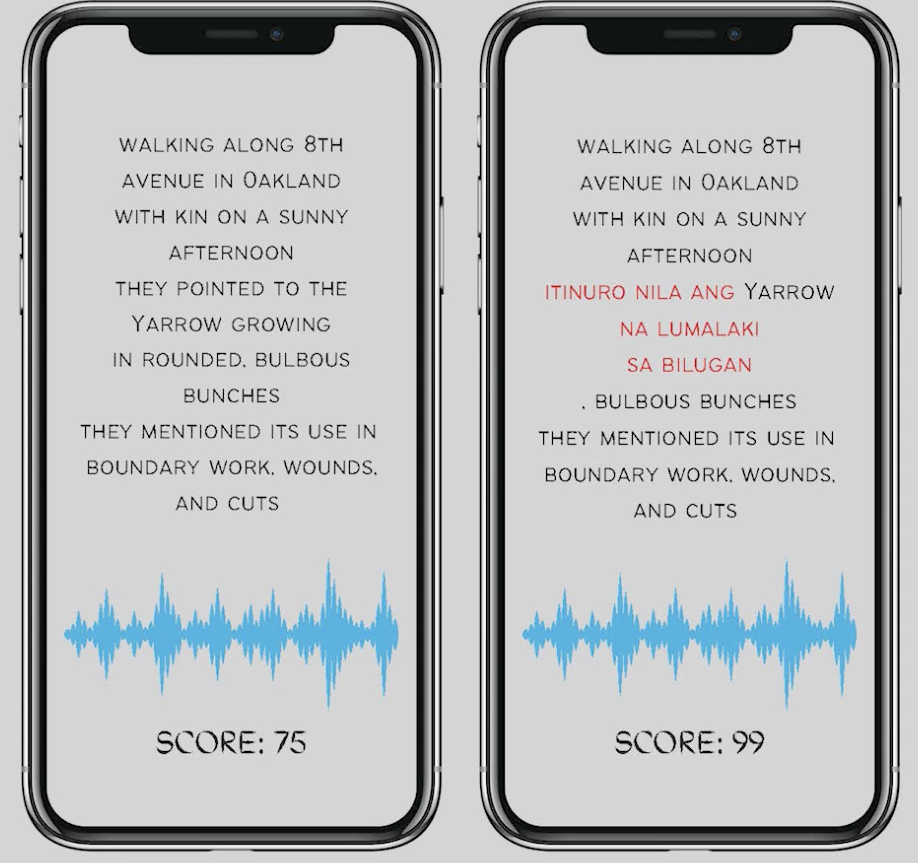
“[. . .] The past few years may have been a remarkable advancement in voice tech with companies such as Amazon and Sanas AI, a voice recognition platform that allows a user to apply a vocal filter onto any human voice, with a discernible accent, that transforms the speech into Standard American English. Yet their hopes for accent elimination and voice mimicry foreshadow a future of design without justice and software development sans cultural and societal considerations, something I work through in my artwork in progress, The Cyborg’s Prosody (2022-present).
The Cyborg’s Prosody is an interactive web-based artwork (optimized for mobile) that requires participants to read five vignettes that increasingly incorporate Tagalog words and phrases that must be repeated by the player. The work serves as a type of parody, as an “accent induction school” — providing a decolonial method of exploring how language and accents are learned and preserved. The work is a response to the creation of accent reduction schools and coaches in the Philippines. Originally, the work was meant to be a satire and parody of these types of services, but shifted into a docu-poetic work of my mother’s immigration story and learning and becoming fluent in American English.”
[Click here to read more]
—
(8). Echoes in Transit: Loudly Waiting at the Paso del Norte Border Region
by José Manuel Flores & Dolores Inés Casillas
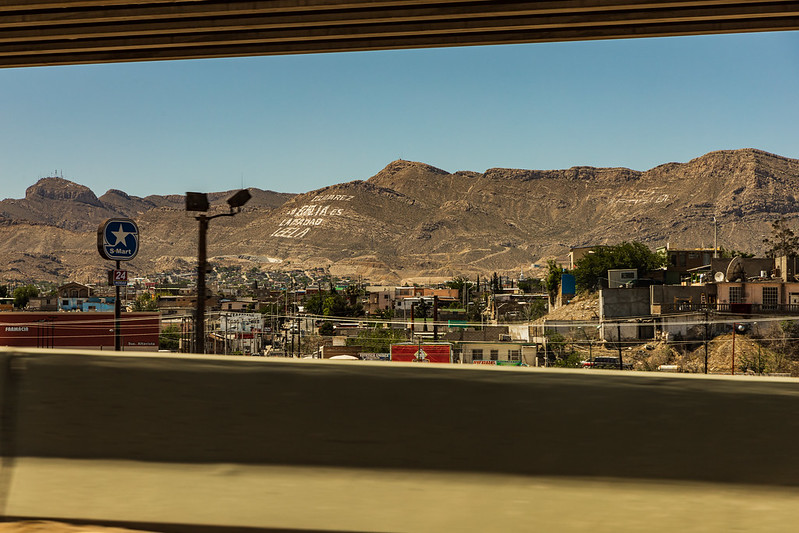
Geographically, the Paso del Norte (PdN) region includes the city of El Paso, Texas, Ciudad Juárez, Mexico, as well as neighboring cities in the state of New Mexico (see map). U.S. citizens live and play in Juárez, and those in Juárez (Juarenses), live and work in El Paso with families extended on both sides; continually moving back and forth. Yet, this broader region has long been plagued with sensationalizing headlines, both in the U.S. and in Mexico, that cast violent and limiting portrayals of these borderland communities. Recognized as sister cities, El Paso and Ciudad Juárez are seen less as close-knit siblings and more like distant cousins with Juárez routinely referred to undesirably as the little sister or ugly sister in comparison to El Paso. Indeed these hierarchical north/south (first world/not-quite-first-world) distinctions are products of histories of colonialism, unequal trade policies, and racial capitalist systems galvanized by immigrant detention camps (a tenant of the Immigration Industrial Complex). Within larger conversations about border cities, both Tijuana (San Diego) and Reynosa (McAllen) are recognized as the “primary” border cities due to their larger population size, transnational capital, and industrious reputations.
Two decades ago, Josh Kun’s concept of the “aural border” invited scholars to consider the US/Mexico border as a “field of sound, a terrain of musicality and music-making, of melodic convergence and dissonant clashing” (2000). Kun’s writings over the years have roused generations of sound scholars to listen to borders, border crossings, border communities and how they reverberate their economic, social, and migrant conditions. This essay intentionally moves away from Kun’s (beloved) border city of Tijuana and towards a less-referenced US/Mexico border city: Ciudad Juárez, Mexico. Here, 1,201 kilometers east of Tijuana, we offer an opportunity to listen to Juárez’s everyday bustling of migratory life through the digital sound repository, the Border Soundscapes Project.
[Click here to read more]
—

(7). Beyond the Every Day: Vocal Potential in AI Mediated Communication
by Amina Abbas-Nazari
“[. . .] I have a particular interest in extended and experimental vocality, especially gained through my time singing with Musarc Choir and working with artist Fani Parali. In these instances, I have experienced the pleasurable challenge of being asked to vocalise the mythical, animal, imagined, alien and otherworldly edges of the sonic sphere, to explore complex relations between bodies, ecologies, space and time, illuminated through vocal expression.
Following from [Nina] Eidsheim, and through my own vocal practice, I believe AI’s prerequisite of voices as “fixed, extractable, and measurable ‘sound object[s]’ located within the body” is over-simplistic and reductive. Voices, within systems of AI, are made to seem only as computable delineations of person, personality and identity, constrained to standardised stereotypes. By highlighting vocal potential, I offer a unique critique of the way voices are currently comprehended in AI recognition systems. When we appreciate the voice beyond the homogenous, we give it authority and autonomy, ultimately leading to a fuller understanding of the voice and its sounding capabilities.”
[Click here to read more]
—

(6). Tuning In to the Desi Valley: Getting to Know a Community via Radio
by Noopur Raval
“Sound has a peculiar relationship to mindfulness; zoning in and out, active and passive forms of listening while we situate our listening practices alongside other daily activities. Especially when it comes to driving, listening to something or someone or just singing aloud by myself, I have realized, helps me drown out other noises of alertness. Over the years I have come to value background music or chatter and especially radio programming that takes the burden of curation and scheduling off my back, in all sorts of tasks that require deep concentration. Enough and more has been said about the visual-bias in various forms of ethnographic inquiry (see Andrew C. Sparkes’s “Ethnography and the senses” for a good example). Without belaboring these arguments, I also find that knowing through listening and listening as a mode of non-haptic yet immersive and intimate engagement can also prove to be a fruitful method of inquiry, especially in our post-pandemic worlds, where it feels a lot harder to establish intimacy. The United Nations noted that radio, in particular, “provided solace” during that period of physical distancing and social isolation.
For me, radio sparked my accidental realization and foregrounding of sonic methods as an itinerant means of getting to know new things, people and surroundings in life and research when I moved from New York to the San Francisco Bay Area in mid-2022 to start a new position as a postdoctoral researcher. Knowing that I would continue living in California for the near future, after eight long years of having deferred driving in America, I decided to learn driving and buy a car.”
[Click here to read more]
—
(5). Ronca Realness: Voices that Sound the Sucia Body
by Cloe Gentile Reyes
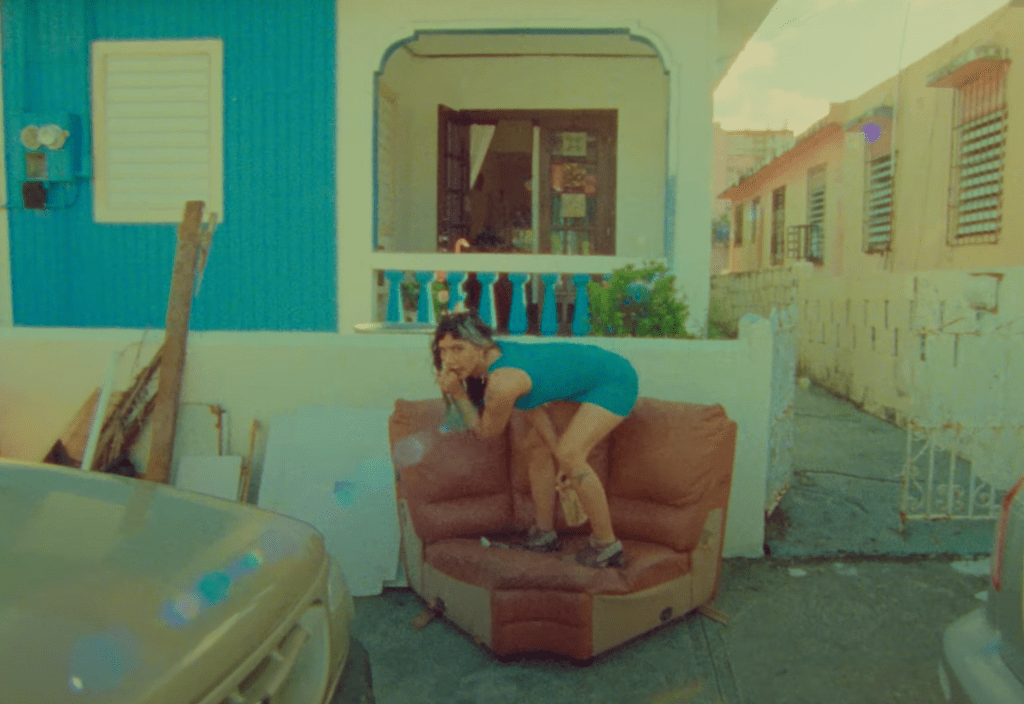
“[. . .] My mother grew up listening to her father sing boleros, and she would later sing with the Florida Grand Opera Chorus when I was a child. My early knowledge of opera came from her. Growing up in Miami Beach, I would also listen to reggaetón and hip-hop in afterschool programs. The Parks & Recreation department would host dances for us, and that was where I first learned to dance perreo. My early musical surroundings represent what it means to be a colonial subject, to hear the Italianate vocal legacies of opera mixed with the Afro-Diasporic and Indigenous rhythms of reggaetón. This post contextualizes my experience within bolero’s colonial history and legacy particularly its operatic disciplining of brown and Black bodies and voices. Reggaetóneras provide models for sonic subversion by being ronca, raspy, or breathy, and thus overriding internalized Eurocentric dichotomies of feminine and masculine vocal timbres.
When I began my own operatic training in college, I was constantly told to “purify” my voice, to resist vocal “fry,” and to handle my acid reflux by avoiding spicy foods. I was steered away from singing the pop songs I had grown up with, and kept many musical activities secret, like when I soloed for the tango ensemble and my a cappella group. In graduate school, thanks to my Latina roommates, I began listening to reggaetón again. I reunited with the voices that raised me and was reassured that their teachings of resistance would always present themselves when I needed them”
[Click here to read more]
—
(4). “Caught a Vibe”: TikTok and The Sonic Germ of Viral Success
by Jay Jolles
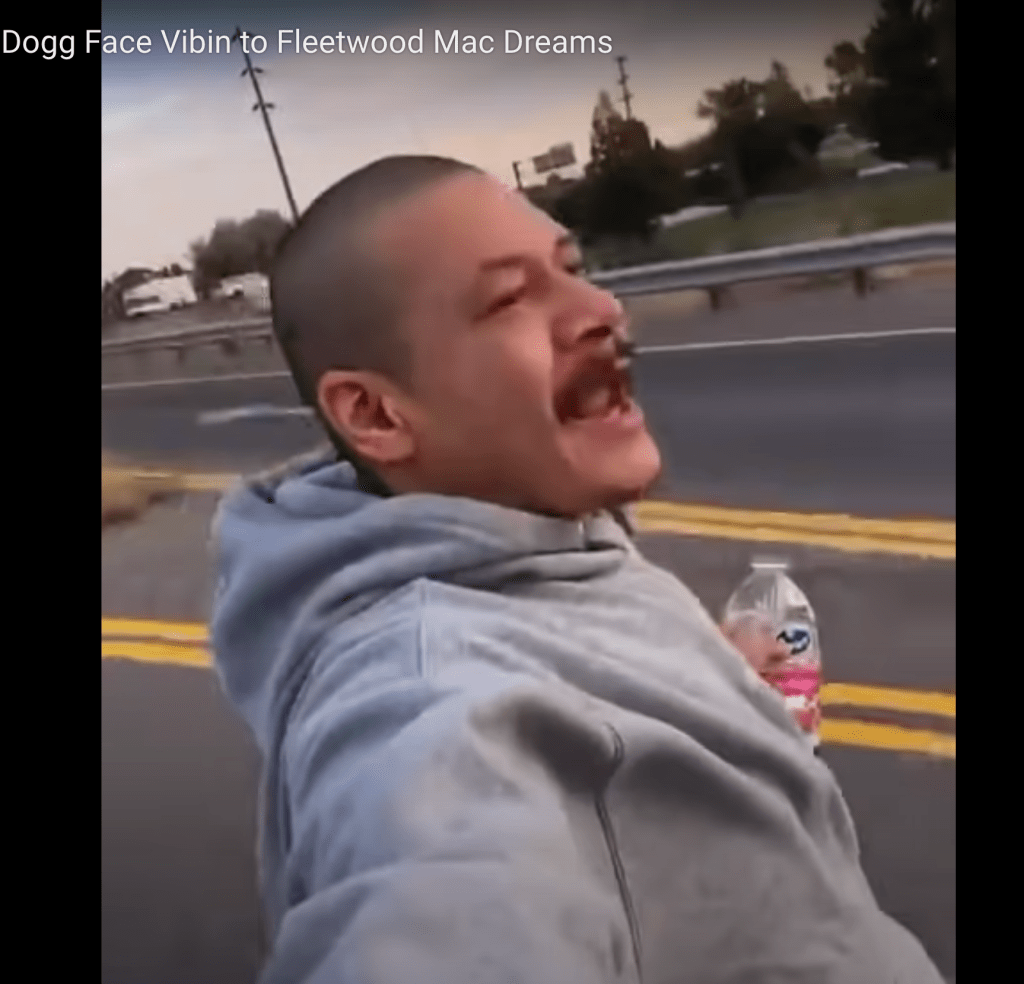
“[. . .]The app currently known as TikTok began as Musical.ly, which was shuttered in 2017 and then rebranded in 2018. By March of 2021, the app boasted one billion worldwide monthly users, indicative of a growth rate of about 180%. This explosion was in many ways catalyzed by successive lockdowns during the first waves of the COVID-19 pandemic. Despite the relaxation and subsequent abandonment of COVID mitigation measures, the app has retained a large volume of its users, remaining one of the highest grossing apps in the iOS environment. TikTok’s viral success (both as noun and adjective) has worked to create a kind of vibe economy in which artists are now subject to producing a particular type of sound in order to be rendered legible to the pop charts. [. . .] The app, which is the perfect–if chaotic–fusion of both radio and video is enmeshed in a wider media ecosystem where social networking and platform capitalism converge, and as a result, it seems that TikTok is changing the music industry. . .”
[Click here to read more]
—

(3). “In My Life”: Loving Queerly and Singing Across Generations
by Casey Mecija
The cold winds staked their claim over Toronto, where my parents had recently arrived from the Philippines. They were underdressed and making their way down Parliament Street. Despite being warned of a shift in temperature, they were not expecting the brutal intensities of Canadian winter. I’m not sure how anyone anticipates the sharp sting of negative temperatures when they are arrivants used to tropical climates. Undeterred, my mother and father headed to a small Filipino grocer, hoping to encounter a semblance of domestic familiarity. Pressed against the biting winds, my mother abruptly stopped, looked at my father and said, “Tumutolo ang sipon” – you have a runny nose. To which my father replied, “Ikaw din” – you do too! They both started laughing and laughed again when they retold me this story 48 years later. When faced with the challenges of migrating to a new and very cold country, they managed to mine humour from a deep well of difficult circumstances. We had been listening to the song “In My Life” by the Beatles (Lennon & McCartney 1965). Something in its expression, melody, and feeling caused my parents to be transported to this small but important moment.
[Click here to read more]
—

(2). “Hey Google, Talk Like Issa”: Black Voiced Digital Assistants and the Reshaping of Racial Labor
by Golden Owens
“In October 2019, Google released an ad for their Google Assistant (GA), an intelligent virtual assistant (IVA) that initially debuted in 2016. As revealed by onscreen text and the video’s caption, the ad’s announced that the GA would soon have a new celebrity voice. The ten-second promotion includes a soundbite from this unseen celebrity—who states: “You can still call me your Google Assistant. Now I just sound extra fly”— followed by audio of the speaker’s laughter, a white screen, the GA logo, and a written question: “Can you guess who it is?”
Consumers quickly speculated about the person behind the voice, with many posting their guesses on Reddit. The earliest comments named Tiffany Haddish, Lizzo, and Issa Rae as prospects, with other users affirming these guesses. These women were considered the most popular contenders: two articles written about the new GA voice cited the Reddit post, with one calling these women Redditors’ most popular guesses and the other naming only them as users’ desired choices. Those who guessed Rae were proven correct. One day after the ad, Google released a longer promo revealing her as the GA’s new voice, including footage of Rae recording responses for the assistant. The ad ends with Rae repeating the “extra fly” line from the initial promo, smiling into the camera.
Google’s addition of Rae as an IVA voice option is one of several recent examples of Black people’s voices employed in this manner. Importantly, this trend toward Black-voiced IVAs deviates from the pre-established standard of these digital aides. While there are many voice options available, the default voices for IVAs are white female voices with flat dialects. This shift toward Black American voices is notable not only because of conversations about inclusion—with some Black users saying they feel more represented by these new voices—but because this influx of Black voices marks a spiritual return to the historical employment of Black people as service-providing, labor-performing entities in the United States, thus subliminally reinforcing historical biases about Black people as uniquely suited for performing this type of work.”
[Click here to read more]
—
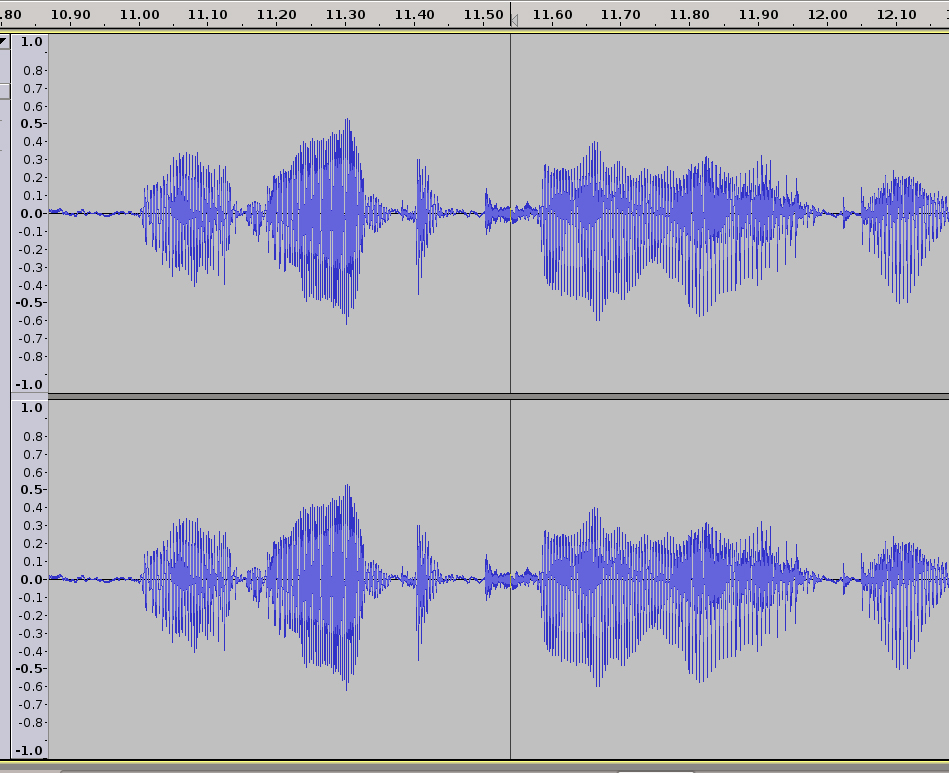
(1). “Your Voice is (Not) Your Passport”
by Michelle Pfeifer
“In the 1992 Hollywood film Sneakers, depicting a group of hackers led by Robert Redford performing a heist, one of the central security architectures the group needs to get around is a voice verification system. A computer screen asks for verification by voice and Robert Redford uses a “faked” tape recording that says “Hi, my name is Werner Brandes. My voice is my passport. Verify me.” The hack is successful and Redford can pass through the securely locked door to continue the heist. Looking back at the scene today it is a striking early representation of the phenomenon we now call a “deep fake” but also, to get directly at the topic of this post, the utter ubiquity of voice ID for security purposes in this 30-year-old imagined future.
In 2018, The Intercept reported that Amazon filed a patent to analyze and recognize user’s accents to determine their ethnic origin, raising suspicion that this data could be accessed and used by police and immigration enforcement. While Amazon seemed most interested in using voice data for targeting users for discriminatory advertising, the jump to increasing surveillance seemed frighteningly close, especially because people’s affective and emotional states are already being used for the development of voice profiling and voice prints that expand surveillance and discrimination. For example, voice prints of incarcerated people are collected and extracted to build databases of calls that include the voices of people on the other end of the line.“
[Click here to read more]
—
Featured Image “ripples in monochrome” by Flickr User SalmonSalmon CC BY-NC-ND 2.0 DEED
—
REWIND! . . .If you liked this post, you may also dig:
The Top Ten Sounding Out! Posts of 2020-2022!
The Top Ten Sounding Out! Posts of 2019!
The Top Ten Sounding Out! Posts of 2018!
The Top Ten Sounding Out! Posts of 2017!
The Top Ten Sounding Out! Posts of 2016!
The Top Ten Sounding Out! Posts of 2015!
Share this:


Current Top Posts





April 2021

January 2020

November 2019

October 2019

August 2019

April 2014

November 2017

March 2015

December 2017

October 2015
 Sounding Out!
Recent Comments