
The Top Ten Sounding Out! Posts of 2023!

Usually when we celebrate our year in review, we get a little bit loud. . .okay, well, maybe we get REAL loud! We’re not usually ones to shy away from joyous bombast, especially when celebrating the hard work of our writers and editors, and the deep relationship we have with our readers. We wouldn’t be here without your clicks, your sharing, and your inspiration, and we love the excitement of readers becoming writers. It’s our favorite! But we don’t want our joy and celebration to be drowned out by 2023’s many loudnesses. We’re starting off 2024 with neither a bang nor a wimper, but instead, with the quiet but powerful resonance of ripples in water, which is exactly the energy our top ten posts bring. Please enjoy them, and keep these ideas spreading far and wide, near and far. Thank you. We’ll be dropping more gems in the pond in 2024. –JS
—

by Petra Rivera-Rideau and Vanessa Díaz
“On the night of September 12, Colombian pop star Shakira made history as the first predominantly Spanish-language artist to be honored as MTV’s Video Vanguard at the Video Music Awards (VMAs). The award recognizes artists who have had a major and innovative impact on music videos and popular music. Shakira played a 10-minute medley of Spanish and English hits from her three-decades long career. Her performance demonstrated her breadth as an artist as she shifted from pop to rock to reggaetón.
Not only did she demonstrate her impressive musical range, but of her 69 singles, Shakira selected those that represent two significant crossover moments for Latin music. She sang hits like “Wherever, Whenever,” “Hips Don’t Lie,” and “She Wolf” from her English-language crossover in the early 2000s as part of the so-called “Latin Boom.” She sang 2001’s “Objection (Tango)” with the same samba/rock music arrangement she used at her very first VMA performance in 2002.”
[Click here to read more]
–
(9). The Cyborg’s Prosody, or Speech AI and the Displacement of Feeling
by Dorothy R. Santos
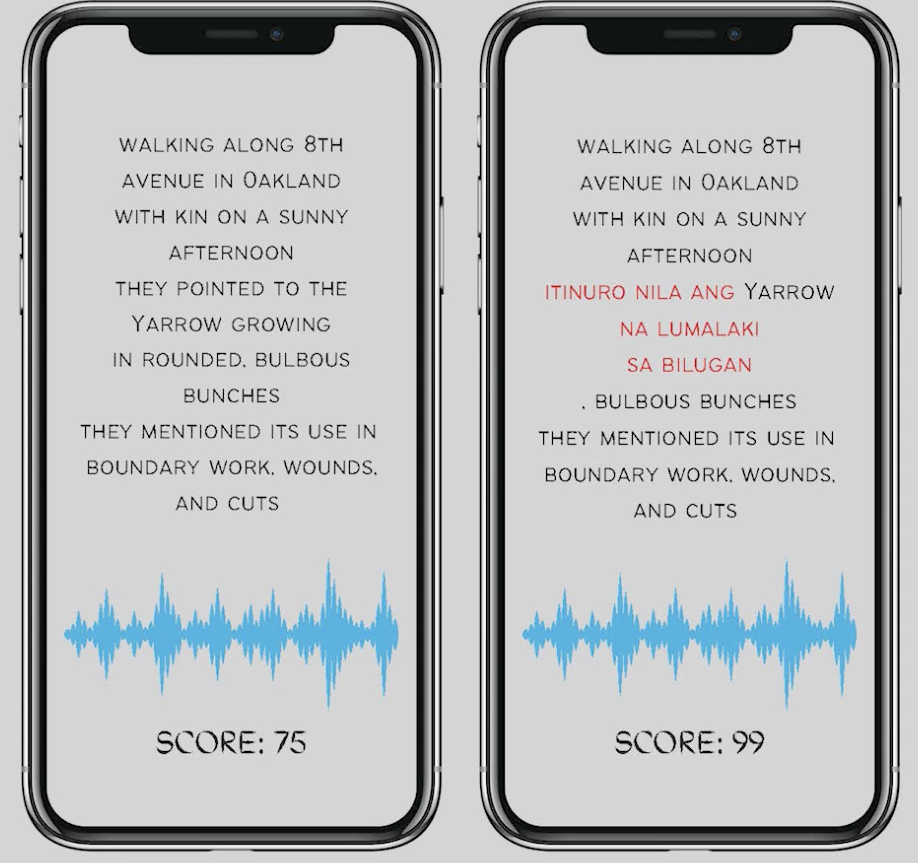
“[. . .] The past few years may have been a remarkable advancement in voice tech with companies such as Amazon and Sanas AI, a voice recognition platform that allows a user to apply a vocal filter onto any human voice, with a discernible accent, that transforms the speech into Standard American English. Yet their hopes for accent elimination and voice mimicry foreshadow a future of design without justice and software development sans cultural and societal considerations, something I work through in my artwork in progress, The Cyborg’s Prosody (2022-present).
The Cyborg’s Prosody is an interactive web-based artwork (optimized for mobile) that requires participants to read five vignettes that increasingly incorporate Tagalog words and phrases that must be repeated by the player. The work serves as a type of parody, as an “accent induction school” — providing a decolonial method of exploring how language and accents are learned and preserved. The work is a response to the creation of accent reduction schools and coaches in the Philippines. Originally, the work was meant to be a satire and parody of these types of services, but shifted into a docu-poetic work of my mother’s immigration story and learning and becoming fluent in American English.”
[Click here to read more]
—
(8). Echoes in Transit: Loudly Waiting at the Paso del Norte Border Region
by José Manuel Flores & Dolores Inés Casillas
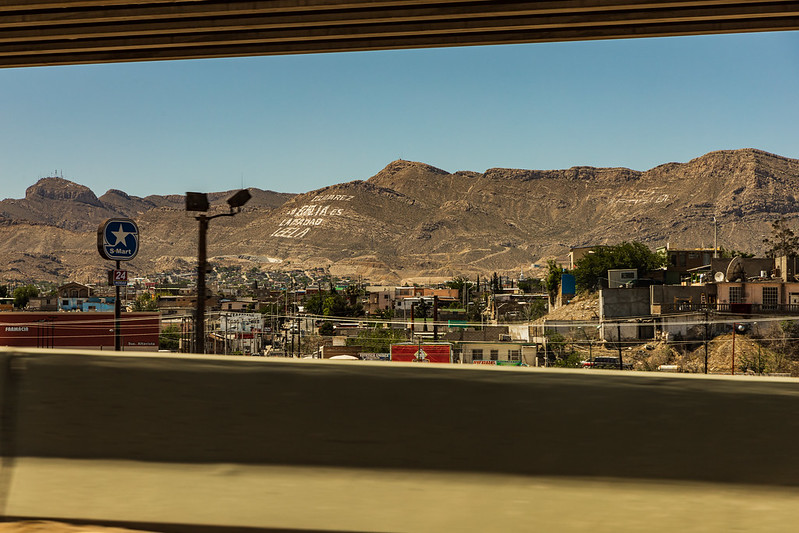
Geographically, the Paso del Norte (PdN) region includes the city of El Paso, Texas, Ciudad Juárez, Mexico, as well as neighboring cities in the state of New Mexico (see map). U.S. citizens live and play in Juárez, and those in Juárez (Juarenses), live and work in El Paso with families extended on both sides; continually moving back and forth. Yet, this broader region has long been plagued with sensationalizing headlines, both in the U.S. and in Mexico, that cast violent and limiting portrayals of these borderland communities. Recognized as sister cities, El Paso and Ciudad Juárez are seen less as close-knit siblings and more like distant cousins with Juárez routinely referred to undesirably as the little sister or ugly sister in comparison to El Paso. Indeed these hierarchical north/south (first world/not-quite-first-world) distinctions are products of histories of colonialism, unequal trade policies, and racial capitalist systems galvanized by immigrant detention camps (a tenant of the Immigration Industrial Complex). Within larger conversations about border cities, both Tijuana (San Diego) and Reynosa (McAllen) are recognized as the “primary” border cities due to their larger population size, transnational capital, and industrious reputations.
Two decades ago, Josh Kun’s concept of the “aural border” invited scholars to consider the US/Mexico border as a “field of sound, a terrain of musicality and music-making, of melodic convergence and dissonant clashing” (2000). Kun’s writings over the years have roused generations of sound scholars to listen to borders, border crossings, border communities and how they reverberate their economic, social, and migrant conditions. This essay intentionally moves away from Kun’s (beloved) border city of Tijuana and towards a less-referenced US/Mexico border city: Ciudad Juárez, Mexico. Here, 1,201 kilometers east of Tijuana, we offer an opportunity to listen to Juárez’s everyday bustling of migratory life through the digital sound repository, the Border Soundscapes Project.
[Click here to read more]
—

(7). Beyond the Every Day: Vocal Potential in AI Mediated Communication
by Amina Abbas-Nazari
“[. . .] I have a particular interest in extended and experimental vocality, especially gained through my time singing with Musarc Choir and working with artist Fani Parali. In these instances, I have experienced the pleasurable challenge of being asked to vocalise the mythical, animal, imagined, alien and otherworldly edges of the sonic sphere, to explore complex relations between bodies, ecologies, space and time, illuminated through vocal expression.
Following from [Nina] Eidsheim, and through my own vocal practice, I believe AI’s prerequisite of voices as “fixed, extractable, and measurable ‘sound object[s]’ located within the body” is over-simplistic and reductive. Voices, within systems of AI, are made to seem only as computable delineations of person, personality and identity, constrained to standardised stereotypes. By highlighting vocal potential, I offer a unique critique of the way voices are currently comprehended in AI recognition systems. When we appreciate the voice beyond the homogenous, we give it authority and autonomy, ultimately leading to a fuller understanding of the voice and its sounding capabilities.”
[Click here to read more]
—

(6). Tuning In to the Desi Valley: Getting to Know a Community via Radio
by Noopur Raval
“Sound has a peculiar relationship to mindfulness; zoning in and out, active and passive forms of listening while we situate our listening practices alongside other daily activities. Especially when it comes to driving, listening to something or someone or just singing aloud by myself, I have realized, helps me drown out other noises of alertness. Over the years I have come to value background music or chatter and especially radio programming that takes the burden of curation and scheduling off my back, in all sorts of tasks that require deep concentration. Enough and more has been said about the visual-bias in various forms of ethnographic inquiry (see Andrew C. Sparkes’s “Ethnography and the senses” for a good example). Without belaboring these arguments, I also find that knowing through listening and listening as a mode of non-haptic yet immersive and intimate engagement can also prove to be a fruitful method of inquiry, especially in our post-pandemic worlds, where it feels a lot harder to establish intimacy. The United Nations noted that radio, in particular, “provided solace” during that period of physical distancing and social isolation.
For me, radio sparked my accidental realization and foregrounding of sonic methods as an itinerant means of getting to know new things, people and surroundings in life and research when I moved from New York to the San Francisco Bay Area in mid-2022 to start a new position as a postdoctoral researcher. Knowing that I would continue living in California for the near future, after eight long years of having deferred driving in America, I decided to learn driving and buy a car.”
[Click here to read more]
—
(5). Ronca Realness: Voices that Sound the Sucia Body
by Cloe Gentile Reyes
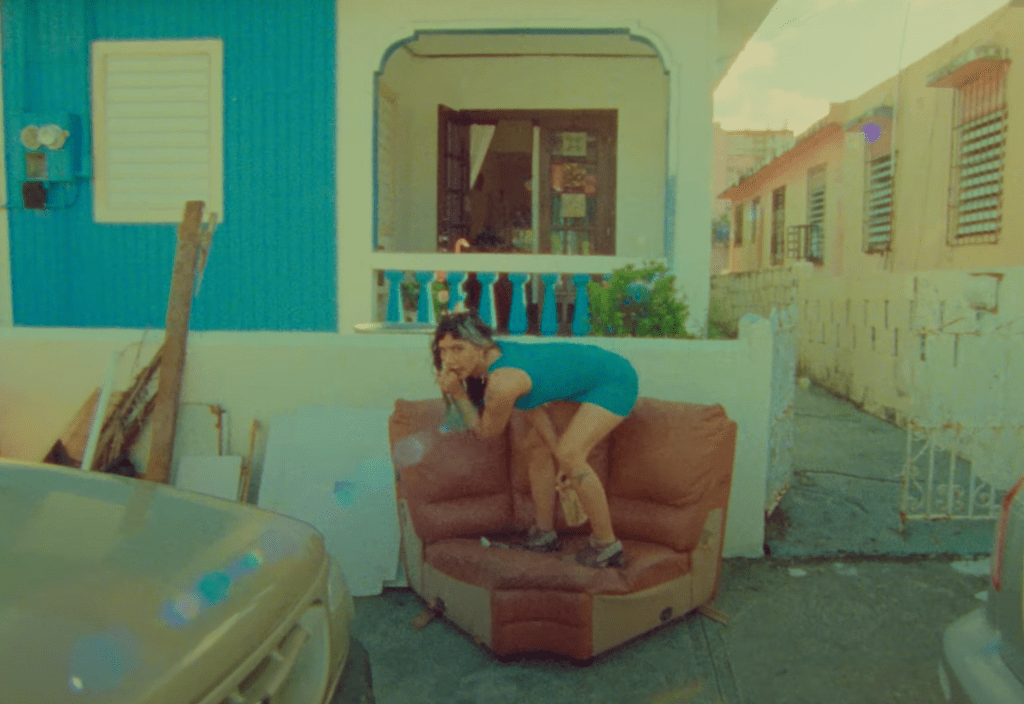
“[. . .] My mother grew up listening to her father sing boleros, and she would later sing with the Florida Grand Opera Chorus when I was a child. My early knowledge of opera came from her. Growing up in Miami Beach, I would also listen to reggaetón and hip-hop in afterschool programs. The Parks & Recreation department would host dances for us, and that was where I first learned to dance perreo. My early musical surroundings represent what it means to be a colonial subject, to hear the Italianate vocal legacies of opera mixed with the Afro-Diasporic and Indigenous rhythms of reggaetón. This post contextualizes my experience within bolero’s colonial history and legacy particularly its operatic disciplining of brown and Black bodies and voices. Reggaetóneras provide models for sonic subversion by being ronca, raspy, or breathy, and thus overriding internalized Eurocentric dichotomies of feminine and masculine vocal timbres.
When I began my own operatic training in college, I was constantly told to “purify” my voice, to resist vocal “fry,” and to handle my acid reflux by avoiding spicy foods. I was steered away from singing the pop songs I had grown up with, and kept many musical activities secret, like when I soloed for the tango ensemble and my a cappella group. In graduate school, thanks to my Latina roommates, I began listening to reggaetón again. I reunited with the voices that raised me and was reassured that their teachings of resistance would always present themselves when I needed them”
[Click here to read more]
—

(4). “Caught a Vibe”: TikTok and The Sonic Germ of Viral Success
by Jay Jolles
“[. . .]The app currently known as TikTok began as Musical.ly, which was shuttered in 2017 and then rebranded in 2018. By March of 2021, the app boasted one billion worldwide monthly users, indicative of a growth rate of about 180%. This explosion was in many ways catalyzed by successive lockdowns during the first waves of the COVID-19 pandemic. Despite the relaxation and subsequent abandonment of COVID mitigation measures, the app has retained a large volume of its users, remaining one of the highest grossing apps in the iOS environment. TikTok’s viral success (both as noun and adjective) has worked to create a kind of vibe economy in which artists are now subject to producing a particular type of sound in order to be rendered legible to the pop charts. [. . .] The app, which is the perfect–if chaotic–fusion of both radio and video is enmeshed in a wider media ecosystem where social networking and platform capitalism converge, and as a result, it seems that TikTok is changing the music industry. . .”
[Click here to read more]
—

(3). “In My Life”: Loving Queerly and Singing Across Generations
by Casey Mecija
The cold winds staked their claim over Toronto, where my parents had recently arrived from the Philippines. They were underdressed and making their way down Parliament Street. Despite being warned of a shift in temperature, they were not expecting the brutal intensities of Canadian winter. I’m not sure how anyone anticipates the sharp sting of negative temperatures when they are arrivants used to tropical climates. Undeterred, my mother and father headed to a small Filipino grocer, hoping to encounter a semblance of domestic familiarity. Pressed against the biting winds, my mother abruptly stopped, looked at my father and said, “Tumutolo ang sipon” – you have a runny nose. To which my father replied, “Ikaw din” – you do too! They both started laughing and laughed again when they retold me this story 48 years later. When faced with the challenges of migrating to a new and very cold country, they managed to mine humour from a deep well of difficult circumstances. We had been listening to the song “In My Life” by the Beatles (Lennon & McCartney 1965). Something in its expression, melody, and feeling caused my parents to be transported to this small but important moment.
[Click here to read more]
—

(2). “Hey Google, Talk Like Issa”: Black Voiced Digital Assistants and the Reshaping of Racial Labor
by Golden Owens
“In October 2019, Google released an ad for their Google Assistant (GA), an intelligent virtual assistant (IVA) that initially debuted in 2016. As revealed by onscreen text and the video’s caption, the ad’s announced that the GA would soon have a new celebrity voice. The ten-second promotion includes a soundbite from this unseen celebrity—who states: “You can still call me your Google Assistant. Now I just sound extra fly”— followed by audio of the speaker’s laughter, a white screen, the GA logo, and a written question: “Can you guess who it is?”
Consumers quickly speculated about the person behind the voice, with many posting their guesses on Reddit. The earliest comments named Tiffany Haddish, Lizzo, and Issa Rae as prospects, with other users affirming these guesses. These women were considered the most popular contenders: two articles written about the new GA voice cited the Reddit post, with one calling these women Redditors’ most popular guesses and the other naming only them as users’ desired choices. Those who guessed Rae were proven correct. One day after the ad, Google released a longer promo revealing her as the GA’s new voice, including footage of Rae recording responses for the assistant. The ad ends with Rae repeating the “extra fly” line from the initial promo, smiling into the camera.
Google’s addition of Rae as an IVA voice option is one of several recent examples of Black people’s voices employed in this manner. Importantly, this trend toward Black-voiced IVAs deviates from the pre-established standard of these digital aides. While there are many voice options available, the default voices for IVAs are white female voices with flat dialects. This shift toward Black American voices is notable not only because of conversations about inclusion—with some Black users saying they feel more represented by these new voices—but because this influx of Black voices marks a spiritual return to the historical employment of Black people as service-providing, labor-performing entities in the United States, thus subliminally reinforcing historical biases about Black people as uniquely suited for performing this type of work.”
[Click here to read more]
—
(1). “Your Voice is (Not) Your Passport”
by Michelle Pfeifer
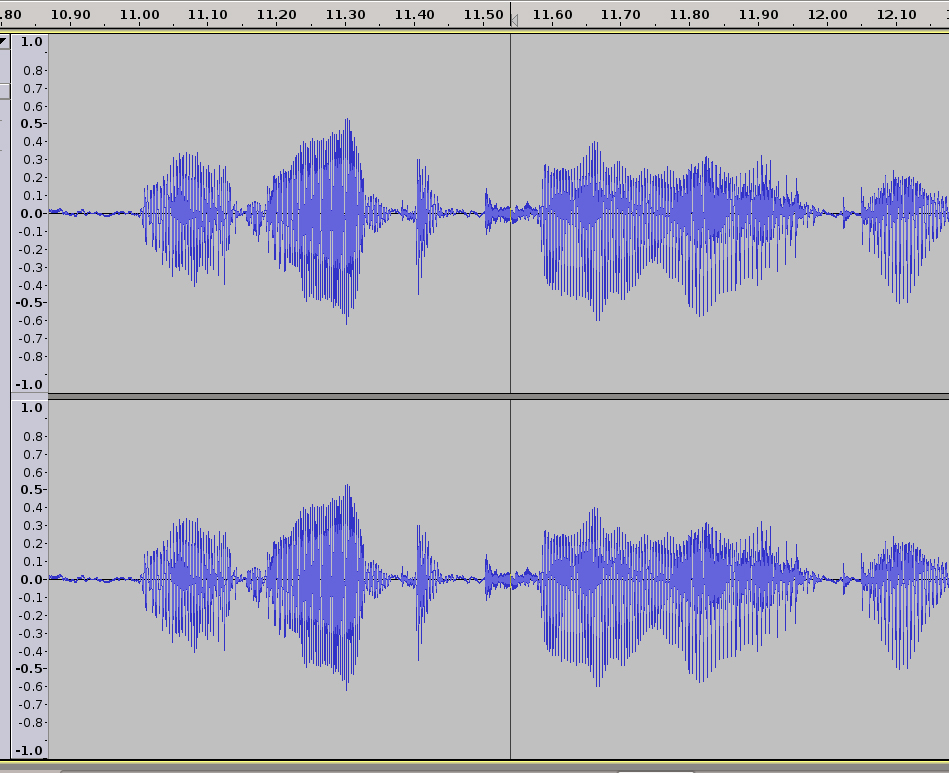
“In the 1992 Hollywood film Sneakers, depicting a group of hackers led by Robert Redford performing a heist, one of the central security architectures the group needs to get around is a voice verification system. A computer screen asks for verification by voice and Robert Redford uses a “faked” tape recording that says “Hi, my name is Werner Brandes. My voice is my passport. Verify me.” The hack is successful and Redford can pass through the securely locked door to continue the heist. Looking back at the scene today it is a striking early representation of the phenomenon we now call a “deep fake” but also, to get directly at the topic of this post, the utter ubiquity of voice ID for security purposes in this 30-year-old imagined future.
In 2018, The Intercept reported that Amazon filed a patent to analyze and recognize user’s accents to determine their ethnic origin, raising suspicion that this data could be accessed and used by police and immigration enforcement. While Amazon seemed most interested in using voice data for targeting users for discriminatory advertising, the jump to increasing surveillance seemed frighteningly close, especially because people’s affective and emotional states are already being used for the development of voice profiling and voice prints that expand surveillance and discrimination. For example, voice prints of incarcerated people are collected and extracted to build databases of calls that include the voices of people on the other end of the line.“
[Click here to read more]
—
Featured Image “ripples in monochrome” by Flickr User SalmonSalmon CC BY-NC-ND 2.0 DEED
—

REWIND! . . .If you liked this post, you may also dig:
The Top Ten Sounding Out! Posts of 2020-2022!
The Top Ten Sounding Out! Posts of 2019!
The Top Ten Sounding Out! Posts of 2018!
The Top Ten Sounding Out! Posts of 2017!
The Top Ten Sounding Out! Posts of 2016!
The Top Ten Sounding Out! Posts of 2015!
Share this:

The Top Ten Sounding Out! Posts of 2020-2022!
.
It’s baaaaack! For your end-of-the year reading pleasure, here are the Top Ten Posts published within the last three years (totals as of 12/8/22). Read and re-read this brilliance today–and often! And please do listen out for us in 2023– our Racial Bias in Speech AI series co-edited with Johann Diedrick is already in the works for May 2023 and a new CFP related to a print edition (!!) of Sounding Out! just launched! Please take good care, stay safe and well, and we’ll see you in January. Thank you for your readership and continued support. We’re here because you are here. –JS
—

10). A Feast of Silence: Listening as Stoic Practice
Andrew Salvati
. . .Over the past decade, Stoicism, which teaches that self-discipline, moderation, and emotional equanimity are key to overcoming hardship and living a good life, has had something of a revival as a self-help paradigm – and Holiday has been one of its most energetic evangelists. Articles in Vice, the New York Times, the Atlantic, the New Yorker, the Guardian, Forbes, Wired, and Sports Illustrated have all taken note of his influence among Silicon Valley tech workers, corporate executives, professional athletes, military personnel, and celebrities to whom he markets the philosophy as a “life-hack”; his six best-selling books on the subject, meanwhile, have positioned him as perhaps the most commercially successful author in a mushrooming genre of Stoic literature; and The Daily Stoic’s A-level guest list, which has included Malcom Gladwell, Camilla Cabello, Matthew McConaughey, and Charlamagne Tha God, has established Stoicism’s cultural cachet as a practical guide for living, and positioned Holiday as its authoritative interpreter. . . [Click here to read the full post!]
.
.

9). Voice as Ecology: Voice Donation, Materiality, Identity
Steph Ceraso
I first heard about voice donation while listening to “Being Siri,” an experimental audio piece about Erin Anderson donating her voice to Boston-based voice donation company, VocaliD. Like a digital blood bank of sorts, VocaliD provides a platform for donating one’s voice via digital audio recordings. These recordings are used to help technicians create a custom digital voice for a voiceless individual, providing an alternative to the predominately white, male, mechanical-sounding assistive technologies used by people who cannot vocalize for themselves (think Stephen Hawking). VocaliD manufactures voices that better match a person’s race, gender, ethnicity, age, and unique personality. To me, VocaliD encapsulates the promise, complexity, and problematic nature of our current speech AI landscape and serves as an example of why we need to think critically about sound technologies, even when they appear to be wholly beneficial. . . [Click here to read the full post!]
.

8). Broadcast Kidnapping: How the Rise of the Radio led to the Fall of Jean-Claude Duvalier
Jennifer Garcon
On January 23, 1973, Jean-Claude Duvalier, only 18 months into his life-long appointment, received a call that threatened to profoundly destabilize his nascent presidency. On the other end was Clinton E. Knox, a close political ally and advisor, who also happened to be the US Ambassador to Haiti. Knox, Jean-Claude was informed, along with US consul general Ward Christensen were being held hostage at a residence just outside of Port-au-Prince. To secure the safe return of two high-ranking US officials, the captors demanded the release of political prisoners, a hefty ransom, and a plane to facilitate their escape. The kidnappers “meant business,” reported The Washington Post, Times Herald on Jan 26, 1973, and during the call, Knox warned Jean-Claude of the severity of the situation, that they ”threatened to blow my head off, if they didn’t get what they wanted” . . . [Click here to read the full post!]
.

7). “Vous Ecoutez La Voix du Peuple”: The Kreyol Language Pirate Radio Stations of Flatbush, Brooklyn
David Goren
‘A lot of these stations, especially the Haitian stations, they have such an extensive music library that a song will come on the radio and all of a sudden my mom is like, ‘Oh my God! Your grandma used to have this record and she played it every Saturday!’ says Joan Martinez, a young Haitian-American born in the US and a former program host on some of the unlicensed Kreyol language stations. “Now she’s transported back to being on the island, with the big radio that’s a piece of furniture in the living room. People are chatting, little drinks are flowing about, my grandmother milling about in a gorgeous dress. It’s kind of like that whole nostalgia era that unfortunately was probably lost because of the political turmoil in Haiti. So it’s harkening back to a good time, to a simpler time, a better time, a more carefree era.” . . . [Click here to read the full post!]
.

6). “One Scream is All it Takes: Voice Activated Personal Safety, Audio Surveillance, and Gender Violence
María Edurne Zuazu
Just a few days ago, London Metro Police Officer Wayne Couzens pled guilty to the rape and murder of Sarah Everard by, a 33-year-old woman he abducted while she walked home from a friend’s house. Since the news broke of her disappearance in March 2021, the UK has been going through a moment of national “soul-searching.” The national reckoning has included a range of discussions–about casual and spectacular misogynistic violence, about a victim-blaming criminal justice system that fails to address said violence–and responses, including a vigil in south London that was met with aggressive policing, that has itself entered into and furthered the UK’s soul-searching. There has also been a surge in the installation of personal safety apps on mobile phones; One Scream (OS), “voice activated personal safety,” is one of them. . .[Click here to read the full post!]
.

5). Teaching Soundwalks in a Course on Gentrification, Black Music, and Corporate America
Rami Toubia Stucky
On May 5, 2018, the C-ville Weekly, a newspaper based out of Charlottesville, Virginia, published an article titled “Sex, drugs and rock ’n’ roll: new apartment complex promises at least one of those.” The headline referred to the complex being built at 600 West Main St. in Charlottesville. The complex has since been completed and studio bedrooms currently cost more than $1000 a month. As the C-ville Weekly headline shows, the developers were using the term and connotations of “rock ’n’ roll” to sell exclusive – and in many ways unaffordable – housing.
After reading this headline, I began to develop an idea for a summer course at my institution, the University of Virginia (UVA). I ultimately titled that course “Black Music and Corporate America” which I offered online during the summer of 2021 (syllabus available for download via the link above). Although the course discussed varied content – from the multi-ethnic, multi-racial, and multi-gendered histories of rock and roll to the endorsement of conspicuous forms of consumption in hip hop – I wanted to spend one unit focusing on the interrelationship between music, corporate America, and gentrification. I strove to solidify this connection by assigning two related articles. The first article, by geographer and sociologist Brandi Thomson Summers, argues that black residents in Washington D.C. adopt go-go music as a form of reclamation aesthetics to combat their city’s increasingly rampant gentrification. In the second article, ethnomusicologist Allie Martin conducts a soundwalk of D.C.’s Shaw District to forefront the experience of a black woman in the city and help displace white hearing as the default standard of interpreting sound (see Sounding Out!’s Soundwalking While POC series from Fall 2019). These two articles served as a foundation for one of the assignments the students had to complete in class: conducting a soundwalk of their own in which they had to walk around a field site of their choosing and think critically about the sounds they were hearing. . .[Click here to read the full post!]
.

4). Archivism and Activism: Radio Haiti and the Accountability of Educational Institutions
Laura Wagner
For four years, I spent forty hours a week in a cubicle in a converted tobacco warehouse with noise-cancelling headphones over my ears, listening to and describing the entire audio archive of Haiti’s first independent radio station, Radio Haïti-Inter. Though my title was “project archivist,” I am not an archivist by training. But I am compelled to compile, assemble, and preserve stories from lost people and lost worlds. Sound is more intimate than printed words or video. With sound, voices are inside your head, as close as another person can be. As I processed the Radio Haiti collection, I would forget that many of the voices I heard every day belonged to people I never knew in life. Sometimes in my dreams I would see the station’s director, Jean Dominique, alive and laughing. . . [Click here to read the full post!]
.

Alexander W. Cowan
If you could listen to your DNA, what would it sound like? A few answers, at random: In 1986, the biologist and amateur musician Susumo Ohno assigned pitches to the nucleotides that make up the DNA sequence of the protein immunoglobulin, and played them in order. The gene, to his surprise, sounded like Chopin.
With the advent of personalized DNA sequencing, a British composition studio will do one better, offering a bespoke three-minute suite based on your DNA’s unique signature, recorded by professional soloists—for a 300GBP basic package; or 399GBP for a full orchestral arrangement.
But the most recent answer to this question comes from the genealogy website Ancestry.com, which in Fall 2018 partnered with Spotify to offer personalized playlists built from your DNA’s regional makeup. For a comparatively meager $99 (and a small bottle’s worth of saliva) you can now not only know your heritage, but, in the words of Ancestry executive Vineet Mehra, “experience” it. Music becomes you, and through music, you can become yourself. . . [Click here to read the full post!]
.

2).Sonic Lessons of the Covid-19 Soundscape
Sarah Mayberry Scott
It’s understandable to resist reading or thinking about Covid in late-2021, even as the Delta variant’s new surges are making headlines around the world. Covid has surrounded and overwhelmed us for over a year, and many people’s reluctance to engage meaningfully with it at this time is fueled by feelings of fatigue, mental exhaustion, and frustration. However, I urge in this post that we have a continued responsibility to sustain our sonic engagement and listen to what the Covid-19 soundscape teaches us.
Covid-19, as most of us now know now, is a virus caused by the coronavirus strain SARS-CoV-2. While the symptoms of Covid-19 are many and varied, one symptom seemed most vital and censorious—a nagging and persistent dry cough that became referred to as the “Covid cough” in everyday vernacular. The Covid cough became an intrusive and yet all too familiar presence in the Covid soundscape—an isolated acoustic environment that allows us to study its characteristics. For instance, investigations within the Covid soundscape have studied the noise annoyances of traffic, neighbors, and personal dwellings; have recorded the quieting of the usually bustling streets of New York City; have researched whale stress hormones linked to less noise pollution in our ocean waters; and have analyzed the reception and aural imagery of sirens. I seek to add to this research by bringing the sounds of the Covid body (or a body perceived to have Covid) into the larger soundscape conversation . . . [Click here to read the full post!]
.

1).A Day on the Dial in Cap Haïtien, Haiti
Ian Coss
Fabrice Joseph is a mender, set up on a street corner in Cap Haïtien, Haiti’s second largest city. He shows me a red plastic toolbox filled with supplies — thread, wires, scraps of fabric—which he can use to fix a jammed zipper or stitch up a torn backpack strap. I stop because he’s cradling a radio set in his hands, tuned to the city’s most popular station: Radio Venus.
We meet on a quiet day; Fabrice has been sitting on the stoop for five hours already with no work. Another day he’s engrossed in assembling a large umbrella—the kind food vendors use for shade—but the radio is still on, now propped on a ledge just behind his head. He replaces the batteries almost weekly, because the radio is always on. In the morning Radio Venus plays news, Fabrice tells me, followed by music as the day heats up. Then in the afternoon he’ll hear sports or perhaps a religious program, before the station returns to music in the evening.
This arc Fabrice describes is designed to follow the arc of his day. In this post, I trace that link: between the rhythms of radio programming and the rhythms of daily life, to show how formatting choices create a heightened sense of ‘liveness’ on Haiti’s airwaves, with all content located in a specific moment: the present moment. . .[Click here to read the full post!]
—
Featured Image: “New Years, about to unfurl” by Flickr User Darwin Bell, Attribution-NonCommercial 2.0 Generic (CC BY-NC 2.0)
—
REWIND! . . .If you liked this post, you may also dig:
The Top Ten Sounding Out! Posts of 2019!
The Top Ten Sounding Out! Posts of 2018!
The Top Ten Sounding Out! Posts of 2017!
The Top Ten Sounding Out! Posts of 2016!
The Top Ten Sounding Out! Posts of 2015!
Share this:


Current Top Posts





April 2021

January 2020

November 2019

October 2019

August 2019

April 2014

November 2017

March 2015

December 2017

October 2015
 Sounding Out!
Recent Comments