
From Mercury to Mars: A Hard Act to Follow: War of the Worlds and the Challenges of Literary Adaptation from Antenna

This week our From Mercury to Mars: Orson Welles on Radio after 75 Years series begins ramping up for our big event, a listening party / social media experiment, in which we’re asking all of our fans and readers to listen to Orson Welles’ “War of the Worlds” radio play at the same time and respond to it on social media with the hashtag #WOTW75, beginning at 8:00 pm Eastern. On that date SO! Editor-in-Chief Jennifer Stoever-Ackerman, SO! Multimedia Editor Aaron Trammell, producer Nick Rubenstein, Binghamton Cinema Professor Monteith McCollum and his “Performative Processes” class, and BU’s Radio Drama Division will offer a broadcast from 90.5 FM WHRW radio in Binghamton, NY (and online) both before and after the play.
Remember to tune in to this blog on that date, and we’ll have lots of links and resources ready to help you participate. Organize your listening party now! Follow our project on Facebook and Twitter, too.
But first! Check out the most recent entry to the M2M series by contributor and media historian Shawn VanCour …
—
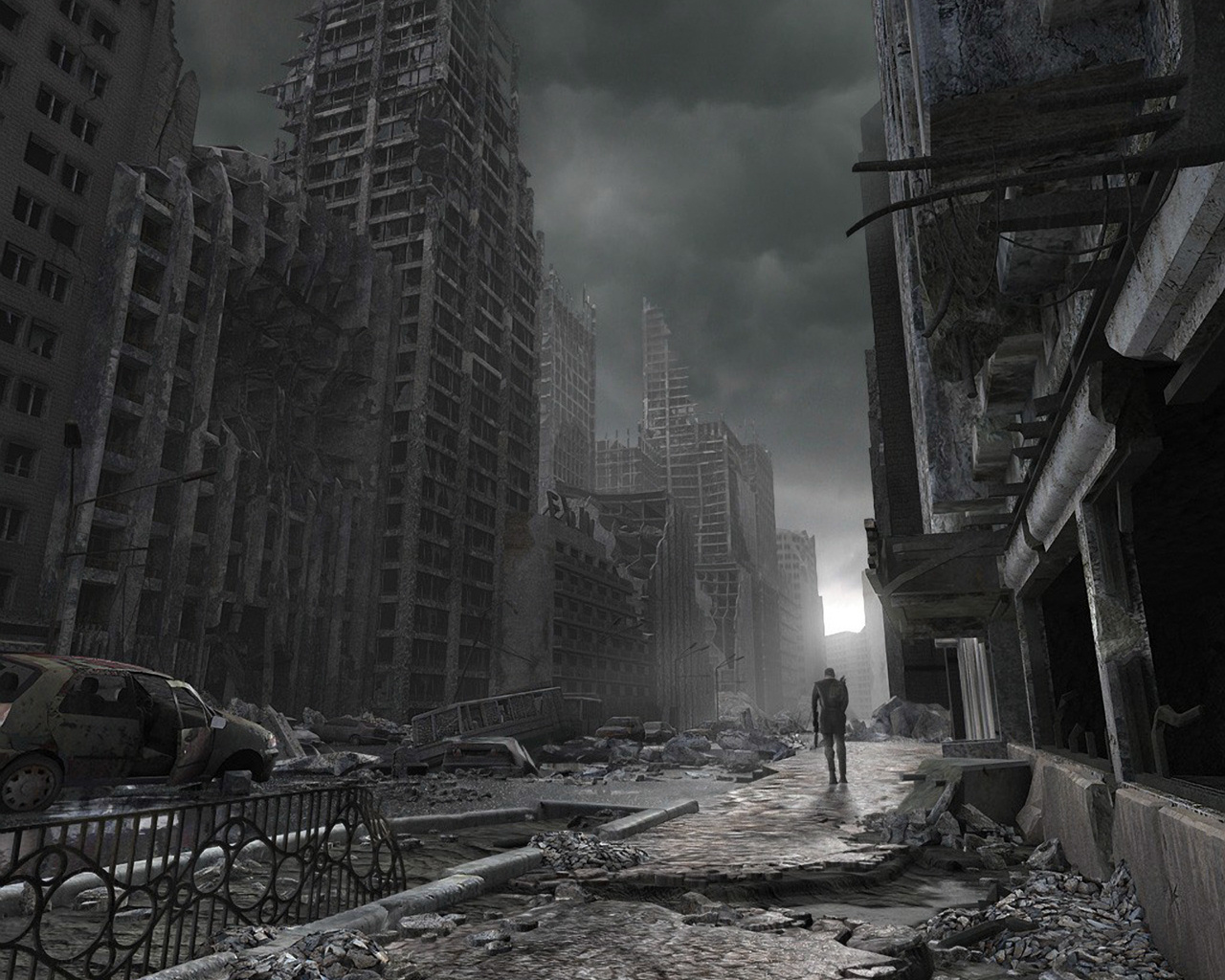 “What is left to tell after the end of the world, and who is there to tell it? In his Mercury Theater signoff on October 30, 1938, producer and star Orson Welles boasted that the evening’s “War of the Worlds” broadcast had “annihilated the world before your very ears and utterly destroyed the C.B.S.” While these scenes of otherworldly invasion from the program’s opening 40-minute act have been a source of much discussion, its 20-minute closing act is seldom addressed and stands in stark contrast to the fast action and stylistic innovation of Act I …”
[Reblogged from Antenna]
Click here to read VanCour’s exceptional essay on the second act of the “War of the Worlds,” and what made it – from a stylistic point of view – perhaps more controversial than the first.
This is the sixth entry in our ongoing series on Welles and radio. Want to catch up with the series? See below.
- Here is “Hello Americans,” Tom McEnaney‘s post on Welles and Latin America
- Here is Eleanor Patterson‘s post on editions of WOTW as “Residual Radio”
- Here is “Sound Bites,” Debra Rae Cohen‘s post on Welles’s “Dracula”
- Here is Cynthia B. Meyers on the pleasures and challenges of teaching WOTW in the classroom
- And … Here is Kathleen Battles on parodies of Welles by Fred Allen.
See you on the 30th! — nv
Share this:

From Mercury to Mars: Cynthia B. Meyers’s” Why Teach War of the Worlds?” from Antenna
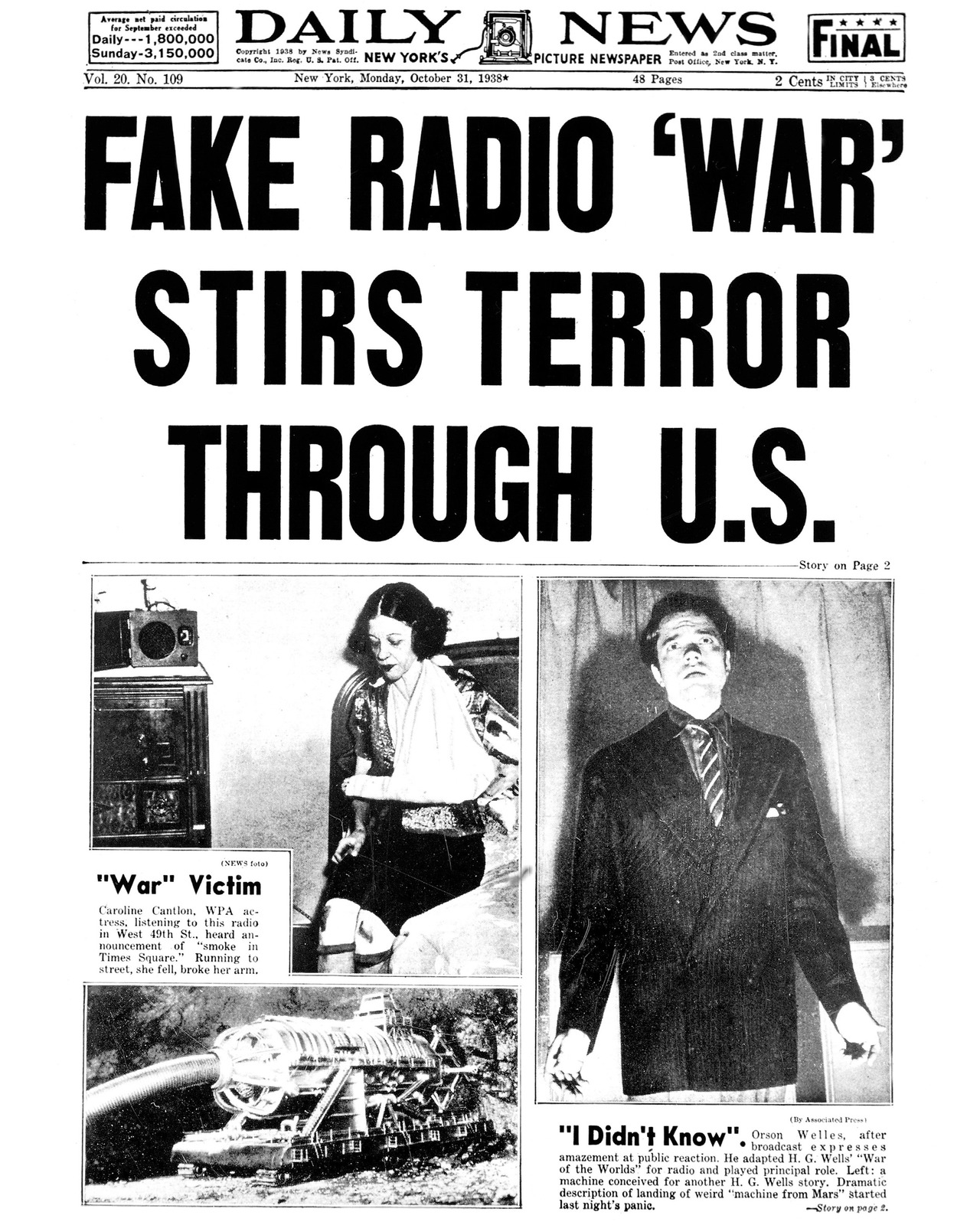 “I turn down the lights and encourage students to close their eyes or rest their heads on the desks. Then I play the first 20 minutes of The Mercury Theater on the Air 1938 broadcast of War of the Worlds. Sometimes I play it straight through; sometimes I pause it occasionally and ask students what’s happening …”
[Reblogged from Antenna]
Click here to read the rest of Cynthia B. Meyers’s thoughts on what it means to teach this radio play in the classroom today. And be sure to watch out for Meyers’s exciting new book, A Word from Our Sponsor: Admen, Advertising, and the Golden Age of Radio, which is sure to reshape how scholars think about advertising in commercial culture.
This post is the fourth in our ongoing series in partnership with Antenna, From Mercury to Mars: Orson Welles on Radio after 75 Years. Want to catch up on the series? Click here to read Tom McEnaney’s thoughts on the place of Latin America in Welles’s radio work. Click here to read Eleanor Patterson’s reflections on recorded re-releases of the “War of the Worlds” broadcast. And click here to read Debra Rae Cohen’s thoughts on vampire media in Orson Welles’s “Dracula.”
—
 Also, if you’re getting terribly drawn in by all this Welles material – and, really, who could blame you – why not join our WOTW anniversary Facebook group? You can learn more about a broadcast we are planning for next month to help celebrate and rethink the panic broadcast , as well as about a social media experiment we’re conducting around it. Help spread the invasion!
Share this:


Current Top Posts





April 2021

January 2020

November 2019

October 2019

August 2019

April 2014

November 2017

March 2015

December 2017

October 2015
 Sounding Out!
Recent Comments