
From the Archive #4: Under the Influence of Rhythm

DOI: https://doi.org/10.59350/v6z71-5fg54
In an article from the New York Times‘ 1956 coverage of the impact of Blackboard Jungle on British teenagers, who reportedly slashed seats, threw lightbulbs and lit cigarettes, set off fireworks, and otherwise danced uncontrollably along with Bill Haley’s “Rock Around the Clock” (the song which opened the film):
According to The Manchester Guardian, “‘One cannot help suspecting a certain amount of auto-intoxication, the dancers going to meet the rhythm halfway. It does not move them (or move them so powerfully) unless they go there with intent to be moved.’
If one was arrested for smashing windows or obstructing traffic, it would be no excuse to plead he was under the influence of rhythm.”
So, although Miami Sound Machine once famously warned us all that “the rhythm is gonna get you,” apparently, it will only get those of us who already want to get got. Something to remember when you are trying to explain yourself on a hungover Sunday morning.
JS
Share this:

From the Archive #3: Privacy, Technology, and National Security
DOI: https://doi.org/10.59350/h5pvk-25a02
“Among technology’s dubious gifts to the 20th century is an ever-growing array of devices for snooping: wiretapping refinements, tiny movie cameras, camera film that takes pictures in the dark, microphones so sensitive that they can pick up a whisper through a masonry wall, tape recorders so compact that they will fit into a coat pocket. Long before 1984, the state of affairs depicted by novelist George Orwell will be a technological possibility: ‘you had to live. . .in the assumption that every sound you made was overheard. . .every moment scrutinized.’
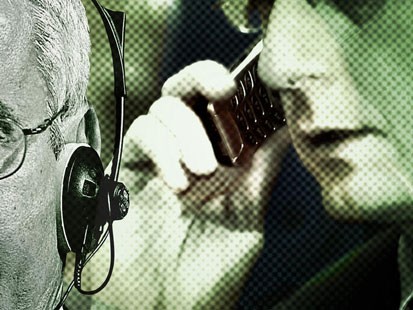
Sooner or later, free societies must deal with the danger that increasingly sensitive electronic eyes and ears may destroy personal freedom by annihilating privacy. This whole field of technological surveillance needs legislative attention. The Government cannot be given unlimited power to peep and to pry. ‘The greatest dangers to liberty,’ wrote Supreme Court Justice Louis Brandeis with reference to wiretapping, ‘lurk in insidious encroachment by men of zeal.’ But the government needs some power to balance the criminal’s new advantages to conspiracy against the national security.”
Time Magazine, “The Debate on Wiretapping,” January 4, 1954
Who would have thought a mainstream magazine article written during the height of the cold war would someday read like a liberal manifesto?
JS
Share this:




Current Top Posts





April 2021

January 2020

November 2019

October 2019

August 2019

April 2014

November 2017

March 2015

December 2017

October 2015


Recent Comments