
Sound at SEM 2013

November 14th through 17th mark the 58th anniversary of the Society of Ethnomusicology’s (SEM) annual meeting, this year at the Indianapolis Marriott Downtown in Indianapolis, Indiana. SEM has some pretty big Sound Studies shoes to fill at this summit. Previous events, like the 2012 AMS/SEM/SMT “Megaconference,” featured a pre-conference symposium on ecomusicology, while the 2011 SEM/CORD conference encouraged the use of sound as an “epistemological filter” and invited ruminations on embodied sound(s). After two epic years of sound at SEM this year’s program seems oddly muted. There are far less sound studies panels and events and no organized soundwalks as of yet (Although there is a paper on soundwalks! And stay tuned, as there’s been buzz on the Sound Studies SIG forum).
Some of the sound-specific themes that emerged in previous years will continue to be explored in Indianapolis. There will be a familiar panel on listening as configured both as an epistemology and a mode of musical participation as well as some panels (see “Raising Voices, Reclaiming Spaces” and “Nature, Ecotourism, and Soundscape”) which consider space and the environment through a sonic lens. In particular, sound in urban environments will receive some special attention in the Sound Studies Special Interest Group-sponsored panel “Auto Sound in the Urban Space: Taipei, São Paulo, Bangkok.” Finally, voice is theorized through a panel on voice and embodiment and the pre-conference symposium on Music and the Global Health.
Since the conference is smaller and there is no explicit theme (such as SEM 2010’s hyper-sonic “sound ecologies”) the discipline might seem to be only marginally engaged with Sound Studies scholarship this year. Perhaps Sound Studies scholarship has simply grown more integrated, or “more diffuse and multivalent,” as a fledgling field. As thinking through sound becomes more common in the methodological toolbox of the ethnomusicologist and as ethnomusicologists begin to acknowledge what sound studies can offer the discipline, sound studies no longer must exist in a vacuum. To this point, a soundscape composition by Shumaila Hemani will be played during the R.L. Stevenson Prize Concert on Friday. If that’s not enough, the newly-launched Sound Matters: the SEM blog reflects a movement to attenuate distinctions between sound and music. So while there may be fewer papers on sound, this is a good thing at the conference for music scholarship. After all, ethnomusicologists have been concerned with sound since Merriam’s tripartite sound-behavior-concept model and we aren’t stopping anytime soon.
—
Please comment to let SO! know what you think–both before and after SEM 2013. If we somehow missed you or your panel in this round up, please let us know!: soundingoutblog@gmail.com
—
Yun Emily Wang is a PhD student in Ethnomusicology at the University of Toronto, where her project explores how people living in diaspora make meaning through listening to sounds of music, speech, and everyday life.

Famous Indianapolis Nightspot, The Slippery Noodle Inn, Image by Sean Molin, 2009
Jump to THURSDAY, November 14
Jump to FRIDAY, November 15
Jump to SATURDAY, November 16
Jump to SUNDAY, November 17
Thursday, November 14
8:30-10:30
IC Music, Emotion and Trance, Indiana Ballroom A-B
Chair: Ruth Stone, Indiana University
“Axé, Vibration, and Religious Work: Conceptualizing Musical Contributions to Batuque and Umbanda Religions in Southern Brazil ,” Marc Gidal, Ramapo College of New Jersey
“Mhongo’s Moving Meanings: Semiotics, Spirituality, and the Emotional”
“Possibilities of Ndau Drumming of Zimbabwe,” Tony Perman, Grinnell College
“Tears, Anger, and Their Dangers: Investigating the Emotional Effects of Sung Poetry in the Gojjam Highlands of Ethiopia,” Katell Morand, University of Washington
“Crying Is Good for You”: Affective Heart Responses to Vocal Expressions of Sadness and Grief ,” Margarita Mazo, Ohio State University
.
1F Urban Sound Studies, Santa Fe
Chair: Ricardo Trimillos, University of Hawai‛i at Mānoa
“Singaporean Hinduism: Tamil Drumming, Ethics and Labor in the Air-Conditioned Nation,” Jim Sykes, University of Pennsylvania
“Sound Stories: SOUNDWALK and the Urban Fantasy,” Catherine Provenzano, New York University
“Resilient Sounds, Changing Atmospheres: A Sonic Exploration of the Urban Transformation of the Mouraria Quarter in Lisbon (Portugal),” Inigo Sanchez, Faculdade de Ciências Sociais e Humanas, Universidade Nova de Lisboa
“Nonstop to La Raza: Music and Mass Transit in Mexico City,” León. F. García Corona, University of California, Los Angeles
.
10:45-12:00
2J Listening, Marriott Ballroom 4
Chair: Jennifer Kyker, Eastman School of Music
“Using Big Data to Examine the Effect of Environment on Listening Habits,” Daniel Shanahan, Ohio State University
“The Promise of Listening: Sound Knowledge among Sufi Muslims in Secular France,” Deborah Kapchan, New York University
“Leisure and Listening in São Paulo’s Aural Public Sphere: The Case of the SESC-SP,” Daniel Gough, University of Chicago
.
12:30-1:30
Sound Studies SIG Indiana Ballroom C-D
,
1:45-3:45
Ecomusicology Listening Room: Ecocriticism, Popular Music, and the Audiovisual, 3F Santa Fe Roundtable
Director: Mark Pedelty, University of Minnesota
Chairs: Justin Burton, Rider University,
Michael Baumgartner, Cleveland State University*Sponsored by Popular Music Section
Laurie Allman, Bell Museum of Natural History of Minnesota
Amanda Belantara, independent artist
Krista Dragomer, independent artist
Craig Eley, Penn State University
Jared Fowler, Los Angeles Harbor College
Rebekah Farrugia, Oakland University
Kellie Hay, Oakland University
Ali Colleen Neff, University of North Carolina and The Baay Fall Order of Mouride Sufi Islam
Peter McMurray, Harvard University
Hannah Lewis, Harvard University
.
Experimentalism in Latin America, Indiana Ballroom – F [LIVE VIDEO STREAMING]
Chair: Alejandro Madrid, Cornell University
*Sponsored by Latin American and Caribbean Section
“From Sounds of the Cosmos to Neo-Indigenist Happenings: The Reinvention of Sonido 13, at the End of the 20th Century,” Alejandro Madrid, Cornell University
“Transgressing the Streets of Mexico City: The “Renovative Destruction” of Collective Improvisation,” Ana R Alonso-Minutti, University of New Mexico
“From Tango Nuevo to Avant-Garde: Disenchantment with the Fringes of Music Making,” Eduardo Herrera, Rutgers, The State University of New Jersey
Discussant: Benjamin Piekut, Cornell University
.
4:00 – 5:30
Technologies and Remixes, Indiana Ballroom – F [LIVE VIDEO STREAMING]
Chair: Rene Lysloff, University of California, Riverside
“Where Does this Cable Go?: Guitar Amplifiers, Instrumentality, and Sonic Ecology,” David VanderHamm, University of North Carolina, Chapel Hill
“A Tribe Called Red: Reversing Stereotypes Through Remix,” Christina Giacona, University of Oklahoma
“Remix<->Culture: A “Fair Trade” Approach to Remixing Field Recordings,” Daniel Sharp, Tulane University
.
8:00 – 9:30
Religion, Music, and Sound Section, Marriott Ballroom 4
.
Thursday Individual Papers of Interest
9:00 The Boundaries of Butoh: Sound, Music, and Nation, Kelly Foreman, Wayne State University, 1E Lincoln
11:45 “At Risk Music”: Embedded Nahua Cosmopolitanism, Mexicanness and Soundscapes at El Festival de la Huasteca, Kim Carter Muñoz, University of Washington, 2I
1:45 From Sounds of the Cosmos to Neo-Indigenist Happenings: The Reinvention of Sonido 13 at the End of the 20th Century, Alejandro Madrid, Cornell University, 3A Indiana Ballroom F

Cook Grand Hall; (formerly Central Avenue Methodist-Epsicopal Church) Indianopolis, Indiana Thomas Sanborn, 1892; Goulding & Wood, 2011
Friday, November 15
8:30-10:30
5G Ethical Listening and the Ethics of Listening: Musical Aesthetics, Style, and Public Piety in Contemporary Morocco, Mariott Ballroom 1
Chair: Christopher Witulski, University of Florida
“The Beautiful Voice Will Bring Them Home: Sufi Devotional Music and the Creation of Islamic Subjectivities,” Philip Murphy, Jr., University of California, Santa Barbara
“Jedba for the Nation: Embodied Listening and the Ethics of Politics in Moroccan Hip Hop,” Kendra Salois, University of Maryland
“Ritual and Entertainment: Permeable Ethics and Aesthetics at the Pilgrimage at Sidi Ali Morocco,” Christopher Witulski, University of Florida
Discussant: Philip Schuyler, University of Washington
.
10:45 am – 12:15 pm
SEM President’s Roundtable: “Phenomenological Approaches to Ethnomusicology and the Study of Expressive Culture“, Mariot Ballroom 5
Chair: Harris M. Berger, Texas A&M University [LIVE VIDEO STREAMING]
Deborah Justice, Yale University
Deborah Kapchan, New York University
Matt Rahaim, University of Minnesota
Timothy Rice, University of California, Los Angeles
Ruth Stone, Indiana University
Jeff Todd Titon, Brown University
Deborah Wong, University of California, Riverside
.
1:45-4:00
7C Raising Voices, Reclaiming Spaces: Antinuclear Soundscapes in Contemporary Japan and Korea, Indiana Ballroom G
Chair: Noriko Manabe, Princeton University
*Sponsored by Popular Music Section, Japanese Music Special Interest Group, and Society for Asian Music
“The Spaces We’ll Go: The Evolving Roles of Music in Antinuclear Demonstrations and Concerts in Post-Fukushima Japan,” Noriko Manabe, Princeton University
“Sounding Against Nuclear Power in Post-Tsunami Japan,” Marie Abe, Boston University
“Project Fukushima! Music, Sound, Noise, and the Public Perception of Nuclear Power in Post-3.11 Japan,” David Novak, University of California, Santa Barbara
“Songs of Complaint and Speeches of Protest in a Grassroots Movement of South Korean Radiation Sufferers,” Joshua Pilzer, University of Toronto
.
4:00-5:30
8D Sounding the Homeland, Indiana Ballroom C-D
Chair: R. Anderson Sutton, University of Hawai‛i at Mānoa
“The Sounds of a Dynamic Korea,” Katherine Lee, University of California, Davis
“‘This is the Music of Contemporary China’s Ethnic Unity’: Sounding Configurations of Difference in Postsocialist China,”Adam Kielman, Columbia University
“Sonic Expressions of Home and Returning in the Chinese Diaspora of Toronto,” Yun Emily Wang, University of Toronto
.
8F Auto Sound in the Urban Space: Taipei, São Paulo, Bangkok, 8F Sante Fe
Chair: Leonardo Cardoso, University of Texas at Austin *Sponsored by Sound Studies Special Interest Group
“Sound-politics in São Paulo, Brazil: Youth and “Pancadões,” Leonardo Cardoso, University of Texas at Austin
“Filtered Soundscapes: The Translation of Sound into Urban Noise in Taipei, Taiwan,” Jennifer Chia-Lynn Hsieh, Stanford University
“Audiophilia, Ideology, and the Automobile: Sound Installation Garages in Bangkok,” Benjamin Tausig, New York University
Discussant (and questions/comments), David Novak, University of California, Santa Barbara
.
9:00-11:00
Stevenson Prize Concert with SEM Orchestra
Indiana Ballroom E
Friday Individual Papers of Interest
9:30 “Build Your Own Plague: Biological Modeling, Sound Technologies, and Experimental Musical Instruments,” Lauren Flood, Columbia University
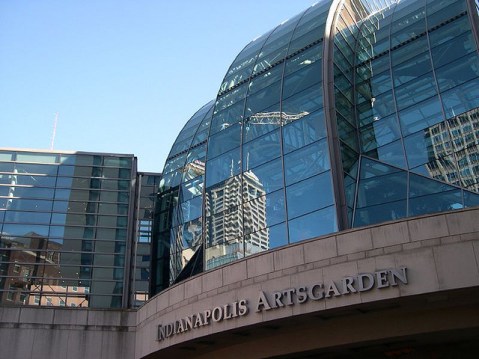
Image by Flickr User tstrayer76
Saturday November 16, 2013
10:45-12:15
10A Indigenous Movement, Sound Activism , Indiana Ballroom F [LIVE VIDEO STREAMING]
Chair: Dylan Robinson, Royal Holloway, University of London *Sponsored by Indigenous Music Special Interest Group
“The Sensory Politics of Hope and Shame: Being Idle No More,” Dylan Robinson, Royal Holloway, University of London
“The Round Dance as Spiritual and Political Vortex,” Elyse Carter Vosen, The College Of St Scholastica
“Ear Cleaning and Throat Clearing: Aurality and Indigenous Activism in Canada,” Lee Veeraraghavan, University of Pennsylvania
.
10C Nature, Ecotourism, and Soundscape
, Indiana Ballroom A-B
Chair: Jennifer Post, University of Western Australia
“Parks as Musical Playgrounds: Co-Performance, Ecotourism, and the Sonic Geographies of National Parks Arts Initiatives,” Kate Galloway, Memorial University
“Thoreau’s Ear,” Jeff Titon, Brown University
“Walking to Tsuglagkhang: Exploring the Function of a Tibetan Soundscape in Northern India,” Danielle Adomaitis, independent scholar

Indianapolis Children’s Choir, 2007, Image by the Indiana Public Media
Sunday, November 17
11F Inside Voice/Outside Voice: Disjunctures of Embodiment in Singing , Santa Fe
Chair: Katherine Meizel, Bowling Green State University *Sponsored by Voice Studies Special Interest Group
“Familiar Voices in Unexpected Bodies: New Dimensions of Celebrity Impersonation,” Katherine Meizel, Bowling Green State University
“‘I Shall Get Home Someday’: Black Countertenors, Bio- Musicality, and Gendered Gospel Performance,”Alisha Jones, University of Chicago
“You Need Equal Measures of Extreme Joy and ‘Don’t Fuck With Me’”: An Embodied Approach to the Ethnography of Singing,” Nadia Chana, University of Chicago
“Unspoken yet Heard: Navigating Outsider/Insider Voice Roles in the Study of Turkish Classical Genres,” Eve McPherson, Kent State University at Trumbull
.
11H For More than One Field: Ethnomusicology and Voice Studies , Marriott Ballroom 2
Chair: Gianpaolo Chiriaco, University of Salento *Sponsored by Voice Studies Special Interest Group
Gianpaolo Chiriaco, University of Salento
Amanda Weidman, Bryn Mawr College
Nina Eidsheim, University of California, Los Angeles
Susan Thomas, University of Georgia

Indianapolis’s own Kenneth “Babyface” Edmonds, Superproducer
—
Featured Image: “Statue outside 5/3 Bank in Indianapolis,” by Flickr User Kay Schlumpf
Share this:

Functional Sound (Studies): The First European Sound Studies Association Meeting

On October 4-6, 2013 ESSA – The European Sound Studies Association – will have its first conference in Berlin. This initiative is just the latest sign that an institutionalization is taking place within the inter-disciplinary field of sound studies. Erik Granly Jensen, who is one of the founding members and vice-chair of ESSA, tells the story here:
During the past decade, the field of sound studies – or auditory culture if you will –has been growing immensely. International conferences and seminars, numerous dissertations, monographs and research articles have shaped a vibrant, interdisciplinary area of study that of course has a much longer history within the more traditional disciplines of the humanities and social sciences, but which during the past 10-15 years has morphed into a discipline of its own. Just last year, two extensive collections of theoretical texts appeared with major publishing houses, The Oxford Handbook of Sound Studies (ed. Trevor Pinch & Karin Bijsterveld) on Oxford University Press and The Sound Studies Reader (ed. Jonathan Sterne) on Routledge. A second edition of the classic Auditory Culture Reader (ed. Michael Bull) is in the making and supposedly another Routledge anthology is being planned as well. Furthermore, in 2010 three European journals on sound cultures appeared within just a few months: the Holland-based Journal of Sonic Studies, the Ireland-based journal Interference and the Denmark-based SoundEffects; all three of them international online journals devoted to the analysis of sound cultures with an explicit ambition to integrate sound into academic analysis. To give an illustration of the interest that these journals are already enjoying is the fact that SoundEffects in 2012 alone had 15,000 individual article downloads.

With all these activities taking place, supplemented by the high number of research networks and transnational research projects throughout Europe, for instance “Sound in Media Culture” sponsored by the German Research Foundation or “The Nordic Research Network for Sound Studies” sponsored by the Nordic Research Foundation, Nordforsk, it seemed to be a question of time before the area of sound studies would take yet another disciplinary step and bring all the efforts together in an association. For even if the field of sound studies is alive and well, the advantage of creating a lasting academic platform where researchers, practitioners and artists can meet annually to exchange ideas and build new networks should not be underestimated. The existence of an association and an explicit reference to a global community for research and artistic practice into sound could be the decisive argument for both the introduction of university programs and job positions within sound studies. ESSA, The European Sound Studies Association that was founded last year could become such a forum.

As is so often the case, the idea for a sound studies association arose at an occasion that was scheduled for other purposes. In January of 2012, twelve members of the Nordic Research Network for Sound Studies were gathered in Copenhagen to plan the activities of the Nordic research network, www.sdu.dk/norsound. During discussions of a possible doctoral school that would include not just doctoral students from the Nordic countries, but be a traveling European doctoral school, the idea for both a European summer school and for a forum that could facilitate sound studies throughout the European continent was put on the table. Everybody present (including Anahid Kassabian, Michael Bull, Heikki Uimonen, and Marcel Cobussen to mention a few) agreed that this was both a great and a timely idea and the association ESSA, European Sound Studies Association, was born.
ESSA is a groundbreaking organization, bringing together the widest range of approaches to the study of sound. It’s exciting to be involved in its earliest stages and to participate in shaping this new community. I’m very much looking forward to its growth over the next few years and to ESSA becoming a productive environment for scholars working with many aspects of sound. –Anahid Kassabian, University of Liverpool
During the past year, an ESSA website was launched and discussions of a possible legal statute of the association have been circulating in the group parallel with the planning of the first ESSA conference. The reason for the working of the legal statute is, that ESSA in the future will be run by membership donations and through a democratically elected board of members.
In particular musicologist Morten Michelsen from the University of Copenhagen and Holger Schulze, professor of historical anthropology of Sound at the Academy of Arts in Berlin (two other members of the founding group) have been the driving forces of ESSA in this initial phase. At this point where everything is still waiting to happen, it is of course hard to predict what ESSA will be and what kind of an association it can be in the future. However, the ambition is to provide “a forum where those involved in the study of sound can meet and exchange ideas.” ESSA will also encourage “the development of research and systematic study in topics and in areas where such study in not well developed” as is stated on the website. In addition to these overall ambitions, the initial idea of a European doctoral summer school for sound studies still has a high priority as a future goal for ESSA.
With the founding of the European Sound Studies Association – the study of sound in all it’s inter-disciplinary richness and diversity now has an independent institutional voice for the first time. The range of sonic scholars that is converging on Berlin for ESSA’s first annual conference in October is evidence of both the need and the success of ESSA. The presence of ESSA will provide a platform, not just for European scholars, but for all those working on sound globally. –Michael Bull, University of Sussex
The theme for the upcoming conference in Berlin is “Functional Sound.” The conference will focus on existing as well as emergent and cutting-edge approaches to functional sound design, sonification, auditory culture, everyday soundscapes, artistic concepts and popular culture. In particular, the conference encourages presentations that include both theoretical and practical aspects and presentations that address everyday contexts within which sound—in its relation to media, technology, and the arts—is constitutive for new ways of thinking, listening, and becoming. The conference is a joint venture with the international research network “Sound in Media Culture” (led by Holger Schulze). During the three conference days, paper presentations in six parallel streams will cover topics such as “Soundscape of the Urban Future,” “Sound Design Practices,” “Sonic Artistic Practices and Research,” and “Cultural Politics & Sonic Experience.” [Editor: Click here for the full program, which includes several Sounding Out! editors and writers: Jennifer Stoever-Ackerman, Neil Verma, reina alejandra prado saldivar, Mack Hagood, and Regina Arnold. –JSA]

The confirmed keynote speakers are all leading scholars in the field and include Douglas Kahn, who is professor of Media and Innovation at the University of New South Wales in Sydney. Professor Kahn has been a driving force for the development of sound studies, primarily due to his influential 2001 book Noise, Water, Meat: A History of Sound in the Arts. Jason Stanyek, professor at the Faculty of Music at Oxford University, is also a keynote speaker. Professor Stanyek is a musicologist, who specializes in Brazilian hip-hop and Pan-African Jazz. Also he is the co-editor of The Oxford Handbook of Mobile Music Studies. The final keynote speaker is Thomas Macho, professor in cultural history at the Humboldt University in Berlin. Professor Macho has published on numerous subjects but of special interest for the sound studies field is his work concerned with the human voice and most recently his book on synchronization, Kulturtechniken der Synchronisation from 2011.
For those who cannot make it to Berlin this year, the place and dates for the 2014 ESSA conference have already been decided. It will take place in Denmark on June 27-29 2014 at the University of Southern Denmark in Odense. To be updated about ESSA and future events, please visit the website, http://www.soundstudies.eu, and sign up.
—
Featured Image Courtesy of Mediateletipos. In 2008, artist Akio Suzuki presented a sound installation around Berlin’s water tower focused on listening to everyday situations, directing listener’s attention through audial symbols painted on the ground.
—
Erik Granly Jensen is associate professor at the Department for the Study of Culture at the University of Southern Denmark. He is the research leader of The Nordic Research Network for Sound Studies, sponsored by Nordforsk 2011-2014. He is also the co-editor of the online journal SoundEffects and a founding member of ESSA, The European Sound Studies Association. His most recent research areas include historical sound archives and radio art. Contact: erikgranly@sdu.dk
—
 REWIND! . . .If you liked this post, you may also dig:
“Once the word ‘sound’ was in the title, it opened up a kind of door”: A Conversation with Eric Weisbard –-Liana Silva
Listening to the A. D. White House: Cornell’s Society for the Humanities’ Year in Review–Timothy Murray
Sound at ASA 2012–Jennifer Stoever-Ackerman
Share this:


Current Top Posts





April 2021

January 2020

November 2019

October 2019

August 2019

April 2014

November 2017

March 2015

December 2017

October 2015
 Sounding Out!
Recent Comments