
SO! Thursday Stream Year in Re-Hear
The offer was, I confess, music to my ears. It was the around this time last year that Editor-in-Chief Jennifer Stoever and the SO! collective generously offered me the chance to come on board to help them draw in sound-minded editors and authors from the American Studies Association and Society for Cinema & Media Studies, and other academic associations, opening up a new space two or three Thursdays each month. The truth is I never even considered turning them down. Working together, we recruited talented folks to work as Guest Editors, crafting a number of special series posts that dig deep into mediated sonic worlds of music, radio, film, art and science.
The result has been a group of articles that I couldn’t be prouder of for their richness. Among the most widely-read articles I’ve worked on this year you’ll find Mike D’Errico’s controversial piece on gender and brostep, but also Margaret Schedel’s groundbreaking article on sonifying nanoparticles. Go ahead, try to find another sound studies venue – online or anyplace – with range like that. No luck? As I suspected. Welcome back.
Not only has working on SO! been an honor, it has also opened up new horizons for me, forged odd alliances and prompted strange harmonies – hallmarks of what exciting sound studies ought to be about. I learned something and relearned more every week. In that spirit, this “Year Re-hear” post celebrates the Thursday stream by listening back –not once, but three times — to where we’ve been.
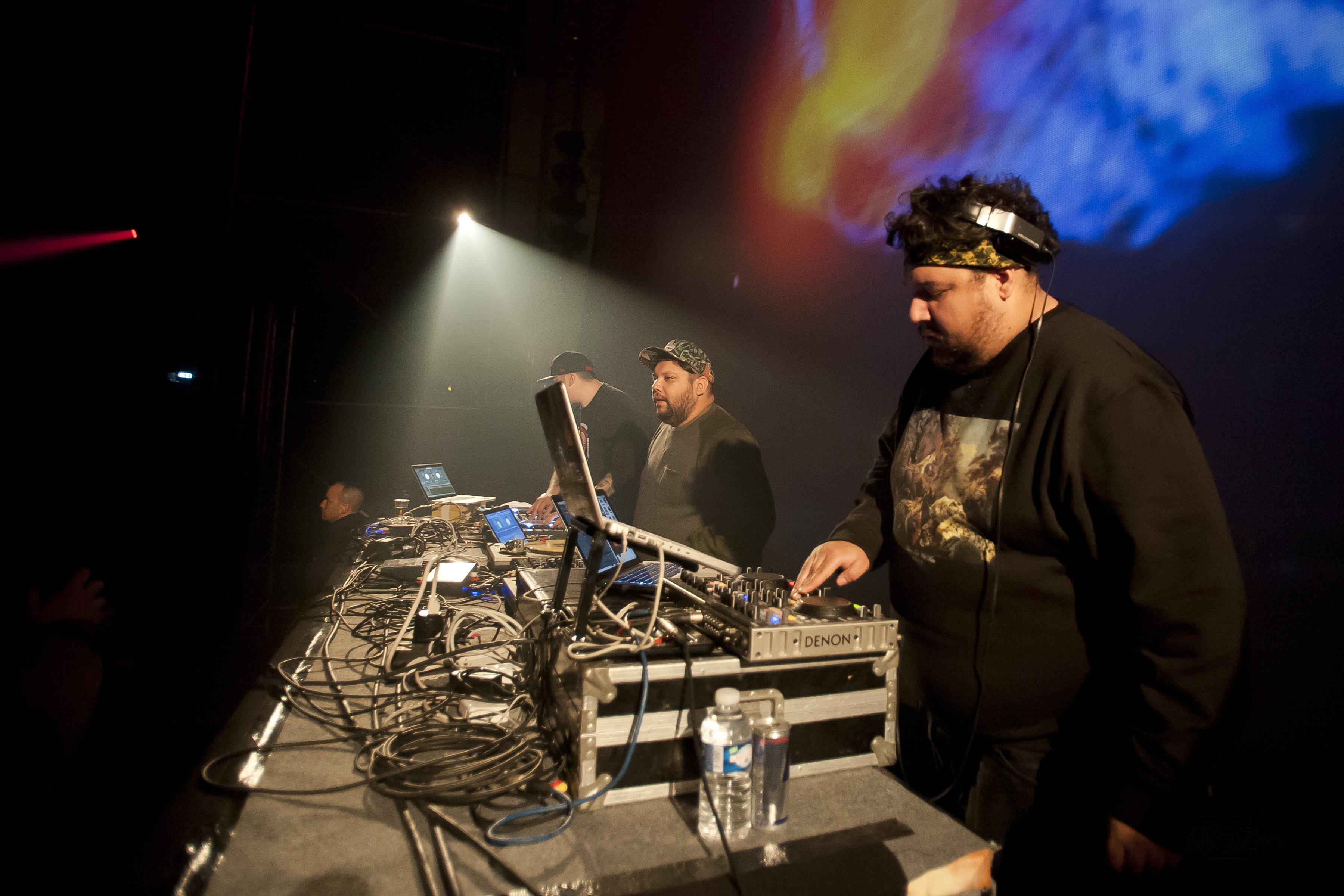
“A Tribe Called Red – Hall 4 (1)” by Flickr user Trans Musicales, CC BY-NC 2.0
—
First, the straight story.
Our year started with The Wobble Continuum, a series on race, gender and dubstep, edited by Justin D. Burton (Rider University) with posts by Mike D’Errico (UCLA), Christina Giacona (U of Oklahoma), and Burton. These articles brought new perspective on the “maximalist aesthetic” of electronic dance music and explored resistance to sonic racism, while examining sonic experience everywhere from a baseball stadium to a bus stop.
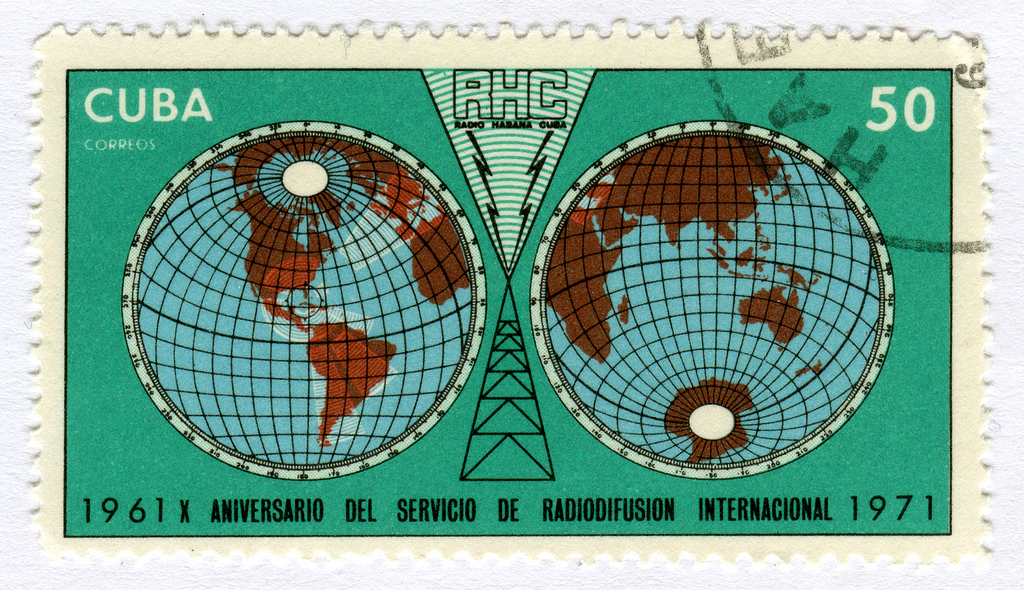
Then, beginning in February, we heard from Latin America through Radio de Acción a series on radio and the idea of region. Edited by Tom McEnaney (Cornell), with posts by Alejandra Bronfman (UBC), Karl Swinehart (Uchicago) and Carolina Guerrero (Radio Ambulante), RdA brought us fascinating stories of student activists taking over radio stations to oppose Fulgencio Batista in the 1950’s and of the founding of Radio Ambulante, at the forefront of Spanish-language creative narrative radio today.
When Spring came (remember Spring? sigh.) I edited Start a Band, reflecting on the legacy and music of the late Lou Reed, with posts by Jacob Smith (Northwestern) and Tim Anderson (Old Dominion). Tim and Jake offered penetrating accounts of how reissues of Velvet Underground records helped a generation learn to listen, and how their music quite literally gets under your skin, and sometimes even deeper.
Sculpting the Film Soundtrack, was our next series, an ambitious take on new directions in film sound design edited by Katherine Spring (Wilfrid Laurier), with posts by Randolph Jordan (Simon Fraser), Danijela Kulezic-Wilson (University College, Cork) and Benjamin Wright (University of Southern California). This series had extraordinary range, examining works by such figures as Hans Zimmer and Shane Carruth that break down old assumptions about soundtracks, while unsettling the act of listening itself.
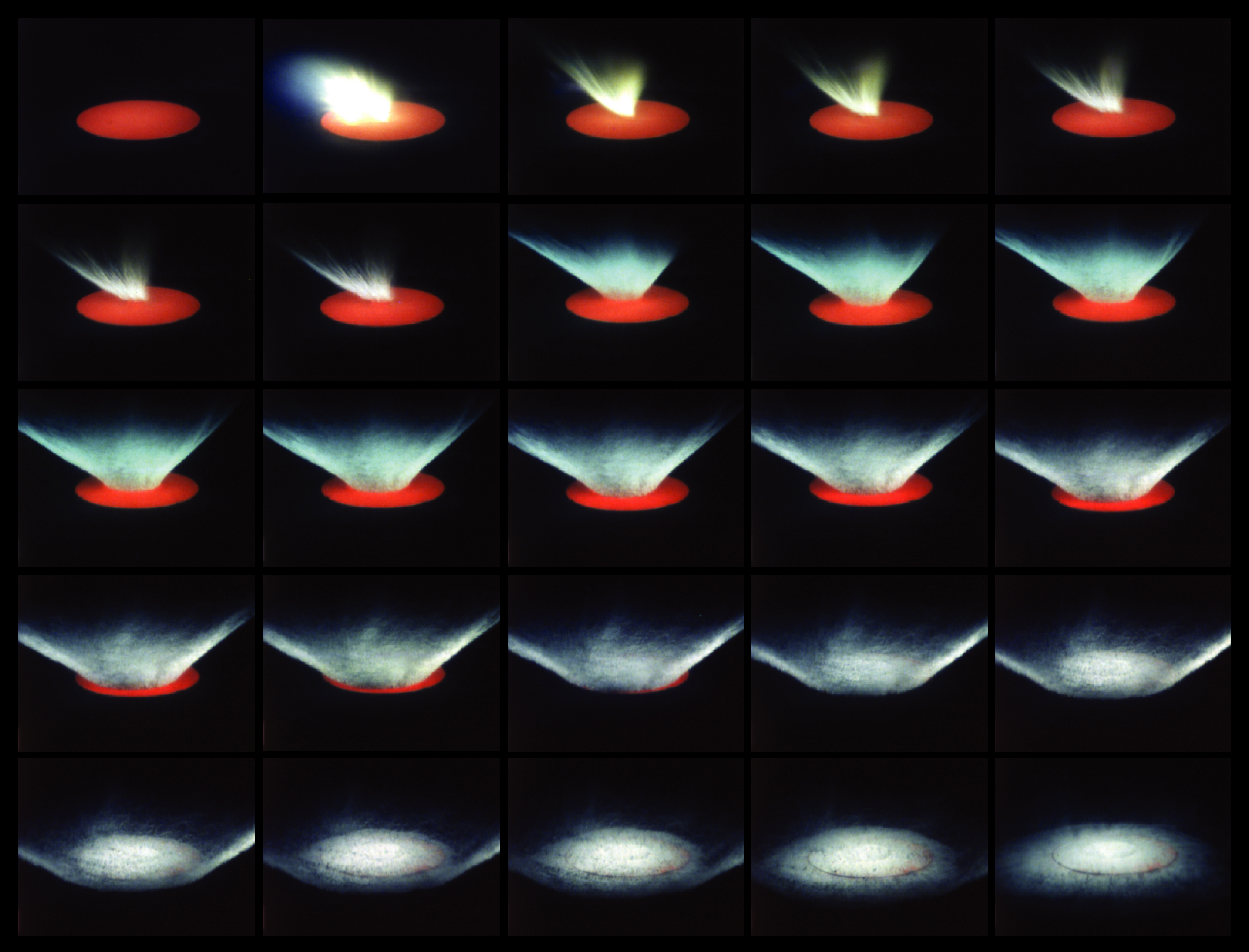
 From radio and film, we turned to art and science. First with Hearing the Unheard,
a series edited by Seth Horowitz (NeuroPop) with posts by the sound artist China Blue (The Engine Institute), Milton A. Garcés (University of Hawaii at Manoa) and Margaret A. Schedel (Stonybrook). This series took us inside the ears of dogs, out into the vacuum of space billions of years ago, and deep inside the sound of underground lava. Then came our current series, Radio Art Reflections, edited by Magz Hall, which promises to undertake a trans-national history of radio art — check out the first post by artist Anna Friz (Canada) on radio art and acoustic ecology.
Where will this stream go next? In part, that’s up to you. If you have a concept for a special series, and a sense of some exciting authors for it, have a look at our Call for Guest Editors, we’ll extend the deadline a few days.

—
Remix!
In reviewing these posts, I was struck by how they form their own connections in ways we didn’t plan and probably couldn’t foresee a year ago. The Thursday stream echoes back on itself. Here, for your consideration, are three alternative hypothetical groupings of the exact same posts you see above:
Sound and Indigenous Peoples Today: a series featuring an examination of the circulation of A Tribe Called Red’s song “Braves“, a study of indigenous peoples of Vancouver’s Eastside on film, and an introduction to Aymara-language radio in Bolivia, with Christina Giacona, Randolph Jordan and Karl Swinehart.
The Microsonic: a series on itty bitty sounds, and how to get at them. Posts explore the sonic fragments in Upstream Color, the sonification of data from x-ray scatter, and the tactile sounds of Lou Reed with Danijela Kulezic-Wilson, Margaret A. Schedel, and Jacob Smith.
Sonic Breakdown: a series on the sound of breaking down and how sounds break things down, from the big budget film soundtrack to volcanic rock formations, and national boundaries in Caribbean radio history, with posts by Benjamin Wright, Milton Garces and Alejandra Bronfman.
—
Finally, why not let the sounds from these posts tell the story for a change?
Tickle your ears with some of the sounds we’ve featured in this stream over the last year, a little sound sandbox:
- Guest editor Seth Horowitz’s office, as an elephant might hear it
- Tape of a student takeover of Radio Reloj in Cuba in 1957
- “Lady Godiva’s Operation” by The Velvet Underground
- A tremor at Arenal, a volcano in Costa Rica
- electrosmog, a work of radio art by Kristen Roos for Radius in Chicago
- The sound of cartoons playing on a TV in a methadone clinic in Vancouver
- A sonifications of a variety of mappings of x-ray scattered particles by Meg Schedel
.
.
.
—
Thanks to Jennifer, Aaron, Liana, Will and everyone here at SO! for putting your faith in me this year. And thanks especially to all our writers and editors for being so enthusiastic, brilliant and patient.
The SO! family salutes you!
—
Featured Photo by Flickr user Jenene Chesbrough, Creative Commons License.
Share this:

Top 40 Democracy: Taylor Swift’s Election Day Victory
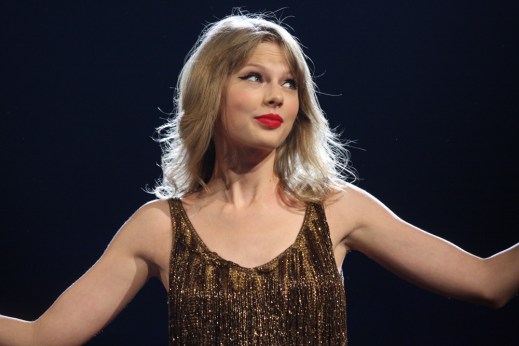
As we read of the decisive Republican victories in the 2014 midterm elections we also hear that Taylor Swift has sold 1.29 million copies of her 1989 album in just a week. Does Swift’s landslide triumph, the biggest selling album of her career in a year when no other artist has sold a million copies at all, have any political implications? Or is popular culture, even at its most wide reaching, cut off now from any such significance? At least, there would be some political meaning in that.
Swift, arguably the most image-savvy popular musician since Madonna and Dolly Parton, won’t be of any direct use to us in figuring out the answer to the questions her success raises. But indirectly, she’s telling us a lot. “New money, suit and tie, I can read you like a magazine,” she sings about a potential conquest in one of her great new songs, “Blank Space.”
That’s her forte: decoding cultural (and commercial) categories and skipping between them. Parton, her predecessor in crossing from country to adult pop back in the 1970s, brought the power ballad to Nashville with “I Will Always Love You” and stressed the commonality, regardless of politics, of working women with “9 to 5.” Madonna’s deft self-framing created an insurgent position on the singles charts for women that hadn’t been there before. Swift seeks the modern feel of Top 40, the big, casual audience of adult pop, the intense allegiances of country fans—and by all indications she’s built that coalition.
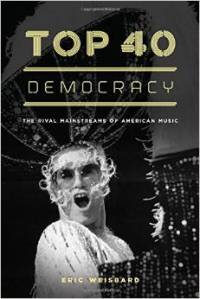 If we can learn to think about how music reaches people as subtly as Swift does, we’ll have a better chance of seeing its political role in our lives. Increasingly since the late 1960s, the most popular songs have reached listeners through music formats. By that I mean, and have written a book about, the radio-defined multiplication of the mainstream into separate channels. Some, like Top 40 and adult contemporary, are spaces of crossover. Others, like country, rock, and R&B, are defined a bit disingenuously as genre spaces. But all care less to cohere musically than demographically—to secure listeners of a certain age, gender, race, or income for advertisers. That may appear crass, but the diversifying effect is that groups of people who lack a dominant political voice (minorities, women, lower income people) become the majority target audience—music must find a style, and message, which speaks to them first. I chose to call my book Top 40 Democracy in recognition of the way that formatting blurs politics and culture in the service of delivering hit singles, just as politicians since Reagan have learned to blur the two to promote policy changes. Radio programmers are sound studies experts: everything about what listeners are to hear has to be understood, implicitly, before they tune in—DJ and promotions tone of voice, acceptable singing styles, production glosses, song length, beats, and much more. The result is an intensified normality, a mainstreaming that works to make whoever is being addressed feel utterly central.
There are real limitations to Top 40 democracy, though, especially if you make a contrast with the other radio-impelled format that has impacted politics: the rightwing populism of talk radio. Hit songs, which seek the widest possible listenership, blur their meaning by definition: everybody can sing “Shake It Off” in response to an adversity. Such numbers are unlikely to provide a conduit for anger against the economic inequities produced by globalization, since their format position as global hits, winners in the big flow, is sealed in sonically. They’re one part rarefied human (diva), one part hipster subculture (really club culture, chopped syncopations), one part the subsuming of both in a New Economy entrepreneurial merger ratified by synthetic, rhetorically multicontinental production glosses – the specialty of the man Swift worked on with “Shake It Off,” Max Martin, for example, responsible for 18 number one songs since his emergence with Britney Spears in the late 1990s.
But if that’s globalization as apolitical free trade zone, you might consider the flip side to that cushioning of identity: Top 40 hits, if unlikely to produce anger against capitalism, are equally unlikely to provide a conduit for anger against immigrants: from Black Eyed Peas to Bruno Mars and Rihanna (and now, in a way, with Swift’s format immigration), pop has long been home for performers with complicated origins. When I wrote a chapter on Elton John, whose links to the British Invasion gave him thirty straight years of Top 40 hits from 1970-1999, I became fascinated by how a British Invasion became globalization, by how closeted sexuality overlapped with other forms of airbrushed identity.
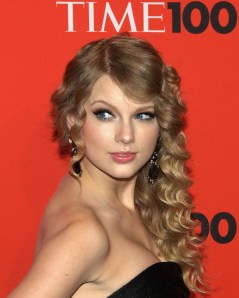
The genius, and curse, of the commercial-cultural system that produced Taylor Swift’s Top 40 democracy win in the week of the 2014 elections, is that its disposition is inherently centrist. Our dominant music formats, rival mainstreams engaged in friendly combat rather than culture war, locked into place by the early 1970s. That it happened right then was a response to, and recuperation from, the splintering effects of the 1960s. But also, a moment of maximum wealth equality in the U.S. was perfect to persuade sponsors that differing Americans all deserved cultural representation.
Since that time, as corporate creativity has favored elites, the groups of people courted by formats have been pushed to put hope in exceptional individuals rather than breakout scenes: another of Taylor Swift’s iconic antecedents is Michael Jackson, the most popular and least representative star of all. It may be that we responded so ecstatically to Beyonce’s last album because in creating a set of songs and videos around her marriage and family she was giving us a symbolic collective, however circumscribed. Pop music democracy too often gives us the formatted figures of diverse individuals triumphing, rather than collective empowerment. It’s impressive what Swift has accomplished; we once felt that about President Obama, too. But she’s rather alone at the top.
—
Featured Image by Flickr User Eva Rinaldi
—
Eric Weisbard is the author of Top 40 Democracy: The Rival Mainstreams of American Music (University of Chicago Press), organizes the EMP Pop Conference, and is an Assistant Professor of American Studies at the University of Alabama.
—
 REWIND!…If you liked this post, check out:
Karaoke and Ventriloquism: Echoes and Divergences–Karen Tongson and Sarah Kessler
Sound + Vision: Andy’s Mick – Eric Lott
“New Wave Saved My Life*”-Wanda Alarcon
Share this:


Current Top Posts





April 2021

January 2020

November 2019

October 2019

August 2019

April 2014

November 2017

March 2015

December 2017

October 2015
 Sounding Out!
Recent Comments