
Misophonia: Towards a Taxonomy of Annoyance

 This is the second post in Sounding Out!’s 4th annual July forum on listening in observation of World Listening Day on July 18th, 2015. World Listening Day is a time to think about the impacts we have on our auditory environments and, in turn, their effects on us. For Sounding Out! World Listening Day necessitates discussions of the politics of listening and listening, and, as Carlo Patrão shares today, an examination of sounds that disturb, annoy, and threaten our mental health and well being. –Editor-in-Chief JS
An important factor in coming to dislike certain sounds is the extent to which they are considered meaningful. The noise of the roaring sea, for example, is not far from white radio noise (…) We still seek meaning in nature and therefore the roaring of the sea is a blissful sound. Torben Sangild, The Aesthetics of Noise
When hearing bodily sounds, we often react with discomfort, irritation, or even shame. The sounds of the body remind us of its fallible and vulnerable nature, calling to mind French surgeon René Leriche’s statement that “health is life lived in the silence of the organs” (1936). The mind rests when the inner works of the body are forgotten. Socially, sounds coming from the organic functions of the body such as chewing, lip smacking, breathing, sniffling, coughing, sneezing or slurping are considered annoying and perceived as intrusions. A recent study by Trevor Cox suggests that our reactions of disgust towards sounds of bodily excretions and secretions may be socially-learned and vary according to whether it is considered acceptable or unacceptable to make such sounds in public.

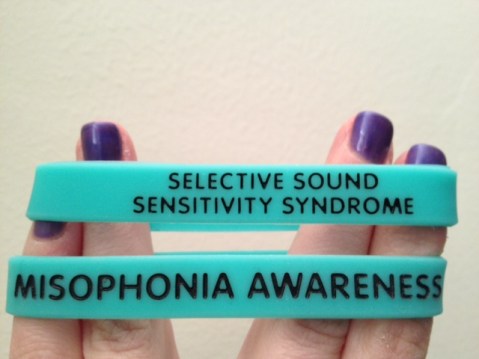
However, for people suffering from a condition called Misophonia, these bodily sounds aren’t simply annoying, rather they become sudden triggers of aggressive impulses and involuntary fight or flight responses. Misophonia, meaning hatred of sound, is a chronic condition characterized by highly negative emotional responses to auditory triggers, which include repetitive and social sounds produced by another person, like hearing someone eating an apple, crunching chips, slurping on a soup spoon or even breathing.
The consequences of Misophonia can be very troublesome, leading to social isolation or the continuous avoidance of certain places and situations such as family dinners, the workplace and recreational activities like going to the cinema. While rate of occurrence of new cases of Misophonia in the population is still under investigation, the fast growing number of online communities gathered around the dislike of certain sounds may indicate that this condition is more common than previously thought.
But why do people with Misophonia feel such strong reactions to trigger sounds? This fundamental question remains up for debate. Some audiologists suggest these heightened emotional responses can be explained by hyperconnectivity between the auditory, limbic and autonomic nervous systems. However, we continue to lack a comprehensive theoretical model to understand Misophonia, as well as an effective treatment to help sufferers of Misophonia cope with intrusive sound triggers.
The Art of Annoyance: is it possible to reframe misophonic trigger sounds as misophonic music?
Between 1966 and 1967, John Cage and Morton Feldman recorded four open-ended radio conversations, called Radio Happenings (WBAI, NYC). Among many topics, Feldman and Cage address the problem of being constantly intruded upon by unpleasant sounds. Feldman narrates his annoyance with the sounds blasted from several radios on a trip to the beach. Cage’s commentary on the growing annoyance of his friend reveals a shift of perception in dealing with unwanted sounds:
Well, you know how I adjusted to that problem of the radio in the environment (…) I simply made a piece using radios. Now, whenever I hear radios – even a single one, not just twelve at a time, as you must have heard on the beach, at least – I think, “Well, they’re just playing my piece.-– John Cage, Radio Happenings.
Cage proposes a remedy via appropriation of environmental intrusions. The negative emotional charge associated with them is neutralized. Sound intrusions no longer exist as absolute external entities trying to intrude their way in. They become part of the self. Ultimately, there are no sonic intrusions, as the entire field of sound is desirable for composition.
Cage’s immersive compositional anticipated an important strategy to build resilience towards aversive sound: exposure-based cognitive-behavioral therapy, which proposes a gradual immersion in trigger sounds. And I suggest we can mine the history of avant-garde practice to productively further the idea of immersion; in the realms of sound poetry, utterance based music, Fluxus events and many other sound art practices, bodily sounds have consistently been exalted as source of composition and performance. Much like Cage did with what he perceived as intrusive radio sounds, by performing chewing, coughs, slurps and hiccups, assembling snores and nose whistles, and singing the poetics of throat clearing, we may be able to elevate our body awareness and challenge the way we perceive unwanted sounds. In what follows, I sample these works with an ear toward misophonia, discussing their interventions in the often jarring world of everyday irritation.
Oral Oddities
As pointed out by Nancy Perloff, while the avant-garde progressively expanded to incorporate the entire scope of sound into composition, sound poetry followed a similar course by playing with the non-semantic proprieties of language and exploring new vocal techniques. The Russian avant-garde (zaum), the Italian futurists (parole in libertà) and the German Dada (Hugo Ball’s verse ohne Worte) built the foundations of a new oral hyper-expression of the body through moans, clicks, hisses, hums, whooshes, whizzes, spits, and breaths.
Henri Chopin, Les Pirouettes Vocales Pour Les Pirouettements Vocaux
Sound poets like Henri Chopin created uncanny sonic textures by only using ‘vocal micro-particles’, revealing a sounding body that can be violent and intrusive. François Dufrêne and Gil J Wolman brought forward more raw and glottal performances.
Bridging the gap between the Schwitter’s Dada-constructivism and a contemporary approach to sound poetry, Jaap Blonk’s inventive vocal performances cover a wide range of mouth sounds. In the same vein, Paul Dutton explores the limits of his voice, glottis, tongue, lips and nose as the medium for compositions — as can be heard on the record Mouth Pieces: Solo Soundsinging.
Paul Dutton, Lips Is, Mouth Pieces: Solo Soundsinging
Fluxus: Eat, Chew, Burp, Cough, Perform!
The Event is a metarealistic trigger: it makes the viewer’s or user’s experience special. (…) Rather than convey their own emotional world abstractly, Fluxus artists directed their audiences’ attention to concrete everyday stuff addressing aesthetic metareality in the broadest sense. Hannah Higgins, Fluxus Experience
The emergence of Fluxus is strongly linked to Cage’s 1957-59 class at New School for Social Research in NYC. George Bretch’s Event Score was one of the best known innovations to emerge from these classes. The Event Score was a performance technique drawn from short instructions that framed everyday life actions as minimal performances. Daily acts like chewing, coughing, licking, eating or preparing food were considered by themselves ready-made works of art. Many Fluxus artists such as Shigeko Kubota, Yoko Ono, Mieko Shiomi, and Alison Knowles saw these activities as forms of social music.
For instance, Alison Knowles produced several famous Fluxus food events such as Make a Salad (1962), Make a Soup (1962), and The Identical Lunch (1967-73).
Also, Mieko Shiomi‘s Shadow Piece No. 3 calls attention to the sound of amplified mastication, while Philip Corner’s piece Carrot Chew Performance is solely centered in the activity of chewing a carrot.
Philip Corner, Carrot Chew Performance, Tellus #24
In Nivea Cream Piece (1962), Alison Knowles invites the performers to rub their hands with cream in front of a microphone, producing a deluge of squeezing sounds:
Alison Knowles – Nivea Cream Piece (1962) – for Oscar (Emmett) Williams
Coughing is a form of love.
 In 1961, the Fluxus artist Yoko Ono composed a 32 minute, 31 second audio recording called Cough Piece, a precursor to her instruction Keep coughing a year (Grapefruit). In this recording, the sound of Ono’s cough emerges periodically from the indistinct background noise. The Cough Piece plays with the concept of time, prolonging the duration of an activity beyond what is considered socially acceptable. While listening to this piece, Yoko Ono brings us close to her body’s automatic reflexes, pulling back the veil of an indistinct inner turmoil. Coughing can be a bodily response to an irritating tickling feeling, troubled breathing, a sore throat or a reaction to foreign particles or microbes. In response, coughing is a way of clearing, a freeing re-flux of air, a way out. Coughing is a form of love.
Yoko Ono – Cough Piece

Sonic Skin
In the work The Ego and the Id (1923), Sigmund Freud stated that the ego is ultimately derived from bodily sensations. The psychoanalyst Didier Anzieu expanded this idea by suggesting that early experiences of sound are crucial to consolidate the infant’s ego. The bath of sounds surrounding the child created by the parent’s voices and their soothing sounds provides a sonorous envelope or an audio-phonic skin that protects the child against ego-assailing noises and helps the creation of the first boundaries between the inside and the external world. The lack of a satisfactory sound envelope may compromise the development of a proper sense of self, leaving it vulnerable to invasions from outside.
It’s no surprise that conditions like Misophonia exist and are very common among us, considering how important our early exposure to sound is in building our sense of self and our sensory limits. For Misophonics, the everyday sounds we make without even thinking about them can be the source of a fractured and disruptive experience that we should not dismiss as the overreactions of a sensitive person. During the month we observe World Listening Day, our discourse usually praises the pleasures of listening and tends to focus on the sounds that soothe rather than annoy. However, conditions like Misophonia show us that there is much more that needs to be said on the subject of unpleasant sound experience. I can’t help but notice a disconnect between the vast exploration of annoying and irritating sounds in the avant-garde and the critical discourse in our sound communities that is dominated by the pleasures of listening. Cage’s call to embrace intrusive sounds urges us to consider all sounds regardless of where they fall on the spectrum of our emotions. For all of us who would consider ourselves philophonics, let’s create a critical discourse that addresses the struggles of listening as much as its pleasures.
—
Thanks to Jennifer Stoever for the thoughtful suggestions.
—
 REWIND! . . .If you liked this post, you may also dig:
Share this:

Pleasure Beats: Using Sound for Experience Enhancement
 After a rockin’ (and seriously informative) series of podcasts from Leonard J. Paul, a Drrty South banger dropped by SO! Regular Regina Bradley, a screamtastic meditation from Yvon Bonenfant, a heaping plate of food sounds from Steph Ceraso, and crowd chants courtesy of Kariann Goldschmidt‘s work on live events in Brazil, our summer Sound and Pleasure comes to a stirring (and more intimate) conclusion. Tune into Justyna Stasiowska‘s frequency below. And thanks for engaging the pleasure principle this summer!--JS, Editor-in-Chief
—
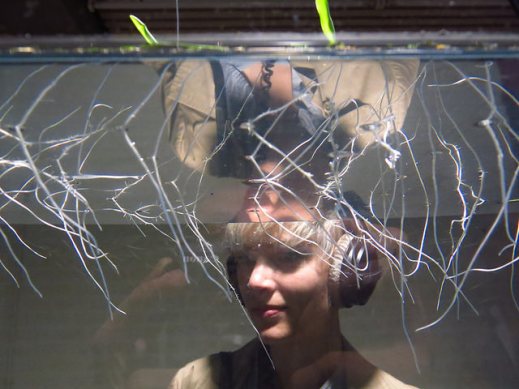
One of my greatest pleasures is lying in bed, eyes closed and headphones on. I attune to a single stimuli while being enveloped in sound. Using sensory deprivation techniques like blindfolding and isolating headphones is a simple recipe for relaxation, but the website Digital Drugs offers you more. A user can play their mp3 files and surround themselves with an acoustical downpour that increases and then develops into gradient waves. The user feels as if in a hailstorm, surrounded by this constant gritty aural movement. Transfixed by the feeling of noise, the outside seems indistinguishable from inside.

Screenshot courtesy of the author
Sold by the i-Doser company, Digital Drugs use mp3 files to deliver binaural beats in order to “simulate a desired experience.” The user manual advises lying in a dark and silent room with headphones on when listening to the recording. Simply purchase the mp3, and fill the prescription by listening. Depending on user needs, the experience can be preprogrammed with a specific scenario. This way users can condition themselves using Digital Drugs in order to feel a certain way. The user can control the experience by choosing the “student” or “confidence” dose suggestive of whether you’d like your high like a mild dose of marijuana or an intense dose of cocaine. The receiver is able to perceive every reaction of their body as a drug experience, which they themselves produced. The “dosing” of these aural drugs is restricted by a medical warning and “dose advisors” are available for consultation.

Screenshot courtesy of the author
Thus, the overall presentation of Digital Drugs resembles a crisscross of medicine and narcotic clichés with the slogan “Binaural Brainwave doses for every imaginable mood.” While researching the phenomena of Digital Drugs, I have tried not to dismiss them as another gimmick or a new age meditation prop. Rather, I argue the I-Doser company offers a simulation of a drug experience by using the discourse of psychoactive substances to describe sounds: the user becomes an actor taking part in a performance.
By tracing these strategies on a macro and micro scale I show a body emerging from a new paradigm of health. I argue that we have become a psychosomatic creature called the inFORMational body: a body that is formed by information, which shapes practices of health undertaken to feel good and form us. This body is networked, much like a fractal, and connects different agencies operating both in macro (society) and micro (individual) scales.
Macroscale Epidemy: The Power of Drug Representation
Heinrich Wilhelm Dove described binaural beats in 1839 as a specific brain stimuli resulting in low-frequency pulsations perceivable when two tones at slightly different frequencies are presented separately through stereo headphones to each of the subject’s ears. The difference between tones must be relatively small, only up to 30 Hz, and the tones themselves must not exceed 1000 Hz. Subsequently, scientific authorities presented the phenomena as a tool in stimulating the brain in neurological affliction therapy. Gerard Oster described the applications in 1968 and the Monroe Institute later continued this research in order to use binaural beats in meditation and “expanding consciousness” as a crucial part of self-improvement programs.
I-Doser then molded this foundational research into a narrative presenting binaural beats as a brain stimulation for a desired experience. The binaural beats can be simply understood as an acoustic phenomena with application in practices like meditation or medical therapy.
I-Doser also employs the unverified claims about binaural beats into a narration that consists of the scattered information about research; it connects these authorities with YouTube recordings of human reactions to Digital Drugs. Video testimonies of Digital Drugs users caused a considerable stir among both parents and teachers in American schools two years ago. An American school even banned mp3 players as a precautionary measure. In the You Tube video one can see a person lying with headphones on. After a while we see an involuntary body movement that in some videos might resemble a seizure. Losing control over one’s body becomes the highlight of the footage alongside a subjective account also present in the video. The body movements are framed as a drug experience both for the viewer who is a vicarious witness and the participant who has an active experience.
This type of footage as evidence was popularized as early as the 1960s when military footage showed reactions to psychoactive substances such as LSD.
In the same manner as the Digital Drugs video, the army footage highlights the process of losing control over one’s body, complete with subjective testimonies as evidence of the psychoactive substance’s power.
This kind of visualization is usually fueled by paranoia, akin to Cold War fears, depicting daily attacks by an invisible enemy upon unaware subjects. The information of the authority agencies about binaural beats created a reference base that fueled the concern framing the You Tube videos as evidence of drug experience. It shows that the angst isn’t triggered by technology, in this case Digital Drugs, but by the form in which the “invisible attack” is presented: through sound waves. The manner of framing is more important than the hypothetical action itself. Context then changes recognition.
Microscale Paradigm Shift: Health as Feeling
On an individual level, did feeling better always mean being healthy? In Histoire des pratiques de santé. Le sain et le malsain depuis le MoyenAge, Georges Vigarello, continuator of the Foucault School of Biopolitics, explains that well-being became a medicalized condition in the 20th century with growing attention to mental health. Being healthy was no longer only about the good condition of the body but became a state of mind; feeling was important as an overall recognition of oneself. In the biopolitical perspective, Vigarello points out, health became more than just the government’s concern for individual well-being but was maintained by medical techniques and technologies.
In the case of Digital Drugs the well-being of children was safely governed by parents and media coverage creating prevention in schools from the “sound drugs.” Similarly, the UAE called for a ban on “hypnotic music” citing it as an illegal drug like cannabis or ecstasy. Using this perspective, I would add that feeling better, then, becomes a never-ending warfare; well-being becomes understood as a state (as in condition and as in governed territory).
Well-being is also an obligation to society, carried out by specific practices. What does a healthy lifestyle actually mean? Its meaning includes self-governance: controlling yourself, keeping fit, discipline (embodying the rules). In order to do it you need guidance: the need for authorities (health experts and trainers) and common knowledge (the “google it” modus operandi). All of these agencies create a strategy to make you feel good every day and have a high performance rate. Digital Drugs, then, become products that promise to boost up your energy, make you more endurable, and extend your mind capabilities. High performance is redefined as a state that enables instant access to happiness, pleasure, relaxation.

“Submerged” by Flickr user Rene Passet, CC BY-NC-ND 2.0
inFORMational Body
Vigarello reflects that understanding health in terms of low/high performance—itself based on the logic of consumption—created the concept of a limitless enhancement. Here, he refers to the information model, connecting past assumptions about health with a technique of self-governing. It is based on senses and an awareness of oneself using “intellectual” practices like relaxation and “probing oneself” (or knowing what vitamins you should take). The medical apparatus’s priority, moreover, shifted from keeping someone in good health to maintaining well-being. The subjective account became the crucial element of a diagnosis, supporting itself on information from different sources in order to imply the feeling of a limitless “better.” This strategy relies strongly on the use of technologies, the consideration of a sensual aspect and self-recognition—precisely the methodology used for Digital Drugs’ focus on enhancing wellbeing.
Still, this inFORMational body needs a regulatory system. How do we know that we really feel better? Apart from the media well-being campaign (and the amount of surveillance it involves), we are constantly asked about our health status in the common greeting phrase, but its unheimlich-ness only becomes apparent for non-anglo-saxon speakers. These checkpoint techniques become an everyday instrument of discipline and rely on an obligation to express oneself in social interactions.
So how do we feel? As for now, everything seems “OK.”
—
Featured image: “Biophonic Garden” by Flickr user Rene Passet, CC BY-NC-ND 2.0
—
Justyna Stasiowska is a PhD student in the Performance Studies Department at Jagiellonian University. She is preparing a dissertation under the working title: “Noise. Performativity of Sound Perception” in which she argue that frequencies don’t have a strictly programmed effect on the receiver and the way of experiencing sounds is determined by the frames or modes of perception, established by the situation and cognitive context. Justyna earned her M.A in Drama and Theater Studies. Her thesis was devoted to the notion of liveness in the context of the strategies used by contemporary playwrights to manipulate the recipients’ cognitive apparatus using the DJ figure. You can find her on Twitter and academia.edu.
—
 REWIND!…If you liked this post, check out:
Papa Sangre and the Construction of Immersion in Audio Games–Enongo Lumumba-Kasongo
On Sound and Pleasure: Meditations on the Human Voice—Yvon Bonenfant
This is Your Body on the Velvet Underground–Jacob Smith
Share this:


Current Top Posts





April 2021

January 2020

November 2019

October 2019

August 2019

April 2014

November 2017

March 2015

December 2017

October 2015
 Sounding Out!
Recent Comments