
The Top Ten Sounding Out! Posts of 2015!



—
Featured image by bostik_ @Flickr CC BY-NC-ND.
—

REWIND! . . .If you liked this post, you may also dig:
Misophonia: Toward a Taxonomy of Annoyance — Carlo Patrão
Sounding Out! Podcast #38: Radio Frequencies, Radio Forms, LIVE — Monteith McCollum and Jennifer Stoever
Mediated Sexuality in ASMR Videos — Emma Leigh Waldron
—
Share this:

Culture Jamming and Game Sound: An Interview with foci + loci
DOI: https://doi.org/10.59350/5gkv0-1×405
Guest Editors’ Note: Welcome to Sounding Out!‘s December forum entitled “Sound, Improvisation and New Media Art.” This series explores the nature of improvisation and its relationship to appropriative play cultures within new media art and contemporary sound practice. Here, we engage directly with practitioners, who either deploy or facilitate play and improvisation through their work in sonic new media cultures.
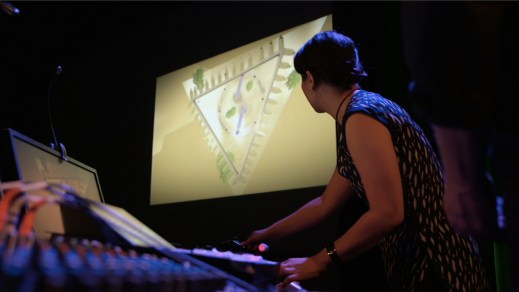
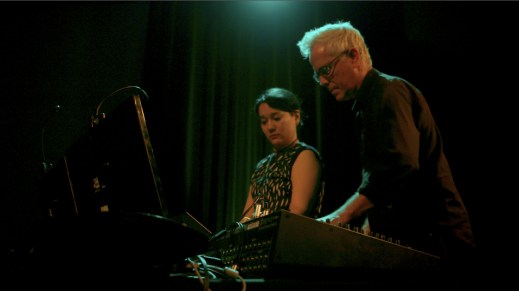
For our second piece in the series, we have interviewed New York City based performance duo foci + loci (Chris Burke and Tamara Yadao). Treating the map editors in video games as virtual sound stages, foci + loci design immersive electroacoustic spaces that can be “played” as instruments. Chris and Tamara bring an interdisciplinary lens to their work, having worked in various sonic and game-related cultures including, popular, electroacoustic and new music, chiptune, machinima (filmmaking using video game engines), and more.
As curators, we have worked with foci + loci several times over the past few years, and have been fascinated with their treatment of popular video game environments as tools for visual and sonic exploration. Their work is highly referential, drawing on artistic legacies of the Futurists, the Surrealists, and the Situationists, among others. In this interview, we discuss the nature of their practice(s), and it’s relationship to play, improvisation and the co-constituative nature of their work in relation to capital and proprietary technologies.
— Guest Editors Skot Deeming and Martin Zeilinger
–
1. Can you take a moment to describe your practice to our readers? What kind of work do you produce, what kind of technologies are involved, and what is your creative process?
foci + loci mostly produce sonic and visual video game environments that are played in live performance. We have been using Little Big Planet (LBP) on the Playstation 3 for about 6 years.
When we perform, we normally have two PS3s running the game with a different map in each. We have experimented with other platforms such as Minecraft and we sometimes incorporate spoken word, guitars, effects pedals, multiple game controllers (more than 1 each) and Game Boys.
Our creative process proceeds from discussions about the ontological differences between digital space and cinematic space, as well as the freeform or experimental creation of music and sound art that uses game spaces as its medium. When we are in “Create Mode” in LBP, these concepts guide our construction of virtual machines, instruments and performance systems.
[Editor’s Note: Little Big Planet’s has several game modes. Create Mode is the space within the game where users can create their own LBP levels and environments. As player’s progress through LBP’s Story Mode, players unlock and increasing number of game assets, which can be used in Create Mode.]
2. Tell us about your background in music? Can you situate your current work in relation to the musical traditions and communities that you were previously a part of?

CB: I have composed for film, TV, video games and several albums (sample based, collage and electronic). Since 2001 I’ve been active in the chipmusic scene, under the name glomag. Around the same time I discovered machinima and you could say that my part in foci + loci is the marriage of these two interests – music and visual. Chipmusic tends to be high energy and the draw centers around exciting live performances. It’s immensely fun and rewarding but I felt a need to step back and make work that drew from more cerebral pursuits. foci + loci is more about these persuits for me: both my love of media theory and working with space and time.
TY: I’m an interdisciplinary artist and composer. I studied classical piano and percussion during my childhood years. I went on to study photography, film, video, sound, digital media and guitar in college and after. I’ve primarily been involved with the electroacoustic improv and chipmusic scenes, both in NYC. I’ve been improvising since 2005, and I’ve been writing chipmusic since 2011 under the moniker Corset Lore.
My work in foci + loci evolved out of the performance experience I garnered in the electroacoustic improv scene. My PS3 replaced my laptop. LBP replaced Ableton Live and VDMX. I think I felt LBP had more potential as a sonic medium because an interface could be created from scratch. Eventually, the game’s plasticity and setting helped to underscore its audiovisual aspect by revealing different relationships between sound and image.
3. Would you describe your work as a musical practice or an audio-visual performance practice?
FL: We have always felt that in game space, it is more interesting to show the mechanism that makes the sound as well as the image. These aspects are programmed, of course, but we try to avoid things happening “magically,” and instead like to give our process some transparency. So, while it is often musical, sound and image are inextricably linked. And, in certain cases, the use of a musical score (including game controller mappings) has been important to how our performance unfolds either through improvisation or timed audiovisual events. The environment is the musical instrument, so using the game controller is like playing a piano and wielding a construction tool at the same time. It has also been important in some contexts to perform in ‘Create Mode’ in order to simply give the audience visual access to LBP‘s programming backend. In this way, causal relationships between play and sound may be more firmly demonstrated.
4. There are many communities of practice that have adopted obsolete or contemporary technologies to create new, appropriative works and forms. Often, these communities recontextualize our/their relationships to technologies they employ. To what extent do you see you work in relation to communities of appropriation-based creative expression?
CB: In the 80s-90s I was an active “culture jammer,” making politically motivated sound montage works for radio and performance and even dabbling in billboard alterations. Our corporate targets were selling chemical weapons and funding foreign wars while our media targets were apologists for state-sanctioned murder. Appropriating their communications (sound bites, video clips, broadcasting, billboards) was an effort to use their own tools against them. In the case of video game publishers and console manufacturers, there is much to criticize: sexist tropes in game narratives, skewed geo-political subtexts, anti-competitive policies, and more. Despite these troubling themes, the publishers (usually encouraged by the game developers) have occasionally supported the “pro-sumer” by opening up their game environments to modding and other creative uses. This is a very positive shift from, say, the position of the RIAA or the MPAA, where derivative works are much more frequently shut down. My previous game-related series, This Spartan Life, was more suited to tackling these issues. As for foci + loci, it’s hard to position work that uses extensively developed in-game tools as being “appropriative,” but I do think using a game engine to explore situationist ideas or the ontology of game space, as we do in our work, is a somewhat radical stance on art. We hope that it encourages more players to creatively express their ideas in similar ways.
TY: Currently, the ‘us vs. them’ attitude that characterized the 80s and 90s is no longer as relevant as it once was because corporations are now giving artists technology for their own creative use. However, they undermine this sense of benevolence by claiming that consumers could be the next Picasso if they buy said piece of technology in their marketing—as if the tool is more important than the artist/artwork. Little Big Planet is marketed this way. On the whole, I think these issues complicate artists’ relationships with their media.
Often our work tends to be included in hacker community events, most recently the ‘Music Games Hackathon’ at Spotify (NYC), because, while we don’t necessarily hack the hardware or software, our approach is a conceptual hack or subversion. At this event, there were a variety of conceptual connections made between music, hacks and games; Double Dutch, John Zorn’s Game Pieces, Fluxus, Xenakis and Stockhausen were all compared to one another. I gave a talk at the Hackers on Planet Earth Conference in 2011 about John Cage, Marcel Duchamp, Richard Stallman and the free software movement. In Stallman’s essay ‘On Hacking,’ he cited John Cage’s ‘4’33″‘ as an early example of a music hack. In my discussion, I pointed to Marcel Duchamp, a big influence on Cage, whose readymades were essentially hacked objects through their appropriation and re-contextualization. I think this conceptual approach informs foci + loci’s current work.
[Editors’ note: Recently celebrating its 10th anniversary, This Spartan Life is a machinima talk show that takes place within the multiplayer game space of the First Person Shooter game Halo. This Spartan Life was created by Chris Burke in 2005. The show has featured luminaries including Malcolm McClaren, Peggy Awesh, and many more.]

5. You mention the ontological differences between game spaces and cinematic spaces. Can you clarify what you mean by this? Why is this such as important distinction and how does it drive the work?
CB: We feel that there is a fundamental difference in the way space is represented in cinema through montage and the way it’s simulated in a video game engine. To use Eisenstein’s terms, film shots are “cells” which collide to synthesize an image in the viewers mind. Montage builds the filmic space shot by shot. Video game space, being a simulation, is coded mathematically and so has a certain facticity. We like the way the mechanized navigation of this continuous space can create a real time composition. It’s what we call a “knowable” space.
6. Your practice is sound-based but relies heavily on the visual interface that you program in the gamespace. How do you view this relationship between the sonic and the visual in your work?
TY: LBP has more potential as a creative medium because it is audiovisual. The sound and image are inextricably linked in some cases, where one responds to the other. These aspects of interface function like the system of instruments we (or the game console) are driving. Since a camera movement can shape a sound within the space, the performance of an instrument can be codified to yield a certain effect. This goes back to our interest in the ontology of game space.
7. Sony (and other game developers) have been criticized for commodifying play as work – players produce and upload levels for free, and this free labour populates the Little Big Planet ecology. How would you position the way you use LBP in this power dynamic between player and IP owner?
CB: We are certainly more on the side of the makers than the publishers, but personally I think the “precarious labor” argument is a stretch with regard to LBP. Are jobs being replaced (International Labor Rights definition of precarious work)? Has a single modder or machinima maker suggested they should be compensated by the game developer or publisher for their work? Compensation actually does happen occasionally. This Spartan Life was, for a short time, employed by Microsoft to make episodes of the show for the developer’s Halo Waypoint portal. I have known a number of creators from the machinima community who were hired by Bioware, Blizzard, Bungie, 343 Industries and other developers. Then there’s the famous example of Minh Le and Jess Cliffe, who were hired by Valve to finish their Half-Life mod, Counterstrike. However, compensating every modder and level maker would clearly not be a supportable model for developers or publishers.
Having said all that, I think our work does not exactly fit into Sony’s idea of what LBP users should be creating. We are resisting, in a sense, by providing a more art historical example of what gamers can do with this engine beyond making endless game remakes, side-scrollers and other overrepresented forms. We want players to open our levels and say “WTF is this? How do I play it?” Then we want them to go into create mode and author LBP levels that contain more of their own unique perspectives and less of the game.
[Corset Lore is Tamara Yadao’s chiptune project.]
8. What does it mean to improvise with new interfaces? Has anything ever gone horribly wrong during a moment of improvisation? Is there a tension between improvisation and culture jamming, or do the two fit naturally together?
CB: It’s clear that improvising with new interfaces is freer and sometimes this means our works in progress lack context and have to be honed to speak more clearly. This freedom encourages a spontaneous reaction to the systems we build that often provokes the exploitation of weaknesses and failure. Working within a paradigm of exploitation seems appropriate to us, considering our chosen medium. In play, there is always the possibility of failure, or in a sense, losing to the console. When we design interfaces within console and game parameters we build in fail-safes while also embracing mechanisms that encourage failure during our performance/play.
In an elemental way, culture jamming is a more targeted approach, whereas improvisation seems to operate with a looser agenda. Improvisation is already a critical approach to the structures of game narrative. Improvising with a video game opens up the definition of what a game space is, or can be.
—
All images used with permission by foci + loci.
—
foci + loci are Chris Burke and Tamara Yadao.
Chris Burke came to his interest in game art via his work as a composer, sound designer and filmmaker. As a sound designer and composer he has worked with, among others, William Pope L., Jeremy Blake, Don Was, Tom Morello and Björk. In 2005 he created This Spartan Life which transformed the video game Halo into a talk show. Within the virtual space of the game, he has interviewed McKenzie Wark, Katie Salen, Malcolm McLaren, the rock band OK Go and others. This and other work in game art began his interest in the unique treatment of space and time in video games. In 2012, he contributed the essay “Beyond Bullet Time” to the “Understanding Machinima” compendium (2013, Continuum).
Tamara Yadao is an interdisciplinary artist and composer who works with gaming technology, movement, sound, and video. In Fall 2009, at Diapason Gallery, she presented a lecture on “the glitch” called “Post-Digital Music: The Expansion of Artifacts in Microsound and the Aesthetics of Failure in Improvisation.” Current explorations include electro-acoustic composition in virtual space, 8-bit sound in antiquated game technologies (under the moniker Corset Lore), movement and radio transmission as a live performance tool and the spoken word. Her work has been performed and exhibited in Europe and North America, and in 2014, Tamara was the recipient of a commissioning grant by the Jerome Fund for New Music through the American Composers Forum.
—

REWIND! . . .If you liked this post, you may also dig:
Improvisation and Play in New Media, Games, and Experimental Sound Practices — Skot Deeming and Martin Zeilinger
Sounding Out! Podcast #41: Sound Art as Public Art — Salomé Voegelin
Sounding Boards and Sonic Styles — Josh Ottum
—
Share this:




Current Top Posts





April 2021

January 2020

November 2019

October 2019

August 2019

April 2014

November 2017

March 2015

December 2017

October 2015


Recent Comments