
SO! Amplifies: Nameless Sound

DOI: https://doi.org/10.59350/k0be4-s6s31
SO! Amplifies. . .a highly-curated, rolling mini-post series by which we editors hip you to cultural makers and organizations doing work we really really dig. You’re welcome!
Nameless Sound is a Houston institution, currently celebrating 25 years of bringing free experiences of experimental music making to the local community. The organization, founded by trombone player/composer/improviser David Dove, started out as a small workshop in improvisation for teenagers at the MECA (Multicultural Education and Counseling through the Arts), an arts community center in Houston’s 6th Ward. Dove realized through musical practice with his students that the opportunity for creativity was often missing in traditional musical education and that improvisation was, for him, the most immediate and inclusive way to collaboratively engage young people in creative music making. Despite widely varying musical expertise, the students were able to able to meaningfully collaborate with one another. Beginners were captivated and engaged, while students with more musical education were challenged and ready to experiment. Shortly after this realization, Dove became part of the Advisory Board of Diverse Works, an arts organization in Houston’s museum district, he began organizing concerts with leading experimental musicians, inviting them to lead sessions of his kids’ workshop at MECA.
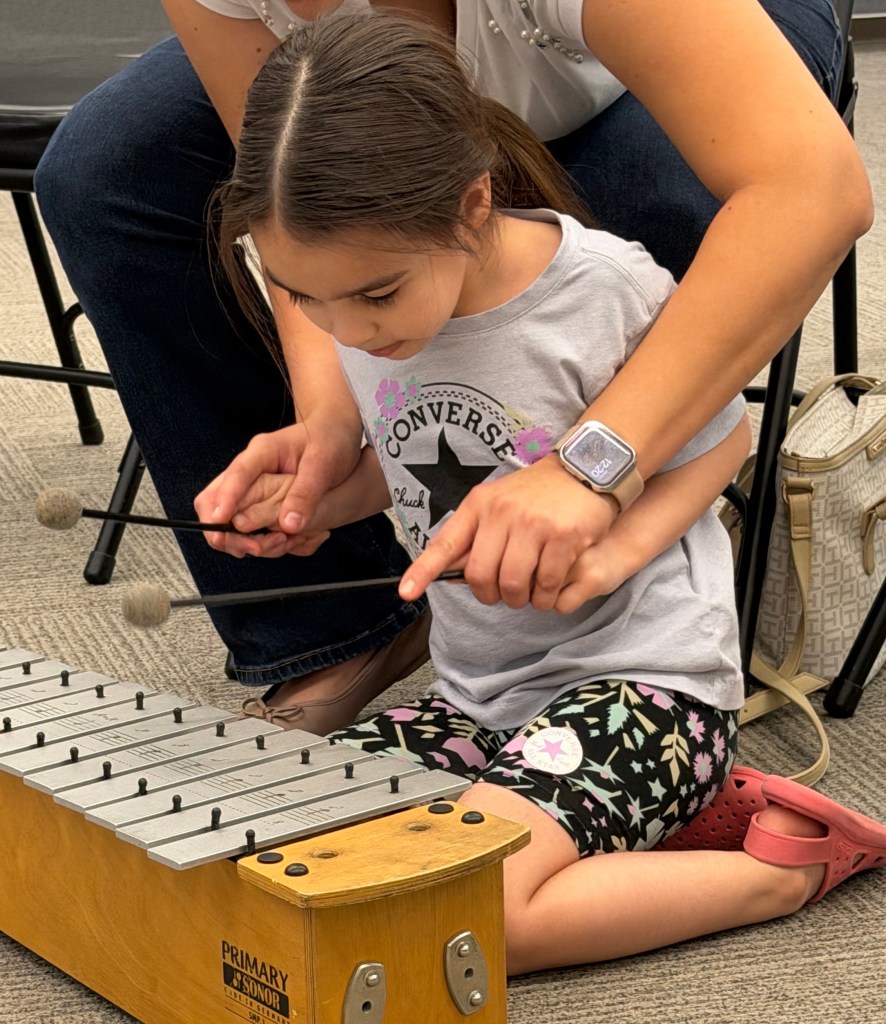
It was Houston’s own Pauline Oliveros who encouraged Dove to formalize this residency model–experimental musicians come to town, give a public performance followed by a community workshop for young people–that would become the blueprint for Nameless Sound’s work today. The organization actually began as a branch of the Pauline Oliveros Foundation in 2001 (and would come to be called the Deep Listening Institute Houston when Oliveros’s organization took on that name). That year they brought 9 artists to Houston and started a ongoing campaign of improvisation workshops in public schools (known then as The Houston Tour).
In 2005 Jo Ann Williams, art therapist and founder of ArtBridge Houston, invited DLI Houston to start giving workshops for children in some Houston homeless shelters. This was an important turning point for DLI Houston. It widened the age group that the organization worked with. It began a practice of facilitating workshops for people who previously had no experience playing music at all. Perhaps most importantly, Nameless Sound began to witness the potential for social-emotional learning in the improvisational process, and they began to understand how a secure framework for creative music making could also provide a safe-space for emotional vulnerability.
In 2006, with the blessing of Oliveros, DLI Houston broke off from its parent organization and became Nameless Sound, a fully independent 501(c)3 non-profit. Over the past 20 years, Nameless Sound has continued to evolve. Its concert series has become known for a diverse range of international artists who represent the most important and influential names in the music, as well as the emerging cutting-edge.
The series features commissions and world-premieres, as well as special projects that entail collaborations between visiting artists and local musicians. Site-specific events in some of Houston’s most interesting art environments often bring in visiting audiences from outside of the city. Visiting artists have included Susie Ibarra, Damon Smith, Keiji Haino, Louis Moholo, Maja Ratkje, Cooper-Moore, Matana Roberts, and Hamid Drake. Occasional interventions bring ears to seemingly unlikely public listening spaces. And one of our ongoing projects outside of Houston brings audiences to The Hill of James Magee, an art installation on private land in the West Texas Chihuahuan Desert.
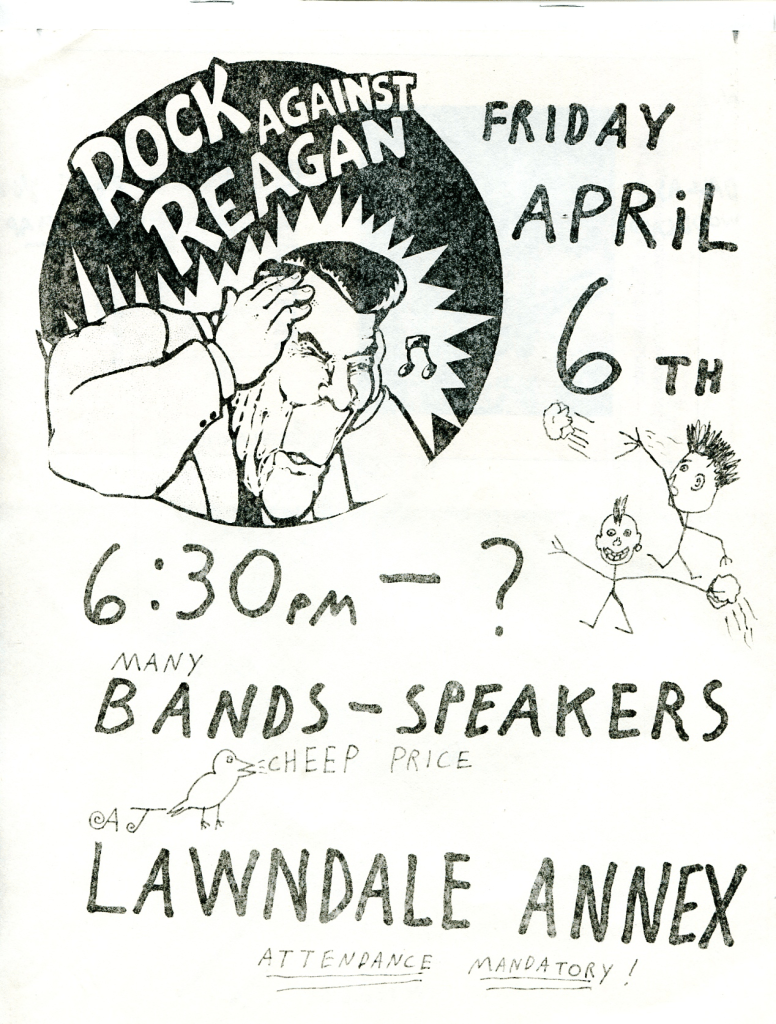
One of Nameless Sound’s most popular interventions is They, Who Sound, which started out as a series of casual sessions at local Houston bars. After some challenges and changes in location, Nameless Sound officially took on They, Who Sound in 2018 as a weekly series of concerts in partnership with Lawndale Art Center. For Lawndale, the series represented something of a return to roots, as in the 1980’s, Lawndale’s original location was the site for some of the most memorable experimental music and underground rock events in Houston. Sun Ra, Anthony Braxton, Pauline Oliveros, Cecil Taylor and the Art Ensemble of Chicago all performed there, as did Black Flag, The Minutemen and the Replacements.
For Nameless Sound, They Who Sound was an opportunity to provide a stage and shed light on Houston’s diverse, vibrant, and unique experimental music scene. It has endured as a meeting place for Houston listeners and experimental musicians, and as a lab for new developments. In response to the COVID-19 pandemic and quarantine, Nameless Sound contined to innovate and serve the community, creating They, Who Sound Special Delivery. For a small fee, anyone can schedule a They, Who Sound musician to come to their home and perform a 10 minute piece of experimental music from a safe distance.
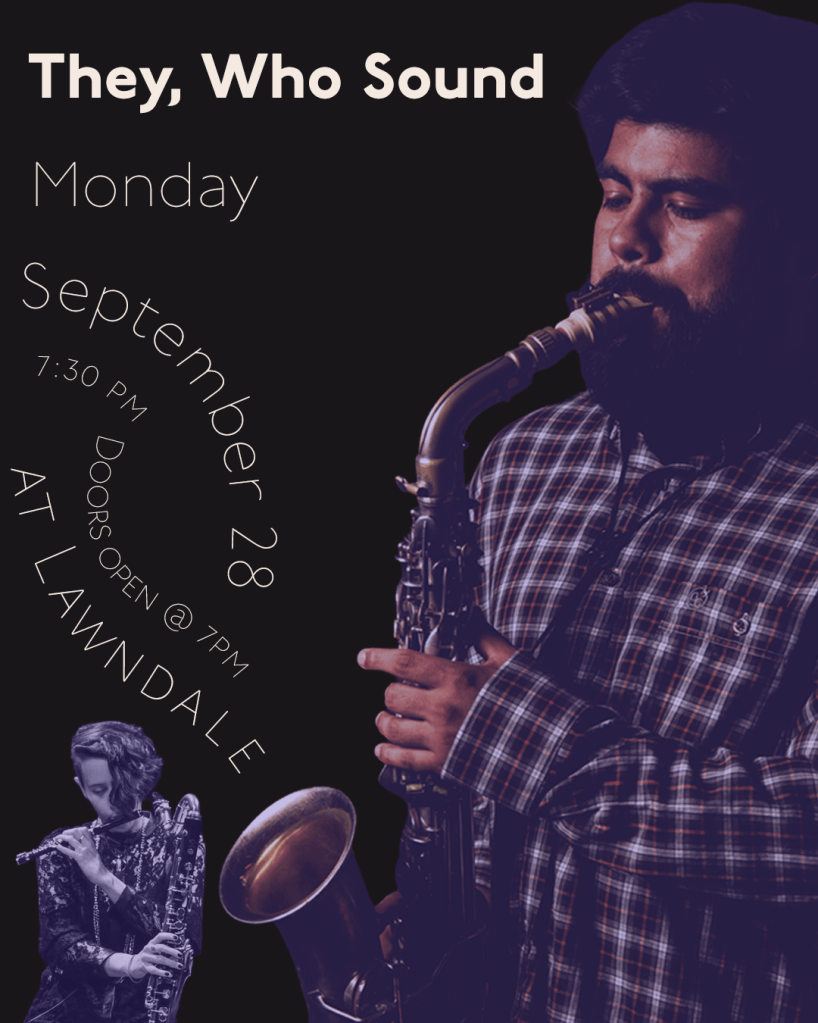
They, Who Sound continues in concert with the Lawndale Art Center every Monday from 7:30 to 9:30pm (Doors open at 7pm). Coming up September 28th, 2026 Nameless Sound will host Emily Beisel/Lisa Cameron & Laura Dykes/Kodey Saldaña/Thomas Swindell. For videos of past performances and to subscribe to receive future updates, you can check out Nameless Sound’s Youtube Page or follow on Vimeo.
Nameless Sound remains committed to a vision of personal and community evolution supported by the practices of creative music. Creative music improvisation provides a unique opportunity to cultivate group awareness, self-awareness and healthy vulnerability, with potential outcomes of knowledge exchange, creative work, play and healing. The skills developed through musical improvisation emphasize listening, creativity, spontaneity, dialogue and self-expression. There are free ongoing workshops through September 2026 and more to be announced.
Other upcoming events for Nameless Sound to close out 2026:
- October 10, 3 – 5 pm, Dimensions Variable at Moody Center for the Arts, Rice University. Laura Dykes and Aryn Ward on/with Nanibah Chacon’s Where Two Rivers Meet. As part of The Moody Center’s Dimensions Variable series, in conjunction with the exhibition Radiant Geometries: Vectors of Knowledge from the Indigenous Americas
- November 12, 7–8 p.m, Vitalized Vitalized at Menil. : The Nameless Sound Ensemble creates and performs scores based on works by Terry Winters. Presented in conjunction with the exhibition Terry Winters: Vitalized Geometry, This program takes place in the main building, located at 1533 Sul Ross Street. As always, Menil programs are free and open to all.
Nameless Sound is currently in Fall Fundraising mode, with an anonymous donor matching every gift up to 8,000 dollars through FRIDAY, September 25, 2026 Here’s to 25 more years of Nameless Sound with ongoing support from local and global sound communities!

—

REWIND! . . .If you liked this post, you may also dig:
SO! Amplifies: Immigrants Wake America Podcast and the Work of Engaged Digital Humanities
SO! Amplifies: Die Jim Crow Record Label
SO! Amplifies: Wu Tsang’s Anthem (2021)
SO! Amplifies: Carleton Gholz and the Detroit Sound Conservancy
—
Share this:

Faithful Listening: Notes Toward a Latinx Listening Methodology

**This piece is co-authored by Wanda Alarcón, Dolores Inés Casillas, Esther Díaz Martín, Sara Veronica Hinojos, and Cloe Gentile Reyes
DOI: https://doi.org/10.59350/381m8-qcy44
For weeks, we have been inundated with executive orders (220 at last count), alarming budget cuts (from science and the arts to our national parks), stupendous tariff hikes, the defunding of DEI-anything, the banning of transgender troops, a Congressional renaming of the Gulf of Mexico, terrifying ICE raids, and sadly, a refreshed MAGA constituency with a reinvigorated anti-immigrant public sentiment. Worse, the handlers for the White House’s social media publish sinister MAGA-directed memes, GIFs across their social channels. These reputed Public Service Announcements (PSAs), under President Trump’s second term, ruthlessly go after immigrants.
It’s difficult to refuse to listen despite our best attempts.
“The ASMR video was true.”
On February 18, 2025, the official White House social media account, @WhiteHouse, shared a 40-second video showing a group of detained immigrants boarding a military aircraft for deportation. The video was captioned: “ASMR: Illegal Alien Deportation Flight.” ASMR, or autonomous sensory meridian response, features gentle, soothing sounds—such as whispering, tapping, or brushing—which can evoke pleasurable tingling sensations. In this satirical ASMR-style post, however, the sounds include the clinking of metal shackles on concrete floors, the jangle of handcuffs against bodies, and the grating of metal on metal as detainees slowly ascend the aircraft’s steps. By framing these distressing noises within the ASMR genre, the video invites listeners to consume them as aesthetically pleasing; encouraging a visceral embodiment where the sounds of violence toward migrants elicit an uncontrollable physical pleasure that seeps through the body. This effectively turns state violence into an unsettling sonic spectacle. Cruelty towards migrants, according to Cristina Beltrán, is not a failure of democracy but an expression of it. The (sonic) spectacle of migrant cruelty functions as a political practice meant to sustain white democracy as both a racial and political category.

Framed within ASMR, Trump’s official message is unmistakably “saying the quiet part out loud.” But not all that well. A closer listen reveals that the roar of the jet engine drowns out more intimate, human sounds: footsteps on the tarmac, the rustle of police pat-downs, and the deep, rhythmic breaths—proof of life—condemned. Listening to this disturbing post, we become attuned to our own internal pleads; our refusal to believe until the unsettling truth confirms: this isn’t a parody or a hoax—it’s real.
How does a sonic social media trend—built around such sounds as the crinkling of chip bags, the crunches of eating, the tap-tap of acrylic nails, the gentle clinks of typing or espresso-making—become a soundboard for the forced removal of immigrants? Indeed, the video has amassed nearly 105 million views on X alone. Clearly, the post broadcasts a pedagogy of cruelty—a lesson in how to aestheticize suffering—and we are left questioning just how far that message both travels and resonates. For many, the video is neither entertaining nor soothing, but rather shocking, offensive, and deeply disturbing.
Written comments show more revulsion than support, with many users openly challenging the video. In doing so, their protest, contained in the comments, starts to dismantle the ASMR aesthetic, undercutting its intended sense of calm. After all, the video isn’t particularly convincing as ASMR to begin with! These are echoes of dissent, outrage, and refusal, that accompany the in-person collective actions that have taken place across the nation rallying against Trump’s broader white-supremacist and anti-democratic agenda.

“What was louder was the screaming and cursing inside my head.”
History shows us that abolitionist efforts often relied on the sounds and images of chains to evoke empathy for enslaved Africans—making their suffering and humanity visible to a broader public. Yet, as Saidiya Hartman’s Scenes of Subjection makes clear, such representations can easily devolve into a spectacle of suffering, where the emphasis shifts from the enslaved person to the emotional response of the white witness. Today, that same auditory imagery—clinking metal, mechanical restraints—resurfaces, but in a profoundly different register. No longer stirring empathy, they risk desensitizing listeners to the pain and struggle of Latinx migrants. This ASMR instance, directed at MAGA-listeners, prioritizes a cruel-yet-gleeful response without any compassion whatsoever towards immigrants.
The word “Illegal” in the caption further amplifies the discourse of criminality, evoking a long legacy of racialized policies and media portrayals that cast mexicanos and Chicanos as perpetually deportable. Note the hypocrisy in naming the people as illegal, when their forced removal without legal due process, is itself illegal. U.S. immigration policy—think Operation Wetback and the Bracero Program, have long simultaneously expelled and depended on Mexican labor. The enduring power of these tropes lies not just in law, but in sentiment—in the way migrants are imagined, portrayed, and ultimately policed in the public eye. Just as Hartman argues that the end of slavery did not mean the arrival of true freedom for Black Americans, so too have U.S. immigration policies failed to fully embrace immigrants as residents or neighbors and much less citizens. In both cases, legal status did not equate to genuine belonging or liberation.
What is notable in the current deployment of “illegality” in the @WhiteHouse post is its expanded scope: whereas earlier rhetoric primarily targeted Mexicans and Mexicanness this framing now extends to encompass all Latinx peoples, which always includes Black, Indigenous, Trans and Queer. This further intensifies prior waves of anti-Mexican sentiment while broadening the reach of criminalizing discourse. In doing so, it reinforces a racialized logic of illegality that casts an ever-widening net of suspicion and exclusion.

The MAGA White House’s broader propaganda – from the self-deport ads on Spanish-language media and Kristi Noem’s pinche photo-ops from CECOT (El Salvador’s infamous mega-prison) to SCOTUS attempts to revoke birthright citizenship – raises the stakes of listening, rendering our response—and our work as Latinx sound studies scholars—urgent.
Like it or not, this video reshapes the contours of our field in real time. Using the ASMR video as a point of departure, we offer a mode of listening on the side of resistance—a practice that affirms our solidarity with migrants and their right to move, work, and live with dignity. Drawing on the work of the late María Lugones, we advocate for a practice of faithful witnessing—a listening attuned not only to sound, but to histories, structures, and acts of refusal that resist dehumanization.

Ofrenda
From Lugones’s book Pilgrimages/Peregrinajes: Theorizing Coalition Against Multiple Oppressions, she teaches that a collaborator witnesses from the side of power; a faithful witness stands with resistance even when it entails risk. And, to witness faithfully is to recognize and honor acts of resistance—even when doing so defies common sense of what we recognize as political acts/sounds. In Decolonizing Diasporas, Yomaira Figueroa-Vásquez reminds us of the important coalitional sociality Lugones envisions in practicing faithful witnessing. For Figueroa, “the practice of faithful witnessing is one that oppressed and colonized peoples have deployed since time immemorial as a method of bearing witness to each other’s humanity even as they faced myriad forms of violence” (156).
Faithful witnessing entails centering the plight of all MAGA political scapegoats, migrants in precarity, pro-Palestinian student activists, the still separated children, trans youth, women, and who ever is next on the Project 2025 agenda. Faithful witnessing is not about centering our own emotional response, but about coming together to listen, to bear witness, and to protect. In response to these distorted public signals, we present a suite of countersonics, shared in a lo-fi listening mode that enacts faithful witnessing and affirms our roles as co-resisters to sonic oppression. We conclude with a noise-filled, healing artifact: a sonic limpia for deep listening and a playlist to sustain the good fight.
FOR THE FULL PLAYLIST CLICK THIS LINK, OR START BELOW!
—
Featured Image: Philly Immigrant May 1st, 2025 march for Justicia. Migrant workers and supporters rallied at 4th & Washington and marched in the streets to the AFL-CIO Mayday rally and march. Image by Joe Piette, cropped by SO! CC BY-NC-SA 2.0
—
Wanda Alarcón is an Assistant Professor of Gender and Women’s Studies at the University of Arizona. Her research takes up sound as a generative site and method for hearing and amplifying resistant grammars in Chicana narratives. She is currently working on her first book manuscript, Chicana Soundscapes, which listens closely to sound, noise, language, songs, echoes, and silences, and proposes decolonial feminist ways of hearing Chicana and queer Chicana worlds.
Dolores Inés Casillas (she/her/ella) is Director of the Chicano Studies Institute (CSI) and Professor of Chicana and Chicano Studies at UC Santa Barbara. Her research focuses on immigrant engagement with U.S. Spanish-language and bilingual media. She is the author of Sounds of Belonging: U.S. Spanish-language Radio and Public Advocacy (NYU Press, 2014), co-editor of The Companion to Latina/o Media Studies (Routledge Press, 2016) and Feeling It: Language, Race and Affect in Latinx Youth Learning (Routledge Press, 2018).
Esther Díaz Martín (she/her/ella) is an Assistant Professor of Latin American and Latino Studies and Gender and Women’s Studies at the University of Illinois Chicago. Her book, Radiophonic Feminisms: Latina Voices in the Digital Age of Broadcasting, (UT Press, 2025) theorizes Chicana feminist listening and attends to the political work of Latina voices in contemporary sound media.
Sara Veronica Hinojos (she/her/ella) is an Assistant Professor of Media Studies at Queens College, CUNY. Her research critically engages popular representations of Chicanxs and Latinxs as racialized, “accented” speakers. Her current book project, The Racial Politics of Chicana and Chicano Linguistic Scripts in Media (1925-2014), intentionally brings together language politics, digital media, humor studies and sound studies.
Cloe Gentile Reyes (she/her/ella) is a queer Boricua scholar, poet, and perreo profa from Miami Beach. She is a Faculty Fellow in NYU’s Department of Music and has a PhD in Musicology from UC Santa Barbara. Her writing focuses on how Indigenous Caribbean femmes navigate intergenerational trauma and healing through decolonial sound, fashion, and dance. Her pieces have been featured in Sounding Out!, Intervenxions, and the womanist magazine, Brown Sugar Lit.
—
Thank you to Daimys Ester García for care in the form of editorial labor.
—

REWIND!…If you liked this post, you may also dig:
“Oh how so East L.A.”: The Sound of 80s Flashbacks in Chicana Literature–Wanda Alarcón
Echoes in Transit: Loudly Waiting at the Paso del Norte Border Region–José Manuel Flores & Dolores Inés Casillas
Xicanacimiento, Life-giving Sonics of Critical Consciousness–Esther Díaz Martín and Kristian E. Vasquez
Listening to Digitized “Ratatas” or “No Sabo Kids”–Sara Veronica Hinojos and Eliana Buenrostro
Ronca Realness: Voices that Sound the Sucia Body–Cloe Gentile Reyes
Latinx Soundwave Series–Edited by Dolores Inés Casillas
Share this:




Current Top Posts





April 2021

January 2020

November 2019

October 2019

August 2019

April 2014

November 2017

March 2015

December 2017

October 2015


Recent Comments