
A Day at the Rock and Roll Hall of Fame Annex
DOI: https://doi.org/10.59350/34arq-mnj17
When I went down to NYC at the beginning of the summer, I saw an ad for the John Lennon exhibit at the Rock and Roll Hall of Fame Annex in Soho. The exhibit focuses on Lennon’s stay in New York and the music he produced while he lived in the city. My curiosity stemmed not just from my own research interest in immigrants and their connection to New York City, but also from the fact that I am a music fan and a Beatles fan in particular. Considering that the actual Rock and Roll Hall of Fame is located in Cleveland, I was excited about the Annex experience. I made it to the Annex in late August and indulged my rock and roll fantasies in the basement-level space.
Even though this is not the place for an exhibit review, what I want to focus on regarding my Rock and Roll experience is the importance of sound to the Annex experience. (Once again, I have not been to the actual museum in Cleveland, so I am not sure if this is just standard for the Rock and Roll Hall of Fame.) When you walk into the Hall of Fame Gallery–they sell you tickets for particular times, so that entrance to the Annex is allowed only at the time on your ticket–you are surrounded by tiles with the inductees’ signatures and that light up when the artists’ music plays. The lights dim while the music starts out slowly, shifting from tile to tile, then gains speed until you are surrounded by music and voices. It ends abruptly, and you are led into a room where there are tv screens and stools, a room meant to recreate the experience of being at a live concert. Again, the music is loud, you are shrouded in darkness, and the screens light up with images of famous musical artists (thankfully from yesteryear and today) as well as quotes. After spending some time watching “The Power and the Glory,” a screen opens up and you move into a large room full of pop music memorabilia, but only after you pick up what looks like a Walkman with a headset. The room is segmented, either by time period, by influences, by artists, or by region–there’s one section devoted to New York City music. The Walkman allows you to hear the tunes while you look at the memorabilia and read the descriptions.
My brother, nine years older than me and a music aficionado as well, agreed with me that having the music come on at every station was a great perk. I expected your run-of-the-mill museum tour tapes, but I was pleasantly surprised to hear music playing while we ogled the bustiers, guitars, and letters. Score! Oftentimes we found ourselves singing along or calling to the other to come over to a station and tune in. I enjoyed the Lennon exhibit, but my favorite part was “The Power and the Glory.” For a young person like me who grew up in a small town, devouring page after page of Rolling Stone, this was the highlight for it was supposed to emulate what it would have been like to see The Sex Pistols in concert, hear Muddy Waters play, feel the shrieks of the female fans when the Beatles came onto the stage.
However, what really caught my eye was that sound was always tied to the visual. The sounds complemented the viewing of the objects–even though the objects were there because their owners produced music. Except for the concert room, where at times the audience was left in the dark, with just the music track playing while you tried to guess who was next, the music was a part of the exhibit as a way to showcase the memorabilia. This was especially evident in the John Lennon exhibit. It was heartwarming to watch a music video with John Lennon, Yoko Ono, and Sean Lennon on holiday, but I wanted to hear more. There were plenty of John Lennon artifacts on display (like the INS letter to Lennon that asked him to leave the country), but what about the music he made? I commend the Annex’s idea of having the music play when you walk up to a piece of memorabilia, but the music should play a bigger role.
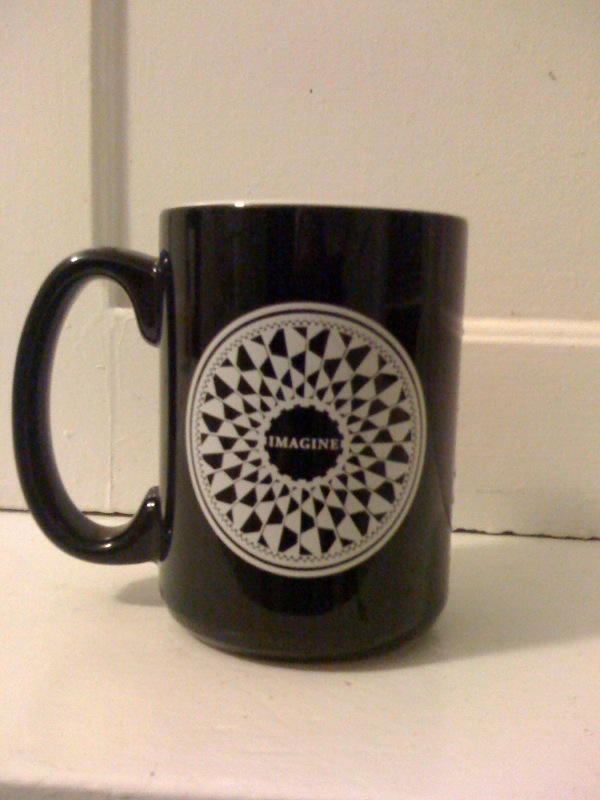
You can’t go to a concert and not buy a souvenir, right?
__
Liana Marie Silva
__
Share this:

On Hand-Made Music
DOI: https://doi.org/10.59350/sma40-97g51
I’ve recently opened up a little online record shop focusing on what I like to call “Hand-Made” music. To me, that ranges from the DIY punk that I grew up with to the oldest kinds of rural music to field recordings from all over to the underground harsh noise tape/CD-R/vinyl scene. I’ve been thinking a bunch about how something like hand-made music gets heard. I figure that it gets passed around. Here’s what I mean.
Right now I’m listening to, get this, The Minutemen’s “The Anchor” on a digital copy of side two of a cassette tape called “Afraid of the Dark: ‘Garage’ Rock ‘n’ Roll 1965-1981.” It’s a mix tape made in 2008(?) by a record label/store in Portland, OR called Mississippi Records. Why is this relevant? The Minutemen exemplify the best of punk rock, three friends who started making music to create, to share, to inspire. “The Anchor” is on a mix tape put out by a record store and label that sells only “dead” media: vinyl and cassette. The store makes the mix tapes to spread the word about music they love. I can discern no other motive. They release reissues of music they love: old-time blues, warbly ragas, creaky punk rock and more–clearly labors of love. A store like this doesn’t distribute records and tapes in any broad sense of the word, it only passes around music to people who know the store. That’s not many people.
It’s funny. I have What Makes a Man Start Fires, the record that “Anchor” comes from and I could put it on my imachine and listen while I type, but the song, with all the vinyl static intact and squeezed between Richard Hell & the Voidoids and The Petticoats, takes on a new life in the context of the mix tape. I can hear the aha! moment that must’ve occurred as the tape was being compiled. We can follow “The Anchor” from its LP release in ’83 to someone at Mississippi Records hearing it and loving it and passing it on to friends and soon enough deciding that it warrants a place on their mix tape. They gave me the opportunity to re-hear something beautiful. “The Anchor” sounds better by having all these fingerprints on it. I feel more connected to it hearing it through this history, having passed through this many hands.
So I offer it to you, fingerprints and all. Imagine this on a homemade tape:
Matt Laferty
Share this:




Current Top Posts





April 2021

January 2020

November 2019

October 2019

August 2019

April 2014

November 2017

March 2015

December 2017

October 2015
 Sounding Out!
Recent Comments