
Only the Sound Itself?: Early Radio, Education, and Archives of “No-Sound”
 Early cinema scholars are faced with statistics that suggest that possibly eighty percent of moving pictures produced in the first thirty years of their existence are lost—that is, they were thrown away because they were no longer profitable, or destroyed through fire or overuse. Likewise, radio historians researching early radio programming formats are confronted with a daunting inability to listen to many of the programs we write about. What does it mean to write about sound without being able to listen to the sounds firsthand? Where can radio scholars like myself track down sound in other places besides recorded media? Must we have to access “the sound itself” in order to be able to write about and understand it? While missing or incomplete sound archives in some ways narrow the depth and breadth of the historical inquiries possible, I find that these gaps of “no-sound” open up other possibilities for examining the material that does remain, in the form of station records, document archives, and programming notes.
For example, my research examines the discourse around the multifaceted campaigns for the classroom and living room educational use of (old) new media, specifically film in the 1910s, radio in the 1920s, and television in the 1950s. Often I find that the discourse around proposed and actual programs details their content quite specifically, including how these shows planned to address their audiences. But sometimes what I am looking for is a paper trail of sorts that will help me visually recreate the missing audio of these lost programs.
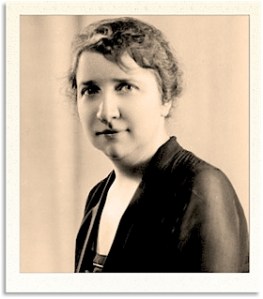
Judith Waller in the mid-1920s
In this regard, as I delved into the events around early radio and education, I became interested in Judith Waller, whose “accidental” radio success began in Chicago in 1922 as programming manager at WMAQ and continued as the Educational/Public Service Director for NBC’s Central division. At WMAQ in the 1920s, Waller helped craft a number of educational programs, including a joint venture between the Chicago Public Schools that successfully connected city-wide special exhibits and the Chicago Daily News into an audio/visual/experiential learning experience.
However, by the 1930s Waller had grown disillusioned with “educational radio.” In 1934 Waller gave an address titled “Achievements of Educational Radio,” where she spoke of her “pessimism” at what she felt was the lack of accomplishments and advancements in education by radio. She felt that most listeners were “frankly bored” by educational radio and that it only appealed to those who wanted to “appear to be very highbrow before their friends and associates.” One of her chief complaints was that many educational programs were “usually a dull and stupid reading of a prepared geography, history, or arithmetic lesson.” Besides further experimentation, she suggested a name change, from “educational” radio to “public service” broadcasting. This superficial remedy seemed like an ideal first step in reclaiming the types of programs that had elements worthy of larger audiences, but that had largely been ignored. This name change did little to suggest, however, any actual changes that might benefit the construction of educational programming.
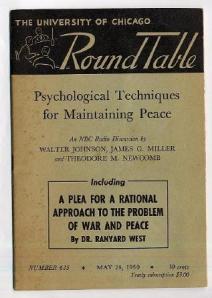 I use this example for the sheer fact that I would very much like to listen to these “dull” programs in order to examine what Waller perceived to be their fatal flaws. Now, some of the programs that Waller created and produced do still exist. The University of Chicago Round Table, for example, was a popular public service program Waller worked on for many years—which has an extensive archive of transcripts, although not recordings. In terms of other educational programming, some of the more prominent commercial network programs like the American School of the Air appear to have some availability. The programs I am interested in hearing, however, used the radio, a program guide, the newspaper, and local city events to weave an intricate educational lesson. Were programs like this, so seemingly well crafted and specifically engineered, really as “boring” as Waller lamented? Would it be clear to me, as a listener nearly a century removed, that there are clear issues or faults with their presentation of educational lessons? Or would Waller’s problems with these programs stem from more complex issues, involving her own personal ideals of what education by radio constituted and how it should be conceived?
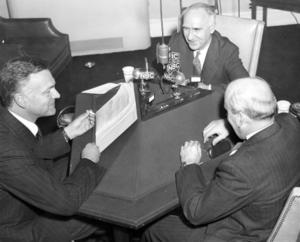
Robert M. Hutchins, Floyd Reeves, and John McCloy record The University of Chicago Roundtable, November 26, 1944
Regardless of the answerability of these questions, they are still worth thinking about in order to understand as much as possible about these missing programs in the context of their “no-sound” status. Not having these sounds to refer to forces us to pose different questions, while tougher to address, that force us to look beyond the audio text to understand what exactly about these programs produced their contemporary reactions. Reading what Waller wrote may supplant the need to hear these programs, but it does not necessarily replace our innate curiosity about them.
The discourse around these “no-sound” programs gives historians a particular reception, in this case, a critical perspective from one radio producer. However, Waller’s public disavowal of educational radio cannot speak to the private consumption of these programs, which may or may not have produced the same negative reaction. Really, then, the Waller example suggests two avenues of inquiry, both equally difficult—a full understanding of what these programs sounded like and contained, and how other listeners felt about them. At the very least, a record of these programs and a selected set of reactions lives on in the print media that avidly reported on and debated so many facets of radio programming.
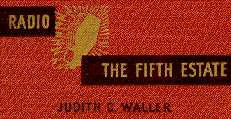
Waller's book, Radio: The Fifth Estate (1946)
—
Sate a little of your curiosity and hear Waller speak in this October 2000 re–broadcast of a 1948 interview she gave on the early days of WMAQ, from broadcaster/historian Chuck Shaden’s “Those Were the Days” radio program.
—
Amanda Keeler (Ph.D., Indiana University, 2011) is a Visiting Assistant Professor at Bucknell University. She teaches courses in film and media studies. Her current research focuses on historical emergent film, radio, and television; media history; media industries; and contemporary television.
Share this:

Pushing Play: What Makes the Portable Cassette Recorder Interesting?
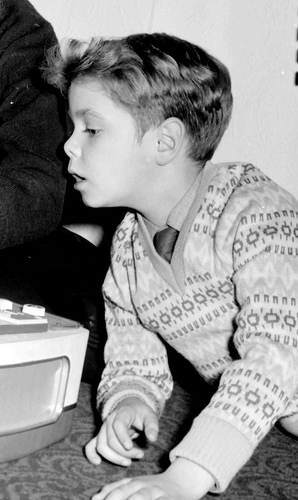
"Change the Speed": image from the "Vintage Kids" archive of flickr user theirhistory
One of my earliest memories of sound recording is one of my earliest memories, period: an isolated image of my own index and middle finger trying to push down the “record” and “play” buttons on my father’s portable cassette tape recorder. More prominent than the visual element of this memory is the haptic one: I can still call up the sensation of the effort required to make the red button go down and latch and the stress on the top joint of my index finger as the resistance bent it backward. Also still with me is a trace sense of the threat of sharp pain, as if at some point previous I had been wounded (perhaps pinched?) by these buttons. How young must I have been to have experienced this degree of opposition from such a small, unassuming device? And whence this desire to persist in the face of it?And: how and where does this object–so unprepossessing with its five big buttons, volume slider, cartridge tray, and little speaker–fit into sound studies and the history of sound recording technology?
There’s a small, rich, growing body of work on tape recording–including work by scholars as different as Kathleen Hayles, Steven Connor, Michael Davidson, and this blog’s doyen, Jennifer Stoever-Ackerman–but almost invariably it focuses on the reel-to-reel recorder, the device the cassette recorder was meant to simplify and miniaturize, at the expense of sound quality. The reel-to-reel was a vital contributor to the development of stereo and hi-fi hobbyism; it was also the mechanism at the center of a series of bold modernist literary experiments with tape recording by Samuel Beckett, William S. Burroughs, David Antin, and others.
Aside from Andy Warhol’s use of it to tape huge swaths of his everyday life (in 1965, he “wrote” a novel consisting of 24 largely consecutive hours of transcribed cassettes) the cassette recorder has no such avant-garde pedigree. The name of the first model, the Norelco Carry-Corder 150, which appeared in 1963, shows the primary focus of its manufacturers’ vision. Ads and trade journal articles from around this time touted the ease with which the device could be toted around on a vacation with the aim of producing an “audio album” of the trip. Doubtless, such albums were made and some may even still exist. But I suspect that the most vibrant history of the Carry-Corder and its descendants lies in the device’s easy adapability into the play world of children. As I and many others of my generation remember it, the pleasure of playing with the device was the way it instigated various sorts of performance, usually based in mimicry of ones we’d consumed through other electronic media. In a manner not unlike Warhol, we created our own little media empires: Dj-ing, news announcing, sportscasting, hosting talk shows with the baby and the dog as guests, singing like Cher on TV, re-enacting TV comedy sketches, recording one’s own comedy sketches, and on and on.
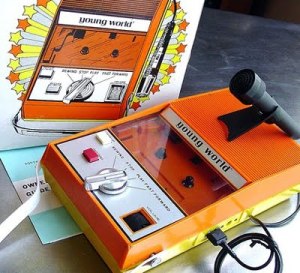
Child's play?: Young World BIC-202 Cassette Recorder
It’s not obvious how sound figures in the context of children’s play. Certainly, the quality with which the tape recorder recorded and played back sound mattered little, if at all. What mattered was the way the device initiated and constructed scenes, provided roles to play. Analogously, as David E. James has noted, one of the most powerful aspects of Warhol’s practice of bringing his Carry-Corder 150 everywhere he went (he was an early adopter, purchasing one in 1964) was that it “ma(de) performance inevitable” and “constitute(d) being as performance” (Allegories of Cinema, page 69). Even playback itself was a matter of secondary interest; how many times do you think I listened to the tape of myself “broadcasting” two innings of a random mid-70s Mets game, delivered as I watched on TV with the sound turned down? My wager is on none. Still, sound is the raison d’etre of the cassette recorder. A few years later, kids might have done similar things with a video camera, but to a lot of kids, the early mass-marketed versions of that device felt much more formal, complicated, authoritative. That was the instrument through which the “official” history of the family was to be told; the tape recorder picked up the creative fragments, the bored interstices, the embarrassments, the extremes–parts of a world that wasn’t to appear before guests. Plus, the sound-based device actually offered greater reach and flexibility along with more forms of integration into other media like television.
My early memory of the recorder, however, seems more primal. Given its intensity, it seems clear that the tape recorder served as a vehicle toward several important forms of self-demarcation, helping me to discover and negotiate certain limits: of my body, of my agency vis-à-vis machines, of my relationships to my parents, of my family’s position in a larger social and economic world. (And in fact, the device was an important part of my family’s livelihood, vital to my father’s work as a radio reporter.) In retrospect, I seem almost impossibly young to be left to my own devices with the machine, and I also have a vague sense that I had been violating some prohibition, perhaps a decree that the recorder is “not a toy.” I wonder how much the force of such a decree originated precisely in the ease with which it could and did become a toy.
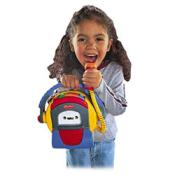
gramophone, film, typewriter, and cassette tape recorder?
It’s unlikely that Friedrich Kittler was going to list “cassette tape recorder” next in his book title after “gramophone, film, and typewriter.” It’s unlikely he had an image of the device in mind when he wrote his bravura dictum, “media determine our situation.” Some technologies don’t stand up to such sweeping statements, toward which media studies sometimes seems particularly drawn. Certain devices, I think, necessitate a broadened and diversified understanding of the things both sound and technology do—even things that aren’t “about” sound in a conventional sense. For many historical narratives of sound reproduction, the cassette tape recorder is a regressive device, a drag on the pursuit of greater audio fidelity, with fidelity defined as “presence.” But the qualities of the cassette recorder that make it significant to our field are manifold, and some of them will be qualities that arise out of their adjacency to the central fact of recording and playing back sound. The “forgotten” areas of the history of sound reproduction technologies aren’t the notable failures—the 8-track players, which after all still draw camp-retro interest–but the most mundane successes. The portable cassette tape recorded never truly failed, it just got left back.
—
Gustavus Stadler teaches English and American Studies at Haverford College. He is the author of Troubling Minds: The Cultural Politics of Genius in the U. S.1840-1890 (U of Minn Press, 2006) and co-editor (with Karen Tongson) of the Journal of Popular Music Studies. His 2010 edited special issue of Social Text on “The Politics of Recorded Sound” was recently named a finalist for a prize in the category of “General History” by the Association of Recorded Sound Collections. He is currently working on Andy Warhol’s sound world, Woody Guthrie’s sexuality, and other stuff.
Share this:


Current Top Posts





April 2021

January 2020

November 2019

October 2019

August 2019

April 2014

November 2017

March 2015

December 2017

October 2015
 Sounding Out!

Recent Comments