
Listening to Punk’s Spirit in its Pre-, Proto- and Post- Formations

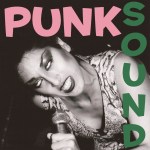
Image of Alice Bag used with her permission (thank you!)
“Genres, styles form around places of cohesion, of transport, of passage. Not an instrumental mathematics (though it can be that too), but a speculative one that seeks out locations of collective affect, of resonance between micro and macro spheres.” –Marcus Boon, “One Nation Under a Groove”
Yes. Punk, is a way of living, being, thinking, and relating to the world. Yes, it is bigger than borders. . .greater than the sum of than any number of bands or even the label of “musical genre” altogether. Its dynamic style visually signifies; its DIY mode-of-operations can empower, even as its more capitalist-oriented versions can frustrate and exploit.
YES YES YES.
But also, NO!
Punk sounds!
Even if punk’s sound intentionally evades classification and clichéd high-fidelity top-ten lists like Keanu Reeves dodges bullets in the Matrix, it nonetheless exists. and means. and incites. and motivates. and creates powerful structures of feeling that resonate through entire lifetimes, reverberations of that one all-ages basement show.
How do we know? Because, at the absolute very least, both of us have heard it with–and through–our bodies. It has moved us, and not just symbolically, intellectually, politically, and metaphorically. It has quite literally vibrationally, kinesthetically, heart-throbbingly, finger bleedingly, head-bangingly, body-smashing-up-against-others-bodily, in the pit of our stomachs-y, angry tear cryingly, skin tinglingly moved us.
Without universalizing our respective experiences in the Jersey and Inland Empire/SoCal punk scenes of the 1990s/early 2000s–and our wide listenings and local involvements since then–we want to say simply that punk sound is not an abstract and negative entity. Punk sounds–and punk’d sounds–form distinct sonic calls to some of us out there in the world that our bodies yearn to answer.
And its listeners’ understanding of and relationship to punk’s sound(s) matters. In her essay “On Not Playing Dead,” Bikini Kill, Le Tigre, and (the) Julie Ruin lead singer Kathleen Hanna described one of the key powers of punk’s live sound as creating a threshold of physical exchange, a vibration drawing folks into “one of the only spaces where we give and receive pleasure publicly” to friends and strangers alike, which she argues “seems radical for a myriad of reasons, especially because it challenges the idea that sexuality/pleasure is only for people in straight/monogamous relationships and not something we as a community can have through music.” Punk sound constructs, enables, and sometimes downright demands a variety of participatory responses, both individual and social.
In short, just ask a punk about what punk sounds like! They know! And they will tell you about it! It’s up to us to figure out how to listen. And what better space to try in the audiovisual ‘zine that is Sounding Out!, started by folks whose scenes taught them how to forge and sustain community with and through sound.
This series (and its follow up in Spring 2017) calls bullshit on the related notions that punk sound is either simple presence–ye olde “three chords,” a misnomer that is always already more geographically and historically specific than popular discourse allows–or overdetermined absence, a too-open, too-inclusive sound that, to riff on Green Day, is simultaneously “nothing and everything all at once.” And we very deliberately use “sound” rather than “music” as our guiding framework to think through punk’s sonic pull, not because punk “isn’t music” (a stale but ever present dis on the genre), but because punk itself sounds out the limitations of musical study ( in addition to Alice Bag’s musical manifesto below, see Leandro Donozo’s “MANIFIESTO POR UNA MUSICOLOGÍA PUNK” suggested to us by Alejandro Madrid).
Our Punk Sound series implicitly argues that sound studies methodologies are better suited to understanding how punk works sonically than existing journalistic and academic conversations about musical genre, chord progressions, and/or genealogies of bands. Alexandra Vasquez’s sound-oriented work on Cuban music, for example, in Listening in Detail (2014) opens up necessary conversations about the “flashes, moments, sounds” in music that bear its meanings and its colonial, raced, classed, and gendered histories in material ways people can hear and feel. While retaining the specificity of Vasquez’s argument and the specific sonic archive bringing it forth, we too insist on “an ethical and intellectual obligation to the question: what do the musicians sound like” (12) and how do folks identifying with and through these musical sounds hear them?
In this series, we invite you to amplify varied historicized “details” of punk sound–its chunk-chunk-chunk skapunk riffs, screams, growls, group chants, driving rhythms, honking saxophones–hearing/feeling/touching these sounds in richly varied locations, times, places, and perspectives: as a pulsing bead of condensation dripping down the wall of The Smell in Downtown LA (#savethesmell), a drummer making her own time on tour, a drunk sitting too near the amp at a backyard party, a queer teenager in their bedroom being yelled at to “turn it down” and “act like a lady[or a man]”. . .and on and on. Today’s essay is by Yetta Howard. Yetta discusses the pre-, post- and proto- punk movements that resisted the hegemony of a dominant punk sound from within. How is resistance be productive of a radical identity?
SOUND!
–Aaron SO! (Sounding Out!) + Jenny SO! (Sounding Out!)
–
The radical impulses of punk sound are generally thought to encompass noisiness, inaccessibly, and inconsistency. Beyond the three chords, anti-virtuosity, and “fuck you” to dominant culture that came to define punk is its spirit of provocation. Punk’s ability to be categorized as a type of identifiable chaos is both what allows it to be readily commodified (in the case of pop-punk), and paradoxically what allows it to coalesce as identity (insofar as punk is the sound of marginal experience). Perhaps, in punk, we can listen for a sense of cultural libertinism, in line with what José Muñoz discusses as “the desire, indeed the demand, for ‘something else’ that is not the holding pattern of a devastated present, with its limits and impasses” (98). Where we hear musical norms challenged in terms of non-heteronormative erotics, like in Bad Brains’ “Pay to Cum,” or as reflecting authoritarian violence, as in the Dead Kennedys’ “Police Truck,” is equally where we may locate punk’s fluidity and refusal to maintain a uniformity of sound.
While punk’s sonic offense to authority and legitimacy was initially cast as a mode of rejecting mainstream politesse and a reflection of a class-specific youth revolt, I want to suggest that these offenses can be made palpable as non-visually-inclined gendered and sexual incitements–inhabitations of sound that are physically felt as anti-normative auditory expression. We hear these expressions today in Xiu Xiu’s “Stupid in the Dark” (2014), set to an uncontrollable pulse “in the moonlight,” the non-normative embrace of violence and the erotic are tangible within the texture of this sinister sound. By listening here to punk’s fringes, I aim to highlight how it actively distorts normativity, disrupts readability, and refuses consistency. I propose that when disobedience is cast as a sexual or gendered event, punk incoherence moves closest toward sounding like a stiff middle finger to dominant uptake–an incoherence that signifies radical identity formation outside the dominant.
While punk became and continues to be legible as one of the most significant cultural upheavals of late-twentieth-century music, its anti-establishment ethos is most pronounced when it reflects gender and sexual transgression. This is most clear in a handful of punk’s first wave and, counterintuitively, in contexts that would not necessarily be called punk. Indeed, its proto-punk predecessors and postpunk experimenters become compelling places to listen to punk’s sonic spirit.
Embodying sexual and ethnic difference as audible protest, Alice Bag of the Bags and the Alice Bag Band, cultivated punk anger as both a menacing scream and a revision of white masculinist rage. As documented in Penelope Spheeris’s The Decline of Western Civilization (1981), while performing “Gluttony,” Bag aggressively meshes with the crowd and, wearing a pink mod dress, pushes slam-dancers out of her way. Uttering “watch the calories,” she fiercely shifts from a reproachable timbre to strident shrieks. In her Violence Girl: East L.A. Rage to Hollywood Stage: A Chicana Punk Story (2011) memoir, Bag includes stories about witnessing her father abuse her mother as well as her struggles with dieting and abortion, all of which obliquely and explicitly informed the female bodily revolt we hear in her raw, counter-melodic vocalizations. As gendered, these forceful contestations of conformity extend to the rejection of homogenizing punk style heard on “We Don’t Need the English” (1979).
Also moving against social-sexual normativity, The Cramps’ version of Hasil Adkin’s psychobilly “She Said” on their Smell of Female (1983) live album—featuring a sex theater on its cover—conspicuously emerges as a sonic resistance to the status quo of mid-eighties sexuality. Alongside the frenzied vibrations of Poison Ivy’s and Kid Congo Powers’s sharp guitar plucking, Lux Interior narrates the hungover morning after a one-night stand using explosively orgasmic, hysterical repetitions of “wooo, eeee, ah, ah!” What we hear in these oppositionally tuned shrieks, grunts and cries is punk loudly throwing its disregard for accessibly and popularity into the ears of general decorum.

The DVD cover of Losier’s documentary. Image used with permission by the author.
The lo-fi and brutish contours of punk have existed for decades along the margins of the genre. Before punk was called punk, before industrial became recognizable as its own genre within postpunk, Throbbing Gristle, which included members Genesis P-Orridge, Peter “Sleazy’ Christopherson, Cosey Fanni Tutti, and Chris Carter, crafted their sound with a broken bass, a homemade modular synthesizer, and a set of cassette-players fed through a keyboard. Using “industrial” to describe their noise pieces and eventually to name their label, the group had a creative friendship with Brion Gysin and William Burroughs. Burroughs employed Gysin’s cut-up technique in/as his writing, which he described/subsequently cut-up: “Images shift sense under the scissors smell images to sound sight to sound sound to kinesthetic” (RE/Search #4/5, 36). If the literary extremes of Burroughs’s words operate in the same scope as their synesthetic ambiguity, then the anti-music provocations that they suggest become something heard in Throbbing Gristle as gender non-normativity, bodily lawlessness, and erotically minoritarian practices.
In an early performance art show and exhibition titled “Prostitution” (1976), members of Throbbing Gristle (who began in 1970 as COUM Transmissions) made full use of accoutrements associated with the abject body: the exhibition featured images from the Playbirds series, pornographic magazine layouts of Tutti, and P-Orridge’s TAMPAX ROMANA, a mixed-media installation that included used tampons. The volume of these images is disruptive, their performative effects straddling the sonic-visual extremes of artistic practice. Appearing in Marie Losier’s The Ballad of Genesis and Lady Jaye (2011), the more recent bodily equivalent is P-Orridge and the late Jaye’s “Pandrogeny” project, a corporeal cut-up: both underwent plastic surgery to look like each other—the physical reference points, like Throbbing Gristle’s sounds’ connections with its sources, became lost as they became one, with P-Orridge getting tattoos of Jaye’s beauty marks, for instance. This is the anti-legibility that characterizes punk’s visionary sonic limits. In their modification of flesh, they embody the material alteration of what is heard in heavily processed tape, ruthless loops, and use of non-musical objects as modes of radical resignification.
Contemporaneous with Throbbing Gristle, Chrome’s formation in 1975 firmly placed its industrial experiments in anticipation of punk with their sonic legacy continuing as postpunk sound. In what is a typical two-ish minute duration of a punk song—say, the Germs’ “Manimal”—Chrome’s “Animal” from Red Exposure (1980) sounds as if it were made of chrome. Tinny, metallic tape manipulations and synthesized guitar make each note sound as if it were sinking in deep, murky water. It is a groove emerging from a bath of acid. For the less-vanilla-inclined ear, this combination of sounds is also immensely erotic. Listening to these multiple sonic elements against the logic of normative arrangement means listening to queer forms of relationally. Here, aural encounters are defined by misalignment rather than complementarity.
The equally confrontational sounds of proto-punk duo Suicide, consisting of the late Alan Vega’s often-terrifying vocals and alarming sparseness of Martin Rev’s keyboard work, ushered in what became No Wave. No Wave, New York’s downtown art-film-performance underground of the 1970s, was a cultural anti-movement that contested the increasing popularity of New Wave as subcultural sound. Visually documented in Kris Needs’s Dream Baby Dream: Suicide: A New York Story (2015), Suicide was one of the first to put “punk music” on fliers for their early 1970s gigs at avant-jazz venues and underground art spaces. We hear punk in Suicide when listening for deviations from punk’s dominant formulae of masculine, churning guitar-rock.
While Suicide’s shows were notoriously destruction-inviting as performances, the antagonism of their sound was established through the use of drum machines instead of drums, incorporation of shadowy forms of disco’s repetition, and, at times, a crooning gone awry. Accordingly, “Girl” on their self-titled 1977 album chill-drips sex as Rev’s opening sequence of full-bodied, low tones undulate at angles for its listeners. Less expected as an accompaniment is Vega’s quivery “turn me on,” murmured “yeahs,” and carnal utters of “oh girl,” which reassign any sense of typically gendered desire. He pleads “touch me soft” before fully offering himself up: these tortured requests morph into submissive orgasmic expressions of desire. Here we might call up the temporally correct yet misplaced mixture of black female sexual agency as disco rhythm and vocal moan-cries in Donna Summer mixed with Iggy Pop’s gravelly appeal on The Stooges’ “Penetration.” Punk’s transgressions are not merely sexual in this case, rather, they embody auditory forms of a sexual avant-garde.
Coming out of New York’s No Wave milieu, Sonic Youth, whose “The Good and the Bad” from their self-titled EP Sonic Youth (1982) defines punk in the negative, by forcing us to revel in dissonance. Thurston Moore plays heavy bass as Kim Gordon and Lee Ranaldo continuously build endless dissonance. The song collapses onto itself until it becomes a rebellious pleasure, an oppositionally melodic omen. The song ends with the heavy bass that initially introduced the song. In opposition to the three-minute Ramones single, it is eight minutes of exhilaratingly wrong notes and inconsistent drumming. The song doesn’t champion “bad,” it breaks down the binary: it refuses to be read as good or bad. Similarly, a live version of this song featuring some vocal work by Moore and Gordon is named “Loud and Soft”—a key description functioning all at once to signal the refusal to be named or the need for classificatory stability—sonic, social, or otherwise.
The musical analogue to Jamie Reid’s Nowhere Buses (1972) image, used for The Sex Pistols’ “Pretty Vacant” (1977) single, is the vocalization of “no future.” Perhaps there was no future for punk’s initial impact if comprehensibility implied watering it down for dull masses. At stake in the politics of punk sound are the identities negotiated at its incomprehensible fringes–they productively and spiritually account for marginal experience. In Xiu Xiu’s “Stupid in the Dark”, we can detect a dark renewal of The Pistols’ not wanting a “holiday in the sun.” Like the others I have pointed to in this essay, Xiu Xiu recognizes how the prurient dangers of night are necessary for non-normativity and discordant strangeness to flourish. In Dirty Beaches’ distanced echoing we can listen for a bloody smirk in the muffled vocal of “Night Walk” (2013) and, rather than necessarily take that bus to nowhere, go somewhere by taking that walk on the other sides of the conventional.
–
Cover image is “Cramps-3” by Chad Johnson CC BY-NC-ND.
—
Yetta Howard is Assistant Professor of English and Comparative Literature at San Diego State University. She specializes in gender and sexuality studies, queer studies, and feminist theories of race and ethnicity. Emphasizing visual and auditory texts, her research and teaching focuses on 20th- and 21st-century American cultural studies with an investment in unpopular, experimental, and underground cultural production. Some of Howard’s work appears in TSQ: Transgender Studies Quarterly, The Journal of Popular Culture, and Women & Performance: A Journal of Feminist Theory. Her book manuscript, Ugly Differences: Queer Female Sexuality in the Underground, is under contract with the University of Illinois Press.
–
 REWIND! . . .If you liked this post, you may also dig:
Enacting Queer Listening, or When Anzaldúa Laughs – Maria P. Chaves Daza
Feeling Through the Keen and Grind: Team Dresch’s Personal Best – Gretchen Jude
Live Through This: Sonic Affect, Queerness, and the Trembling Body – Airek Beauchamp
Share this:

On Ventriloquism, Dummies, and Trump’s Voice


The powerful fantasy of unbridled speech that attends to Trump has equally captivated Democrats and Republicans, liberals and conservatives, those on the supposedly opposite poles of our dual-party system. This is why liberal arguments whose heft hinges on the things Trump has said, citing their lack of logic, their fascistic bent, et cetera, will have utterly no bearing on the man’s popularity. Trump’s pull arises from his vocalization’s appearance as unfettered. And Trump well knows this, which is why he flouts teleprompts and cues, debate preparation, and “party lines.” His act may, as ventriloquist acts often do, end up going badly. My point, however, is that its allure is less about language and more about voice.
Trump’s supporters often praise how the politician gives voice to harsh truths. But that voice itself, that unmistakable instrument, has been a noteworthy element of Trump’s populist image. Though he grew up in privilege…Trump never shed his Queens accent. Today, that accent helps him summon the stereotype of the blunt, no-nonsense New Yorker.
—
 REWIND!…If you liked this post, you may also dig:
Karaoke and Ventriloquism: Echoes and Divergences--Sarah Kessler and Karen Tongson
“Hearing Queerly: NBC’s ‘The Voice’”-Karen Tongson
Sound and Sanity: Rallying Against “The Voice”–Mark Brantner
Share this:


Current Top Posts





April 2021

January 2020

November 2019

October 2019

August 2019

April 2014

November 2017

March 2015

December 2017

October 2015
 Sounding Out!
Recent Comments