
Sounding Out! Podcast Episode #1: “Peter DiCola at River Read Books”
 As multimedia editor of Sounding Out!, it’s my pleasure to introduce our new podcast series. Starting today, Sounding Out! will challenge and enhance our critique of sound in culture by turning to the production of sound as culture with the first of many occasional podcasts, free and ready to download at your convenience. Itunes users can access our stream here: http://bingweb.binghamton.edu/~apape/subscribeSO.html. For listeners with other podcatchers please use http://feeds.feedburner.com/SoundingOutPodcast.
From the crackle, pop and hiss of a record to the scuffle over Arizona noise ordinances, Sounding Out! remains committed to scratching the surface of your everyday with practices, insights, and theories concerning sound and culture. For your listening pleasure, we will provide extended multimedia for our posts, cultural commentary, serendipitous soundscapes, startling sound art, and mobile mixes as we quest for listeners at all corners of the ‘tubes. These podcasts will show not tell, playing back like a new album at a midnight party. Let us celebrate the archeology of sound, as we follow an episodic guide excavating relics of the unseen. If you’ve got an idea for a future podcast or would like to submit work, please drop me a line at aht@soundstudiesblog.com.
In today’s podcast, SO! guest blogger, law professor, and co-author of Creative License: The Law and Culture of Digital Sampling, Peter DiCola mashes creativity, intellectual property, race and music into a lecture you can’t afford to miss. DiCola addresses the legalities of sampling under the current expansive definitions of copyright and discusses how lawsuits brought an end to the “Golden Age of Sampling” in the early 1990s. Arguing that the current music industry practices constrain musical creativity, DiCola suggests reforms that would make clearing samples much more streamlined. With an introduction and Q and A by SO! Editor-in-Chief Jennifer Stoever SO! regular contributors Andreas Pape and Osvaldo Oyola and economics professor Daniel Henderson. Listen in, and leave some feedback!
Thanks to River Read Books for hosting this event, and to William Huston for the recording.
SoundingOutPodcast1-PeterDiCola-CreativeLicense
AT


Share this:

“Sensing Voice”*
*a longer version of this piece is forthcoming in Senses & Society 6 (2), July 2011.

Bathroom Recital 2007
In 2007, I received an invitation to a recital that would take place in my bathroom; the artist offered to present an underwater concert in my tub. My reaction? “Crazy,” I thought. “Why go to the trouble of singing in an element so far from ideal?” After a year of mulling it over, though, I finally realized that what I had dismissed for its hopeless impracticality might—precisely because it was impractical—offer fresh perspectives on singing and listening by resituating these familiar activities in vastly unfamiliar territory.
The underwater singing practiced by contemporary American soprano and performance artist Juliana Snapper challenges audiences to confront their unexamined assumptions about the relationships between the voice and materiality, the sensed and the singular. How do the physical and sensory properties of singers’ and listeners’ bodies affect and participate in the music we create and the sounds we hear? How do the physical space within and the matter through which sound travels shape what we hear? And how do the relations between these aspects affect what it feels like to sing, and what it is possible to hear?

The rooftop bar at the Standard Hotel, downtown LA
During the spring of 2010, while I was working on an article about Snapper’s project and teaching a seminar on the multi-sensory aspects of music, Snapper offered to mount a participatory version of her project for my class. She took us through some exercises in a large swimming pool in downtown Los Angeles. The first exercise paired us up; one person gently held the other under water, while the person underwater made sounds. I was paired with Natalia, who shouted––but with my ears above the water I couldn’t hear her voice.

The author with Natalia Bieletto (under water). Aquaopera #4/Los Angeles, 28 April 2010.
So we tried another strategy: one person made sounds underwater while the rest of us put our heads and ears in – and then we could hear her. We found that the deeper into the water we descended, the more difficult it was to sing high notes. Fast tempi were also difficult to maintain; Natalia’s attempt resulted in muddled sounds.
We found that the deeper into the water we descended, the more difficult it was to sing high notes. Fast tempi were also difficult to maintain; Natalia’s attempt resulted in muddled sounds. Surprisingly, while sung sounds didn’t seem very loud, small internal throat sounds were incredibly powerful. These exercises demonstrate how much the medium through which sound waves flow affects their characteristics: their speed, direction and so on. It also shows that in order to register sound, the listening body (including the head) must be immersed in the material through which the sound flows.

The next exercise linked the six of us together
The next exercise linked the six of us together by the arms; three participants stood in a line, with their backs against three others. We sang in a drone-like manner, playing with our voices above the water, at its surface, and then slowly sinking into it. We felt the sonic vibrations largely through direct contact with each other’s bodies. Of course sound also passed through the air and water, but because the most immediate path was from one body to another, this was the sensation that overpowered us.
At the end of the day, gathered around the poolside fireplace, we discussed how different singing felt in a liquid environment. We’d discovered that aural experience is predicated on physical contact with sound waves through shared media, in this case water and air, flesh and bone. We noted that the shared medium makes a great differenceto how we experience the voice, and that the sound we ultimately hear depends partly on what is sung, and partly on the medium through which it passes (and how our bodies interact with that medium). In other words, in Snapper’s workshop we discovered that sound is a multi-sensory experience, tactile as well as aural. It also became clear that sound and music involve much more than traditional theories and notation can capture. (For a more thorough discussion of the differences between singing and sound underwater and in air, please see my forthcoming article.)
-

- At the Standard poolside fireplace.
-

- Hyunjong Lee and Zachary Wallmark.
-

- Sam Baltimore and Alexandra Apolloni.
-

- Jill Rogers.
I would like to underscore here that the character of a given sound source is not stable. Instead it is dependent on specific material conditions, and on particular relationships between the elements involved. A sound signal will move with a given speed depending on the material––air, water, metal, glass, etc.––through which it is propelled. As humans register the sound it will move more or less directly through the ear drum or bones (and then transfer to the inner ear) depending on the relationship between the material through which it is propelled and the materiality of the ear. The part of the body that registers sound also plays a role in its apparent directionality.

Juliana Snapper.
For example, our ability to hear in “stereo”––two distinct signals, left and right––is the result of sound entering our bodies from two directions (two ears). Because we most frequently deal with sound as it is propelled through air, we take this as a given and adjust our musical and acoustic research (and thus our concert halls and (performance spaces accordingly).
By highlighting the material aspects of sound and their reception, Snapper reminds us that what we hear depends as much on our materiality, physicality, and cultural and social histories as it does on so-called objective measurements (decibel level, soundwave count, or score), which are themselves mere images. Our experience of sound is a triangulation of events in which physical impulses (sonic vibrations), our bodies’ encultured capacity to receive these vibrations, and how we have been taught to understand them are at constant play, and subject to negotiation. In the experience of sound, what becomes clear is not a stable explanation of what sound or music is. Instead we are led to understand that each such account is a composite manifestation of our perception of sound at a given moment in time and place.
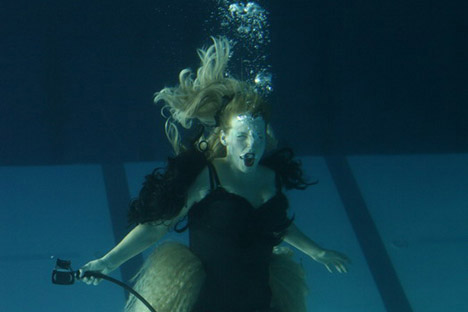
Juliana Snapper
Share this:


Current Top Posts





April 2021

January 2020

November 2019

October 2019

August 2019

April 2014

November 2017

March 2015

December 2017

October 2015
 Sounding Out!
Recent Comments