
Black Excellence on the Airwaves: Nora Holt and the American Negro Artist Program
—Co-authored by Chelsea Daniel and Samantha Ege—
Nora Holt (c.1885 – 1974) was a leading voice in Black America’s classical music scene. Her activities as a composer, performer, critic, commentator, and more shaped the Harlem Renaissance and its Chicago counterpart. As the fervor of the Black Renaissance progressed into the Civil Rights era, the energy that drove Black women’s activism sought greater outlets, one of which was the male-dominated world of radio. In radio, Holt continued her mission to broadcast Black excellence and there, her voice found greater power.
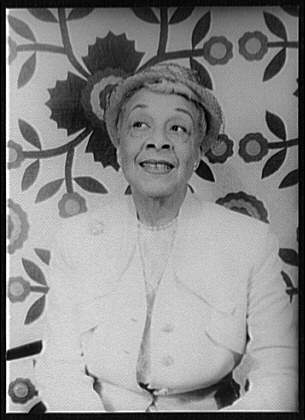
Photograph of Nora Holt by Carl Van Vechten. Retrieved from the Library of Congress website.
As two classical pianists of African descent, we—Chelsea M. Daniel and Samantha Ege—were accustomed to Black women’s voices (as embodied in their compositions, performances, and criticism) being minimized, or muted all together in the Western art music narrative. Hearing Holt for the first time was powerful.
Chelsea never knew that someone who looked like her existed in classical music, especially someone who had as great of an impact as Holt. Starting her piano studies at five, Chelsea was consistently the only Black female pianist in both her high school and college programs and she felt very isolated. It was nearly impossible for her to find any representation of Black female pianists and she was only encouraged to play a “standard” repertoire, which is dominated by white male composers. In her sophomore year of college, Chelsea took a music history course that taught her about diverse musicians who were omitted from her textbook. This discovery and a meaningful partnership with friends who shared similar experiences to her prompted the beginnings of numerous projects dedicated to showcasing music by diverse musicians, one being her junior degree recital where she programmed Sonata in E minor by the groundbreaking African-American composer Florence Price (1887 – 1953). With few performances of the piece existing online, Chelsea found Samantha’s recording and decided to reach out asking for guidance with the music.
Samantha’s journey had been very similar to Chelsea’s, from looking to see some part of herself reflected in her studies to actively seeking a classical music history that celebrated the truth of its diversity. These similarities are what led them to Price, and eventually to this collaboration. At the time Chelsea reached out, Samantha was developing her research on Price’s network and its impact during the Chicago Black Renaissance. As Samantha began to piece Holt’s influence together, she couldn’t help but lament the radio silence around her life and legacy in the mainstream musical consciousness. The following tweet from the Red Bull Music Academy certainly rang true. Or so she thought.
https://twitter.com/RBMA/status/879617104030420992
Chelsea came across Holt’s literal voice during her internship at WQXR-Radio, to which Samantha’s reaction was: “Oh. My. God.” Chelsea had been trying to track down locations in New York where Price’s friend and collaborator composer-pianist Margaret Bonds (1913 – 1972) had performed. She was shocked to find a live recording of the artist on the American Negro Artist Program, something that does not even exist on YouTube. For us to hear Bonds on the piano and Holt’s actual voice, with the crisp mid-Atlantic elocution of a bygone era but a message of Black excellence for the ages, was to feel inspired, renewed, significant, and empowered (much like Holt’s listeners during her time).
***
Born Lena Douglas in Kansas City to a minister father and musically-inclined mother, Holt’s music education began with playing organ in the church. Her musical pursuits aligned with the Talented Tenth thinking that W.E.B. Du Bois promoted around the turn of the century; it was believed that the highly educated top ten percent of the African-American population would uplift the race and that the study of classical music would provide a tool for mobility. However, Holt also lived beyond the limits of early twentieth-century respectability. As a young adult, she challenged the archetype of the modern day Black woman. By the time she had graduated from Kansas’s Western University, a prestigious HBCU, she had been married three times while still managing to graduate at the top of her class.
In 1917, she married her fourth husband, George Holt, who was a rich hotel owner thirty years her senior. She changed her name to Nora Holt. Prior to meeting her husband, she moved to Chicago and earned her living as a cabaret performer while also actively performing, composing, and promoting classical music. In 1918, Holt became the first person African-American person in the United States to attain a Master of Music degree, which she earned at the Chicago Musical College. For her thesis composition, she presented an orchestral piece called Rhapsody on Negro Themes. The rhapsody was one of over 200 compositions that Holt wrote. Unfortunately, many of them were lost and have yet to be recovered. Holt had kept her manuscripts in storage during her time away in Europe, but returned to find that all had been stolen. The only surviving works were those that had appeared in her publication, Music and Poetry: the art song “The Sandman” and Negro Dance (1921) for solo piano.
Negro Dance with Samantha Ege, piano
Holt’s advocacy for Black artistic excellence became even more far-reaching with her work as a music critic for the Chicago Defender and the New York Amsterdam News. She reviewed all of the concerts with African-American performers and composers that she could find and made history as one of the first women to write for a major newspaper as the Chicago Defender’s first ever music critic.
Holt moved into radio during the 1940s. Her American Negro Artist Program on WNYC began in 1945 and spanned almost a decade. It was upon this platform that she used her voice to further amplify the work of Black classical practitioners.
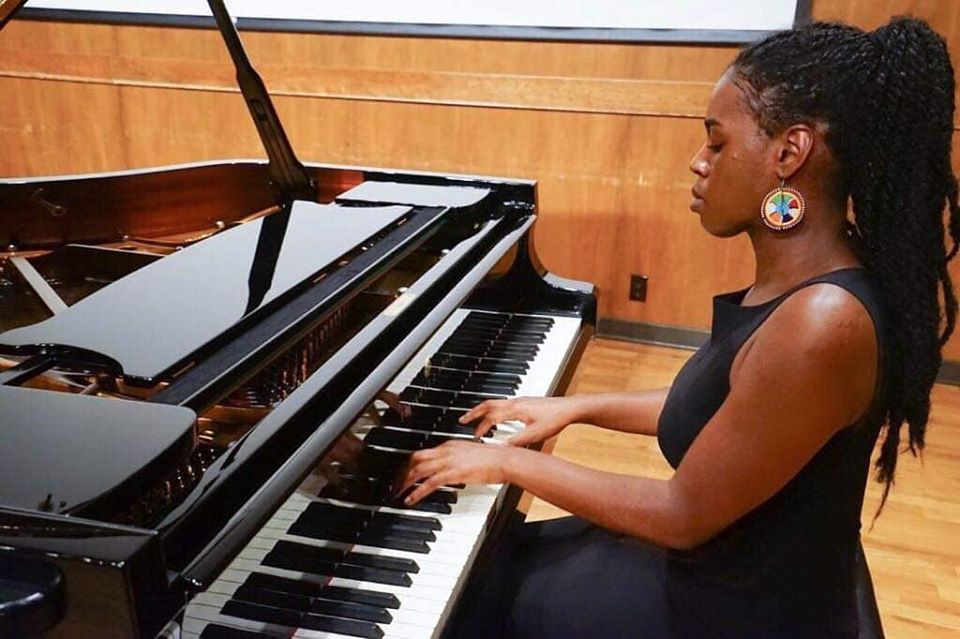
Chelsea M. Daniel, Butler School of Music, University of Texas at Austin. Image courtesy of the authors.
Chelsea found that the NYPR Archive Collections had published Holt’s 1953 American Negro Artist Program. This half an hour segment aired on February 12 at 5pm and was part of WNYC’s 14th annual American Music Festival. Though the scope of the festival was far broader, Holt’s program specifically highlighted the classical artistry of African-descended practitioners. February 12 fell in the middle of Negro History Week–the forerunner of today’s Black History Month–which New York Governor Thomas E. Dewey had proclaimed from February 8 to 15 (a span selected by the Week’s founder, Dr. Carter G. Woodson, in the 1920s to encompass the birthdays of Abraham Lincoln and Frederick Douglass). With this program, Holt led her listeners through the multifarious layers of Black diasporic representation.
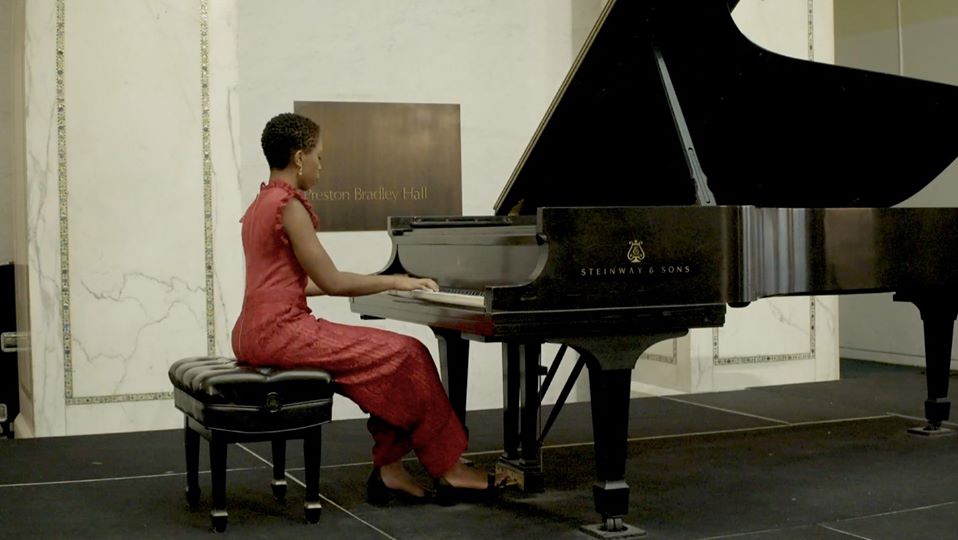
Samantha Ege, Preston Bradley Hall, Chicago Cultural Center. Images courtesy of the authors.
February 12 was also the commencement date of the festival, which was first announced in early February, in 1940. WNYC planned to broadcast an all-American series of concerts (forty in total) that would begin on February 12 and end on February 22, as marked by the dates of Abraham Lincoln’s and George Washington’s birthdays, respectively. Morris. S. Novik, WNYC director, told the New York Times (February 3, 1940) that the purpose of the festival was two-fold. He elaborated:
One purpose is to build the municipal radio station into an even greater force in the cultural life of the community, and the second is to promote the cause of good American music. American broadcasters have done a splendid job in developing appreciation of classical music. Radio must do still another important job by focusing attention on American music, and by demonstrating that Americans have written good–even great music.
The American Music Festival was the first of its kind to promote music that encompassed the nation’s musical past and present on such a scale, and with such stylistic variety. According to Novik, no other radio station had attempted to broadcast such a wide cross-section of American music with the same grand vision that he had. The New York Times reported on just how extensive this cross-section was (February 12, 1940):
The concerts will cover nearly all types of American composition. Simple ballads which the pioneer sang as he plodded his way Westward will be included, along with the professional orchestral works of today. Spirituals and blues, indigenous to American soil, will vie with compositions that incorporate the latest innovations. All types of compositions: mountain songs, barber-shop ballads, vaudeville melodies, marches and the more serious forms of composition which make up the musical life of America will be represented. The festival offers an affirmative answer to the question, “Do we have American music?”
Holt’s program not only evidenced a resounding “yes,” it presented a pan-diasporic purview that affirmed the socio-sonic pluralities of Black artistry. Samantha uses the term “socio-sonic pluralities” to ground the musical developments of Black cultural creators in their environment and to recognize how various social conditions can shape artistic expression. She identifies this as a central component in Holt’s 1953 American Negro Artist Program, particularly as the program went beyond the United States to embrace the Americas. With composers whose backgrounds encompassed Canada (R. Nathaniel Dett) and St. Kitts (Edward Margetson) and musical influences that merged different diasporic folk traditions with Romantic, neo-classicist, modernist, and Black Renaissance aesthetics, the American Negro Artist Program celebrated the interconnected, yet also distinct audiovisual histories of the African diaspora.
Program:
“The Breadth of a Rose”
William Grant Still, composer
Viola John, contralto and Margaret Bonds, piano
“I want Jesus to Walk With Me”
Negro Spiritual arranged by Edward Boatner
Viola John, contralto and Margaret Bonds, piano
“His Song” and “Juba Dance” from In the Bottoms
- Nathaniel Dett, composer
Una Hadley, piano
“One” and “Genius Child,” based on poems by Langston Hughes
Edward Lee Tyler, composer
Edward Lee Tyler, bass-baritone and Norma Holmes, piano
“First Movement” from Fantasy on Caribbean Rhythms
Edward Margetson, composer
The American String Quartet: David Johnson, 1st violin; Frank Sanford, 2nd violin; Felix Baer, viola; and Marion Combo, cello
“By the Sea”
Julia Perry, composer
Adele Addison, soprano and Margaret Bonds, piano
“The Negro Speaks of Rivers,” based on a poem by Langston Hughes
Margaret Bonds, composer
Adele Addison, soprano and Margaret Bonds, piano
On a scholarly level, Holt’s American Negro Artist Program adds another dimension to the way Samantha interprets the socio-sonic pluralities of Black artistry in the post-war era. Accessing Holt’s voice in the context of radio reifies connections between growing technologies and Black classical propagation at this time. In the absence of Holt’s full composition catalogue, hearing Holt amplify the work of her esteemed peers gives an enhanced perspective on her musical developments—from composer to curator, off the score and onto the airwaves.
On a personal level, however, it is upsetting to not have learned about Holt sooner and, as Chelsea elaborates, to not have a face like Holt’s to look up to during the loneliest moments of our education. Holt’s work validates Chelsea’s own pursuits, particularly in radio. Holt successfully created her own space in classical music, and did so unapologetically. She provided opportunities for Black musicians to be at the forefront and challenged a system that was not built for first-person Black narratives. And so, we take a leaf from her book, recognizing that the (re)sounding of her story is also the celebration of our own.
Listen to Holt and the American Negro Artist Program here.
—
Featured image:”Music stand (1)” by Flickr user Rachel Johnson, CC-BY-ND 2.0
—
Chelsea M. Daniel is a senior at the University of Texas, Austin, pursuing her Bachelor’s in Piano Performance. She is devoted to showcasing the stories and music of marginalized people and musicians. Daniel is the co-founder of the award-winning Exposure TV, which was created to highlight composers and musicians from underrepresented backgrounds. Daniel came across the American Negro Artist Program during her internship at WQXR-FM.
Samantha Ege is a scholar, pianist and educator. Her PhD (University of York) centres on the African-American composer Florence Price. Ege’s upcoming article on Price, Holt and the Chicago Black Renaissance women is called “Composing a Symphonist: Florence Price and the Hand of Black Women’s Fellowship” and appears in Volume 24 of Women and Music: A Journal of Gender and Culture. As a concert pianist and recording artist, Ege continues to amplify Black women composers in her repertoire.
—
 REWIND! . . .If you liked this post, you may also dig:
My Music and My Message is Powerful: It Shouldn’t Be Florence Price or “Nothing”-Samantha Ege
Spaces of Sounds: The Peoples of the African Diaspora and Protest in the United States–Vanessa Valdes
Deejaying her Listening: Learning through Life Stories of Human Rights Violations– Emmanuelle Sonntag and Bronwen Low
Share this:

Youth, Reverberations, and Detroit’s Most Charismatic Rapper
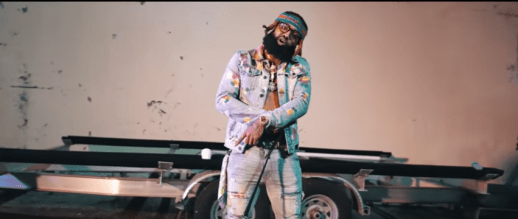
“Type in Sada Baby on the computer and let them hear the difference.”
Devante gives me this advice in the midst of an escalating back-and-forth among his peers about the difference between singing and rapping. Eighteen middle schoolers lounge around two picnic tables inside our local community center for this six-week summer program. We’re still in the first week, and each day they’ve name-checked Sada Baby, a charismatic rapper from the eastside of Detroit. I’m too occupied at the moment—trying to keep the conversation from spilling into an argument—to heed Devante’s advice, so he takes matters into his own voice.
“Rapping is like this,” he tells the group while starting to nod his head to an ear-magined beat. “Oh boy, I ain’t playing no games!” Devante raps the first half-bar of “Oh Boy,” Sada Baby’s 2017 track that narrates his street exploits and threatens his rivals — often with violence to the women they might or might not love. Devante not only raps this opening line but approximates the grain of Sada Baby’s voice, at least as much as he can since his adolescent tone hasn’t yet caught up to his linebacker build. My own ear—from over 20 years as hip-hop DJ, turntablist, and vinyl enthusiast—is more Sadat X than Sada Baby. But Sada’s playful allure is audible even to me, like while bending his cadence into indecipherable sounds over the track’s intro. And he covered “Return of the Mack” into a shirtless gunplay revenge track. So there’s that, too. I can understand the affective draw he has on the young people in the room. And even if couldn’t, this wouldn’t be the last I would hear of him in Yaktown Sounds that summer.
Yaktown Sounds is an emergent space of sound making I curate in and around Pontiac, Michigan. (Pon-ti-Yak = Yaktown, get it?) A postindustrial city halfway between Detroit and Flint, Pontiac is the home of jazz drummer Elvin Jones, hip-hop group Binary Star, and perhaps the most respected battle rapper on the national scene today: JC. Since 2015, I’ve organized an evolving network of artists—usually DJs and beat makers—to make space for youth and community members to play with sound. Of course, play and sound go well together. In Yaktown Sounds, sometimes it’s elementary-age youth at the public library hitting pads and twisting knobs on MIDI controllers until they like what they hear. Other times it’s daddies and daughters scratching a record under the needle to see what comes out. The summer of 2017, I lined up a different musical artist each week from Pontiac and Detroit to visit and share their skills.

Photo at Yaktown Sounds by James Easterly
My curatory approach to this space takes inspiration from Saving Our Lives Hear Our Truths (SOLHOT), a creative, visionary, performative Black girlhood practice. In part, SOLHOT generates from a particular stance on Black girlhood sound. In Hear Our Truths (2013), SOLHOT visionary Ruth Nicole Brown theorizes Black girlhood sound and the ways it resists and improvises around neoliberal youth programming constraints that are intended to “fix” youth. Riffing off Tricia Rose in Black Noise, Brown theorizes Black girlhood as a sound nobody can organize. It bounces off adult listenings that would compress it into binary identity positions like sass/silence or into white mainstream notions of politeness and civility. What follows from this stance are not constrained, prescribed “learning environments” for youth but open, performative, imaginative spaces not always under adults’ control. This is the type of environment I try to facilitate in Yaktown Sounds.
This stance toward space and environment means vulnerability to reverberations and their affects. Reverberation, of course, is a phenomenon and technique that plays a prominent role in Black diasporic sonic expression. As Michael E. Veal writes, its affect/effect is most pronounced through Jamaican dub music: the collisions among sounds through echo, delay, and reverb. Veal’s engagement with dub and reverberation is also conceptual. In Dub (2013), he considers its echoes and ruptures “a sonic metaphor for the condition of diaspora” (197). In Sound Curriculum (2018), Walter Gershon thinks with sound to make a similar argument for reverberation and other physical, metaphysical, and aural phenomena: “Because sounds are already in motion, they are always reverberating, bouncing off of objects from sinus cavities to walls to coral to brush to air to water to stone” (56). In these instances, Veal and Gershon take up reverberation in both aural and environmental settings. Yet these ideas also apply to the spaces where youth and adults co-create together. What collides, bounces, and stays in motion? What counts as a reverberation?
In that summer of Yaktown Sounds, I understand Sada Baby’s aural presence as a kind of reverberation. He stayed in motion, colliding with youth judgments about what counted as rap, how a rapper’s voice should sound, and even my own aspirations for the space. These collisions were most apparent while preparing each week for our visiting artist.
Before a visit from Mahogany Jones, we watched the video for her song “Blue Collar Logic.” Landon was the first to respond while leaning back against the table, feet kicked out in front of him, and retwisting his short bronze locks:
“Can we see another one? That one wasn’t good. I didn’t think it was good. Not as good as I thought it would be. It was too much of that, uh, old time. I just think she didn’t rap enough.”
For Landon, the standard for rapping enough and not sounding “old time” was—you guessed it—Sada Baby. “He actually raps,” Landon noted while explaining. If we consider music and song not only as art but as different organizations of sound (another point from Gershon), Landon has a point. To get specific, some of Sada Baby’s songs are continuous bars of rapping — no hooks, no chorus, no rest. In “Oh Boy,” Sada Baby raps for two minutes and 20 seconds of the song, and guest artist FMB DZ raps a 40 second verse. Straight bars over a trap beat. By comparison, “Blue Collar Logic” is also roughly 3-minutes long but has a fuller song structure. Mahogany Jones raps for 1 minute and 20 seconds across two verses. In the golden era template of DJ Premier, cuts from DJ Los make up the 30-second intro, the two choruses, and the instrumental outro that lasts approximately one minute. If we do the math, Sada Baby’s track has more than double the rapping compared to Mahogany’s.
My point here isn’t to judge which organization of sound is better; there is no wrong way to organize sound. Rather, these details illustrate two very different organizations and how Sada Baby’s made up the basis for Landon’s judgment.
If Landon’s directness that “she didn’t rap enough” rings a bit harsh to our polite adult listenings, then hear Kareem slice through the group conversation after listening to hometown artist Kodac aka M80, who had just returned from a European tour:
“He don’t know how to rap.”
Kareem’s judgment was based upon what he heard as singing and rapping happening in the same song, an organization of sound he classified as “old.” When I asked Kareem what Kodac needed to do to be a better rapper — “in your opinion,” the recommendation was equally direct: “Be more like Sada Baby.”
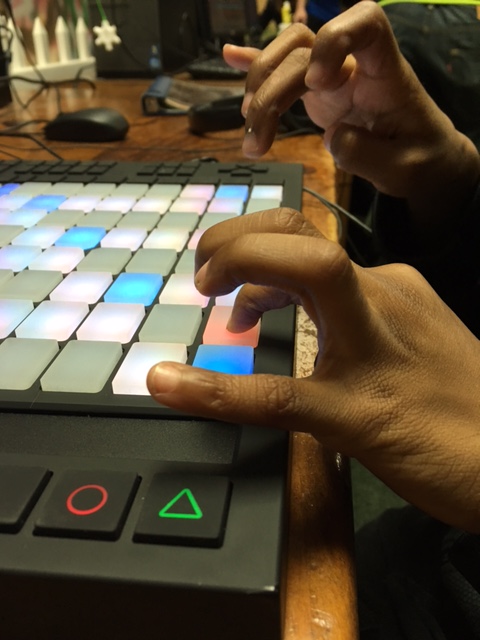
Photo at Yaktown Sounds by Emery Petchauer
These responses from Landon and Kareem show us something else about the movement of reverberations through this space. Sada Baby’s aural presence not only collided with youth preferences and claims about rap. As a reverberation, he was used to berate other artists whose sounds and configurations of sound were heard as “old” through youths’ generationally tuned ears.
Despite the youth-centric stance I take on spaces like Yaktown Sounds, I’m not gonna lie: the strikes and blows of these reverberations hit me too because of the relational ties I hold with these artists. They are part of my own creative community. I’ve DJed on stage for Kodac. I go to all of Mahogany’s shows. As a result, I remain vulnerable to the force of these reverberations. Owning up to that point, I am reminded of what Shakira Holt teaches us about adults and how we listen, particularly in education settings: sometimes we are not as open-eared to youth as we imagine ourselves to be — especially given the ways we have been socialized to censor and silence Black youth, even ones who live through our own cities, schools, and community centers. Though I’m two years removed from this particular iteration of Yaktown Sounds, Sada Baby continues to reverberate with/against me. He stays in motion even now, echoing through my writing as I toggle over to his Soundcloud page, press play on his songs, and wonder if I will hear something that makes me tune in differently to the young people around me.
—
Featured image: Screenshot from “Sada Baby–On Gang”
—
Emery Marc Petchauer makes beats and DJs with kids in and around Pontiac, MI. A former high school English teacher, he works as an associate professor of English and Teacher Education at Michigan State University. His scholarship has addressed the aesthetic practices of hip-hop culture and their connections to teaching, learning, and living. He also studies the high stakes test educators must pass to become certified teachers. He is online at empetch.com and on Twitter at @emerypetchauer.
—
 REWIND! . . .If you liked this post, you may also dig:
Deep Listening as Philogynoir: Playlists, Black Girl Idiom, and Love–Shakira Holt
The Sounds of Anti-Anti-Essentialism: Listening to Black Consciousness in the Classroom–Carter Mathes
Can’t Nobody Tell Me Nothin: Respectability and The Produced Voice in Lil Nas X’s “Old Town Road”–Justin Burton
Share this:


Current Top Posts





April 2021

January 2020

November 2019

October 2019

August 2019

April 2014

November 2017

March 2015

December 2017

October 2015
 Sounding Out!
Recent Comments