
Aural Guidings: The Scores of Ana Carvalho and Live Video’s Relation to Sound
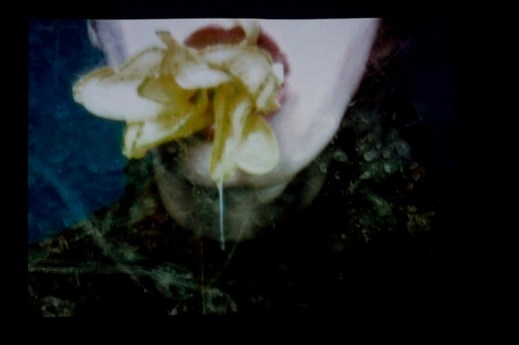
If you were to choose to watch live video composer and performer Ana Carvalho’s work silent, your brain would be easily guided into a synesthetic experience, assigning sounds to each rhythmic change in color, pace, frame. Her images oscillate…they dance, they breathe. As you experience this, there might be a sense that you have lost your ability to hear the outside world, as these images are clearly attached to, woven with, a part of sound.
There is a history of composers such as Iannis Xenaxis and Cornelius Cardew using graphic scores and notation in place of traditional methods and symbols, as a way to reach a deeper expression through allowing greater interpretation, chance, and improvisation with their musicians. They concentrate more on conveying information on how a work is played, rather then what notes to play when. Carvalho uses the graphic score much in the same way, but also as a method of communication between live audio and live video performances, instructing a dialog between two disciplines that are often side-by-side or leaning on each other, but rarely woven together in the manner I have experienced both as audience, and as an audio composer, with her work.
The following interview has been edited for style.
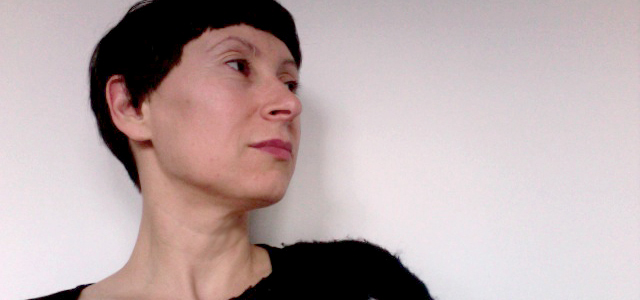
Maile Colbert: Hi Ana, how are you today? And what are you working on currently?
Ana Carvalho: I am good. I’m working on a performance to present at the solstice, with Neil Leonard, and a text about the possibility of expansion of the mind through performing and fruition of being in an audiovisual performance.
At the moment the performance is still involved into misty possibilities of what we know of each other’s work, and what we have been developing individually and talking about. There will be saxophone, electronics, and visuals made of strange landscapes.
MC: At this stage in the process, when working with a sound maker such as Leonard, how do you think about the images’ relationship with the sound?
AC: Images come to be as they appear on the screen in two ways: first there is the introspection about what have I learned from the previous performances, what I want to explore further and what I don’t want to repeat. Secondly, there is the encounter with the other person and his or her work and how do I translate their sound into moving image. At some point my ideas change through the exchange and becomes something else, a visual performance that could only be presented with that sound, with that person, at that place and time.
Regarding the sound in particular, sometimes I propose a structure, or a score, to be followed by sound and image. Other times it is improvised. As I enjoy very much the process, I tend to like to make structures for the performances, which develop along drawings and texts.
MC:  Your scores of text and image are quite beautiful, and of course I am personally lucky to both have some of the published ones, and have had a chance to work with them as well.
As a sound maker, I find they have a flow and almost narrative that feels both intentional and intuitive, no matter how abstract. When you make these, how much of a clear idea of how the audio would sound in relation to the images is in your mind? Do your images always or often follow the same score? Do the results surprise you?
AC: My state of arriving at the point of starting to make a composition is very much the same I described about working with a sound artist towards the presentation of a performance, that is, what do I want to develop further and what I want to leave behind? Then, what is particular to this new situation/performance/collaboration? The composition is a sort of a vehicle that connects process and performance, and that connects sound and image.
The composition is for the two mediums, sound and image, and they are considered in terms of composition as a unity made of two parts. They have to work in a conversational way. Imagine two close friends and how they would be talking to each other. I have in my imagination how it would be ideally two people in that position. That is how sound and image relate on the composition. I think in the most generic terms, more of intensity and flow rather than sonic results. For this reason any musician, with any possible (or invented) instrument, with whichever image or sound database, is able to play a score. It’s required though that the performers take time to reflect, that the composition is understood and incorporated in the way each one plays their instrument. The results are always a surprise.
MC: What inspired you to start working in this way with the scores, and when?
AC: My interest in making compositional scores, and from them documents related to my performance, has been inspired by conceptual and process based art and by my research on documentation of the ephemeral. The focus on the process highlights the need for other representations that are not the finished art object per se. These other ways of representation use available media to describe the making and the reflection while making. Mary Kelly’s Post-Partum Document (1973-79) is a very interesting example of what I am describing. She is expressing her feelings, the growing process of a child and an external perspective through visual objects displayed both as an exhibition and in book formats. Within audiovisual practice, I have been researching for the past five years on creative ways to make documents of the process. My attention was directed to composition in music. The influence of the composer Cornelius Cardew has been great, especially his work Treatise and his idea of directed improvisation. John Cage was also very important for his structures (in talks, texts and music), the use of the I Ching, and for bringing chance into composition.
Simultaneously, while studying and reflecting on these and other subjects, I realized that intuitively I make drawings, texts, and take photographs as a way to detach from the everyday and immerge into a creative process which eventually will lead to the concept and content of a performance.
 Systematic Illusion – The Subtle Technique in an Earthquake Detector Construction has been so far the most complex project to include a score, as well as a series of photographs and the performance. It was presented in its complete form just once in the curatorial project Decalcomania. Organizing these elements as composition, creating a score, and from all this to make little books has been a way of putting into practice my research interests.
A result from the construction of the score has been that the process doesn’t stop with one performance, as I then use the same scores to perform with different artists. For example with the score from this project I created the Earthquake Detector performance series within which we presented the performance together in São Paulo in 2013 at the event Arranjos Experimentais.
MC: As you speak about your work, I keep thinking about Robert Bresson’s Notes on Sound and how most of his notes refer to variations of not letting sound or image take over each other, but to weave them together within the composition. In his Notes on the Cinematographer, he also wrote number “10. not to use two violins when one is enough”. What might this mean to you in relation to your collaborations?
AC: One very inspiring event in the attempts I make to construct a formal grammar and way for me to address collaborations has been to see the film Passage Through: A Ritual by Stan Brakhage. The film was screened at Serralves Museum, here in Porto, Portugal, in June 2011. The event addressed the collaboration and improvisation of music in relationship with cinema from the work of the composers Malcolm Goldstein and Philip Corner and their music in the film work of Daïchi Saïto and Stan Brakhage.
The most amazing thing in Passage Through: A Ritual was to watch such a beautiful film made of an abundance of black screen, that is, an absence of visual form, of light and movement. Each appearance of image was a precious moment. What I learned is that the visual emptiness, and sonic as well, contains information when stimulated through glimpses of image, making the experience of seeing and listening very deep. (In his Notes), Bresson sums up this appropriateness of means and complex connections in a simple and clear sentence.
On the scores I make most of the information can be used for both sound and image. On the Refractive Composition, the scale of greys is for image. That was its purpose when the score was performed the first time. But if someone decides to play from the score without knowing anything about it beforehand, and lacking this intention (which was relevant when it was made, but afterwards there was the decision to not leave it as a declared instruction), that person can also interpret the same information as sound.
MC: Alchemy has been described as: “…the chemistry of the subtlest kind which allows one to observe extraordinary chemical operations at a more rapid pace; ones that require a long time for nature to produce” (Paul-Jacques Malouin, Alchimie). Looking from a history of cinema, there is a tradition and pattern of picture coming before sound, a hierarchy that is both in process and production. You often feel this as an audience. Your work and collaboration have a quality of sound and image having been born together. Having worked with you using your scores, I was likening it to being given a recipe where you have before you ingredients and suggestions, but there is room for your own improvisations and reading. Perhaps that is where that feeling of both disciplines coming together in a manner that feels like they are one part of a whole, rather then separate but leaning on each other, comes from.
Is there an alchemical element to this work, or are you seeking one out? And in that regard, are your scores like a recipe?
AC: What I am seeking with my work can relate to alchemy as experiments and attempts in the quest for depth in all things at the point where differences and frontiers become undefined and irrelevant (in communication between beings, in areas of knowledge, between matter and energy). This quest for depth is based on stubborn curiosity towards evolution as a person, and as part of the world. Perhaps there isn’t an alchemical element to the work, but rather a connection with alchemy, in the ways scores relate to the experiments as recipes to be shared with others in construction and change. This takes me to another aspect of composition. It is difficult for me to understand live image as just accompaniment to a music performance, and vice versa. This is perhaps central to my composition, and the reason why I am doing it for sound and image, to be able to perform that intertwined.
If we look at compositions as recipes, it aim will be to set the performers in tune with each other in the construction of a performance, to set sound and image in dialogue, and to permit a multisensory experience. I have been trying to get other artists interested in performing my scores. To perform from another artist’s score may be very common in music but is unheard of in live visuals. I have as an objective to make a change in that, but for now I perform the scores with sound artists. With the Earthquake Detector series I asked sound artists to read from the score and perform with me. So far, I have presented this as performance with Jeremy Slater, Ben Owen, and with you. Because each artist has a very different approach to the score and reads it in its own way, the processes have been very different. For example, Ben Owen made visual reinterpretations of the structure, and you experimented with and without voice (reading of the text in the score), the results are therefore equally different.
MC: Aside from your scores, you could speak about your relationship to the sound you work with, and sound makers you work with, in the live moment of performance?
AC: Looking for a sound artist to work together on a specific piece or to interpret with me a composition comes from a need to transcend my individual perception of the world and to perceive it with others. It is, again, the curiosity to know the world. The only time I made a complete sound piece on my own was for the performance Vista II – Montanha presented last May (as part of Semana Andrómeda, in Maus Hábitos, Porto). Aside from this really interesting experience, each collaboration is different, every process is different, because each musician is a different person with different skills and sees the relationship between sound and image in different ways.
I am very thankful for everything I have learned with each collaboration and all the intensity with each performance but, as always, it’s the curiosity and the need to explore new frontiers that makes me move from previous project to next project. It is also the possibilities that intuitively present themselves as challenges and the “what if…” in variations.
—
Ana Carvalho is a live video composer and performer, and writes on subjects related to live audiovisual performance. She is a doctor of Communication and Digital Platforms from FLUP (Faculdade de Letras da Universidade do Porto). Her thesis is “Materiality and the Ephemeral: Identity and Performative Audiovisual Arts, its Documentation and Memory Construction.” Currently, she holds a position as invited lecturer at the ISMAI (Instituto Universitário da Maia). For more on her work, visit: http://cargocollective.com/visual-agency/About.
—
Maile Colbert is a multi-media artist with a concentration on sound and video who relocated from Los Angeles, US to Lisbon, Portugal. She is a regular writer for Sounding Out!
—
All images courtesy of the author.
—
 REWIND! . . .If you liked this post, you may also dig:
Playing with Bits, Pieces, and Lightning Bolts: An Interview with Sound Artist Andrea Parkins — Maile Colbert
Sound as Art as Anti-environment — Steven Hammer
Live Electronic Performance: Theory and Practice — Primus Luta
Share this:

Blog-o-Versary 6.0 : Keep on Pushing (Our 400th Post!!!)

Click here for Sounding Out!‘s Blog-O-Versary “Keep on Pushing” mix 6.0 with track listing
Happy 6th Blog-o-Versary Team SO!
This year was tough, y’all. We know it. You know it. 2014-2015 was a year of rolling up sleeves, raging against the machine, typing furiously into the night, blocking the trolls, crying tears of frustration and anger, organizing heated meetings, fitting shoulders uncomfortably to various wheels while questioning exactly why and for whom, hugging our folks closer while unfriending Facebook “friends” like mofos, facing the millionth revision—or worse, the next police shooting, and the next and the next.
 All of us have reeled at one time or another at what sometimes seemed like a Niagara Falls of quicksand: mounting challenges, unexpected setbacks, pay and budget cuts (if you had a budget to begin with), hashtag memorials, calculated attacks, haters far more malevolent than your basic Taylor Swift variety, general piling on, restrictive and invasive university policies, less jobs/more adjuncts, and racist, sexist, and classist aggressions, macro, micro and everywhere in between.
But to quote one of my favorite poems from Langston Hughes, especially in these times, we are STILL HERE. And that really is everything. We can move mountains with that. We can. And, to cite the ethos of the Sounding Out! Editorial Collective: We remain committed, undaunted,
AND.  WE. CLAP. BACK.
Here, for example, is SO! regular writer, Cornell Science and Technology Studies PhD Candidate, and producer Enongo Lumumba-Kasongo performing as her (m)other brain rapper SAMMUS at Ithaca Fest in May 2015, where she debuted her powerful new song protesting state violence against black people, “Three Fifths,” produced by DNilz for the upcoming independent film “Rodney.”
Sammus closed her performance with a stirring sonic memorial to the unarmed black men and women who have been murdered by police in the U.S. over the last 20 years, as well as a call to action for white listeners to acknowledge their complicity in the “law and order” state and the agency they have to end the deadly terror of white supremacist policing.
***

We see you Sandra. And we’re listening. Image by J. Stoever, Ithaca, NY, 26 July 2015
***
Sammus’s music and lyrics have long inspired the SO! crew to keep on pushing–you’ll hear another of her songs on our mix–but especially this year. We talked a lot about how and why SO! continues to matter, specifically how can the collective labor here that seeks to understand sound as a medium of power be useful in struggles to make #blacklivesmatter once and for all, for example, or to end violence against transpeople? To dismantle debilitating gender stereotypes about women? To stop the marginalization and exploitation of immigrants and undocumented workers in the U.S.? And how to push the boundaries of US-centric sound work with local and/or comparative research from other countries–and vice versa? This year, we redoubled our collective efforts to produce top notch applied scholarship that intervenes in the challenges of our contemporary moment, not just the field of sound studies.
Not that we don’t plan to keep on pushing interventions there as well. Team SO! spent a lot of time earlier this year reflecting, in real time, on our origin story for an article we co-authored for the new Digital Sound Studies anthology edited by the Soundbox Crew (forthcoming on Duke University Press, digital entries already live here). We were grateful for the opportunity to articulate the politics of our founding and why SO! remains so vitally important to us (and we hope to you). Here’s an exclusive sneak peek of our upcoming chapter “The Pleasure (is) Principle: Sounding Out! and the Digitizing of Community”:
When we met in a humid apartment in upstate New York to plot a sound studies blog back in 2009, one of our key goals was to provide indelible visibility to the top-notch contributions we knew were being made to sound studies by scholars of color, graduate students, junior scholars and other groups marginalized in/by academia, so that their role in building this growing field could not be erased, ignored, silenced, hijacked, buried, or claimed by others better positioned by social and institutional privilege and its attendant cultural capital to gain conference spots and find publishers for their work. There is solidarity in the affects produced by giving voice, making visible, and, above all else: listening. Because connections undeniably matter, we decided to build our own, and to do so in a way that celebrated the people and the scholarship perpetually at the fringes of most fields, but especially those involving technology and music.
 Through the experience of collaboratively reviewing our history and together calling a new creation into being once again, we realized—on an entirely new frequency—how Sounding Out! and the community it kindles consistently sustains the three of us through stormy times: personally, professionally, and politically. I am not sure if it clicked in while scowling through the umpteenth revision or LMAO-ing through yet another Hangout, but we all came around to the truth that the right kind of work, performed with your ride-or-die people, can energize rather than enervate, center rather than scatter, and make you want to keep on pushing, especially when being pushed. For us, it never has been just about sound.
 So this year, for our 6th Blog-o-Versary, our theme, “Keep on Pushing,” honors the fact that sound can be both a balm and a motivator for years like this one and for times when the news is ENOUGH but we need to keep going. We also want to express our respect and gratitude for all the heavy lifting, daily grinds, and labors of love, pleasure, and sometimes frustration—both Tweeted and unsung—of ourselves and our ever-growing community of readers, writers, Twitter Followers, Facebook friends, Link sharers, survey respondents, sticker distributors, folks who archive us, writers who cite us, teachers who assign us, and peeps who talk us up and give word of mouth. We are all putting in work in a thousand and one ways, big and small, to make this community bigger, badder, and deffer each and every year. And *that’s why we are still here.
Thank you and here’s to lucky number seven in 2016!
Team SO!
—
 Liana’s back!!: We had a bit of a personnel shuffle last summer, but in the end the stars aligned and we got Liana back. She edited this year’s February forum on gender and voice (which you can check out here) and selected the tracks for this year’s mixtape for the second year in a row. Outside of Sounding Out! she’s been publishing more, getting her break in the Houston Chronicle online column Gray Matters, developing a column for Chronicle Vitae, and working on a book proposal due later this year. You can keep up with her writerly adventures on Twitter: @lianamsilva
 INDEXING: We told you this year was all about the grind. We are working hard over here to make SO! more searchable. With 400 posts and counting over 6 years, we recognize that finding what you need grows more challenging every Monday. This spring, we debuted an alphabetical index of all of the themed series and forums and soon we will have completed full indexes by author soon and title soon, as well as some themed lists for teaching and general inquiry.
 MLA INDEX IS UP AND RUNNING!: For folks privileged to have access to the Modern Language Association’s digital bibliography—perform a search for Sounding Out! and you will find links to all of our posts categorized as “articles.” The index is also searchable by author. Now we are officially, as Hammer would say, 2 legit 2 quit.

WE KEEP ON PUSHING THE ENVELOPE: Now that sound studies is increasingly becoming canonized and institutionalized, we feel it is increasingly important to continue looking for new avenues of interest and inquiry and to experiment with the form of the blog and podcast. This year we debuted a series of online sonic installations by artists and thinkers such as Salomé Voegelin (“Sound Art as Public Art”), the Berlin arts collective La Mission who performed a full series of sound and video installations in honor of José Esteban Muñoz for our Round Circle of Resonance series, and sound artists Sonia Li, Mendi + Keith Obadike and Anne Zeitz and David Boureau. We also began a new running series called “SO! Amplifies,” which allows us the opportunity to scout out innovative organizations, artists, installations, exhibits, community engagement projects, radio programs, etc. and bring them to your attention.

THURSDAYS STILL ON POINT! Special Editor Neil Verma has continued to rule the Thursday airwaves with his specially curated series of guest editors emphasizing sound and media. For a rundown of 2014’s programming see his excellent year in re-hear post from November 2014. Right now we are in the midst of the “Sonic Shadows” series with more excitement to come! And of course, Multimedia editor Aaron Trammell continues to curate an exciting and innovative open format podcast series on the last Thursday of every month. This year’s Blog-O-Versary mix is our 45th podcast!
 RELAX! DON’T DO IT!: This year SO! started doing its part to promote healthier work habits by taking a week off here or there. We hope that, rather than disappointing our avid Monday morning readership, we have encouraged our community to stop and gather strength too (or at least to explore our extensive back catalog. 400 posts!). SO! is a marathon rather than a sprint and we are just getting started.
SPEAKING OF. . .

WE’RE ALWAYS LOOKING FOR NEW FOLKS FOR TEAM SO! Don’t forget we have our latest Call For Posts on “Sound and Affect” up and running with a deadline of August 15th. Please submit a pitch and/or spread the word!!
—
Highlight Reel: See what’s new with SO! authors and community members this year! Congratulations everyone (and don’t forget to keep those cards and letters coming!).
- Regina Bradley was selected as a 2016 Nasir Jones HipHop Fellow, Harvard University. She is also and incoming Assistant Professor of African American Literature at Armstrong State University in Georgia.
- Steph Ceraso finished her first year as an Assistant Professor at the University of Maryland, Baltimore County. Her audio-visual project, “A Tale of Two Soundscapes: The Story of My Listening Body,” appeared in the open access collection Provoke! Digital Sound Studies and her article, “(Re)Educating the Senses: Multimodal Listening, Bodily Learning, and the Composition of Sonic Experiences,” was featured in College English. She gave talks at Duke University, The University of Virginia, UCLA’s “Inertia: Sound, Media, and the Digital Humanities” Conference, the Conference on College Composition and Communication, and MITH (Maryland Institute for Technology in the Humanities). Ceraso was also interviewed by The Guardian about teaching the podcast Serial. You can find more about her work and current book project at www.stephceraso.com.
- Stuart Fowkes’ Cities and Memory hit the 700 mark in terms of numbers of sounds, with more than 150 contributors and now over 200,000 listens. They’ve run open call sound project every few months, which have included: Oblique Strategies: more than 50 artists reimagining field recordings using Eno and Schmidt’s oblique strategy cards for inspiration; Quiet Street: a sound map of the city of Bath that was installed as part of the Fringe Arts Bath festival; Sound Waves: for World Listening Day 2015, a sound map and edited piece looking at the role water plays in our lives; and Dreamland: a commission by the Dreamland amusement park in Margate, UK, to reimagine the sounds of a theme park.
- Enongo Lumumba-Kasongo passed her Ph.D qualifying exams and has just returned from a research trip to Congo. She also has recently had the opportunity to put together some music and a sound installation for a stage play that will premiere at the National Black Theatre Festival in Winston Salem in early August 2015. The organizers have put together a fundraising campaign via Indie Gogo; they’re trying to raise $15,000, right now they’re just shy of $10,000–please join SO! in supporting her work here. As Sammus, she went on her first tour with rapper Mega Ran which included a performance at the SXSW festival in Austin, TX. You can follow her on Twitter (@sammusmusic) or listen to her music, including her latest releases at http://sammusmusic.bandcamp.com/.
- Kristin Moriah’s article on Uncle Tom’s Cabin/Onkel Tom’s Hütte was recently published in Lateral, the Cultural Studies Association’s online journal. She will be presenting a paper entitled “Singing Books: The Curation of Sound in Sissieretta Jones’s Scrapbook” at the 2015 American Studies Association convention in Toronto.
- Visual Editor Will Stabile is still out there every day, making it happen. He asked that we not worry about him. We still check in on him regularly though.
- Justyna Stasiowska put together for the international conference “Post-technological experience. Art-Science-Culture” (Poznań 23-27 October 2014) the presentation “Soft machine – somaintrument,” on modes of programming perception in Maryanne Amacher’s instalations. She also presented “Ephemeral performance or how does sound smell,” focused on programing a synaesthetic expierience in Ephemera and creating a new academic format during “Fluid Sounds” (lectures, perfomances, performances and audio papers in Amager 18-21 June 2015). Lastly, she created a sound mix for a drag queen-inspired performance called Valentine Tanz, which focused on being a performance artist. The episode (the project is a series of performances), that she worked on juxtaposed the ballroom queer scene aesthetic with Marina Abramovic’s work on trying to deconstruct persona of a performer.
- Kyle D. Stedman is co-editing a digital collection on sound and writing pedagogy. If you’re interested on submitting an idea for how you use sound in the classroom, read the CFP or listen to the audio version at the Soundwriting Pedagogies project page. He also podcasts every month or so at Plugs, Play, Pedagogy, a show about teaching writing and rhetoric in the 21st century, which led to a workshop and presentation on academic podcasting at the 2015 Computers and Writing conference.
- Jennifer Stoever published three articles this year, “Fine-tuning the Sonic Color-line: Radio and the Acousmatic Du Bois” in Modernist Cultures, “‘Just Be Quiet Pu-leeze’: New York’s Black Press Fights the Postwar ‘Campaign Against Noise,’” in Radical History Review, and “Toward a Civically Engaged Sound Studies, or (Re) Sounding Binghamton,” in the Proceedings of Invisible Places / Sounding Cities. Sound Urbanism and Sense of Place (you can download the full volume here). She was also named an Engaged Teaching Fellow by the Binghamton Center for Civic Engagement and enjoyed the hell out of herself co-teaching a radio arts course with filmmaker and Sound Artist Monteith McCollum. They produced an accompanying live radio show (listen here!).
- Aaron Trammell will defend his dissertation in September 2015 and will begin a two year postdoctoral fellowship at the Annenberg School of Communication at the University of Southern California.
-
Neil Verma has had a busy year: the WOTW article ran in Velvet Light Trap, published a chapter on noir in Kiss the Blood of My Hands, wrote an article on Wyllis Cooper in the Journal of Sonic Studies, did a review about Sean Borodale’s “Mighty Beast” in RadioDoc Review, wrote an article on Game of Thrones in Critical Quarterly, did a short piece on listening in Lang’s Hangmen Also Die in Cine-Files, then this post on using podcasting to study podcasting in Antenna. He also co-programmed the conference Sonic Boom: Sustaining Sound Studies here at Northwestern, and did Network Director stuff for the Library of Congress RPTF.
- Alyxandra Vesey published three articles: “Mixing in Feminism.” Popular Music and Society (39) 4: 1-20; “Putting Her on the Shelf: Pop Star Fragrances and Post-feminist Entrepreneurialism.” Feminist Media Studies 15 (6): 1-17; and “Working for @LateNightJimmy.” Spectator: Performing Labor in the Media Industries 35 (2): 47-56. Also, as the graduate representative for the Women’s Caucus, she helped put on SCMS’s “Participatory Pedagogy” networking event and workshop at last spring’s conference in Montreal.
—
The theme for this year’s Blog-o-Versary post and mix was of course inspired by Curtis Mayfield and his early group The Impressions. Thank you for this sonic uplift!
—
Jennifer Stoever is co-founder and Editor-in-Chief of Sounding Out! She is also Associate Professor of English at Binghamton University.
—
Click here for Sounding Out!‘s Blog-O-Versary “Keep on Pushing” mix 6.0 with track listing
—
REWIND! . . .If you liked this post, you may also dig:
-

- 2014
-

- 2013
-
- 2012
-
- 2011
-

- 2010
- 2014 #flawless 5.0 celebration and mix
- 2013 Blog-o-Versary 4.0: Solid Gold Summer Countdown!
- 2012 #Blog-O-Versary 3.0: Can’t Stop Won’t Stop (The Awesomeness)!
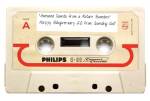
- 2011 “Awesome Sounds from a Future Boombox” 2.0
- 2010 First Blog-O-Versary party mix: A Celebration of Awesomeness
—
Share this:




Current Top Posts





April 2021

January 2020

November 2019

October 2019

August 2019

April 2014

November 2017

March 2015

December 2017

October 2015
 Sounding Out!
Recent Comments