
Revising the Future of Music Technology
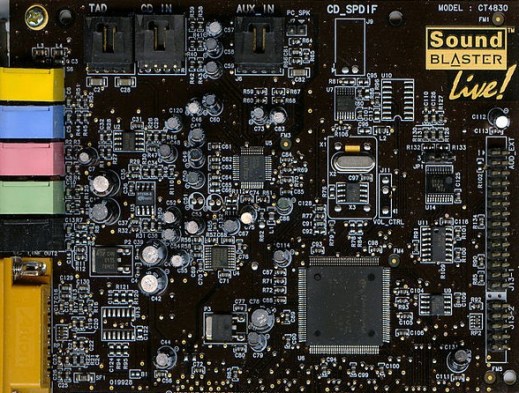
 This is the opening salvo in Sounding Out!‘s April Forum on “Sound and Technology.” Every Monday this month, you’ll be hearing new insights on this age-old pairing from the likes of Sounding Out! veterano Primus Luta, along with new voices Andrew Salvati and Owen Marshall. These fast-forward folks will share their thinking about everything from Auto-tune to productivity algorithms. So, program your presets for Sounding Out! and enjoy today’s exhilarating opening think piece from SO! Multimedia Editor Aaron Trammell. —JS, Editor-in-Chief
—
We drafted a manifesto.
Microsoft Research’s New England Division, a collective of top researchers working in and around new media, hosted a one-day symposium on music technology. Organizers Nancy Baym and Jonathan Sterne invited top scholars from a plethora of interdisciplinary fields to discuss the value, affordances, problems, joys, curiosities, pasts, presents, and futures of Music Technology. It was a formal debrief of the weekend’s Music Tech Fest, a celebration of innovative technology in music. Our hosts christened the day, “What’s Music Tech For?” and told us to make bold, brave statements. A kaleidoscope of kinetic energy and ideas followed. And, at 6PM we crumpled into exhausted chatter over sangria, cocktails, and imported beer at a local tapas restaurant.
The day began with Annette Markham, our timekeeper, offering us some tips on how to best think through what a manifesto is. She went down the list: manifestos are primal, they terminate the past, create new worlds, trigger communities, define us, antagonize others, inspire being, provoke action, crave presence. In short, manifestos are a sort of intellectual world building. They provide a road map toward an imagined future, but in doing so they also work to produce this very future. Annette’s list made manifestos seem to be a very focused thing, and perhaps they usually are. But, having now worked through the process of creating a manifesto with a collective, I would add one more point – manifestos are sloppy.
Our draft manifesto is a collective vision about what the blind-spots of music technology are, at present, and what we want the future of music technology to look like. And although there is general synergy around all of the points within it, that synergy is somewhat addled by the polyphonic nature of the contributors. There were a number of discussions over the course of the day that were squelched by the incommensurable perspectives of one or two of the participants. For instance, two scholars argued about whether or not technical platforms have politics. These moments of disagreement, however, only added a brilliant contour to our group jam. Like the distortion cooked into a Replacements single, it only serves to highlight how superb the moments of harmony and agreement are in contrast. This brilliant and ambivalent fuzziness speaks perfectly to the value of radical interdisciplinarity.
These disagreements were exactly the point. Why else would twenty academics from a variety of interdisciplinary fields have been invited to participate? Like a political summit, there were delegates from Biology, Anthropology, Computer Science, Musicology, Science and Technology Studies, and more. Rotating through the room, we did our introductions (see the complete list of participants at the bottom of this paper). Our interests were genuine and stated with earnestness. Nancy Baym declared emphatically that music is, “a productive site for radical interdisciplinarity,” while Andrew Dubber, the director of Music Tech Fest, noted the centrality of culture to the dialogue. Both music and technology are culture, he argued. The precarity of musical occupations, the gender divide, and the relationship between algorithm and consumer, all had to take a central role in our conversation, an inspired Georgina Born demanded. Bryan Pardo, a computer scientist, announced that he was listening with an open mind for tips on how to best design the platforms of tomorrow. Though collegial, our introductory remarks were all political, loaded with our ambitions and biases.
The day was an amazing, free-form, brainstorm. An hour and a half long each, the sessions challenged us to answer a big question – first, what are the problems of music technology, then what are some actions and possibilities for its future. Every fifteen or twenty minutes an alarm would ring and tables would exchange members, the new member sharing ideas from the table they came from. At one point I came to a new table telling stories about how music had the power to sculpt social relations, and was immediately confronted with a dialogue about problems of integration in the STEM fields.
In short, the brainstorms were a hodgepodge of ideas. Some spoke about the centrality of music to many cultural practices. Noting the ways in which humans respond to their environments through music, they questioned if tonal schema were ultimately a rationalization of the world. Though music was theorized as a means of social control many questions remained about whether it could or should be operationalized as such. Others considered different conversations entirely. Jocking sustainability and transduction as key factors in an ideal interdisciplinarity and shunning models that either tried to put one discipline in service of another, or simply tried to stack and combine ideas.
Borrowed from Margaret Atwater.
Some of the most productive debates centered around the nature of “open” technology. Engineers were challenged on their claim that “open source technology” was an unproblematic good, by Cultural Studies scholars who argued that the barriers to access were still fraught by the invisible lines of race, class, and gender. If open source technology is to be the future of music technology, they argued, much work must still be done to foster a dialogue where many voices can take part in that space.
We also did our best to think up actionable solutions to these problems, but for many it was difficult to dream big when their means were small in comparison. One group wrote, “we demand money,” on a whiteboard in capital letters and blue marker. Funding is a recurrent and difficult problem for many scholars in the United States and other, similar, locations, where funding for the arts is particularly scarce. On points like this, we all agreed.
We even considered what new spaces of interactivity should look like. Fostering spaces of interaction with public works of art, music, performance and more, could go a long way in convincing policy makers that these fields are, in fact, worthy of greater funding. Could a university be designed so as to prioritize this public mode of performance and interactivity? Would it have to abandon the cloistered office systems, which often prohibit the serendipitous occasion of interdisciplinary discussion around the arts?

Borrowed from bfishadow @Flickr.
There are still many problems with the dream of our manifesto. To start, although we shared many ideas, the vision of the manifesto is, if anything, disheveled and uneven. And though the radical interdisciplinarity we epitomized as a group led to a million excellent conversations, it is difficult, still, to get a sense of who “we” really are. If anything, our manifesto will be the embodiment of a collective that existed only for a moment and then disbursed, complete with jagged edges and inconsistencies. This gumbo of ideas, for me, is beautiful. Each and every voice included adds a little extra to the overall idea.
Ultimately, “What’s Music Tech For?” really got me thinking. Although I remain skeptical about the United States seeing funding for the arts as a worthy endeavor anytime soon, I left the event with a number of provocative questions. Am I, as a scholar, too critical about the value of technology, and blind to the ways it does often function to provoke a social good? How can technological development be set apart from the demands of the market, and then used to kindle social progress? How is music itself a technology, and when is it used as a tool of social coercion? And finally, what should a radical mode of listening be? And how can future listeners be empowered to see themselves in new and exciting ways?
What do you think?
Our team, by order of introduction:
Mary Gray (Microsoft Research), Blake Durham (University of Oxford), Mack Hagood (Miami University), Nick Seaver (University of California – Irvine), Tarleton Gillespie (Cornell University), Trevor Pinch (Cornell University), Jeremy Morris (University of Wisconsin-Madison), Diedre Loughridge (University of California – Berkley), Georgina Born (Oxford University), Aaron Trammell (Rutgers University), Jessa Lingel (Microsoft Research), Victoria Simon (McGill University), Aram Sinnreich (Rutgers University), Andrew Dubber (Birmingham City University), Norbert Schnell (IRCAM – Centre Pompidou), Bryan Pardo (Northwestern University), Josh McDermitt (MIT), Jonathan Sterne (McGill University), Matt Stahl (Western University), Nancy Baym (Microsoft Research), Annette Markham (Aarhus University), and Michela Magas (Music Tech Fest Founder).
—
Read the Manifesto here and sign on if you dig it. . . http://www.musictechifesto.org/
—
Aaron Trammell is co-founder and Multimedia Editor of Sounding Out! He is also a Media Studies PhD candidate at Rutgers University. His dissertation explores the fanzines and politics of underground wargame communities in Cold War America. You can learn more about his work at aarontrammell.com.
—
 REWIND! . . .If you liked this post, you may also dig:
Listening to Tinnitus: Roles of Media when Hearing Breaks Down— Mack Hagood
Sounding Out! Podcast #15: Listening to the Tuned City of Brussels, The First Night— Felicity Ford and Valeria Merlini
“I’m on my New York s**t”: Jean Grae’s Sonic Claims on the City— Liana Silva-Ford
Share this:

Sound Designing Motherhood: Irene Lusztig & Maile Colbert Open The Motherhood Archives

A Conversation Article in Chat with Irene Lusztig, Director of The Motherhood Archives and Sound Designer Maile Colbert
In 2011 filmmaker Irene Lusztig contacted me about designing sound and composing for her film project, The Motherhood Archives.
Irene had spent several years buying discarded educational films on eBay and working in historical archives to amass an unusual and fascinating collection of archival films aimed at teaching women how to be pregnant, give birth, and look after babies. The Motherhood Archives uses this extraordinary archival treasure trove to form a lyrical essay film excavating hidden histories of childbirth in the twentieth century, illuminating our changing narratives of maternal success and failure, and raising questions about our social and historical constructions of motherhood.
I was immediately intrigued by her concept and construction process as well as her desire to work with sound design in a very collaborative manner at an earlier stage in the project than most filmmakers would. Geographically distant, Irene and I mostly worked by “satellite,” using email, chat, Skype, phone, and file sharing software to communicate and send files. We did manage to have a few production weeks in New York and Santa Cruz, but the majority of the work was woven back and forth across an ocean and continent…California to Lisbon, Portugal, West Coast to West Coast. Rather than hindering, this method lent itself to an exquisite corpse nature to the work. In the creation of this article we followed much the same process, using an initial Gmail chat.
Maile Colbert (MC): So, I’m both shy and excited about asking this… why me, Irene?
Irene Lusztig (IL): I had heard your work in both Adele Horne’s film [The Tailenders, 2005] and Rebecca Baron’s [How Little We Know of Our Neighbors, 2005], both films with beautiful sound.
.
The sound in How Little We Know of Our Neighbors in particular does something with natural / unnatural that I was really interested in – field recordings that somehow become other kinds of things as they are layered, transformed, and processed. I think of myself as a documentary maker / artist who is invested in actuality, but not very invested in traditional documentary form, and I think your sound has similar investments and disinvestments. It begins with the sounds of the real world but takes those sounds to very unexpected places that are often quite far from their original context.
.
MC: I love that you brought up the “natural/unnatural.” It not only really describes well my work and approach in general, but also the experience we get in your film with mediated motherhood. We would often talk about certain sections being very science fiction…then you think, wow, this really happened, this is part of a history that led up to our experience now, and one I’m currently having, having recently become pregnant for the first time!
IL: I think there is a lot to say about science fiction and sound! First, there is a great tradition of feminist science fiction that I feel like our work is very connected to: Margaret Atwood, Ursula Le Guin, and even stuff like Shulamith Firestone’s futuristic vision of external uteruses. A lot of that work has in common a willingness to “make strange” or denaturalize aspects of female reproduction and mothering in ways that feel radical.
MC: I’m not sure if I was able to contain my excitement when you first mentioned a section felt sci-fi to you. This is something that I think has a root back in my childhood. My father was and is an obsessive science fiction film watcher: I grew up with a soundtrack of The Day the Earth Stood Still and Lost in Space. These soundscapes that “weren’t” became such a part of what I wanted to listen to.
.
IL: I always thought I had no interest in science fiction when I was younger, but I think growing a human inside my own body probably shifted my relationship to that!
I think science fiction is almost always expressing our anxieties about the future, about our technologies, about things that we struggle to control. And of course questions and anxieties about trying and failing to control things are completely at the heart of our experiences with pregnancy, birth, and learning to be new mothers in the 21st century. As are questions around technological mediations that we feel ambivalent about, whether it’s fertility technologies, medicalized birth technologies, or things like baby monitors or worrying about whether the iPad is rewiring your baby’s brain. So science fiction feels like a sonic space that totally makes sense for negotiating these maternal anxieties.
MC: One of our biggest struggles was trying to make sure things weren’t too dark for the audience.
IL: People often respond with anxiety to the film and its sound design. I’ve never before made a film where the sound comes up so often in post-screening discussions, and generally the question is something like “why is the sound so dark / scary / anxiety-provoking?” It seems very specific to the subject of The Motherhood Archives – how anxious we are societally about the whole topic, and also how uncomfortable we are being open about these anxieties.
MC: I’m still shocked at how shocked I am when I realize how some people react to this film, how uncomfortable they are. U.S. society seems just as afraid of birth as death in this manner! We speak of each in such a similar way and we’re not allowed the complexity of, for example, being simultaneously anxious about how this will affect our careers and identity, and how in love we are when we hear that heartbeat!
IL: Do you think of yourself as a feminist artist? I ask because becoming a mother (and making art about motherhood) has made me much more aware of myself as a feminist artist.
MC: I absolutely consider myself a feminist– it’s woven into every part of my life and my work. I’m also beginning to feel this in a new way with the pregnancy: I recently lost a gig I was really looking forward to because there was an assumption that I couldn’t do it somehow because I was pregnant. A recent interviewer asked me about how I navigate motherhood and my work, and I couldn’t help consider that this question would never come up with a male artist.

My recent recordings of my future daughter growing and moving have been wonderful to listen to: watery and subdued, you still feel like you’re only getting a little of her sonic world, so mysterious. But it reminds me of when I was a child – in any body of water I loved to dive down to the bottom, let go of my breath and just rest there as long as I could…it was an ultimate peace. I loved the visual perspective of the world above me, but most loved the deep gentle filter of everything aural coming through this watery world. Some might argue that peace refers to our first soundscape experienced…and listening to my own active womb, it doesn’t seem far-fetched.
IL: There are a lot of watery sounds in the film! My friend Irene Gustafson made this great connection between all the water in the soundtrack and the voiceover passage in the twilight sleep section about how the “soothing sound of running water muffles newborn cries to prevent the formation of what are called islands of memory.” That description of water literally being used to erase memory allows all the water sounds throughout the film to become a metaphor for the erasure of historical memory… the fact that we no longer remember the historical moment where feminists were advocates for anesthetic drugs and medicalized childbirth, for instance…the many ways that the histories in the film are now forgotten.
.
MC: I think sounds are like cells in a way…they carry a memory, even though abstracted.
That’s why I love working with natural sources initially, something comes through from that palette, a shadow is carried from its initial source. As animals, we use sound for information, much processing and translation happens that we aren’t even aware of. So I do feel like when a sound is removed by processing, it still carries its source information with it, and we pick up on some of that.
IL: Talking about cellular memory makes me think about the section of the film that a friend described as “crispy cells:” the image is from a very early 20th century educational film about reproduction – sheep cells that are dividing and reproducing – and the sound is the sound of the magnetosphere, which I love!
.
MC: I find listening to the magnetosphere sort of grounds me. I use a VLF recorder very often when I travel. If there are lightening storms or space weather, like solar storms, you get these very beautiful and strange soundscapes. I often use the recordings in my work, but your film is the first that seemed to demand them as a sound source! That section just called out for them, in their “pure” form. When you placed them there and sent it to me, I was blown away…it seemed like that was the sound of the video itself somehow.
I’ve been collecting and working on my sound library for over a decade now, and I’ve never been in a situation where a client or collaborator was interested in it in such a hands-on way. It seemed so right to share it with you and build upon it together for this project. For each sound – some of them going way back – I still remember the source, recording conditions, what was surrounding it (or rather what it was surrounding usually!). They become symbols, but also memory triggers. Now some of them have changed and were saved with this project, so there are generations as well. And the historic archival sounds you added to it…they come with their own history and memory; your film and their use is then added to that.
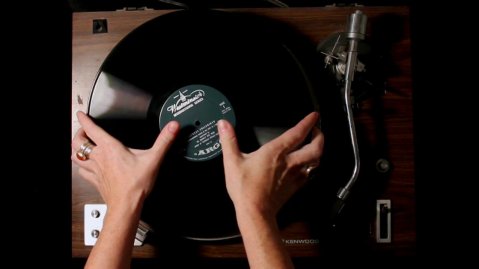
IL: Speaking of archival sound, one of the most amazing (to me) moments in our collaboration was really close to the end when you sent me the end credit sound. We’ve actually never talked about this because as soon as you sent it I totally intuitively and immediately knew that it was perfect. The sound is a backwards transformation of the wax cylinder Chopin Waltz recording that is used earlier in the film during the pregnant ballet sequence. There’s something so brilliant about your instinct to bring back that very polite, restrained music at the end, but have it reversed – both because it turns something familiar and half-remembered on its head, but also because I think it says something about history that is so attuned to the way the film works. The film thinks about histories of childbirth, but the chronological structure is circular, not linear – which I think of as a kind of challenge to the conventional forward-marching progress narrative. History is always haunting the present, and history is always circular. It makes amazing and beautiful sense that this music that we’ve heard before returns at the end in this uncanny backwards form.
—
Maile Colbert is a multi-media artist with a concentration on sound and video who relocated from Los Angeles, US to Lisbon, Portugal. She is a regular writer for Sounding Out!
—
REWIND! . . .If you liked this post, you may also dig:
Wayback Sound Machine: Sound Through Time, Space, and Place— Maile Colbert
Sounds Like a Baby— Liana Silva-Ford
Playing with Bits, Pieces, and Lightning Bolts: An Interview with Sound Artist Andrea Parkins— Maile Colbert
Share this:


Current Top Posts





April 2021

January 2020

November 2019

October 2019

August 2019

April 2014

November 2017

March 2015

December 2017

October 2015
 Sounding Out!
Recent Comments