
Poptimism and Popular Feminism

DOI: https://doi.org/10.59350/xfz3z-j0g61
Almost 20 years ago, 2 Many DJs and Freelance Hellraiser each released too-clever mashups that laid R&B pop diva vocals over indie rock instrumentals, revealing that the paired songs had exactly the same compositional structure. The former’s “Smells Like Booty” put Destiny’s Child together with Nirvana, and the latter’s “A Stroke of Genius” combined Christina Aguilera with The Strokes. The mashups were clever because they flouted supposedly commonsense views that these these pairings shouldn’t work: how could something as superficial, formulaic, and, frankly, girly as Destiny’s Child and Aguilera have anything in common with something as serious and aggressive as Nirvana and The Strokes? Writing in 2009, Dorian Lynskey explained that “A Stroke of Genius came out when many indie fans still believed that manufactured pop stank of evil and death, and the idea of Christina Aguilera and the Strokes in perfect harmony was strange.” Note Lynskey’s use of the past tense: by 2009, the gatekeepers of elite musical taste generally agreed that commercial, chart-oriented music whose fans were at least thought to be mainly teen girls and/or gay men could be just as artistically valuable as rock and hip hop.

That consensus has a name: poptimism. Poptimism upends the hierarchy between rock (and sometimes hip hop) and pop, which is a contemporary variation on a very old hierarchy that privileged fine art over craft. Back in the 18th century, philosophers like Immanuel Kant invented the idea of “fine art” by distinguishing it from craft: craft is subordinate to utility (you don’t want your coffee mug to leak), but art exists for its own sake (think of how unwearable some high fashion is, or of Rosemarie Trockel’s art sweaters). As many feminist art historians have argued, this art/craft hierarchy conveniently maps onto patriarchal gender hierarchies: art, like men, is autonomous, whereas craft, like women, are subordinate to daily needs; art is productive, craft is reproductive. For example, art historians Roziska Parker and Griselda Pollock have shown that there is an “intersection in the eighteenth and nineteenth centuries of the development of an ideology of femininity…with the emergence of a clearly defined separation of art and craft.” The conceptual and institutional structures that confined women to reproductive labor and craft into the service of life’s reproductive needs were manifestations of the same underlying gender system.

This same system informs the traditional rock-over-pop hierarchy. In her 2001 article “Feminist Musicology and the Abject Popular,” Susan Cook argues that “‘the popular’…has been so thoroughly feminized” and “carries with it a staggering cultural baggage, a trunk full of social codes that have been historically attached to womankind and underprivileged men.” In the latter half of the twentieth century, the distinction between rock and pop was largely grounded in the same gender system that organized the art/craft hierarchy: rock embodied all the values and characteristics of ideal masculinity, and that’s why it was superior, whereas pop embodied all the values and characteristics of ideal femininity, and that’s why it was inferior. In the early 2000s, poptimism revises this gender script, putting “thoroughly feminized” pop on an equal playing field with rock. However, instead of more-or-less uncritically cheerleading for pop and/or pop stars, we should be thinking about the institutions and conventions that dole out artistic status.

Kelefa Sanneh’s 2004 article “The Rap Against Rockism” brought the fact of rock-conceived-as-art to the general public’s attention. “Rockism” is the idea that rock music is the only kind of commercial recorded music that has artistic merit. According to Sanneh,
rockism isn’t unrelated to older, more familiar prejudices…The pop star, the disco diva, the lip-syncher, the “awesomely bad” hit maker: could it really be a coincidence that rockist complaints often pit straight white men against the rest of the world? Like the anti-disco backlash of 25 years ago, the current rockist consensus seems to reflect not just an idea of how music should be made but also an idea about who should be making it.
Grounded in the idea that rock is superior because it is both made by and for white dudes and expresses the stereotypical features of elite white masculinity, rockism upgrades the gendered (and raced) logics of the fine art/craft distinction into 20th century terms. Meanwhile, poptimism revalues the aspects of pop music that were traditionally de-valued because of their association with stereotypical (often white) femininity: pop is hugely collaborative and rarely written by lone authors; it prioritizes pleasure over deep meaning, beauty and spectacle over substance; its music and its ideas are supposedly simple rather than complex…you get the idea. (Ethnomusicologist Elizabeth Keenan-Penagos explains the gendered implications of poptimism in more depth in this piece about the role of misogyny in critiques of poptimism.)
Sanneh’s article kicked off this millennial round of poptimism, but poptimism’s basic ideas and values go all the way back to the 19th century (which is much later than Michael Kramer argues here). Friedrich Nietzsche’s critique of German composer Richard Wagner uses the same basic framework we now call poptimism: Wagner, he argued, was too concerned with deep philosophical meaning and not enough with the beauty and pleasure of the sounds. Saying things like “music is a woman” and that Italian opera is superior to German opera because it’s prettier and more fun (see The Gay Science sections 77-80), Nietzsche also recognized the gender and race dynamics of poptimism: by 19th century standards Italians weren’t fully white, so his prioritization of Italian over German opera subordinates white highbrow culture to not-really-white middle-to-lowbrow culture. In Nietzsche Contra Wagner, he makes his preference for light, unserious art over high culture quite clear. There, he contrasts the “hubbub…with which the ‘cultured’ man and the man about town allow themselves to be forced through art, literature, music, and with the help of intoxicating liquor, to ‘intellectual enjoyments’” with the “nimble, volatile, divinely undisturbed, divinely artificial art, which blazes up like pure flame into a cloudless sky” (emphasis mine). This contrast flips fine art/craft hierarchies and argues that things traditionally devalued as feminine, such as superficiality or sensory pleasure, are artistically superior to all the values commonly attributed to fine art, such as intellectual depth. Though he called it “the joyful wisdom” (die frӧliche Wissenschaft, often translated as The Gay Science) instead of “poptimism,” the later Nietzsche’s music aesthetics articulates the same basic theoretical commitments that inform 21st century poptimism.

The basic idea of poptimism has been around since the late 1880s, but it took more than a century to really take off. In the decade after Sanneh’s article, there was a poptimism bubble: it rose to huge popularity, especially with the publication of Carl Wilson’s 2007 book on fans of cheesy pop music. That bubble started to burst about 9 or 10 years after that book appeared as critics began to sour on poptimism. Though it was initially understood as a radical upheaval of the powers that be, by 2017 poptimism had been co-opted by those powers. Instead of challenging patriarchal gender systems, poptimism reinforced them. Writing in The Quietus, Michael Hann argues that “Poptimism, in practice, has not meant championing those who do not get the acclaim they are due, so much as celebrating the position of artists who don’t need their genius proclaimed” such as Beyonce or Taylor Swift. The oft-noted death of the negative album review suggests that [p]optimism is now the orthodox practice among music critics. (This also coincides with recent trends in academic literary theory, which prize “reparative” readings over critical ones.) Such concerns have led Rob Harvilla to pose the rhetorical question “Have we reached the end of poptimism?” because what began as a feminist revolt now feels like an expectation or obligation to stan for the already powerful, such as corporations and megastars. Hann and Harvilla observe a change in poptimism, at least as it is practiced in the music media and industry: poptimism feels less like rooting for undervalued and underrepresented women and more like cheerleading for The Man. Harvilla speculates about poptimism’s end because this corporate poptimism betrays the movement’s original ideals and values.
Why did the poptimism bubble happen when it did? There were many contributing factors, such as the rise of what sociologists Richard Peterson and Roger Kern call “omnivorous taste,” which is the idea that elites prefer both traditional highbrow culture and a range of lowbrow forms, a.k.a. “I like everything but [usually country or hip hop].” Evolutions in feminist media and activism are another central cause of the poptimist bubble. Because pop is an inherently gendered category defined by its feminization, poptimism’s evolution is closely tied to feminism’s. The poptimism bubble roughly coincides with the period when feminism broke the mainstream and mutated into popular feminism.
This is more than just a correlation or coincidence. “Pop” is a gendered category, so its evolution is inextricably tied to evolving gender norms and politics. Poptimism emerged at the dawn of a broader “woke” turn in popular media and pop culture. The first decades of the 21st century saw the rise of a proliferation of explicitly feminist web publications (Autostraddle, Broadly, Jezebel, etc.) and the circulation of feminist theory outside the academy on social media sites like tumblr. 2014, the year Beyonce brought the big pink “FEMINIST” sign to the VMAs, was the year that feminism broke the mainstream. As media studies scholar Sarah Banet-Wesier argues, around 2014 a variety of white liberal feminism focused primarily on individual economic (and sexual) empowerment; it “became a sort of product” that circulated both as a corporate and individual brand. “Feminism” sold us Tshirts, Spotify playlists, and a couple of Beyonce albums. Banet-Weiser’s term for this feminism as brand or business strategy is “popular feminism.” In 2018, poptimism works more or less like popular feminism: it turns the revaluation of things traditionally devalued because of their femininity into a way to make money.

Both popular feminism and corporate poptimism are the result of the same flawed thinking that believes inequality can be fixed just by empowering individuals and not by restructuring the institutions and conventions that structure our relations with one another. This thinking seeks to put formerly low-status things in high status places without reconfiguring the underlying fact that there is a status differential in the first place.
Banet-Weiser warns that popular feminism is only half of a two-sided coin: “popular misogyny…mimics the operation of popular feminism but flips and distorts the politics.” The incel movement is an example of popular misogyny: arguing that women oppress men by refusing to have sex with them, it takes the language of oppression developed by feminism and uses it to justify the idea of patriarchal sex-right. Similarly, the classical music blog “Slipped Disc” has been described as the “Breitbart of classical music” because its championing of the orthodox Western art music canon is “openly sexist, racist, and LGBT-phobic.” The 2018 Grammy Awards show presented both sides of this coin in stark clarity: as Maura Johnston noted, though the ceremony prominently featured a #MeToo performance from Kesha and other women artists, almost all the awards went exclusively to men.

Viewed in Banet-Weiser’s terms, the RIAA seems to be leveraging both sides of this coin to maximize its profits, practicing popular feminism in the streets but popular misogyny on the ballot. Like popular feminism, the RIAA’s poptimism values superficial markers of feminist progress because they obscure patriarchy’s retrenchment. For example, the two most definitive or canonical poptimist texts (the Sanneh article and Wilson book) are authored by cis men, so it may appear that poptimism hasn’t changed those institutions and conventions so much as conformed to them.
I agree with Banet-Weiser that though Feminism™ is certainly limited and insufficient, it can be a helpful gateway for beginners. Poptimism™ is similarly limited and insufficient, but we should think about how we can lead fans brimming with that kind of poptimism to a deeper engagement with the institutions and conventions that continue to value the same kinds of people and the music they make and like above others.
—
Featured image: “Pop” by Flickr user Andreas Andrews, CC BY-NC-ND 2.0
—
Robin James is Associate Professor of Philosophy at UNC Charlotte. She is author of two books: Resilience & Melancholy: pop music, feminism, and neoliberalism, published by Zer0 books last year, and The Conjectural Body: gender, race and the philosophy of music was published by Lexington Books in 2010. Her work on feminism, race, contemporary continental philosophy, pop music, and sound studies has appeared in The New Inquiry, Hypatia, differences, Contemporary Aesthetics, and the Journal of Popular Music Studies. She is also a digital sound artist and musician. She blogs at its-her-factory.com and is a regular contributor to Cyborgology.
—

REWIND! . . .If you liked this post, you may also dig:
In Search of Politics Itself, or What We Mean When We Say Music (and Music Writing) is “Too Political”–Elizabeth Newton
Music Meant to Make You Move: Considering the Aural Kinesthetic–Imani Kai Johnson
Pushing Play: What Makes the Portable Cassette Recorder Interesting?–Gus Stadler
—
Share this:

Look Away and Listen: The Audiovisual Litany in Philosophy

DOI: https://doi.org/10.59350/zp970-2zg82
This is an excerpt from a paper I delivered at the 2017 meeting of the Society for Phenomenology and Existential Philosophy.
—

According to sound studies scholar Jonathan Sterne in The Audible Past, many philosophers practice an “audiovisual litany,” which is a conceptual gesture that favorably opposes sound and sonic phenomena to a supposedly occularcentric status quo. He states, “the audiovisual litany…idealizes hearing (and, by extension, speech) as manifesting a kind of pure interiority. It alternately denigrates and elevates vision: as a fallen sense, vision takes us out of the world. But it also bathes us in the clear light of reason” (15). In other words, Western culture is occularcentric, but the gaze is bad, so luckily sound and listening fix all that’s bad about it. It can seem like the audiovisual litany is everywhere these days: from Adriana Cavarero’s politics of vocal resonance, to Karen Barad’s diffraction, to, well, a ton of Deleuze-inspired scholarship from thinkers as diverse as Elizabeth Grosz and Steve Goodman, philosophers use some variation on the idea of acoustic resonance (as in, oscillatory patterns of variable pressure that interact via phase relationships) to mark their departure from European philosophy’s traditional models of abstraction, which are visual and verbal, and to overcome the skeptical melancholy that results from them. The field of philosophy seems to argue that we need to replace traditional models of philosophical abstraction, which are usually based on words or images, with sound-based models, but this argument reproduces hegemonic ideas about sight and sound.

For Sterne, the audiovisual litany is traditionally part of the “metaphysics of presence” that we get from Plato and Christianity: sound and speech offer the fullness and immediacy that vision and words deny. However, contemporary versions of the litany appeal to a different metaphysics. For example, Cavarero in For More Than One Voice argues that the privileging of vision over sound is the foundation of the metaphysics of presence. “The visual metaphor,” she argues, “is not simply an illustration; rather, it constitutes the entire metaphysical system” (38). The problem with this videocentric metaphysics is that it “legitimates the reduction of whatever is seen to an object” (Cavarero 176) and it cannot “anticipate” or “confirm the uniqueness” of each individual (4). In other words, it objectifies and abstracts, and that’s bad. If vision is the foundation of the metaphysics of presence, one way to fix its problems is to replace the foundation with something else. Cavarero thinks vocal resonance avoids the objectifying and abstracting tendencies that images and text supposedly lend to philosophy.
Similarly, in the same way that the traditional audiovisual litany “assume[s] that sound draws us into the world while vision separates us from it” (Sterne 18), Barad’s argument for agential realism in Meeting the Universe Halfway assumes that diffraction draws theorists into actual contact with matter while “reflection still holds the world at a distance” (87). Agential realism looks is the view that even the most basic units of reality, like the basic particles of matter, exercise agency as they interact to form more complex units; diffraction is Barad’s theory about how these particles interact. This litany of distance-versus-relationality and external objectivity versus immersive materiality structures Barad’s counterpoint between reflection and diffraction. For example, she contrasts traditional investment in reflective surfaces—“the belief that words, concepts, ideas, and the like accurately reflect or mirror the things to which they refer-makes a finely polished surface of this whole affair” (86)–with diffractive interiorities, which get down to “the real consequences, interventions, creative possibilities, and responsibilities of intra-acting within and as part of the world” (37). But how do we know Barad is appealing to an audiovisual litany? We know because her fundamental concept–diffraction–describes the behavior of waveforms as they encounter other things, and 21st century Western scientists and music scholars think sound is a waveform. When two or more waves interact, they produce “alternating pattern[s] of wave intensity” or “increasing and decreasing intensities” (Barad 77), like ripples in water or alternating light frequencies.

Barad appeals to notions of consonance and dissonance to explain how these patterns interact. For example, when diffracting light waves around a razor blade, “bright spots appear in places where the waves enhance one another-that is, where there is ‘constructive interference’-and dark spots appear where the waves cancel one another-that is, where there is ‘destructive interference’” (Barad 77). This “constructive” and “destructive” interference is like audio amplification and masking: when frequencies are perfectly in sync (peaks align with peaks, valleys with valleys), they amplify; when frequencies are perfectly out of sync (peaks align with valleys), they cancel each other out (this is how noise-cancelling headphones work). Constructive interference is consonance: the synced patterns amplify one another; destructive interference is dissonance: the out-of-sync patterns mask each other. Both types of interference are varieties of resonance, a rational or irrational phase relationship among frequencies. Rational phase relationships are ones where the shorter phases or periods of higher frequencies are evenly divisible into the longer phases/periods; irrational phase relationships happen when the shorter phases can’t be evenly divided into the longer wavelengths. Abstracting from waveforms to philosophical analysis, Barad often uses resonance as a metaphor to translate wave behavior into materialist philosophical methods. However, even though most of Barad’s examples throughout Meeting the Universe Halfway are visual, she’s describing what scientists call acoustic relationships.
For example, Barad argues that “diffractively read[ing]” philosophical texts means processing “insights through one another for the patterns of resonance and dissonance they coproduce” (195; emphasis mine). Similarly, she advises her readers to tune into the “dissonant and harmonic resonances” (43) that emerge when they try “diffracting these insights [from an early chapter in her book] through the grating of the entire set of book chapters” (30). As patterns of higher and lower intensity that interact via ir/rational phase relationships, diffraction patterns are a type of acoustic resonance. Appealing to acoustics against representationalism, Barad practices a version of the audiovisual litany. And she’s not the only new materialist to do so—Jane Bennett’s concept of vibration and Elizabeth Grosz’s notion of “music” also ontologize a similar idea of resonance and claim it overcomes the distancing and skeptical melancholy produced by traditional methods of philosophical abstraction.

There are also instances of the audiovisual litany in phenomenology. For example, Alia Al-Saji develops in the article “A Phenomenology of Critical-Ethical Vision” a notion of “critical-ethical vision” against “objectifying vision,” and, via a reading of Merleau-Ponty, grounds the former, better notion of sight (and thought) in his analogy between painting and listening. According to Al-Saji, “objectifying vision” is the model of sight that has dominated much of European philosophy since the Enlightenment. “Objectifying vision” takes seeing as “merely a matter of re-cognition, the objectivation and categorization of the visible into clear-cut solids, into objects with definite contours and uses” (375). Because it operates in a two-dimensional metaphysical plane it can only see in binary terms (same/other): “Objectifying vision is thus reductive of lateral difference as relationality” (390). According to Al-Saji, Merleau-Ponty’s theory of painting develops an account of vision that is “non-objectifying” (388) and relational. We cannot see paintings as already-constituted objects, but as visualizations, the emergence of vision from a particular set of conditions. Such seeing allows us “to glimpse the intercorporeal, social and historical institution of my own vision, to remember my affective dependence on an alterity whose invisibility my [objectifying] vision takes for granted” (Al-Saji 391). Al-Saji turns to sonic language to describe such relational seeing: “more than mere looking, this is seeing that listens (391; emphasis mine).
This Merleau-Pontian vision not only departs from traditional European Enlightenment accounts of vision, it gestures toward traditional European accounts of hearing. Similarly, Fred Evans, in The Multivoiced Body uses voice as a metaphor for the Deleuzo-Guattarian metaphysics that he calls “chaosmos” or “composed chaos” (86); he then contrasts chaosmos to “homophonic” (67) Enlightenment metaphysics. According to Evans, if “‘voices,’ not individuals, the State, or social structures, are the primary participants in society” (256), then “reciprocity” and “mutual intersection” (59) appear as fundamental social values (rather than, say, autonomy). This analysis exemplifies what is at the crux of the audiovisual litany: voices put us back in touch with what European modernity and postmodernity abstract away.

The audiovisual litany is hot right now: as I’ve just shown, it’s commonly marshaled in the various attempts to move past or go beyond stale old Western modernist and postmodernist philosophy, with all their anthropocentrism and correlationism and classical liberalism. To play with Marie Thompson’s words a bit, just as there is an “ontological turn in sound studies,” there’s a “sound turn in ontological studies.” But why? What does sound DO for this specific philosophical project? And what kind of sound are we appealing to anyway?
The audiovisual litany naturalizes hegemonic concepts of sound and sight and uses these as metaphors for philosophical positions. This lets philosophical assumptions pass by unnoticed because they appear as “natural” features of various sensory modalities. Though he doesn’t use this term, Sterne’s analysis implies that the audiovisual litany is what Mary Beth Mader calls a sleight. “Sleights” are, according to Mader in Sleights of Reason,“conceptual collaborations that function as switches or ruses important to the continuing centrality and pertinence of the social category of a political system like “sex” (3). Sleights, in other words, are conceptual slippages that render underlying hegemonic structures like cisheteropatriarchy coherent. More specifically, sleights are “conceptual jacquemarts” (Mader 5). Jacquemarts are effectively the Milli Vanilli of clocks: sounds appear to come from one overtly visible, aesthetically appealing source action (figures ringing a bell) but they actually come from a hidden, less aesthetically appealing source action (hammers hitting gongs). The clock is constructed in a way to “misdirect or misindicate” (Mader 8) both who is making the sound and how they are making it. A sound exists, but its source is misattributed. This is exactly what happens in the uses of the audiovisual litany I discuss above: philosophers misdirect or misindicate the source of the distinction they use the audiovisual litany to mark. The litany doesn’t track the difference between sensory media or perceptual faculties, but between two different methods of abstraction.
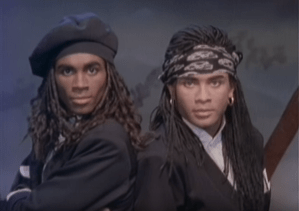
This slippage between perceptual medium and philosophical method facilitates the continued centrality of Philosophy-capital-P: philosophy appears to reform its methods and fix its problems, while actually re-investing in its traditional boundaries, values, and commitments. For example, both new materialists and sound studies scholars have been widely critiqued for actively ignoring work on sound and resonance in black studies (e.g., by Zakiyyah Jackson, Diana Leong, Maire Thompson). As Zakiyyah Jackson argues in “Outer Worlds: The Persistence of Race in Movement “Beyond the Human,” new materialism’s “gestures toward the ‘post’ or the ‘beyond’ effectively ignore praxes of humanity and critiques produced by black people” (215), and in so doing ironically reinstitute the very thing new materialism claims to supercede. Stratifying theory into “new” and not-new, new materialist “appeals to move ‘beyond’…may actually reintroduce the Eurocentric transcendentalism this movement purports to disrupt” (Jackson 215) by exclusively focusing on European philosophers’ accounts of sound and sight. Similarly, these uses of the litany often appeal only to other philosophers’ accounts of sound or music, not actual works or practices or performances. They don’t even attend to the sonic dimensions of literary texts, a method that scholars such as Jennifer Lynn Stoever and Alexander Weheliye develop in their work. Philosophers use the audiovisual litany to disguise philosophy’s ugly politics—white supremacy and Eurocentrism—behind an outwardly pleasing conceptual gesture: the turn from sight or text to sound. With this variation of the audiovisual litany, Philosophy appears to cross beyond its conventional boundaries while actually doubling-down on them.
—
Featured image: “soundwaves” from Flickr user istolethetv
—
Robin James is Associate Professor of Philosophy at UNC Charlotte. She is author of two books: Resilience & Melancholy: pop music, feminism, and neoliberalism, published by Zer0 books last year, and The Conjectural Body: gender, race and the philosophy of music was published by Lexington Books in 2010. Her work on feminism, race, contemporary continental philosophy, pop music, and sound studies has appeared in The New Inquiry, Hypatia, differences, Contemporary Aesthetics, and the Journal of Popular Music Studies. She is also a digital sound artist and musician. She blogs at its-her-factory.com and is a regular contributor to Cyborgology.
—
REWIND! . . .If you liked this post, you may also dig:
From “listening” to “filling in”: where “La Soeur Écoute” Teaches Us to Listen-Emmanuelle Sontag
The Listening Body in Death –Denise Gill
Re-orienting Sound Studies’ Aural Fixation: Christine Sun Kim’s “Subjective Loudness”-Sarah Mayberry Scott
—
Share this:




Current Top Posts




April 2021

January 2020

November 2019

October 2019

August 2019

April 2014

November 2017

March 2015

December 2017

October 2015


Recent Comments