
Evoking the Object: Physicality in the Digital Age of Music

In our current relationship with technology, we bring our bodies, but our minds rule–Linda Stone, “Conscious Computing”
DOI: https://doi.org/10.59350/52w8z-60015
I begin with an epigraph from Linda Stone, who coined the phrase ‘continuous partial attention’ to describe our mental state in the digital age. The passive cousin of multi-tasking, continuous partial attention is a reaction to our constantly connected lifestyles in which everything is happening right now and where value is increasingly equated with our ability to digest it all. Almost everything we do has the potential to be interrupted, be it by an email, a text or a tweet; often we will give only partial attention to any one thing in anticipation of the next thing that will require our attention. In this internal fight for mental attention, listening to music has been seriously impacted.
The digital era has seen more music releases than ever before. Unfortunately, the massive influx of quantity is by no means a measure of how we are engaging with said music. iPhones and similar devices, for which music players have become mere features, enable listening to become a thing of partial attention. From allowing the shuffle or random modes to choose music selections for you, or even streaming music algorithms to calculate things you might like, to listening while playing Angry Birds or reading your Twitter stream, less commitment is made to the act of listening, and as such only a portion of our working memory is committed to the experience. Without working memory actively processing musical information, it is less likely to be stored for the long term, particularly if other information is continuously vying for space and attention.
These days video games sell better than music. Despite being a digital product, games are able to instill memories (even of the music) into one’s consciousness, because the game interface allows our sensory memories to work together in an active manner with the medium. Iconic memory stores visual cues from the game, echoic memory takes the audible cues from the game and the haptic memory is engaged in controlling game play. There is only so much more which can be done while playing a video game. If something were to interrupt game play, the game would be paused to address the new information rather than giving it partial attention. This is quite different from music which plays a background role in so much of our lives even when we are actively putting music on we tend to only engage it with partial attention.
When I began thinking about turning Concrète Sound System into a record label, one of my main goals was to create works that could engage the audience in active musical experiences that could create long term memories. I felt that as important as the music would be, it would take something material to create these memories, a physical product more evocative of earlier moments in recording history than the CD, its most recent gasp. I wondered if, by creatively evoking the physical object, the listener could be engaged in an active manner that would enable the memory of music and its power to persist through the everyday waves of digital noise.
The first mass duplicated audio medium was the Gold Moulded Edison Cylinder at the turn of the twentieth century. Imagine two cylinder copies of one of these recording today, as musical objects. Each of them would have over a hundred years of physical history. From the wear of the cases to the condition of the wax based on the temperature in which they were stored, each of these cylinders would be unique musical objects, with completely different histories, despite having the same origin. It is reasonable to assume that if the cylinders were played today on the same playback device, despite the fact that the compositions and performances are exactly the same, the differences between the recordings would be audible.
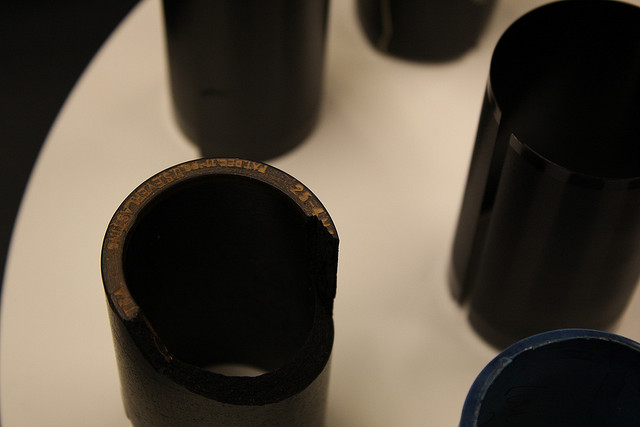
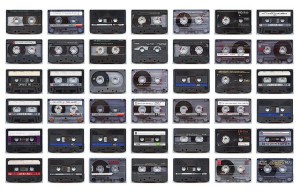
Even without a century of history, there would likely be audible differences between the cylinders. If one cylinder was the first copy made, and another the 150th –master cylinders of Gold Moulded Edison Cylinders could only produce 150 copies reliably–the physical wear in the process of reproduction would leave its own imprint, making each of those copies distinct musical objects. In the analog world, as the technology improved the differences between copies decreased substantially. Cassettes were manufactured in batches of ten to hundreds of thousands without audible differences. But even in circulations so high, over time each of those analog copies took on their own identity and collected their own memories.
The listener as an active agent contributed to the development of these unique musical objects. After a purchase, any number of variables played into the ritual of the first experience of the music. Was there a way to listen upon walking out of the store? Were there liner notes or lyric sheets inside? Would you read those prior to listening or as you listen? Where would you listen? Through headphones? The listening chair in front of the hi-fi stereo? Or on the boombox with some friends? All of these possibilities shaped memories as musical objects that defined the music consumption culture of the past.
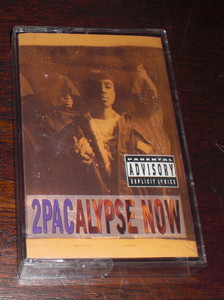
For example, I bought the debut 2Pac album 2Pacalypse Now on cassette the day it was released. I loved the album so much I kept it in regular rotation in my Walkman for months until finally the tape popped. Rather than go out and buy a new copy I decided to perform a surgery. It was in a screwless reel case which meant I couldn’t just open it up to retrieve the ends of the tape trapped inside, but rather had to crack the reel case open and transplant the reels into a new body. So, my copy of the 2Pacalypse Now cassette is now inside of a clear reel holder with no visual markings. It also has a piece of tape that was used to splice it back together, which makes an audible warp when played back. I can pretty much be sure that there is no other copy of 2Pacalypse which sounds exactly like mine. While this probably detracts from the resale value of the cassette (not that I’d sell it), it is imbued with a personal history that is priceless.
Cassettes, in particular, played a significant role in the attachment of physical memories to music beyond the recordings they held. They gave birth to the mixtape. The taper community was born from personal tape recorders that allowed concert-goers to record performances they attended, and, prior to the rise of peer to peer sharing online, these communities were trading tapes internationally via regular postal mail. European jazz and rock concerts were finding their way back to the states and South Bronx hip-hop performances were traveling with the military in Asia. All of these instances required a physical commitment with which came memories that inherently became their own musical objects.
Needless to say the nature of musical exchange has changed with the rise of the digital age of music. This is not to say that memories as musical objects have gone away, but they are being taken for granted as the objects lose their physicality. I remember going to The Wiz on 96th Street with $10 to spend on music. I spent at least ten minutes trying to decide between Sid and B-Tonn and Arabian Prince. I ended up with Arabian Prince and have regretted it since I got home and listened that day, as I never found Sid and B-Tonn for sale again. Today I could download both in the time it took me to walk to the train station. After skimming through the first few songs of Arabian Prince I could decide it was not for me and drag drop it in the trash where the memory of it would disappear with the files. No matter how I felt about the music then, the memory of it is a permanent fixture in my mind because of the physical actions it took to listen.
The first release for Concrète Sound System, Schrödinger’s Cassette, tackled this issue head on by presenting the audience with its own paradox, an update of physicist Erwin Schrödinger’s famous Thought Experiment, where the ultimate fate of the cassette inside is left up to the individual. Schrödinger’s Cassette sought to take listeners out of digital modes of consumption by using an analog medium to evoke the physical. The cassette release trend has been growing over the last few years, almost in parallel to the rise of the digital music and speaking to the need to separate music from our digital lives and to a desire to work harder for it. At the minimum, listening to a cassette requires having a cassette player, and acquiring one these days takes commitment. Unlike digital media, listeners cannot instantly skip a song on a cassette or put a favorite on repeat. It takes physical manipulation of the medium to move through its songs and doing so is a time investment. All these limitations make the cassette a medium that is best for linear listening, from beginning to end (unless you physically cut, rearrange, and splice it yourself).

Schrödinger’s Cassette took the required commitment a step further by encasing the cassette itself in industrial grade concrete. This required the user to actively crack the concrete (or the french concrète meaning ‘real’, from which the label derives its name) in order to listen to the music. The paradox is that, depending on the listener’s method for cracking, harm could be done to the cassette that might render it ‘unlistenable’. Upon receiving one of these pieces, the listener holds in their hands a musical object which they must physically act upon in order to create an unrepeatable musical event. Schrödinger’s Cassette has a look, a sound (if shaken you can hear the cassette reels), a feel, a smell, and a taste as well (though I wouldn’t advise it). All of the senses can be actively focused on the object and, as such, the whole of one’s working memory is engaged in the discernment of the object’s musical contents.
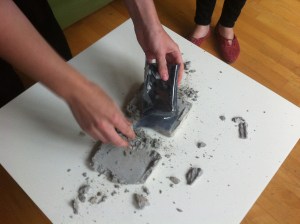
For many, Schrödinger’s Cassette was taken as a work of art and left uncracked. The Wire magazine successfully cracked one edition open, revealing a portion of the musical contents on their regular radio program. For those that decided not to crack it, digital versions were made available so that they could listen, though this option was only made available after the listener spent some time with their physical object. In this way, the music from the project, a compilation called Between the Cracks, was directly connected to physical memories spurred by a material presence.
Triggering active memory during the consumption of music through physical objects need not be this complex. Old medium such as vinyl and cassette releases inherently have the physical properties required without the concrete or much else. Perhaps for this reason they show new signs of life despite the rise of digital. No matter how much our reality is augmented by our digital lives, we still inhabit those bodies that we bring with us, and, as far as the memories those bodies carry with them go, physicality rules.
—
Featured Image: Wax Cylinders in the Library of Congress, Image by Flickr User Photo Phiend
—
Primus Luta is a husband and father of three. He is a writer and an artist exploring the intersection of technology and art, and their philosophical implications. He is a regular guest contributor to theCreate Digital Music website, and maintains his own AvantUrb site. Luta is a regular presenter for the Rhythm Incursions Podcast series with his monthly showRIPL. As an artist, he is a founding member of the live electronic music collectiveConcrète Sound System, which spun off into a record label for the exploratory realms of sound in 2012.
—
Share this:

“The Happiest Day of the Year”: A Reparative (I Hope) Approach to Record Store Day

Editor’s Note: This post, by media scholar Norma Coates, was originally published on May 9, 2011, by the excellent folks over at Flow TV, a critical forum on television and media culture published by theDepartment of Radio, Television, and Film at the University of Texas at Austin. We thank them for permission to give this gem another spin for Record Store Day 2012. It was modified only infinitesimally to fit the SO! stylesheet. Enjoy! And don’t forget put the virtual needle on Sounding Out!‘s new Record Store Day 2012 Podcast, produced by Multimedia Editor Aaron Trammell and featuring interviews with Eric Lott, Damien Keene, Benjamin Gold, Rebecca Berkowitz, Quinn Bishop, Dave Truesdell, Miranda Taylor, and yours truly. –JS Editor-in-Chief
—-
DOI: https://doi.org/10.59350/gs0s8-e0x46
Several of my graduate students, in separate meetings, have shared their recent inspiration from the late Eve Kosofsky Sedgwick’s work on affect, especially as compiled in her book Touching Feeling. After the third student talked about it, I figured that I’d better read it. I was instantly plunged back into that wonderful feeling, or more appropriately affect, of discovering something compelling and useful, that could change the ways in which I think about certain things, or at least complicate my approaches. Hence this post about Record Store Day is going to be a bit different than my first drafts. I must proceed with the caveat that although my reading of Sedgwick’s theory of affect is still shallow and my approach necessarily speculative, I’m going to jump into it and use it anyway, in the hope of jumpstarting more careful thought and theorizing for later projects.

On April 16, this year’s Record Store Day [2012’s Record Store Day is April 21st], I proclaimed it to my family as “the Happiest Day of the Year.” My reading of Record Store Day was at the same time, in Sedgwick’s terminology, paranoid and reparative. Implicit in my paranoid stance, and in the first draft of this post, was my deep suspicion of and sadness about its commercial and consumerist co-optation. What began as a celebration of the continuing economic health and vibrancy of some independent record stores four years ago now has a glossy web site and sponsorship by major labels and industry players. Special “one-day-only” releases, usually on vinyl, sell for somewhat exorbitant prices and end up, unsealed and resold for even more exorbitant prices on Ebay the next day. This in turn feeds the “baseball card” collector mentality that in turn perpetuates gendered discourses and practices of inclusion and exclusion, as well as the vinyl fetishism that separates the “real” music fan from the poseur. I could go on and on with this paranoid reading, one laden with negative affect that critical theorists use to ward off any surprises and to comfort ourselves with the knowledge that the sources of our cultural oppression can be exposed. Sedgwick asks us to think about what such knowledge or exposure does for us. Perhaps it justifies a cynical and critical fatalism that ultimately goes nowhere.
The path that Sedgwick offers out of this conundrum is reparative reading, one open to surprises rather than to sureties. Record Store Day is, for me, a happy day. I even anticipate it. It celebrates several things that I love: music, community, independent cultural production and businesses, browsing racks of records and CDs, talking about music, hearing live music, and more. Despite the presence of corporate logos on the slick website, Record Store Day does manage to retain an element of, in the immortal words of Jack Black in School of Rock, “sticking it to the man.” That is, Tower Records and Virgin Megastores are gone, but a few local record stores are still thriving. That there are “few” is indeed problematic, as they are perhaps the last left standing after a ferocious cull over the past decade, with an uncertain future despite their alleged economic health.
A reparative reading, according to Sedgwick lacks the tight control of a paranoid reading, in which we fatalistically intuit or even call into being what we expect to find or expose. Record Store Day makes me, and I assume the others who were responsible for a 30-minute long check-out line at 10:30 am, feel good, even if we “shouldn’t.” For example, record stores and record collecting are assumed by scholars and laypeople to be space dominated by males, often but not always young ones. What to make, then, of the more than a handful of older women in the store? Or the general sense of camaraderie and celebration that seemed to transcend age and gender, at least? (Race and class weren’t as well-represented in my local record store.) What brought the biggest smile to my face was a woman, perhaps in her late twenties, whose arms were over-flowing with records and CDs. My initial, paranoid reading saw her as both an aberration or a updated version of one of Adorno’s “rhythmic obedients” [from “On Popular Music], blithely purchasing the tools of her own oppression. Or perhaps she was generally caught up in the celebration and needing to catch up on purchases. Maybe, like myself, she was genuinely caught up in the tactile and aural pleasures of music, especially that available in tangible form. I, too, succumbed to the lure of special editions, one-day only availability, and contests that tested my knowledge of rock trivia.

While in the middle of it Record Store Day tapped into what are for me dense layers of affective pleasure made available by listening to and otherwise interacting with recorded music. The hunt is itself enjoyable. Ripping the plastic off a CD provides the joyful and familiar sound of anticipation. The smell of vinyl, the crackle of the needle in the groove, even the preparatory cleaning of a record before playing all provide pleasurable feelings of positive affect. All of these things fit neatly into my original paranoid reading of Record Store Day. Special editions that are only available on record store day feed into two consumer economies: that of the major labels who produce some of these instant rarities, and those who buy them to take advantage of collectors on Ebay later. Plus, these affective “pleasures” could all be reduced to fetishism, or to false consciousness, but my reading of Sedgwick causes me to argue that they don’t have to be either of these things (or other negative things). Through a reparative lens, these feelings, the affect, generated by Record Store Day, could lead to different questions and answers that linger alongside and are equally valid as the set we already ask and the conclusions that we draw from them.
The paranoid critic in me wonders, though, if reparative approaches of media texts are nothing more than the return of 1980s and 1990s ideas about producerly consumption, theories roundly, if sometimes unfairly criticized for a lack of political efficacy. Moreover, affect theory can also return to a possibly problematic return to some notion of something innate, in this case affect or more simply, feeling. I do wonder, though, with Sedgwick, whether our existing critical tools may lead to the triumph of the paranoid reading and of negative affect. That is, our only way to deal with the present condition is tantamount to capitulation. Reparative readings enable us to place our pleasure alongside the negative aspects; that is, they may be capable of thinking beyond binaries, originations, and desires to unveil things that we already know are there. What does alongside mean? Is theorizing the alongside just another way of submitting to an increasingly depressing status quo? For now, I’ll just submit that Record Store Day is “the happiest day of the year,” (you can do what you want with the scare quotes) and that happiness and other positive affects are latent with political possibility, even if we are still figuring out how to access that potential.
For Poly Styrene, Hazel Dickens, and Phoebe Snow. Originally published on May 9, 2011, by the excellent folks over at Flow TV.
—
Norma Coates is Associate Professor with a joint appointment in the Don Wright Faculty of Music and the Faculty of Information and Media Studies at the University of Western Ontario. She writes and studies about popular music and sound and their interactions and intersections with other things such as gender, television, film, age, and the entertainment industry.
—
Share this:




Current Top Posts





April 2021

January 2020

November 2019

October 2019

August 2019

April 2014

November 2017

March 2015

December 2017

October 2015
 Sounding Out!
Recent Comments