
“Caught a Vibe”: TikTok and The Sonic Germ of Viral Success

“When I wake up, I can’t even stay up/I slept through the day, fuck/I’m not getting younger,” laments Willow Smith of The Anxiety on “Meet Me at Our Spot,” a track released through MSFTSMusic and Roc Nation in March of 2020. Despite the song’s nature as a “sludgy alternative track with emo undertones that hits at the zeitgeist,” “Meet Me at Our Spot” received very little attention after its initial release and did not chart until the summer of 2021, when it went viral on TikTok as part of a dance trend. The short-form video app which exploded in popularity during the COVID-19 pandemic, catalyzed the track’s latent rise to success where it reached no. 21 on the US Billboard Hot 100, becoming Willow’s highest charting song since her 2010 hit, “Whip My Hair”.
The app currently known as TikTok began as Musical.ly, which was shuttered in 2017 and then rebranded in 2018. By March of 2021, the app boasted one billion worldwide monthly users, indicative of a growth rate of about 180%. This explosion was in many ways catalyzed by successive lockdowns during the first waves of the COVID-19 pandemic. Despite the relaxation and subsequent abandonment of COVID mitigation measures, the app has retained a large volume of its users, remaining one of the highest grossing apps in the iOS environment. TikTok’s viral success (both as noun and adjective) has worked to create a kind of vibe economy in which artists are now subject to producing a particular type of sound in order to be rendered legible to the pop charts.
For anyone who has yet to succumb to the TikTok trap, allow me to offer you a brief summary of how it functions. Upon opening it, you are instantly fed content. Devoid of any obvious internal operating logic, it is the media equivalent of drinking from a fire hose. Immersive and fast-paced, users vertically scroll through videos that take up their entire screen. Within five minutes of swiping, you can–if your algorithm is anything like mine–see: cute pet videos, protests against police brutality, HypeHouse dance trends, thirst traps, contemporary music, therapy tips, attractive men chopping wood, attractive women lifting weights, and anything else you can fathom. Since its shift from Musical.ly, the app has also been a staging ground for popular music hits such as Lil Nas X’s’ “Old Town Road”, Lizzo’s “Good As Hell”, and, recently, Harry Styles’ “As It Was.”
The app, which is the perfect–if chaotic–fusion of both radio and video is enmeshed in a wider media ecosystem where social networking and platform capitalism converge, and as a result, it seems that TikTok is changing the music industry in at least three distinct ways:
First, it affects our music consumption habits. After hearing a snippet of a song used for a TikTok, users are more likely to queue it up on their streaming platform of choice for another, more complete listen. Unlike those platforms, where algorithms work to feed a listener more of what they’ve already heard, TikTok feeds a listener new content. As a result, there’s no definitive likelihood that you’ve previously heard the track being used as a sound. Therefore, TikTok works the way that Spotify used to: as a mechanism for discovery.
Second, TikTok is changing the nature of the single. Rather than relying upon a label as the engine behind a song’s success, TikTok disseminates tracks–or sounds as they’re referred to in the app–widely, determining a song’s success or role as a debut within a series of clicks. Particularly during the pandemic, when musicians were unable to tour, TikTok’s relationship to the industry became even more salient. Artists sought new ways to share and promote their music, taking to TikTok to release singles, livestream concerts, and engage with fans. Moreover, Spotify’s increasingly capacious playlist archive began to boast a variety of tracklists with titles such as, “Best TikTok Songs 2019-2022”, “TikTok Songs You Can’t Get Out Of Your Head”, and “TikTok Songs that Are Actually Good” among others. The creation and maintenance of this feedback loop between TikTok and Spotify demonstrates not only the centrality of social media ecosystems as driving current popular music success, but also the way that these technologies work in harmony to promote, sustain, or suppress interest in a particular tune.
Most notoriously, the bridge of Olivia Rodrigo’s “drivers license”, went viral as a sound on TikTok in January 2021 and subsequently almost broke the internet. Critics have praised this 24-second section as the highlight of the song, underscoring Rodrigo’s pleading soprano vocals layered over moody, syncopated digital drums. Shortly after it was released, the song shattered Spotify’s record for single-day streams for a non-holiday song. New York Times writer Joe Coscarelli notes of Rodrigo’s success, “TikTok videos led to social media posts, which led to streams, which led to news articles , and back around again, generating an unbeatable feedback loop.”
And third, where songwriting was once oriented towards the creation of a narrative, TikTok’s influence has led artists to a songwriting practice that centers on producing a mood. For The New Yorker, Kyle Chayka argues that vibes are “a rebuke to the truism that people want narratives,” suggesting that the era of the vibe indicates a shift in online culture. He argues that what brings people online is the search for “moments of audiovisual eloquence,” not narrative. Thus, on the one hand, media have become more immersive in order to take us out of our daily preoccupations. On the other, media have taken on a distinct shape so that they can be engaged while doing something else. In other words, media have adapted to an environment wherein the dominant mode of consumption is keyed toward distraction via atmosphere.

Despite their relatively recent resurgence in contemporary discourse, vibes have a rich conceptual history in the United States. Once a shorthand for “vibration” endemic to West Coast hippie vernacular, “vibes” have now come to mean almost anything. In his work on machine learning and the novel form, Peli Grietzer theorizes the vibe by drawing on musician Ezra Koenig’s early aughts blog, “Internet Vibes.” Koenig writes, “A vibe turns out to be something like “local colour,” with a historical dimension. What gives a vibe “authenticity” is its ability to evoke–using a small number of disparate elements–a certain time, place, and milieu, a certain nexus of historic, geographic, and cultural forces.” In his work for Real Life, software engineer Ludwig Yeetgenstein defines the vibe as “something that’s difficult to pin down precisely in words but that’s evoked by a loose collection of ideas, concepts, and things that can be identified by intuition rather than logic.” Where Mitch Thereiau argues that the vibe might just merely be a vocabulary tick of the present moment, Robin James suggests that vibes are not only here to stay, but have in fact been known by many other names before. Black diasporic cultures, in particular, have long believed sound and its “vibrations had the power to produce new possibilities of social attunement and new modes of living,” as Gayle Wald’s “Soul Vibrations: Black Music and Black Freedom in Sound and Space,” attests (674). We might then consider TikTok a key method of dissemination for a maximalist, digital variant of something like Martin Heidegger’s concept of mood (stimmung), or Karen Tongson’s “remote intimacy.” The vibe is both indeterminate and multiple, a status to be achieved and the mood that produces it; vibes seek to promote and diffuse feelings through time and space.
Much current discourse around vibes insists that they interfere with, or even discourage academic interpretation. While some people are able to experience and identify the vibe—perform a vibe check, if you will—vibes defy traditional forms of academic analysis. As Vanessa Valdés points out, “In a post-Enlightenment world that places emphasis on logic and reason, there exists a demand that everything be explained, be made legible.” That the vibe works with a certain degree of strategic nebulousness might in fact be one of its greatest assets.

Vibes resist tidy classification and can thus be named across a variety of circumstances and conditions. Although we might think of the action of ‘vibing’ as embodied, and the term vibration quite literally refers to the physical properties of sound waves and their travel through various mediums, the vibe through which those actions are produced does not itself have to be material. Sometimes, they name a genre of feeling or energy: cursed vibes or cottagecore vibes. Sometimes, they function as a statement of identification: I vibe with that, or in the case of 2 Chainz’s 2016 hit, “it’s a vibe.” Sometimes, vibes are exchanged: you can give one, you can catch one, you can check one, So, while things like energy and mood—which are often taken as cognates for vibes—work to imagine, name, and evoke emotions, vibes are instead invitations.
Not only do vibes serve as a prompt for an attempt at articulating experience, they are also invitations to co-presently experience what seems inarticulable. By capturing patterns in media and culture in order to produce a coherent image/sound assemblage, the production of a vibe is predicated upon the ability to draw upon large swathes of visual, aural, and environmental data. Take for example, the story of Nathan Apodaca, known by his TikTok handle as: 420doggface208. After posting a video of himself listening to Fleetwood Mac’s “Dreams” while drinking cranberry juice and riding a longboard, Apodaca went viral, amassing something like 30 million views in mere hours. This subsequently sparked a trend in which TikTok users posted videos of themselves doing the same thing, using “Dreams” as the sound. According to Billboard, this sparked the largest ever streaming week for Fleetwood Mac’s 1977 hit with over 8.47 million streams. Of his overnight success, Apodaca says, “it’s just a video that everyone felt a vibe with.” To invoke a vibe is thus to make a particular atmosphere more comprehensible to someone else, producing a resonant effect that draws people together.
As both an extension and tool of culture, vibes are produced by and imbricated within broader social, political, and economic matrices. Recorded music has always been confined—for better and worse—to the technologies, formats, and mediums through which it has been produced for commercial sale. On a platform like TikTok, wherein the emphasis is on potentially quirky microsections of songs, artists are invited to key their work towards those parameters in order to maximize commercial success. Nowadays, pop songs are produced with an eye towards their ability to go viral, be remixed, re-released with a feature verse, meme’d, or included in a mashup. As such, when an artist ‘blows up’ on TikTok, it does not necessarily mean that the sound of the song is good (whatever that might mean). Rather, it might instead be the case that a hybrid assemblage of sound, performance, narrative, and image has coalesced successfully into an atmosphere or texture – that we recognize as a/the vibe – something that not only resonates but also sells well. As TikTok’s success continues to proliferate, the app is continually being developed in ways that make it an indispensable part of the popular music industry’s ecosystem. Whether by exposing users to new musical content through the circulation of sounds, or capitalizing upon the speed at which the app moves to brand a song a ‘single’ before it’s even released, TikTok leverages the vibe to get users to listen differently.
@jimmyfallon This one’s for you @420doggface208 #cranberrydreams#doggface208#dogfacechallenge♬ original sound – Jimmy Fallon

We might indeed consider vibes to be conceptual, affective algorithms created in the interstice between lived experience and new media. “Meet Me At Our Spot,” the track through which I’ve framed this article, is full of allusions to youth culture: drunk texts, anxiety over aging, and late-night drives on the 405. It is buoyed by a propulsive bass line that thumps with a restless energy and evokes a mood of escapism. Willow Smith’s intriguing timbre and the pleasing harmonies she achieves with Tyler Cole invite listeners to ride shotgun. For the two minutes and twenty-two seconds of the song, we are immersed within their world. In the final measures the pop of the snare recedes into the background and Tyler’s voice fades away. The vibe of the track – both sonically and thematically – is predicated on the experience of a few, fleeting moments. Willow leaves us with a final provocation, one that resonates with popular music’s current mode: “Caught a vibe, baby are you coming for the ride?”
—
Featured Image: Screencap of Nathan Apodaca’s viral TikTok post, courtesy of SO! eds.
—
Jay Jolles is a PhD candidate in American Studies at the College of William and Mary currently at work on a dissertation tentatively titled “Man, Music, and Machine: Audio Culture in a/the Digital Age.” He is an interdisciplinary scholar with interests in a wide range of fields including 20th and 21st century literature and culture, critical theory, comparative media studies, and musicology. Jay’s scholarly work has appeared in or is forthcoming from The Los Angeles Review of Books, U.S. Studies Online, and Comparative American Studies. His essays can be found in Per Contra, The Atticus Review, and Pidgeonholes, among others. Prior to his time at William and Mary, he was an adjunct professor of English at Drexel University and Rutgers University-Camden.
—

REWIND! . . .If you liked this post, you may also dig:
Listen to yourself!: Spotify, Ancestry DNA, and the Fortunes of Race Science in the Twenty-First Century”–Alexander W. Cohen
Evoking the Object: Physicality in the Digital Age of Music–-Primus Luta
“Music is not Bread: A Comment on the Economics of Podcasting”-Andreas Duus Pape
“Pushing Record: Labors of Love, and the iTunes Playlist”–Aaron Trammell
Critical bandwidths: hearing #metoo and the construction of a listening public on the web–Milena Droumeva
TiK ToK: Post-Crash Party Pop, Compulsory Presentism and the 2008 Financial Collapse—Dan DiPiero (The other “TikTok”! The people need to know!)
Share this:

What Do We Hear in Depp v. Heard?

As you probably know—whether you want to or not—the jury reached a verdict earlier this summer in the trial between Amber Heard and Johnny Depp. The trial, in the Fairfax County Circuit Court in Virginia, involved defamation and counter-defamation claims by the two actors. Heard published a 2018 op-ed in The Washington Post in which she claimed to be “a public figure representing domestic abuse.” Depp sued her for defamation, she counter-sued, and a seven-week spectacle of celebrity, misogyny, and power followed, in which Depp substantially prevailed.
What does a close listening to Depp v. Heard tell us about this particular trial, as well as about sex and power in the courtroom more generally?
Depp v. Heard did not just randomly become a media circus. As Joanne Sweeny noted in Slate, the judge made two procedural rulings that led to the ensuing frenzy—and greatly tipped the scales toward the plaintiff. Firstly, the judge allowed cameras in the courtroom to broadcast the proceedings. The Code of Virginia leaves this decision largely up to the court’s discretion, but also stipulates that coverage of “proceedings concerning sexual offenses” is prohibited. Despite the content and high-profile nature of this case, Judge Penney Azcarate decided to proceed with the broadcast.

Azcarate’s decision is strikingly at odds with the court’s emphasis on silence and decorum. Court order CL-2019-2911 stated, for example, that “Quiet and order shall be maintained at all times. Audible comments of any kind during the court proceedings … will not be tolerated.” In fact, Azcarate interrupted proceedings during trial to tell courtroom spectators to keep their mouths shut. During trial, extraneous noise is heard not just as uncivil but as a threat to impartiality and fairness. However, according to the judge’s logic, this threat is only perceived within the courtroom.
This brings us to the second procedural ruling of consequence here. Despite the frenzy enveloping the case, Azcarate decided not to sequester the jury. Jury sequestration involves the members of the jury being isolated from public and press during a trial, in order to avoid accidental or deliberate exposure to outside influence or information. Video from the courtroom flooded the internet and, as commentators have argued, likely and unduly influenced the jury, who were not isolated and prevented from accessing TV or social media. As Depp’s legions of supporters raged online, social media effectively became part of his legal team. This work was done in great part through sound.
Social media online commentary forensically dissected Heard’s oral testimony, noting changes in her breathing patterns or her speech cadence. Often they would hone in on the fact that she “exhale[d] erratically,” or “can talk so fast,” as seen in this Entertainment Tonight compilation:
The online jury adjudicated on all these vocal elements as proof that she was lying. One internet article described her in audiotape evidence as “cackle[ing] like a witch” and alternating between “laugh[ing] hysterically” and using a “baby voice.” Heard’s detractors took her voice as proof that she was emotionless, robotic, calculated, too well-rehearsed—but also that she was chaotic, nervous, crazy.
In contrast, commentators described Depp’s voice as “calm,” “calming,” and “soothing,” with Tik Tok users hash-tagging ASMR to audio of him. One fan even posted a ninety-minute ASMR video of his testimony. Multiple Twitter users claimed that “you can hear the pain” in his voice, from an audiotape admitted during trial. At other times, he is applauded for “giggling” and laughing during the trial, with fans hearing it as evidence of his authenticity and “kind soul.” One YouTube commentator, Grandma WHOa, writes that they wish he would record an audiobook so they could “listen to his calming, sexy soothing man voice.”
So far, so predictable. These are well-established, recognizable patterns about how we hear men’s vs women’s voices in public life—e.g. critiques of Hilary Clinton’s shrill, whiny voice. But listening in to the trial also reveals that this isn’t just a case of online fan culture on overdrive. Instead, it shows how broader social dynamics around gender and power don’t just create outside noise, but are built into formal legal practice within the courtroom.
Much of the conflict here follows a common pattern in defamation cases involving sexual violence claims, with questions around who gets to be a victim (see in my forthcoming piece in HAU: Journal of Ethnographic Theory titled “The Tone of Justice: Voicing the Perpetrator-as-Victim in Sexual Assault Cases”). Depp claimed to have suffered through the defamatory statement and through a longer history of abuse by Heard. His fans framed him as a hero and a victim, using the social media hashtag #HeardIsAnAbuser. On the other hand, they refused to believe Heard’s claims of having suffered abuse. This determination was based at least in part on Heard’s vocal performance and courtroom testimony, with detractors hearing duplicity in her exhalations, her rapid pace, the occasional firmness and confidence of her tone. As one Depp supporter commented on a video of Heard’s testimony, “There’s no way a victim sounds like this.”
Yet in a key strategic move, Depp’s lawyers chose to make Heard sound precisely as sexual assault victims often do during trial. Seeking to dismantle her credibility, they looked to the toolkit of how to deal with a victim in court, mobilizing a well-worn set of legal techniques used to interrogate survivors of sexual violence. In one cross-examination, for example, the plaintiff’s counsel declares that Heard’s “lies have been exposed to the world multiple times.” This claim is then manifested through a series of vocal disciplinary tactics to undermine Heard’s testimony and depict her as a false witness.
For instance, the lawyer, Camille Vasquez, repeatedly employs a common interrogation technique of speaking over and cutting off Heard as she is replying to a question. As legal scholars and sociologists have shown, such techniques are often used in sexual assault cases to intimidate and shape perceptions of the complainant. In a pioneering study on courtroom talk during rape trials, Gregory Matoesian, in Reproducing rape: Domination through talk in the courtroom (1993) describes how lawyers reproduce patriarchal relations of dominance and subordination by “usurping” the witness’ ability to respond (186). As he notes, questions—wielded like weapons of attack by skillful lawyers—are more powerful than answers.
Vocal technique and dynamics are key here. In Vasquez’s cross-examinations, she repeatedly raises her voice to interrupt Heard, disciplining her before the jury and spectators. She laughs at her testimony and infantilizes Heard, at times speaking to her in calm tones before quickly shifting to a harsher timbre. At one point, Vasquez snaps her notes shut and walks back to her seat while Heard is still answering her question. Heard is forced into abrupt silence. Unable to respond to the question she was asked, she audibly loses control of the narrative being spun. Vasquez also frequently speaks over her and directly to the judge, objecting that Heard is being non-responsive. The lawyer performs for the judge and jury her refusal to listen to Heard.
At other moments, Vasquez’s voice and affect telegraph exasperation, as she audibly sighs while Heard attempts to answer a question. As Heard and Vasquez go back-and-forth over a line of questioning, Vasquez’s voice bristles with irritation as she speaks in clipped tones, with sharp inflection at the end of each line: “Yes?” “Right?” “Yes or no?” These interjections add an aural layer of interpretation to Heard’s testimony in real-time, guiding the jury to hear the witness as evasive and therefore unreliable. Vasquez’s expressions are all part of a careful vocal strategy, implicitly saying to the jury, “Can you believe this woman?”
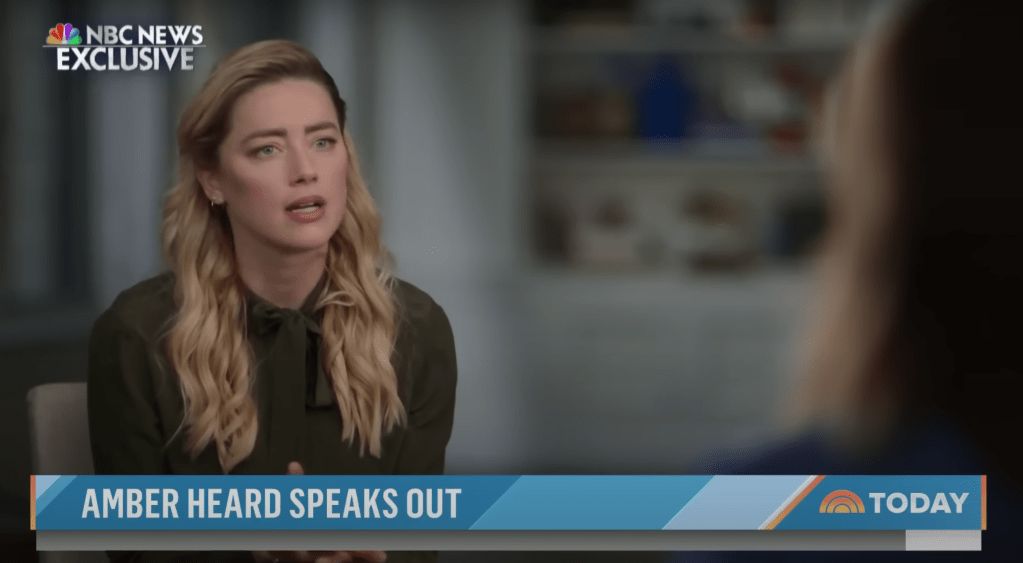
Of course, the answer is no. Jessica Winter, writing in The New Yorker, points out that Heard lost in part because of her “tearless crying,” the fact that she appeared insincere. Winter acknowledges that successful testimony is about “affect and presentation”, a reality that is no secret. In fact, jury instructions in Depp v. Heard clearly state that determinations of witness credibility are based in part on witnesses’ “appearance and manner.” Jurors must use their “common sense” to “determine which witnesses are more believable.”
But how is “common sense” established? Listening closely to this trial reminds us that such understandings are constructed and regulated through sound as well as through determinants of “appearance and manner,” both in and out of the courtroom. Vasquez’s performance, Heard’s subordinated testimony, and the commentary of millions of avid consumers underline that Heard and Depp sound to many people exactly as common sense and conventional norms would dictate.
A woman claiming abuse and assault at the hands of a more powerful man is always subject to patriarchal ways of listening, even if she is rich, famous, straight, and white. These ways of listening are contradictory. Research shows that “masculine” voices are heard as more authoritative and dominant, while women are often heard as weak, uncertain, lacking confidence. The public ear hears other racialized and gendered voices through similar power inequities, including queer, nonbinary, and LGBT voices or voices of people of color. In the context of sexual assault adjudication, however, Heather Hlavka and Sameena Mulla show in their Law & Society Review article “That’s How She Talks”: Animating Text Message Evidence in the Sexual Assault Trial” “that a confident voice and calm performance can work against a victim-witness in court, by suggesting that she is not passive or meek enough to be a ‘real’ victim.” On the other hand, they note that a victim-witness who cries on the stand may give the impression of performing or acting. Lawyers audibly manipulate these perceptions, as the examples here show, and men (particularly heteronormative, white men in positions of power) reap huge benefits from them.
Many observers of Depp v. Heard have noted the toxic social media sludge around the case, as well as the danger that the verdict poses to survivors of domestic abuse and sexual assault. But listening closely to the proceedings shows us that these outcomes aren’t random and aren’t just part of informal processes like trial by Tik Tok.
Instead, formal court proceedings manipulate and mobilize social scripts around survivors of sexual assault and domestic violence, and around women and marginalized others, to reach their outcomes. We can hear how this strategy plays out through sound and voice, from sighing and interrupting to laughter and silence. The jury instructions in Depp v. Heard state that “Our system of law does not permit jurors to be governed by sympathy, prejudice, or public opinion.” But despite claims that the legal system is based on objectivity and impartiality, we can hear that the law never exists in a bubble – and lawyers often and successfully rely on this very fact.
—
Featured image: “Courtroom” by Flickr user Karen Neoh, CC BY 2.0
—
Nomi Dave is a former lawyer, interdisciplinary researcher, and co-director of the Sound Justice Lab at the University of Virginia, where she is Associate Professor of Music. She is currently co-writing and co-directing a documentary film, Big Mouth, on a defamation lawsuit connected to a sexual violence case in Guinea.
—

REWIND!…If you liked this post, you may also dig:
“People’s lives are at stake”: A conversation about Law, Listening, and Sound between James Parker and Lawrence English—Lawrence English and James Parker
Vocal Gender and the Gendered Soundscape: At the Intersection of Gender Studies and Sound Studies—Christine Ehrick
Or Does it Explode?: Sounding Out the U.S. Metropolis in Hansberry’s A Raisin in the Sun—Liana Silva
Share this:


Current Top Posts





April 2021

January 2020

November 2019

October 2019

August 2019

April 2014

November 2017

March 2015

December 2017

October 2015
 Sounding Out!
Recent Comments