
The Role of Sound in Video Games: Pong, Limbo and Interactivity
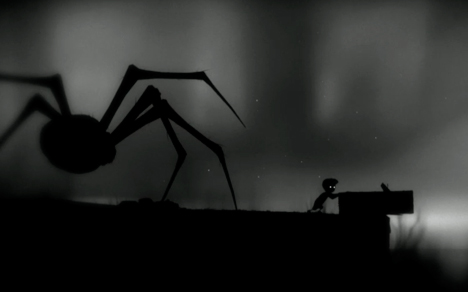
Recently, I’ve been amazed by how well the sound design of the new Xbox LIVE game Limbo has been able to coax me into various degrees of panic. Visually, the game is monochrome – black, white and various shades of grey sink into and out of the television as I guide the main character, a little boy, through the landscape of his nightmares. Tension builds as sound is used to announce off-screen dangers as they slowly creep across the screen. The muffled thud-thud of a giant spider on the left prompted me to run to the right where I suddenly encountered the deadly scream of a buzz-saw roaring toward me. It’s scary stuff. An ambient sound-layer is interrupted only by an occasional feedback crescendo or the rustling of the world’s many dangerous occupants. The soundtrack of Limbo says a lot about the game, which in turn says a lot about our culture. Video games are rarely the object of analysis for sound culture studies, this is fairly counterintuitive considering both their social impact and technological nature. Should sound studies take a closer look at video games – where would it start?
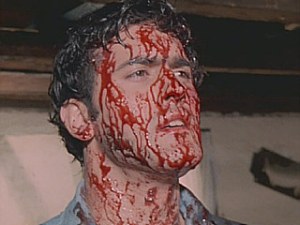
One option is to consider the game historically, as the convergence of several media discourses. First, there is cinema: The soundscape of Limbo borrows the formula that set the stage of desolation for so many low-budget horror movies. Consider the eerie silence of a horror movie like The Evil Dead and how there is a deliberate quiet within it’s conversation and music. These sonic memes are intended to invoke tension and surprise within the audience. Bruce Campbell, who plays the hapless protagonist, Ash, creeps through a similarly nightmarish landscape, inviting the listener into the soundscape of leaves, creaks, and screams. In a tradition, indebted to the aesthetics of Hitchcock, quiet soundscapes allow for broad dynamic shifts, juxtaposing safety and danger.
Another important discourse is that of video game history. Broad dynamic shifts in video games, have not always been the result of a deliberate horror aesthetic. Video games lacked sound until the release of Computer Space in 1971. A year later, the same creative team, Nolan Bushnell and Ted Dabney, would later found Atari and release Pong. Though Pong was a clone of an electric ping-pong game for 1966’s Magnavox Odyssey, Bushnell convinced Al Alcorn, the lead engineer, to hack-in sound. Silence, blips and beeps were for almost 25 years a result of hard technological limits in video games. As CD driven consoles were released in the mid-nineties, game sound was able to become more sophisticated, eventually integrating popular music seamlessly into games like Tony Hawk Pro Skater. Although game soundtracks were no longer constrained by the draconic limitations of console circuits (The Atari VCS was often unable to set its two lead voices to a similar scale – Karen Collins describes this more fully in her article “In the Loop”), game sounds still depend on the limitations of programming code. Limbo offers the latest technology, sound designer Martin Stig Anderson, has explained how advances in programming language have helped him to accommodate dramatic shifts in player control.
Game sound has always focused on the interactive, and Limbo is a great example of this development. Although games like Super Metroid and Portal have used ambient sound to emulate cinema, Limbo presents a living soundscape. Able to freely traverse the world, players can control the score of Limbo, a sign that music is becoming interactive in new ways. Is this a meaningful sign of technological convergence, or simply a reiteration of the existing aesthetic tropes? You decide.
AT


Share this:

Check it out: Ralph Gardner’s “Sounding Their Way Around the City”
Last month Ralph Gardner, from The Wall Street Journal, reviewed Elastic City’s listening tour of DUMBO. (If you’re interested in Elastic City’s listening tour or other sensory tours of NYC, click here. Next time I swing by NYC I’d love to check this out.) In his piece he details how the tour guide, an acoustic engineer, takes them around the area between the Brooklyn and Manhattan bridges and invites them to take in the sounds the area has to offer. Here’s the trick, though: the listening walk must be in silence. Gardner did not seem too impressed by the tour, by the tone of his article. However, I think Gardner’s frustration stems from the fact that he kept on looking for a particular kind of sound, instead of simply listening to his urban surroundings.
What was Gardner looking for? I’m not sure. But he was looking for something other than “noise”: “The evening began with Daniel Neumann, our guide (he’s an acoustical engineer), taking the handful of us who signed up into an alley and inviting us to close our eyes and listen. Unfortunately, an industrial air-conditioner chose that moment to kick in, drowning out all other sounds….But it was so noisy I couldn’t make out what he was saying.” Farther down the article he complains about one of the most iconic New York sounds, the sound of the subway:
From the alleyway we proceeded to walk underneath the Manhattan Bridge. I’d never taken a good look at the bridge before, and I was struck by how elegant it is, how much it reminded me of the ironwork on the Eiffel Tower, built in the same era. But I remembered I wasn’t supposed to be looking. I was supposed to be listening. The problem was that there wasn’t much to listen to except the deafening clatter of the subway running overhead, back and forth across the bridge between Manhattan and Brooklyn. We passed a guy practicing the saxophone; I assume the reason he chose that location was because it was already so noisy he knew nobody would complain.
From the looks of it, what bothered Gardner was that he couldn’t focus on the acoustic landscape of DUMBO because of the noise. I don’t believe that cities only produce and harbor noise (as in harsh sounds or artificial sounds) because listeners can find the sounds of nature and the sound of silence down alleyways, backyards, or parks, day or night. However, the sounds Gardner complains about are artificial sounds, industrial sounds (air conditioner, subway) that you would find in a city. Later in the article he mentions “the sweet trill of birdsong.” Even though he is making a joke here about how it’s hard to focus on such sounds when you’re walking around NYC with your eyes closed, his choice of words–and of sound–is interesting to say the least.
Gardner tried to tune in, and I appreciate it. But he consciously tuned out the very sounds he was supposed to tune in to. There’s a very fine line here: sounds/noise, urban sounds/natural sounds (I am assuming that’s what he was looking for, from his comment about the birds’ songs). And can we ever “just” listen? There’s always some sort of discernment going on when we listen; we are always in the process of tuning out when we tune in. These are issues people within sound studies contend with. They are not solely issues that Gardner’s piece poses. We are not sure of how the tour guide influenced Gardner’s listening, and if he coaxed the folks on the tour to listen to certain sounds (Gardner mentions one moment where the tour guide asked them to listen to the sound farthest away). In the end, Gardner’s article is a snapshot of listening vs hearing, and how selective we can be when it comes to listening even when we are not trying.


Share this:


Current Top Posts





April 2021

January 2020

November 2019

October 2019

August 2019

April 2014

November 2017

March 2015

December 2017

October 2015
 Sounding Out!
Recent Comments