
You Got Me Feelin’ Emotions: Singing Like Mariah

Mariah Carey’s New Year’s Eve 2016 didn’t go so well. The pop diva graced a stage in the middle of Times Square as the clock ticked down to 2017 on Dick Clark’s Rockin New Year’s Eve, hosted by Ryan Seacrest. After Carey’s melismatic rendition of “Auld Lang Syne,” the instrumental for “Emotions” kicked in and Carey, instead of singing, informed viewers that she couldn’t hear anything. What followed was five minutes of heartburn. Carey strutted across the stage, hitting all her marks along with her dancers but barely singing. She took a stab at a phrase here and there, mostly on pitch, unable to be sure. And she narrated the whole thing, clearly perturbed to be hung out to dry on such a cold night with millions watching. I imagine if we asked Carey about her producer after the show, we’d get a “I don’t know her.”
These things happen. Ashlee Simpson’s singing career, such as it was, screeched to a halt in 2004 on the stage of Saturday Night Live when the wrong backing track cued. Even Queen Bey herself had to deal with lip syncing outrage after using a backing track at former President Barack Obama’s second inauguration. So the reaction to Carey, replete with schadenfreude and metaphorical pearl-clutching, was unsurprising, if also entirely inane. (The New York Times suggested that Carey forgot the lyrics to “Emotions,” an occurrence that would be slightly more outlandish than if she forgot how to breathe, considering it’s one of her most popular tracks). But yeah, this happens: singers—especially singers in the cold—use backing tracks. I’m not filming a “leave Mariah alone!!” video, but there’s really nothing salacious in this performance. The reason I’m circling around Mariah Carey’s frosty New Year’s Eve performance is because it highlights an idea I’m thinking about—what I’m calling the “produced voice” —as well as some of the details that are a subset of that idea; namely, all voices are produced.
I mean “produced” in a couple of ways. One is the Judith Butler way: voices, like gender (and, importantly, in tandem with gender), are performed and constructed. What does my natural voice sound like? I dunno. AO Roberts underlines this in a 2015 Sounding Out! post: “we’ll never really know how we sound,” but we’ll know that social constructions of gender helped shape that sound. Race, too. And class. Cultural norms make physical impacts on us, perhaps in the particular curve of our spines as we learn to show raced or gendered deference or dominance, perhaps in the texture of our hands as we perform classed labor, or perhaps in the stress we apply to our vocal cords as we learn to sound in appropriately gendered frequency ranges or at appropriately raced volumes. That cultural norms literally shape our bodies is an important assumption that informs my approach to the “produced voice.” In this sense, the passive construction of my statement “all voices are produced” matters; we may play an active role in vibrating our vocal cords, but there are social and cultural forces that we don’t control acting on the sounds from those vocal cords at the same moment.
Another way I mean that all voices are produced is that all recorded singing voices are shaped by studio production. This can take a few different forms, ranging from obvious to subtle. In the Migos song “T-Shirt,” Quavo’s voice is run through pitch-correction software so that the last word of each line of his verse (ie, the rhyming words: “five,” “five,” “eyes,” “alive”) takes on an obvious robotic quality colloquially known as the AutoTune effect. Quavo (and T-Pain and Kanye and Future and all the other rappers and crooners who have employed this effect over the years) isn’t trying to hide the production of his voice; it’s a behind-the-glass technique, but that glass is transparent. Less obvious is the way a voice like Adele’s is processed. Because Adele’s entire persona is built around the natural power of her voice, any studio production applied to it—like, say, the cavernous reverb and delay on “Hello” —must land in a sweet spot that enhances the perceived naturalness of her voice.
Vocal production can also hinge on how other instruments in a mix are processed. Take Remy Ma’s recent diss of Nicki Minaj, “ShETHER.” “ShETHER”’s instrumental, which is a re-performance of Nas’s “Ether,” draws attention to the lower end of Remy’s voice. “Ether” and “ShETHER” are pitched in identical keys and Nas’s vocals fall in the same range as Remy’s. But the synth that bangs out the looping chord progression in “ShETHER” is slightly brighter than the one on “Ether,” with a metallic, digital high end the original lacks. At the same time, the bass that marks the downbeat of each measure is quieter in “ShETHER” than it is in “Ether.” The overall effect, with less instrumental occupying “ShETHER”’s low frequency range and more digital overtones hanging in the high frequency range, causes Remy Ma’s voice to seem lower, manlier, than Nas’s voice because of the space cleared for her vocals in the mix. The perceived depth of Remy’s produced voice toys with the hypermasculine nature of hip hop beefs, and queers perhaps the most famous diss track in the genre. While engineers apply production effects directly to the vocal tracks of Quavo and Adele to make them sound like a robot or a power diva, the Remy Ma example demonstrates how gender play can be produced through a voice by processing what happens around the vocals.
Let’s return to Times Square last New Year’s Eve to consider the produced voice in a hybrid live/recorded setting. Carey’s first and third songs “Auld Lang Syne” and “We Belong Together”) were entirely back-tracked—meaning the audience could hear a recorded Mariah Carey even if the Mariah Carey moving around on our screen wasn’t producing any (sung) vocals. The second, “Emotions,” had only some background vocals and the ridiculously high notes that young Mariah Carey was known for. So, had the show gone to plan, the audience would’ve heard on-stage Mariah Carey singing along with pre-recorded studio Mariah Carey on the first and third songs, while on-stage Mariah Carey would’ve sung the second song entirely, only passing the mic to a much younger studio version of herself when she needed to hit some notes that her body can’t always, well, produce anymore. And had the show gone to plan, most members of the audience wouldn’t have known the difference between on-stage and pre-recorded Mariah Carey. It would’ve been a seamless production. Since nothing really went to plan (unless, you know, you’re into some level of conspiracy theory that involves self-sabotage for the purpose of trending on Twitter for a while), we were all privy to a component of vocal production—the backing track that aids a live singer—that is often meant to go undetected.

The produced-ness of Mariah Carey’s voice is compelling precisely because of her tremendous singing talent, and this is where we circle back around to Butler. If I were to start in a different place–if I were, in fact, to write something like, “Y’all, you’ll never believe this, but Britney Spears’s singing voice is the result of a good deal of studio intervention”–well, we wouldn’t be dealing with many blown minds from that one, would we? Spears’s career isn’t built around vocal prowess, and she often explores robotic effects that, as with Quavo and other rappers, make the technological intervention on her voice easy to hear. But Mariah Carey belongs to a class of singers—along with Adele, Christina Aguilera, Beyoncé, Ariana Grande—who are perceived to have naturally impressive voices, voices that aren’t produced so much as just sung. The Butler comparison would be to a person who seems to fit quite naturally into a gender category, the constructed nature of that gender performance passing nearly undetected. By focusing on Mariah Carey, I want to highlight that even the most impressive sung voices are produced, and that means that we can not only ask questions about the social and cultural impact of gender, race, class, ability, sexuality, and other norms may have on those voices, but also how any sung voice (from Mariah Carey’s to Quavo’s) is collaboratively produced—by singer, technician, producer, listener—in relation to those same norms.
Being able to ask those questions can get us to some pretty intriguing details. At the end of the third song, “We Belong Together,” she commented “It just don’t get any better” before abandoning the giant white feathers that were framing her onstage. After an awkward pause (during which I imagine Chris Tucker’s “Don’t cut to me!” face), the unflappable Ryan Seacrest noted, “No matter what Mariah does, the crowd absolutely loves it. You can’t go wrong with Ms. Carey, and those hits, those songs, everybody knows.” Everybody knows. We didn’t need to hear Mariah Carey sing “Emotions” that night because we could fill it all in–everybody knows that song. Wayne Marshall has written about listeners’ ability to fill in the low frequencies of songs even when we’re listening on lousy systems—like earbuds or cell phone speakers—that can’t really carry it to our ears. In the moment of technological failure, whether because a listener’s speakers are terrible or a performer’s monitors are, listeners become performers. We heard what was supposed to be there, and we supplied the missing content.

Sound is intimate, a meeting of bodies vibrating in time with one another. Yvon Bonenfant, citing Stephen Connor’s idea of the “vocalic body,” notes this physicality of sound as a “vibratory field” that leaves a vocalizer and “voyages through space. Other people hear it. Other people feel it.” But in the case of “Emotions” on New Year’s Eve, I heard a voice that wasn’t there. It was Mariah Carey’s, her vocalic body sympathetically vibrated into being. The question that catches me here is this: what happens in these moments when a listener takes over as performer? In my case, I played the role of Mariah Carey for a moment. I was on my couch, surrounded by my family, but I felt a little colder, like I was maybe wearing a swimsuit in the middle of Times Square in December, and my heart rate ticked up a bit, like maybe I was kinda panicked about something going wrong, and I heard Mariah Carey’s voice—not, crucially, my voice singing Mariah Carey’s lyrics—singing in my head. I could feel my vocal cords compressing and stretching along with Carey’s voice in my head, as if her voice were coming from my body. Which, in fact it was—just not my throat—as this was a collaborative and intimate production, my body saying, “Hey, Mariah, I got this,” and performing “Emotions” when her body wasn’t.
By stressing the collaborative nature of the produced voice, I don’t intend to arrive at some “I am Mariah” moment that I could poignantly underline by changing my profile picture on Facebook. Rather, I’m thinking of ways someone else’s voice is could lodge itself in other bodies, turning listeners into collaborators too. The produced voice, ultimately, is a way to theorize unlikely combinations of voices and bodies.
—
Featured image: By all-systems-go at Flickr, CC BY-SA 2.0, via Wikimedia Commons
—
Justin Adams Burton is Assistant Professor of Music at Rider University, and a regular writer at Sounding Out! You can catch him at justindburton.com.
—

REWIND! . . .If you liked this post, you may also dig:
Gendered Sonic Violence, from the Waiting Room to the Locker Room-Rebecca Lentjes
I Can’t Hear You Now, I’m Too Busy Listening: Social Conventions and Isolated Listening–Osvaldo Oyola
One Nation Under a Groove?: Music, Sonic Borders, and the Politics of Vibration-Marcus Boon
Share this:

The Top Ten Sounding Out! Posts of 2016!

While we at SO! are just as eager as everyone else to put 2016 behind us, we can’t forget about the excellent envelope- (and button-) pushing work we served up for you last year. So here, for your New Year’s reading pleasure, are the Top Ten Posts of 2016 (according to views). Let’s raise our glasses one more time and let this brilliance echo into 2017!
***

10) Gendered Sonic Violence, from the Waiting Room to the Locker Room
Rebecca Lentjes
This past August 2016, professional “pick-up artist” Dan Bacon caused a stir with his article “How to Talk to a Woman Who is Wearing Headphones.” The article was published on TheModernMan, a site pledging to “make [a woman] want to have sex with you ASAP.” Bacon offers step-by-step “instructions” for pick-up artists to overcome the obstacle of being rendered inaudible by the music a woman might be listening to:
She will most likely take off her headphones to talk to you when you say, ‘Hey, how’s it going?’, but if she doesn’t, just smile, point to her headphones and confidently ask, ‘Can you take off your headphones for a minute?’ as you pretend to be taking headphones off your head, so she fully understands what you mean.
His article was criticized in articles that appeared in The Guardian, Washington Post, Slate, and other news sites, which pointed out that Bacon and his followers advocated ignoring a clear visual signifier of privacy in pursuit of sex. Not only did Bacon feel entitled to a woman’s time, they suggested, but also to an audience. What Bacon insists is “two, [sic] normal human beings having a conversation” is in fact a belief in his unilateral right to be heard. . . [Click here to read more!]

9) Listen to the Sound of My Voice
Kelly J. Baker
Betrayal
I first realized there was a problem with my voice on the first day of tenth grade English class. The teacher, Mrs. C, had a formidable reputation of strictness and high standards. She had us sit in alphabetical order row after row, and then insisted on calling roll aloud while she sat at her desk. Each name emerged as both a command and a threat in her firm voice.
“Kelly Barfield?”
“Here,” I mumbled quietly. I was a Honor Roll student with consistent good grades, all A’s and one B on each report card, yet I was shy and softspoken in classes. This was an excellent way to make teachers amiable but largely go unnoticed. The softness of my voice made me less visible and less recognizable. . .[Click here to read more!]

8) The Amplification of Muted Voices: Notes on a Recitation of the Adhan
David Font-Navarrete
Where do we begin?
On Tuesday January 13th, 2015, my first-year students and I gathered for the second meeting of our seminar, “Soundscapes: Artistic, Social, and Biological Approaches to Acoustic Environments.” We were just a few steps away from the iconic Duke chapel, almost in its shadow.
The chapel is an example of a revivalist architectural style known as “Collegiate Gothic.” Its steps were constructed with soft stone, intended to wear down quickly and provide an accelerated impression of age and prestige. The chapel’s cruciform blueprint is an unambiguous symbol of its Methodist Christian roots, as is the university’s motto: “eruditio et religio” (“erudition and religion”). In true Gothic revivalist style, the phrase is a Latin translation of a line from an 18th-century, English-language Methodist hymn titled “Sanctified Knowledge” . . . [Click here for more!]
7). Listening to Sounds in Post-Feminist Pop Music
Robin James
Some of the most popular early 21st century feminist approaches to pop culture are rooted in a collapse of visual and aural representations. For example, though Disney princesses have become visibly more diverse and realistic, linguists Carmen Fought and Karen Eisenhauer have compiled data showing that women characters in Disney princess films speak less in films released between 1989-1999 than they did in films released in the 1930s-1950s. Writing in Noisey in 2015, Emma Garland wonders whether we “have created an environment in which female artists are being judged only on their feminism.” Both in her own analysis and in the thinkpieces she references, that judgment addresses the verbal content of song lyrics or artists’ public statements and the visual content of music videos. Noting that “a lengthy Google search will drag up hundreds of editorial pieces about the [Rihanna’s] ‘BBHMM’ video” (The Guardian alone hosts six), but barely any reviews of the actual song, Garland illustrates just how much feminist analysis of pop music skews to the visual and away from sound and music. Popular post-feminist analysis focuses on the visual and verbal because of the influence of law and legal theory on 20th century American feminism. However, in post-feminist pop, the sound lets in the very same problems the lyrics and visuals claim to have solved. [Click here for more!]

6.) Audiotactility and the Medieval Soundscape of Parchment
Michelle M. Sauer
As humans, we engage all of our senses in every undertaking, whether or not we consciously perceive our sensory interactions. For instance, when we consume a gourmet meal, we don’t simply taste the food—we also see it, smell it, and feel it. We might also hear it as it is being prepared and/or consumed, and the meal’s pleasure can be enhanced by conversation. Overall, our experiences are enriched (or worsened) through our multisensory engagement. Similarly, reading involves multimodal feedback. While we might think of it as solely a visual experience, both auditory and tactile interactions occur within the process. As The Handbook of Multisensory Processes (518) tells us, audiotactile (sound+touch) and visuotactile (sight+touch) interactions are of great functional importance as they link remote senses to the body. . . [Click here to read more!]

5) Tape Hiss, Compression, and the Stubborn Materiality of Sonic Diaspora
Christopher Chien
In an article for Pitchfork, music critic Adam Ward reminisces about digital music files that sound as if they’re “being played through a payphone,” and calls the extreme compression of the low-quality MP3 “this generation’s vinyl crackle or skipping CD.” The crackles, hisses, and compression that characterize such sound files are what I term “encoded materiality.” Focusing on the encoded materiality of the digital helps us to reconfigure our approach to sonic media, understanding how the compression of early MP3s and tape hiss remind us not only of lost fidelity, but also of the richness of exchange. These warm and stubborn sonic impurities, having been encoded in our digital listening formats and thus achieving repeatability and variability, act as persistent reminders that we can think diaspora beyond melancholy and authenticity, sidestepping the questions of purity and loss that so often characterize dialogues in the field of diaspora studies. . .[Click here for more!]

4) Introduction: Medieval Sound
Dorothy Kim and Christopher Roman
A text arrives and the buzz of a cell phone jolts you from your idle thoughts. The sound–like an alarm, another kind of bell to mark out the day–shifts you from one audition to another. The spatiality of competing sounds fills our consciousness and shapes our attitudes towards music and noise, privacy and pollution. These themes surround the issue of sound and articulate a variety of questions and problems. How does one delineate between noise and sound? How does sound individualize us within the community? How does sound create space? Why is the scopic the privileged sense? . . .[Click here for more!]
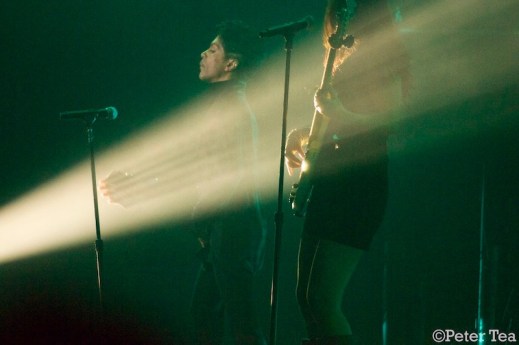
3) This is What It Sounds Like . . . . . . . . On Prince (1958-2016) and Interpretive Freedom
Ben Tausig
Prince leaves an invitingly “messy” catalog—a musical cosmos, really—just as rich for those who knew it well as for those encountering it with fresh ears. He avoided interviews like he avoided conventions. He made few claims. Read him as you will.
We are free to interpret Prince, but not too free. Yes, art is open, and perhaps Prince’s art especially. And yet many eulogies have described him as indescribable, as if he were untethered by the politics of his world; he wasn’t. Some remembrances assume (or imagine) that Prince was so inventive that he could escape stultifying codes and achieve liberation, both as musician and human being. For example, Prince has often been called “transcendent”—of race, of musical genre, even of humanity itself. This is overstated; he was rooted in all of these. Better to say, maybe, that he was a laureate of many poetics, some musical and some not. He responded to race, genre, and humanity, all things that he and we are stuck with. He was a living artwork, and these, by way of sound, were his media.
Prince was not transcendent. He was just too much for some to assimilate. . . [Click here for more!]

2) Malcolm Gladwell’s Bad Aesthetics
Justin Burton
Malcolm Gladwell, who recently wrapped the first season of his podcast Revisionist History, has been on a roll lately. Not a particularly endearing one, though. I’ve been trying to locate his nadir, but it’s not easy with so many options to choose from. Is it in the New Yorker, when he condescendingly exclaims “Of course not!” in response to whether Caster Semenya should be allowed to compete in the 800-meter at the Olympics? He follows up with the assertion that no track-and-field fan disagrees with him, as if the complexity of gender identification is somehow best left to a majority appeal. Or is it in Revisionist History’s Episode 9, “Generous Orthodoxy,” when he chides Princeton students protesting the use of Woodrow Wilson’s name around campus? Calling one student “angry”—a loaded word to lob at a black woman—and surmising she would later “regret her choice of words,” Gladwell advises the students to instead threaten to leave the university if their requests aren’t honored. Why? Because otherwise “every crotchety old Princeton alum” wouldn’t believe they actually care about the university. . . [Click here for more!]
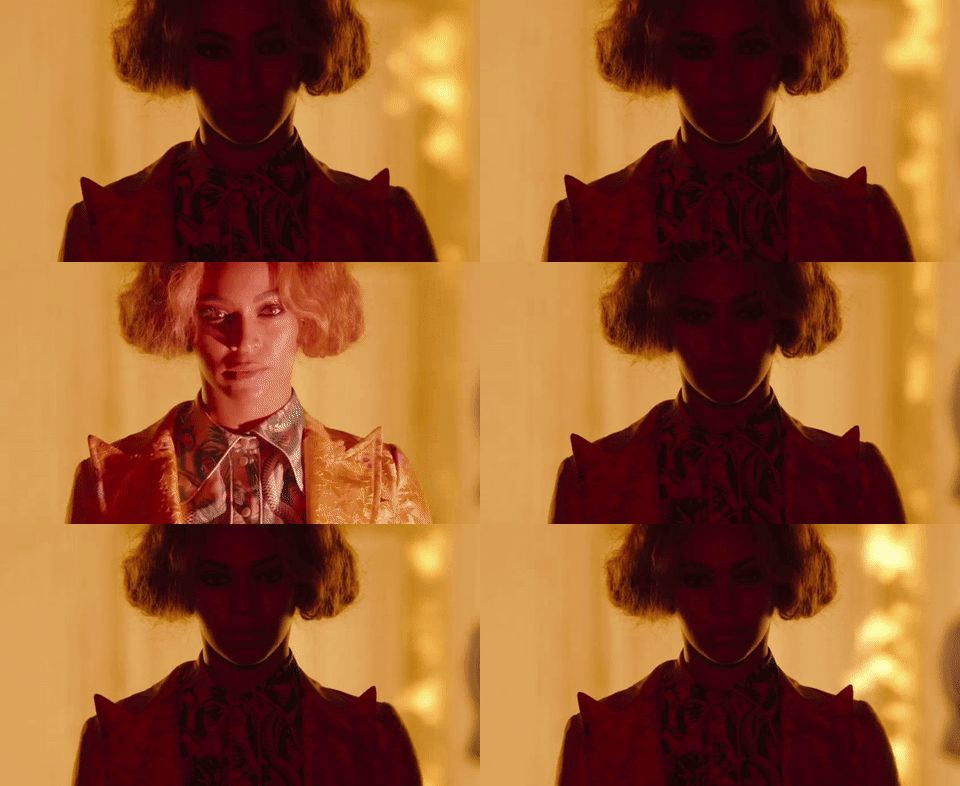
1) How not to listen to Lemonade: music criticism and epistemic violence
Robin James
With the premiere last month of Lemonade, her second visual album, Beyoncé didn’t make the world stop so much as she make it revolve: around her, around her work, around black women. For all of the limitations of pop music as a medium (it’s inherently capitalist, for one) and Lemonade’s various feminist strategies (“Formation,” with its “Black Bill Gates” language, can be heard as a black parallel public to white corporate feminism), the album nevertheless re-centered mainstream media attention on black women’s cultural and creative work.
As the conversation about Lemonade revolved around black women and black feminism, two white men pop critics writing for major publications responded with “So What About The Music?” articles. The description to Carl Wilson’s Slate piece asks “But how is it as strictly music?,” and Kevin Fallon’s Daily Beast piece asks both “But is the music any good?” in the title and “But is the music worth listening to?” in the dec. Each time, the “but” sounds like the antecedent to its implied mansplainy consequent “actually…” And just as “but actually” recenters men as authorities and experts, these three questions decenter features prioritized in black women’s pop performance traditions, and in Lemonade itself. As posed in these two articles, the “so what about the music?” question frames “music” so narrowly that it both obscures or at best trivializes what the album does musically. Wilson and Fallon’s essays are good examples of how not to listen to Lemonade . . [Click here for more!]
—
Featured Image: “Microphone Flowers” by Flickr user Matthias Ripp, (CC BY 2.0)
—
 REWIND! . . .If you liked this post, you may also dig:
The Top Ten Sounding Out! Posts of 2015!
!!!!!!!, or Blog-o-Versary 7.0
SO! Amplifies: The Women in L.A. Punk Archive
Share this:


Current Top Posts





April 2021

January 2020

November 2019

October 2019

August 2019

April 2014

November 2017

March 2015

December 2017

October 2015
 Sounding Out!
Recent Comments