
Sounding Out! Unplugged: “Power in Listening” (August 2026)

Hello listeners + readers!
We usually take July as a BYE month to celebrate our yearly blog-o-versary, but this year, we are going bigger! Team SO! is pausing for the full summer–June, July, AND August–to catch our breath in advance of the publication of the official Sounding Out! print anthology, Power in Listening (New York University Press) on August 25, 2026 (although you can pre-order now, if you’d like at Indiepubs, direct from NYU, and other book outlets). This book is a long time coming and we are really proud of what we have put together. It’s a fresh mix of brand new essays with fan-favorites that have been revised, expanded and fully updated to the present, with an introduction by the editorial collective and a forward by SO!‘s very own Neil Verma.
Power in Listening is a love letter to everyone who has participated in the ongoing collective project of the blog over our first 15 years and a fantastic way to kick off the future together. Like the blog, it’s sharp, accessible, gorgeously written, diverse, and ready for the classroom, the library, the beach, public transit, the coffee shop, the couch on a rainy day, the club . . .wherever you love to read, but now you can be unplugged too, which we all need more than ever. Scroll down for more details about the book, including a full author list!
Enjoy the coming months–the book will be out there catching eyes in August and the blog will grab your ears once again this September! Please help us spread the word about the book– we’d love it if you’d tell two friends, so that they two friends, and so on, and so on, and so on. . .or you can share social media, whatever works for you!
Thank you and SO! looking forward–see you in September!
JLS, SO! Ed-in-Chief
P.S. Details to come on release parties, conference events, speaking engagements, podcasts, broadcasts, and all that good stuff! If you’d like us to come out your way to talk about the book, the blog, and all things sound, we have a Google form for that! Contact NYU Press at this link if you are interested in reviewing the book on your publication: https://nyupress.org/resourcesold/for-media/
—
How listening shapes power
Power in Listening explores how listening shapes—and is shaped by—power. From the politics of “sad girl” Spotify playlists to the sonic architectures of surveillance and the gendered voices of Siri and Alexa, this collection investigates how sound and listening inform identity, embodiment, and social life. How does Beyoncé’s remix of her “elevator incident” expose the surveillance of Black bodies? How do deaf listeners use multiple senses to navigate sound? How are Latina voices racialized through ideas of volume and tone?
Building from the groundbreaking Sounding Out! blog, Power in Listening curates 36 new, revised, and expanded essays from scholars, artists, DJs, and activists across more than twenty disciplines. Together, they trace how auditory culture intersects with race, gender, sexuality, technology, and media—from radio and tape to streaming and AI.
Accessible yet rigorous, this reader reveals sound studies in motion: a field that listens as a form of inquiry, protest, and care. Each essay connects theory and everyday experience, offering tools to hear the world—and each other—more critically. Power in Listening invites readers to experience listening as a social practice, a political act, and a method of understanding one’s place within a resonant and contested public sphere.
—
Authors
Neil Verma, Nichole Prucha, Rami Stucky, Max Abner, Ola Mohammed, Christie Zwahlen, Art Blake, Liana Silva, Maria Chaves Daza, Tara Betts, Marlén Ríos, Kimberly Williams, Samantha Ege, Aaron Trammell, Christina Giacona, Andrew Salvati, Kemi Adeyemi, Enongo Lumumba-Kasongo, Andreas Pape, AO Roberts, Milena Droumeva, Steph Ceraso, Linda O’Keeffe, Michael Levine, Amanda Gutierrez, Asa Mendelsohn, Rebecca Lentjes, Priscilla Peña Ovalle, Justin Burton, Gustavus Stadler, Dolores Inés Casillas, Jennifer Lynn Stoever, Chris Chien, Benjamin Tausig, Hubert Gendron-Blais, Maile Costa Colbert, and Dustin Tahmahkera
Section Titles and Topics
- Sonic Presents
- Putting The “I” in Listening: Memoir as Method
- The Sound You Make Is Not Your Own: Our Social Voices
- “Hop With It, Rock With It”: Listening to Popular Culture
- Bits and Screeches: Technology and Sound
- Hitting the Streets: Space, Place, and Sound
- Panaudicism: Sound and Surveillance
- Listening While White: Sound and Racial Privilege
- “Can You Hear Me Now?”: Sound, Agency, and Activism
—
What folks are saying. . .
Spotlighting the work of emerging scholars under innovative rubrics like space, gender, time, race, and power, Power in Listening curates an impressive array of authors and disciplinary approaches of the highest caliber. This is a welcome, fresh take on the field of sound studies. ~Roshanak Kheshti, author of Modernity’s Ear: Listening to Race and Gender in World Music
From voice and memoir to technology, space, race, surveillance, and activism, Power in Listening centers captivating soundworkers. and shows how listening can unsettle hierarchies and make new worlds audible. This sharply curated collection brings together newly revised classics from the blog as well as bold new essays that treat listening not as neutral perception, but as a site of power, struggle, pleasure, and possibility. Smart, generous, and unapologetically loud, this book doesn’t just reflect a field. It changes how you hear it. ~Karen Tongson, author of Norm Porn: Queer Viewers and the TV That Soothes Us
Not only chronicles the dynamism of the field of sound studies, but also beckons readers to find the listening experience to be an unmistakably political social practice. Power in Listening is an exceptional achievement, uniting scholars and artists across countless disciplines to foster conversations and new scholarship for years to come. ~Iván Ramos, author of Unbelonging: Inauthentic Sounds in Mexican and Latinx Aesthetics
—
Jennifer Lynn Stoever is Associate Professor of English at Binghamton University, founding Editor-in-Chief of Sounding Out!, and author of The Sonic Color Line: Race and the Cultural Politics of Listening.
Liana Silva is Managing Editor of Sounding Out! She is a teacher, writer, reader, and editor living in Houston, TX. She graduated from Binghamton University’s Department of English in 2012. In the past she was Editor-in-Chief of the professional publication Women in Higher Education.
Aaron Trammell is Assistant Professor of Informatics and Core Faculty in Visual Studies at UC Irvine and author of Repairing Play: A Black Phenomenology and The Privilege of Play. He is Editor-in-Chief of the journal Analog Games Studies and was an honoree of the hobby game industry’s prestigious Diana Jones Award.
Share this:

The Top Ten Sounding Out! Posts of 2020-2022!
.
It’s baaaaack! For your end-of-the year reading pleasure, here are the Top Ten Posts published within the last three years (totals as of 12/8/22). Read and re-read this brilliance today–and often! And please do listen out for us in 2023– our Racial Bias in Speech AI series co-edited with Johann Diedrick is already in the works for May 2023 and a new CFP related to a print edition (!!) of Sounding Out! just launched! Please take good care, stay safe and well, and we’ll see you in January. Thank you for your readership and continued support. We’re here because you are here. –JS
—

10). A Feast of Silence: Listening as Stoic Practice
Andrew Salvati
. . .Over the past decade, Stoicism, which teaches that self-discipline, moderation, and emotional equanimity are key to overcoming hardship and living a good life, has had something of a revival as a self-help paradigm – and Holiday has been one of its most energetic evangelists. Articles in Vice, the New York Times, the Atlantic, the New Yorker, the Guardian, Forbes, Wired, and Sports Illustrated have all taken note of his influence among Silicon Valley tech workers, corporate executives, professional athletes, military personnel, and celebrities to whom he markets the philosophy as a “life-hack”; his six best-selling books on the subject, meanwhile, have positioned him as perhaps the most commercially successful author in a mushrooming genre of Stoic literature; and The Daily Stoic’s A-level guest list, which has included Malcom Gladwell, Camilla Cabello, Matthew McConaughey, and Charlamagne Tha God, has established Stoicism’s cultural cachet as a practical guide for living, and positioned Holiday as its authoritative interpreter. . . [Click here to read the full post!]
.
.

9). Voice as Ecology: Voice Donation, Materiality, Identity
Steph Ceraso
I first heard about voice donation while listening to “Being Siri,” an experimental audio piece about Erin Anderson donating her voice to Boston-based voice donation company, VocaliD. Like a digital blood bank of sorts, VocaliD provides a platform for donating one’s voice via digital audio recordings. These recordings are used to help technicians create a custom digital voice for a voiceless individual, providing an alternative to the predominately white, male, mechanical-sounding assistive technologies used by people who cannot vocalize for themselves (think Stephen Hawking). VocaliD manufactures voices that better match a person’s race, gender, ethnicity, age, and unique personality. To me, VocaliD encapsulates the promise, complexity, and problematic nature of our current speech AI landscape and serves as an example of why we need to think critically about sound technologies, even when they appear to be wholly beneficial. . . [Click here to read the full post!]
.

8). Broadcast Kidnapping: How the Rise of the Radio led to the Fall of Jean-Claude Duvalier
Jennifer Garcon
On January 23, 1973, Jean-Claude Duvalier, only 18 months into his life-long appointment, received a call that threatened to profoundly destabilize his nascent presidency. On the other end was Clinton E. Knox, a close political ally and advisor, who also happened to be the US Ambassador to Haiti. Knox, Jean-Claude was informed, along with US consul general Ward Christensen were being held hostage at a residence just outside of Port-au-Prince. To secure the safe return of two high-ranking US officials, the captors demanded the release of political prisoners, a hefty ransom, and a plane to facilitate their escape. The kidnappers “meant business,” reported The Washington Post, Times Herald on Jan 26, 1973, and during the call, Knox warned Jean-Claude of the severity of the situation, that they ”threatened to blow my head off, if they didn’t get what they wanted” . . . [Click here to read the full post!]
.
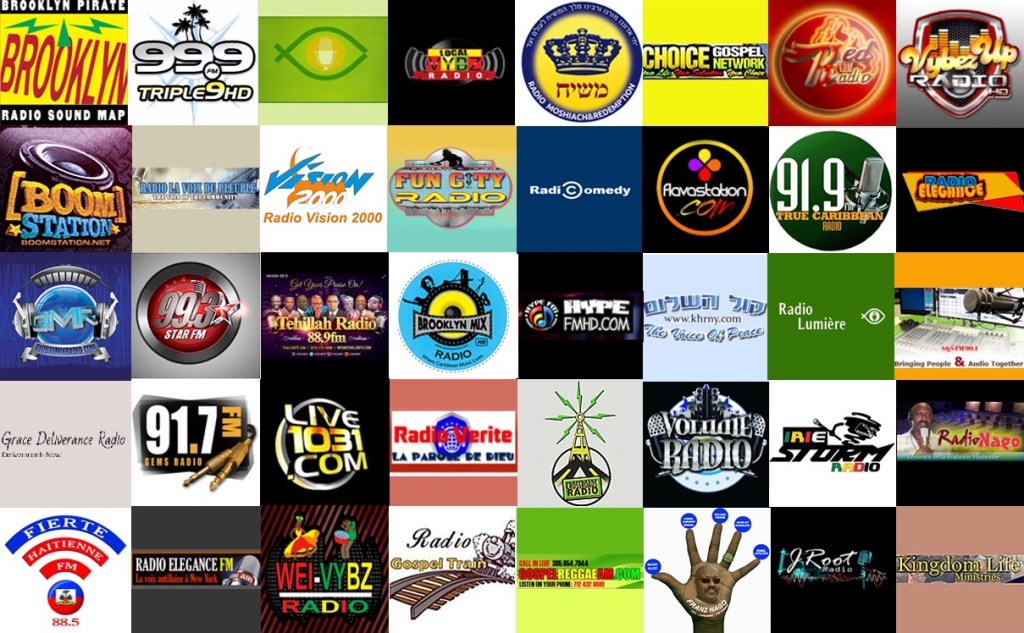
7). “Vous Ecoutez La Voix du Peuple”: The Kreyol Language Pirate Radio Stations of Flatbush, Brooklyn
David Goren
‘A lot of these stations, especially the Haitian stations, they have such an extensive music library that a song will come on the radio and all of a sudden my mom is like, ‘Oh my God! Your grandma used to have this record and she played it every Saturday!’ says Joan Martinez, a young Haitian-American born in the US and a former program host on some of the unlicensed Kreyol language stations. “Now she’s transported back to being on the island, with the big radio that’s a piece of furniture in the living room. People are chatting, little drinks are flowing about, my grandmother milling about in a gorgeous dress. It’s kind of like that whole nostalgia era that unfortunately was probably lost because of the political turmoil in Haiti. So it’s harkening back to a good time, to a simpler time, a better time, a more carefree era.” . . . [Click here to read the full post!]
.

6). “One Scream is All it Takes: Voice Activated Personal Safety, Audio Surveillance, and Gender Violence
María Edurne Zuazu
Just a few days ago, London Metro Police Officer Wayne Couzens pled guilty to the rape and murder of Sarah Everard by, a 33-year-old woman he abducted while she walked home from a friend’s house. Since the news broke of her disappearance in March 2021, the UK has been going through a moment of national “soul-searching.” The national reckoning has included a range of discussions–about casual and spectacular misogynistic violence, about a victim-blaming criminal justice system that fails to address said violence–and responses, including a vigil in south London that was met with aggressive policing, that has itself entered into and furthered the UK’s soul-searching. There has also been a surge in the installation of personal safety apps on mobile phones; One Scream (OS), “voice activated personal safety,” is one of them. . .[Click here to read the full post!]
.

5). Teaching Soundwalks in a Course on Gentrification, Black Music, and Corporate America
Rami Toubia Stucky
On May 5, 2018, the C-ville Weekly, a newspaper based out of Charlottesville, Virginia, published an article titled “Sex, drugs and rock ’n’ roll: new apartment complex promises at least one of those.” The headline referred to the complex being built at 600 West Main St. in Charlottesville. The complex has since been completed and studio bedrooms currently cost more than $1000 a month. As the C-ville Weekly headline shows, the developers were using the term and connotations of “rock ’n’ roll” to sell exclusive – and in many ways unaffordable – housing.
After reading this headline, I began to develop an idea for a summer course at my institution, the University of Virginia (UVA). I ultimately titled that course “Black Music and Corporate America” which I offered online during the summer of 2021 (syllabus available for download via the link above). Although the course discussed varied content – from the multi-ethnic, multi-racial, and multi-gendered histories of rock and roll to the endorsement of conspicuous forms of consumption in hip hop – I wanted to spend one unit focusing on the interrelationship between music, corporate America, and gentrification. I strove to solidify this connection by assigning two related articles. The first article, by geographer and sociologist Brandi Thomson Summers, argues that black residents in Washington D.C. adopt go-go music as a form of reclamation aesthetics to combat their city’s increasingly rampant gentrification. In the second article, ethnomusicologist Allie Martin conducts a soundwalk of D.C.’s Shaw District to forefront the experience of a black woman in the city and help displace white hearing as the default standard of interpreting sound (see Sounding Out!’s Soundwalking While POC series from Fall 2019). These two articles served as a foundation for one of the assignments the students had to complete in class: conducting a soundwalk of their own in which they had to walk around a field site of their choosing and think critically about the sounds they were hearing. . .[Click here to read the full post!]
.

4). Archivism and Activism: Radio Haiti and the Accountability of Educational Institutions
Laura Wagner
For four years, I spent forty hours a week in a cubicle in a converted tobacco warehouse with noise-cancelling headphones over my ears, listening to and describing the entire audio archive of Haiti’s first independent radio station, Radio Haïti-Inter. Though my title was “project archivist,” I am not an archivist by training. But I am compelled to compile, assemble, and preserve stories from lost people and lost worlds. Sound is more intimate than printed words or video. With sound, voices are inside your head, as close as another person can be. As I processed the Radio Haiti collection, I would forget that many of the voices I heard every day belonged to people I never knew in life. Sometimes in my dreams I would see the station’s director, Jean Dominique, alive and laughing. . . [Click here to read the full post!]
.

Alexander W. Cowan
If you could listen to your DNA, what would it sound like? A few answers, at random: In 1986, the biologist and amateur musician Susumo Ohno assigned pitches to the nucleotides that make up the DNA sequence of the protein immunoglobulin, and played them in order. The gene, to his surprise, sounded like Chopin.
With the advent of personalized DNA sequencing, a British composition studio will do one better, offering a bespoke three-minute suite based on your DNA’s unique signature, recorded by professional soloists—for a 300GBP basic package; or 399GBP for a full orchestral arrangement.
But the most recent answer to this question comes from the genealogy website Ancestry.com, which in Fall 2018 partnered with Spotify to offer personalized playlists built from your DNA’s regional makeup. For a comparatively meager $99 (and a small bottle’s worth of saliva) you can now not only know your heritage, but, in the words of Ancestry executive Vineet Mehra, “experience” it. Music becomes you, and through music, you can become yourself. . . [Click here to read the full post!]
.

2).Sonic Lessons of the Covid-19 Soundscape
Sarah Mayberry Scott
It’s understandable to resist reading or thinking about Covid in late-2021, even as the Delta variant’s new surges are making headlines around the world. Covid has surrounded and overwhelmed us for over a year, and many people’s reluctance to engage meaningfully with it at this time is fueled by feelings of fatigue, mental exhaustion, and frustration. However, I urge in this post that we have a continued responsibility to sustain our sonic engagement and listen to what the Covid-19 soundscape teaches us.
Covid-19, as most of us now know now, is a virus caused by the coronavirus strain SARS-CoV-2. While the symptoms of Covid-19 are many and varied, one symptom seemed most vital and censorious—a nagging and persistent dry cough that became referred to as the “Covid cough” in everyday vernacular. The Covid cough became an intrusive and yet all too familiar presence in the Covid soundscape—an isolated acoustic environment that allows us to study its characteristics. For instance, investigations within the Covid soundscape have studied the noise annoyances of traffic, neighbors, and personal dwellings; have recorded the quieting of the usually bustling streets of New York City; have researched whale stress hormones linked to less noise pollution in our ocean waters; and have analyzed the reception and aural imagery of sirens. I seek to add to this research by bringing the sounds of the Covid body (or a body perceived to have Covid) into the larger soundscape conversation . . . [Click here to read the full post!]
.

1).A Day on the Dial in Cap Haïtien, Haiti
Ian Coss
Fabrice Joseph is a mender, set up on a street corner in Cap Haïtien, Haiti’s second largest city. He shows me a red plastic toolbox filled with supplies — thread, wires, scraps of fabric—which he can use to fix a jammed zipper or stitch up a torn backpack strap. I stop because he’s cradling a radio set in his hands, tuned to the city’s most popular station: Radio Venus.
We meet on a quiet day; Fabrice has been sitting on the stoop for five hours already with no work. Another day he’s engrossed in assembling a large umbrella—the kind food vendors use for shade—but the radio is still on, now propped on a ledge just behind his head. He replaces the batteries almost weekly, because the radio is always on. In the morning Radio Venus plays news, Fabrice tells me, followed by music as the day heats up. Then in the afternoon he’ll hear sports or perhaps a religious program, before the station returns to music in the evening.
This arc Fabrice describes is designed to follow the arc of his day. In this post, I trace that link: between the rhythms of radio programming and the rhythms of daily life, to show how formatting choices create a heightened sense of ‘liveness’ on Haiti’s airwaves, with all content located in a specific moment: the present moment. . .[Click here to read the full post!]
—
Featured Image: “New Years, about to unfurl” by Flickr User Darwin Bell, Attribution-NonCommercial 2.0 Generic (CC BY-NC 2.0)
—

REWIND! . . .If you liked this post, you may also dig:
The Top Ten Sounding Out! Posts of 2019!
The Top Ten Sounding Out! Posts of 2018!
The Top Ten Sounding Out! Posts of 2017!
The Top Ten Sounding Out! Posts of 2016!
The Top Ten Sounding Out! Posts of 2015!
Share this:




Current Top Posts





April 2021

January 2020

November 2019

October 2019

August 2019

April 2014

November 2017

March 2015

December 2017

October 2015


Recent Comments