
Sounding Out! Unplugged: “Power in Listening” (August 2026)
Hello listeners + readers!
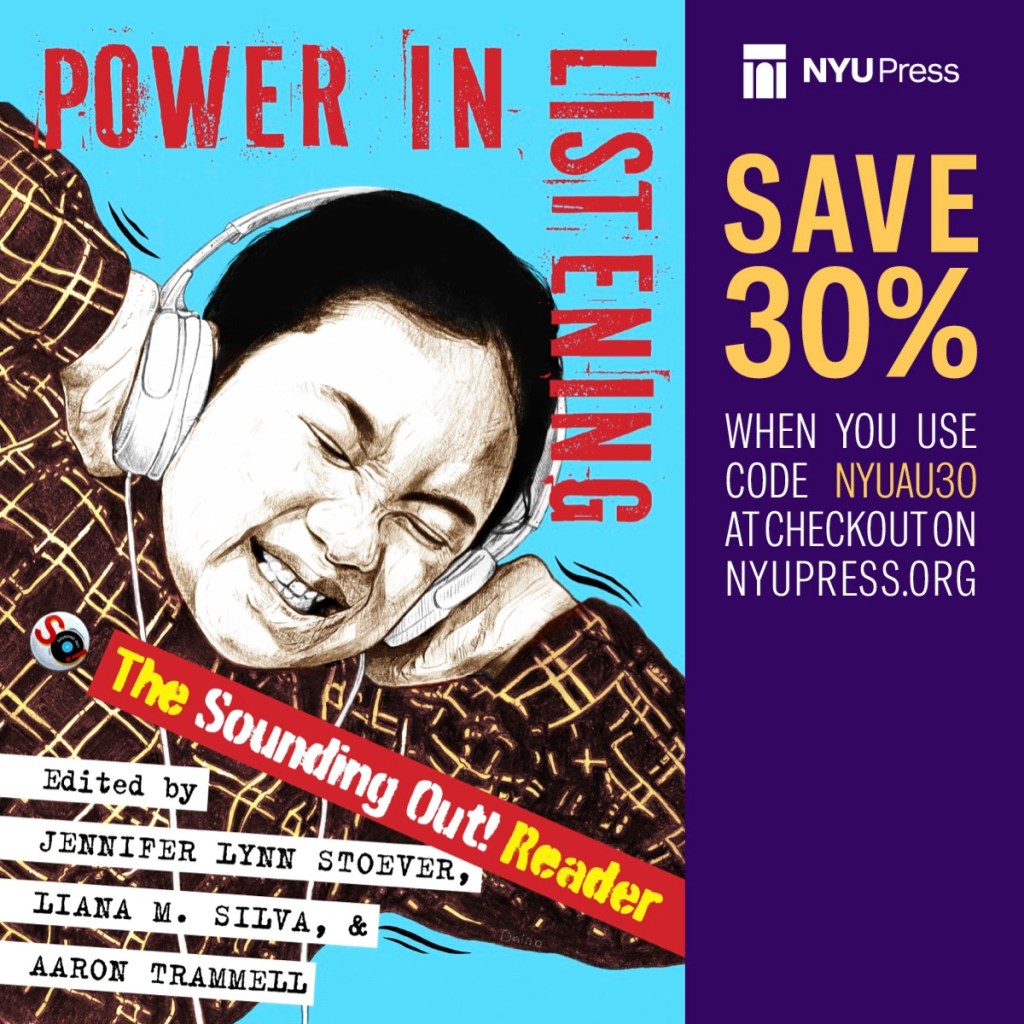
We usually take July as a BYE month to celebrate our yearly blog-o-versary, but this year, we are going bigger! Team SO! is pausing for the full summer–June, July, AND August–to catch our breath in advance of the publication of the official Sounding Out! print anthology, Power in Listening (New York University Press) on August 25, 2026 (although you can pre-order now, if you’d like at Indiepubs, direct from NYU, and other book outlets). This book is a long time coming and we are really proud of what we have put together. It’s a fresh mix of brand new essays with fan-favorites that have been revised, expanded and fully updated to the present, with an introduction by the editorial collective and a forward by SO!‘s very own Neil Verma.
Power in Listening is a love letter to everyone who has participated in the ongoing collective project of the blog over our first 15 years and a fantastic way to kick off the future together. Like the blog, it’s sharp, accessible, gorgeously written, diverse, and ready for the classroom, the library, the beach, public transit, the coffee shop, the couch on a rainy day, the club . . .wherever you love to read, but now you can be unplugged too, which we all need more than ever. Scroll down for more details about the book, including a full author list!
Enjoy the coming months–the book will be out there catching eyes in August and the blog will grab your ears once again this September! Please help us spread the word about the book– we’d love it if you’d tell two friends, so that they two friends, and so on, and so on, and so on. . .or you can share social media, whatever works for you!
Thank you and SO! looking forward–see you in September!
JLS, SO! Ed-in-Chief
P.S. Details to come on release parties, conference events, speaking engagements, podcasts, broadcasts, and all that good stuff! If you’d like us to come out your way to talk about the book, the blog, and all things sound, we have a Google form for that! Contact NYU Press at this link if you are interested in reviewing the book on your publication: https://nyupress.org/resourcesold/for-media/
—
How listening shapes power
Power in Listening explores how listening shapes—and is shaped by—power. From the politics of “sad girl” Spotify playlists to the sonic architectures of surveillance and the gendered voices of Siri and Alexa, this collection investigates how sound and listening inform identity, embodiment, and social life. How does Beyoncé’s remix of her “elevator incident” expose the surveillance of Black bodies? How do deaf listeners use multiple senses to navigate sound? How are Latina voices racialized through ideas of volume and tone?
Building from the groundbreaking Sounding Out! blog, Power in Listening curates 36 new, revised, and expanded essays from scholars, artists, DJs, and activists across more than twenty disciplines. Together, they trace how auditory culture intersects with race, gender, sexuality, technology, and media—from radio and tape to streaming and AI.
Accessible yet rigorous, this reader reveals sound studies in motion: a field that listens as a form of inquiry, protest, and care. Each essay connects theory and everyday experience, offering tools to hear the world—and each other—more critically. Power in Listening invites readers to experience listening as a social practice, a political act, and a method of understanding one’s place within a resonant and contested public sphere.
—
Authors
Neil Verma, Nichole Prucha, Rami Stucky, Max Abner, Ola Mohammed, Christie Zwahlen, Art Blake, Liana Silva, Maria Chaves Daza, Tara Betts, Marlén Ríos, Kimberly Williams, Samantha Ege, Aaron Trammell, Christina Giacona, Andrew Salvati, Kemi Adeyemi, Enongo Lumumba-Kasongo, Andreas Pape, AO Roberts, Milena Droumeva, Steph Ceraso, Linda O’Keeffe, Michael Levine, Amanda Gutierrez, Asa Mendelsohn, Rebecca Lentjes, Priscilla Peña Ovalle, Justin Burton, Gustavus Stadler, Dolores Inés Casillas, Jennifer Lynn Stoever, Chris Chien, Benjamin Tausig, Hubert Gendron-Blais, Maile Costa Colbert, and Dustin Tahmahkera
Section Titles and Topics
- Sonic Presents
- Putting The “I” in Listening: Memoir as Method
- The Sound You Make Is Not Your Own: Our Social Voices
- “Hop With It, Rock With It”: Listening to Popular Culture
- Bits and Screeches: Technology and Sound
- Hitting the Streets: Space, Place, and Sound
- Panaudicism: Sound and Surveillance
- Listening While White: Sound and Racial Privilege
- “Can You Hear Me Now?”: Sound, Agency, and Activism
—
What folks are saying. . .
Spotlighting the work of emerging scholars under innovative rubrics like space, gender, time, race, and power, Power in Listening curates an impressive array of authors and disciplinary approaches of the highest caliber. This is a welcome, fresh take on the field of sound studies. ~Roshanak Kheshti, author of Modernity’s Ear: Listening to Race and Gender in World Music
From voice and memoir to technology, space, race, surveillance, and activism, Power in Listening centers captivating soundworkers. and shows how listening can unsettle hierarchies and make new worlds audible. This sharply curated collection brings together newly revised classics from the blog as well as bold new essays that treat listening not as neutral perception, but as a site of power, struggle, pleasure, and possibility. Smart, generous, and unapologetically loud, this book doesn’t just reflect a field. It changes how you hear it. ~Karen Tongson, author of Norm Porn: Queer Viewers and the TV That Soothes Us
Not only chronicles the dynamism of the field of sound studies, but also beckons readers to find the listening experience to be an unmistakably political social practice. Power in Listening is an exceptional achievement, uniting scholars and artists across countless disciplines to foster conversations and new scholarship for years to come. ~Iván Ramos, author of Unbelonging: Inauthentic Sounds in Mexican and Latinx Aesthetics
—
Jennifer Lynn Stoever is Associate Professor of English at Binghamton University, founding Editor-in-Chief of Sounding Out!, and author of The Sonic Color Line: Race and the Cultural Politics of Listening.
Liana Silva is Managing Editor of Sounding Out! She is a teacher, writer, reader, and editor living in Houston, TX. She graduated from Binghamton University’s Department of English in 2012. In the past she was Editor-in-Chief of the professional publication Women in Higher Education.
Aaron Trammell is Assistant Professor of Informatics and Core Faculty in Visual Studies at UC Irvine and author of Repairing Play: A Black Phenomenology and The Privilege of Play. He is Editor-in-Chief of the journal Analog Games Studies and was an honoree of the hobby game industry’s prestigious Diana Jones Award.
Share this:

SO! Reads: Alexis McGee’s From Blues To Beyoncé: A Century of Black Women’s Generational Sonic Rhetorics

DOI: https://doi.org/10.59350/2ggqc-77f66
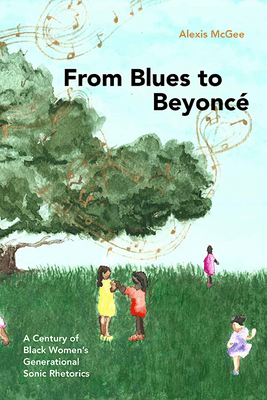
From Blues To Beyoncé: A Century of Black Women’s Generational Sonic Rhetorics (SUNY Press, 2024) by Alexis McGee explores Black women’s creative labor and cultural production. The book offers a searing critique of both record industry exploitation and sound studies’ white gaze. By focusing on quotidian engagement with sound, McGee speaks simultaneously to linguists, rhetoricians, and ethnomusicologists, demonstrating how each discipline has overlooked Black women’s fundamental contributions to our understanding of language and cultural expression. This is not merely an additive project seeking inclusion within existing frameworks, but rather a fundamental reconceptualization of how we study Black women’s sounds.
McGee, currently Associate Professor at the University of British Columbia’s School of Journalism, Writing, and Media, mobilizes her training in linguistics, rhetoric, and composition to analyze everyday communicative practices and generational knowledge systems passed down between Black women. McGee joins other recent texts such as Earl Brooks’s On Rhetoric and Black Music (2024) in critical conversations around “sonic rhetoric.” In From Blues to Beyoncé, McGee theorizes sonic rhetoric as a collection of cultural technologies for storytelling that “act as methods of communicating knowledge that can be used to persuade or inform (younger) generations about topics like survival, liberation, and care” (6). Examining artists from the 19th, 20th, and 21st centuries through personal experience, archival material, biographies, interviews, and popular media, McGee demonstrates the critical necessity of taking seriously the generational cultural knowledge embedded in Black women’s creative practices within an anti-Black and misogynist world.
At its core, the book introduces “sonic sharecropping” as a term that illuminates the lopsided relationship between Black women creatives (tenants), their sonic and musical creations (crops), and wealthier, more powerful recording industry players (landlords, music labels, copyright holders). The sharecropping metaphor reveals how the music industry extracts value from Black women’s cultural labor while denying them ownership and fair compensation. McGee further develops the concept of “audibility of advice” to name the intergenerational mentorship and fugitive pedagogy that Black women practice as they navigate this exploitative system—showing how even the transmission of survival knowledge between generations becomes entangled in the same structures designed to profit from Black women’s creative work.
The book’s chapters traverse an impressive range of cultural moments. Opening with Cardi B’s attempted trademark of “okurrr,” McGee demonstrates how legal and social structures systematically prevent Black women from securing intellectual property rights over cultural innovations that white industry executives appropriate without restriction.
This contemporary case illuminates sonic sharecropping: Black women are expected to create cultural property that record labels then own and sell back to them. McGee then traces these dynamics historically, analyzing business practices of major labels like Atlantic Records. By drawing parallels between sharecropping contracts and recording agreements, the analysis reveals how the music industry has historically relied on discretionary ethical conduct by executives rather than equitable contractual structures, perpetuating exploitative relationships reminiscent of post-Reconstruction economic arrangements.
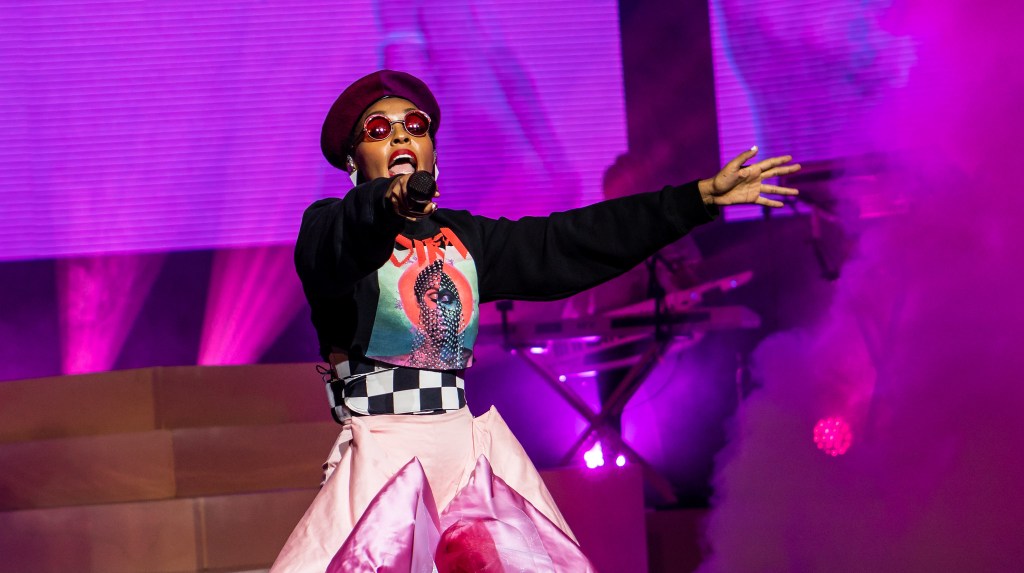
In what is perhaps the book’s most compelling chapter, McGee examines successive performances of “Strange Fruit,” tracing how Nina Simone and later artists like Missy Elliott and Janelle Monáe have reinterpreted Billie Holiday’s haunting meditation on lynching.
McGee builds on Amiri Baraka’s concept of the “changing same”, to show that antiblackness persists throughout time though it changes form. McGee demonstrates how Black women performers resist being treated as interchangeable vessels for Black cultural expression. Rather than presenting generic renditions, each artist asserts her distinctive voice and perspective that reiterates the enduring violence perpetuated against Black bodies.
Each performance carries its own rhetorical power while participating in “sankofarration,” a neologism from artist, writer, and media studies professor John Jennings that combines “sankofa” (a West African concept symbolizing learning from the past to move forward) with “narration” to describe a rhetorical worldview premised on understanding time as cyclical rather than linear. Sankofarration positions past and future as interconnected forces that actively shape the present. Crucially, McGee connects Lawrence Beitler’s commercial sale of lynching photographs (depicting the hanged bodies of Thomas Shipp and Abram Smith) to the visual and sonic rhetorical devices in these musical works. Through this framework, Black women artists transform historical trauma into ongoing political commentary and visions for future liberation. Black women’s creative work, she argues, consistently foregrounds documented histories of racial violence alongside the willful ignorance that upholds white supremacy and patriarchy. By listening critically to Black women’s sonic rhetorics, we can access pathways toward collective liberation.
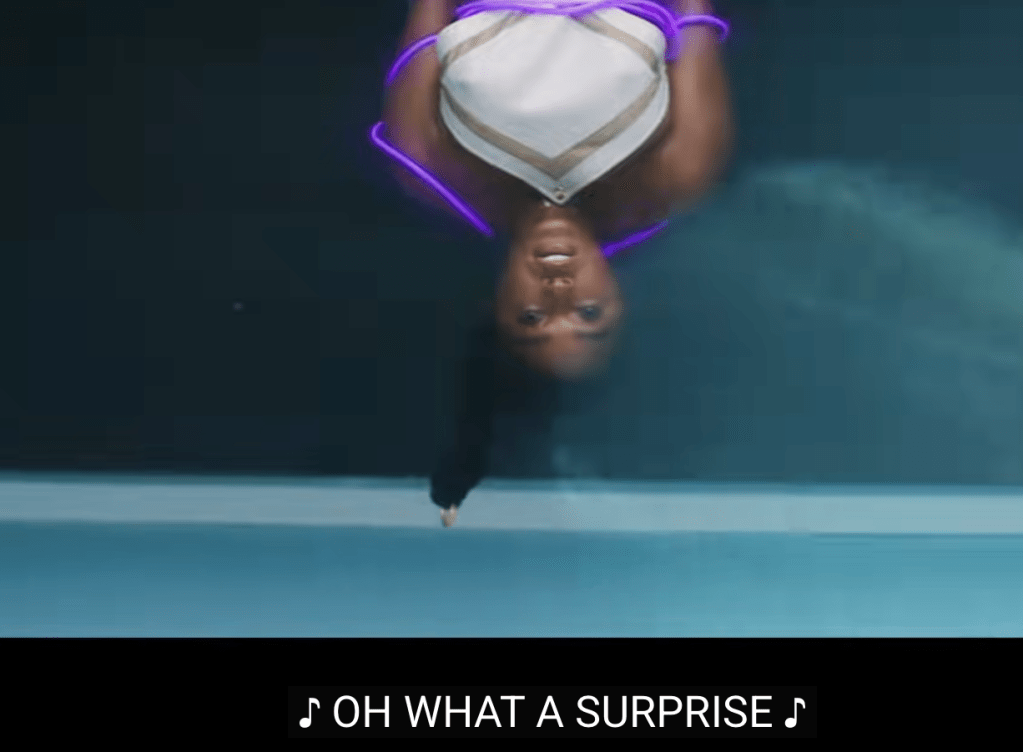
Despite the book’s title, McGee’s engagement with Beyoncé focuses narrowly on the lemon-to-lemonade metaphor in the album, Lemonade. Her analysis of other Black women artists, however, anticipated critiques later directed at Cowboy Carter, highlighting a double standard: as a Black woman, Beyoncé faces moral scrutiny for engaging with country music—positioned as both capitalist enterprise and white cultural property—while white and male artists have participated in the same commercial structures for centuries without comparable ethical condemnation.
This defense raises the book’s most provocative question, one McGee gestures toward but leaves unresolved: if the inequitable standards applied to Black women artists are symptoms of a fundamentally exploitative system, what would liberation from that system actually entail? Does it require dismantling existing structures of cultural ownership and profit, or can it be achieved through expanded access and recognition within them?
While McGee does not directly engage Matthew Morrison’s recent work Blacksound: Making Race and Popular Music in the United States, her analysis clearly converses with his examination of how Black cultural products have been reproduced for white consumption, particularly through the ongoing afterlives of blackface minstrelsy. McGee’s focus on Black women specifically adds crucial gender analysis to ongoing scholarly conversations about racial capitalism and cultural appropriation.
McGee acknowledges that capitalism itself, rather than Black women’s participation in it, constitutes the fundamental problem. However, the analysis stops short of fully theorizing alternatives to existing structures of Western sound production and commodification. Readers familiar with Sylvia Wynter’s insistence on distinguishing the map from the territory, or Audre Lorde’s warning that “the master’s tools will never dismantle the master’s house,” may desire more sustained engagement with radical alternatives and additional tool building necessary for Black liberation from existing antiblack social and political structures. What might Black women’s sonic practices look like in anticapitalist frameworks of collective ownership and exchange? How might Black femme and queer performances expand or complicate these intergenerational transmissions of knowledge? How might Black women’s intergenerational knowledge systems point toward alternative epistemologies that refuse the terms of racial capitalism altogether?
This theoretical restraint appears strategic rather than accidental. From Blues to Beyoncé navigates carefully between colleagues unfamiliar with Black feminist and womanist theory, who require accessible entry points, and specialists seeking new takes on traversing multiple disciplines at once. In threading this needle, McGee prioritizes disciplinary bridge-building before radical dismantling of capitalist structures and academic knowledge production systems.
These limitations notwithstanding, the book represents an essential contribution to multiple fields. It insists that scholars of sound studies, rhetoric, and Black feminist thought must engage one another—that these conversations can no longer proceed in isolation. Methodologically, it offers both theoretical sophistication and practical analytical tools, making it intellectually substantive for non-specialists while providing specialists a compelling model for interdisciplinary synthesis. Most importantly, McGee demonstrates that we cannot understand American culture, sound, or rhetoric without recognizing Black women’s voices as foundational rather than supplementary.
This book transforms its disciplines by interrogating their foundational assumptions, asking us not simply to include Black women in sound studies, but to recognize how their systematic exclusion has rendered the entire field epistemologically incomplete. In raising these questions, even without fully resolving them, McGee provides both rigorous foundation and invitation to continue the work.
—
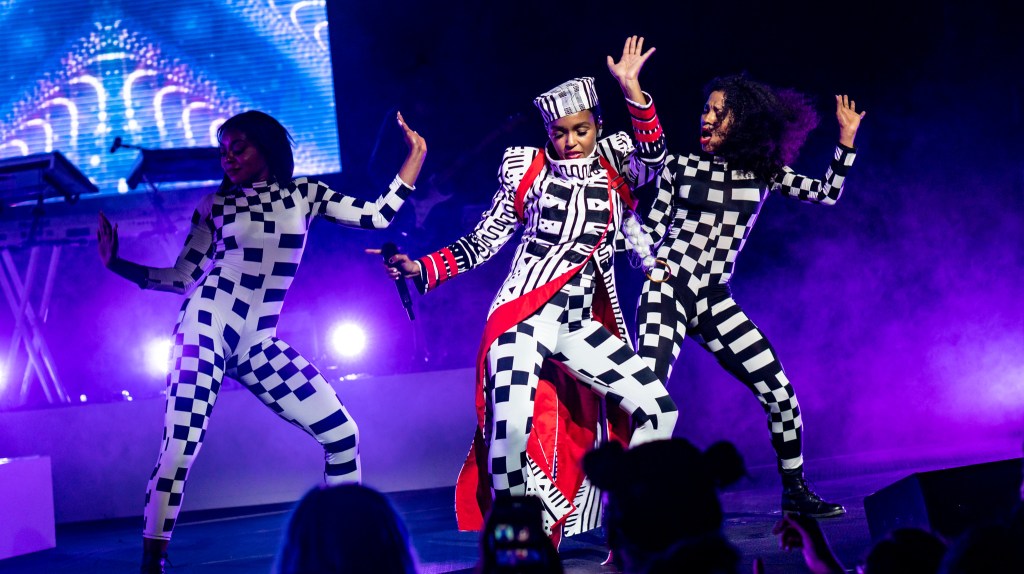
Featured Image: Janelle Monae on the Dirty Computer Tour at Madison Square Garden in 2018 by Flickr User Raph_PH. License: CC BY 2.0
—
Joe Zavaan Johnson (he/they) is a multi-instrumentalist, arts educator, and Black music researcher. Currently an Ethnomusicology Ph.D. Candidate at Indiana University-Bloomington, he examines the Black banjo renaissance through Black studies, human geography, folklore, and ethnomusicology. Johnson frequently collaborates with grassroots organizations focused on coalition building, community healing, and cultural reparations, bridging scholarship with community-engaged practice. His forthcoming dissertation, Black Banjo Bodylands: Recovering an African American Instrument, explores the relationship between Black people, lands, and banjos as ancestral technology.
—

REWIND!…If you liked this post, check out:
SO! Reads: Marisol Negrón’s Made in NuYoRico: Fania Records, Latin Music, and Salsa’s Nuyorican Meanings –Vanessa Valdés
SO! Reads: Justin Eckstein’s Sound Tactics: Auditory Power in Political Protests––Jonathan Stone
“I’m on my New York s**t”: Jean Grae’s Sonic Claims on the City--Liana Silva
Love and Hip Hop: (Re)Gendering The Debate Over Hip Hop Studies--Travis Gosa
My Music and My Message is Powerful: It Shouldn’t Be Florence Price or “Nothing”-Samantha Ege
I Been On: BaddieBey and Beyoncé’s Sonic Masculinity — Regina Bradley
Cardi B: Bringing the Cold and Sexy to Hip Hop–Ashley Luthers
Share this:




Current Top Posts





April 2021

January 2020

November 2019

October 2019

August 2019

April 2014

November 2017

March 2015

December 2017

October 2015
 Sounding Out!
Recent Comments