
¡¡¡¡Resist!!!!: Blog-o-Versary 8.0

DOI: https://doi.org/10.59350/v6mp6-4yx29
** Click here if you are the kind of person who opens the gift first and the card later and you want us to just give you the mix already!! Otherwise, scroll down following this post**
Never have we been prouder in the history of Sounding Out! that nothing much has changed over here in year 8.0. In what has been a period of unrelenting fear, volatility, violence, hate, and uncertainty, we have not only maintained our commitment to amplifying sound studies knowledge in the service of social justice, but we have deepened and intensified it. While, like so many, we struggled with the roller coaster of emotions the injustices of 2016-2017 have wrought, we at SO! did not flinch, we did not falter, nor did we shirk or evade: we rolled up our sleeves and went to work, taking good care of each other while figuring out the best ways to publicly flex our intellectual muscle where it’s most needed, in our own communities and, hopefully, far beyond.
When editorial collective started SO! eight years ago—first gen academics, all—we used to joke (rather seriously, actually) that we started the blog so we could show our families how and why the work we did mattered, especially because it all too often kept us so busy and far away (and “for what?” they kept asking). We wanted to show the people who mattered to us—but quite frankly rarely seem to matter on our university campuses–not just the abstract “importance” of sound studies research, but that the best research in our field could reveal to *everybody’s folks about how the politics of sound and listening were already impacting our lives, in ways both small and tremendous, life-affirming and death-dealing, in ways that enact subjection and enable resistance. 8 years later this mission still guides us—our readability-focused design, our accessible tone that refuses condescension, and our use of multimedia forms of argument and explanation—the only thing different is that we’re coming for y’all’s families too!
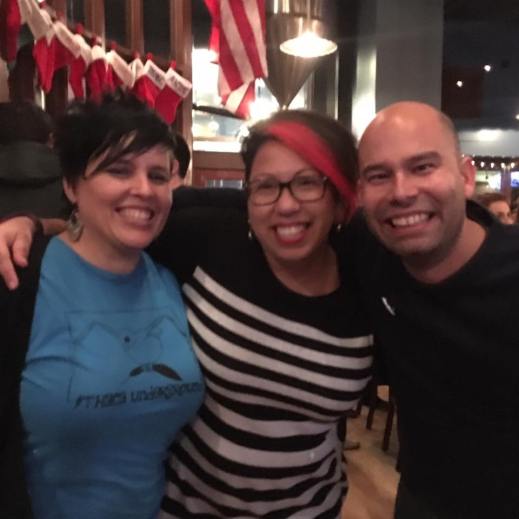
Monday after Monday after Monday, SO! has not only resisted, but has flat out rejected the tired, inaccurate narrative that the humanities somehow don’t matter in our current moment of crisis. Far from it, the knowledge we help surface regarding the cultural, political and historical meanings of sound and shifting formations of listening has an undeniable urgency in our everyday lives—unabashedly challenging automatic modes of perception and disrupting how we listen in the moments that matter most—while exerting transformational power over the inequalities of our institutional structures one reader at a time. SO! delivers the most cutting edge artistic praxis, theories, ideas, and discoveries of the field of sound studies through on-point applications to often very contemporary issues, events, spaces, and places; this year alone SO! brought you sounds and listeners’ perspectives from Standing Rock, anti-abortion protests+ Trump rallies, the film Moonlight, Leftist election protests in Paris, France. the January Women’s March in the US, and footage of the police shootings of Philando Castile and Alton Sterling (as well as King Britt’s artistic protest in response). We’re here, we’re listening, and we aren’t going anywhere (and we👏🏼 Tweet👏🏼too!👏🏼).
As the posts just mentioned show, more than ever before, SO! 8.0’s watchword was resistance. With this guiding ethos, we curated our posts to explore paths to liberation across and beyond borders—in addition to our nuanced explorations of the peoples, power dynamics, and soundscapes of the United States, this year saw posts from the Caribbean diaspora, Cuba, France, Germany, Iceland, Turkey, and indigenous nations in the Americas—to resist the limitations and silences of established historiographies—revealing punk rock’s Queer Chicana history, for example, or radical re-definitions of “silence” in Ojibwe culture and “quiet” in Black women’s lives and art—to explode the idea that sound technology isn’t human and that instruments can be played but not played with—see our posts on what knowledge “vocal deformance” gives us, for example or what experimentations with Adaptive Use Musical Instruments teach us about music and each other, or dig DJ/Producer Primus Luta explaining how and why he created the new instrument he calls the “Rhythm Box.” Our themed forums took on established terms, fields, and institutions, presenting fresh hot takes on the Digital Humanities (DH and Listening), Medieval Studies (Medieval Sound), Punk Rock (Punk Sound), Ability (Sound, Ability, and Emergence), and K-12 education (Pencils Down: Sound in the K-12 Classroom).
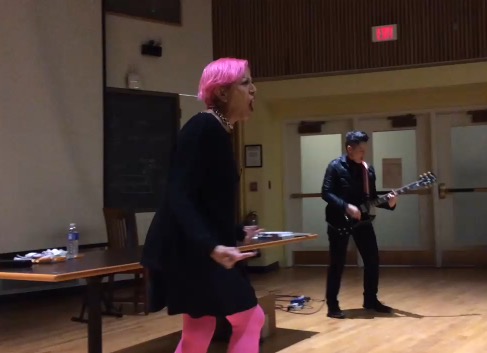
While we can’t stop and we won’t stop, we also can’t front. Spiritually and politically, this past year was frustrating, exhausting, depressing. . . . grueling even. But because of SO!, the editorial collective has never felt alone in these struggles, nor have we let the world wring the joy out of our labor, performed with and for our community. The thing is, though, we didn’t do anything more this year than you did and continue to do, which is why the quality of work on SO! this year was sharper and more incisive than it’s ever been (and its why we are already happily drowning in badass submissions for year 9). Special props and deepest thanks must go to our regular writers Regina Bradley, Justin Burton, and Robin James who bring it three times a year, to our Spring 2017 intern and MVP Ariel Taub who created and maintains our new SO! Instagram feed (follow us!), and our writers’ faith, generosity, and patience with SO!’s stringently hi-fi editorial process and our low-fi “just the three of us” DIY publication style. And of course, we are grateful to our readers; without you we are nothing, but together, we are EVERYTHING. Let’s keep on pushing in year 9.0–and keep listening, better, deeper, and more thoughtfully.
💪🏾💪🏽💪🏿💪🏼SO! 2016-2017 Highlight Reel💪🏾💪🏽💪🏿💪🏼
- Regina Bradley published her first short story collection titled Boondock Kollage: Stories from the Hip Hop South and started a new position as Assistant Professor of English and African Diaspora Studies, Kennesaw State University.
- Chris Chien published two pieces on SO! this year: the Moonlight piece co-authored with Shakira Holt and an essay called “G.L.O.S.S., Hardcore, and the Righteous White Voice“
- Yetta Howard has been promoted to Associate Professor with tenure, Department of English and Comparative Literature, San Diego State University. Howard’s book Ugly Differences: Queer Female Sexuality in the Underground is forthcoming in 2018 from the University of Illinois Press. She is also editing a collection, Rated RX: Sheree Rose with and after Bob Flanagan (under contract with Ohio State University Press). For more information, visit www.yettahoward.com
- Aurelio Meza has a co-authored an article on performing the sound archive SpokenWeb, is about to be published in the book Making Things and Drawing Boundaries: Experiments in the Digital Humanities (U Minnesota Press, 2017), edited by Jentery Sayers. https://www.upress.umn.edu/book-division/books/making-things-and-drawing-boundaries
And remember, the “notes” on our Facebook page is *still the best place to hear about calls for art, calls for posts, and upcoming conferences, shows, and volumes in sound studies. “Like” us here and please continue to keep us in the loop regarding new projects. We love to signal boost!
—
Jennifer Stoever is co-founder and Editor-in-Chief of Sounding Out! She is also Associate Professor of English at Binghamton University, lead organizer of The Binghamton Historical Soundwalk Project and author of The Sonic Color Line: Race and the Cultural Politics of Listening (NYU Press, 2016).
—
Click here for Sounding Out!‘s Blog-O-Versary “!!!!Resist!!!!” mix 8.0 with track listing.
—
REWIND! . . .If you liked this post, you may also dig:


- 2016 Blog-O-Versary “!!!!!!!” mix 7.0
- 2015 Blog-o-Versary 6.0 Keep on Pushing! (Our 400th post!!)
- 2014 #flawless 5.0 celebration and mix
- 2013 Blog-o-Versary 4.0: Solid Gold Summer Countdown!
- 2012 #Blog-O-Versary 3.0: Can’t Stop Won’t Stop (The Awesomeness)!
- 2011 “Awesome Sounds from a Future Boombox” 2.0
- 2010 First Blog-O-Versary party mix: A Celebration of Awesomeness
—
Share this:

If You Can Hear My Voice: A Beginner’s Guide to Teaching


DOI: https://doi.org/10.59350/fmv3j-mm256
Here at Sounding Out! we like to celebrate World Listening Day (July 18) with a blog series. This year, we bring your attention to the role of listening when it comes to the sounds of the K-12 classroom, and by extension, the school.
Any day in a K-12 school involves movement and sounds day in and day out: the shuffling of desks, the conversations among classmates, the fire drill alarm, the pencils on paper, the picking up of trays of food. However, in many conversations about schools, teaching, and learning, sound is absent.
This month’s series will have readers thinking about the sounds in classrooms in different ways. They will consider race, class, and gender, and how those aspects intersect how we listen to the classrooms of our past and our present. More importantly, the posts will all include assignments that educators at all stages can use in their classrooms.
Time’s up, pencils down, and if you can hear Caroline Pinkston‘s voice, you should clap once for this personal essay. –Liana Silva, Managing Editor
Editorial Note (7/17/2017, 11:55 am): After careful consideration, I have changed the last photo of the post, as it was from a NATO Flickr account, and it could be seen as supportive of military presence in Afghanistan. I have added a different photo that compliments better the original intention of the author and the editorial mission of SO!.–Liana Silva, Managing Editor
[C]ontrolling who has the floor is the mark of your authority and a necessity to your teaching.
Doug Lemov, Teach Like a Champion: 49 Techniques That Put Students on the Path to College
I am twenty two, new to New York City and new to teaching. In six weeks, I will be in charge of my own classroom, and like most new teachers, I am worried about classroom management. In my summer pedagogy classes I soak up the advice I am given, dutifully taking notes. Controlling my classroom, I learn, means controlling noise: my own and my students’. My words should be clear, carefully chosen, purposeful. I should eliminate words altogether when I can, using hand signals instead: students who need to use the bathroom, for example, can simply raise their hand with two fingers crossed. I should determine when and how students will answer my questions. I should memorize the names of different participation strategies: cold call, popcorn, call and response. Students should not speak out of turn, even if their responses are well intentioned or correct. Even nonverbal sound should be prevented. “Don’t let them suck their teeth at you,” a veteran teacher cautions me. Unsanctioned noise, I learn, can signal rebellion.
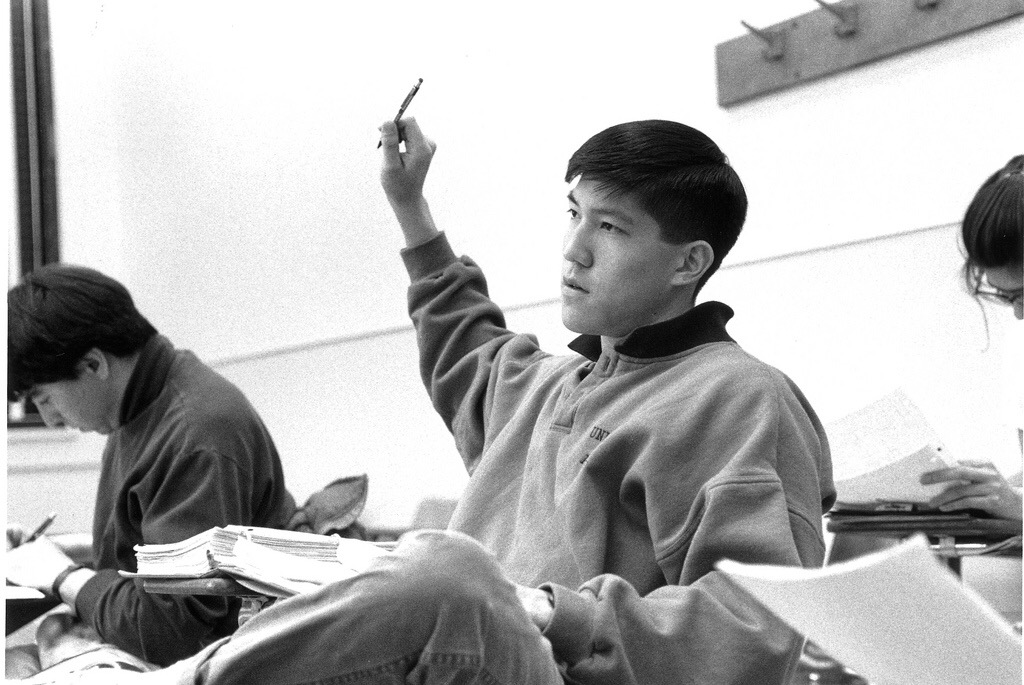
I should never, under any circumstances, talk over my students, or let them talk over me. I learn techniques to quiet large groups efficiently. “If you can hear my voice, clap once,” I learn to say. “If you can hear my voice, clap twice.”
On the first days of school, learn to begin many of your sentences with, “You will … “ An alternative would be, “The class procedure is…” The first few days are critical. This cannot be stressed enough.
Harry K. Wong & Rosemary Wong, The First Days of School: How To Be An Effective Teacher
For the first few weeks, I write my lessons in complete sentences, rehearsing them in advance like a play. In the lesson plans I write each night, I attempt to impose order on the noise of the classroom the next day with scripted responses. I plan for periods of speaking and silence. I write out the questions I will ask, giving thought to the most effective wording, and I try to anticipate every possible answer. I think through how I might address a misunderstanding, correct a behavior, dole out consequences. In my lesson plans I speak, students respond, and we go back and forth together.
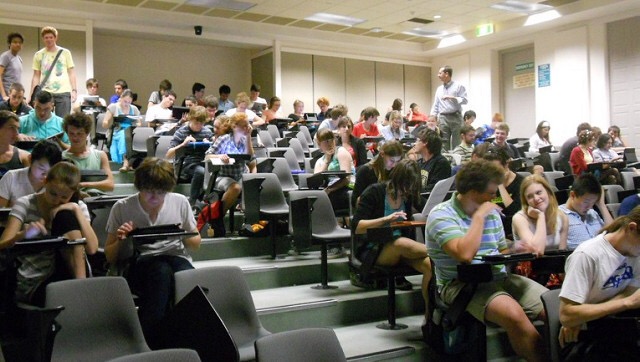
But in the classroom, noise emerges in less predictable ways, bubbling up through the cracks in ways I haven’t planned for. I am listening for outbursts, students speaking out of turn, challenging my authority: the sorts of sounds I’ve been trained to respond to. But mostly, there are pencils tapping on desks. My tongue tripping over names that are at first unfamiliar to me. My voice, to my dismay, shaking. The door, swinging open and shut. Students arriving late, administrators stepping in: sorry to interrupt but could I borrow…? The fire alarm. The crackling loudspeaker.
My voice is tired and hoarse at the end of each day. The hand signal to use the bathroom does not go over well.
Quiet Power. When you get loud and talk fast, you show that you are nervous, scared, out of control. You make visible all the anxieties and send a message to students that they can control you and your emotions… Though it runs against all your instincts, get slower and quieter when you want control. Drop your voice, and make students strain to listen. Exude poise and calm. (Lemov, Teach Like a Champion)
In October of my first year, something strange happens at the beginning of B period. I’ve come into class a little late, flustered and overwhelmed and tired of pretending so hard that I know what I’m doing, to be calm and authoritative and in control. I open my mouth to say the right words to get class started, but instead I find myself laughing—I’m not sure why, really—and then I can’t stop laughing, and I laugh till I cry a little, and I have to step out into the hallway to compose myself.
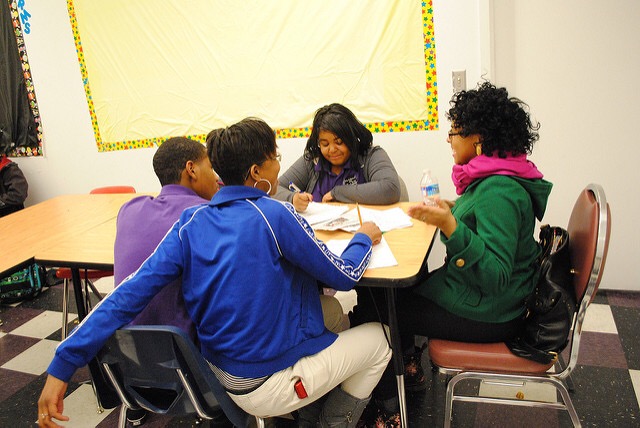
Outside, I am sobered by the thought of what I’ve just done: whatever authority and professionalism I had gained, gone. I’ll have to start all over. But when I walk back in, my students are laughing, too, at me, and with me, and through that laughter something tiny but important shifts. It is one of the best days of teaching I’ve had all year.
The soundscape begins to shift. The less I try to extinguish every noise I hear, the more I begin to hear things I hadn’t noticed before: singing in the hallways, laughing. Students asking me about my day.
[K]eep in mind that all students – no matter what age – respond to authenticity. They crave teachers who see them as real people, and they do back flips for the ones whose interactions with them are based on sensitivity and respect. Remember to let them know – this is my single greatest pearl of wisdom, Caroline – let them know every single day that you like them. Laugh with them. Lift their spirits. Sing with them!
(Marsha Russell, personal email).
I observe a veteran teacher whose class of seniors is putty in her hands. At her request, they even burst into song, in unison. How do you get them to do that? I ask. And she tells me: You just have to believe that they will.
She writes me an email of classroom management tips. I print out my favorite part and keep it; I unfold it and I reread it and I put it in my pocket and I pass it along to other teachers.
Sing with them! It’s a revelation, that teaching could be conducting, that learning could be music.
Economy of Language. Fewer words are stronger than more. Demonstrating economy of language shows that you are prepared and know your purpose in speaking. Being chatty or verbose signals nervousness, indecision, and flippancy. It suggests that your words can be ignored. (Lemov, Teach Like a Champion)
My second teaching post is at a private, Episcopal school, where students transition between classes to the sound of music playing through the loudspeakers. In daily chapel, the whole community marks a moment of silence, signaled by a bell that reverberates through the rafters. We sit together patiently, four hundred people breathing. I wonder what combination of school culture and privilege and training creates a student body this quiet and calm, and what unseen tradeoffs might come with such silence. It’s peaceful, but I also find myself nostalgic for the stream of noise I’d grown accustomed to in New York, constant and lively and joyful.

I am finally confident in my ability to quiet a classroom, but the skill proves unhelpful in this new space, where on the first day my seniors sit quietly and wait for me to begin. I find this a little unnerving, like I’ve stepped into a game I thought I knew well, only to find that the rules have changed.
Ineffective teachers say things like:
“Where did we leave off yesterday?”
(Translation: I have no control.)
“Open your books so that we can take turns reading.”
(For what reason?)
“Sit quietly and do the worksheet.”
(To master what?)
“Let’s watch this movie.”
(To learn what?)
“You can have a free period.”
(Translation: I do not have an assignment for you. I am unprepared.)
(Wong & Wong, The First Days of School)
F period teaches me that silence can be deadening, too. They answer when I ask them to, but they wait to be asked, or for one of their classmates to resign themselves to raising their hands, again. And the moment of waiting, the stillness that follows the question, punctures the energy in the room as perfectly as a needle: we arrive at an answer, but something important has been lost along the way.
I’m learning that sometimes controlling noise is easier than producing it, creating sound where before there was silence. And sound is not enough: I must layer speech on top of speech to build a conversation, which is something altogether different and more precious. We have to create something, together. That’s the real challenge.
Teaching isn’t magic, says every classroom management book I’ve ever read. And it isn’t, if you’re talking about technique, about participation strategies, about getting everyone quiet or deciding who speaks. But at the center of all that structure is something elusive and harder to describe or replicate — a moment all those management books try to help you approach, when you and your students arrive at something powerful and important together. I’m not sure that moment requires a lively classroom or a silent one, and I don’t think you can conjure it. It comes unbidden. It might be chance. It might happen like this.
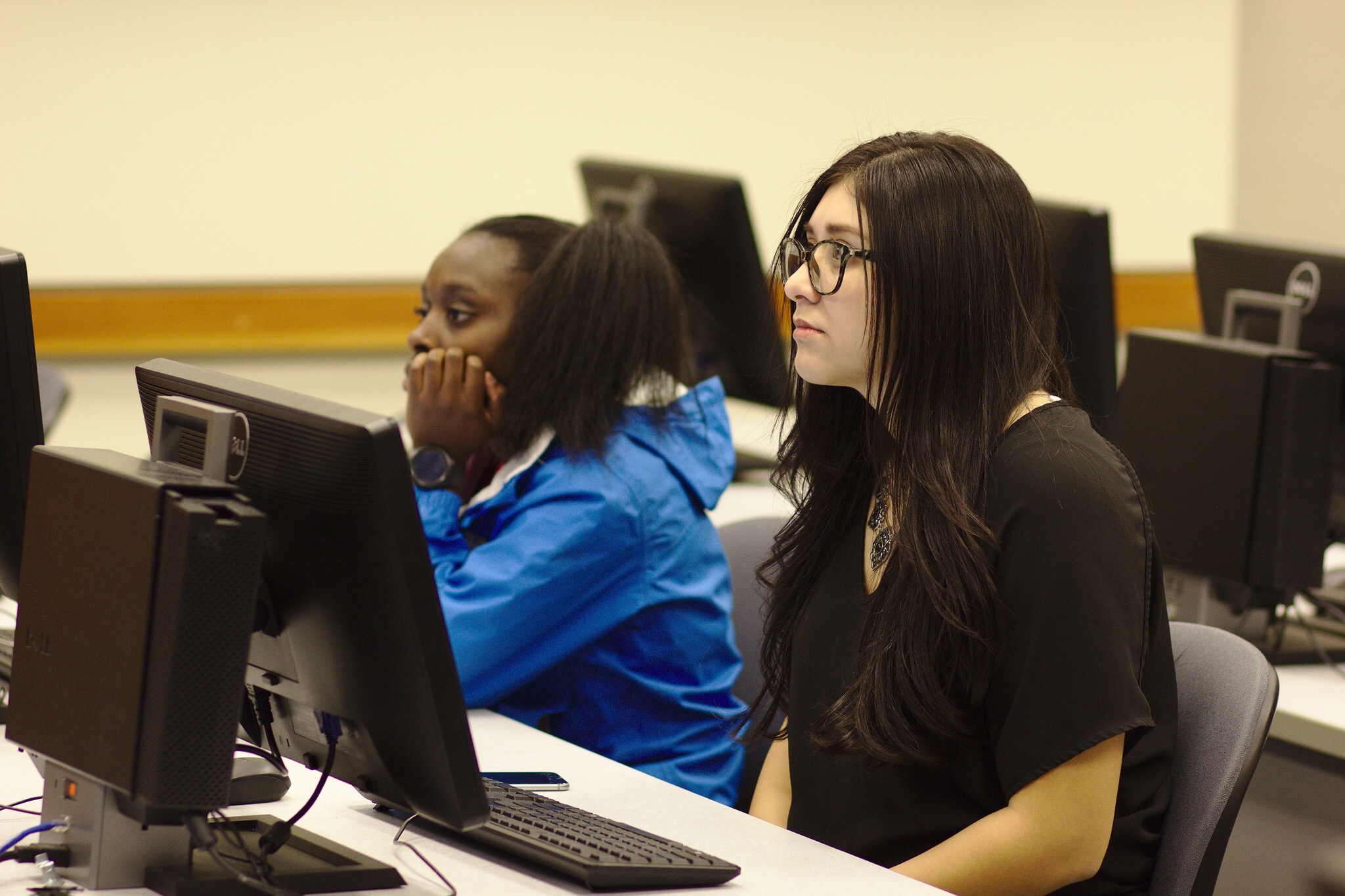
You’ll be in second period English, reading King Lear, at the part when Kent tells Lear to see better. You’ll be telling a story about the very first days of your teaching, when you were too concerned about controlling your classroom to really notice the students in front of you, to see them as real, whole people. You use the story to talk about sight, about what it might mean to see better, how what we pay attention to shapes what we think we know. This story matters to you. You believe in it.
And on this afternoon, for whatever reason, the intensity of your students’ attention will be so sharp and clear it will raise goosebumps on your arms. You’ll feel it and look up, and they will be listening exactly the way you’re talking about seeing, and the room will be so quiet that it almost hums. It’s the kind of quiet you can’t get from silencing noise, just like you can’t create a conversation by making students speak. It grows from the ground up, a momentary enchantment brought on through some alchemy of their interest and your story and the book and the weather that day.
You’ll yield to it, listening, holding your breath in case it disappears.
—
Featured image: “Inside My Classroom” by Flickr user Marie, CC BY-SA 2.0
—
Caroline Pinkston is a PhD candidate in American Studies at the University of Texas at Austin. Her work brings education into conversation with childhood studies and cultural memory. She holds a B.A. in American Studies and English from Northwestern University (2008), an M.S. in English Education from Lehman College (2010), and an M.A. in American Studies from the University of Texas (2014). A former high school English teacher, she has taught and worked in public, private, and nonprofit settings in New York City and Austin, Texas.
—

REWIND! . . .If you liked this post, you may also dig:
A Listening Mind: Sound Learning in a Literature Classroom–Nicole Furlonge
Audio Culture Studies: Scaffolding a Sequence of Assignments–Jentery Sayers
The Sounds of Anti-Anti-Essentialism: Listening to Black Consciousness in the Classroom–Carter Mathes
—
Share this:




Current Top Posts





April 2021

January 2020

November 2019

October 2019

August 2019

April 2014

November 2017

March 2015

December 2017

October 2015


Recent Comments