
Sounding Out! Podcast #40: Linguicide, Indigenous Community and the Search for Lost Sounds

DOI: https://doi.org/10.59350/1f3nw-pqr65
CLICK HERE TO DOWNLOAD: Linguicide, Indigenous Communities and the Search for Lost Sounds
SUBSCRIBE TO THE SERIES VIA ITUNES
This podcast is an effort to understand the cultural practices which surround the recovery of “lost sounds.” These are early linguistic sounds that have been forgotten after years of cultural and martial violence toward indigenous communities in America.
From the very beginning of the invasion of the Americas that began in 1492, Eurocentric ideologies overwhelmingly failed to recognize the strengths of American Indian cultures. Evaluating Native people as “savage,” efforts to westernize the tribes alternated between genocide and acts of removal. Government supported education, amongst other things, became the primary means to accomplish the forced eradication of Indian language. The loss of language as a component of ongoing colonization is what Hawaiian scholar Noenoe K. Silva has called “linguicide.” The results of “linguicide,” as the suppression of indigenous languages and cultures in the United States, has been catastrophic for American Indian and Alaska Native peoples.
For Indigenous people, the spoken language is a cherished intellectual treasure. Each sound captures how we see the world. Native American languages are oral, but some of them have been written in the last three centuries. There are over two hundred different North American languages still spoken by peoples of the United States and Canada. That is, of the over three hundred pre-contact languages originally spoken, only two hundred languages still remain. Fortunately, Native communities are fighting hard to keep these languages alive through sustainability efforts and revitalization projects.
I wonder about the relationship between “lost sounds,” indigenous language, and personal experience. How did we come to lose the language in our own homes? How does this loss continue today? What is being done to “find lost sounds”? How are we, as Native people, searching for the sounds, and what does that process mean to us? The conversation in this podcast is not about the science of linguists, it is not about history or the methods of linguistic preservation. Instead, it is a conversation about the experience of listening and trying to hear how we once were.
–
Marcella Ernest is a Native American (Ojibwe) interdisciplinary video artist and scholar. Her work combines electronic media with sound design with film and photography in a variety of formats; using multi-media installations incorporating large-scale projections and experimental film aesthetics. Currently living in California, Marcella is completing an interdisciplinary Ph.D. in American Studies at the University of New Mexico. Drawing upon a Critical Indigenous Studies framework to explore how “Indianness” and Indigenity are represented in studies of American and Indigenous visual and popular culture, her primary research is an engagement with contemporary Native art to understand how members of colonized groups use a re-mix of experimental video and sound design as a means for cultural and political expressions of resistance.
—

REWIND! . . .If you liked this post, you may also dig:
Sounds of Science: The Mystique of Sonification – Margaret Anne Schedel
Radio and the Voice of the Aymara People – Karl Swinehart
The “Tribal Drum” of Radio: Gathering Together the Archive of American indian Radio – Josh Garrett-Davis
—
Share this:

SO! Thursday Stream Year in Re-Hear
DOI: https://doi.org/10.59350/vqch6-4bq36
The offer was, I confess, music to my ears. It was the around this time last year that Editor-in-Chief Jennifer Stoever and the SO! collective generously offered me the chance to come on board to help them draw in sound-minded editors and authors from the American Studies Association and Society for Cinema & Media Studies, and other academic associations, opening up a new space two or three Thursdays each month. The truth is I never even considered turning them down. Working together, we recruited talented folks to work as Guest Editors, crafting a number of special series posts that dig deep into mediated sonic worlds of music, radio, film, art and science.
The result has been a group of articles that I couldn’t be prouder of for their richness. Among the most widely-read articles I’ve worked on this year you’ll find Mike D’Errico’s controversial piece on gender and brostep, but also Margaret Schedel’s groundbreaking article on sonifying nanoparticles. Go ahead, try to find another sound studies venue – online or anyplace – with range like that. No luck? As I suspected. Welcome back.
Not only has working on SO! been an honor, it has also opened up new horizons for me, forged odd alliances and prompted strange harmonies – hallmarks of what exciting sound studies ought to be about. I learned something and relearned more every week. In that spirit, this “Year Re-hear” post celebrates the Thursday stream by listening back –not once, but three times — to where we’ve been.
—
First, the straight story.
Our year started with The Wobble Continuum, a series on race, gender and dubstep, edited by Justin D. Burton (Rider University) with posts by Mike D’Errico (UCLA), Christina Giacona (U of Oklahoma), and Burton. These articles brought new perspective on the “maximalist aesthetic” of electronic dance music and explored resistance to sonic racism, while examining sonic experience everywhere from a baseball stadium to a bus stop.
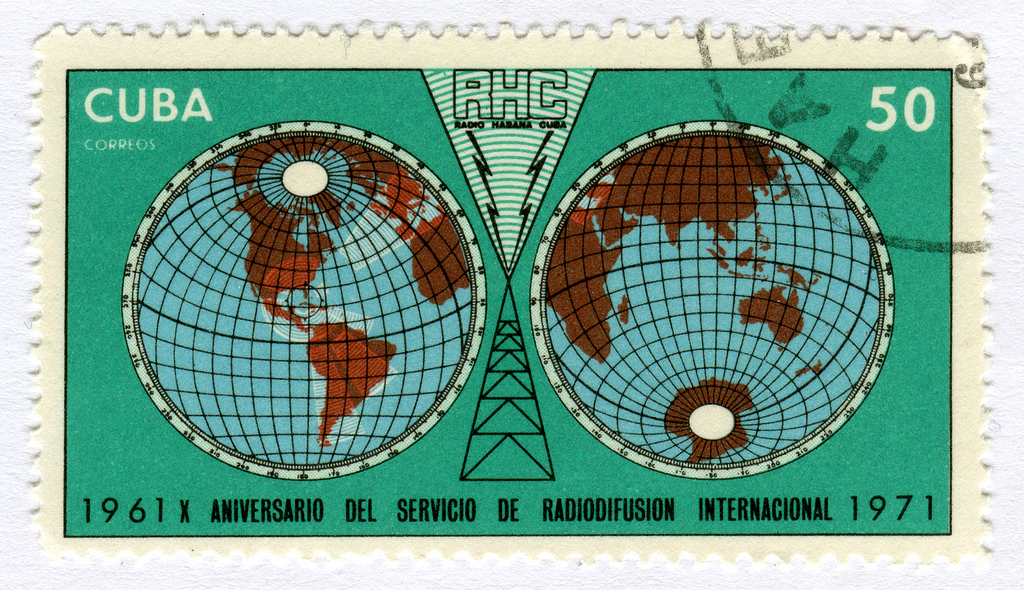
Then, beginning in February, we heard from Latin America through Radio de Acción a series on radio and the idea of region. Edited by Tom McEnaney (Cornell), with posts by Alejandra Bronfman (UBC), Karl Swinehart (Uchicago) and Carolina Guerrero (Radio Ambulante), RdA brought us fascinating stories of student activists taking over radio stations to oppose Fulgencio Batista in the 1950’s and of the founding of Radio Ambulante, at the forefront of Spanish-language creative narrative radio today.
When Spring came (remember Spring? sigh.) I edited Start a Band, reflecting on the legacy and music of the late Lou Reed, with posts by Jacob Smith (Northwestern) and Tim Anderson (Old Dominion). Tim and Jake offered penetrating accounts of how reissues of Velvet Underground records helped a generation learn to listen, and how their music quite literally gets under your skin, and sometimes even deeper.
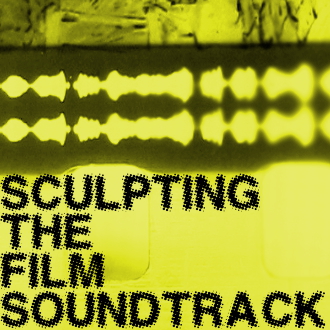
Sculpting the Film Soundtrack, was our next series, an ambitious take on new directions in film sound design edited by Katherine Spring (Wilfrid Laurier), with posts by Randolph Jordan (Simon Fraser), Danijela Kulezic-Wilson (University College, Cork) and Benjamin Wright (University of Southern California). This series had extraordinary range, examining works by such figures as Hans Zimmer and Shane Carruth that break down old assumptions about soundtracks, while unsettling the act of listening itself.
From radio and film, we turned to art and science. First with Hearing the Unheard,
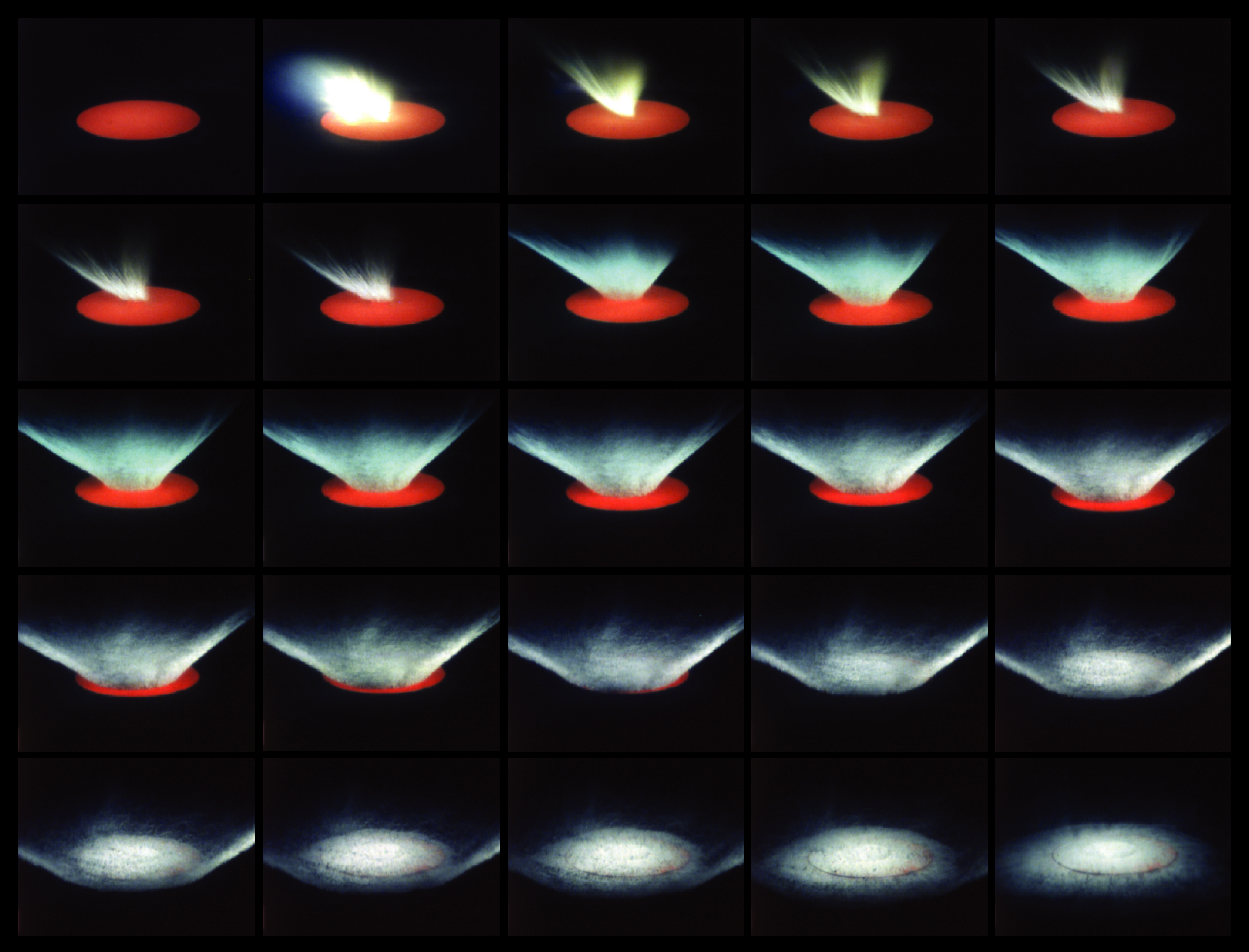
a series edited by Seth Horowitz (NeuroPop) with posts by the sound artist China Blue (The Engine Institute), Milton A. Garcés (University of Hawaii at Manoa) and Margaret A. Schedel (Stonybrook). This series took us inside the ears of dogs, out into the vacuum of space billions of years ago, and deep inside the sound of underground lava. Then came our current series, Radio Art Reflections, edited by Magz Hall, which promises to undertake a trans-national history of radio art — check out the first post by artist Anna Friz (Canada) on radio art and acoustic ecology.
Where will this stream go next? In part, that’s up to you. If you have a concept for a special series, and a sense of some exciting authors for it, have a look at our Call for Guest Editors, we’ll extend the deadline a few days.
—
Remix!
In reviewing these posts, I was struck by how they form their own connections in ways we didn’t plan and probably couldn’t foresee a year ago. The Thursday stream echoes back on itself. Here, for your consideration, are three alternative hypothetical groupings of the exact same posts you see above:
Sound and Indigenous Peoples Today: a series featuring an examination of the circulation of A Tribe Called Red’s song “Braves“, a study of indigenous peoples of Vancouver’s Eastside on film, and an introduction to Aymara-language radio in Bolivia, with Christina Giacona, Randolph Jordan and Karl Swinehart.
The Microsonic: a series on itty bitty sounds, and how to get at them. Posts explore the sonic fragments in Upstream Color, the sonification of data from x-ray scatter, and the tactile sounds of Lou Reed with Danijela Kulezic-Wilson, Margaret A. Schedel, and Jacob Smith.
Sonic Breakdown: a series on the sound of breaking down and how sounds break things down, from the big budget film soundtrack to volcanic rock formations, and national boundaries in Caribbean radio history, with posts by Benjamin Wright, Milton Garces and Alejandra Bronfman.
—
Finally, why not let the sounds from these posts tell the story for a change?
Tickle your ears with some of the sounds we’ve featured in this stream over the last year, a little sound sandbox:
- Guest editor Seth Horowitz’s office, as an elephant might hear it
- Tape of a student takeover of Radio Reloj in Cuba in 1957
- “Lady Godiva’s Operation” by The Velvet Underground
- A tremor at Arenal, a volcano in Costa Rica
- electrosmog, a work of radio art by Kristen Roos for Radius in Chicago
- The sound of cartoons playing on a TV in a methadone clinic in Vancouver
- A sonifications of a variety of mappings of x-ray scattered particles by Meg Schedel
.
.
.
—
Thanks to Jennifer, Aaron, Liana, Will and everyone here at SO! for putting your faith in me this year. And thanks especially to all our writers and editors for being so enthusiastic, brilliant and patient.
The SO! family salutes you!
—
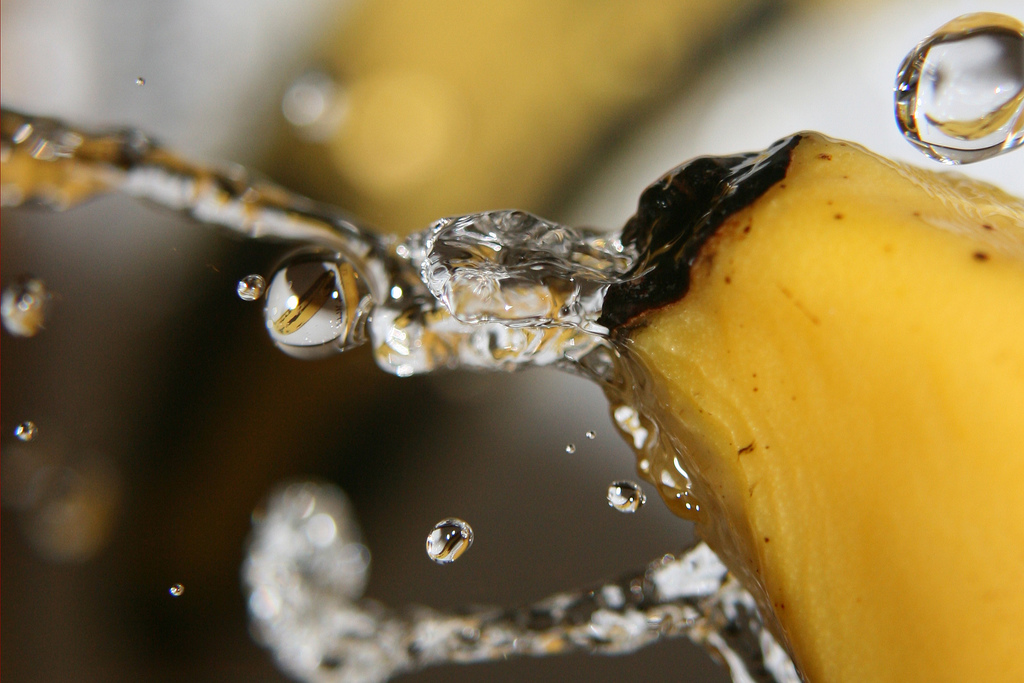
Featured Photo by Flickr user Jenene Chesbrough, Creative Commons License.
—
Share this:




Current Top Posts





April 2021

January 2020

November 2019

October 2019

August 2019

April 2014

November 2017

March 2015

December 2017

October 2015


Recent Comments