
Sounding Out! Podcast #29: Game Audio Notes I: Growing Sounds for Sim Cell

DOI: https://doi.org/10.59350/055kj-6jq16
A pair of firsts! This is both the lead post in our summer Sound and Pleasure series, and the first podcast in a three part series by Leonard J. Paul. What is the connection between sound and enjoyment, and how are pleasing sounds designed? Pleasure is, after all, what brings y’all back to Sounding Out! weekly, is it not?
In today’s installment Leonard peels back the curtain of game audio design and reveals his creative process. For anyone curious as to what creative decisions lead to the bloops, bleeps, and ambient soundscapes of video games, this is essential listening. Stay tuned for next Monday’s installment on the process of designing sound for Retro City Rampage, and next month’s episode which focuses on the game Vessel. Today, Leonard begins by picking apart his design process at a cellular level. Literally! -AT, Multimedia Editor
–
CLICK HERE TO DOWNLOAD: Game Audio Notes I: Growing Sounds for Sim Cell
SUBSCRIBE TO THE SERIES VIA ITUNES
ADD OUR PODCASTS TO YOUR STITCHER FAVORITES PLAYLIST
–
Game Audio Notes I: Growing Sounds for Sim Cell
Sim Cell is an educational game released in Spring 2014 by Strange Loop Games. Published by Amplify, a branch of News Corp, it teaches students how the human cell works. Players take control of a small vessel that is shrunk down to the size of a cell and solve the tasks set by the game while also learning about the human cell. This essay unpacks the design decisions behind the simulation of a variety of natural phenomena (motion, impact, and voice) in Sim Cell.
For the design of this game I decided to focus on the elements of life itself and attempted to “grow” the music and sound design from synthetic sounds. I used the visual scripting language Pure Data (PD) to program both the sounds and the music. The music is generated from a set of rules and patterns that cause each playback of a song to be slightly different each time. Each of the sound effects are crafted from small programs that are based on the design of analogue modular synthesizers. Basic synthetic audio elements such as filtered noise, sawtooth waves and sine waves were all used in the game’s sound design.

The visuals of the game give a feeling of being in an “inner space” that mirrors outer space. I took my inspiration for Sim Cell‘s sound effects from Louis and Bebe Baron’s score to Forbidden Planet. I used simple patches in PD to assemble all of the sounds for the game from synthesis. There aren’t any recorded samples in the sound design – all of the sound effects are generated from mathematics.
The digital effects used in the sound design were built to emulate the effects available in vintage studios such as plate reverb and analog delay. I found a simulation of a plate reverb that from a modified open source patch from the RjDj project, and constructed an analogue delay by using a low-pass filter on a delayed signal.
In keeping with the vintage theme, I used elements of sound design from the early days of video games as well. Early arcade games such as Space Invaders used custom audio synthesis microchips for each of their sounds. In order to emulate this, I gave every sound its own patch when doing the synthesis for Sim Cell. I learned to appreciate this ethic of design when playing Combat on the Atari 2600 while growing up. The Atari 2600 could only output two sounds at once thus had a very limited palette of tones. All of the source code for the sounds and music for Sim Cell are less than 1 megabyte, which shows how powerful the efficient coding of mathematics can be.
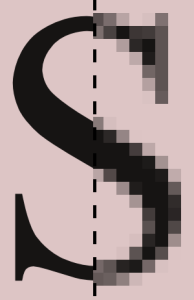
Another cool thing about generating the sounds from mathematics is that users can “zoom in” on sounds in the same way that one can zoom in to a vector drawing. In vector drawings the lines are smooth when you zoom in, as opposed to rasterized pictures (such as a JPEG) which reveal a blurry set of pixels upon zooming. When code can change sounds in real-time, it makes them come alive and lends a sense of flexibility to the composition.
For a human feeling I often filter the sounds using formant frequencies which simulate the resonant qualities of vowel sounds, thus offering a vocal quality to the sample. For alarm sounds in Sim Cell I used minor second intervals. This lent a sense of dissonance which informed players that they needed to adjust their gameplay in order to navigate treacherous areas. Motion was captured through a whoosh sound that used filtered and modulated noise. Some sounds were pitched up to make things seem like they were travelling towards the player and likewise they exploited a sense of doppler shift when pitched down, giving the feel that a sound was traveling away from the player. Together, these techniques produced a sense of immersion for the player while simultaneously building a realistic soundscape.
Our decision to use libPD for this synthesis turned problematic and its processing requirements were too high. In order to remedy this, we decided to convert our audio into samples. Consider a photograph of a sculpture. Our sounds, like sculpture in the photograph, could now only be viewed from one direction. This meant that the music now only had a single version and that sound effects would repeat as well. A small fix was exporting the file with a set of five different intensities from 0 to 1.0. Like taking a photograph from several angles, this meant that the game could play a sample at intensity levels of 20%, 40%, 60%, 80% and 100%. Although a truly random sense of variation was lost, this method still conveyed the intensity of impacts (and other similar events) generated by the physics engine of the game.
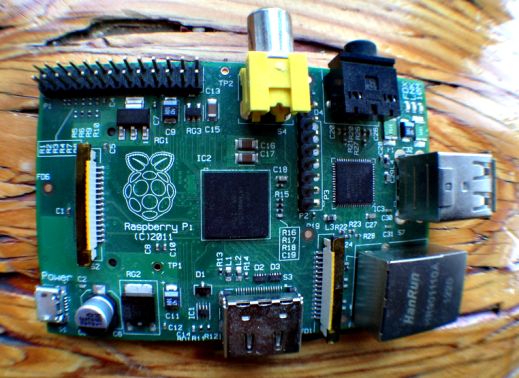
PD is a great way to learn and play with digital audio since you can change the patch while it is running, just like you might do with a real analogue synthesizer. There’s plenty of other neat stuff that PD can do, like being able to be run on the Raspberry Pi, so you could code your own effects pedals and make your own synths using PD for around $50 or so. For video games, you can use libPD to integrate PD patches into your Android or iOS apps as well. I hope this essay has offered some insight as to my process when using PD. I’ve included some links below for those interested in learning more.
Additional resources:
- “The Generative Music and Procedural Sound Design of Sim Cell” – School of Video Game Audio
- Pure Data – download extended from Puredata.info for all platforms
- Download 10 free patches demonstrating the sound effects in Sim Cell from my site at VideoGameAudio.com – search for “Patches” section for “10 Procedural Sound Design Patches” – Power down, fat synth, spaceship, whoosh, robot blabber, missile, alising scream, alien blast, computery, explosion and bonus synth cat meow sound
- Miller Puckette’s book “The Theory and Technique of Electronic Music” – free 300+ page book using Pure Data
- “Designing Sound” by Andy Farnell has great patches in it from fires to guns to birds – great for game audio
- Download student patches from previous times I’ve taught at Emily Carr University
–
Leonard J. Paul attained his Honours degree in Computer Science at Simon Fraser University in BC, Canada with an Extended Minor in Music concentrating in Electroacoustics. He began his work in video games on the Sega Genesis and Super Nintendo Entertainment System and has a twenty year history in composing, sound design and coding for games. He has worked on over twenty major game titles totalling over 6.4 million units sold since 1994, including award-winning AAA titles such as EA’s NBA Jam 2010, NHL11, Need for Speed: Hot Pursuit 2, NBA Live ’95 as well as the indie award-winning title Retro City Rampage.
He is the co-founder of the School of Video Game Audio and has taught game audio students from over thirty different countries online since 2012. His new media works has been exhibited in cities including Surrey, Banff, Victoria, São Paulo, Zürich and San Jose. As a documentary film composer, he had the good fortune of scoring the original music for multi-awarding winning documentary The Corporation which remains the highest-grossing Canadian documentary in history to date. He has performed live electronic music in cities such as Osaka, Berlin, San Francisco, Brooklyn and Amsterdam under the name Freaky DNA.
He is an internationally renowned speaker on the topic of video game audio and has been invited to speak in Vancouver, Lyon, Berlin, Bogotá, London, Banff, San Francisco, San Jose, Porto, Angoulême and other locations around the world.
His writings and presentations are available at http://VideoGameAudio.com
–
Featured image: Concept art for Sim Cell. Used with permission (c) 2014 Amplify.
—

REWIND! . . .If you liked this post, you may also dig:
Sounding Out! Podcast #10: Interview with Theremin Master Eric Ross- Aaron Trammell
Papa Sangre and the Construction of Immersion in Audio Games- Enongo Lumumba-Kasongo
Playing with Bits, Pieces, and Lightning Bolts: An Interview with Sound Artist Andrea Parkins
—
Share this:

Learning to Listen: The Velvet Underground’s “Once Lost” LPs


Welcome back to Start a Band, our two-part series on Lou Reed and the Velvet Underground, focusing on what the band’s sonic provocations mean for sound studies today. Last week, we heard from Jake Smith, who introduced us to a way of thinking about the Velvets that emphasized the “haptic” qualities that emerge so often while listening to them. Following that idea, Smith took us on a kind of journey from the skin to the musculature and the viscera through a deep analysis of key songs in their catalog — “This is your body on the Velvet Underground.”
This week, we’re delighted to welcome to Sounding Out! a writer whose work we’ve been eager to feature for a long while — Tim Anderson, Associate Professor of Communication and Theatre Arts at Old Dominion University. Tim has written extensively on popular music and sound, and is currently a leader of the Sound Studies Scholarly Interest Group at the Society for Cinema and Media Studies, one of the scholarly groups associated with the SO! Thursday stream. It’s such a pleasure to present this sensitive and personal account of the Velvet Underground — and of learning to listen.
– NV
—

Reports of Lou Reed’s death came on a Sunday. Even though he was 71, it was still a shock. To many present-day friends and colleagues Reed’s Velvet Underground are a band that they understand are important, but just don’t get. In the case of an artist like Lou Reed, an artist who never had a top ten charting single and only two gold albums, you could see their point.
Still, I obsessed. Rattled from my travels in Washington, DC, I called my wife and we talked about his music for about an hour or so, after which I took a long walk to the Washington Mall. It was a sunny fall day, October 27, 2013, and I walked past the Smithsonian with its prominent memorials, such a clean space for so much past, some of which the nation has buried and some of which we don’t even bother to think about. The deceased have always done the most important work in our nation’s capital.
The day after, I really don’t remember doing much. I took a train home, read everything I could online about Reed, and thought a lot about his records. The ones I liked —New York and The Blue Mask—the ones I learned to like —it took me years to enjoy Transformer—and the ones I loved —The Velvet Underground and Nico, White Light, White Heat, The Velvet Underground and VU. Those four records, more than any records I can remember, altered me, many of my friends in my teens and in college, and almost every rock musician I admired in the 1980s. Velvet Underground records were simply foundational. Writing about Reed’s death, rock critic Greg Kot summed up the Velvet’s influence by claiming that they were “as influential as The Beatles” and if you named “just about any left-of-centre band or artist since the ‘70s”, some of whom like R.E.M., U2 and Talking Heads “became mainstream giants”all of them would “acknowledge a deep debt to the Velvet Underground.”
This influence is the reason that the collective mourning of such a marginally popular figure swelled to such a crescendo. However, to paraphrase the words of one of Reed’s most storied rivals, Lester Bangs, on the death of John Lennon, this was not the mourning of a person. Most of us never met Lou Reed. Instead, we were mourning ourselves. To lose Lou Reed was tantamount to losing the author of a proverbial urtext of a kind of secret rock language that has been passed down since the late 1960s on how to be cool. It was a language of composed of style, gestures, and reactions. It was one that was filled with a fun that was not of the obligatory “hey-dude-let’s-party!” party. The Velvet’s overdriven guitars repeatedly underscored that teenage kicks included other aesthetic pleasures such as contemplation and melancholy. Most importantly, the Velvet Underground offered a language of listening passed down from one rock underground to another.
Because pop fans of all stripes must learn how to be a fan, learning how and what to listen to is a taste-defining social exercise. Simon Frith once explained that, for him, “one aspect of learning how to be a rock fan in the 1960s was, in fact, learning to prefer [original records made by black artists of the 1950s] to covers [made by white artists of the same era]. And this was, as I recall, something that had to be learned [by Frith]: nearly all the records I had bought in the late 1950s had been the cover versions” (Performing Rites: On the Value of Popular Music, 1996). In my case, learning to listen also meant learning what to listen to while listening to The Velvet Underground, a process involving peers, record clerks, friends, musicians and reviews.
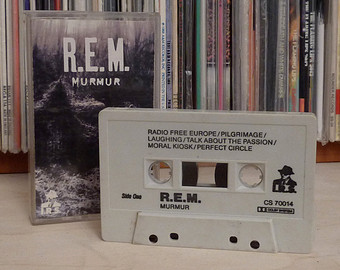
As a young rock fan who began first collecting cassettes —that’s right, cassettes —this process would begin through an obsession with R.E.M.’s Murmur, a cryptic, odd inscrutable cassette with no lyrics, a black and white picture and layers of reverb. The copy I found had been severely discounted in a ma and pa record store in Globe, Arizona. In Summer 1983 I read a rave review in a copy of Rolling Stone and at 14 had purchased a cassette unlike anything I had ever heard; I wasn’t sure I enjoyed it. Why did so many reviewers seem to fall over themselves about this record? To solve this puzzle, it meant learning how to listen to music invested in tone rather than ostentatious chops. It meant paying attention to drones rather than solos. It meant following those features to Velvet Underground records after peers, record clerks, friends, musicians and reviews made a point that Murmur reminded them a bit of VU records.
Murmur was also the first record I ever purchased that embraced what Jacob Smith so wonderfully identifies as a distinctive trait of all Velvet Underground records. For Smith, these pop records are part of a genealogy that “stress evocative timbres, idiosyncratic voices, and signature sounds over structural or lyrical complexity.” The distillation of this pop ethos onto record was one of the reasons that so many musicians whose abilities may have been limited but whose tastes tended toward the poetic found The Velvets so influential. As Jonathan Richman explained, “I didn’t start singing or playing till I was 15 and heard the Velvet Underground. They made an atmosphere, and I knew that I could make one too!” (Quoted in Greil Marcus, Lipstick Traces: A Secret History of the Twentieth Century, 61). Indeed, Smith notes that the deceptive complexity of VU Records “can be found more on the level of timbre than in musical structure or instrumentation” and “lyrics often encourage a blurring of listening and touching”; his post actually reads like many of the conversations and reviews surrounding R.E.M.’s debut LP. The same could also be said of records released by other 1980s and 90s artists such as The Pixies, My Bloody Valentine, Opal, Mazzy Star, Radiohead, The Dream Syndicate, Galaxie 500, The Rain Parade, Green on Red, New Order, Joy Division, The Feelies, Spacemen 3, Sonic Youth, The Pretenders, The Sisters of Mercy, Ministry, The Jesus and Mary Chain, and The Violent Femmes, to name but a few who drew water from the Velvet Underground well. Bands sonically inspired by the Velvets often providing feedback before solos, drummed without cymbals, and portrayed dark themes sung in monotones that sounded sophisticated and obscure.
.
However, actually hearing a Velvet Underground record in 1983 and 1984 was a significant problem for newer fans, as their MGM catalog was out of print. Many understood these records to be effectively buried by label president Mike Curb’s infamous axing of the act from MGM along with seventeen others who allegedly promoted and exploited “hard drugs through music” (Tiegel, Eliot “Mgm Busts 18 Rock Groups.” Billboard, November 7 1970, 1, 70). As Lou Reed himself once noted, “it’s depressing when you’re still around and your albums are out of print.” I have often wondered if this was one of the reasons that The Velvets catalogue would have such a profound effect on so many of us. Sure, I had found a copy of Loaded, the band’s fourth official release, but its bright tones had none of the subversive menace that so many reviewers alluded to when speaking of the Velvets. Even in a mountain town in Arizona, I had a better chance of finding used copies of The Grateful Dead’s Wake of the Flood or Blues for Allah than I did The Velvet Underground and Nico. In other cities, in other record stores, when I did find those records they were used and prices started at $15 and up. They were records I simply could not afford to listen to.

All that changed after 1985, when every MGM Velvet Underground record would appear in my life for less than $25. Bill Levenson’s efforts as Polygram’s then A&R manager to reissue the buried and lost MGM catalog on Verve provided me and every other young person who had only “heard of The Velvet Underground” the chance to finally to listen to all of these records at once. Indeed, the moment of the catalogue’s reissue was simply a sonic flood, one where sounds filled in gaps that had been cut deeply by conversations, descriptions and my own imagination. Writing at the time about these reissues and the unveiling of a lost album’s worth of material that would be titled V.U., David Fricke argued that “rock historians and fans alike owe Bill Levenson, the executive producer of V.U., a debt of thanks for resurrecting these tracks and for giving the band’s first three LPs the proper reissue they’ve long deserved. At $5.98 list price, The Velvet Underground and Nico,White Light/White Heat and The Velvet Underground are essential purchases —certainly essential listening for any study of Seventies and Eighties punk evolution. As for V.U., the Great Lost Velvet Underground Album is no longer lost. It is simply great” (Fricke, David. “The Velvet Underground – V.U.” Rolling Stone, March 14 1985).
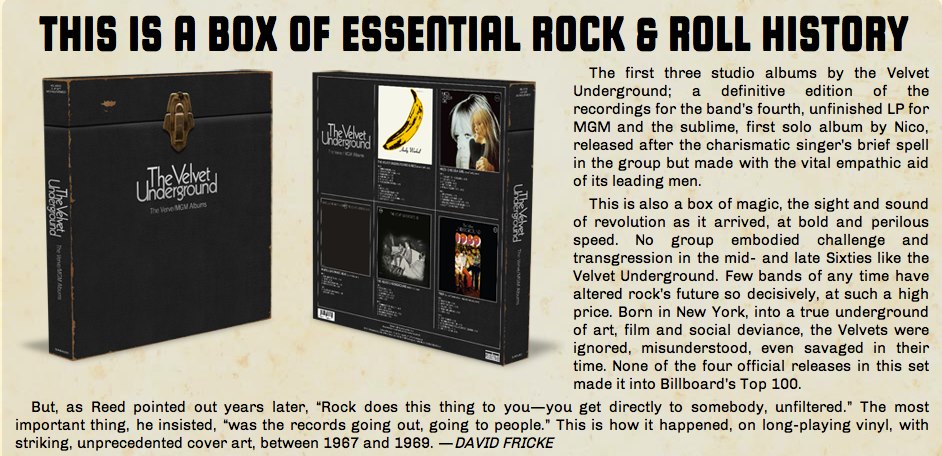
Is it too much to suggest a that the pent up desire to hear a secret history sparked by The Velvet Underground’s reissues created the 80s/90s iteration of “alternative rock”? Perhaps, but history is filled with desires asserted, accepted and denied. Indeed, most of those aforementioned 80s alternative acts I came into contact with had been performing and recording and releasing records years before 1985. However, there is no doubt that the VU reissues turned a number of ears predisposed to hearing in a certain way onto new ways of listening to the Velvets concentrated doses of moody darkness, modes that earlier Velvet Underground fans simply had little access to.
Ignoring the impact of the sonic flood of VU material that fell upon my ears during this period turns away from a specific history of listening that, while personally unique, was an opportunity available to so many of my contemporaries. Indeed, if sounds have histories because their traces persist, then listening must have histories guided partially by testimonial. To hear these histories we might ask ourselves to remember how, why, and with whom did we listen, and to trade in this information. If we did so, we might better understand how we learned to listen: especially what to listen to and why it was important. And, without these testimonials of our pasts as listeners, we just may lose sound’s crucial other half.
—
Featured Image: “Velvet Underground Yellow Label Mono” by Flickr user Simon MurphyThe Velvet Underground – Yellow label mono
—
Tim J. Anderson is an Associate Professor of Communication and Theatre Arts at Old Dominion University where studies the multiple cultural and material practices that make music popular. He has published numerous book chapters, refereed journal articles, and two monographs: Making Easy Listening: Material Culture and Postwar American Recording (University of Minnesota Press, 2006) and Popular Music in a Digital Music Economy: Problems and Practices for an Emerging Service Industry (Routledge, 2014). His latest research project focuses on recordings, musicians, listeners and the public sphere. His website is timjanderson.weebly.com and he can be contacted at tjanders@odu.edu.
—

REWIND!…If you liked this post, you may also dig:
“One Nation Under a Groove?: Music, Sonic Borders, and the Politics of Vibration” -Marcus Boon
“Sound + Vision: Andy’s Mick” -Eric Lott
“Hold this Thread: A Partial History of a Rock n’Roll Relationship”-Benjamin Gold
—
Share this:




Current Top Posts





April 2021

January 2020

November 2019

October 2019

August 2019

April 2014

November 2017

March 2015

December 2017

October 2015


Recent Comments