
Sounding Out! Podcast #29: Game Audio Notes I: Growing Sounds for Sim Cell

DOI: https://doi.org/10.59350/055kj-6jq16
A pair of firsts! This is both the lead post in our summer Sound and Pleasure series, and the first podcast in a three part series by Leonard J. Paul. What is the connection between sound and enjoyment, and how are pleasing sounds designed? Pleasure is, after all, what brings y’all back to Sounding Out! weekly, is it not?
In today’s installment Leonard peels back the curtain of game audio design and reveals his creative process. For anyone curious as to what creative decisions lead to the bloops, bleeps, and ambient soundscapes of video games, this is essential listening. Stay tuned for next Monday’s installment on the process of designing sound for Retro City Rampage, and next month’s episode which focuses on the game Vessel. Today, Leonard begins by picking apart his design process at a cellular level. Literally! -AT, Multimedia Editor
–
CLICK HERE TO DOWNLOAD: Game Audio Notes I: Growing Sounds for Sim Cell
SUBSCRIBE TO THE SERIES VIA ITUNES
ADD OUR PODCASTS TO YOUR STITCHER FAVORITES PLAYLIST
–
Game Audio Notes I: Growing Sounds for Sim Cell
Sim Cell is an educational game released in Spring 2014 by Strange Loop Games. Published by Amplify, a branch of News Corp, it teaches students how the human cell works. Players take control of a small vessel that is shrunk down to the size of a cell and solve the tasks set by the game while also learning about the human cell. This essay unpacks the design decisions behind the simulation of a variety of natural phenomena (motion, impact, and voice) in Sim Cell.
For the design of this game I decided to focus on the elements of life itself and attempted to “grow” the music and sound design from synthetic sounds. I used the visual scripting language Pure Data (PD) to program both the sounds and the music. The music is generated from a set of rules and patterns that cause each playback of a song to be slightly different each time. Each of the sound effects are crafted from small programs that are based on the design of analogue modular synthesizers. Basic synthetic audio elements such as filtered noise, sawtooth waves and sine waves were all used in the game’s sound design.

The visuals of the game give a feeling of being in an “inner space” that mirrors outer space. I took my inspiration for Sim Cell‘s sound effects from Louis and Bebe Baron’s score to Forbidden Planet. I used simple patches in PD to assemble all of the sounds for the game from synthesis. There aren’t any recorded samples in the sound design – all of the sound effects are generated from mathematics.
The digital effects used in the sound design were built to emulate the effects available in vintage studios such as plate reverb and analog delay. I found a simulation of a plate reverb that from a modified open source patch from the RjDj project, and constructed an analogue delay by using a low-pass filter on a delayed signal.
In keeping with the vintage theme, I used elements of sound design from the early days of video games as well. Early arcade games such as Space Invaders used custom audio synthesis microchips for each of their sounds. In order to emulate this, I gave every sound its own patch when doing the synthesis for Sim Cell. I learned to appreciate this ethic of design when playing Combat on the Atari 2600 while growing up. The Atari 2600 could only output two sounds at once thus had a very limited palette of tones. All of the source code for the sounds and music for Sim Cell are less than 1 megabyte, which shows how powerful the efficient coding of mathematics can be.

Another cool thing about generating the sounds from mathematics is that users can “zoom in” on sounds in the same way that one can zoom in to a vector drawing. In vector drawings the lines are smooth when you zoom in, as opposed to rasterized pictures (such as a JPEG) which reveal a blurry set of pixels upon zooming. When code can change sounds in real-time, it makes them come alive and lends a sense of flexibility to the composition.
For a human feeling I often filter the sounds using formant frequencies which simulate the resonant qualities of vowel sounds, thus offering a vocal quality to the sample. For alarm sounds in Sim Cell I used minor second intervals. This lent a sense of dissonance which informed players that they needed to adjust their gameplay in order to navigate treacherous areas. Motion was captured through a whoosh sound that used filtered and modulated noise. Some sounds were pitched up to make things seem like they were travelling towards the player and likewise they exploited a sense of doppler shift when pitched down, giving the feel that a sound was traveling away from the player. Together, these techniques produced a sense of immersion for the player while simultaneously building a realistic soundscape.
Our decision to use libPD for this synthesis turned problematic and its processing requirements were too high. In order to remedy this, we decided to convert our audio into samples. Consider a photograph of a sculpture. Our sounds, like sculpture in the photograph, could now only be viewed from one direction. This meant that the music now only had a single version and that sound effects would repeat as well. A small fix was exporting the file with a set of five different intensities from 0 to 1.0. Like taking a photograph from several angles, this meant that the game could play a sample at intensity levels of 20%, 40%, 60%, 80% and 100%. Although a truly random sense of variation was lost, this method still conveyed the intensity of impacts (and other similar events) generated by the physics engine of the game.
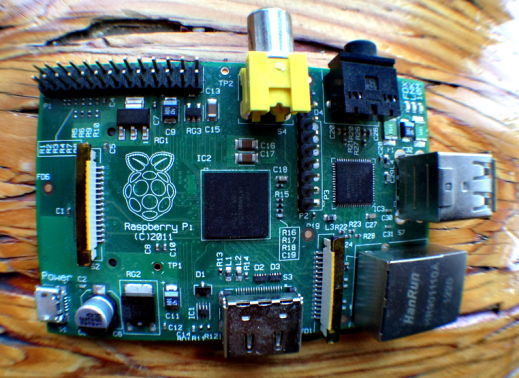
PD is a great way to learn and play with digital audio since you can change the patch while it is running, just like you might do with a real analogue synthesizer. There’s plenty of other neat stuff that PD can do, like being able to be run on the Raspberry Pi, so you could code your own effects pedals and make your own synths using PD for around $50 or so. For video games, you can use libPD to integrate PD patches into your Android or iOS apps as well. I hope this essay has offered some insight as to my process when using PD. I’ve included some links below for those interested in learning more.
Additional resources:
- “The Generative Music and Procedural Sound Design of Sim Cell” – School of Video Game Audio
- Pure Data – download extended from Puredata.info for all platforms
- Download 10 free patches demonstrating the sound effects in Sim Cell from my site at VideoGameAudio.com – search for “Patches” section for “10 Procedural Sound Design Patches” – Power down, fat synth, spaceship, whoosh, robot blabber, missile, alising scream, alien blast, computery, explosion and bonus synth cat meow sound
- Miller Puckette’s book “The Theory and Technique of Electronic Music” – free 300+ page book using Pure Data
- “Designing Sound” by Andy Farnell has great patches in it from fires to guns to birds – great for game audio
- Download student patches from previous times I’ve taught at Emily Carr University
–
Leonard J. Paul attained his Honours degree in Computer Science at Simon Fraser University in BC, Canada with an Extended Minor in Music concentrating in Electroacoustics. He began his work in video games on the Sega Genesis and Super Nintendo Entertainment System and has a twenty year history in composing, sound design and coding for games. He has worked on over twenty major game titles totalling over 6.4 million units sold since 1994, including award-winning AAA titles such as EA’s NBA Jam 2010, NHL11, Need for Speed: Hot Pursuit 2, NBA Live ’95 as well as the indie award-winning title Retro City Rampage.
He is the co-founder of the School of Video Game Audio and has taught game audio students from over thirty different countries online since 2012. His new media works has been exhibited in cities including Surrey, Banff, Victoria, São Paulo, Zürich and San Jose. As a documentary film composer, he had the good fortune of scoring the original music for multi-awarding winning documentary The Corporation which remains the highest-grossing Canadian documentary in history to date. He has performed live electronic music in cities such as Osaka, Berlin, San Francisco, Brooklyn and Amsterdam under the name Freaky DNA.
He is an internationally renowned speaker on the topic of video game audio and has been invited to speak in Vancouver, Lyon, Berlin, Bogotá, London, Banff, San Francisco, San Jose, Porto, Angoulême and other locations around the world.
His writings and presentations are available at http://VideoGameAudio.com
–
Featured image: Concept art for Sim Cell. Used with permission (c) 2014 Amplify.
—

REWIND! . . .If you liked this post, you may also dig:
Sounding Out! Podcast #10: Interview with Theremin Master Eric Ross- Aaron Trammell
Papa Sangre and the Construction of Immersion in Audio Games- Enongo Lumumba-Kasongo
Playing with Bits, Pieces, and Lightning Bolts: An Interview with Sound Artist Andrea Parkins
—
Share this:

SO! Reads: Susan Schmidt Horning’s Chasing Sound: Technology, Culture and the Art of Studio Recording from Edison to the LP


DOI: https://doi.org/10.59350/4mqa3-jbp55
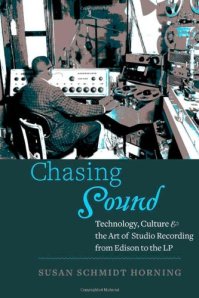
The recently published Chasing Sound: Technology, Culture & the Art of Studio Recording from Edison to the LP (Johns Hopkins Press, 2013) is historian Susan Schmidt Horning’s first book. Veering away from the usual sound recording suspects (like the phonograph), Chasing Sound shows the studio and the audio engineer as central to the cultural and technological changes associated with the production and reproduction of sound.
According to Schmidt Horning, such changes were reflected in the shifting ideal of recorded music as a representation of live performance to the ideal of recorded music as a studio-engineered creation. Using the accounts of those responsible for recording sound, Schmidt Horning constructs a rich narrative that manages to be accessible while still focused on the highly technical work required of studio workers. That said, by focusing so heavily on user practices and anecdotes she misses an opportunity to engage with the theoretical implications of the ways audio engineers imagine and describe the actual space in which they work. Still, I contend that Chasing Sound represents an indispensable and critical approach for historians of sound, one that is unafraid of reconfiguring the central players in a narrative as big as the history of recorded music.
As a contribution to sound studies, Chasing Sound follows in the footsteps of Trevor Pinch’s Analog Days, the first work to explicitly apply Science and Technology Studies (STS) approaches to the history of a musical instrument. For Pinch, a critical understanding of sound requires examining the ways in which society and technology produce historical sites of change and stabilization. This approach focuses on understanding the ways people engage with technologies of sound, in order to interrogate their cultural and historical meanings. A historian of science and technology by training, Schmidt Horning has thus devoted much of her academic career to writing about the production and reproduction of sound through the practices and tacit knowledge of engineers, producers, musicians and technicians at music studios. By following the breadcrumbs dropped by these actors, Chasing Sound reveals the rich history of commercial studios and the cultural ideals cultivated therein.
Methodologically, the author draws on a mixed bag of sources, which include oral histories from early recordists, interviews with more contemporary audio engineers, her own ethnomethodogical studio research, trade literature, and archival documents from big studios like EMI. The book proceeds in chronological order, with each chapter laying out changes in the physical and acoustic qualities of commercial studios as they shifted from bare-walled rooms with “the recording horn jutting through a wall at the far end of the room” (9) to multi-track studios complete with “Mission furniture, [and] hand-laid distressed wood floors.” (209) The author plots these changes alongside improvements in the science of acoustics, the importation of techniques and tools from the more well developed medium of radio broadcasting, the consolidation and growth of the recording industry, the rise of independent labels, the emergence of new attitudes and musical tastes, and the professionalization of audio engineering.
Chasing Sound, unlike many other books on the topic, places the studio in relation to a set of changing cultural expectations regarding recorded music. Where recordings were once understood as a reflection of live performance, they later were seen as a signature creation of music studios. Rather than focusing on the phonograph, gramophone, microphone, or magnetic tape, the author argues that the recording studio belongs at the center of recorded music because it was there that the ideal of music as a “technologically mediated art” was first engineered into cultural listening norms. Consequently the audio engineer, or recordist as he (or in rare cases, she) was known prior to the 1930s, must also be understood as central to narratives regarding recorded sound from its inception. In this way, Schmidt Horning aims to recontextualize and centralize the studio and its inhabitants within histories of the production and reproduction of sound.
Because the audio engineer represents an inextricable part of this history, each chapter devotes time to the technologies and practices cultivated by the amateur recordists and trusted professionals responsible for recording sound. Initially such practices formed the basis of their tacit knowledge regarding the proper “staging” of artists in relation to acoustic recording horns among other techniques, but by the 1950s, sound engineers were responsible not just for positioning artists, microphones, and the increasingly important work of “enhancing” recordings during post-production. The book concludes by charting the unfettered rise of independent studios as well as the consequent proliferation of (and backlash to) new sound manipulation technologies in the 1970s.
Throughout the text the author notes the ways in which audio engineers often lamented the increasing technological mediation involved in record production, even as it granted them more creative control and prestige.
Schmidt Horning’s methodology represents Chasing Sound’s strongest quality. The rich narratives of the audio engineers allow the author to directly connect their technologically and culturally informed ideas about what constitutes good sound to the desires and expectations of listeners. In addition to this work, Schmidt Horning also highlights the ways in which advances in engineering technology did not necessarily overlap neatly with cultural norms. Throughout the text the author notes the ways in which audio engineers often lamented the increasing technological mediation involved in record production, even as it granted them more creative control and prestige. Such examples reveal the tightly knit relationship between ideas of liveness, talent, creativity, and authenticity. Chasing Sound is full of stories that detail the complex material, artistic, and ethical constraints around which recordists and engineers navigated in order to achieve the perfect sound.
The author’s methodological approach certainly helps to structure the narrative, but there are also ways in which it prevents her from digging in to important theoretical discourses regarding the studio. As Eliot Bates notes in his article, “What Studios Do,” the way audio engineers conceive of their workspaces is crucial for making sense of the power relations and social interactions that govern and are governed by studio spaces. Chasing Sound does not pursue these discourses. The author briefly mentions how the metaphor of flight is often used by sound engineers regarding the increasingly complex console controls of the 1950s and 60s but does not provide further elaboration on the implications of such a comparison. Even if the participants in her study did not reflect on their colloquial notes about the studio space, it would have been interesting to see Schmidt Horning consider what these metaphors reveal about the changing roles of the engineer.
These points aside, Chasing Sound is an important read both for those with a general interest in the history of sound production and reproduction as well as those scholars more specifically invested in understanding the role of recorded sound in society. Since I discussed the book’s limitations in “Making Music in Studio X,” Chasing Sound has become a foundational text in much of my research. Specifically, the author’s claim that the studio is (and has been) a critical site for examining broader industrial, technological, and cultural changes resonates deeply with me because it offers a critical methodology for considering issues of identity and power within studio spaces that are often neglected. In this regard, Chasing Sound is important not just for what it discusses, but also for what it does not. Noting the lack of female and black audio engineers discussed throughout the book, the author laments, “For the first century of sound recording, the field of audio engineering and recording studios in particular comprised a profoundly white male-centered culture that reflected corporate culture at large and technical professions in particular.” (9) The absence of these faces serves to remind us that while successfully “chasing sound” certainly relies on the cultivation of craft skill, and tacit knowledge, it also depends heavily on access.
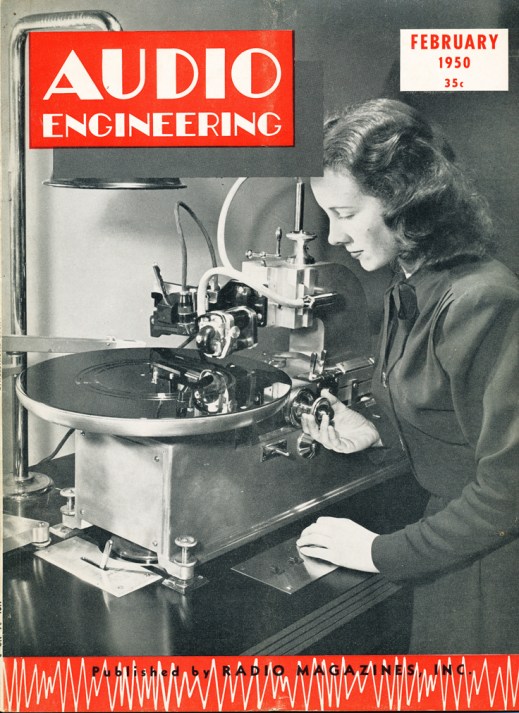
Chasing Sound stands out as the most exhaustive history of audio engineering available. Schmidt Horning’s user-focused narrative successfully ties together changes in studio configurations and audio engineering practices with cultural expectations regarding recorded music. This helps to show how the studio and audio engineer can easily be recognized as central figures in the history of sound reproduction. Chasing Sound’s intervention is necessary as the history of recording is often told through artifacts like the phonograph, microphone, and magnetic tape, not living spaces like the studio and its inhabitants. Schmidt Horning’s dedication to telling these neglected stories is what makes the book come to life. Her research promises to open up new avenues for others interested in these issues. For me, this means pursuing lines of inquiry related to the growing philanthropic interest in the recording studio as a site for engaging and “assisting” low-income communities. In this way Chasing Sound asks us to recognize the recording studio as a critical site for the production and reproduction of our assumptions about what counts as appropriate, good, or real in music and people.
—
Featured Image: My Recording Studio by Flickr User Fabio Dellutri
—
Enongo Lumumba-Kasongo is a PhD student in the Department of Science and Technology Studies at Cornell University. Since completing a senior thesis on digital music software, tacit knowledge, and gender under the guidance of Trevor Pinch, she has become interested in pursuing research in the emergent field of sound studies. She hopes to combine her passion for music with her academic interests in technological systems, bodies, politics and practices that construct and are constructed by sound. More specifically she would like to examine the politics surrounding low-income community studios, as well as the uses of sound in (or as) electronic games. In her free time she produces hip hop beats and raps under the moniker Sammus (based on the video game character, Samus Aran, from the popular Metroid franchise).
—
REWIND! . . .If you liked this post, you may also dig:
Making Music at Studio X: The Identity Politics of Community Studios— Enongo Lumumba-Kasongo
SO! Reads: Japanoise: Music at the Edge of Circulation— Seth Mulliken
SO! Reads: Isaac Weiner’s Religion Out Loud: Religious Sound, Public Space, and American Pluralism— Jordan Musser
—
Share this:




Current Top Posts





April 2021

January 2020

November 2019

October 2019

August 2019

April 2014

November 2017

March 2015

December 2017

October 2015


Recent Comments