
Gender and the First Sound Films in 1930s Bombay


co-edited by Praseeda Gopinath and Monika Mehta
Our listening practices are discursively constructed. In the sonic landscape of India, in particular, the way in which we listen and what we hear is often normative, produced within hegemonic discourses of gender, class, caste, region, and sexuality. . . This forum, Gendered Soundscapes of India, offers snapshots of sound at sites of trans/national production, marketing, filmic and musical texts. Complementing these posts, the accompanying photographs offer glimpses of gendered community formation, homosociality, the pervasiveness of sound technology in India, and the discordant stratified soundscapes of the city. This series opens up for us the question of other contexts in India where sound, gender, and technology might intersect, but more broadly, it demands that we consider how sound exists differently in Pakistan, Sri Lanka, the Maldives, Bangladesh, Bhutan, Nepal, and Afghanistan. How might we imagine a sonic framework and South Asia from these locations? —Guest Editors Praseeda Gopinath and Monika Mehta
For the full introduction to the forum, click here.
To read all of the posts in the forum, click here.
—
The coming of sound in Bombay cinema in the 1930s dovetailed with discussions concerning men and women’s roles in modern Indian society and filmmakers’ efforts to establish the cinema as a respectable medium that was integral to Indian nationalist aspirations. With sound now essential to a film’s diegesis, film producers adjusted narrative strategies and how they aurally and visually presented a character as male or female, such as through voice, language/accent, and music. Christine Ehrick reminds us, gender is “represented, contested, and reinforced through the aural.” What did the addition of sound to cinema mean for presenting fe/male bodies and voices on screen? Scholars such as Laura Mulvey have famously demonstrated how film visual editing can lead to women’s objectification in cinema. The sounds and narrative of Dokhtar-e Lor “The Lor Girl” (1933)—the first Persian-language sound film—extend Mulvey’s argument by letting us hear the early sound film’s role in gendering bodies within the wider socio-political context of colonial modernity, as well as the impact the film would have on later Indian and Iranian cinematic conventions.

Golnar and Jafar discuss love in The Lor Girl (1933), Screen capture by author
Although usually featured in histories of Iranian cinema, The Lor Girl was made in Bombay in collaboration between Iranian scholar and expatriate, Abdolhossein Sepanta, and Ardeshir Irani, film producer and owner of the Imperial Film Company. Irani, who is known as the father of the first Indian talkie and Urdu-language film Alam Ara, was also a prominent member of the Bombay Parsis. Irani sought to establish his Imperial Film Company as a global film center and produced a number of the first talkie films in several other languages in India. Sepanta and Irani decided to collaborate on a Persian-language film for Parsi audiences in Bombay and for distribution in Iran. India was already establishing itself as a major global film power while Iran had not yet invested in the technology necessary to make a sound film.
The film’s first scene opens with a close up shot of Golnar’s gyrating hips and the sounds of a reed flute, oud, tabla, and male singing voices. The camera zooms out, and we see that Golnar is shaking a tambourine and performing for an audience of mostly male patrons in the café. The audience members – as indicated by their clothing – include local men of Lor and Arab backgrounds, which remind us of the café’s location near Iran’s border with modern day Iraq.. The men, as well as an ensemble of male musicians, sit in large circle around Golnar. As Golnar dances and the ensemble plays, we hear the audience clapping and yelling “very good, very good!” in encouragement. Through their jeers and taunts, the film sonically casts the men in the audience as vulgar, and its visual construction of Arabs dovetail with Orientalist aesthetics that Rosie Thomas argues were found in contemporaneous Hollywood, European, and Bombay cinemas. The sonic characteristics of these men that we hear throughout the film also reinforce the one-dimensional Orientalist, racist visual codes; the Arab sheikh’s high-pitched, cackling voice sounds simultaneously evil and weak, while the bandits’ voices cast them as brutish and uneducated.
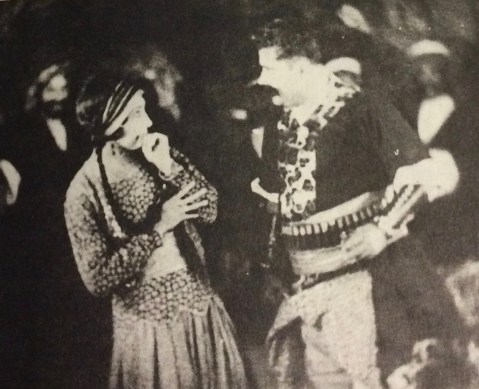
Golnar negotiates with Qoli Khan, in The Lor Girl (1933), Screen capture by author
When the song ends, Golnar skips around the circle holding out a basket to collect tips from the audience members who oblige her to flirt with them before they hand her money. After a short private conversation between Ramazan and the Arab sheikh in which both men cackle over the sheikh’s plan to visit Golnar in her room at night, the next scene shows another dancing sequence similar to the first – although this time Golnar dances for a smaller group of men in Ramazan’s lair. In both dance scenes, the sonic landscape is simultaneously seductive and threatening, elements reinforced by Golnar’s vulnerable yet enticing positioning and the audience’s leering, eager stares and shouts. The film casts men as voyeuristic listeners and consumers of sound, and through Golnar’s dancing – a role considered and reinforced by the film as disreputable – sound produces Golnar as object for the male listeners’ pleasure. While other contemporaneous Bombay films featured more spectacular song and dance sequences, Hamid Naficy notes that this scene in The Lor Girl still hints at the cabaret and café sequences which later emerged in Indian and Iranian commercial cinemas. This, is turn, demonstrates how cinematic codes – informed by discourses on gender and nation – move and are shared transnationally through co-production and exchange.
Now that cinema included both sound and images, filmmakers drew on elements of music, dancing, and other aspects of existing local performance traditions, such as Parsi theater. Representations of gender in Parsi theater were characterized by flexibility; Kathryn Hansen notes that due to concerns about female actors performing for male audiences and in public in general, female characters were often played by men. The acceptance of cross-dressing – not only in terms of body, but also voice – allowed for fluidity in terms of how femininity and masculinity were visually and aurally represented. Yet sound cinema did not allow the same flexibility in terms of gender performance due to aesthetic concerns, as well as sound cinema’s intersection with national and modernist discourses. While women’s voices on radio and records became increasingly commonplace and accepted in Bombay in the 1930s, the audiovisual experience that the sound film provided presented a challenge. Cinema was still not widely regarded as a “respectable” medium, and many of Indian cinema’s early actresses came from what were considered questionable backgrounds.
The trajectory of Golnar and Jafar’s characters encapsulates this tension between gender identities and modernity. Jafar wears a military uniform and mustache associated with the “pre-modern” Qajars. Throughout most of the film while in Iran, Golnar wears long braids and a long dress, clothing that indicates that Golnar hails from the “chaotic” Lorestan province, and that mark her as traditional and backwards in the context of colonial modernity.

Jafar and Golnar in The Lor Girl (1933), Screen capture by author
Although Jafar rescues Golnar initially, the film ultimately casts Golnar as more capable of outsmarting the bandits. Golnar saves Jafar from the bandits several times throughout the film, moments that cast her as strong and brave similar to the virangana (warrior woman) trope that was widely circulated and popular in early 20th century Indian popular culture which Rosie Thomas notes in Bombay Before Bollywood “implied gender ambivalence and multiple modes of femininity” (111).
Golnar’s high-pitched voice and regional Kermani accent associate her with the countryside – especially in contrast to Jafar’s sophisticated, cultured Persian. But her voice’s firm and confident presence resonates across the soundtrack. In the scenes in which she searches for and saves Jafar, she calls his name repeatedly, sonic moments that emphasize her role as Jafar’s rescuer. To negotiate with and escape from the bandits in other scenes, Golnar uses what seems to be her familiarity with the bandit and countryside way of life, as well as her voice; she bravely yells at the bandits and Ramazan’s henchmen while in captivity. At one point, pretending to seem frightened and intimidated by her captors through fake tears and whimpers, Golnar manages to use bandit’s whip against him and steal his horse. Golnar escapes captivity another time when she uses her brazen and coy voice and speaking style to trick Qoli Khan into letting her leave the cave to supposedly find and help capture Jafar.
Yet Golnar and Jafar experience significant transformations by the end of the film and upon their arrival in Bombay. Happy piano music plays on the soundtrack as the film shows us buildings and monuments of modern Bombay. Afterwards, intertitles inform us of the spectacular changes that have taken place in Iran while Jafar and Golnar have been in Bombay now that a new shah has come to power. In the next scene, we are in the couple’s grand living room of their house in Bombay; a servant cleans their grand staircase while we hear and see Golnar at the piano. Jafar enters the room and notes how well she has learned to play. While initially positioned similar to the virangana, Golnar now wears a European-style dress and short haircut. In Bombay Cinema: an Archive of the City, Ranjani Mazumdar discusses how in emerging Indian nationalism, “Victorian ideology entered into a comfortable alliance with Indian myths to reinvent the “virtues” and “purity” of the Indian woman,” casting her as associated with the bourgeois domestic space of the home, and interested in European-associated pursuits such as the piano (82).

Jafar and Golnar arrive in Bombay, in The Lor Girl (1933), Screen capture by author
Meanwhile, Jafar, who appeared inept at his role as soldier and potentially effeminate, now is clean-shaven and wearing a Pahlavi hat and suit. Golnar’s near silence in this scene and attentive listening contrasts dramatically with the presence of her voice in the previous scenes when she argued and negotiated with the bandits, sang solos, confidently flirted with Jafar and talked with him about the differences between notions of love in the modern city and the countryside. Now, nearly silent in terms of her voice, but providing musical accompaniment to Jafar’s nationalistic song through the piano, Golnar demonstrates the more limited essentialized femininity of the new, modern, middle-class woman, and one characterized by its association with culture. Later, reading the newspaper together, Jafar suggests that they return to Iran now that it has become modern like Bombay. Golnar quietly listens to Jafar, and assents with his desire to return.
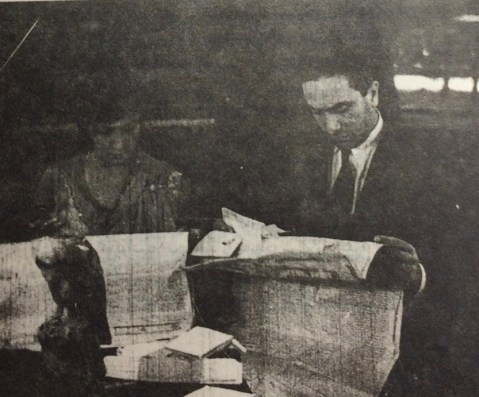
Jafar and Golnar read the newspaper in The Lor Girl (1933), Screen capture by author
The Lor Girl’s importance in Iranian cinema histories – and its near absence historiography of cinema in India – is reflective of how national cinema frameworks limit how we understand the early sounds of Iranian and Indian cinemas. The film was produced at a time when national cinema was not yet articulated with a specific language and when transnational elements played a key role in film production. In addition to its role in sonically gendering bodies, The Lor Girl demonstrates the sound film’s role in participating in the association of language and nation.
—
Featured Image: The Lor Girl (1933) Film Poster
—
Claire Cooley is a PhD student in the Department of Middle Eastern Studies at the University of Texas at Austin. Her research interests center on overlapping Middle East and South Asia film histories. Claire’s dissertation project traces connections between Egyptian, Iranian, and Indian cinemas with a focus on the 1930s-1960s, and uses sound as a framework to capture the dynamics of cinematic circulations across this contiguous region. In 2010, she received her BA from Tufts University, and from 2010-2013 she lived in Cairo, Egypt where she pursued a project translating, mapping, and blogging about graffiti during the 2011 Egyptian Revolution. Claire also teaches Persian and Arabic.
—
 REWIND!…If you liked this post, you may also dig:
Fade to Black, Old Sport: How Hip Hop Amplifies Baz Luhrmann’s The Great Gatsby– Regina Bradley
Quiet on the Set?: The Artist and the Sound of a Silent Resurgence– April Miller
Play It Again (and Again), Sam: The Tape Recorder in Film (Part Two on Walter Murch)– Jennifer Stoever
Share this:

Echoes of Ian Curtis: Film and the Punk Voice

Image of Alice Bag used with her permission (thank you!)
For full intro and part one of the series click here. For part two, click here. For part three click here. For part four click here. For part five click here.
Our Punk Sound series implicitly argues that sound studies methodologies are better suited to understanding how punk works sonically than existing journalistic and academic conversations about musical genre, chord progressions, and/or genealogies of bands. Alexandra Vasquez’s sound-oriented work on Cuban music, for example, in Listening in Detail (2014) opens up necessary conversations about the “flashes, moments, sounds” in music that bear its meanings and its colonial, raced, classed, and gendered histories in material ways people can hear and feel. While retaining the specificity of Vasquez’s argument and the specific sonic archive bringing it forth, we too insist on “an ethical and intellectual obligation to the question: what do the musicians sound like” (12) and how do folks identifying with and through these musical sounds hear them?
In this series, we invite you to amplify varied historicized “details” of punk sound–its chunk-chunk-chunk skapunk riffs, screams, growls, group chants, driving rhythms, honking saxophones–hearing/feeling/touching these sounds in richly varied locations, times, places, and perspectives: as a pulsing bead of condensation dripping down the wall of The Smell in Downtown LA (#savethesmell), a drummer making her own time on tour, a drunk sitting too near the amp at a backyard party, a queer teenager in their bedroom being yelled at to “turn it down” and “act like a lady[or a man]”. . .and on and on. In today’s essay Landon Palmer shows us how film may be just as responsible as music for how we remember the punk voice.
SOUND!
–Aaron SO! (Sounding Out!) + Jenny SO! (Sounding Out!)
—
In Joy Division’s 1979 song “Transmission,” singer Ian Curtis embodied several aspects of what made the group’s post-punk sound unique with the chorus, “Dance, dance, dance, dance, dance, dance to the radio.” As a piece of music, its repetition is intense and rousing, working as a compelling instruction that, when played loud enough, can be felt to the bone via Curtis’s deep timbre. At the same time, Curtis’s voice is robotic and distant, the signature of the group’s bleak sound that signified the post-industrial alienation of Thatcher-era Manchester. A historically specific critique of media, “Transmission” plays out a loss of agency. In the 21st century, however, the song has circulated more as a self-referential testament to Joy Division’s – and Curtis’s – musical skill, a container and a summary of myth.
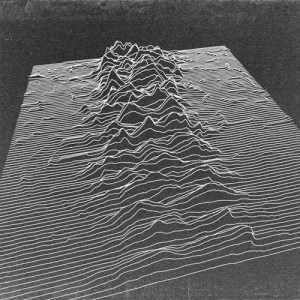
Image by Ho-Teng Chang @Flickr CC BY.
To adopt Alexandra Vasquez’s question that has framed this series, what happens to representations of punk sound as they change over time? I argue that the cinematic techniques employed in presenting Ian Curtis and his voice in both 24 Hour Party People (Michael Winterbottom 2002) and Control (Anton Corbijn 2007) help us to understand the construction of a mythic punk voice.
Punk’s avoidance of comprehensibility, identification, and what Dave Liang calls “the prettiness of the mainstream song” have existed in awkward relation to narrative cinema, which requires legibility as a central component of storytelling (70, 71). While displacing the voice through fragmentation and asynchronous sound work has proven vital to theorizing and subverting cinematic norms, rarely has depicting a well-known punk singer’s voice in cinema translated to a cinematic punk aesthetic, as Stacy Thompson argues regarding the narrative and documentary Sex Pistols biopics Sid & Nancy (Alex Cox 1986) and The Filth and the Fury (Julien Temple 2000) (49-50). Even the revered punk documentary The Decline of Western Civilization (Penelope Spheeris 1981) renders punk voices legible by providing lyric subtitles. However, the two most notable cinematic portrayals of Ian Curtis–24 Hour Party People and Control, released during the band’s resurgence in 21st century popular culture–demonstrate competing interpretations for a punk voice’s place within filmmaking and put into play the question of how to interpret it.

Image by a town called malice @flickr CC BY.
Despite Curtis’s short lifetime, his voice continues to be amplified throughout popular culture. These extended echoes of his voice have participated in shaping its meanings and myth. In his book Joy Division’s Unknown Pleasures, Chris Ott writes that Joy Division’s music “defied imitation” (xiii); however, imitation (and citation) have fueled public memory of the band and augmented the myth of Ian Curtis. By the time Joy Division’s two LPs were re-released by Rhino in 2007, several contemporary bands–The Killers, Editors, Interpol and She Wants Revenge–built music careers that are openly indebted to this Manchester sound but distinct from its socio-historical context. Public memory of the group has been interpreted through uses of their music in the 1980s-set period pieces like Donnie Darko (Richard Kelly 2001) and Netflix’s Stranger Things (2016). The contemporary circulation of Joy Division’s music has extended to films that resurrect Curtis himself.
To start, 24 Hour Party People self-consciously stages an inquiry into Ian Curtis’s meanings and his contemporary resonance as part of the post-punk scene writ large. Chronicling the ‘70s-‘80s Manchester music scene through Tony Wilson (Steve Coogan), the attention-seeking TV personality and unlikely underground music patron who formed Factory Records, the film fits several tenets of Thompson’s definition of punk cinema in its “engage[ment] with history” and “critique [of] its own commodification” (64). A tongue-in-cheek historical guide, Wilson narrates via a fourth-wall-breaking blend of mythmaking, footnotes, and commentary that reflects upon the film’s historiography as he articulates it, and in so doing overtly selects myth over “truth,” stating, “When you have to choose between truth and the legend, print the legend” (itself a quote dubiously credited to John Ford). The film’s self-conscious performance of history extends to its musical numbers, where Winterbottom liberally blends imitation with the genuine article through a mix of archival and staged footage, thus overtly staging encounters with key moments in Manchester musical history. The film’s play with historiography does not go so far as to trouble its reinforcement of a canonical timeline.
It is in this spirit that 24 Hour Party People brings actor Sean Harris’s portrayal of Ian Curtis to life. In re-creating Joy Division’s performance of “Digital” at the Hacienda Club, Harris invokes Curtis’s jittery-mechanical dance style while his “voice” remains Curtis’s. Additionally, the film mixes ambient crowd noises with a band of actors performing in synch to the song’s studio recording. 24 Hour Party People not only preserves Curtis’s voice as an inimitable icon of this history, but places the studio recording of “Digital” as the authoritative version of the song within the nascent period of the Manchester scene, thus mapping this studio recording onto the band’s live sound (rather than implementing an existing live recording). Curtis’s voice is reproduced only through the most valuable, resonant historical record of it–the recorded commodity.

Image by bixentro @Flickr CC BY.
The retrospective framing implied by this choice speaks to the film’s greater approach to Ian Curtis as a figure best understood (or perhaps inevitably shrouded) via his posthumous legacy, and thus foregrounds Curtis’s transformation into myth. Due to the timing of his passing, there exists a relatively limited media archive of the actual Curtis compared to other late-20th century rock singers of similar influence. Beyond official performances on television, music video, and records, scant recordings of Curtis performing and speaking are available via silent 8mm home movies and archival audio interviews. Thus, 24 Hour Party People cannot resort to the historical record(ing) in all instances, and thus Harris’s voice proves central to interpreting Curtis off-stage. In recalling Joy Division’s notorious first encounter with Wilson, 24 Hour Party People portrays Curtis as intimidatingly sure-footed, confronting Wilson through quick, direct speech and locked eyes. Harris conveys the actorly qualities that so often typecast him in villain roles. Further complicating Curtis’s public image, Coogan’s Wilson provides a counter-narrative of the singer following his suicide, asserting to the audience that Curtis was not exactly the “dark and depressive…prophet of urban decay and alienation” that his music suggested, and recounts a rousing collective rendition of “Louie Louie” with the band to prove his point. The only instance in which Harris’s actual voice is used as Curtis’s singing voice, this cacophonous chorus depicts a Curtis participating in a deliriously muddled punk sound. Yet even this counter-narrative does not challenge the mythmaking of Ian Curtis, for it reinforces Curtis’s suicide as central to his meaning and value as a musician.
Music biopics have long bolstered definitive interpretations of a popular performer’s biography. In contrast to 24 Hour Party People’s self-conscious approach to mythmaking, Control is adapted from Deborah Curtis’s autobiography and directed by a former Joy Division photographer. Control’s most conventional choices as a rock biopic are the narrative associations the film makes between events in Curtis’s life and his songwriting, connecting Curtis’s music directly to his troubled marriage and the distress caused by his epilepsy. Control juxtaposes Curtis’s interior life with his production of music, cutting to the recording of “She’s Lost Control” after he learns that a client in his unemployment office has died of epilepsy, and featuring a performance of “Love Will Tear Us Apart” following a scene in which he tells his wife (Samantha Morton) that he no longer loves her. Control thus connects the singer’s authorial voice to the film’s narrative voice, arguing that the sounds Ian Curtis left behind are legible remnants of his biography. In so doing, the film deterministically situates his life through the framework of his death, his music serving a seemingly inevitable path to his suicide and thus transformation into musical myth (staged at the end with a crane shot rising up to the Manchester skyline during “Atmosphere,” indicating a ubiquitous echo of Curtis that has transcended the corporeal).

Punks in Manchester. Image by agogo @Flickr CC BY.
The film’s voicing of Curtis is articulated through Sam Riley’s performance, not through archival audio of the singer. As with 24 Hour Party People, Corbijn initially planned to have Riley and the supporting actors mimic their performances. However, during preproduction the band of actors rehearsed together until they were confident enough to play live shows for Joy Division fans. This convinced Corbijn to utilize them as a sort-of legitimate cover band for the purposes of embodying Joy Division’s history. Riley’s voice is notably higher than Curtis’s and is thus distinctive enough that it resonates comfortably alongside the numerous bands of this century whose leads “sound like” Curtis. Indeed, the resonance of Curtis throughout contemporary alternative rock may have helped make Riley more palatable as an authorized substitute for Corbijn and Joy Division fans. Such homage through imitation is reinforced by Control’s end credits, which features The Killers’ cover of “Shadowplay.” Both of these invocations of Curtis locate his value in his contemporary influence, not his historic place, an approach evident in Control’s less overt interest in post-punk’s socio-cultural context than 24 Hour Party People.
Control is uninterested in recreating the details of Joy Division’s history with exacting verisimilitude, forgoing the archive for a resonant aura of the band’s history. This approach is evident in Corbijn’s visual decisions – shooting the film in black-and-white memorializes the band through the stark photography with which Corbijn captured them – as well as his musical ones. In Control’s depiction of the band’s breakthrough performance on Tony Wilson’s (here played by Craig Parkinson) Granada Television program So It Goes, for example, Corbijn’s Joy Division perform the enduringly popular “Transmission” rather than “Shadowplay,” the song they actually played. Joy Division’s breakthrough television moment was further recast through “Transmission” in a fan-made Playmobil animation that curiously combines introductory audio of Parkinson’s Wilson from Control with Joy Division’s 1979 performance of “Transmission” on BBC2’s Something Else. Control not only situates Curtis’s singing voice coherently within authorial and narrative legibility, but also reflects and participates in contemporary popular memorialization of Joy Division regardless of the historical accuracy of such choices.
Pamela Robertson Wojcik argues that the human voice and its mediation through recording technologies is an important but overlooked component of cinematic performance. It is also vital to consider how famous voices travel and gain meaning through processes of imitation and citation–tropes of authenticity which pervade the musical biopic. While 24 Hour Party People and Control avoid many clichés of the musical biopic, narrative cinematic imperatives of legibility, coherence, and individual-centered storytelling motivate each film to participate in the production of rock star myth despite efforts at historical critique in the former or the austere style of the latter. Even in punk, rock star death is the most compelling biographical framework. The punk voice has long held a discordant relationships to cinematic norms, and these two films demonstrate how the translation of punk sound into cinematic soundscapes presents the inherent problem of recounting punk’s history.
–
Featured image “scream” by be.refreshed @Flickr CC BY-NC-ND.
–
Landon Palmer is a PhD Candidate studying Film and Media in the Department of Communication and Culture at Indiana University and recently defended a dissertation on the cross-industrial history of casting rock stars on film titled “Rock Cinema: A Transmedia History, 1956-1986.” He has published on popular music and moving image media culture in Music, Sound, and the Moving Image, iaspm@journal: Journal of the International Association for the Study of Popular Music, and Celebrity Studies.
–
 REWIND! . . .If you liked this post, you may also dig:
G.L.O.S.S., Hardcore, and the Righteous White Voice – Chris Chien
If La Llorona Was a Punk Rocker: Detonguing The Off-Key Caos and Screams of Alice Bag – Marlen Ríos-Hernández
Riot-Grrrl, Punk and the Tyranny of Technique – Tamra Lucid
Share this:


Current Top Posts





April 2021

January 2020

November 2019

October 2019

August 2019

April 2014

November 2017

March 2015

December 2017

October 2015
 Sounding Out!
Recent Comments