
The Role of Sound in Video Games: Pong, Limbo and Interactivity
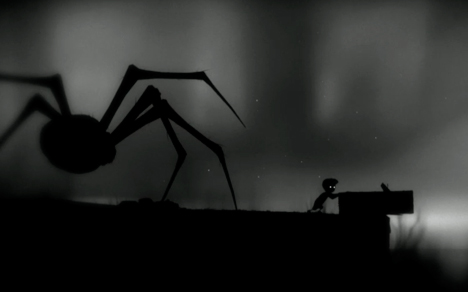
Recently, I’ve been amazed by how well the sound design of the new Xbox LIVE game Limbo has been able to coax me into various degrees of panic. Visually, the game is monochrome – black, white and various shades of grey sink into and out of the television as I guide the main character, a little boy, through the landscape of his nightmares. Tension builds as sound is used to announce off-screen dangers as they slowly creep across the screen. The muffled thud-thud of a giant spider on the left prompted me to run to the right where I suddenly encountered the deadly scream of a buzz-saw roaring toward me. It’s scary stuff. An ambient sound-layer is interrupted only by an occasional feedback crescendo or the rustling of the world’s many dangerous occupants. The soundtrack of Limbo says a lot about the game, which in turn says a lot about our culture. Video games are rarely the object of analysis for sound culture studies, this is fairly counterintuitive considering both their social impact and technological nature. Should sound studies take a closer look at video games – where would it start?
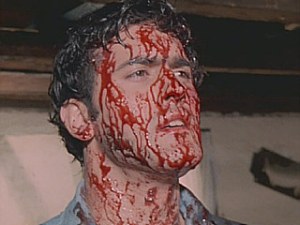
One option is to consider the game historically, as the convergence of several media discourses. First, there is cinema: The soundscape of Limbo borrows the formula that set the stage of desolation for so many low-budget horror movies. Consider the eerie silence of a horror movie like The Evil Dead and how there is a deliberate quiet within it’s conversation and music. These sonic memes are intended to invoke tension and surprise within the audience. Bruce Campbell, who plays the hapless protagonist, Ash, creeps through a similarly nightmarish landscape, inviting the listener into the soundscape of leaves, creaks, and screams. In a tradition, indebted to the aesthetics of Hitchcock, quiet soundscapes allow for broad dynamic shifts, juxtaposing safety and danger.
Another important discourse is that of video game history. Broad dynamic shifts in video games, have not always been the result of a deliberate horror aesthetic. Video games lacked sound until the release of Computer Space in 1971. A year later, the same creative team, Nolan Bushnell and Ted Dabney, would later found Atari and release Pong. Though Pong was a clone of an electric ping-pong game for 1966’s Magnavox Odyssey, Bushnell convinced Al Alcorn, the lead engineer, to hack-in sound. Silence, blips and beeps were for almost 25 years a result of hard technological limits in video games. As CD driven consoles were released in the mid-nineties, game sound was able to become more sophisticated, eventually integrating popular music seamlessly into games like Tony Hawk Pro Skater. Although game soundtracks were no longer constrained by the draconic limitations of console circuits (The Atari VCS was often unable to set its two lead voices to a similar scale – Karen Collins describes this more fully in her article “In the Loop”), game sounds still depend on the limitations of programming code. Limbo offers the latest technology, sound designer Martin Stig Anderson, has explained how advances in programming language have helped him to accommodate dramatic shifts in player control.
Game sound has always focused on the interactive, and Limbo is a great example of this development. Although games like Super Metroid and Portal have used ambient sound to emulate cinema, Limbo presents a living soundscape. Able to freely traverse the world, players can control the score of Limbo, a sign that music is becoming interactive in new ways. Is this a meaningful sign of technological convergence, or simply a reiteration of the existing aesthetic tropes? You decide.
AT


Share this:

A Series of Mistakes: Nullsleep and the Art of 8-bit Composition

8-bit rendition of NYC, by Alex Bond.
Three weeks ago I got to meet one of my musical heroes. I went to an 8-bit game design workshop at NYU focused around programming games for developing nations. It was organized into a series of tutorials, each focusing on a different element of the game design process. The tutorial on music design was hosted by 8bitpeople’s Nullsleep, Jeremiah Johnson, one of my two favorite chiptune artists! As he instructed the room on the finer points of using the Famitracker software to script authentic 8-bit music, I was struck by some of the nuance in his process. Creativity is a messy and fluid endeavor where mistakes and successes remain ambiguous until they can be contextualized within a final draft.
When Jeremiah programmed the Famitracker, his instrument, I watched as he pushed notes around, made arbitrary decisions and deliberately turned his attention from some tasks which became too arduous. His demo was still awesome, but I was struck by how unstructured his creative process seemed. Famitracker is a music scripting instrument, the notes are organized and prearranged, despite this formal quality there remains a good deal of negotiation between the artist and its interface. I have forever stereotyped music composition as a fairly sterile and surgical art, far away from the authentic feedback between an artist and their instrument. I always had imagined live music as the moment of the authentic, and pigeonholed studio compositions as somehow stale. Watching Jeremiah work helped me to see that all artists hold a unique relationship to their instrument no matter how mechanical, electronic, or mundane that instrument might seem. Even static compositions bring with them history, negotiation and risk. These were liberating ideas, when it came time for me to compose a song on Famitracker, I was able to rip in and rapidly sift ideas from my mind to the canvas.
Eventually, I tried to program in a portamento effect (think: keyboard intro,The Cars, “My Best Friend’s Girl”), and needed some help. Jeremiah came over and started to fiddle with the options, but he was having trouble getting it to work as well. It took about five minutes of trial and error before we figured out how to get the effect just right. These mistakes, bad notes, even misspelled words are all part of the creative process and they inscribe themselves into the larger work, even if they only remain in spirit. Understanding these hiccups and nuances let me view composition from a new perspective where I could recognize all of the skirmishes and textures which have been made invisible in the final product. Live music is often constructed as a space of possibility, where these odd textures and negotiations are given the opportunity to appear. How is this presumption challenged if studio compositions can be read as a series of mistakes leading to an arbitrary but coherent whole?
My big song is called Clever Fishies (Click to hear it!) it will be the soundtrack to a game called Math Shark.
Check out Nullsleep’s Her Lazer Light Eyes to hear why I’m so psyched!
AT

Share this:


Current Top Posts





April 2021

January 2020

November 2019

October 2019

August 2019

April 2014

November 2017

March 2015

December 2017

October 2015
 Sounding Out!
Recent Comments