
Misophonia: Towards a Taxonomy of Annoyance

 This is the second post in Sounding Out!’s 4th annual July forum on listening in observation of World Listening Day on July 18th, 2015. World Listening Day is a time to think about the impacts we have on our auditory environments and, in turn, their effects on us. For Sounding Out! World Listening Day necessitates discussions of the politics of listening and listening, and, as Carlo Patrão shares today, an examination of sounds that disturb, annoy, and threaten our mental health and well being. –Editor-in-Chief JS
An important factor in coming to dislike certain sounds is the extent to which they are considered meaningful. The noise of the roaring sea, for example, is not far from white radio noise (…) We still seek meaning in nature and therefore the roaring of the sea is a blissful sound. Torben Sangild, The Aesthetics of Noise
When hearing bodily sounds, we often react with discomfort, irritation, or even shame. The sounds of the body remind us of its fallible and vulnerable nature, calling to mind French surgeon René Leriche’s statement that “health is life lived in the silence of the organs” (1936). The mind rests when the inner works of the body are forgotten. Socially, sounds coming from the organic functions of the body such as chewing, lip smacking, breathing, sniffling, coughing, sneezing or slurping are considered annoying and perceived as intrusions. A recent study by Trevor Cox suggests that our reactions of disgust towards sounds of bodily excretions and secretions may be socially-learned and vary according to whether it is considered acceptable or unacceptable to make such sounds in public.

However, for people suffering from a condition called Misophonia, these bodily sounds aren’t simply annoying, rather they become sudden triggers of aggressive impulses and involuntary fight or flight responses. Misophonia, meaning hatred of sound, is a chronic condition characterized by highly negative emotional responses to auditory triggers, which include repetitive and social sounds produced by another person, like hearing someone eating an apple, crunching chips, slurping on a soup spoon or even breathing.
The consequences of Misophonia can be very troublesome, leading to social isolation or the continuous avoidance of certain places and situations such as family dinners, the workplace and recreational activities like going to the cinema. While rate of occurrence of new cases of Misophonia in the population is still under investigation, the fast growing number of online communities gathered around the dislike of certain sounds may indicate that this condition is more common than previously thought.
But why do people with Misophonia feel such strong reactions to trigger sounds? This fundamental question remains up for debate. Some audiologists suggest these heightened emotional responses can be explained by hyperconnectivity between the auditory, limbic and autonomic nervous systems. However, we continue to lack a comprehensive theoretical model to understand Misophonia, as well as an effective treatment to help sufferers of Misophonia cope with intrusive sound triggers.
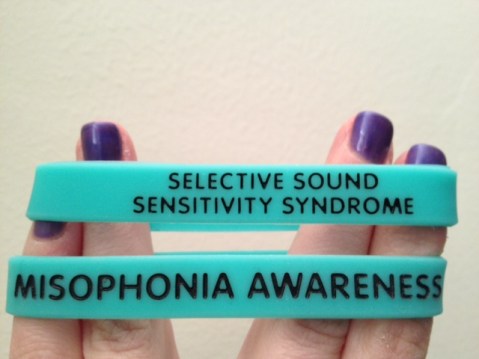
The Art of Annoyance: is it possible to reframe misophonic trigger sounds as misophonic music?
Between 1966 and 1967, John Cage and Morton Feldman recorded four open-ended radio conversations, called Radio Happenings (WBAI, NYC). Among many topics, Feldman and Cage address the problem of being constantly intruded upon by unpleasant sounds. Feldman narrates his annoyance with the sounds blasted from several radios on a trip to the beach. Cage’s commentary on the growing annoyance of his friend reveals a shift of perception in dealing with unwanted sounds:
Well, you know how I adjusted to that problem of the radio in the environment (…) I simply made a piece using radios. Now, whenever I hear radios – even a single one, not just twelve at a time, as you must have heard on the beach, at least – I think, “Well, they’re just playing my piece.-– John Cage, Radio Happenings.
Cage proposes a remedy via appropriation of environmental intrusions. The negative emotional charge associated with them is neutralized. Sound intrusions no longer exist as absolute external entities trying to intrude their way in. They become part of the self. Ultimately, there are no sonic intrusions, as the entire field of sound is desirable for composition.
Cage’s immersive compositional anticipated an important strategy to build resilience towards aversive sound: exposure-based cognitive-behavioral therapy, which proposes a gradual immersion in trigger sounds. And I suggest we can mine the history of avant-garde practice to productively further the idea of immersion; in the realms of sound poetry, utterance based music, Fluxus events and many other sound art practices, bodily sounds have consistently been exalted as source of composition and performance. Much like Cage did with what he perceived as intrusive radio sounds, by performing chewing, coughs, slurps and hiccups, assembling snores and nose whistles, and singing the poetics of throat clearing, we may be able to elevate our body awareness and challenge the way we perceive unwanted sounds. In what follows, I sample these works with an ear toward misophonia, discussing their interventions in the often jarring world of everyday irritation.
Oral Oddities
As pointed out by Nancy Perloff, while the avant-garde progressively expanded to incorporate the entire scope of sound into composition, sound poetry followed a similar course by playing with the non-semantic proprieties of language and exploring new vocal techniques. The Russian avant-garde (zaum), the Italian futurists (parole in libertà) and the German Dada (Hugo Ball’s verse ohne Worte) built the foundations of a new oral hyper-expression of the body through moans, clicks, hisses, hums, whooshes, whizzes, spits, and breaths.
Henri Chopin, Les Pirouettes Vocales Pour Les Pirouettements Vocaux
Sound poets like Henri Chopin created uncanny sonic textures by only using ‘vocal micro-particles’, revealing a sounding body that can be violent and intrusive. François Dufrêne and Gil J Wolman brought forward more raw and glottal performances.
Bridging the gap between the Schwitter’s Dada-constructivism and a contemporary approach to sound poetry, Jaap Blonk’s inventive vocal performances cover a wide range of mouth sounds. In the same vein, Paul Dutton explores the limits of his voice, glottis, tongue, lips and nose as the medium for compositions — as can be heard on the record Mouth Pieces: Solo Soundsinging.
Paul Dutton, Lips Is, Mouth Pieces: Solo Soundsinging
Fluxus: Eat, Chew, Burp, Cough, Perform!
The Event is a metarealistic trigger: it makes the viewer’s or user’s experience special. (…) Rather than convey their own emotional world abstractly, Fluxus artists directed their audiences’ attention to concrete everyday stuff addressing aesthetic metareality in the broadest sense. Hannah Higgins, Fluxus Experience
The emergence of Fluxus is strongly linked to Cage’s 1957-59 class at New School for Social Research in NYC. George Bretch’s Event Score was one of the best known innovations to emerge from these classes. The Event Score was a performance technique drawn from short instructions that framed everyday life actions as minimal performances. Daily acts like chewing, coughing, licking, eating or preparing food were considered by themselves ready-made works of art. Many Fluxus artists such as Shigeko Kubota, Yoko Ono, Mieko Shiomi, and Alison Knowles saw these activities as forms of social music.
For instance, Alison Knowles produced several famous Fluxus food events such as Make a Salad (1962), Make a Soup (1962), and The Identical Lunch (1967-73).
Also, Mieko Shiomi‘s Shadow Piece No. 3 calls attention to the sound of amplified mastication, while Philip Corner’s piece Carrot Chew Performance is solely centered in the activity of chewing a carrot.
Philip Corner, Carrot Chew Performance, Tellus #24
In Nivea Cream Piece (1962), Alison Knowles invites the performers to rub their hands with cream in front of a microphone, producing a deluge of squeezing sounds:
Alison Knowles – Nivea Cream Piece (1962) – for Oscar (Emmett) Williams
Coughing is a form of love.
 In 1961, the Fluxus artist Yoko Ono composed a 32 minute, 31 second audio recording called Cough Piece, a precursor to her instruction Keep coughing a year (Grapefruit). In this recording, the sound of Ono’s cough emerges periodically from the indistinct background noise. The Cough Piece plays with the concept of time, prolonging the duration of an activity beyond what is considered socially acceptable. While listening to this piece, Yoko Ono brings us close to her body’s automatic reflexes, pulling back the veil of an indistinct inner turmoil. Coughing can be a bodily response to an irritating tickling feeling, troubled breathing, a sore throat or a reaction to foreign particles or microbes. In response, coughing is a way of clearing, a freeing re-flux of air, a way out. Coughing is a form of love.
Yoko Ono – Cough Piece

Sonic Skin
In the work The Ego and the Id (1923), Sigmund Freud stated that the ego is ultimately derived from bodily sensations. The psychoanalyst Didier Anzieu expanded this idea by suggesting that early experiences of sound are crucial to consolidate the infant’s ego. The bath of sounds surrounding the child created by the parent’s voices and their soothing sounds provides a sonorous envelope or an audio-phonic skin that protects the child against ego-assailing noises and helps the creation of the first boundaries between the inside and the external world. The lack of a satisfactory sound envelope may compromise the development of a proper sense of self, leaving it vulnerable to invasions from outside.
It’s no surprise that conditions like Misophonia exist and are very common among us, considering how important our early exposure to sound is in building our sense of self and our sensory limits. For Misophonics, the everyday sounds we make without even thinking about them can be the source of a fractured and disruptive experience that we should not dismiss as the overreactions of a sensitive person. During the month we observe World Listening Day, our discourse usually praises the pleasures of listening and tends to focus on the sounds that soothe rather than annoy. However, conditions like Misophonia show us that there is much more that needs to be said on the subject of unpleasant sound experience. I can’t help but notice a disconnect between the vast exploration of annoying and irritating sounds in the avant-garde and the critical discourse in our sound communities that is dominated by the pleasures of listening. Cage’s call to embrace intrusive sounds urges us to consider all sounds regardless of where they fall on the spectrum of our emotions. For all of us who would consider ourselves philophonics, let’s create a critical discourse that addresses the struggles of listening as much as its pleasures.
—
Thanks to Jennifer Stoever for the thoughtful suggestions.
—
 REWIND! . . .If you liked this post, you may also dig:
Share this:

Saving Sound, Sounding Black, Voicing America: John Lomax and the Creation of the “American Voice”

 Today, SO! finishes its series reconsidering the life and work of Alan Lomax in his centenary year, edited by Tanya Clement of The University of Texas at Austin. We started out with Mark Davidson‘s reflections on what it means to raise questions about the politics behind Lomax’s efforts to record and collect folk music, and continued a few weeks later with Parker Fishel‘s consideration of Lomax’s famous “Southern Journey” and how it has been appropriated by musicians more recently. The third piece in this series was Clement’s own, which challenged us to consider the politics behind efforts to search, retrieve and analyze audio, something that the case of Lomax throws into stark relief.
We conclude with a piece by Toneisha Taylor, who urges us to think about the influence of John Lomax’s curatorial practice on Alan’s own, particularly the monumental Works Progress Administration project of recording interviews with elderly former slaves in the 1930s. At once a critique and a counternarrative, Taylor’s work urges us to think of the interviewees as co-creators of the “American voice” so important to both Lomaxes.
— Special Editor Neil Verma
—
I recently found myself in a discussion with white friends and fellow scholars about the Lomax recordings of the 1930’s where I, as the lone Black woman in the conversation, heard myself tell an inner truth that most Black folk know, but won’t speak on. I admitted to my small audience of friends and colleagues, in the vein of Black folklore scholar John B. Cade, a truth about the past: if you were a Black person living in Waller County Texas in the 1930s and white men came to your door with notebooks, questions and a voice recording device, you weren’t thinking to yourself, “let me be my most honest and authentic self.” Even if you knew the men to be John Lomax and Alan Lomax—those men collecting those songs from Black folks around and through these parts—you still didn’t trust them. Not really. Your whole life experience up until that point taught you better. It was still your life. And you knew that.
Although we scholars have not often been willing to admit it, those Black folks had an agency when it came to the myth creation and historical preservation associated with the Lomax archive. They knew what they were doing. They knew that they were telling their stories in a ways that served them best as John Lomax contemporary John Cade notes in his work “Out of the Mouths of Ex-Slaves.”

John Lomax and Uncle Rich Brown at the home of Julia Killingsworth near Sumterville, Ala., Oct. 1940, Courtesy of the Library of Congress
In our modern day readings of the Lomax collections, it is not at all fair to take agency away from Black folk brave enough to share their stories, and to place the creative power in the hands of the Lomaxes and the white oral history and folk music collectors they worked with in the Federal Writers Project. To do that negates the work of Zora Neale Hurston, Cade, and other Black folklore and folk life collectors and scholars; it also negates the power of the narrators that shared their lives with John and Alan Lomax. By focusing on the sound recordings of former slaves, we can investigate the ways in which Black people who participated in the Works Progress Administration interviews coded their agency in their narratives. Moreover, we have an opportunity to investigate the ways in which the Lomaxes facilitated the agency of Black interview participants and Black folklorists.
The systematic collection of slave narratives as recorded by the writers and scholars participating in the John Lomax-directed Federal Writers Project always had multiple goals. The Works Progress Administration conceived of the project as a way to employ out of work authors and underemployed scholars during the Depression. The Library of Congress and John Lomax saw the project as a method to collect first hand accounts of a dying history. The participants likely saw the opportunity as a way to be a witness to their own truths. During the 1930’s and 1940’s when the bulk of the collection was taking place other scholars such as Cade were working to collect narratives using similar techniques and research designs. Many scholars, at the time and afterward–famously John Blassingame and Henry Louis Gates–would question the authenticity of the transcribed narratives, there was always a sense that the WPA collected narrative left more questions than they answered. When the Library of Congress, with funding from Citigroup Foundation, put the narratives, transcripts, WPA collection reports, photographs and other documents up on the internets they opened the collection up to scholars to ask new questions. The digital representation of the WPA collection allowed for new options in research with the ability to hear the recordings the controversy over authenticity of transcripts seemed dated and immaterial. Now the questions can focus on embodied narrative, with access to the reports and memos written by WPA staff questions of intent and purpose can be asked. With a focus on sound studies we can ask about the ways in with interpersonal discourse in racialized moments are navigated between people with sociocultural difference.
This post focuses on the early collection work of John Lomax (Alan Lomax’s father and teacher), asking some critical questions about how the Lomaxes archived Black voices into the “American Voice.” In his piece, as part of this series, Parker Fishel discusses the purposefulness of Alan Lomax’s Southern Journey recordings notes. As Fishel notes one of the elements Alan offers in his notes are methods for critical listening. By focusing on both the recordings in the WPA Slave Narratives and letters and memos written by John and Alan Lomax directing the collection, transcription, and preservation of the narratives I focus on how taking the totality of the collection into consideration can change the view of the WPA Slave narratives. How was it possible that the Lomaxes preserved stories of Black American life while at the same time, silencing their subjects in other ways? How can we rediscover, conserve, and integrate the sounds of Black folk life into a more holistic understanding of the American past?

Patsy Moses, age 74, ca. 1937, courtesy of the Library of Congress
A Funny Thing Happened on the Way to Research
I discovered the work of the WPA Slave Narratives when I was in college. I was assigned a paper and went to the library to do some research. With the help of the research librarian I found the website (layout unchanged since the late-1990’s) for the WPA Slave Narratives. I wrote my paper, did well, and, like most undergraduates, moved forward with my life.
However, the voices of those Black folks continued to echo in the back of my mind. As I advanced in my academic study, I would “check up” on the website, you know, lurk. I would go in to see if there were updates or new information placed online. When I found information, I engaged the text. When the Library of Congress made the digital recordings available online, the collection included WPA recordings as well as other interviews recorded and collected with former slaves. The crackle of the recordings, coupled with the rhythm of voices of those women and men bold enough to share their stories, drew me in once more. In particular, I tended to return to recording of Aunt Harriet Smith. Her memory of her work, life, and religious experiences during slavery still interest me.
“Ex-slave Narratives – Interview with Aunt Harriet Smith”. Released: 2003.
Mrs. Smith, like all participants in the Ex-Slave Narrative Project, shares her personal narrative in such a ways as to engage the listener in the shared creation of a “memorable message.” Memorable messages are stories that we get from family, friends, co-workers, neighbors and even strangers that transmit an experience so salient we bookmark the message and use it as a guide for future interaction, behavior—performance.Communication scholars have worked with memorable messages for decades (Knapp, Stohl & Reardon 1981; Camara & Orbe, 2010). In tandem with the narrative paradigm, memorable messages function within rhetoric to give rise to the central importance of the retelling of human experience as part of the collective human story (Fisher, 1984). The value of listening to the recording of Mrs. Smith, therefore, is in the way hearing her voice completes the accuracy of the narrative.For example, take a listen [about 5:31 in the recording] to the way she answers the interviewer’s question:
Well did you ever hear of any slaves being mistreated? Were there any tails going around?
Mrs. Smith answers:
Yes, I know of times when, mistreated people they did. I hear our folks talk ‘bout whopping, you know, cus they had to grease the back. To get the clothes from their back.
The tone in her voice and the engagement in her memory is so clear and certain that her insistence that the family she belonged to didn’t “mistreat their colored people” was honestly presented. Notably, even the short transcription I provided differs from the transcribed section of the same interview printed at the time of the collection.
As I discuss elsewhere, memorable messages as theory relies on the verbal and embodied telling of a story. Different from the womanist theorizing of re-memory, memorable messages are based on the lived experience of others not ourselves. Re-memory is the work done by the womanist who imparts the memorable message. In constructing the narrative I, as the womanist narrator, re-member my narrative as part of the life lesson I seek to impart to my reader.
John Lomax, Alan Lomax and the Power to Decide
The process of generating the WPA narratives was far more complicated than many realize. It is not tangential to the creation of the WPA Slave narratives that one way of entering the project was through the former slavemaster. In other words, Black participants were often identified by their former owners or the relatives of those owners to participate in the collection. Additionally, some of the interviewers were themselves know to be related to large slaveholding families. The combination of these facts likely impacted the creation of the narratives on the part of the Black participants. In her essay “Ex-Slave Narratives: The WPA Federal Writers’ Project Reappraised” Lynda M. Hill focuses on the language and questions of Alan Lomax outlined in a number of his reports to his father and other directors of the WPA Ex-Slave Narrative collection. In their papers and notes, as well as their directives to those collecting the narratives—a list including Alan Lomax, Dr. Charles S. Johnson, John Lomax, Zora Neale Hurston, John Henry Faulk, Dr. Lorenzo Dow Turner, Ruby Lomax and others—it is clear that both father and son wish for a greater humanity in the interviews.
![Zora Neale Hurston with three boys in Eatonville Florida, 1935. Hurston interviewed children and had them demonstrate their games as Alan Lomax documented the action. [Prints and Photographs, Call number: LOT 7414-C, no. N109a, frame 47].](https://soundstudiesblog.com/wp-content/uploads/2015/06/flzorawithchildren500_3d01772v.jpg?w=479)
Zora Neale Hurston with three boys in Eatonville Florida, 1935. Hurston interviewed children and had them demonstrate their games as Alan Lomax documented the action. [Prints and Photographs, Call number: LOT 7414-C, no. N109a, frame 47].
Where Alan and John seemed to disagree was on the content. John Lomax wanted a narrative concentrated on the participant’s life during slavery, where Alan also wanted to know about their life since. Alan seemed more interested in race relations, as well as the economic, political and social engagement of the participants. Both father and son seem quick to place the blame for lightness of the interviews on the interviewers they used and their inability or reluctance to ask probative follow-up questions.
The Lomaxes, Texans who spent much time in the Southern states collecting narratives, songs, and oral histories from African American community members, speak from a place of experience. When Alan Lomax suggests that interviewers need to “spend time” and “become friends” with individuals, he knows of what he speaks. While certain that members of the “ex-slave community” can be reluctant to share their stories and the truths of their inner lives with white outsiders, he is much less clear on how one might “become friends” with them. To modern ethnographers, Alan Lomax’s call to his contemporary white colleagues can read as harsh (or perhaps not harsh enough). For 21st century ethnographers, folklorists, and musicologists, it is common to “become friends” to engage in participant observation research where the scholar and his or her interlocutors have fewer social distances.
![[Alan Lomax (left) youngster on board boat, during Bahamas recording expedition], 1935, Courtesy of the Library of Congress](https://soundstudiesblog.com/wp-content/uploads/2015/06/alan-boat.jpg?w=479&h=385)
[Alan Lomax (left) youngster on board boat, during Bahamas recording expedition], 1935, Courtesy of the Library of Congress

Aunt Harriet McClintock, dancing for John A. Lomax as she sang “Shing, Shing,” at the crossroads near Sumterville, Ala., 1940, Courtesy of the Library of Congress
In April 1937, John Lomax himself seemed to recognize that the directives he sent to local field directors were not yielding the responses he thought they should, prompting a revision of the interview questions as and instructions. While both John Lomax and Alan Lomax pushed on local directors to hire African American interviewers, there was no formal incentive to follow through (65-66). Some local directors did hire African American interviewers, but would fire or replace them within a few short months. The field notes and interview transcripts collected by African Americans were often included in larger reports with notations suggesting the local director found the work inferior or suspect (66-67).
Critique and Understanding : Questions With and Without Answers
I continue to lurk about the WPA website to this day, wondering if the site’s peach background and sepia photograph header and text-only links create a statement of recording silence. As an early career faculty member with a keener sense of funding and project completion maps, I see the unchanged digital interface of the Slave Narratives from the Federal Writers Project, 1936-1938 as a type of visual internet nostalgia, a way of placing Black voices in the record and then silencing or muting the power of voices by not attending to their narratives or, ironically, making those narratives easily accessible. Every time I check back, I question how the visual presentation of information is as critical to scholarly engagement as the recording itself.
Albeit in a new technical format, my critique is not novel, but rather one encoded in the report Slave Narratives from the Federal Writers Project, 1936-1938 Administrative Files compiled in 1941. Slave narratives tell us much of the daily interactions and histories of all parts of American life. John Lomax believed that their preservation in the moment was necessary. His sense of coding the narratives in more standardized, easy-to-read 1930s language did, however, point to the limits of his willingness to allow the narrative to stand in full voice. To John Lomax, it mattered that there was uniformity in the way that the written text of ex-slave narratives appeared. He knew part of the long project was a book length manuscript. The collection of narratives needed to present visually in a way that eased the reader, some of whom may have been reluctant to see Black lives as having authenticity. It is in this moment of graphic depiction that language becomes contested as some (perhaps rightfully,) argue the slave narratives are inaccurate reflections of slave life.

Does it matter that the few sound recordings remaining from the WPA project are not coupled with the transcribed narratives and photographs of speakers listed on the Slave Narratives site? Yes. Through sound, listeners have a truer sense of the active creation of Black bodies by Black folks involved in their own documentation. Think back to Mrs. Smith and her description of the neighborhood girl that leaves with the union soldiers. Mrs. Smith activates a sense of freedom and sadness in those few sentences that is understood through the combination of her tone and words. Access to sound records in a digital format allows contemporary scholars the opportunity to compare the narrator’s voice and embodiment to the written document where possible. The Library of Congress and The American Folk Life Center actively document and curate the list of sound recordings and their origins. However, the preset format forces interested people into a game of lurker hide and seek on the LOC site to access them. It is this “work” that keeps the sound recordings, texts, and photographs far too distant from one other, allowing the narratives to be only minimally present and appear not to be valued. In their current format, the WPA recordings seem appropriated as a way of suggesting inclusion in American life, but not prioritized as valued American experience.

Simon Walker, Interviewed by Ira S. Johnson Birmingham, Alabama WPA Slave Narratives, A917, vol. 1, pp. 404-406 Manuscript Division, Library of Congress (90)
One could argue that the reading of Black bodies as American bodies isn’t possible without the inclusion of Black voices in Lomax’s collection of Americana and folk music.The narratives of daily life during slavery and after shape our understanding of the bodies of Blackness and the human toll of bondage. When John Lomax, and by extension Alan Lomax, collected American folk music and actively sought the music and voices of Black southern musicians and story-tellers, they authenticated belongingness of Black peoples in the creation of the American voice. Lomax centralized Black life in American life. However, the Lomax team accomplished this archiving only with with the cooperation of Black narrators whose lives were central to the telling of American life. —what we need now are more questions that center on the documents, sounds and voices of the past—centralizing memorable message sound is the key. In a contemporary context,the WPA narratives provide a space to investigate memorable message creation and the embodiment of Blackness in the project of American life.
—
Featured Image: Gabriel Brown playing guitar as Rochelle French and Zora Neale Hurston listen- Eatonville, Florida, June 1935. Courtesy of State Archives of Florida, Florida Memory, http://floridamemory.com/items/show/107444
—
Toniesha L. Taylor is an Assistant Professor of Communication and Interim Department Head in the Department Languages and Communication at Prairie View A & M University. She earned her B. A. with a double major in 1999 from California State University, San Marcos in Communication and Liberal Studies with a minor in History. She immediately began her graduate work at San Jose State University in Speech Communication completing an M. A. in 2002. Her research foci in African American, Religion, Intercultural, Gender and Popular Culture communication started during her undergraduate studies. She has cultivated those interest throughout her doctoral work at Bowling Green State University were she completed her Ph.D. in Communication Studies with a focus on Rhetoric. Her dissertation developed womanist rhetorical theory and analysis of African American women’s sermons in the contemporary Black Church.
Toniesha’s research, conference presentations and publications speak to her diverse interest. Her recent research and conference presentations include discussions on womanist rhetoric as method and theory; practical social justice pedagogy for faculty and students; critical engagement in popular cultural critique; digital humanities methods implications for activist recovery projects; African American women’s sermons and conversion discourses both historic and contemporary. Her recent publications include “Transformative Womanist Rhetorical Strategies: Contextualizing Discourse and the Performance of Black Bodies of Desire” in Crémieux, Lemoine & Rocchi (Eds.) Black Being, Black Embodying; Contemporary Arts & The Performance Of Identities and “Black Women, Thou Art Produced! Tyler Perry’s Gosperella Productions: A Womanist Critique” in Bell & Jackson (Eds.) Tyler Perry Reader.
—
REWIND! . . .If you liked this post, you may also dig:
Como Now? Marketing “Authentic” Black Music— Jennifer Stoever
Prison Music: Containment, Escape, and the Sound of America — Jeb Middlebrook
Tuning Into the “Happy Am I” Preacher: Researching the Radio Career of Elder Lightfoot Solomon Michaux
— Suzanne E. Smith
Share this:


Current Top Posts





April 2021

January 2020

November 2019

October 2019

August 2019

April 2014

November 2017

March 2015

December 2017

October 2015
 Sounding Out!
Recent Comments