
Sound at SEM 2013

November 14th through 17th mark the 58th anniversary of the Society of Ethnomusicology’s (SEM) annual meeting, this year at the Indianapolis Marriott Downtown in Indianapolis, Indiana. SEM has some pretty big Sound Studies shoes to fill at this summit. Previous events, like the 2012 AMS/SEM/SMT “Megaconference,” featured a pre-conference symposium on ecomusicology, while the 2011 SEM/CORD conference encouraged the use of sound as an “epistemological filter” and invited ruminations on embodied sound(s). After two epic years of sound at SEM this year’s program seems oddly muted. There are far less sound studies panels and events and no organized soundwalks as of yet (Although there is a paper on soundwalks! And stay tuned, as there’s been buzz on the Sound Studies SIG forum).
Some of the sound-specific themes that emerged in previous years will continue to be explored in Indianapolis. There will be a familiar panel on listening as configured both as an epistemology and a mode of musical participation as well as some panels (see “Raising Voices, Reclaiming Spaces” and “Nature, Ecotourism, and Soundscape”) which consider space and the environment through a sonic lens. In particular, sound in urban environments will receive some special attention in the Sound Studies Special Interest Group-sponsored panel “Auto Sound in the Urban Space: Taipei, São Paulo, Bangkok.” Finally, voice is theorized through a panel on voice and embodiment and the pre-conference symposium on Music and the Global Health.
Since the conference is smaller and there is no explicit theme (such as SEM 2010’s hyper-sonic “sound ecologies”) the discipline might seem to be only marginally engaged with Sound Studies scholarship this year. Perhaps Sound Studies scholarship has simply grown more integrated, or “more diffuse and multivalent,” as a fledgling field. As thinking through sound becomes more common in the methodological toolbox of the ethnomusicologist and as ethnomusicologists begin to acknowledge what sound studies can offer the discipline, sound studies no longer must exist in a vacuum. To this point, a soundscape composition by Shumaila Hemani will be played during the R.L. Stevenson Prize Concert on Friday. If that’s not enough, the newly-launched Sound Matters: the SEM blog reflects a movement to attenuate distinctions between sound and music. So while there may be fewer papers on sound, this is a good thing at the conference for music scholarship. After all, ethnomusicologists have been concerned with sound since Merriam’s tripartite sound-behavior-concept model and we aren’t stopping anytime soon.
—
Please comment to let SO! know what you think–both before and after SEM 2013. If we somehow missed you or your panel in this round up, please let us know!: soundingoutblog@gmail.com
—
Yun Emily Wang is a PhD student in Ethnomusicology at the University of Toronto, where her project explores how people living in diaspora make meaning through listening to sounds of music, speech, and everyday life.

Famous Indianapolis Nightspot, The Slippery Noodle Inn, Image by Sean Molin, 2009
Jump to THURSDAY, November 14
Jump to FRIDAY, November 15
Jump to SATURDAY, November 16
Jump to SUNDAY, November 17
Thursday, November 14
8:30-10:30
IC Music, Emotion and Trance, Indiana Ballroom A-B
Chair: Ruth Stone, Indiana University
“Axé, Vibration, and Religious Work: Conceptualizing Musical Contributions to Batuque and Umbanda Religions in Southern Brazil ,” Marc Gidal, Ramapo College of New Jersey
“Mhongo’s Moving Meanings: Semiotics, Spirituality, and the Emotional”
“Possibilities of Ndau Drumming of Zimbabwe,” Tony Perman, Grinnell College
“Tears, Anger, and Their Dangers: Investigating the Emotional Effects of Sung Poetry in the Gojjam Highlands of Ethiopia,” Katell Morand, University of Washington
“Crying Is Good for You”: Affective Heart Responses to Vocal Expressions of Sadness and Grief ,” Margarita Mazo, Ohio State University
.
1F Urban Sound Studies, Santa Fe
Chair: Ricardo Trimillos, University of Hawai‛i at Mānoa
“Singaporean Hinduism: Tamil Drumming, Ethics and Labor in the Air-Conditioned Nation,” Jim Sykes, University of Pennsylvania
“Sound Stories: SOUNDWALK and the Urban Fantasy,” Catherine Provenzano, New York University
“Resilient Sounds, Changing Atmospheres: A Sonic Exploration of the Urban Transformation of the Mouraria Quarter in Lisbon (Portugal),” Inigo Sanchez, Faculdade de Ciências Sociais e Humanas, Universidade Nova de Lisboa
“Nonstop to La Raza: Music and Mass Transit in Mexico City,” León. F. García Corona, University of California, Los Angeles
.
10:45-12:00
2J Listening, Marriott Ballroom 4
Chair: Jennifer Kyker, Eastman School of Music
“Using Big Data to Examine the Effect of Environment on Listening Habits,” Daniel Shanahan, Ohio State University
“The Promise of Listening: Sound Knowledge among Sufi Muslims in Secular France,” Deborah Kapchan, New York University
“Leisure and Listening in São Paulo’s Aural Public Sphere: The Case of the SESC-SP,” Daniel Gough, University of Chicago
.
12:30-1:30
Sound Studies SIG Indiana Ballroom C-D
,
1:45-3:45
Ecomusicology Listening Room: Ecocriticism, Popular Music, and the Audiovisual, 3F Santa Fe Roundtable
Director: Mark Pedelty, University of Minnesota
Chairs: Justin Burton, Rider University,
Michael Baumgartner, Cleveland State University*Sponsored by Popular Music Section
Laurie Allman, Bell Museum of Natural History of Minnesota
Amanda Belantara, independent artist
Krista Dragomer, independent artist
Craig Eley, Penn State University
Jared Fowler, Los Angeles Harbor College
Rebekah Farrugia, Oakland University
Kellie Hay, Oakland University
Ali Colleen Neff, University of North Carolina and The Baay Fall Order of Mouride Sufi Islam
Peter McMurray, Harvard University
Hannah Lewis, Harvard University
.
Experimentalism in Latin America, Indiana Ballroom – F [LIVE VIDEO STREAMING]
Chair: Alejandro Madrid, Cornell University
*Sponsored by Latin American and Caribbean Section
“From Sounds of the Cosmos to Neo-Indigenist Happenings: The Reinvention of Sonido 13, at the End of the 20th Century,” Alejandro Madrid, Cornell University
“Transgressing the Streets of Mexico City: The “Renovative Destruction” of Collective Improvisation,” Ana R Alonso-Minutti, University of New Mexico
“From Tango Nuevo to Avant-Garde: Disenchantment with the Fringes of Music Making,” Eduardo Herrera, Rutgers, The State University of New Jersey
Discussant: Benjamin Piekut, Cornell University
.
4:00 – 5:30
Technologies and Remixes, Indiana Ballroom – F [LIVE VIDEO STREAMING]
Chair: Rene Lysloff, University of California, Riverside
“Where Does this Cable Go?: Guitar Amplifiers, Instrumentality, and Sonic Ecology,” David VanderHamm, University of North Carolina, Chapel Hill
“A Tribe Called Red: Reversing Stereotypes Through Remix,” Christina Giacona, University of Oklahoma
“Remix<->Culture: A “Fair Trade” Approach to Remixing Field Recordings,” Daniel Sharp, Tulane University
.
8:00 – 9:30
Religion, Music, and Sound Section, Marriott Ballroom 4
.
Thursday Individual Papers of Interest
9:00 The Boundaries of Butoh: Sound, Music, and Nation, Kelly Foreman, Wayne State University, 1E Lincoln
11:45 “At Risk Music”: Embedded Nahua Cosmopolitanism, Mexicanness and Soundscapes at El Festival de la Huasteca, Kim Carter Muñoz, University of Washington, 2I
1:45 From Sounds of the Cosmos to Neo-Indigenist Happenings: The Reinvention of Sonido 13 at the End of the 20th Century, Alejandro Madrid, Cornell University, 3A Indiana Ballroom F

Cook Grand Hall; (formerly Central Avenue Methodist-Epsicopal Church) Indianopolis, Indiana Thomas Sanborn, 1892; Goulding & Wood, 2011
Friday, November 15
8:30-10:30
5G Ethical Listening and the Ethics of Listening: Musical Aesthetics, Style, and Public Piety in Contemporary Morocco, Mariott Ballroom 1
Chair: Christopher Witulski, University of Florida
“The Beautiful Voice Will Bring Them Home: Sufi Devotional Music and the Creation of Islamic Subjectivities,” Philip Murphy, Jr., University of California, Santa Barbara
“Jedba for the Nation: Embodied Listening and the Ethics of Politics in Moroccan Hip Hop,” Kendra Salois, University of Maryland
“Ritual and Entertainment: Permeable Ethics and Aesthetics at the Pilgrimage at Sidi Ali Morocco,” Christopher Witulski, University of Florida
Discussant: Philip Schuyler, University of Washington
.
10:45 am – 12:15 pm
SEM President’s Roundtable: “Phenomenological Approaches to Ethnomusicology and the Study of Expressive Culture“, Mariot Ballroom 5
Chair: Harris M. Berger, Texas A&M University [LIVE VIDEO STREAMING]
Deborah Justice, Yale University
Deborah Kapchan, New York University
Matt Rahaim, University of Minnesota
Timothy Rice, University of California, Los Angeles
Ruth Stone, Indiana University
Jeff Todd Titon, Brown University
Deborah Wong, University of California, Riverside
.
1:45-4:00
7C Raising Voices, Reclaiming Spaces: Antinuclear Soundscapes in Contemporary Japan and Korea, Indiana Ballroom G
Chair: Noriko Manabe, Princeton University
*Sponsored by Popular Music Section, Japanese Music Special Interest Group, and Society for Asian Music
“The Spaces We’ll Go: The Evolving Roles of Music in Antinuclear Demonstrations and Concerts in Post-Fukushima Japan,” Noriko Manabe, Princeton University
“Sounding Against Nuclear Power in Post-Tsunami Japan,” Marie Abe, Boston University
“Project Fukushima! Music, Sound, Noise, and the Public Perception of Nuclear Power in Post-3.11 Japan,” David Novak, University of California, Santa Barbara
“Songs of Complaint and Speeches of Protest in a Grassroots Movement of South Korean Radiation Sufferers,” Joshua Pilzer, University of Toronto
.
4:00-5:30
8D Sounding the Homeland, Indiana Ballroom C-D
Chair: R. Anderson Sutton, University of Hawai‛i at Mānoa
“The Sounds of a Dynamic Korea,” Katherine Lee, University of California, Davis
“‘This is the Music of Contemporary China’s Ethnic Unity’: Sounding Configurations of Difference in Postsocialist China,”Adam Kielman, Columbia University
“Sonic Expressions of Home and Returning in the Chinese Diaspora of Toronto,” Yun Emily Wang, University of Toronto
.
8F Auto Sound in the Urban Space: Taipei, São Paulo, Bangkok, 8F Sante Fe
Chair: Leonardo Cardoso, University of Texas at Austin *Sponsored by Sound Studies Special Interest Group
“Sound-politics in São Paulo, Brazil: Youth and “Pancadões,” Leonardo Cardoso, University of Texas at Austin
“Filtered Soundscapes: The Translation of Sound into Urban Noise in Taipei, Taiwan,” Jennifer Chia-Lynn Hsieh, Stanford University
“Audiophilia, Ideology, and the Automobile: Sound Installation Garages in Bangkok,” Benjamin Tausig, New York University
Discussant (and questions/comments), David Novak, University of California, Santa Barbara
.
9:00-11:00
Stevenson Prize Concert with SEM Orchestra
Indiana Ballroom E
Friday Individual Papers of Interest
9:30 “Build Your Own Plague: Biological Modeling, Sound Technologies, and Experimental Musical Instruments,” Lauren Flood, Columbia University
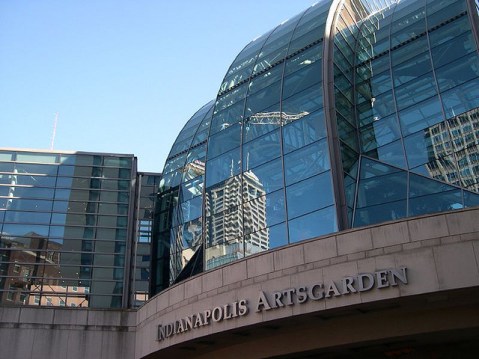
Image by Flickr User tstrayer76
Saturday November 16, 2013
10:45-12:15
10A Indigenous Movement, Sound Activism , Indiana Ballroom F [LIVE VIDEO STREAMING]
Chair: Dylan Robinson, Royal Holloway, University of London *Sponsored by Indigenous Music Special Interest Group
“The Sensory Politics of Hope and Shame: Being Idle No More,” Dylan Robinson, Royal Holloway, University of London
“The Round Dance as Spiritual and Political Vortex,” Elyse Carter Vosen, The College Of St Scholastica
“Ear Cleaning and Throat Clearing: Aurality and Indigenous Activism in Canada,” Lee Veeraraghavan, University of Pennsylvania
.
10C Nature, Ecotourism, and Soundscape
, Indiana Ballroom A-B
Chair: Jennifer Post, University of Western Australia
“Parks as Musical Playgrounds: Co-Performance, Ecotourism, and the Sonic Geographies of National Parks Arts Initiatives,” Kate Galloway, Memorial University
“Thoreau’s Ear,” Jeff Titon, Brown University
“Walking to Tsuglagkhang: Exploring the Function of a Tibetan Soundscape in Northern India,” Danielle Adomaitis, independent scholar

Indianapolis Children’s Choir, 2007, Image by the Indiana Public Media
Sunday, November 17
11F Inside Voice/Outside Voice: Disjunctures of Embodiment in Singing , Santa Fe
Chair: Katherine Meizel, Bowling Green State University *Sponsored by Voice Studies Special Interest Group
“Familiar Voices in Unexpected Bodies: New Dimensions of Celebrity Impersonation,” Katherine Meizel, Bowling Green State University
“‘I Shall Get Home Someday’: Black Countertenors, Bio- Musicality, and Gendered Gospel Performance,”Alisha Jones, University of Chicago
“You Need Equal Measures of Extreme Joy and ‘Don’t Fuck With Me’”: An Embodied Approach to the Ethnography of Singing,” Nadia Chana, University of Chicago
“Unspoken yet Heard: Navigating Outsider/Insider Voice Roles in the Study of Turkish Classical Genres,” Eve McPherson, Kent State University at Trumbull
.
11H For More than One Field: Ethnomusicology and Voice Studies , Marriott Ballroom 2
Chair: Gianpaolo Chiriaco, University of Salento *Sponsored by Voice Studies Special Interest Group
Gianpaolo Chiriaco, University of Salento
Amanda Weidman, Bryn Mawr College
Nina Eidsheim, University of California, Los Angeles
Susan Thomas, University of Georgia

Indianapolis’s own Kenneth “Babyface” Edmonds, Superproducer
—
Featured Image: “Statue outside 5/3 Bank in Indianapolis,” by Flickr User Kay Schlumpf
Share this:

Experiments in Aural Resistance: Nordic Role-Playing, Community, and Sound

 Editor’s Note: Welcome to Sounding Out!‘s fall series titled “Sound and Play,” where we ask how sound studies, as a discipline, can help us to think through several canonical perspectives on play. While Johan Huizinga had once argued that play is the primeval foundation from which all culture has sprung, it is important to ask where sound fits into this construction of culture; does it too have the potential to liberate or re-entrench our social worlds? SO!’s Multimedia editor Aaron Trammell reflects upon using sound in role-playing games as a form of resistance. Ready, players?
—
When we play with sound, how does it influence the ways in which we understand, configure, and experience the world? I have already argued that non-diegetic sound can produce a visceral and emotive effect when connected to player interaction within a game world, that sounds are often structured within games to construct a sort of feedback between player and system, and that often within this feedback loop the narrative voice perpetuates problematic tropes of sexism and racism through its scripting. While I focused on the often dystopic production efforts of large and middle sized game companies in those prior essays, here I will be focusing on autonomous and grassroots examples of how sound is used as a way to stage social experiments which resist these often hegemonic ways that these dominant narratives constrict our views of the world.
Role-playing games, the focus of my post today, offer a more viable path of social resistance than better-known video games. Nordic larp style-games, for example, are written and played within not-for-profit communities, and they utilize themes of social inequality, transformation, and activism within their very scripts. Second, role-playing games, unlike computer games, do not require that their developers are able to code. Instead, games are often circulated by word-of-mouth, or in script format through player communities. In this sense, the genre itself is untethered from many of the problems of consumer capitalism. Many underground role-playing games are designed both around social issues and for local community needs as opposed to the market demands that necessitate big budgets, big programming teams, and few risks in the video game industry today. Finally, because role-playing games necessitate neither big budgets, the ability to code, nor mass audiences, they are an ideal site wherein game designers and referees can stage social experiments that speak to the unique wants and desires of the communities within which they are run.
In The Larpfactory Book Project, a forthcoming book containing several ready to play examples of Nordic larp (a big shout out to Lizzie Stark for hooking me up with an advance copy of this portion of the manuscript!), larpwrights Matthijs Holter and Fredrik Hossmann propose a game entitled “Before and After Silence,” focused on thinking through the collective experience of silence. From the game description:
In a world of more and more sound, silence is becoming more valuable. Before and After Silence is about limitations and listening, and about doing almost nothing. It is non-verbal and uses silence as its starting point. It is about shifting the point of view from “what is” to “what is not,” about shifting the focus from “the sounds” to “the spaces between the sounds,” from “the actions” to what is “between the actions,” and to “what is not done.” Rather than playing characters, we examine how we look at ourselves and how different filters can change how we see ourselves and others.
The game is structured as a social experiment for five to twelve players who are made to select two cards, one of which prompts players with an action they must complete only once during the hour of silence (one example reads “Go over to someone and whisper something in a language you don’t know”), and another which prompts players with a setting through which they should interpret the actions of the other players in the room (one example suggests a player imagine themselves in a community of prisoners, another makes a player imagine themselves as one in a society of telepaths). Before the game there are a set of workshops aimed at orienting players to the scope and silence of the game, and afterward there is a debriefing session where players compare their experiences of silence during the game.

Tons of great examples of work in the Nordic larp genre are in this book. Image borrowed from FransBadger @Flickr.
Unlike American larps, which often take place in high-fantasy settings and direct their action around combat scenarios, Nordic larps often focus on the everyday and comparatively mundane, and as such tend to be more concerned the problems of the everyday as well. Even those that take place in more exotic environments, such as System Danmarc, a game set in the cyberpunk future of Copenhagen, engage players in real issues regarding class and poverty. After living in a shanty-town simulating the future streets of Copenhagen for a week of game-time (In Nordic-style larps, game-time is often equivalent to real time, and so a week in-game is equivalent to a week out of game) players are shown a documentary about the actual slums of Copenhagen where they realize that their experience within the space of play was made to mirror the experience of those struggling with the these very issues in the real world.
In the case of “Before and After Silence,” it is interesting to consider the ways in which the game designers here play with sound, and how these experiments in sonic game design might provoke new modes of subjectivity. As described earlier, players are both given a particular action and or noise to perform, but also are prompted with a way to imagine the actions that the rest of the players in the room are performing. The resulting group performance is an acid dream of sorts wherein each player is made to imagine the room’s soundscape in a very different way. Is the setting a long-lost silent film, or are you drifting through an ether of emotions and past romances? The game focuses on playing with silence in a way that makes the din of communication an unfamiliar and distant memory. The game affords players an opportunity to imagine the world sound. In doing this, “Before and After Silence” displaces the dominance of the voice as a mode of communication and through this questions the ways in which we imagine the world.
Not all is perfect, however, in this utopia of resistance. As Lisa Blackman (2009) argues in her essay “Embodying Affect: Voice-hearing, Telepathy, Suggestion and Modelling the Non-Conscious,” play with the exchange of subjectivities and sound marks an ontological shift from a praxiology of what bodies are to what bodies can do (p. 170). Moving forward from her work in understanding the ritual practices of voice-hearing communities, Blackman explains that similar forms of sonic play (including play with silence) allow for the experience, embodiment, and trade of desire, fear, and trauma. In the context of “Before and After Silence,” this means that as players sculpt and adjust the sonic space of the room, they run the risk of also shaping and altering each others psychic conditions, in unpredictable and perhaps dangerous ways.
The conflation which occurs between these spaces of real emotion and play emotion is, in fact, well documented, and referred to in larp communities as “bleed.” As role-playing scholar Sarah Bowman (2013), explains in her essay “Social Conflict in Role-Playing Communities: An Exploratory Qualitative Study,” even though bleed does occasionally create rifts in relationships (some participants that she has interviewed reported in-game events disturbing their out of game relationships), others seek it out as a form of extreme play. For this reason Nordic larps require ethical behavior on the parts of their players, and because of the nature of the psychic and social sculpting which can occur within the play spaces of the game, the possibility exists that a single unethical player could create a negative and perhaps concerning experience for many others. That said, there are several ways the community mitigates the possibility of this problem including meticulous casting processes, before-game workshops, after-game debrief sessions, and safe words for use during play.

Players debrief after a game. Image borrowed from Fiezi @Flickr.
“Before and After Silence” is a valuable cultural artifact that lies at the intersection of scholarship on sound studies and serious play. At the same time that it promises several new ways to think through how sound, communication, and silence influence the how we frame and approach the world, it also raises deeper questions regarding the nature of social control and the viability of autonomous modes of organization. As silence allows players to explore and interact with a world where the soundscape takes on an increased prominence, do sexist, racist, and homophobic modes of socialization still manage to creep into the play space? And does the voice, along with its physiological and cultural embodiment of race, class, and gender, offer an escape from these experiments in silence if and when they turn dystopic?
—
Featured image: “Larp” by Flickr user marten vaher, CC-BY-NC-SA 2.0
—
Aaron Trammell is co-founder and Multimedia Editor of Sounding Out! He is also a Media Studies PhD candidate at Rutgers University. His dissertation explores the fanzines and politics of underground wargame communities in Cold War America. You can learn more about his work at aarontrammell.com.
—
 REWIND! . . .If you liked this post, you may also dig:
Goalball: Sport, Silence, and Spectatorship— Melissa Helquist
GLaDOS, The Voice of Postfeminist Control— Aaron Trammell
Video Gaming and the Sonic Feedback of Surviellance: Bastion and the Stanley Parable— Aaron Trammell
Share this:


Current Top Posts





April 2021

January 2020

November 2019

October 2019

August 2019

April 2014

November 2017

March 2015

December 2017

October 2015
 Sounding Out!
Recent Comments