
SO! Reads: Susan Schmidt Horning’s Chasing Sound: Technology, Culture and the Art of Studio Recording from Edison to the LP

 The recently published Chasing Sound: Technology, Culture & the Art of Studio Recording from Edison to the LP (Johns Hopkins Press, 2013) is historian Susan Schmidt Horning’s first book. Veering away from the usual sound recording suspects (like the phonograph), Chasing Sound shows the studio and the audio engineer as central to the cultural and technological changes associated with the production and reproduction of sound.
According to Schmidt Horning, such changes were reflected in the shifting ideal of recorded music as a representation of live performance to the ideal of recorded music as a studio-engineered creation. Using the accounts of those responsible for recording sound, Schmidt Horning constructs a rich narrative that manages to be accessible while still focused on the highly technical work required of studio workers. That said, by focusing so heavily on user practices and anecdotes she misses an opportunity to engage with the theoretical implications of the ways audio engineers imagine and describe the actual space in which they work. Still, I contend that Chasing Sound represents an indispensable and critical approach for historians of sound, one that is unafraid of reconfiguring the central players in a narrative as big as the history of recorded music.
As a contribution to sound studies, Chasing Sound follows in the footsteps of Trevor Pinch’s Analog Days, the first work to explicitly apply Science and Technology Studies (STS) approaches to the history of a musical instrument. For Pinch, a critical understanding of sound requires examining the ways in which society and technology produce historical sites of change and stabilization. This approach focuses on understanding the ways people engage with technologies of sound, in order to interrogate their cultural and historical meanings. A historian of science and technology by training, Schmidt Horning has thus devoted much of her academic career to writing about the production and reproduction of sound through the practices and tacit knowledge of engineers, producers, musicians and technicians at music studios. By following the breadcrumbs dropped by these actors, Chasing Sound reveals the rich history of commercial studios and the cultural ideals cultivated therein.
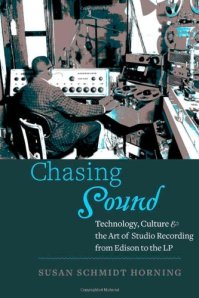 Methodologically, the author draws on a mixed bag of sources, which include oral histories from early recordists, interviews with more contemporary audio engineers, her own ethnomethodogical studio research, trade literature, and archival documents from big studios like EMI. The book proceeds in chronological order, with each chapter laying out changes in the physical and acoustic qualities of commercial studios as they shifted from bare-walled rooms with “the recording horn jutting through a wall at the far end of the room” (9) to multi-track studios complete with “Mission furniture, [and] hand-laid distressed wood floors.” (209) The author plots these changes alongside improvements in the science of acoustics, the importation of techniques and tools from the more well developed medium of radio broadcasting, the consolidation and growth of the recording industry, the rise of independent labels, the emergence of new attitudes and musical tastes, and the professionalization of audio engineering.
Chasing Sound, unlike many other books on the topic, places the studio in relation to a set of changing cultural expectations regarding recorded music. Where recordings were once understood as a reflection of live performance, they later were seen as a signature creation of music studios. Rather than focusing on the phonograph, gramophone, microphone, or magnetic tape, the author argues that the recording studio belongs at the center of recorded music because it was there that the ideal of music as a “technologically mediated art” was first engineered into cultural listening norms. Consequently the audio engineer, or recordist as he (or in rare cases, she) was known prior to the 1930s, must also be understood as central to narratives regarding recorded sound from its inception. In this way, Schmidt Horning aims to recontextualize and centralize the studio and its inhabitants within histories of the production and reproduction of sound.
Because the audio engineer represents an inextricable part of this history, each chapter devotes time to the technologies and practices cultivated by the amateur recordists and trusted professionals responsible for recording sound. Initially such practices formed the basis of their tacit knowledge regarding the proper “staging” of artists in relation to acoustic recording horns among other techniques, but by the 1950s, sound engineers were responsible not just for positioning artists, microphones, and the increasingly important work of “enhancing” recordings during post-production. The book concludes by charting the unfettered rise of independent studios as well as the consequent proliferation of (and backlash to) new sound manipulation technologies in the 1970s.
Throughout the text the author notes the ways in which audio engineers often lamented the increasing technological mediation involved in record production, even as it granted them more creative control and prestige.
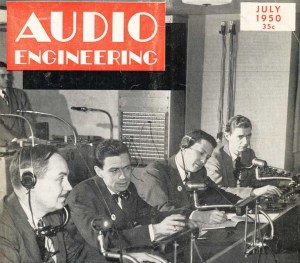 Schmidt Horning’s methodology represents Chasing Sound’s strongest quality. The rich narratives of the audio engineers allow the author to directly connect their technologically and culturally informed ideas about what constitutes good sound to the desires and expectations of listeners. In addition to this work, Schmidt Horning also highlights the ways in which advances in engineering technology did not necessarily overlap neatly with cultural norms. Throughout the text the author notes the ways in which audio engineers often lamented the increasing technological mediation involved in record production, even as it granted them more creative control and prestige. Such examples reveal the tightly knit relationship between ideas of liveness, talent, creativity, and authenticity. Chasing Sound is full of stories that detail the complex material, artistic, and ethical constraints around which recordists and engineers navigated in order to achieve the perfect sound.
The author’s methodological approach certainly helps to structure the narrative, but there are also ways in which it prevents her from digging in to important theoretical discourses regarding the studio. As Eliot Bates notes in his article, “What Studios Do,” the way audio engineers conceive of their workspaces is crucial for making sense of the power relations and social interactions that govern and are governed by studio spaces. Chasing Sound does not pursue these discourses. The author briefly mentions how the metaphor of flight is often used by sound engineers regarding the increasingly complex console controls of the 1950s and 60s but does not provide further elaboration on the implications of such a comparison. Even if the participants in her study did not reflect on their colloquial notes about the studio space, it would have been interesting to see Schmidt Horning consider what these metaphors reveal about the changing roles of the engineer.
These points aside, Chasing Sound is an important read both for those with a general interest in the history of sound production and reproduction as well as those scholars more specifically invested in understanding the role of recorded sound in society. Since I discussed the book’s limitations in “Making Music in Studio X,” Chasing Sound has become a foundational text in much of my research. Specifically, the author’s claim that the studio is (and has been) a critical site for examining broader industrial, technological, and cultural changes resonates deeply with me because it offers a critical methodology for considering issues of identity and power within studio spaces that are often neglected. In this regard, Chasing Sound is important not just for what it discusses, but also for what it does not. Noting the lack of female and black audio engineers discussed throughout the book, the author laments, “For the first century of sound recording, the field of audio engineering and recording studios in particular comprised a profoundly white male-centered culture that reflected corporate culture at large and technical professions in particular.” (9) The absence of these faces serves to remind us that while successfully “chasing sound” certainly relies on the cultivation of craft skill, and tacit knowledge, it also depends heavily on access.

Reproduced under a Creative Commons Attribution license from Reel2ReelTexas.com
Chasing Sound stands out as the most exhaustive history of audio engineering available. Schmidt Horning’s user-focused narrative successfully ties together changes in studio configurations and audio engineering practices with cultural expectations regarding recorded music. This helps to show how the studio and audio engineer can easily be recognized as central figures in the history of sound reproduction. Chasing Sound’s intervention is necessary as the history of recording is often told through artifacts like the phonograph, microphone, and magnetic tape, not living spaces like the studio and its inhabitants. Schmidt Horning’s dedication to telling these neglected stories is what makes the book come to life. Her research promises to open up new avenues for others interested in these issues. For me, this means pursuing lines of inquiry related to the growing philanthropic interest in the recording studio as a site for engaging and “assisting” low-income communities. In this way Chasing Sound asks us to recognize the recording studio as a critical site for the production and reproduction of our assumptions about what counts as appropriate, good, or real in music and people.
—
Featured Image: My Recording Studio by Flickr User Fabio Dellutri
—
Enongo Lumumba-Kasongo is a PhD student in the Department of Science and Technology Studies at Cornell University. Since completing a senior thesis on digital music software, tacit knowledge, and gender under the guidance of Trevor Pinch, she has become interested in pursuing research in the emergent field of sound studies. She hopes to combine her passion for music with her academic interests in technological systems, bodies, politics and practices that construct and are constructed by sound. More specifically she would like to examine the politics surrounding low-income community studios, as well as the uses of sound in (or as) electronic games. In her free time she produces hip hop beats and raps under the moniker Sammus (based on the video game character, Samus Aran, from the popular Metroid franchise).
—
 REWIND! . . .If you liked this post, you may also dig:
Making Music at Studio X: The Identity Politics of Community Studios— Enongo Lumumba-Kasongo
SO! Reads: Japanoise: Music at the Edge of Circulation— Seth Mulliken
SO! Reads: Isaac Weiner’s Religion Out Loud: Religious Sound, Public Space, and American Pluralism— Jordan Musser
Share this:

SO! Reads: David Novak’s Japanoise: Music at the Edge of Circulation

We are living in strange times. Our experiences, especially our musical experiences, have become fragmented and odd. The album has been declared dead, live concerts are now silent, listened to on headphones, and some of our favorite performers exist in a faux-holographic space between life and death. The fragmentation of our musical experiences is indicative of a larger set of changes that encourage sound studies to pay attention to fragmented, outlying, and diffuse sonic phenomenon. In his new book Japanoise: Music at the Edge of Circulation, part of Jonathan Sterne and Lisa Gitelman’s “Sign, Storage, Transmission” series at Duke University Press, David Novak pays attention to one such fragmented and outlying realm, Noise music. Novak’s contribution to sound studies is to encourage us to deal with the fragmented complexity of sonic environments and contexts, especially those where noise plays a crucial part.
The past decade has seen growing public attention to noise as pollution, as problem, and as a poison. Examples of noise as a social issue needing immediate response abound, but one letter to the editor from the Wisconsin Rapid Tribune epitomizes the way that noise is sometimes read as a problem to be overcome. Novak’s book is one a few recent books, including Eldritch Priest’s Boring Formless Nonsense, Greg Hainge’s Noise Matters, and Joseph Nechvatal’s Immersion Into Noise, that complicate the idea of noise as problem. What sets Novak’s book apart from these is how his ethnographic approach allows him to approach Noise music from both the macro-perspective of its historical context and the micro-lens of his personal relationship to it.
 For Novak, Noise music is a trans-cultural, transnational interaction that is both material and abstract. His analysis of it works to blur the boundary between both large-scale networks of exchange and the highly individuated experience. Novak relates the story of Noise music as originating in Japan in the 1980s. Noise musicians working separately caught the ears of American fans. Some of these fans were well-known musicians themselves, who brought Noise recordings and eventually the performers themselves to a wider U.S. audience. At the time, Noise was generally understood as taking one of two binary positions. Either Noise music was understood as a uniquely Japanese cultural expression, or it was instead theorized as a product of the Western imaginary motivated by the production of Japan as the anti-subject within modernity (24). Novak wisely recognizes the limited nature of these two positions, and seeks a more sophisticated method of understanding the circulation that creates Noise music, contributing, ultimately, a theory of feedback. Here the transnational circulation of materials, ideas, and expressions constitutes a culture itself, one that is not distinct from either the Japanese or the U.S. manifestations of Noise music (17). This a welcome contribution to compositional and intersectional perspectives on cultural exhange.
If Noise music is a circulation, a set of experiences and contexts, flows and scapes, ecologies and environments, then genre boundaries can not adequately describe the contextual and historical exchange of sound. Though genre must be considered, Japanoise does not find Novak searching particularly rigorously. He chooses two key Noise musicians, The Nihilist Spasm Band from Canada and Merzbow from Japan and describes their historical context, reception, and influence. But other than those descriptive basics, he is unsuccessful in finding anything new to say about Noise as genre. Concluding the chapter, he casually states that the existence of Noise threatens the boundaries of other musical genres. Though this fascinating statement would have been worthy of a chapter, and certainly foundational to his central idea (that Noise music is diffuse), Novak misses an opportunity to better support these connections in his chapter on genre.
Most interesting, however, is Novak’s focus on the material conditions of the production of Noise music. In describing the diffuse flows and scapes of Noise music, he addresses a plurality of experience: from the technological to the spatial to the private dimensions of listening. These concerns put him in conversation with Louise Meintjes’ Sound of Africa and Julian Henriques’ Sonic Bodies. Like these scholars, Novak refuses to locate the material conditions of production as solely economic, technological, or cultural. Instead, Noise music results from of an assemblage of conditions and possibilities. This is best exemplified by how Novak distinguishes the live music experience from the recorded. Here, Novak resists the neat distinction, long established in musicology, that hears the live experience as collective and interactive, and recorded music as individuated and passive. Instead, Novak suggests “liveness” and “deadness.” Liveness and deadness are not bounded to the dichotomy of the live performance with the recording, but rather two qualities that float through and with both experiences. “Liveness is about the connection between performance and embodiment… deadness, in turn, helps remote listeners recognize their affective experiences…” The experience of live Noise music, according to Novak, often challenges the boundaries of what is often expected when hearing live music. I have seen this in my own experiences standing in an audience surrounded by shrieking, booming, droning noises.
Truth be known, I’m as taken with Noise music as Novak. If his book confesses to being written by a critical but vehement fan, then I ought to confess the same of the music which I love so dearly. I had the chance to see Merzbow perform in Raleigh in August. He strummed obviously homemade instruments, turned fader pots, and concentrated intently on his laptop. A fan was crawling through the crowd on their hands and knees; occasionally they stood to sway, then returned to crawling. I thought that this behavior might seem odd, but in the context of Merzbow’s performance, it was as legitimate as any other. Through these odd behaviors, the fan demonstrated Novak’s conception of individuation within Noise music. The material conditions of the performance, the screeching Noise, made it impossible for me to ask the person what they were doing or feeling. I experienced the fan and the Noise in a tension from which there is no resolution. We were both uncomfortably located in a multiplicity of experiences. These experiences don’t resolve to a whole, but rather pulsate and echo and feed back into each other, intertwining with expectations of behavior, material conditions, and embodiment(s).
Japanoise raises many important questions. What social processes lead us to foreground the sonic experiences in our lives? And further, how does a critical understanding of these processes help to advance the work of understanding the power and politics of sound? But, for me, Novak’s work serves best to remind me of how much value is found in fragmented, diffuse, outlier experiences, like Noise music. Because sound occupies a crucial role in our social and political lives, Novak encourages us not to resolve tensions, rather to exist amongst them and hear them as lively and productive.
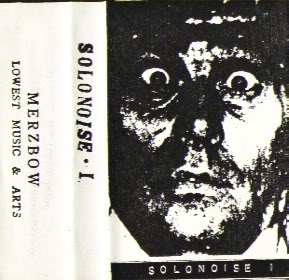
For those readers who might be unfamiliar with the music Novak describes, the book’s website has a fantastic collection of supplemental media for you to enjoy: http://www.japanoise.com/media/.
–
Seth Mulliken is a Ph.D. candidate in the Communication, Rhetoric, and Digital Media program at NC State. He does ethnographic research about the co-constitutive relationship between sound and race in public space. Concerned with ubiquitous forms of sonic control, he seeks to locate the variety of interactions, negotiations, and resistances through individual behavior, community, and technology that allow for a wide swath of racial identity productions. He is convinced ginger is an audible spice, but only above 15khz.
—
REWIND! . . .If you liked this post, you may also dig:
Tofu, Steak, and a Smoke Alarm: The Food Network’s Chopped & the Sonic Art of Cooking–Seth Mulliken
SO! Reads: Jonathan Sterne’s MP3: The Meaning of a Format–Aaron Trammell
The Noise of SB 1070: or Do I Sound Illegal to You?–Jennifer Stoever-Ackerman
Share this:


Current Top Posts





April 2021

January 2020

November 2019

October 2019

August 2019

April 2014

November 2017

March 2015

December 2017

October 2015
 Sounding Out!
Recent Comments