
Sounding Out! Podcast Episode #1: “Peter DiCola at River Read Books”
 As multimedia editor of Sounding Out!, it’s my pleasure to introduce our new podcast series. Starting today, Sounding Out! will challenge and enhance our critique of sound in culture by turning to the production of sound as culture with the first of many occasional podcasts, free and ready to download at your convenience. Itunes users can access our stream here: http://bingweb.binghamton.edu/~apape/subscribeSO.html. For listeners with other podcatchers please use http://feeds.feedburner.com/SoundingOutPodcast.
From the crackle, pop and hiss of a record to the scuffle over Arizona noise ordinances, Sounding Out! remains committed to scratching the surface of your everyday with practices, insights, and theories concerning sound and culture. For your listening pleasure, we will provide extended multimedia for our posts, cultural commentary, serendipitous soundscapes, startling sound art, and mobile mixes as we quest for listeners at all corners of the ‘tubes. These podcasts will show not tell, playing back like a new album at a midnight party. Let us celebrate the archeology of sound, as we follow an episodic guide excavating relics of the unseen. If you’ve got an idea for a future podcast or would like to submit work, please drop me a line at aht@soundstudiesblog.com.
In today’s podcast, SO! guest blogger, law professor, and co-author of Creative License: The Law and Culture of Digital Sampling, Peter DiCola mashes creativity, intellectual property, race and music into a lecture you can’t afford to miss. DiCola addresses the legalities of sampling under the current expansive definitions of copyright and discusses how lawsuits brought an end to the “Golden Age of Sampling” in the early 1990s. Arguing that the current music industry practices constrain musical creativity, DiCola suggests reforms that would make clearing samples much more streamlined. With an introduction and Q and A by SO! Editor-in-Chief Jennifer Stoever SO! regular contributors Andreas Pape and Osvaldo Oyola and economics professor Daniel Henderson. Listen in, and leave some feedback!
Thanks to River Read Books for hosting this event, and to William Huston for the recording.
SoundingOutPodcast1-PeterDiCola-CreativeLicense
AT


Share this:

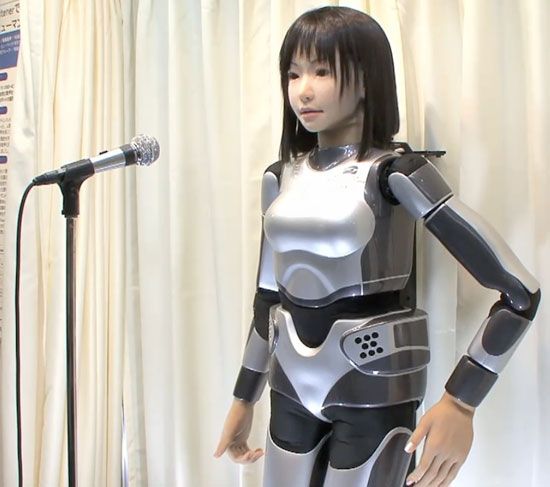
Listening to Robots Sing: GarageBand on the iPad
 I recently had the opportunity to fool around with the iPad2’s new GarageBand suite. Enticed by the intuitive touch interface I soon found myself lost within the device’s labyrinthine architecture. Every poke, prod and press brought me to a new screen with a bevy of exciting options. A touch to create a drum loop, a tickle to evoke some reverb, and a brush to strum a guitar. I was one with the machine; it was a truly cybernetic, kinesthetic moment. This may sound naïve, but I had never realized how many tools were available to electronic musicians, or how intuitive using these tools could be. As digital tools to create music become more accessible and more intuitive, what is the role of the human in understanding their use? Further, what strategies can we adopt when listening to these creations?
This question may seem a bit outdated to those who have been researching post-humanist phenomena since the digital boom in the mid-nineties. Often conflicting perspectives regarding the negotiation of the human and the digital have been considered in the last decade or so. Some like Donna Haraway, Pierre Lévy, and even Ray Kurzweil offer particularly optimistic readings of the post-human (although for radically different reasons). While scholars like Nancy Baym and Jaron Lanier have offered decisively more sober readings of the problematic. They argue that splits between the human and post-human, or analog and digital are false dichotomies. Truth be told, none of the theorists above adequately address my feelings on this topic. Producing music with a digital audio suite makes me defensive of my humanism and it is by its very nature a project of preservation.
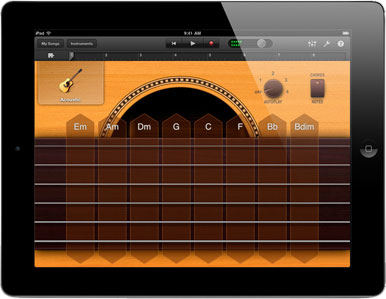 The algorithmic tools packaged within digital audio suites encourage a sense of aesthetic preservation. Tools like GarageBand’s Smart Guitar, Smart Drums, Smart Bass, various arpeggiators and Appleloops encourage the user to program music on a high level where the nuance of serendipity and improvisation play second fiddle to the overall sonic contours of a piece. Although the user is provided the tools to intervene and program music in a very specific way, it is by default a distinctly different experience than that of playing a guitar or piano. The ghost of the algorithm haunts such performances; reminding the user that these acts of spontaneous creation are no longer the default but deliberate…. This sense of deliberate improvisation forces me into a reflexive space where I am acutely aware of the mediations occurring within my performance. Succinctly, I must defend a sense of self within my creation. If I yield to the algorithms that seek to help me compose, I destroy all sense of the human within my work. Simply turning on robots and watching them sing.
For this reason, I propose an aesthetic of preservation as a way to understand the ways in which we listen to works created by digital audio suites. As algorithmic aids become more advanced and commonplace in music, the human becomes a less essential aspect of the form. Understanding what has been deliberately included in spite the seductive algorithmic environment is ultimately a project that seeks to recover the human in the machine; perhaps even, a project doomed from the start, as we grow ever closer to the means of our artistic production.
AT
Magnasanti – Check out the results of my collaboration with Colin Germain on GarageBand!


Share this:


Current Top Posts





April 2021

January 2020

November 2019

October 2019

August 2019

April 2014

November 2017

March 2015

December 2017

October 2015
 Sounding Out!
Recent Comments