
“Ain’t Got the Same Soul”
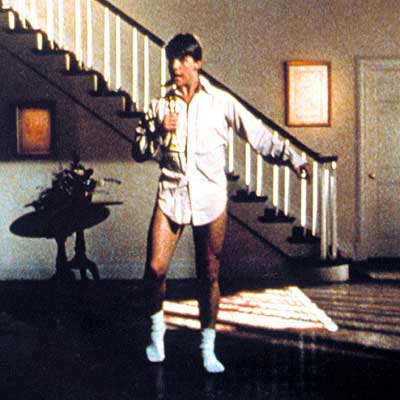 Bob Seger’s “Old Time Rock n’ Roll” has bothered me for a long time. I first heard it in Risky Business in 1983, four years after its initial release, as the soundtrack to a young Tom Cruise frolicking in his tightie-whities to his father’s sacrosanct (and expensive) hi-fi, expressing his repressed white suburban middle-class masculinity and sexuality. It was the song’s vague appeal that got me wondering even back then, how Cruise’s character was even old enough to remember the “old times” that Seger sang of. Hearing it on a “classic rock” station on a recent drive, it suddenly hit me – for many young people the song is a representation of what it clearly isn’t: “old time” rock n’ roll itself.
The song performs a form of hyper-nostalgia, not only eliding all potentially negative aspects of the “old times”—such as the racial erasure at rock n’ roll’s emergence into the mainstream—but eschewing any kind of specificity about “old time rock n’ roll” altogether. The song’s lyrical and sonic vagueness, punctuated by bland guitar solos and cheesy piano rolls, hearkens to an undefined sense of authenticity that casts doubt on other musical forms and implicitly marks itself as legitimate and authentic – laying a kind of homogeneous claim on rock itself.
The key phrase to Seger’s song, “Today’s music ain’t got the same soul / I like that old time rock n’ roll,” is leavened with irony, because it could be used as an example of “today’s music” itself – at least contemporary to the release of the song in 1979. And let’s face it, “Old Time Rock ‘n Roll” itself seems to be lacking in the soul department. Now, “soul” is a shibboleth. It is a call to a form of racial authenticity that many assume blacks have a natural, essential access to. When whites allegedly have it–it is something worthy of a NY Times article. However, when used by Seger, “soul” becomes a way of defining authentic music as having an unchanging “feel” anchored in a particular vision of the past. So distant it seems, that the lyrics can give us no real hint as to what constitutes “soul”; listeners are just supposed to know it when they feel it.
And yet, “Old Time Rock n’ Roll” arguably lacks that feel; leaving aside the happy accident of the repeated piano intro and the grain of Bob Seger’s voice, I’d make the argument that any close listening to the musical portions themselves makes the lack of “feeling” in the song evident. The song’s music can only be described as an attempt to present a generic portrait of rock n’ roll sounds, with Chuck Berry guitar licks deprived of all gusto and a sax so filtered it may have come from a late seventies synth. This could be attributable to the fact that Seger is singing over a demo meant as a model for his band to record its own version, but the fact remains that is the cut that was kept and that we all know.
The questions then arise: why so generic? Why the lack of specificity in sound and content?
The answer, I feel, can be found in the two listening practices described in the song and the preference of one over the other. The speaker’s unwillingness to be taken “to a disco / you’ll never even get [him] out on the floor” seems to be putting down a genre of music that emerges from a line of descent in the development of popular music in America that can be traced from the “blues and funky old soul” he claims he’d rather hear – Black American music. “Old Time Rock n’ Roll” can be seen as a kind of anthem of the disco wars, where rock fans violently objected to disco.
The rejection of disco then becomes part of a conflict at the time between “rock” as a dominant mainstream white musical form and disco, which Alice Echols has described in her recent book, Hot Stuff: The Remaking of American Culture, as a heterogeneous site that was black, queer, women-friendly and social and that eschewed the centrality of a ineffable “authenticity” that rock n’ roll always strove for. In order for Bob Seger’s “Old Time Rock n’ Roll” to establish its authenticity, it must contrast itself to disco, accomplishing this not only by pulling rock n’ roll into a personal listening sphere, but by eliding the sexual energy present in early rock n’ roll and still evident in the disco of the 70s. To heap upon this irony, the fact the high-hat cymbal moves into a disco off-time beat at several points in the song provides “Old Time Rock n’ Roll” with what catchy-rhythm it does have.
Leaving the disco after 10 minutes along with the opening lines of the song “Just take those old records off the shelf / I sit and listen to them by myself” one gets a sense of an anti-social listening practice that divorces the music he claims to love from its cultural context and transform it into a solitary act. Like nearly all forms of nostalgia, Seger’s view of the past of the music is problematic in its glossing over the complexities and specificities of the time he is ostensibly singing about.
 Another one of Seger’s hits may claim that “rock n’ roll never forgets,” but it seems like forgetting might be what it does best. Looking at Bob Seger’s professed influences— Little Richard and Elvis — we can see some of that forgetting in action. If the former suggests that the shifting, slippery, and flamboyant sexuality of disco has been present from rock’s very beginning, then the crowning of the latter as the “King of Rock n’ Roll” highlights just the kind of erasure that allows for a song like “Old Time Rock n’ Roll” to make sense as an anthem of whitewashed “heartland” rock. Seger’s clarion call to old timey-ness strips it of its sex even as he evokes a particular kind of “blackness” through the grain of his voice – a throaty howl full of a representation of sonic authenticity profiting of a vague sense of racial marking. In other words, Seger’s voice performs soulfulness through a growly working-class sound (typified in his “Like a Rock” Chevy commercials), itself a placeholder for race which is verboten in this construction of rock n’ roll. This kind of rock star class passing functions because of the racial erasure the songs enacts by means of white privilege.
Richard’s slippery sexuality and the way in which his most famous songs, like “Tutti Frutti” emphasize dance–and dancing as a euphemism for sex: “she rocks it to the east/she rocks it to the west/but she’s the girl that I know best”–brings me back to Seger’s denial of dance and the solitude of his idealized rock n’ roll, and thus back to Tom Cruise in his tightie-whities dancing around by himself in his parents’ fancy suburban Chicago house.
It makes sense that the scene in Risky Business is so isolated, middle-class and white – idealized rock n’ roll has been hijacked out of the heterogeneity of urban centers, and into the mythic American Heartland where white masculine sexuality can be extolled without threat. Seger’s reactionary song makes a world where it is safe for a teen-aged Cruise to enact his youthful rebellion by unproblematically participating in a form of class-passing of his own – lest we forget, the plot of Risky Business has his character playing the part of pimp to earn his way into Princeton – and yet retain his privileged position insulated from further influence of Black America on his music and on his life.


Share this:

“Last Recording of a Porn Palace”
In the “Sound and Noise” chapter from Aden Evens’s Sound Ideas, he asserts that “to hear is to hear difference” (1), and while he is referencing the variation inherent to the sine wave of a frequency, more broadly we can see this statement as also applying to notions of sounds and their associated historical timeframe in recordings. This is to suggest that the sound quality and fidelity not only speaks to understandings of what makes a recording “good,” but also helps to place it in a historical framework constructed not only of the sound quality, but the means of recording it, delivering and its purpose within the culture, and how this might capture a particular cultural/historical moment or feature. Evens also asserts that “sound is repetition at every turn” (3), and such repetition breeds such an immediate familiarity that sounds can begin to sound dated as they become less common (and thus less familiar) as the push of technology and economics makes them obsolete.
In February 2006, the Polk Theatre in Jackson Heights, Queens closed its doors for good. The theatre presented a daily festival of pornographic films for the waning audience of men who preferred a public showing of lewd offerings to the private show available via VHS and DVD. Despite the relatively recent closure of one New York City’s last porno theatres, the answering machine message giving the show listings and times bespeaks not of the mid-portion of the first decade of the 21st century, but rather harkens back to an older time when such recordings informing patrons of showings were more common. The recording sounds anachronistic and stands out in an anomaly in terms of the typical ways we find information these days. The low-fidelity, background noise, and timbre of the 70-something old man’s voice, not just the content, suggests a particular era of sound communication (and also a stark contrast to the visual mode most used these days to gain information about movies being shown, e.g. the internet).
Click Here to listen to the “Polk Theater Answering Machine”
The recording also speaks to a localized and low budget operation that is marginalized no longer for its lurid content, but by the failure of this dying porn economic model. “This is a recording,” says Harold Guissin (the proprietor) on the message, feeling it necessary to remind callers that it is not a live person that can be engaged with, that is, no questions can be asked of him. There is a clicking hum of a projector in the background, and his coughs, unedited from the recording, present a lackadaisical and spontaneous approach to the recording of the week’s featured films. Furthermore, the old man’s intonation underscores the absurdity of the titles of pornographic movies, such as “Sexo a la Mexicana,” which he makes sound like “Sexualla Mexicana.”
In comparison to the current mode of using a phone to find out listings for movies, the Polk Theatre answering machine is dated and quaint. Moviefone, by contrast, presents a contrived announcer’s voice, and presents a method with which to interact with the recordings, moving through menus and portions of the announcement as desired. The recording is digitized and free of any context that may alert the caller to where or how it was recorded or the experience to be had at any of the movies listed. Furthermore, Harold Gussin includes his own opinion (ostensibly) on the pictures, something we’d never hear on moviefone, “Brazilian Mulatto, great title, great picture!” Ultimately, however, even Moviefone has started to feel dated and obsolete, or perhaps it is my own decreasing familiarity with it, preferring Netflix to theatres, and a website to the telephone on those rare occasions that I do go out to see a movie. The recorded listings reinforce the multifarious ways that time is involved in the how we hear and interpret sound. Sound is noted for its change over time; both in an immediate physiological way in how out eardrums react to changes ton air pressure, but also a marker of time in a broader historical way.


Share this:


Current Top Posts





April 2021

January 2020

November 2019

October 2019

August 2019

April 2014

November 2017

March 2015

December 2017

October 2015
 Sounding Out!
Recent Comments