
Echoes of Ian Curtis: Film and the Punk Voice

For full intro and part one of the series click here. For part two, click here. For part three click here. For part four click here. For part five click here.
Our Punk Sound series implicitly argues that sound studies methodologies are better suited to understanding how punk works sonically than existing journalistic and academic conversations about musical genre, chord progressions, and/or genealogies of bands. Alexandra Vasquez’s sound-oriented work on Cuban music, for example, in Listening in Detail (2014) opens up necessary conversations about the “flashes, moments, sounds” in music that bear its meanings and its colonial, raced, classed, and gendered histories in material ways people can hear and feel. While retaining the specificity of Vasquez’s argument and the specific sonic archive bringing it forth, we too insist on “an ethical and intellectual obligation to the question: what do the musicians sound like” (12) and how do folks identifying with and through these musical sounds hear them?
In this series, we invite you to amplify varied historicized “details” of punk sound–its chunk-chunk-chunk skapunk riffs, screams, growls, group chants, driving rhythms, honking saxophones–hearing/feeling/touching these sounds in richly varied locations, times, places, and perspectives: as a pulsing bead of condensation dripping down the wall of The Smell in Downtown LA (#savethesmell), a drummer making her own time on tour, a drunk sitting too near the amp at a backyard party, a queer teenager in their bedroom being yelled at to “turn it down” and “act like a lady[or a man]”. . .and on and on. In today’s essay Landon Palmer shows us how film may be just as responsible as music for how we remember the punk voice.
SOUND!
–Aaron SO! (Sounding Out!) + Jenny SO! (Sounding Out!)
—
DOI: https://doi.org/10.59350/379zj-3ew95
In Joy Division’s 1979 song “Transmission,” singer Ian Curtis embodied several aspects of what made the group’s post-punk sound unique with the chorus, “Dance, dance, dance, dance, dance, dance to the radio.” As a piece of music, its repetition is intense and rousing, working as a compelling instruction that, when played loud enough, can be felt to the bone via Curtis’s deep timbre. At the same time, Curtis’s voice is robotic and distant, the signature of the group’s bleak sound that signified the post-industrial alienation of Thatcher-era Manchester. A historically specific critique of media, “Transmission” plays out a loss of agency. In the 21st century, however, the song has circulated more as a self-referential testament to Joy Division’s – and Curtis’s – musical skill, a container and a summary of myth.
To adopt Alexandra Vasquez’s question that has framed this series, what happens to representations of punk sound as they change over time? I argue that the cinematic techniques employed in presenting Ian Curtis and his voice in both 24 Hour Party People (Michael Winterbottom 2002) and Control (Anton Corbijn 2007) help us to understand the construction of a mythic punk voice.
Punk’s avoidance of comprehensibility, identification, and what Dave Liang calls “the prettiness of the mainstream song” have existed in awkward relation to narrative cinema, which requires legibility as a central component of storytelling (70, 71). While displacing the voice through fragmentation and asynchronous sound work has proven vital to theorizing and subverting cinematic norms, rarely has depicting a well-known punk singer’s voice in cinema translated to a cinematic punk aesthetic, as Stacy Thompson argues regarding the narrative and documentary Sex Pistols biopics Sid & Nancy (Alex Cox 1986) and The Filth and the Fury (Julien Temple 2000) (49-50). Even the revered punk documentary The Decline of Western Civilization (Penelope Spheeris 1981) renders punk voices legible by providing lyric subtitles. However, the two most notable cinematic portrayals of Ian Curtis–24 Hour Party People and Control, released during the band’s resurgence in 21st century popular culture–demonstrate competing interpretations for a punk voice’s place within filmmaking and put into play the question of how to interpret it.
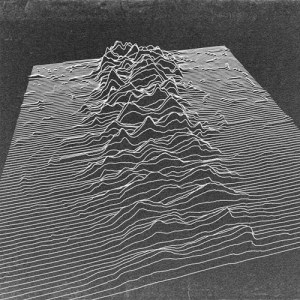
Despite Curtis’s short lifetime, his voice continues to be amplified throughout popular culture. These extended echoes of his voice have participated in shaping its meanings and myth. In his book Joy Division’s Unknown Pleasures, Chris Ott writes that Joy Division’s music “defied imitation” (xiii); however, imitation (and citation) have fueled public memory of the band and augmented the myth of Ian Curtis. By the time Joy Division’s two LPs were re-released by Rhino in 2007, several contemporary bands–The Killers, Editors, Interpol and She Wants Revenge–built music careers that are openly indebted to this Manchester sound but distinct from its socio-historical context. Public memory of the group has been interpreted through uses of their music in the 1980s-set period pieces like Donnie Darko (Richard Kelly 2001) and Netflix’s Stranger Things (2016). The contemporary circulation of Joy Division’s music has extended to films that resurrect Curtis himself.
To start, 24 Hour Party People self-consciously stages an inquiry into Ian Curtis’s meanings and his contemporary resonance as part of the post-punk scene writ large. Chronicling the ‘70s-‘80s Manchester music scene through Tony Wilson (Steve Coogan), the attention-seeking TV personality and unlikely underground music patron who formed Factory Records, the film fits several tenets of Thompson’s definition of punk cinema in its “engage[ment] with history” and “critique [of] its own commodification” (64). A tongue-in-cheek historical guide, Wilson narrates via a fourth-wall-breaking blend of mythmaking, footnotes, and commentary that reflects upon the film’s historiography as he articulates it, and in so doing overtly selects myth over “truth,” stating, “When you have to choose between truth and the legend, print the legend” (itself a quote dubiously credited to John Ford). The film’s self-conscious performance of history extends to its musical numbers, where Winterbottom liberally blends imitation with the genuine article through a mix of archival and staged footage, thus overtly staging encounters with key moments in Manchester musical history. The film’s play with historiography does not go so far as to trouble its reinforcement of a canonical timeline.
It is in this spirit that 24 Hour Party People brings actor Sean Harris’s portrayal of Ian Curtis to life. In re-creating Joy Division’s performance of “Digital” at the Hacienda Club, Harris invokes Curtis’s jittery-mechanical dance style while his “voice” remains Curtis’s. Additionally, the film mixes ambient crowd noises with a band of actors performing in synch to the song’s studio recording. 24 Hour Party People not only preserves Curtis’s voice as an inimitable icon of this history, but places the studio recording of “Digital” as the authoritative version of the song within the nascent period of the Manchester scene, thus mapping this studio recording onto the band’s live sound (rather than implementing an existing live recording). Curtis’s voice is reproduced only through the most valuable, resonant historical record of it–the recorded commodity.
The retrospective framing implied by this choice speaks to the film’s greater approach to Ian Curtis as a figure best understood (or perhaps inevitably shrouded) via his posthumous legacy, and thus foregrounds Curtis’s transformation into myth. Due to the timing of his passing, there exists a relatively limited media archive of the actual Curtis compared to other late-20th century rock singers of similar influence. Beyond official performances on television, music video, and records, scant recordings of Curtis performing and speaking are available via silent 8mm home movies and archival audio interviews. Thus, 24 Hour Party People cannot resort to the historical record(ing) in all instances, and thus Harris’s voice proves central to interpreting Curtis off-stage. In recalling Joy Division’s notorious first encounter with Wilson, 24 Hour Party People portrays Curtis as intimidatingly sure-footed, confronting Wilson through quick, direct speech and locked eyes. Harris conveys the actorly qualities that so often typecast him in villain roles. Further complicating Curtis’s public image, Coogan’s Wilson provides a counter-narrative of the singer following his suicide, asserting to the audience that Curtis was not exactly the “dark and depressive…prophet of urban decay and alienation” that his music suggested, and recounts a rousing collective rendition of “Louie Louie” with the band to prove his point. The only instance in which Harris’s actual voice is used as Curtis’s singing voice, this cacophonous chorus depicts a Curtis participating in a deliriously muddled punk sound. Yet even this counter-narrative does not challenge the mythmaking of Ian Curtis, for it reinforces Curtis’s suicide as central to his meaning and value as a musician.
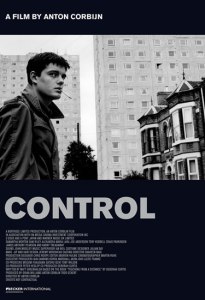
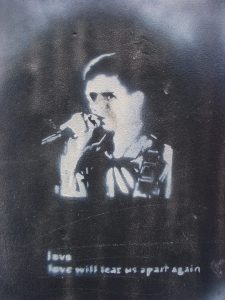
Music biopics have long bolstered definitive interpretations of a popular performer’s biography. In contrast to 24 Hour Party People’s self-conscious approach to mythmaking, Control is adapted from Deborah Curtis’s autobiography and directed by a former Joy Division photographer. Control’s most conventional choices as a rock biopic are the narrative associations the film makes between events in Curtis’s life and his songwriting, connecting Curtis’s music directly to his troubled marriage and the distress caused by his epilepsy. Control juxtaposes Curtis’s interior life with his production of music, cutting to the recording of “She’s Lost Control” after he learns that a client in his unemployment office has died of epilepsy, and featuring a performance of “Love Will Tear Us Apart” following a scene in which he tells his wife (Samantha Morton) that he no longer loves her. Control thus connects the singer’s authorial voice to the film’s narrative voice, arguing that the sounds Ian Curtis left behind are legible remnants of his biography. In so doing, the film deterministically situates his life through the framework of his death, his music serving a seemingly inevitable path to his suicide and thus transformation into musical myth (staged at the end with a crane shot rising up to the Manchester skyline during “Atmosphere,” indicating a ubiquitous echo of Curtis that has transcended the corporeal).

The film’s voicing of Curtis is articulated through Sam Riley’s performance, not through archival audio of the singer. As with 24 Hour Party People, Corbijn initially planned to have Riley and the supporting actors mimic their performances. However, during preproduction the band of actors rehearsed together until they were confident enough to play live shows for Joy Division fans. This convinced Corbijn to utilize them as a sort-of legitimate cover band for the purposes of embodying Joy Division’s history. Riley’s voice is notably higher than Curtis’s and is thus distinctive enough that it resonates comfortably alongside the numerous bands of this century whose leads “sound like” Curtis. Indeed, the resonance of Curtis throughout contemporary alternative rock may have helped make Riley more palatable as an authorized substitute for Corbijn and Joy Division fans. Such homage through imitation is reinforced by Control’s end credits, which features The Killers’ cover of “Shadowplay.” Both of these invocations of Curtis locate his value in his contemporary influence, not his historic place, an approach evident in Control’s less overt interest in post-punk’s socio-cultural context than 24 Hour Party People.
Control is uninterested in recreating the details of Joy Division’s history with exacting verisimilitude, forgoing the archive for a resonant aura of the band’s history. This approach is evident in Corbijn’s visual decisions – shooting the film in black-and-white memorializes the band through the stark photography with which Corbijn captured them – as well as his musical ones. In Control’s depiction of the band’s breakthrough performance on Tony Wilson’s (here played by Craig Parkinson) Granada Television program So It Goes, for example, Corbijn’s Joy Division perform the enduringly popular “Transmission” rather than “Shadowplay,” the song they actually played. Joy Division’s breakthrough television moment was further recast through “Transmission” in a fan-made Playmobil animation that curiously combines introductory audio of Parkinson’s Wilson from Control with Joy Division’s 1979 performance of “Transmission” on BBC2’s Something Else. Control not only situates Curtis’s singing voice coherently within authorial and narrative legibility, but also reflects and participates in contemporary popular memorialization of Joy Division regardless of the historical accuracy of such choices.
Pamela Robertson Wojcik argues that the human voice and its mediation through recording technologies is an important but overlooked component of cinematic performance. It is also vital to consider how famous voices travel and gain meaning through processes of imitation and citation–tropes of authenticity which pervade the musical biopic. While 24 Hour Party People and Control avoid many clichés of the musical biopic, narrative cinematic imperatives of legibility, coherence, and individual-centered storytelling motivate each film to participate in the production of rock star myth despite efforts at historical critique in the former or the austere style of the latter. Even in punk, rock star death is the most compelling biographical framework. The punk voice has long held a discordant relationships to cinematic norms, and these two films demonstrate how the translation of punk sound into cinematic soundscapes presents the inherent problem of recounting punk’s history.
–
Featured image “scream” by be.refreshed @Flickr CC BY-NC-ND.
–
Landon Palmer is a PhD Candidate studying Film and Media in the Department of Communication and Culture at Indiana University and recently defended a dissertation on the cross-industrial history of casting rock stars on film titled “Rock Cinema: A Transmedia History, 1956-1986.” He has published on popular music and moving image media culture in Music, Sound, and the Moving Image, iaspm@journal: Journal of the International Association for the Study of Popular Music, and Celebrity Studies.
–

REWIND! . . .If you liked this post, you may also dig:
G.L.O.S.S., Hardcore, and the Righteous White Voice – Chris Chien
If La Llorona Was a Punk Rocker: Detonguing The Off-Key Caos and Screams of Alice Bag – Marlen Ríos-Hernández
Riot-Grrrl, Punk and the Tyranny of Technique – Tamra Lucid
Share this:

Riot Grrrl, Punk and the Tyranny of Technique

DOI: https://doi.org/10.59350/n5c86-2q829
For full intro and part one of the series click here. For part two, click here.
Our Punk Sound series implicitly argues that sound studies methodologies are better suited to understanding how punk works sonically than existing journalistic and academic conversations about musical genre, chord progressions, and/or genealogies of bands. Alexandra Vasquez’s sound-oriented work on Cuban music, for example, in Listening in Detail (2014) opens up necessary conversations about the “flashes, moments, sounds” in music that bear its meanings and its colonial, raced, classed, and gendered histories in material ways people can hear and feel. While retaining the specificity of Vasquez’s argument and the specific sonic archive bringing it forth, we too insist on “an ethical and intellectual obligation to the question: what do the musicians sound like” (12) and how do folks identifying with and through these musical sounds hear them?
In this series, we invite you to amplify varied historicized “details” of punk sound–its chunk-chunk-chunk skapunk riffs, screams, growls, group chants, driving rhythms, honking saxophones–hearing/feeling/touching these sounds in richly varied locations, times, places, and perspectives: as a pulsing bead of condensation dripping down the wall of The Smell in Downtown LA (#savethesmell), a drummer making her own time on tour, a drunk sitting too near the amp at a backyard party, a queer teenager in their bedroom being yelled at to “turn it down” and “act like a lady[or a man]”. . .and on and on. Today’s essay is by Tamra Lucid. Here, Tamra offers her thoughts on how both technique and expression reinforce a gendered understanding of music. When punk sound plays with extremes, how can artists who feel trapped by these polemics resist?
SOUND!
–Aaron SO! (Sounding Out!) + Jenny SO! (Sounding Out!)
—
“Don’t touch that!” a virtuoso guitarist had once told me when as a kid I reached for his guitar. The same phrase would later be delivered by a punk guitarist at a gig where I offered to replace a string broken during his performance. As noted in the book Girls Rock , women are often told not to touch these sacred instruments (18). I remember thinking that guitar was as complex as a car engine and as dangerous as a circular saw. Technique and theory are meant to liberate musicians (so that their dexterity can follow wherever imagination and inspiration may lead), but when experiencing gender discrimination from instructors and fellow instrumentalists, technique and theory can seem antagonistic. In this essay I show how the elite and virtuoso focus on technique and theory has catalyzed punk musicians to cultivate the raw, expressive, qualities of punk sound. Yet, paradoxically, I point out how movements toward a raw and visceral sound constitute a cage of their own, alienating an equally radical and virtuoso community of women in the punk scene. How do these sonic contours in the 1990s riot grrrl scene tell a story about injustice and community building through sound?
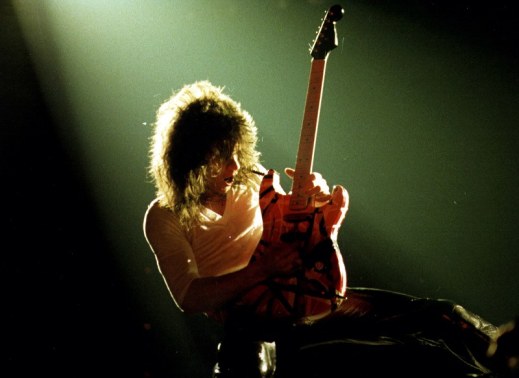
Theory and technique become a cage when they are used by sexist cliques, such as the heavy metal scene, which sought to maintain hegemony over local scenes and resources. For the gatekeepers, there are many benefits to this form of discrimination–women are encouraged to act as doting fans rather than joining bands. As a teenager I saw many young women told by male musicians that their only permissible roles were those of sex object or fan. Early in my musical career when I put out an ad searching for band mates some male musicians would call just to laugh at me.
In the late 1980s and early 1990s when canons of punk tone and composition ironically became defined by an athletics-like dedication to speed, precision and endurance, riot grrrl bands were criticized for their primitive skills. However, by removing the barriers to self-expression that this emphasis on technique and theory created, many people, not only female or female identified, were empowered to create music similar to performance art. As Liam S. Ruin of the Columbia, South Carolina hardcore band Shirley Temple of Doom (1993-1996) said in an interview I conducted with them for this essay: “I still think emphasis on technique is gross and ableist and boring and obvious.”
In this time of sonic reform, some scenes came to prize sincerity over skill. Here, a new canon of theory and technique evolved–another cage. Some related to the riot grrrl scene found themselves accepted by their community while receiving praise for abandoning a commitment to simplicity. For example Associated Newspapers News North West previewed a gig by Sleater Kinney in Manchester, UK by describing them as “too musically competent to be a Riot Grrrl band.” Likewise, the female hardcore bands Girl Jesus and Free Verse (though politically aligned with riot grrrl) found little support in a scene that viewed them as a threat. It was as if the language of technique and theory was the language of oppressors, and using it implied submission to the status quo. The directness of purpose which had liberated so many artists, became a new kind of cage for others.
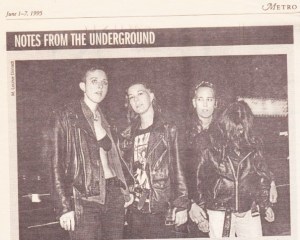
As a roadie for Girl Jesus, I witnessed the immediate dismissal (including groans of disappointment) they suffered when confronting male bands at gigs many times. Despite these jeers I also saw the way their ferocious music and performance, anchored by guitarist Gina Rush’s use of middle eastern scales, Shell Davina’s unique and unusual drumming style, and Grit Maldonado’s flamenco-like bass lines, reduced many male bands to discouraged silence and listless performances. I remember thinking that riot grrrl, or what was left of it in 1993, would welcome such a powerful example of female creativity. The feeling of competence I felt as Girl Jesus approached each gig with confidence in their music and technology helped me to reinvent myself, encouraging me to graduate quickly from roadie to musician.
Gina Rush carefully chose her amps and had them modded by an expert. Shell used a vintage drum-kit that would make any collector drool. But these distinctions were rejected by the riot grrrl audience who found them elitist and classist. Though Girl Jesus was a band of working class lesbians they were treated the same way as male bands in the scene. As Shell reported in an article entitled “Queercore: Ready to Face the Market” by Brent Atwood in the May 6, 1995 issue of Billboard Magazine: “As a female band, we expected a strong network of women in music to stick together. Instead we found a lot of competition.” She also pointed out: “We’ve had more club owners be sexist to us than homophobic.” Despite their embrace of technology and technique, two domains that code as masculine, Girl Jesus nurtured into existence two of the more popular riot grrrl bands in mid-90’s Los Angeles, Patsy and my own band Lucid Nation, which began by rehearsing in Girl Jesus’s garage using their equipment. The name of Girl Jesus’s first cassette demo succinctly captured the problem: “Afraid of Our Own.”
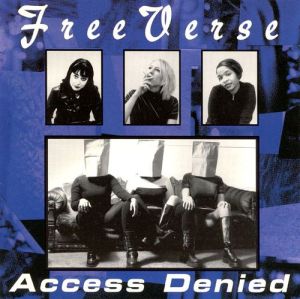
A similar trajectory was found by the all female hardcore band Free Verse, whose first record “Access Denied” was released by the indie label Brain Floss Records. Free Verse began in Lawrence, Kansas in 1995 and in 1998 relocated to Seattle. Lucid Nation toured nationally with Free Verse in the summer of 1998. The experience was similar to what I observed as a roadie for Girl Jesus. Male bands who looked down upon female musicians with disdain were stunned by their display of skill and ferocity. However, when we played in Olympia, Washington, the riot grrrl community cowered against the back wall, clearly uncomfortable. On the road we smiled ruefully over the irony of masculinist male bands becoming fans while female fans who shared our politics turned their backs. This created a conundrum for Free Verse. Although they were able to deliver a feminist message to scenes and individuals who were hostile to feminism, they could not enjoy the community of like minded women who identified as riot grrrl.
Over time, Free Verse earned enough respect that they were able to open for leading bands from a variety of scenes. From Hardcore bands like The Blood Brothers to indie stars like Sleater Kinney. From queer core bands like The Need and The Butchies to riot grrrl supergroup The Cold Cold Hearts. Though Free Verse were chosen to participate in the Northwest Coalition For Human Dignity’s anti-racism tour October 2002, a tour sponsored by Ms. magazine and featured in ROCKRGRL magazine, the band was never able to achieve the following or recognition of the bands they shared bills with, information about them is hard to find on the internet today.
Liam S. Ruin, now one of the guiding lights of the new Riot Grrrl Intersectional movement, provides a more intimate look at how the pressures of technique and theory influenced Shirley Temple of Doom: “Not really any RG [riot grrrl] activity in Columbia SC. Um, Slant 6 played there once. Our scene was extremely nuclear. We played with our friend’s bands, The Trema, Erector Set, Guyana Punch Line. We were pretty much all in each other’s bands or dating each other or whatever. Making it up as we went along. Jessica saw me in the halls at school wearing a Pearl Jam shirt and told me ‘you’re way too cool to be listening to shitty bands.’ She made me a mix cd that was mostly D.C. Emo and Hardcore but it had Bratmobile, Bikini Kill and L7, too. Then she lent me her bass. I practiced with Joy Division and Heavens To Betsy covers till I could play along. We started a band with her boyfriend. Half of our band were really into Straight Edge H/C and the other half were into Huggy Bear, Fugazi, NOU, etc.”
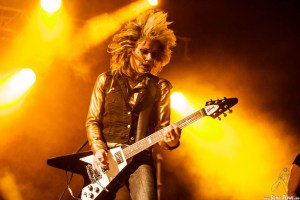
Shirley Temple of Doom, despite reflecting a riot grrrl like platform in their lyrics received little attention from the riot grrrl community. Eventually the band collapsed due to internal tensions regarding technique–as if the rhetoric of extremes around technique and expression had become an expertly baited, misogynist trap. As Liam informed me: “The guys in the band were very technical and pushed me to play more technical bass lines but honestly, I get bored with proficiency. I’ve heard what guitars are supposed to sound like. I wanna hear what they’re not supposed to sound like. We split because of ideological differences. I got really into visceral bass-feels and wanted to sound like a disaster, and they wanted to be on Victory Records.”
How did the cage of technique and expression, evolve in a style of music that advanced freedom as its guiding praxis? Early on, rock musicians were considered unskilled when compared to classical, jazz and country musicians. Later, virtuosity became central to rock music as bands like Yes, Led Zeppelin, and Pink Floyd, sought radical sounds to accommodate an aesthetic cultivated by Cannabis and LSD. As What’s That Sound? An Introduction to Rock and It’s History puts it: “Rock musicians now had a responsibility to create sophisticated music using whatever means were available.” Soon after this turn to virtuosity, guitarists like Eddie Van Halen became the Paganinis of their time, displaying jaw-dropping finger speed and impressive knowledge of scales and musical theory.
Later, punk rock crashed the party. First in the hands of the MC5 and The Stooges, and then the New York Dolls, The Ramones, the Sex Pistols and many other bands, rock music turned again towards primitive and cathartic sincerity. Musical virtuosity was literally spit upon. The Ramones famously told The Clash that they needn’t worry about improving their musicianship before playing live because “as you’ll see tonight, we suck.” Ferocity replaced dexterity. Nihilistic and cathartic lyrics displaced idealistic flights of fancy. Punk quickly developed its own criteria to indicate mastery of the genre. Bands like Fugazi and F.Y.P. typified a performance style that required frenetic motion while preserving the lockstep rhythm and hand speed, if not the musical knowledge and experimentation, of the earlier virtuosos. Then riot grrrl arrived, freeing a generation of punk women who were uncomfortable with the athletic performance style of these bands. For example, one of L.A.’s favorite riot grrrl bands Crown for Athena would perform at times with one member of the band sitting on the stage singing while clinging to the pant leg of another who stood immobile and emotionless. Frenetic performance and blazing chord speed was no longer a requirement for legitimacy on the punk stage.
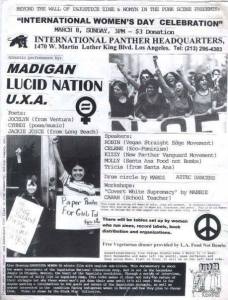
Riot grrrl liberated me from the odious trial of confronting sexist music teachers, store clerks, booking agents, and record companies. I learned from the movement that I could get by with simple barre chords. I could use cheap and borrowed gear and I didn’t have to worry about great tone. One of the bands I admired, Foxfire, a band of female high school students from Los Angeles, used an oven pan instead of a snare drum. Riot grrrl bands emphasized community by booking shows with each other and with activist groups like Food Not Bombs. We made our own labels to distribute each other’s records. When Lucid Nation opened for Bikini Kill at Terraza Jamay in Montebello, Kathleen Hanna took tickets at the door.
As my musical skills developed I found myself feeling restricted by the aesthetics of riot grrrl. Beginning with Lucid Nation’s DNA record (2000) we began exploring cliches of what we called “butt rock,” now more popularly known as classic rock. While we attempted to master the techniques of classic rock our intent was to deconstruct them by introducing unexpected twists of sound (like chaotic analog synth and noise pedals) and lyrics containing feminist perspectives. At this point, we had moved on to other scenes, for example, the melange of Peace Punks, Black Panthers, and riot grrrls at Koo’s Cafe in Santa Ana, CA. We played hemp rallies and non-riot grrrl political events like fundraisers for Big Mountain and other Native American causes.
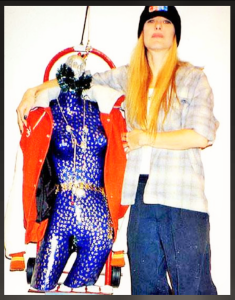
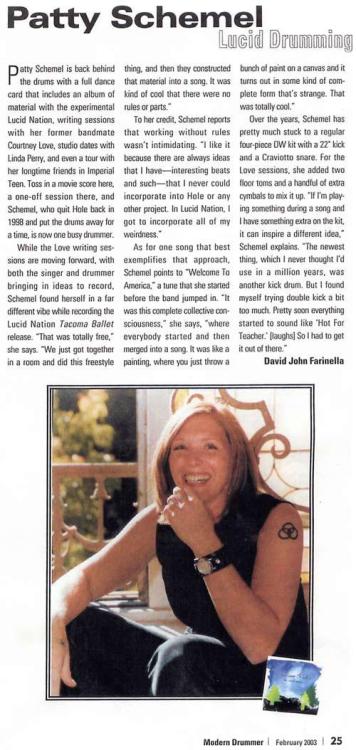
Eventually I developed a fascination with improvisation inspired by freestyle rap and augmented by the writing of Gertrude Stein and the recordings of Jack Kerouac. By the time our most successful album was released, the improvised Tacoma Ballet (2002), I prized musicianship and encouraged experienced collaborators, like Patty Schemel of Hole on drums and Greta Brinkman of Moby’s live band on bass, to bring to bear the breadth and depth of their musical knowledge. I was delighted that Rick King of Guitar Maniacs in Tacoma allowed us to use his highly valuable collectible gear such as a 1967 Gibson Flying V and an array of legendary vintage pedals when we recorded the album. I was proud when Patty said in an interview about Tacoma Ballet: “…there are always ideas that I have–interesting beats and such–that I could never incorporate into Hole or any other project. In Lucid Nation I got to incorporate all my weirdness.” Though Tacoma Ballet made it to #1 on the New Music Weekly Chart of College and Secondary Market Radio Stations in December 2002 it received very little attention in riot grrrl circles. I found myself silenced again, not by advocates of technique, but by a community who valued raw expression.
Of course, in 2002 riot grrrl was less popular than it had been a decade before–it mostly consisted of isolated zine writers and bands. Still, those who remained in the scene ignored Tacoma Ballet despite its success. When I asked them why, they explained that although they admired our work and the songs spoke to their experience, our band just wasn’t riot grrrl. I was told that the skills and awareness of musical history displayed on the record were too self conscious, that I had become ambitious, or as more than one zine writer said, I had sold out. Since I made no money on that record despite the attention it got, and we couldn’t tour behind it since the music was improvised, I found it hard to understand how such a purely artistic lark could be viewed as selling out. I didn’t sell out, my increased respect for theory and technique just felt wrong when viewed from the perspective of the riot grrrl canon.

While new music hardware and software have helped level the field in ways that were not possible in the 90’s, the cage of expression and technique continues to govern a new world of highly individuated scenes. EDM continues to fetishize the drop. Live performers need no longer be concerned about vocal pitch or knowledge of vocal harmony. Hardware like the Digitech VLFX, available on Amazon for under $200, corrects pitch and provides easy and automatic harmony vocals. In this device, music’s ability to create unexpectedly cathartic experiences has been diminished, while the simple mimicry of technique has been elevated.
Perhaps new regimes of data are to blame. Specific canons of theory and technique function as points of data that help define marketing audiences. After all, bands often succeed by conforming to the sonic norms of their given scene. For this reason, there is a tension between conservation and innovation. An artist must conserve as much of their scene’s identity as possible while finding subtle ways to innovate. Today, anyone can share their music on the internet regardless of traditional criteria. Despite this, a desire for acceptance and success continues to pressure musicians into accepting limitations to their creativity like technique and expression.
–
Cover image is of Tamra Lucid and by TheInfinite314 @Wikimedia Commons CC BY-SA.
—
Tamra Lucid is an executive producer of Viva Cuba Libre: Rap is War the award winning documentary about Cuban hip hop legends Los Aldeanos, a producer of Edward James Olmos Presents Exile Nation: The Plastic People, and associate producer of The Gits documentary. Writing from her riot grrrl zines was reprinted in A Girl’s Guide To Taking Over The World: The Zine Revolution by Karen Green and Tristan Taormino,and in Hilary Carlip and Francesca Lia Block’s Zine Scene. Tamra blogs for Exterminating Angel Press and for Reality Sandwich where her most recent project has been a series of interviews with water protectors and filmmakers at Standing Rock. She’s a founding member and primary singer of Lucid Nation.
–
REWIND! . . .If you liked this post, you may also dig:
Listening to Punk’s Spirit in its Pre-, Proto- and Post- Formations – Yetta Howard
Feeling Through the Keen and Grind: Team Dresch’s Personal Best – Gretchen Jude
SO! Amplifies: Indie Preserves – Norie Guthrie and Scott Carlson
—
Share this:




Current Top Posts





April 2021

January 2020

November 2019

October 2019

August 2019

April 2014

November 2017

March 2015

December 2017

October 2015


Recent Comments