
Malcolm Gladwell’s Bad Aesthetics

DOI: https://doi.org/10.59350/zqrah-qv489
Malcolm Gladwell, who recently wrapped the first season of his podcast Revisionist History, has been on a roll lately. Not a particularly endearing one, though. I’ve been trying to locate his nadir, but it’s not easy with so many options to choose from. Is it in the New Yorker, when he condescendingly exclaims “Of course not!” in response to whether Caster Semenya should be allowed to compete in the 800-meter at the Olympics? He follows up with the assertion that no track-and-field fan disagrees with him, as if the complexity of gender identification is somehow best left to a majority appeal. Or is it in Revisionist History’s Episode 9, “Generous Orthodoxy,” when he chides Princeton students protesting the use of Woodrow Wilson’s name around campus? Calling one student “angry”—a loaded word to lob at a black woman—and surmising she would later “regret her choice of words,” Gladwell advises the students to instead threaten to leave the university if their requests aren’t honored. Why? Because otherwise “every crotchety old Princeton alum” wouldn’t believe they actually care about the university.

For those keeping score, that’s Gladwell, who spent an entire other episode of his podcast lamenting that we don’t “capitalize” people’s educational potential well enough, counseling black students to separate themselves from an Ivy League education as a way to make a point about a pro-segregationist president. Gladwell’s seventh episode, “Hallelujah,” where he discusses musical genius, is not obviously about the kind of systemic inequalities he bumbles in the Semenya and Princeton examples. But the conclusions he draws about genius and the anti-pop aesthetic judgments he claims are informed by the same bad gender and race politics that would put a person’s gender identification in other people’s hands and place the burden of sacrifice on the aggrieved in matters of racial injustice.
The episode “Hallelujah” revolves around two songs that Gladwell argues reached their peak of genius years after they were initially recorded: “Deportees Club” (1984) by Elvis Costello and “Hallelujah” (1984) by Leonard Cohen. In each case, Gladwell asserts that the first recordings were flawed but that they attained a certain beauty in later versions that reveals something about how genius works, though each attained that genius status by different routes. While Costello is responsible for the version of “Deportees Club” that Gladwell loves—he re-recorded it as “Deportee” in 1985 (it wouldn’t be released until 1995 on a re-issue of Goodbye, Cruel World)—“Hallelujah” would peak for Gladwell in a series of covers, most famously by Jeff Buckley (1994), performed by artists other than Cohen. Gladwell’s focus on the process by which a song reaches genius status is a riff on David Galenson’s Old Masters and Young Geniuses theory. Here, Costello and the litany of “Hallelujah” coverers display a process of genius called “experimental innovation,” where the first draft is never the final draft, and genius is only unlocked after years of work. I’ll return to Gladwell’s notion of musical beauty and how it relates to his bad politics momentarily, but I first want to unpack the theory of genius that enthralls him in this episode.

Galenson’s notion of genius is a binary, where some geniuses (“conceptual innovators”) are very young, decisive artists and others, like the “experimental innovators” responsible for “Deportee” and “Hallelujah,” are endless tinkerers who tend to reach their creative potential later in life. Gladwell uses the same paradigmatic examples that Galenson does to categorize geniuses; conceptual innovators are Pablo Picasso, while experimental innovators are Paul Cézanne. Curiously, Gladwell notes that this theory of genius may be best exemplified in music, but he doesn’t seem aware that music scholars have already laid out this same broad theory of genius with easy comps: Mozart the young genius and Beethoven the old master. Moreover, Gladwell doesn’t seem aware that this is a lousy theory of genius.
I’ve written elsewhere about genius myths, and there’s a rabbit hole of problematic ideas out there about classical music genius that run from benignly self-serving to violently racist. One critique is particularly useful for pushing back against Gladwell, as it highlights the gender and race problems with Gladwell’s approach to genius. Tia DeNora’s Beethoven and the Construction of Genius (1994) is a painstaking deconstruction of Beethoven’s genius. While DeNora’s argument includes a number of moving parts, it can be summarized as a demonstration of the way “genius” isn’t so much innate talent as it is a combination of several social and political ideals intersecting with a person’s talents or insights.
It was the 90s, when postmodernity crested in musicology, and the aim of DeNora’s analysis is quintessentially postmodern: undo the Great White Man myth to make room for other kinds of histories and notions of genius to be accommodated. If we understand Beethoven’s genius to be firmly rooted in a number of social and political attitudes—including the reflexive belief that only a white man could be a genius—that tipped in his favor, then we can understand that history isn’t telling us that only men or only white people can be geniuses; rather, history is showing its biases. This sort of deconstruction doesn’t really move the academic needle now—most college freshmen can articulate the Great White Man critique—largely due to the work of DeNora and other deconstructionists who effectively cleared the space for us to build other kinds of scholarship on top of their work.

Alas, though, the 90s truly must be all the rage right now, because Gladwell is wading right back into Great White Man territory. To be clear, he isn’t doing it on purpose, for whatever that’s worth. In Episode 9, the one where he counsels the black Princeton students to threaten to leave the school, he performs a whole Great White Man rant to establish his credibility as A Guy Who Gets It. But beyond understanding that there are too many things named after white men, Gladwell doesn’t indicate that he knows what the rub really is, that the name on a building or School is a tiny piece of a much bigger, systemic problem of race and gender. Perhaps unsurprisingly, then, his ideas about musical genius betray his own tendency to set up hierarchies where Great White Men are always on top. So excuse me while I pump some air in my Reeboks, hitch up my Guess jeans, and douse myself in CK1; we have some 90s theory to attend to.
Gladwell doesn’t—and perhaps can’t—articulate what’s genius about the versions of “Deportee” and “Hallelujah” he reveres, and his assessment of the originals is similarly vague. About 1984’s “Deportees Club,” he exclaims, “Oh, god, It’s awful!” For Cohen’s 1984 “Hallelujah,” Gladwell borrows a line from Michael Barthel, who could’ve just as well been describing Gladwell’s podcast: “The entire performance is so hyperserious that it’s almost satire.” [Historiographic aside: Barthel, who is now a researcher for the Pew Research Center, seems to be the under-cited source for the “Hallelujah” history in both Gladwell’s podcast and Alan Light’s book on the song]. Gladwell may suffer a poverty of aesthetic language to describe what is or isn’t good about these songs, but by considering what he does and doesn’t like—what counts as genius or not for him—we can understand where his aesthetic allegiances lie.

Gladwell finds beauty in music whose emotional content is as stripped down as the acoustic guitar textures on the later recordings of “Deportee” and “Hallelujah.” The line he quotes from Barthel misses the point: Barthel likes the satirical nature of the original “Hallelujah” and finds the famous Buckley version—which becomes something of an ürtext for all the covers that came after it—an unfortunate telescoping of emotional range, a “Hallelujah” that only knows lament instead of the many “holy, broken, profane, transcendent” hallelujahs Cohen first explored. But all those hallelujahs, along with the “angry, loud, and upsetting” original “Deportees Club,” don’t seem to suit Gladwell, who prefers versions of the songs where both the emotional and musical content are as straightforward as possible.

That Gladwell is drawn to the versions of Buckley’s “Hallelujah” and Costello’s later “Deportee” that feature an acoustic singer-songwriter coffeehouse vibe isn’t a coincidence. The villain in his account of genius is pop. Noting that both songs were initially recorded in 1984, he reminds us that year’s “biggest album” was Michael Jackson’s “Thriller,” “pop music glossed to perfection…not a single stray note or emotion on that record.” “Thriller” was the final single from an album two years old, and it peaked at #4 on the Billboard Hot 100, so Gladwell’s definition of “biggest album” is suspect, but he’s looking for “the antithesis of ‘Deportee’ and ‘Hallelujah,’” so I’ll engage on his terms and zero in on his aesthetics by figuring out what he thinks is wrong with pop music like “Thriller.”
Gladwell offers a couple other assessments of pop aesthetics in his description of producers. Clive Langer and Alan Winstanley, who co-produced the Goodbye, Cruel World album “Deporteees Club” appeared on, are the ill-fitting pop perfectionists who try to harness Costello’s sound but only manage to screw it up. Trevor Horn is the guy spending four weeks—“a month,” Gladwell bemoans—shaping a snare sound for Frankie Goes to Hollywood’s “Two Tribes” (1983). Whether it’s Langer and Winstanley, Horn, or Quincy Jones (who Gladwell doesn’t name but who produced “Thriller”), Gladwell has no space for the behind-the-glass work of sound design and sonic processing in his aesthetics of genius. He argues, citing Costello’s own assessment, that glossy pop perfection couldn’t capture the “dark, emotional, bitter songs, gritty and spare,” pouring out of Costello. For Gladwell, pop music production is the villain because it short circuits the true, raw emotion that he finds beautiful.
The problem with Gladwell’s aesthetics is that he’s mistaking his taste for genius, then reverse-manufacturing an explanation of genius that privileges a specifically white masculine mode of expression. “Glossy pop perfection,” in his estimation, covers up something beautiful, obscuring real emotion. But directly sharing one’s emotions—whether musically or politically—is more acceptable for some than for others. We need look no further than Gladwell for proof. If you’re Elvis Costello or Jeff Buckley singing laments? You’re a genius. If you’re a black woman protesting Woodrow Wilson at Princeton? You’re “angry.”

In fact, the danger of directly expressing oneself underlies a wide array of black aeshetics, from Gates’s Signifying Monkey to Shana Redmond’s analysis of Janelle Monae’s “Cold War.” Redmond cites Darlene Clark Hines’s “Rape and the Inner Lives of Black Women in the Middle West” to highlight Monae’s engagement with “the acts of dissemblance that have long characterized black women’s participation in the public sphere” (398). Hines argues that Black women developed “a cult of secrecy, a culture of dissemblance” to protect themselves in public spaces, “creating the appearance of disclosure…while actually remaining an enigma” (Hines 915). It is Monae’s rupture of pop conventions—she breaks down and cries, dropping her lip synch even as the track plays on—that, on the one hand, creates the space for her to step outside of that culture of dissemblance and, on the other hand, marks the cover those pop conventions provide, the strategic, protective secrecy available under so much glossy pop perfection. In his 2002 “Feenin,’” Alexander Weheliye homes in on glossy pop voice-processing, the vocoders and filters (and, several years after his article, AutoTune) that render the R&B voice machinic, and contends that these processing techniques yield human desire that “can be represented only in the guise of the machinic” (39, emphasis mine). In other words, the gloss isn’t a bad thing. It’s a strategy that plugs technology into humanity in order to project ways of being beyond the white liberal humanist subject. In both Redmond’s and Weheliye’s analyses, the sound of pop, the glossy perfection that Gladwell holds up as the antithesis of genius, is employed by Black musicians to enable emotionality in a world that is otherwise hostile to such expression.
Gladwell’s bad aesthetics, his refusal to recognize beauty in pop music, is also bad politics. By holding up an aesthetic that prizes stripped-down, straightforward emotionality, a form of expression available to some but not others, Gladwell ends up in the same Great White Man genius bind DeNora and others unraveled in the postmodern 90s. So I’ll sum it up with a 90s phrase: genius is always already political. Denora argues—and Gladwell inadvertently demonstrates—that labeling artists as genius relies on politically volatile aesthetic judgments that reinforce existing power hierarchies, in this case along the lines of race and gender. Like his response to Princeton students and his armchair adjudication of Semenya’s gender identity, Gladwell’s theory of musical genius proves to be less a revision of history and more a revival of history’s worst politics.
—
Featured image: “Malcolm Gladwell” by Flickr user Ed Schipul, CC BY-SA 2.0
—
Justin D Burton is Assistant Professor of Music at Rider University, and a regular writer at Sounding Out!. His research revolves around critical race and gender theory in hip hop and pop, and his current book project is called Posthuman Pop. He is co-editor with Ali Colleen Neff of the Journal of Popular Music Studies 27:4, “Sounding Global Southernness,” and with Jason Lee Oakes of the Oxford Handbook of Hip Hop Music Studies (2017). You can catch him atjustindburton.com and on Twitter @justindburton. His favorite rapper is Right Said Fred.
—

REWIND! . . .If you liked this post, you may also dig:
Pop’s Chill Thrills Aren’t So Cheap-Robin James
Trap Irony: Where Aesthetics Become Politics-Justin D. Burton
This is What It Sounds Like . . . . . . . . On Prince (1958-2016) and Interpretive Freedom-Ben Tausig
—
Share this:

SO! Reads: Roshanak Khesti’s Modernity’s Ear


DOI: https://doi.org/10.59350/meeyh-w9351
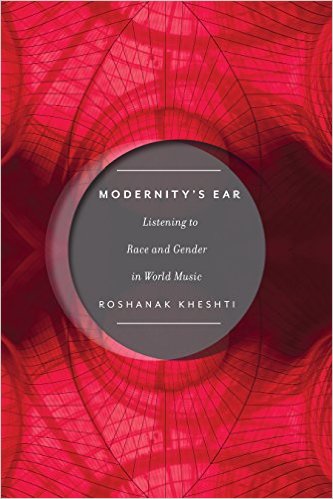
“I drifted to another place and time,” reminisces drummer and musicologist Mickey Hart in his 2003 book about salvaging indigenous musical traditions, Songcatchers: In Search of the World’s Music. He continues, “Every day I rushed home, put on the sounds of the Pygmies [on the old RCA Victrola], and melted into their very being.” For the Grateful Dead drummer and world music producer, this experience of disorientation would eventually shape his transformation into a “songcatcher,” or one who seeks to preserve the intangible cultural heritage of indigenous music. In Modernity’s Ear: Race and Gender in World Music, author Roshanak Kheshti interrogates the “origin myth” presented by Hart, along with other collective fantasies and historical narratives that urge listening to world music. She argues that we must look beyond the political and economic exploitation of actual musicians to consider the economy of desire in which the conditions of possibility for such exploitation are formed. In contrast to a critical discourse on musical appropriation and exploitation among ethnomusicologists, one that Martin Stokes acknowledges is “marked by an anxious awareness of complexity and complicity” with world music (835), Kheshti deftly tunes into racialized and gendered yearnings for the recorded sounds of others.
Sounds in bodies
Crucial to Kheshti’s argument is her radical proposition for what occurs as, to briefly return to Hart’s aural memories, the sounds of others “melt” into our “very being.” In a crucial maneuver that focuses on how what is being heard is shaped by the embodied experience of listening, Kheshti proposes that “the object [of listening] becomes a part of the self by being taken into the body” (41). Thus when “sound, the listener’s body, escape, and affect fold into one another” (54-56) in the act of listening (a Derrida-derived encounter that Kheshti dubs “invagination”), selfhood is performatively constituted through the aural other. Moreover, the pleasure of imagining the other through listening, writes Kheshti, is not only the hegemonic form of listening within the world music industry but an experience of desire that Western media markets have historically capitalized upon.

Given the ways in which listening embodies an economy of desire, Kheshti tells the history of this libidinal economy through a narrative in which modern selfhood is constructed through the racialized and gendered aural other. The Godzilla in this narrative is the World Music Culture Industry (WMCI), an entity conjured by Kheshti in reference to the historical juncture of comparative musicologists in the early twentieth century with the popular music recording industry, a coupling that she argues spawned the globalized product of modern media known as world music. As a set of hybrid musical practices designed by and large for Western media markets, world music is the key object of her inquiry (in contrast to the diversity of musical practices worldwide).
The imagined listener

Though the book does not proceed chronologically, the first chapter seeks to interweave memory with history by opening with the early twentieth century. Stressing the pioneering role of white female sound archivists, this chapter is crucial for setting up the historical significance of the feminization of listening, a process familiar to readers of Jonathan Sterne, Louise Michele Newman, and William Howland Kenney. Kheshti puts Songcatcher (2000), a feature film about a fictional comparative musicologist who dives into Appalachian country and “discovers” Scottish and Irish ballads thought to have gone extinct, into conversation with the iconic images of Frances Densmore, an ethnologist affiliated with the Bureau of American Ethnology in the 1910s, who famously staged phonographic recordings of the Blackfoot chief, Mountain Chief (Nin-Na-Stoko). The point of convergence between these materials is the gendered and racialized politics of who was sent where to record whose sounds: white female sound archivists, spurned by their male colleagues and sent to the periphery of their respective fields to practice their craft. Once in the field, these comparative musicologists, one fictional and one real, committed acts of racial appropriation and erasure. The song catcher deracinates Appalachia by stripping the region of its Native American and African-American histories in favor of the ‘collective origin fantasy’ that links European and American genealogies, while Densmore, among others, domesticates indigenous sounds in her work for the Bureau.
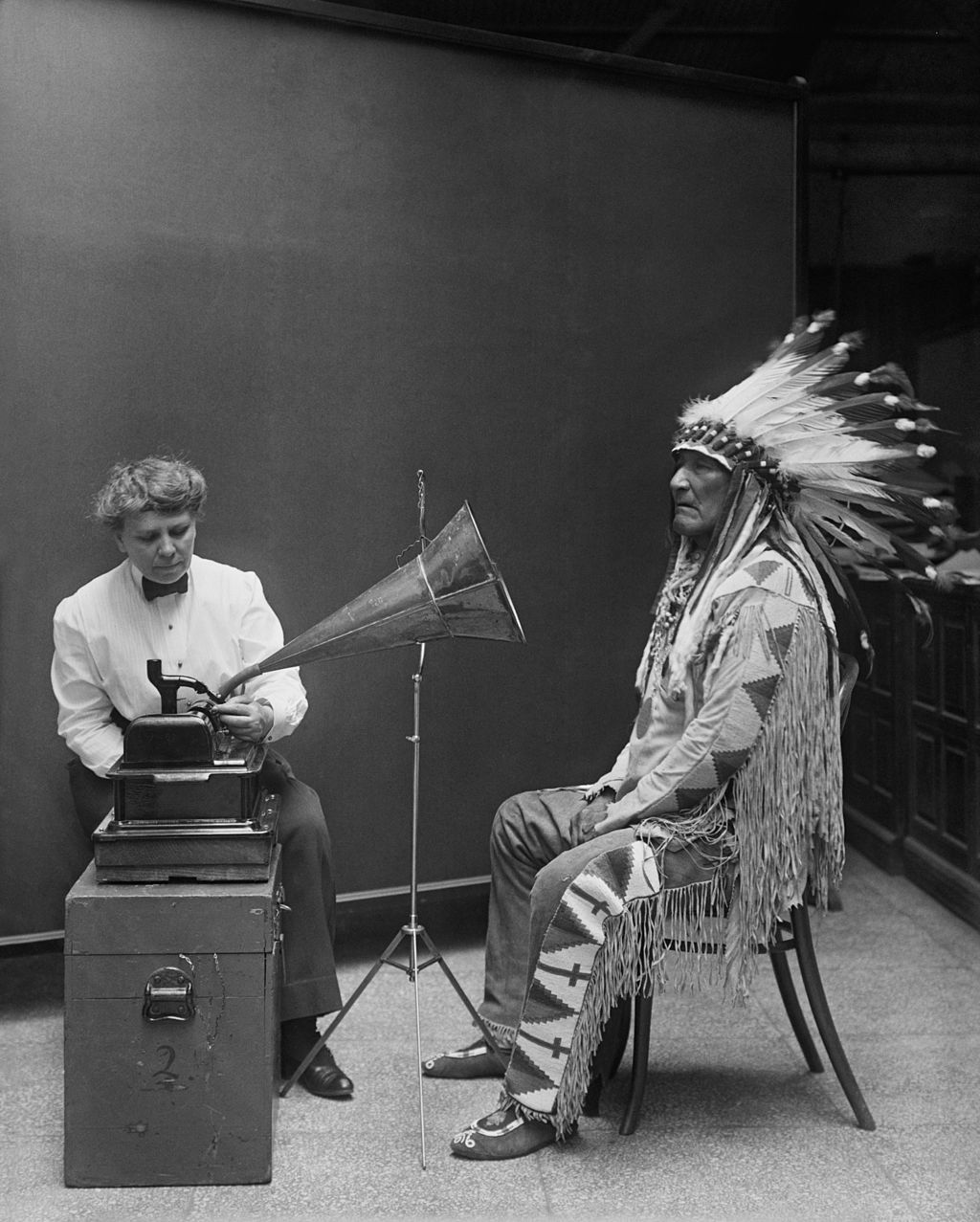
The very presence of these upwardly mobile women in the sonic-social worlds that they listen to leaves a trace on their phonographic recordings. These aural traces, Kheshti contends, mark the processes of settler colonialism and salvage ethnography by which indigenous bodies are subjected and made subject through phonographic recording techniques (what she calls ‘phonographic subjectivity’), and in particularly gendered and racialized ways. Kheshti traces the performative effects of these aural traces on contemporary world music in her fieldwork with a Bay area world music label in the early 2000s. In particular, she reveals that the target listener for contemporary world music is white and female, and, that this fact is an apparent truism among music executives, or at least the executive who she worked for. This revelation is the cornerstone for Kheshti’s unfolding of the aurality of this figure, the white female listener of contemporary world music.
Though the book tends to favor intensive re-readings of critical and psychoanalytic theory (from Adorno and Benjamin to Freud and Lacan) over thick ethnographic description, Kheshti touches upon key encounters in this culture industry to explain how listening to world music engenders modernity’s ear. For instance, she transcribes segments from a radio show in Northern California in which the host, a middle-aged white female, discusses what constitutes “African rhythms” with a record label executive. The two banter about this misnomered subject for some length. The host interprets what she is hearing as “African rhythms coming through.” Her visitor, an expert in world music, affirms and clarifies this attribution: “Yeah, absolutely. The rhythm on this particular song… is from a style of music called Afro-beat… that rhythm you’re hearing is definitely African, so, you don’t know nothing, you’re learning” (52). Kheshti interprets this banter as an example of how world music listeners “cherish” the experience of listening to sonic difference as a moment to live out “fantasy and imaginative play” (54), in other words, that the pleasures experienced through aurality have become definitive of twentieth-century modernity.

In other chapters, she details how record labels fulfill this fantasy through the production of hybrid sound media. The orchestration of these sounds in the studio not only enables the listener to feel “lost” and transcend the contingencies of the listening event, they also “pronounce and suppress presences and absences of all sorts of bodies and grains” (77). Drawing on phenomenological descriptions of her own listening experiences as well as liner notes and other commercial media, she describes how non-Western sounds are encoded as feminine, whereas the synthetic production and digital manipulation of sounds are rendered techno-logically modern and masculine. Racialized and feminized bodies are put to work in constituting the modern cosmopolitan listener. Furthermore, Kheshti argues that market mobility and aesthetic mobility are gendered male and alterity is gendered female in ways that link, for her, to miscegenation. The listening self reproduces dominant forms of heteronormativity in the consumption of modern sound media.
The listening self reproduces dominant forms of heteronormativity in the consumption of modern sound media.
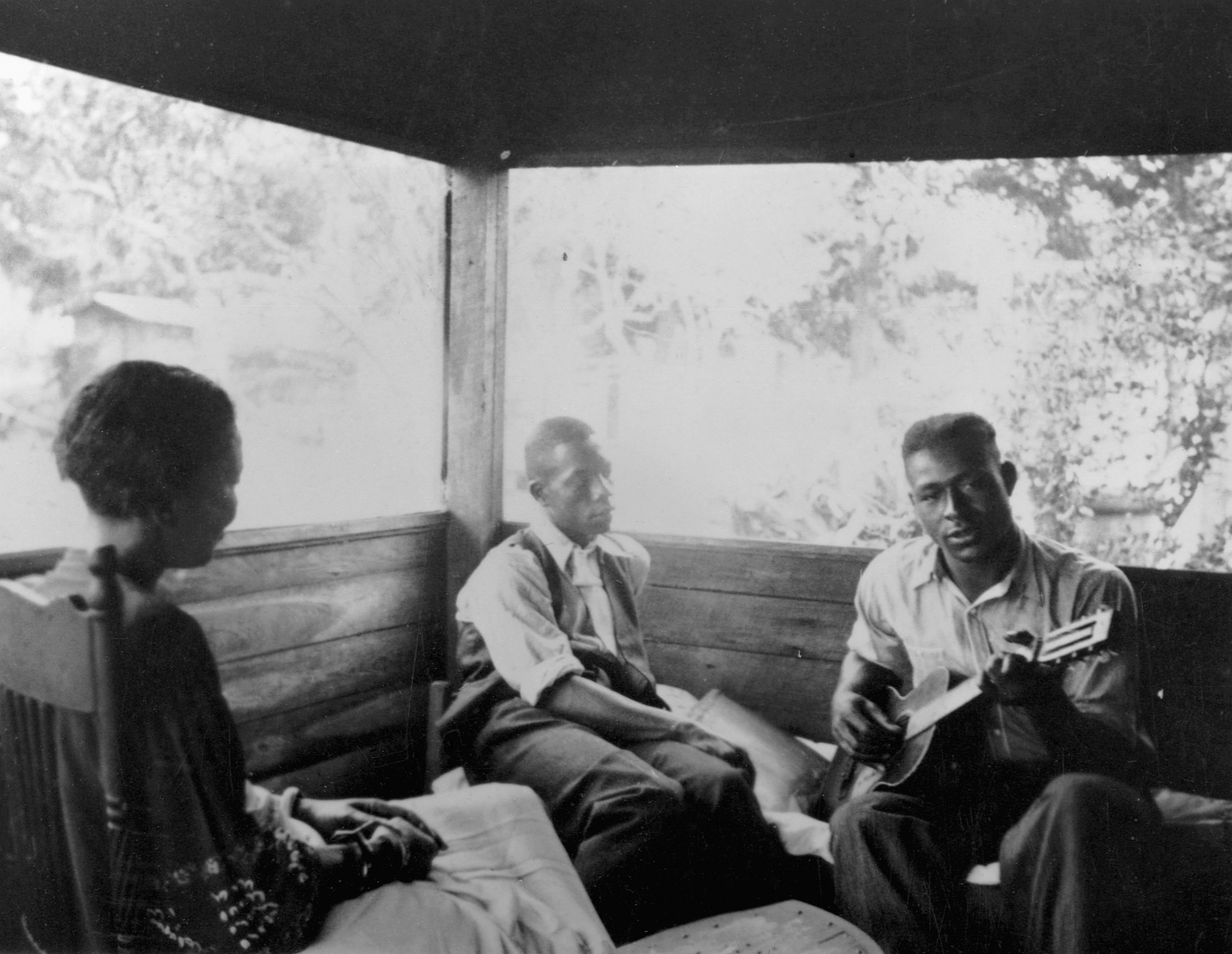
Kheshti offers a radical alternative to these normative listening practices by turning to field recordings taken by Zora Neale Hurston between 1933 and 1939. Trained by Franz Boas in the traditions of nascent cultural anthropology, Hurston is kin to Densmore and those who worked for the Bureau of American Ethnology a few decades earlier. Like them, she goes to record America’s aural others, or “black folk.” But unlike her white foremothers, Hurston does not attempt to splice out the “noise” of the recordings. She “refuses fidelity” (126). Instead of staging field recordings, she made studio recordings of herself performing songs and discussing rituals. When recording her interlocutors, she interrupts, interjects, and poses directorial cues that Kheshti reads as an attempt to resist the desire to faithfully (re)produce an archive of phonographic subjects.
Recommended for advanced graduate students and faculty, this virtuosic and tightly rehearsed tour through critical and psychoanalytic theory offers an ambitious and groundbreaking retake on an industry that we thought we understood, perhaps too intimately. Kheshti asks her readers to hold themselves accountable to their own forms of aural pleasure. In so doing, she offers a fresh perspective on the role of embodiment in relation to knowledge production. Rather than embracing somatic methods of inquiry as a welcome challenge to inductive reasoning, she argues that taking pleasure in listening enables the commodification of desire that sustains the world music culture industry.
Kheshti shifts the discussion of world music qua music (aesthetics, history, representation) towards issues of alterity and sound. As such, this book contributes to sound studies by holding the field accountable for difference, and, by inscribing this accountability within the history of the field itself. Indeed, Modernity’s Ear is about how the forces of desire that constitute the modern listening self are enveloped in the aural other as phonographic subject.
—
Featured image: “ear” by Flickr user Leo Reynolds, CC-BY-NC-SA 2.0
—
Shayna Silverstein is an assistant professor of Performance Studies at Northwestern University. Her research generally examines the performative processes of politics, culture, and society in relation to sound and movement in the contemporary Middle East. Her current book project examines the performance tradition of Syrian dabke as a means for the strategic contestation of social class, postcolonial difference, and gender dynamics in contemporary Syria. She has contributed to peer-reviewed journals and several anthologies including The Arab Avant-Garde: Music, Politics, and Modernity, Islam and Popular Culture, the Sublime Frequencies Companion, and Syria: From Reform to Revolt. Previously a Mellon Postdoctoral Fellow in the Penn Humanities Forum, Shayna received her PhD in Ethnomusicology from the University of Chicago and her BA in History from Yale University.
—
REWIND!…If you liked this post, you may also dig:
SO! Reads: Daniela Cascella’s F.M.R.L. (Finding Materials for Remembering and Listening) — Kyle D. Stedman
Lokananta: Sounds of Crisis and Recovery from Indonesia’s National Record Company — Ian Coss
Saving Sound, Sounding Black, Voicing America: John Lomax and the Creation of the “American Voice” — Toniesha L. Taylor
—
Share this:




Current Top Posts





April 2021

January 2020

November 2019

October 2019

August 2019

April 2014

November 2017

March 2015

December 2017

October 2015


Recent Comments