
From Kitschy to Classy: Reviving the TR-808

DOI: https://doi.org/10.59350/xjd8n-4ka70
Before Roland’s new TR-8 Rhythm Performer, a contemporary drum machine, was unveiled this year, the company released a series of promotional videos in which the machine’s designers sought out the original schematics and behavior of its predecessor the TR-808, an iconic analog drum machine from the early 1980s. The TR-808 holds cultural cache–most recently due to its use by Outkast, Baauer, and Kanye West–that Roland is interested in exploiting for the Rhythm Performer. The video features engineers closely examining the TR-808’s sound with an oscilloscope, trying to glean every last detail of the original’s personality.

Things were not always this way. Upon its initial release, the TR-808 was widely dismissed. Because it did not sound like “normal” acoustic drums, many established musicians questioned its utility and many ultimately disregarded it. However, its “cheap” circuit-produced sounds became bargain-bin treasures for emerging artists. Since its sounds now play such a large part in the landscape of electronic music, this essay takes a historical perspective on the TR-808 Rhythm Composer’s use and circulation. By analyzing how Juan Atkins and Marvin Gaye used the TR-808 in the early 1980s, I show how the TR-808 created a sonic space for drum machines in popular music.
Drum machines, though commonplace today, were once seen as kitschy tools for broke amateur musicians. As audio engineer Mitchell Sigman explains, the 808’s low, subsonic kick drum and “tick” snare characterized a departure from the realistic, sampled drum sounds produced by high-end drum machines in the early 1980s. The 808 uses analog oscillators and white noise generators to make sounds resembling the components of a drum set (kick, snare, hi-hats, etc.) And, although these sounds are now commonplace, most contemporary artists use them precisely because they sound robotic, not because they sound like drums. Even though the 808 at first seemed a failed imitation of “real” drums, the comparatively low cost of the 808, which originally retailed around $1,195, attracted musicians who were unable to afford other similar machines such as the LinnDrum that retailed at more than twice that price. Roland advertised the machine as a “studio” for musicians on a budget and even as they began to disinvest from the 808–as testified by the company’s decision to invest in marketing and research for other products–the 808’s so-called noises began their movement into mainstream American popular culture. In Detroit, electronic musician Juan Atkins, now known as one of the innovators of Detroit Techno, began experimenting with the machine’s sonic capabilities as early as 1981, while other artists such as Afrika Bambaataa were also using it in the Bronx by 1982.

A landmark year for the 808, 1982 saw the release of Juan Atkins’ “Clear” and Marvin Gaye’s “Sexual Healing,” tracks that illuminate the key features each musician realized in the 808. For Atkins, the machine was something he felt could embody his early career; Atkins’ use of the 808 represented a pivotal moment in the American musical landscape, in which the futurism of the sound of synthesizers echoed other segments of the nation’s sonic imagination. Gaye’s use of the 808 was a clear departure from his body of Motown work. Although the instrument enabled different sorts of experimentation for the two, the new sorts of sounds the machine produced allowed them both to explore new possibilities for musical meaning. Just as Trevor Pinch and Frank Trocco argue in Analog Days that analog synthesizers required validation by musicians such as Geoff Downes and Keith Emerson a decade before, the 808 broke into the mainstream through artistic experimentation.
Juan Atkins
In the early ‘80s, Juan Atkins was learning all he could about electronic music. As an able musician and the son of a concert promoter, Atkins was poised to couple his musical knowledge with a new breed of electronic musical instruments such as the 808. Together with a tightly knit group from Detroit, Atkins succeeded in promoting techno from a subculture to part of a global dance music scene. According to Atkins, the popularity of Detroit Techno came from its adoption in European urban centers like London and Berlin, which lent the music additional meaning stateside. In an interview with Dollop UK, Atkins emphasizes that the 808 was central to this musical development, as he calls the 808 (among other machines) “the foundation[s] of electronic dance music.”

Under the moniker of Cybotron, Atkins released the song “Clear” in 1982. “Clear”’s proto-techno soundscape pushes the 808 to the front of his mix, and provides the track’s backbone. The solid, resonant kick, swishy open high hat, and the piercing snare are decidedly machinic, departing from most rhythmic trends in popular music to date, since, as music scholar John Mowitt points out, a sense of “human feeling” comes hand-in-hand with drumming.
Atkins embraced these machine sounds and considered the 808 his “secret weapon.” Its ability to be programmed, manipulated, and warped on the fly lent it a very particular kind of performance and music making that Atkins exploited. Rather than rely on the breaks that DJs could find on records, the 808 allowed Atkins to create beats to his own liking, placing kick, snare, and hi-hat hits where he found them to be most effective. Because of this flexibility, the kitsch of the 808’s sounds empowered the difference between his music and other artists’ creations. The breaks Atkins produced on the 808, for example, were obviously impossible to find on vinyl.

As Bleep43, an online EDM collective, notes, Atkins’ vision for electronic music would eventually pick up in London, where he relocated in the late eighties. Although Detroit Techno had achieved regional success in the US, record sales and performance dates in London signaled techno had found a larger audience abroad. Although Atkins considers himself an eclectically “Detroit” artist, he recognizes the impact of his work globally, and thinks of the modern Berlin flavor of minimal techno as a notably clever offshoot.
Marvin Gaye
Marvin Gaye’s struggle with depression, drug use and relationship issues were the context for the subtle and understated 808 rhythmic backing he used in “Sexual Healing.” Gaye’s use of the 808 in “Sexual Healing” differs vastly from Watkins’ in “Clear,” operating as a tool of texture and punctuation from the noticeable timbric changes to the clever placement of handclaps and clave in the composition. While Gaye recovered from his personal crises in Belgium, Colombia Records sent him an 808 because it was more portable than a studio drummer. It also offered sonic capabilities new and exciting to Gaye’s seasoned ears.

The drum machine’s prevalence in “Sexual Healing” shows how culturally marginal sounds move into mainstream musical culture. Gaye and his producers, already squarely in the center of popular American music, experimented with the sound of the 808 not in an attempt to break through, but rather to exercise musical flexibility. Since he was already an extremely successful pop artist, Gaye’s use of the 808 marks him as a sonic risk-taker and innovator, weaving the machine sounds of the 808 seamlessly but noticeably into R and B.
The machine’s normally powerful snare is invoked only at the quietest of velocities, often being replaced by the now iconic handclap. Unlike many contexts in which the 808 is heard such as “Clear” and Afrika Bambaataa’s “Planet Rock,” “Sexual Healing“ manages to keep everything low key. Matching the lyrics that espouse peace, harmony, and sense of internal struggle (Whenever blue tear drops are falling/And my emotional stability is leaving me/Honey I know you’ll be there to relieve me/The love you give to me will free me), Gaye uses the 808 to evoke a surprisingly contemplative and serene atmosphere. It is this use that best shows the machine’s strange versatility, as both a harbinger of radically innovative musical genres and its ability to produce tranquil rhythmic textures for popular music.
Transformation

Although Atkins and Gaye’s work exemplify the TR-808’s early adoption, a long road toward mainstream popularity remained because of Roger Linn’s more “realistic” sampled drums sounds included in his high-end machines. The LM-1 and its successors (famous for hit singles like Billy Idol’s “White Wedding”, Hall and Oate’s “Maneater,” and Don Henley’s “Dirty Laundry”) made sampled drums the gold standard of computerized rhythmic backing. In fact, Roland’s next drum machine, the TR-909, implemented samples alongside synthesis. As a result, 808s couldn’t be given away until musical innovators gave its sounds gravitas (Sigman, 2011, 46).
The 808’s shift from sonically trashy and undesirable to ostensibly hip signifies a culturally important moment within the history of music technology. As shown in the examples above, subtle moments of economic, emotional, and geographic necessity seeded the popular music industry for the eventual 808 boom today. When techno eventually broke through to global popularity, the 808 was so fundamental to the canon of the genre that it has managed to retain a place of fundamental sonic importance for musicians and producers.
—
11:40, 6/11/14: This essay was re-edited for clarity, grammar, and flow by Jennifer Stoever.
—
Ian Dunham is a musician and music scholar originally from northeast Ohio. He earned a B.S. from Middle Tennessee State University in the Recording Industry within the College of Mass Communications, and then worked as a recording engineer in Nashville and Germany. Afterward, he earned an M.M. in Ethnomusicology from the University of Texas at Austin, where he also operated a home recording studio. He will start a PhD in Media Studies at Rutgers in the fall, where he will pursue research related to music and copyright.
—
Featured image: “1980 Roland TR-808” by Flickr user Joseph Holmes, CC BY-NC-ND 2.0
—

REWIND!…If you liked this post, you may also dig:
“Into the Woods: A Brief History of Wood Paneling on Synthesizers*”-Tara Rodgers
“The Blue Notes of Sampling”-Primus Luta
“Revising the Future of Music Technology”-Aaron Trammell
—
Share this:

Sound at SEM 2013

DOI: https://doi.org/10.59350/df9m9-4m631
November 14th through 17th mark the 58th anniversary of the Society of Ethnomusicology’s (SEM) annual meeting, this year at the Indianapolis Marriott Downtown in Indianapolis, Indiana. SEM has some pretty big Sound Studies shoes to fill at this summit. Previous events, like the 2012 AMS/SEM/SMT “Megaconference,” featured a pre-conference symposium on ecomusicology, while the 2011 SEM/CORD conference encouraged the use of sound as an “epistemological filter” and invited ruminations on embodied sound(s). After two epic years of sound at SEM this year’s program seems oddly muted. There are far less sound studies panels and events and no organized soundwalks as of yet (Although there is a paper on soundwalks! And stay tuned, as there’s been buzz on the Sound Studies SIG forum).
Some of the sound-specific themes that emerged in previous years will continue to be explored in Indianapolis. There will be a familiar panel on listening as configured both as an epistemology and a mode of musical participation as well as some panels (see “Raising Voices, Reclaiming Spaces” and “Nature, Ecotourism, and Soundscape”) which consider space and the environment through a sonic lens. In particular, sound in urban environments will receive some special attention in the Sound Studies Special Interest Group-sponsored panel “Auto Sound in the Urban Space: Taipei, São Paulo, Bangkok.” Finally, voice is theorized through a panel on voice and embodiment and the pre-conference symposium on Music and the Global Health.
Since the conference is smaller and there is no explicit theme (such as SEM 2010’s hyper-sonic “sound ecologies”) the discipline might seem to be only marginally engaged with Sound Studies scholarship this year. Perhaps Sound Studies scholarship has simply grown more integrated, or “more diffuse and multivalent,” as a fledgling field. As thinking through sound becomes more common in the methodological toolbox of the ethnomusicologist and as ethnomusicologists begin to acknowledge what sound studies can offer the discipline, sound studies no longer must exist in a vacuum. To this point, a soundscape composition by Shumaila Hemani will be played during the R.L. Stevenson Prize Concert on Friday. If that’s not enough, the newly-launched Sound Matters: the SEM blog reflects a movement to attenuate distinctions between sound and music. So while there may be fewer papers on sound, this is a good thing at the conference for music scholarship. After all, ethnomusicologists have been concerned with sound since Merriam’s tripartite sound-behavior-concept model and we aren’t stopping anytime soon.
—
Please comment to let SO! know what you think–both before and after SEM 2013. If we somehow missed you or your panel in this round up, please let us know!: soundingoutblog@gmail.com
—
Yun Emily Wang is a PhD student in Ethnomusicology at the University of Toronto, where her project explores how people living in diaspora make meaning through listening to sounds of music, speech, and everyday life.
Jump to THURSDAY, November 14
Jump to FRIDAY, November 15
Jump to SATURDAY, November 16
Jump to SUNDAY, November 17
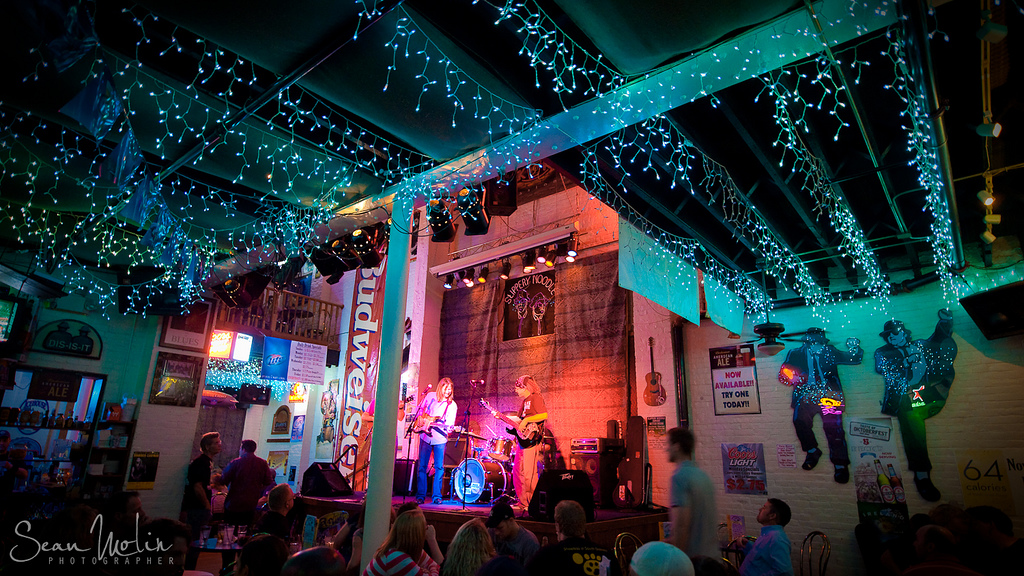
Thursday, November 14
8:30-10:30
IC Music, Emotion and Trance, Indiana Ballroom A-B
Chair: Ruth Stone, Indiana University
“Axé, Vibration, and Religious Work: Conceptualizing Musical Contributions to Batuque and Umbanda Religions in Southern Brazil ,” Marc Gidal, Ramapo College of New Jersey
“Mhongo’s Moving Meanings: Semiotics, Spirituality, and the Emotional”
“Possibilities of Ndau Drumming of Zimbabwe,” Tony Perman, Grinnell College
“Tears, Anger, and Their Dangers: Investigating the Emotional Effects of Sung Poetry in the Gojjam Highlands of Ethiopia,” Katell Morand, University of Washington
“Crying Is Good for You”: Affective Heart Responses to Vocal Expressions of Sadness and Grief ,” Margarita Mazo, Ohio State University
.
1F Urban Sound Studies, Santa Fe
Chair: Ricardo Trimillos, University of Hawai‛i at Mānoa
“Singaporean Hinduism: Tamil Drumming, Ethics and Labor in the Air-Conditioned Nation,” Jim Sykes, University of Pennsylvania
“Sound Stories: SOUNDWALK and the Urban Fantasy,” Catherine Provenzano, New York University
“Resilient Sounds, Changing Atmospheres: A Sonic Exploration of the Urban Transformation of the Mouraria Quarter in Lisbon (Portugal),” Inigo Sanchez, Faculdade de Ciências Sociais e Humanas, Universidade Nova de Lisboa
“Nonstop to La Raza: Music and Mass Transit in Mexico City,” León. F. García Corona, University of California, Los Angeles
.
10:45-12:00
2J Listening, Marriott Ballroom 4
Chair: Jennifer Kyker, Eastman School of Music
“Using Big Data to Examine the Effect of Environment on Listening Habits,” Daniel Shanahan, Ohio State University
“The Promise of Listening: Sound Knowledge among Sufi Muslims in Secular France,” Deborah Kapchan, New York University
“Leisure and Listening in São Paulo’s Aural Public Sphere: The Case of the SESC-SP,” Daniel Gough, University of Chicago
.
12:30-1:30
Sound Studies SIG Indiana Ballroom C-D
,
1:45-3:45
Ecomusicology Listening Room: Ecocriticism, Popular Music, and the Audiovisual, 3F Santa Fe Roundtable
Director: Mark Pedelty, University of Minnesota
Chairs: Justin Burton, Rider University,
Michael Baumgartner, Cleveland State University*Sponsored by Popular Music Section
Laurie Allman, Bell Museum of Natural History of Minnesota
Amanda Belantara, independent artist
Krista Dragomer, independent artist
Craig Eley, Penn State University
Jared Fowler, Los Angeles Harbor College
Rebekah Farrugia, Oakland University
Kellie Hay, Oakland University
Ali Colleen Neff, University of North Carolina and The Baay Fall Order of Mouride Sufi Islam
Peter McMurray, Harvard University
Hannah Lewis, Harvard University
.
Experimentalism in Latin America, Indiana Ballroom – F [LIVE VIDEO STREAMING]
Chair: Alejandro Madrid, Cornell University
*Sponsored by Latin American and Caribbean Section
“From Sounds of the Cosmos to Neo-Indigenist Happenings: The Reinvention of Sonido 13, at the End of the 20th Century,” Alejandro Madrid, Cornell University
“Transgressing the Streets of Mexico City: The “Renovative Destruction” of Collective Improvisation,” Ana R Alonso-Minutti, University of New Mexico
“From Tango Nuevo to Avant-Garde: Disenchantment with the Fringes of Music Making,” Eduardo Herrera, Rutgers, The State University of New Jersey
Discussant: Benjamin Piekut, Cornell University
.
4:00 – 5:30
Technologies and Remixes, Indiana Ballroom – F [LIVE VIDEO STREAMING]
Chair: Rene Lysloff, University of California, Riverside
“Where Does this Cable Go?: Guitar Amplifiers, Instrumentality, and Sonic Ecology,” David VanderHamm, University of North Carolina, Chapel Hill
“A Tribe Called Red: Reversing Stereotypes Through Remix,” Christina Giacona, University of Oklahoma
“Remix<->Culture: A “Fair Trade” Approach to Remixing Field Recordings,” Daniel Sharp, Tulane University
.
8:00 – 9:30
Religion, Music, and Sound Section, Marriott Ballroom 4
.
Thursday Individual Papers of Interest
9:00 The Boundaries of Butoh: Sound, Music, and Nation, Kelly Foreman, Wayne State University, 1E Lincoln
11:45 “At Risk Music”: Embedded Nahua Cosmopolitanism, Mexicanness and Soundscapes at El Festival de la Huasteca, Kim Carter Muñoz, University of Washington, 2I
1:45 From Sounds of the Cosmos to Neo-Indigenist Happenings: The Reinvention of Sonido 13 at the End of the 20th Century, Alejandro Madrid, Cornell University, 3A Indiana Ballroom F
Friday, November 15
8:30-10:30
5G Ethical Listening and the Ethics of Listening: Musical Aesthetics, Style, and Public Piety in Contemporary Morocco, Mariott Ballroom 1
Chair: Christopher Witulski, University of Florida
“The Beautiful Voice Will Bring Them Home: Sufi Devotional Music and the Creation of Islamic Subjectivities,” Philip Murphy, Jr., University of California, Santa Barbara
“Jedba for the Nation: Embodied Listening and the Ethics of Politics in Moroccan Hip Hop,” Kendra Salois, University of Maryland
“Ritual and Entertainment: Permeable Ethics and Aesthetics at the Pilgrimage at Sidi Ali Morocco,” Christopher Witulski, University of Florida
Discussant: Philip Schuyler, University of Washington
.
10:45 am – 12:15 pm
SEM President’s Roundtable: “Phenomenological Approaches to Ethnomusicology and the Study of Expressive Culture“, Mariot Ballroom 5
Chair: Harris M. Berger, Texas A&M University [LIVE VIDEO STREAMING]
Deborah Justice, Yale University
Deborah Kapchan, New York University
Matt Rahaim, University of Minnesota
Timothy Rice, University of California, Los Angeles
Ruth Stone, Indiana University
Jeff Todd Titon, Brown University
Deborah Wong, University of California, Riverside
.
1:45-4:00
7C Raising Voices, Reclaiming Spaces: Antinuclear Soundscapes in Contemporary Japan and Korea, Indiana Ballroom G
Chair: Noriko Manabe, Princeton University
*Sponsored by Popular Music Section, Japanese Music Special Interest Group, and Society for Asian Music
“The Spaces We’ll Go: The Evolving Roles of Music in Antinuclear Demonstrations and Concerts in Post-Fukushima Japan,” Noriko Manabe, Princeton University
“Sounding Against Nuclear Power in Post-Tsunami Japan,” Marie Abe, Boston University
“Project Fukushima! Music, Sound, Noise, and the Public Perception of Nuclear Power in Post-3.11 Japan,” David Novak, University of California, Santa Barbara
“Songs of Complaint and Speeches of Protest in a Grassroots Movement of South Korean Radiation Sufferers,” Joshua Pilzer, University of Toronto
.
4:00-5:30
8D Sounding the Homeland, Indiana Ballroom C-D
Chair: R. Anderson Sutton, University of Hawai‛i at Mānoa
“The Sounds of a Dynamic Korea,” Katherine Lee, University of California, Davis
“‘This is the Music of Contemporary China’s Ethnic Unity’: Sounding Configurations of Difference in Postsocialist China,”Adam Kielman, Columbia University
“Sonic Expressions of Home and Returning in the Chinese Diaspora of Toronto,” Yun Emily Wang, University of Toronto
.
8F Auto Sound in the Urban Space: Taipei, São Paulo, Bangkok, 8F Sante Fe
Chair: Leonardo Cardoso, University of Texas at Austin *Sponsored by Sound Studies Special Interest Group
“Sound-politics in São Paulo, Brazil: Youth and “Pancadões,” Leonardo Cardoso, University of Texas at Austin
“Filtered Soundscapes: The Translation of Sound into Urban Noise in Taipei, Taiwan,” Jennifer Chia-Lynn Hsieh, Stanford University
“Audiophilia, Ideology, and the Automobile: Sound Installation Garages in Bangkok,” Benjamin Tausig, New York University
Discussant (and questions/comments), David Novak, University of California, Santa Barbara
.
9:00-11:00
Stevenson Prize Concert with SEM Orchestra
Indiana Ballroom E
Friday Individual Papers of Interest
9:30 “Build Your Own Plague: Biological Modeling, Sound Technologies, and Experimental Musical Instruments,” Lauren Flood, Columbia University
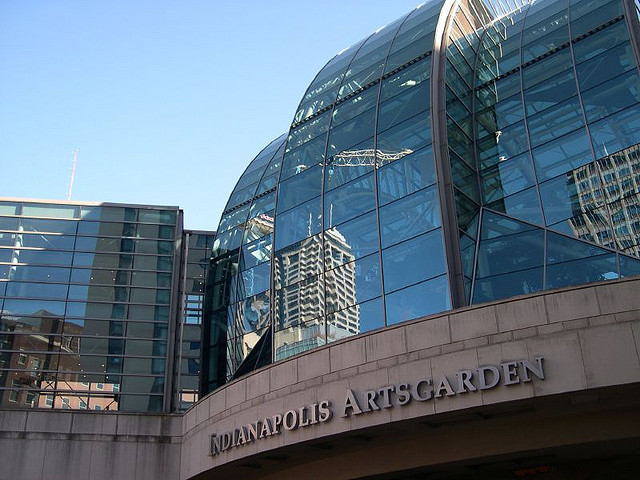
Saturday November 16, 2013
10:45-12:15
10A Indigenous Movement, Sound Activism , Indiana Ballroom F [LIVE VIDEO STREAMING]
Chair: Dylan Robinson, Royal Holloway, University of London *Sponsored by Indigenous Music Special Interest Group
“The Sensory Politics of Hope and Shame: Being Idle No More,” Dylan Robinson, Royal Holloway, University of London
“The Round Dance as Spiritual and Political Vortex,” Elyse Carter Vosen, The College Of St Scholastica
“Ear Cleaning and Throat Clearing: Aurality and Indigenous Activism in Canada,” Lee Veeraraghavan, University of Pennsylvania
.
10C Nature, Ecotourism, and Soundscape
, Indiana Ballroom A-B
Chair: Jennifer Post, University of Western Australia
“Parks as Musical Playgrounds: Co-Performance, Ecotourism, and the Sonic Geographies of National Parks Arts Initiatives,” Kate Galloway, Memorial University
“Thoreau’s Ear,” Jeff Titon, Brown University
“Walking to Tsuglagkhang: Exploring the Function of a Tibetan Soundscape in Northern India,” Danielle Adomaitis, independent scholar
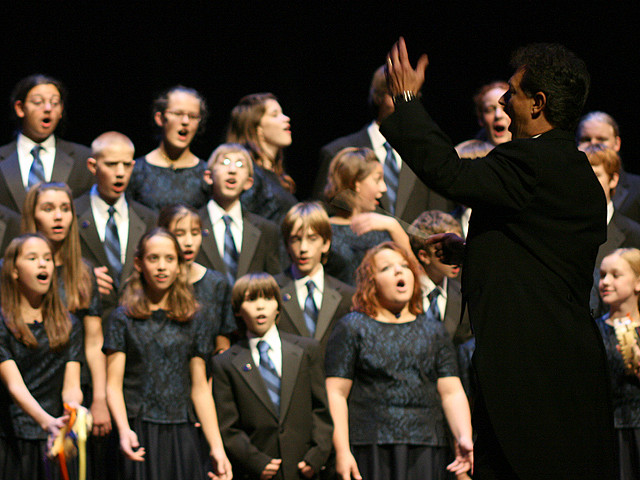
Sunday, November 17
11F Inside Voice/Outside Voice: Disjunctures of Embodiment in Singing , Santa Fe
Chair: Katherine Meizel, Bowling Green State University *Sponsored by Voice Studies Special Interest Group
“Familiar Voices in Unexpected Bodies: New Dimensions of Celebrity Impersonation,” Katherine Meizel, Bowling Green State University
“‘I Shall Get Home Someday’: Black Countertenors, Bio- Musicality, and Gendered Gospel Performance,”Alisha Jones, University of Chicago
“You Need Equal Measures of Extreme Joy and ‘Don’t Fuck With Me’”: An Embodied Approach to the Ethnography of Singing,” Nadia Chana, University of Chicago
“Unspoken yet Heard: Navigating Outsider/Insider Voice Roles in the Study of Turkish Classical Genres,” Eve McPherson, Kent State University at Trumbull
.
11H For More than One Field: Ethnomusicology and Voice Studies , Marriott Ballroom 2
Chair: Gianpaolo Chiriaco, University of Salento *Sponsored by Voice Studies Special Interest Group
Gianpaolo Chiriaco, University of Salento
Amanda Weidman, Bryn Mawr College
Nina Eidsheim, University of California, Los Angeles
Susan Thomas, University of Georgia
—
Featured Image: “Statue outside 5/3 Bank in Indianapolis,” by Flickr User Kay Schlumpf
—
Share this:




Current Top Posts





April 2021

January 2020

November 2019

October 2019

August 2019

April 2014

November 2017

March 2015

December 2017

October 2015


Recent Comments