
Springtime in KC: Soundwalk #2
DOI: https://doi.org/10.59350/egctd-wrw21
Since spring has sprung in Kansas City, I decided to do another soundwalk as my post for the month of April. It seemed timely and appropriate. (And for those of you who have yet to receive the spring in your neighborhood, I hope the sounds of spring in this post will warm you up.)
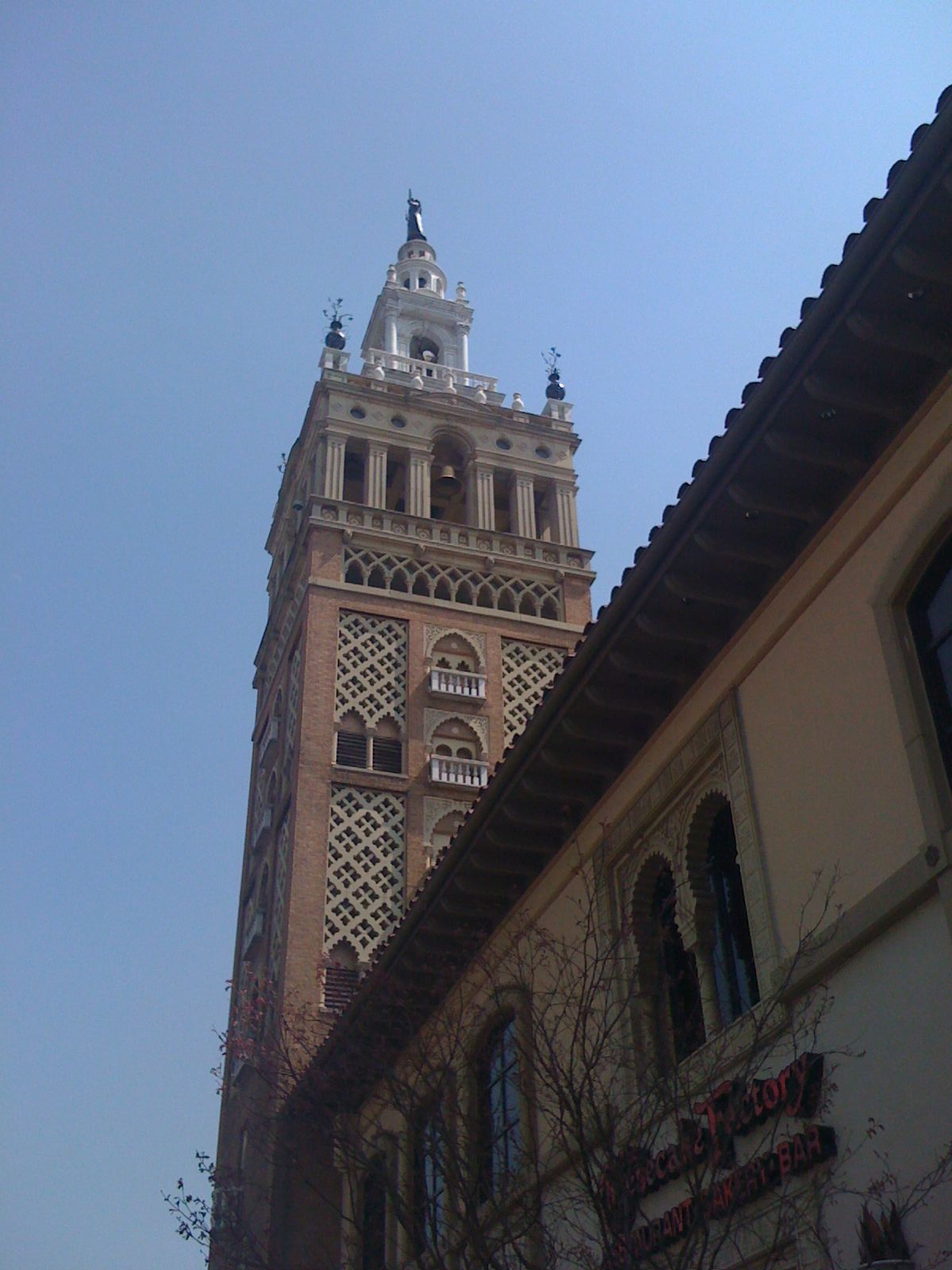
Before I moved to Kansas City, I did not know much about the area. So my past few months in my new home have been full of little discoveries. One of the things I like about Kansas City is walking around the Country Club Plaza area in Midtown KCMO. The Country Club Plaza (or known among residents simply as “The Plaza”) is a shopping district and residential area. Tourists flock there because of the number of shops and outlets along its streets, but it is also a nice place to just take a stroll on a weekend. My boyfriend lived there before Miss E and I relocated to Kansas City, and I have fond memories of being pregnant and walking to the Plaza for gelato while he was at work.
Oftentimes I will go there with my daughter to just walk around and window shop. It is always abuzz with people and sounds. Street performers abound, as do outdoor eateries. Last weekend it was our first warm weekend out here, and I decided it was a shame for Miss E and I to stay indoors. So I packed up our things and drove us to the Plaza.
The Plaza was awash in sounds. Spring brings out not just our shorts and sunglasses, but also sounds. In winter, our doors and windows are closed. When we drive, we don’t open the windows (because it’s too cold to do so). Hence, winter seems to be a quieter season than spring. And although summer is noisy as well (when I think of summer I think of beaches, ballparks and terraces), spring stands out because it is set against winter. Summer is an extension of the sounds of spring. But spring heralds the return of warmer temperatures with a cornucopia of sound, like the sounds of birds that have returned from their winter retreats—or Top 40 music blaring from cars with the windows rolled down.
For this soundwalk I walked along 47 Street, the main thoroughfare of The Plaza.
I started at Summit Street, off of 47th, and made my way to JC Nichols parkway (at the end of 47th, where it turns into Emmanuel Cleaver Blvd). I chose this route because it is the busiest; also, it is the route I usually take when I go on my strolls with my daughter. I used my iPhone to record the sounds on my soundwalk, particularly the Voice Memo app.
Saturday was full of sounds, which is one of the things I enjoy about the Plaza so much. There is so much life on the street. The sounds bring the warmth of the human element that was missing in winter. However, many of the sounds are not necessarily organic, “human”; there were plenty of industrial, “created” sounds. In my recordings you can hear people singing, people talking, my daughter cooing, birds chirping, and the wind blowing. But you can also hear (recorded) bells ringing at the top of the hour, crossing sound-boxes at intersections, music coming from cars, and even the click of my phone’s camera.
I was surprised that this is not what came out on the recordings. In fact, I was disappointed to hear a “click click click” where I heard a smooth “grrrrrrrr” of the wheels of my baby’s stroller. What seemed like a cornucopia of sound comes off as humming, barely audible. (Your best bet to listen to my on-field recordings is to listen to them at full volume or to listen to them with headphones on. When I listened to the recordings a second time, this time with headphones, I grasped a lot of sounds that I didn’t when I simply played the recordings on my laptop.) Initially I was annoyed because I hoped these recordings would render the full spectrum of sounds I encountered, as I encountered them.
It could be that my problem is simply a matter of hardware (my iPhone) or software (my iPhone’s Voice Memo app). Perhaps my smartphone is unsuitable for the task of recording a soundwalk. To a lesser extent, this also makes me think about what hardware or software we use to record soundwalks, and I’d love to hear from our readers who have done these. But this leads me to another question: is accuracy important when recording a soundwalk? Will my recordings ever accurately portray my listening experience, or will there always be something missing? Ultimately, is this ideal recording a figment of my sonic imagination?
All in all, it was a day that was full of sound and commotion. Perhaps you needed to be there to hear it.
Tracks:
4_9_2011 1_26 PM Getting ready to start soundwalk: birds chirping
4_9_2011 1_28 PM Parking garage-as-echo chamber
4_9_2011 1_40 PM Eastbound on 47th Street; keep an ear out for the voice of a man begging for change at 4:55. Street band playing at 5:30. Also, drumline toward last minute of recording.
4_9_2011 2_00 PM Westbound on 47th Street, heading back home; check out the countdown at the crosswalk at 9:40 mark.
Bonus tracks:
4_9_2011 1_50 PM Drumline at JC Nichols fountain
—
Liana Silva
—
Share this:

Can You Hear Me Now?

DOI: https://doi.org/10.59350/zc0jb-kgr76
And Gil-Scott Heron thought the revolution would not be televised.
The past few weeks the world has been watching the protests in Egypt. We have not just watched, but we have also tuned in. This is history in the making, especially considering that many of the information we are getting of this protest movement come from the ground, from the protesters themselves, and their requests have gone viral on Youtube and Twitter.
Earlier this week, I was watching CNN and its coverage of the protesters at Tahrir Square after Mubarak’s statement that he would not step down. On several occasions the broadcasters on CNN asked viewers to listen to protesters. The grainy images of the mobile crowds had been playing in the background all afternoon, a reminder of what was going on while the broadcasters offered information and analysis. But at times the broadcasters stopped speaking so viewers could listen to the crowds. The grainy images emitted a dull roar, the combination of all of the cries and statements from the protesters. The cameras followed people down streets, but the roar was constant. It struck me how often the plea to listen came up during the broadcast. On Friday, when Mubarak resigned, I tuned in online (from work) to CNN, MSNBC, and BBC America. The broadcasters made the same requests: let’s tune in to the crowds at Tahrir Square. See early in this MSNBC video where Brian Williams encourages viewers to listen to the protesters:
The newsmedia seemed to offer the sounds to its viewers, but what is at stake when that happens? How are the sounds being coded? Mark Branter’s post on sound and sanity in the context of the Rally to Restore Sanity (which took place on October 30th 2010), reminds us that oftentimes noise and screaming is connected to “irrationality and fear.” He points out, “Public noise is senseless sound, while rational debate is meaningful sound.” In this context, the constant plea from newscasters for the American public to “listen in” to the crowds at Tahrir Square takes a different spin. Are we insiders looking at the Other scream and shout? When the newscasters ask us to tune in to the pleas and screams coming from the Egyptian crowds I wonder if the newscasts frame them as senseless crowds because of the way that they present these sounds. In any instance, this presentation of sound is not innocent. Some may argue that it is just a request from Western media to pay attention to what the crowds are saying, but I believe that we cannot truly listen to their cries on Tahrir Square when we still hold in place this analogy of “sound/noise::rationality/irrationality.” Many agreed that Mubarak should listen to the pleas of the crowds, but are we listening to them as well?
The coverage of the Egyptian protests shows us how complicated listening is. The protesters are not just seen but heard (only when the network wants the viewers to listen, mind you) by viewers. The sonic aspect of this movement is reinforced when we think of the “Speak-to-Tweet” service, set up to allow Egyptian protesters to tweet when the Egyptian government turned off all internet communication. We could read AND hear what the protesters were saying.
When media outlets choose to tune in to the protests in Egypt, this is an example of how important sound is to narratives. Visuals are not the only story, is what I get from the protest coverage. (And letting the world hear the protesters is a step in the right direction.) The coverage and its inclination toward the audio of the protesters tells me that it’s not just a matter of shock value but it’s also a statement of the role of audio in the news. It’s supposed to be a reflection of what is going on at the moment, like taking the temperature of the crowds. As others have said on this blog (for example, Priscilla Peña Ovalle) sound is usually linked to the visual, and the hierarchy of senses in our society always has the visual as the most important. Listening is important, but we must also think about how we listen, and what filters the sounds we listen to.
Liana Silva
Share this:




Current Top Posts





April 2021

January 2020

November 2019

October 2019

August 2019

April 2014

November 2017

March 2015

December 2017

October 2015
 Sounding Out!
Recent Comments