
Listening to Tinnitus: Roles of Media When Hearing Breaks Down
Editor’s Note: Welcome to the third installment in our month-long exploration of listening in observation of World Listening Day on July 18, 2012. For the full introduction to the series click here. To peep the previous posts, click here. Otherwise, prepare yourself to listen carefully as Mack Hagood contemplates how sound studies scholars can help tinnitus sufferers (and vice versa). –JS
—-
DOI: https://doi.org/10.59350/1z5cx-vpw20
One January morning in 2006, Joel Styzens woke up and life sounded different. Superimposed over the quiet ambience of his Chicago apartment was a cluster of sounds: pure, high-pitched tones like those of a hearing test. Loud, steady, and constant, they weren’t going away. He walked to the bathroom to wash his face. “As soon as I turned on the water on the faucet,” he told me in an interview, “the left ear was crackling… like, a speaker, you know, being overdriven.” Joel was 24 and a professional musician, someone who made his living through focused and detailed listening.
As days passed, he grew more fearful and depressed. For two months, he barely left the house. The air brakes of a city bus or a honking horn were painful and caused his heart to race. His sense of himself, his environment, and his identity as a musician were all undermined. This man who lived through his ears now faced the prospect of a life of tinnitus (ringing or other “phantom sounds”) and its frequent companion, hyperacusis (sound sensitivity sometimes accompanied by distortion). Joel could even identify the dominant pitch of his torment: it was A sharp.
We humanistic and qualitative sound scholars—particularly those of us focused on media and technology—can learn a lot from listening to tinnitus and the people who have it. Scholars of science and technology studies (STS) often utilize moments of technological breakdown to reveal the processes and mechanisms that constitute things we take for granted. Tinnitus and hyperacusis are, in the words of anthropologist Stefan Helmreich, “moments when hearing and listening break down” (629). Because sound scholars understand sound, hearing, and listening not only as the material effects of physics and physiology, but also as culturally and technologically emergent phenomena, we can potentially contribute much to the growing public conversation around tinnitus.
And there is a lot at stake. Tinnitus affects 10-15% of adults and is the top service-related disability affecting U.S. veterans returning from Iraq and Afghanistan. Tinnitus and hyperacusis are also fairly common among musicians who work in loud performance and media production environments. It is perhaps ironic, then, that mediated sound and music are audiologists’ primary tools in helping people recover from these conditions.
My own study of tinnitus centers on its articulation with audio-spatial media—devices such as bedside sound machines, white noise generators, and noise-canceling headphones, all used to fabricate a desired sense of space through sound. People with tinnitus are among the most avid users of these devices, carefully mediating their aural-spatial relations as tinnitus becomes more evident in quiet spaces and hyperacusis flares up in noisy ones. During my fieldwork in audiology clinics and conferences, tinnitus support groups, and online forums, I observed that audio media were being deployed as medicine and technologies of self-care. Gradually, I came to the realization that the experience, discourse, and treatment of tinnitus is always bound up in mediation. In fact, I believe that tinnitus signals the highly mediated nature of our most intimate perceptions of sound and self. Below, I sketch just a few of the places I think aural media scholarship could go in conversation with tinnitus and hyperacusis.
The sound of media aftermath
Hearing experts do not consider subjective tinnitus to be a disease, but rather a condition in which individuals experience the normal, random neuronal firing of their auditory system as sound. Although it may be tied to various diseases and disorders, tinnitus itself is benign and does not inherently signal progressive hearing loss nor any other malignant condition.
Nevertheless, research shows a frequent association between tinnitus and reduced auditory input, comparable to a sound engineer turning up the volume on a weak signal and thus amplifying the mixing board’s inherent noise. This “automatic gain control” theory neatly explains a classic 1953 study, in which 94 percent of “normal hearing” people experienced tinnitus in the dead silence of an anechoic chamber. Unfortunately, it also helps confirm the fear that the ringing heard after a night of loud music is due to hearing loss, known clinically as “temporary threshold shift.”
As Joel’s case suggests, when repeated, such threshold shifts lead to permanent damage. Audiologists increasingly see media-induced hearing loss and tinnitus as an epidemic, with ubiquitous earbuds often positioned as the main culprits. I have heard clinicians express dismay at encountering more young people with “old ears” in their offices, and youth education programs are beginning to proliferate. These apparent relations between aural pleasure and self-harm are an intriguing and socially significant area for sound and media scholarship, but they should also be considered within the context of moral panics that have historically accompanied the emergence of new media.
Objectifying phantom sound
For both clinicians and sufferers, one of the most frustrating and confounding aspects of tinnitus is how hard it is to objectify, either as a subject of research and treatment or as a condition worthy of empathy and activism. For both clinicians and sufferers, media are the primary tools for converting tinnitus into a manageable object.
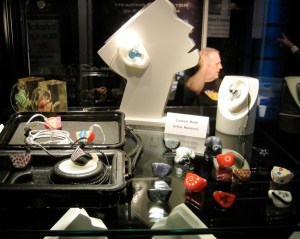
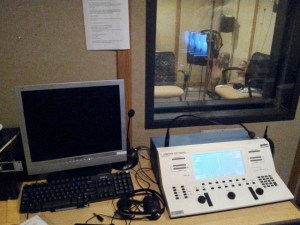
Although media scholars haven’t yet studied it as such, the audiologist’s clinic is a center of media production and consumer electronics retail. Having audio production experience, I felt a sense of recognition on seeing the mixer-like audiometer in the control room of Joel’s audiologist, Jill Meltzer, separated by a pane of glass from the soundproofed booth where her patients sit. It was a studio where Meltzer recorded hearing rather than sound, as she attempted the tricky work of matching the pitch, volume, and sensitivity levels of tinnitus and hyperacusis. Since medication and surgery are not effective treatment options, the remedies for sale are media prosthetics and palliatives such as wearable sound generators, “fractal tone” hearing aids, Neuromonics, and sound machines that help distract, calm, and habituate patients to the ringing. Meltzer and other clinicians consistently told me that they have only two tinnitus tools at their disposal—counseling and sound.
The subjectivity of tinnitus is most frustrating for sufferers, however, who often encounter impatience and misunderstanding from family, friends, bosses, and even their doctors. Again, media serve to externalize and objectify the sound. Joel did this through music: “A Sharp,” Styzens’ first post-tinnitus composition, represents tinnitus with chordal dissonance and hyperacusis with a powerful change of dynamics on a guitar. He eventually recorded an entire album that explored his condition and raised awareness.
.
Other individuals, in an attempt to communicate the aural experience that drives their sleeplessness, depression, anxiety, or lack of concentration, create YouTube videos designed to recreate the subjective experience of tinnitus.
.
The American Tinnitus Association, an advocacy group, has used broadcast and social media to raise awareness and research funding, as we see in this PSA from 1985.
.
However, such dramatic uses of media may be in some ways too powerful. In fact, “raising awareness of tinnitus” might be as bad as it literally sounds.
Communicable dis-ease
In the process of externalizing their experience for others to hear, people with tinnitus can make their own perception of the sound grow stronger. They may also generate anxiety in others, encouraging them to notice and problematize their own, previously benign tinnitus.
Neuroscientist Pawel Jastreboff’s groundbreaking and influential neurophysiological model of tinnitus postulates that tinnitus becomes bothersome only when the auditory cortex forms networks with other areas in the brain, resulting in a vicious circle of increasing perception and fear. The implication of this model, now substantiated by clinical research, is that the way people think about tinnitus is a much greater predictor of suffering than the perceived volume of the sound. As Jastreboff told me in an interview, “Incorrect information can induce bothersome tinnitus.” Information, of course, circulates through media. It may be productive, then, to think of tinnitus suffering as a communicable dis-ease, one strengthened in circulation through networks of neurons, discourse, and media.
I think there is both a need and an opportunity in tinnitus for an applied sound studies, one that intervenes in this mediated public discourse, works against moral panic and hyperawareness, and suggests the quieting possibilities that open up when we grasp the constructed nature of our aurality. Listening to tinnitus as a networked coproduction highlights the ways in which our most subjective aural perceptions are also social, cultural, and mediated—perhaps the fundamental insight of sound studies. My hope is that by listening to tinnitus we can speak to it as well.
__
*Featured Image Credit: A representation of Tinnitus by Flickr User Jason Rogers, called “Day 642/365–Myself is against me”
—
Share this:

Listening to the A. D. White House: Cornell’s Society for the Humanities’ Year in Review
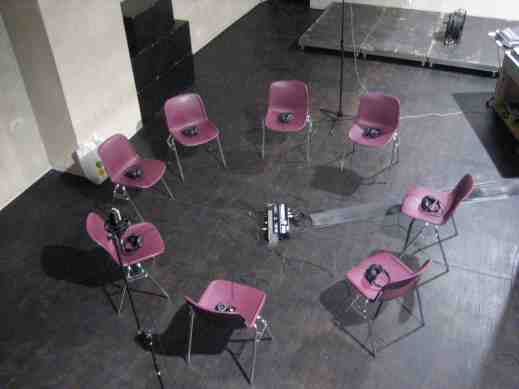

Today, Society for the Humanities Director Timothy Murray sings us back home with a meditation on the soundscapes of study at the A.D. White House this year, closing out our spring “Live from the SHC” series covering new research on “Sound: Culture, Theory, Practice, Politics.” The 2011-2012 Fellows have got to say goodbye for the summer–and sadly beyond–but we all hope that next years’ Fellows (2012-2013 Theme: Risk @ Humanities) enjoy all the good vibrations we will leave behind, and that you, Dear SO! readers, have enjoyed our broadcast! Our summer series, “Tuning In the Past,” on radio and legacy of broadcaster Norman Corwin, featuring Neil Verma, Shawn VanCour, and Alex Russo begins at the end of June. And, of course, every Monday in between and beyond, we’ll keep giving you something you can feel. –JS, Editor in Chief (and 2011-2012 SHC Fellow)
—
DOI: https://doi.org/10.59350/xfep8-syc96
Many thanks to Jennifer Stoever for hosting “Live from the SHC” on Sounding Out! What a fantastic experience it’s been to have Jennifer screening and tweaking Sounding Out! from her garret office overlooking the gardens behind the A.D. White House, the Cornell home of the Cornell’s Society for the Humanities. Readers of “Live from the SHC” have read various strains of this year’s focal theme, “Sound: Culture, Theory, Practice, Politics.” The aim of this year’s residential research project was to contemplate and analyze the resonance of historical and contemporary representations, movements, ideas, and negations of sound.
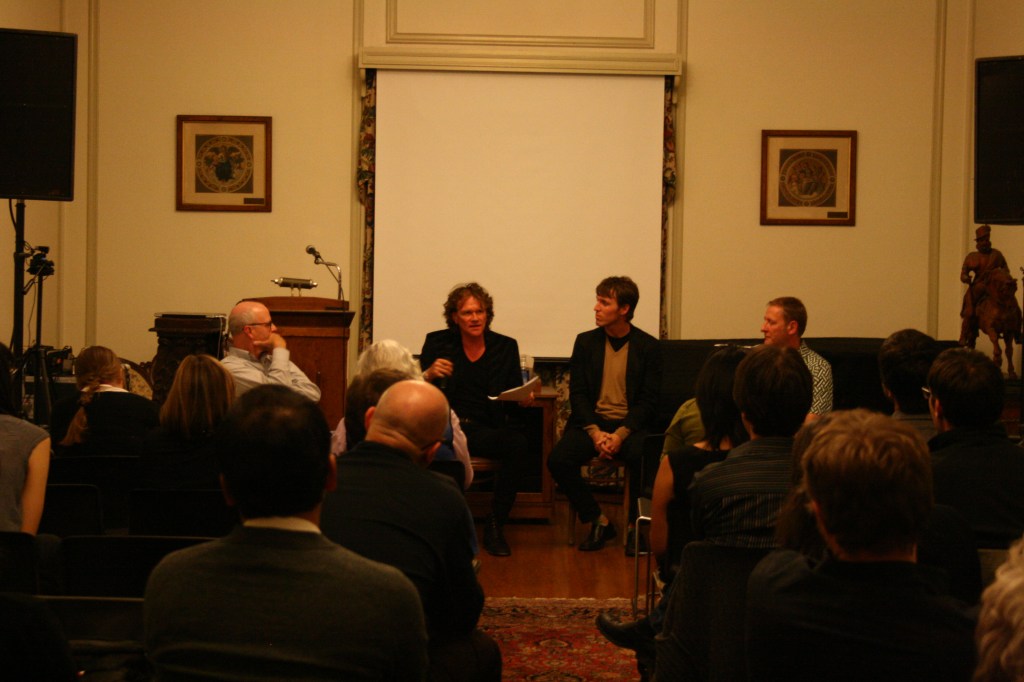
Open to study of the broadest cross-cultural range of contexts and media that cross the boundaries of time and space–from East and West/South and North–the Fellows’ research delved into the complex ways that sound abounds in visual, textual, and aural realms. From “voicing” to “listening,” sound shaped the framework of our critical and philosophical analyses of the body, affect, and social publics. Sound came to be appreciated for its shaping of the parameters of psycho-cultural imaginaries, social practice, religious ritual, and political regulation throughout history and across the globe. Just as sound differs in the global context of capitalism and cosmopolitanism, not to mention the specificities of ethnic difference and cultural diversity, “voice,” “hearing,” and “listening” frame the humanities disciplines in relation to their aesthetic properties and political ramifications.
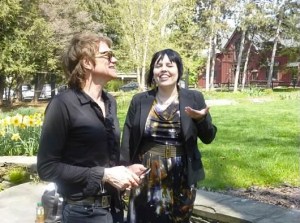
The Fellows found themselves reflecting on several key issues. Which criteria differentiates natural from artificial sounds? Does sound challenge disciplinary distinctions between the visual and the oral/aural/tactile? Can the loud noises of industrial culture be distinguished from the synthetic sounds of electronic music, the stammerings of performance and the vibrations of philosophical manifestos? It should come as no surprise to followers of Sounding Out! that sound marks the passage of time, the correlation of the aural to the movement of the body in dance and performance, the sonic promise of cartographic projects of social movements and migrations, and the cultural and ethnic specificities of acoustic fields and rhythms in the age of sampling and mixing, not to mention the gender, racial, and ethnic import of voice and spoken narrative.
Adding vibrant texture to our year-long discussions were the three weeks spent in extended dialogue with the Society’s Senior Invited Fellows. Emily Thompson (The Soundscape of Modernity) charted the histories of the architectonic sounds of cinema houses as well as the untraceable wealth of the historical sounds of New York City as its peripheries morphed from country estate to urban zone. Brandon LaBelle came from Norway to take us on a journey of artistic imagination and phenomenological hopefulness as he cruised his writings on Acoustic Territories and Site Specific Sound while sampling the background noises of his multimedia installations. Then Norie Neumark, fresh off the release of VOICE: Vocal Aesthetics in Digital Arts and Media (co-edited with Ross Gibson and Theo Van Leewen), arrived from Australia to follow up on our 2003 online seminar on Sound Cultures. She reminded us of the deep history of sound studies down under, while focusing our attention on voicings and her own multimedia art practice that blends spoken narrative, synthetic noise, mouthed breath, and shocks in the ear. [The “Live From the SHC” logo is a piece from Neumark and Maria Miranda’s “Shock in the Ear”–ED].
.
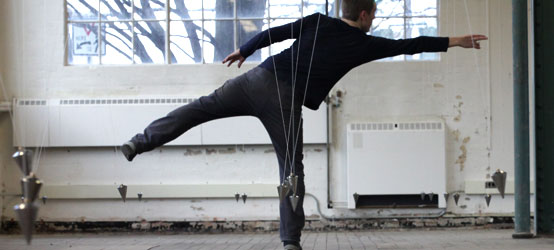
Various other visitors throughout the year included multimedia artists Mendi and Keith Obadike whose “not” Afrofuturism walked us through their exciting series of performance works,“Four Electric Ghosts,” Caitlin Marshall from Berkeley who brought cyborg speech to life with her prosthetic soundings, and renowned choreographer William Forsythe, whose four-hour choreography piece “Nowhere and Everywhere at the Same Time“–performed amidst amidst over 150 hanging pendulums–combined dance and environment as a means of physically manifesting the process of thought. Marjorie Garber from Harvard rode our acoustic wave to reflect on the future of the humanities while Norma Coates came down from Western Ontario to sensitize us to the mixes of pop sound and culture.
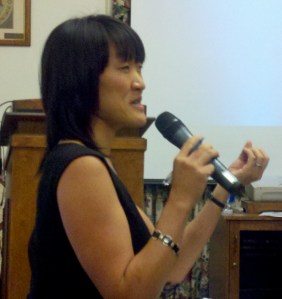
In listening back to the echoes of the year past, rather than here retracing the specific projects of our Fellows (you can consult the critical tales already Sound[ed] Out! by Damien Keane, Tom McEnaney, Nina Sun Eidsheim, Jonathan Skinner, Eric Lott, Jennifer Stoever, and Jeanette Jouili), I find myself sampling the sounds, noises, and glitches that provided unexpected reverbs for the academic writing happening behind closed office doors throughout the A. D. White House.
Sounds of glee, delight, and play first arrived on the scene at the end of August with gaggles of laughing and screaming kids running wild and climbing trees in the gardens, surrounded by bemused adults and envious dogs. Accompanying partners brought to the mix the diverse soundings of African film, suspicious packages, software beats, performance art, critical geography, and real estate hawking. No wonder the assembled Fellows strayed so readily, if not unconventionally, from the promised strictures of already exceptional research projects that brought to our weekly seminar table the street sounds of Egypt, Turkey, Korea, early modern Germany, contemporary Islam, American hip hop, contemporary art, circuit bending, gaming, German, Irish, U.S. and Latin American radio, voices of performers, animals, and posthumans, urban soundscapes, and, here making a loud call out to one Stoever-Ackerman, sonic color-lines.
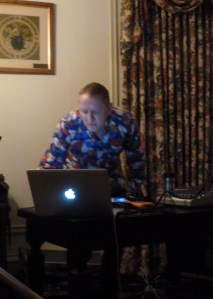
Resounding throughout the year to give cadence and timbre to our serious ponderings were the spontaneous soundings that seemed always to give ample depth to the provocative interstices of intellectual life. There were the noises of glitch, circuit-bending, and Guitar Hero that stretched and extended the purpose of music and machinics. There were spontaneous voice lessons that turned anxious performers into wild choreographic objects. Singing above in the hidden alcoves–when not streaming through the high Victorian ceilings of the A. D. White House–were our flying mammal friends whose echolocation extended beyond the reach of our mere human ears. Then were the sudden noisy reminders of the vulnerability of our corporeal organs. Who could forget the reported imaginary of the crunch of human leg against car as two of our Fellows found themselves under assault from a crazed pizza delivery guy – luckily no lasting damage?
Our fellows will carry away the subliminal lacings of the lighter sounds of improvisation and camaraderie. There were the poundings of feet and slappings of bodies dancing late into the night after hours of laborious conferencing to the beats of DJs Marcus Boon, Art Jones, and Earmuffs.
.
At the end of the year, Fellows grooved to the beat of Tom McEnaney playing bass with The Vix Krater out at the Rongo in Trumansburg, NY (down the road from the home of Moog), before retreating to the bowels of the A. D. White House basement for another dusty, late night jam session with drums, synthesizer, guitars, bass, and various acoustics, led by the ultimate sound blogger herself, the guitar heroesse, Jenny S-A. [Well, I’m learning. So far I know E-Minor. It was Trevor that really broke my strings in! –ED].
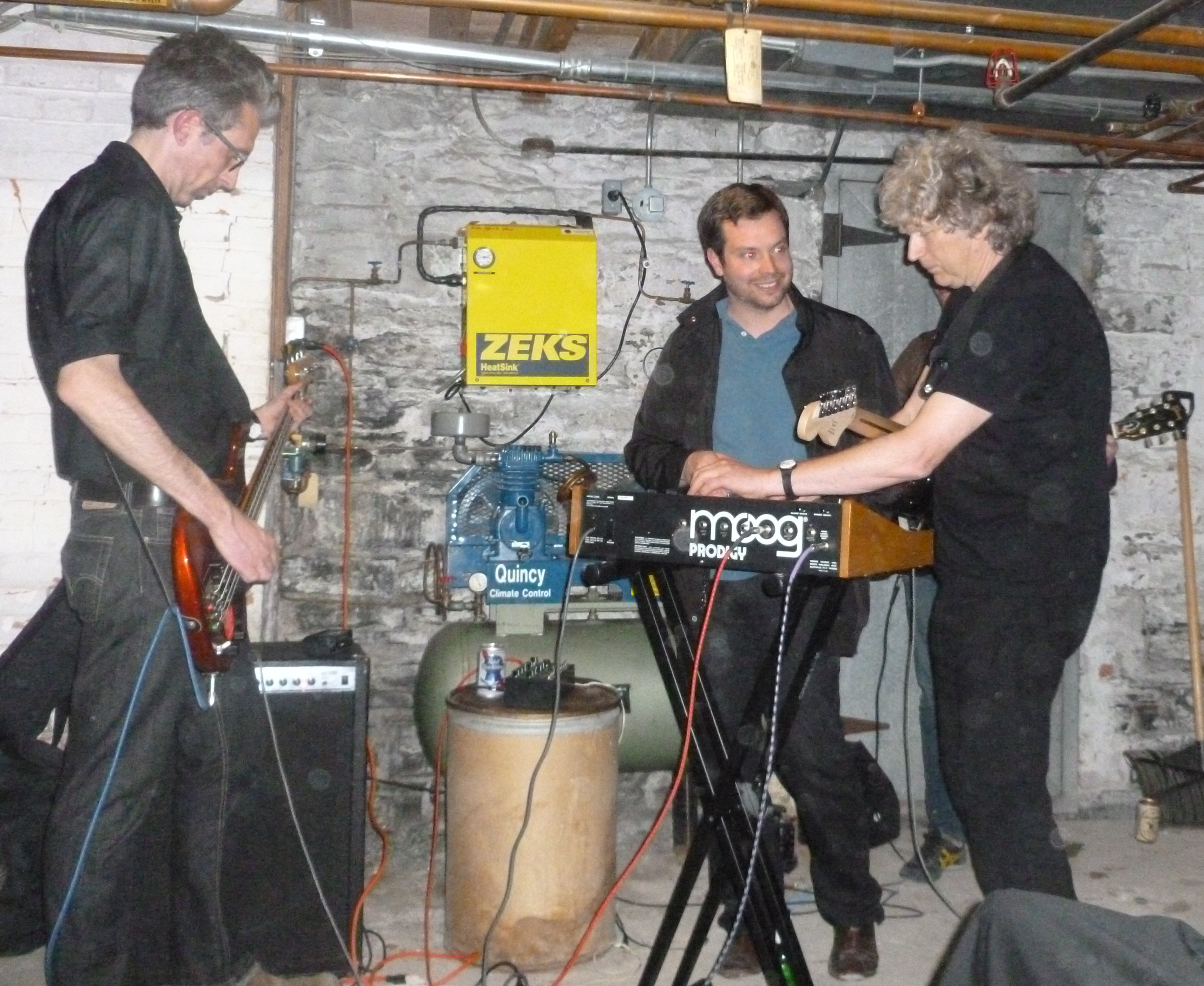
And, yes, there was always the accompaniment of the clinks of glasses and bottles bearing the liquid life blood of any noisy crew.
The French philososopher, Jean-Luc Nancy, reminds us in Listening (2007) that the shared space of noise and sound entails “a totality of referrals: from a sign to a thing, from a state of things to a quality, from a subject to another subject or to itself, all simultaneously. Sound is also made of referrals: it spreads in space, where it resounds while still resounding ‘in me'” (7). What resounded and referred this year at the Society for the Humanities was the very immaterial and inchoate touch of sound, which is a-live in intensity and force. But who would have imagined the intensity of the noise of referral that remained so constant throughout the year to envelop the solid academic work of our Fellows in the wilding vibrations of jouissance? Indeed, perhaps the best lesson of the year, at a moment when the humanities finds itself threatened and in transition by the supposed certainty of metric and assessment, is that the Society’s scholarship in sound was driven by the relentless noise of referral and the unpredictable delight of the commune.
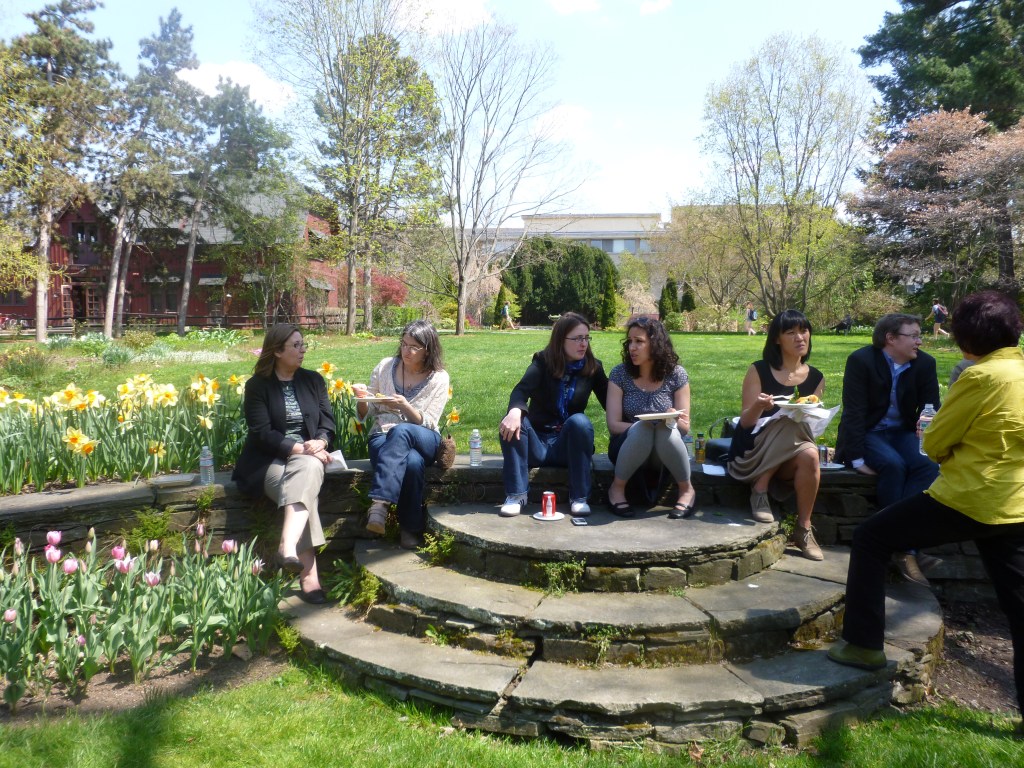
—
Featured Image Credit: Brandon La Belle, Duck Duck Goose Installation, Ausland, Berlin
—
Timothy Murray is Professor of Comparative Literature and English and Curator of the Rose Goldsen Archive of New Media Art. He is the Cornell Principal Investigator of the Central Humanities Corridor, generously supported by a grant from the Andrew W. Mellon Foundation, and he sits on the International Advisory Board of the Consortium of the Humanities Centers and Institutes (CHCI) and the Steering Committee of the Humanities, Arts, Science, and Technology Advanced Collaboratory (HASTAC). He is Co-Moderator of the –empyre- new media listserv and the author of Digital Baroque: New Media Art and Cinematic Folds (Minnesota 2008); Zonas de Contacto: el arte en CD-ROM (Centro de la imagen, 1999); Drama Trauma: Specters of Race and Sexuality in Performance, Video, Art (Routledge, 1997); Like a Film: Ideological Fantasy on Screen, Camera, and Canvas (Routledge, 1993); Theatrical Legitimation: Allegories of Genius in XVIIth-Century England and France (Oxford, 1987). He is editor of Mimesis, Masochism & Mime: The Politics of Theatricality in Contemporary French Thought (Michigan, 1997) and, with Alan Smith, Repossessions: Psychoanalysis and the Phantasms of Early-Modern Culture (Minnesota, 1997). His curatorial projects include CTHEORY MULTIMEDIA and Contact Zones: The Art of the CD-Rom.
—
Share this:




Current Top Posts





April 2021

January 2020

November 2019

October 2019

August 2019

April 2014

November 2017

March 2015

December 2017

October 2015


Recent Comments