
Echoes of Ian Curtis: Film and the Punk Voice
Image of Alice Bag used with her permission (thank you!)
For full intro and part one of the series click here. For part two, click here. For part three click here. For part four click here. For part five click here.
Our Punk Sound series implicitly argues that sound studies methodologies are better suited to understanding how punk works sonically than existing journalistic and academic conversations about musical genre, chord progressions, and/or genealogies of bands. Alexandra Vasquez’s sound-oriented work on Cuban music, for example, in Listening in Detail (2014) opens up necessary conversations about the “flashes, moments, sounds” in music that bear its meanings and its colonial, raced, classed, and gendered histories in material ways people can hear and feel. While retaining the specificity of Vasquez’s argument and the specific sonic archive bringing it forth, we too insist on “an ethical and intellectual obligation to the question: what do the musicians sound like” (12) and how do folks identifying with and through these musical sounds hear them?
In this series, we invite you to amplify varied historicized “details” of punk sound–its chunk-chunk-chunk skapunk riffs, screams, growls, group chants, driving rhythms, honking saxophones–hearing/feeling/touching these sounds in richly varied locations, times, places, and perspectives: as a pulsing bead of condensation dripping down the wall of The Smell in Downtown LA (#savethesmell), a drummer making her own time on tour, a drunk sitting too near the amp at a backyard party, a queer teenager in their bedroom being yelled at to “turn it down” and “act like a lady[or a man]”. . .and on and on. In today’s essay Landon Palmer shows us how film may be just as responsible as music for how we remember the punk voice.
SOUND!
–Aaron SO! (Sounding Out!) + Jenny SO! (Sounding Out!)
—
In Joy Division’s 1979 song “Transmission,” singer Ian Curtis embodied several aspects of what made the group’s post-punk sound unique with the chorus, “Dance, dance, dance, dance, dance, dance to the radio.” As a piece of music, its repetition is intense and rousing, working as a compelling instruction that, when played loud enough, can be felt to the bone via Curtis’s deep timbre. At the same time, Curtis’s voice is robotic and distant, the signature of the group’s bleak sound that signified the post-industrial alienation of Thatcher-era Manchester. A historically specific critique of media, “Transmission” plays out a loss of agency. In the 21st century, however, the song has circulated more as a self-referential testament to Joy Division’s – and Curtis’s – musical skill, a container and a summary of myth.
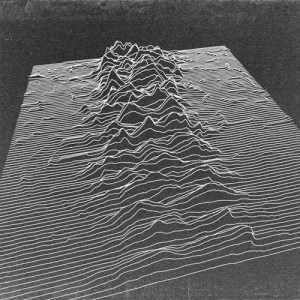
Image by Ho-Teng Chang @Flickr CC BY.
To adopt Alexandra Vasquez’s question that has framed this series, what happens to representations of punk sound as they change over time? I argue that the cinematic techniques employed in presenting Ian Curtis and his voice in both 24 Hour Party People (Michael Winterbottom 2002) and Control (Anton Corbijn 2007) help us to understand the construction of a mythic punk voice.
Punk’s avoidance of comprehensibility, identification, and what Dave Liang calls “the prettiness of the mainstream song” have existed in awkward relation to narrative cinema, which requires legibility as a central component of storytelling (70, 71). While displacing the voice through fragmentation and asynchronous sound work has proven vital to theorizing and subverting cinematic norms, rarely has depicting a well-known punk singer’s voice in cinema translated to a cinematic punk aesthetic, as Stacy Thompson argues regarding the narrative and documentary Sex Pistols biopics Sid & Nancy (Alex Cox 1986) and The Filth and the Fury (Julien Temple 2000) (49-50). Even the revered punk documentary The Decline of Western Civilization (Penelope Spheeris 1981) renders punk voices legible by providing lyric subtitles. However, the two most notable cinematic portrayals of Ian Curtis–24 Hour Party People and Control, released during the band’s resurgence in 21st century popular culture–demonstrate competing interpretations for a punk voice’s place within filmmaking and put into play the question of how to interpret it.

Image by a town called malice @flickr CC BY.
Despite Curtis’s short lifetime, his voice continues to be amplified throughout popular culture. These extended echoes of his voice have participated in shaping its meanings and myth. In his book Joy Division’s Unknown Pleasures, Chris Ott writes that Joy Division’s music “defied imitation” (xiii); however, imitation (and citation) have fueled public memory of the band and augmented the myth of Ian Curtis. By the time Joy Division’s two LPs were re-released by Rhino in 2007, several contemporary bands–The Killers, Editors, Interpol and She Wants Revenge–built music careers that are openly indebted to this Manchester sound but distinct from its socio-historical context. Public memory of the group has been interpreted through uses of their music in the 1980s-set period pieces like Donnie Darko (Richard Kelly 2001) and Netflix’s Stranger Things (2016). The contemporary circulation of Joy Division’s music has extended to films that resurrect Curtis himself.
To start, 24 Hour Party People self-consciously stages an inquiry into Ian Curtis’s meanings and his contemporary resonance as part of the post-punk scene writ large. Chronicling the ‘70s-‘80s Manchester music scene through Tony Wilson (Steve Coogan), the attention-seeking TV personality and unlikely underground music patron who formed Factory Records, the film fits several tenets of Thompson’s definition of punk cinema in its “engage[ment] with history” and “critique [of] its own commodification” (64). A tongue-in-cheek historical guide, Wilson narrates via a fourth-wall-breaking blend of mythmaking, footnotes, and commentary that reflects upon the film’s historiography as he articulates it, and in so doing overtly selects myth over “truth,” stating, “When you have to choose between truth and the legend, print the legend” (itself a quote dubiously credited to John Ford). The film’s self-conscious performance of history extends to its musical numbers, where Winterbottom liberally blends imitation with the genuine article through a mix of archival and staged footage, thus overtly staging encounters with key moments in Manchester musical history. The film’s play with historiography does not go so far as to trouble its reinforcement of a canonical timeline.
It is in this spirit that 24 Hour Party People brings actor Sean Harris’s portrayal of Ian Curtis to life. In re-creating Joy Division’s performance of “Digital” at the Hacienda Club, Harris invokes Curtis’s jittery-mechanical dance style while his “voice” remains Curtis’s. Additionally, the film mixes ambient crowd noises with a band of actors performing in synch to the song’s studio recording. 24 Hour Party People not only preserves Curtis’s voice as an inimitable icon of this history, but places the studio recording of “Digital” as the authoritative version of the song within the nascent period of the Manchester scene, thus mapping this studio recording onto the band’s live sound (rather than implementing an existing live recording). Curtis’s voice is reproduced only through the most valuable, resonant historical record of it–the recorded commodity.

Image by bixentro @Flickr CC BY.
The retrospective framing implied by this choice speaks to the film’s greater approach to Ian Curtis as a figure best understood (or perhaps inevitably shrouded) via his posthumous legacy, and thus foregrounds Curtis’s transformation into myth. Due to the timing of his passing, there exists a relatively limited media archive of the actual Curtis compared to other late-20th century rock singers of similar influence. Beyond official performances on television, music video, and records, scant recordings of Curtis performing and speaking are available via silent 8mm home movies and archival audio interviews. Thus, 24 Hour Party People cannot resort to the historical record(ing) in all instances, and thus Harris’s voice proves central to interpreting Curtis off-stage. In recalling Joy Division’s notorious first encounter with Wilson, 24 Hour Party People portrays Curtis as intimidatingly sure-footed, confronting Wilson through quick, direct speech and locked eyes. Harris conveys the actorly qualities that so often typecast him in villain roles. Further complicating Curtis’s public image, Coogan’s Wilson provides a counter-narrative of the singer following his suicide, asserting to the audience that Curtis was not exactly the “dark and depressive…prophet of urban decay and alienation” that his music suggested, and recounts a rousing collective rendition of “Louie Louie” with the band to prove his point. The only instance in which Harris’s actual voice is used as Curtis’s singing voice, this cacophonous chorus depicts a Curtis participating in a deliriously muddled punk sound. Yet even this counter-narrative does not challenge the mythmaking of Ian Curtis, for it reinforces Curtis’s suicide as central to his meaning and value as a musician.
Music biopics have long bolstered definitive interpretations of a popular performer’s biography. In contrast to 24 Hour Party People’s self-conscious approach to mythmaking, Control is adapted from Deborah Curtis’s autobiography and directed by a former Joy Division photographer. Control’s most conventional choices as a rock biopic are the narrative associations the film makes between events in Curtis’s life and his songwriting, connecting Curtis’s music directly to his troubled marriage and the distress caused by his epilepsy. Control juxtaposes Curtis’s interior life with his production of music, cutting to the recording of “She’s Lost Control” after he learns that a client in his unemployment office has died of epilepsy, and featuring a performance of “Love Will Tear Us Apart” following a scene in which he tells his wife (Samantha Morton) that he no longer loves her. Control thus connects the singer’s authorial voice to the film’s narrative voice, arguing that the sounds Ian Curtis left behind are legible remnants of his biography. In so doing, the film deterministically situates his life through the framework of his death, his music serving a seemingly inevitable path to his suicide and thus transformation into musical myth (staged at the end with a crane shot rising up to the Manchester skyline during “Atmosphere,” indicating a ubiquitous echo of Curtis that has transcended the corporeal).

Punks in Manchester. Image by agogo @Flickr CC BY.
The film’s voicing of Curtis is articulated through Sam Riley’s performance, not through archival audio of the singer. As with 24 Hour Party People, Corbijn initially planned to have Riley and the supporting actors mimic their performances. However, during preproduction the band of actors rehearsed together until they were confident enough to play live shows for Joy Division fans. This convinced Corbijn to utilize them as a sort-of legitimate cover band for the purposes of embodying Joy Division’s history. Riley’s voice is notably higher than Curtis’s and is thus distinctive enough that it resonates comfortably alongside the numerous bands of this century whose leads “sound like” Curtis. Indeed, the resonance of Curtis throughout contemporary alternative rock may have helped make Riley more palatable as an authorized substitute for Corbijn and Joy Division fans. Such homage through imitation is reinforced by Control’s end credits, which features The Killers’ cover of “Shadowplay.” Both of these invocations of Curtis locate his value in his contemporary influence, not his historic place, an approach evident in Control’s less overt interest in post-punk’s socio-cultural context than 24 Hour Party People.
Control is uninterested in recreating the details of Joy Division’s history with exacting verisimilitude, forgoing the archive for a resonant aura of the band’s history. This approach is evident in Corbijn’s visual decisions – shooting the film in black-and-white memorializes the band through the stark photography with which Corbijn captured them – as well as his musical ones. In Control’s depiction of the band’s breakthrough performance on Tony Wilson’s (here played by Craig Parkinson) Granada Television program So It Goes, for example, Corbijn’s Joy Division perform the enduringly popular “Transmission” rather than “Shadowplay,” the song they actually played. Joy Division’s breakthrough television moment was further recast through “Transmission” in a fan-made Playmobil animation that curiously combines introductory audio of Parkinson’s Wilson from Control with Joy Division’s 1979 performance of “Transmission” on BBC2’s Something Else. Control not only situates Curtis’s singing voice coherently within authorial and narrative legibility, but also reflects and participates in contemporary popular memorialization of Joy Division regardless of the historical accuracy of such choices.
Pamela Robertson Wojcik argues that the human voice and its mediation through recording technologies is an important but overlooked component of cinematic performance. It is also vital to consider how famous voices travel and gain meaning through processes of imitation and citation–tropes of authenticity which pervade the musical biopic. While 24 Hour Party People and Control avoid many clichés of the musical biopic, narrative cinematic imperatives of legibility, coherence, and individual-centered storytelling motivate each film to participate in the production of rock star myth despite efforts at historical critique in the former or the austere style of the latter. Even in punk, rock star death is the most compelling biographical framework. The punk voice has long held a discordant relationships to cinematic norms, and these two films demonstrate how the translation of punk sound into cinematic soundscapes presents the inherent problem of recounting punk’s history.
–
Featured image “scream” by be.refreshed @Flickr CC BY-NC-ND.
–
Landon Palmer is a PhD Candidate studying Film and Media in the Department of Communication and Culture at Indiana University and recently defended a dissertation on the cross-industrial history of casting rock stars on film titled “Rock Cinema: A Transmedia History, 1956-1986.” He has published on popular music and moving image media culture in Music, Sound, and the Moving Image, iaspm@journal: Journal of the International Association for the Study of Popular Music, and Celebrity Studies.
–
 REWIND! . . .If you liked this post, you may also dig:
G.L.O.S.S., Hardcore, and the Righteous White Voice – Chris Chien
If La Llorona Was a Punk Rocker: Detonguing The Off-Key Caos and Screams of Alice Bag – Marlen Ríos-Hernández
Riot-Grrrl, Punk and the Tyranny of Technique – Tamra Lucid
Share this:

How not to listen to Lemonade: music criticism and epistemic violence

With the premier last month of Lemonade, her second visual album, Beyoncé didn’t make the world stop so much as she make it revolve: around her, around her work, around black women. For all of the limitations of pop music as a medium (it’s inherently capitalist, for one) and Lemonade’s various feminist strategies (“Formation,” with its “Black Bill Gates” language, can be heard as a black parallel public to white corporate feminism), the album nevertheless re-centered mainstream media attention on black women’s cultural and creative work.
As the conversation about Lemonade revolved around black women and black feminism, two white men pop critics writing for major publications responded with “So What About The Music?” articles. The description to Carl Wilson’s Slate piece asks “But how is it as strictly music?,” and Kevin Fallon’s Daily Beast piece asks both “But is the music any good?” in the title and “But is the music worth listening to?” in the dec. Each time, the “but” sounds like the antecedent to its implied mansplainy consequent “actually…” And just as “but actually” recenters men as authorities and experts, these three questions decenter features prioritized in black women’s pop performance traditions, and in Lemonade itself. As posed in these two articles, the “so what about the music?” question frames “music” so narrowly that it both obscures or at best trivializes what the album does musically. Wilson and Fallon’s essays are good examples of how not to listen to Lemonade.

Borrowed from “Let’s Talk About Sex(ism)” from Twin Geeks
I want to read Wilson and Fallon carefully so we can think about when this question makes for both technically correct and ethically/politically responsible theory and criticism, and when it makes for technically incorrect and ethically/politically irresponsible theory and criticism. My aim here isn’t to argue that Wilson and Fallon are bad people. My focus is the definition or concept of “music” that’s at the heart of the method they use in these two articles (and methods are bigger than individual writers). In more academic terms, I’m asking about research ethics. If, as Wilson’s and Fallon’s articles prove, the “so what about the music?” question can be a power move that establishes the critic’s or theorist’s authority, how can we–especially the mainstream we–ask about the music parts of pop music without making that power move?
 Firstly, both articles apply fairly conventional European fine art aesthetics to the album. Wilson invokes pre-Enlightenment European aesthetics to argue that the “reality show aspect” of the album is somehow aesthetically inconsistent with great pop music. Prior to the 17th century, it was commonly thought that the status of a work’s form or medium ought to correspond to the status of its representational content: painting, the most highly regarded art form, should have subject matter of equal stature–gods and royalty. Wilson’s claim that “the other distraction is the way that the album’s central suite of music interacts with tabloid-style gossip (and a certain elevator video clip) about Beyoncé and her husband Jay Z” echoes that centuries-old sentiment, a sentiment which is about as alien to Lemonade’s aesthetic as, well, Boethius is.
Fallon begins his article with a genuflection to Prince (as does Wilson), scrunches its nose at the gossipy lyrical and narrative content, and then twice scoffs at the very idea of a visual album, “whatever that is,” as though we in the West don’t have precedents for this sort of Gesamtkunstwerky (the total artwork combining music, visuals, and lyrics) thing going back to Wagner and the Florentine Camerata (the collective attributed with inventing opera in the 17th century). He does talk more extensively about the sounds and music than Wilson does, but given the rapid turnaround he also faced, there’s not a lot of close listening to specific musical figures, performances, or compositional techniques, mostly just a survey of the different genres on the album.
Wilson says that the cheating story detracts from the album’s musical quality because it’s an unoriginal narrative:
a drama of jealousy, betrayal, and reconciliation, one of the most ancient and common of human experiences, and of songwriting fodder…that issue of thematic freshness may render some of the songs here less distinctive and invigorating than Beyoncé was.
I find this an odd criticism to level at a pop album, or even an artwork. Nobody would say that West Side Story or Romeo & Juliet were aesthetically diminished because they recycled that tired old theme of jealousy, betrayal, and (failed) reconciliation. Moreover, as Angela Davis argued in Blues Legacies and Black Feminism, these themes of jealousy, betrayal, and reconciliation are the foundation of black feminist pop music aesthetics in a personal-is-political kind of way. Both articles force a contextually incorrect definition of “politics” onto the album, one which sees the most intimate details of relationships, sex, and kinship as merely personal and apolitical. Fallon, for example, says “there’s no doubt that the music on the album is far more personal than it is political.” Both critics fail to consider it in terms established in black women’s pop performance traditions.
Even in Wilson’s attempt to focus strictly on the music, he spends most of the time talking about visuals and lyrics. He hears a wide range of sonic references in Lemonade, from Dolly Parton to Donna Summer to the Lomax recordings to calypso. But he thinks this makes it sound derivative: “as an aural album, Lemonade is a little less fascinatingly singular and eccentric than Beyoncé” (Wilson). Fallon makes an almost identical remark in his article: “Lemonade doesn’t hurl itself toward any genre in a statement of artistry. Instead it masters… um, all of them, but in turn doesn’t make the same powerful statement of Beyoncé’s artistic mission, like her last album did.” Contrast this with the way Jonathan Shecter talks about Diplo’s post-genre eclecticism as “fresh and cutting-edge,” part of an “ongoing artistic evolution.” As philosopher Christine Battersby has argued, the habit of thinking that flexibility is a sign of innovation when attributed to white men, but a sign of regression when attributed to anyone else, is a habit that goes back to the 19th century. It’s not surprising that Beyoncé gets dinged for the same thing that garners Diplo praise: in her case, what Fallon calls “the most daringly genre-hopping music she’s ever produced” is evidence of unoriginality, whereas in Diplo’s case post-genre eclecticism is evidence of his ability to distinctively transcend provincialism. Even when Wilson’s article does manage to talk about sounds and music, it trivializes Beyoncé’s other artistic achievements on the album.
Both articles rely on some gendered and racialized interpretive habits to address the song’s aesthetic value, lyrical content, and Beyoncé’s artistry. But what about their discussion of the music?

“listen” by Flickr user Robyn Jay, CC BY-SA 2.0
These same racialized, gendered habits tune Wilson and Fallon’s listening and mask the sonic dimensions of Lemonade that don’t fit their narrow concept of music. Both critics make a conceptual move that separates musical practice from black feminist practice. Fallon uses some parentheses and a “but…?” question to put rhetorical and grammatical space between Lemonade’s black femininity and its musical and sonic features: “(By the way, it’s powerful, and feminist, and unapologetically black, and transfixing, and gorgeous, and assured, and weird, and confusing, and dumb, and groundbreaking.) But hey: Is the music any good?” This framing defines “the music” as something distinct and independent of the album’s black femininity, as though black women’s and black feminist musical traditions didn’t infuse the album’s music…or, to the extent they do, they don’t count as “music.”

“Listening” by Jens Schott Knudsen, CC BY-NC 2.0
Wilson makes an identical move. Following the white liberal feminist aesthetics that influence lots of contemporary post-feminist pop, Wilson’s piece locates treats the black feminist message primarily in the video. “In video form…it’s more evident that [Lemonade] is equally the cyclical story of generations of black women dealing with men and balancing their struggle for R-E-S-P-E-C-T (as well as S-E-X) against the violations and injustices of race and gender.” He sees the politics in the visuals, but doesn’t consider the sounds as having anything to say or do about that story and that struggle.
This approach isn’t limited to well-meaning but ignorant white men pop critics: even bell hooks’ now (in)famous essay on Lemonade looks at but doesn’t listen for its politics. She argues that it is a “visual extravaganza” whose “radical repositioning of black female images does not truly overshadow or change conventional sexist constructions of black female identity.” Locating the politics entirely in Lemonade’s visuals, hooks’s essay treats black feminism as something contested solely in terms of images. (And divorcing the images from the sounds fails to consider the fact that the sounds impact how viewers interpret what they see.)

Screenshot from Lemonade
This is the wrong method to use for thinking about Lemonade and Beyoncé’s work as a whole (and pop music in general). Sounds on this album don’t operate independently of black femininity, black women’s performance traditions, or individual artists’ black feminist politics. On the one hand, thinking with Daphne Brooks and Regina Bradley, it’s more accurate to say that Beyoncé’s sound game has generally led the way and been more politically cutting-edge than her visual game. On the other hand, sound can also be what does the heavy lifting for patriarchy and other systems of domination, as I argue here. Separating the music itself out from the political content misrepresents what music is and how it works. And it is a particularly gendered misrepresentation: critics are not so eager to separate Kendrick’s sounds from his politics. In both white and black philosophical traditions, dominant concepts of politics and the political are normatively masculine (just think about the gendered public/private distinction, for example), so from these perspectives feminine and feminized sounds don’t feel or seem “political.”
But in these two cases the divorce between music and politics is also what lets white men pop critics have authority over black feminist music. If they can distill Lemonade down to its “solely musical” aspects, then they can plausibly present themselves as experts over generic, depoliticized sound, sounds disconnected from knowledges and values tied to particular lived experiences and performance traditions. Problem is, in the same way that there is no generic ‘person’ without a race or a gender, there is no generic, depoliticized sound. As Jennifer Stoever has argued, even though Western modernity’s occularcentric epistemology obscures the sonic dimensions of white supremacist patriarchy and the subaltern knowledges developed under it, sounds nevertheless work politically. Digging deep into the music on Lemonade or any other pop song does not involve abstracting the music away from every other aspect of the work and its conditions of production. Digging deep into the music part of pop music means digging deeper into these factors, too.
When Regina Bradley, Dream Hampton, Laur M. Jackson, Zandria Robinson, and Joan Morgan talk about how Lemonade makes them feel, what affects and knowledges and emotions it communicates, they are talking about the music–they just work in a tradition that understands music as something other than ‘the music itself’ (that is, they don’t think music is abstracted away from visual and cultural elements, from structures of feeling common to black women with shared histories and phenomenological life-worlds). As I have tried to show in my own work, the sounds and musical performance are central to Beyoncé and Rihanna’s work because they engage traditions of black women’s and black feminist knowledges. Aesthetic practices develop and emerge as types of implicit (i.e., non-propositional or non-verbal) knowledge, knowledge created in response to lived experiences in a particular social location. Aesthetic practices can communicate and perform knowledges that reinforce systems of domination, and they can also communicate and perform subordinate knowledges that map out strategies for survival amid domination. Dominant institutions (like the music industry) and people from dominant groups (like Iggy Azalea or Eric Clapton) separate the aesthetic practice from the implicit knowledges that make it meaningful, and thus neutralize those knowledges and make the aesthetic practice fungible and co-optable. Talking about “the music itself” or “solely music” does the same thing: it is a form of what philosophers call epistemic violence.

Screenshot from Lemonade
So, asking “but what about the music?” is a way to dig into those implicit knowledges to show where much of this epistemic work is happening. And that’s good analysis that isn’t (necessarily) epistemically violent. It demonstrates what Stoever calls “an ethical responsibility to hear African American cultural production with…assumptions about value, agency and meaning” (31) that are appropriate to them. But you can also ask “but what about the music?” in a way that abstracts away from these implicit knowledges. That’s what Wilson’s and Fallon’s pieces do, and that’s why they’re both epistemically violent and objectively poor methods of musical interpretation. But we can and do better when we write about and theorize the music part of pop music. And, to riff on Mariana Ortega’s argument in her article on the type of epistemic violence she calls “loving, knowing ignorance,” doing better means listening to and with black women, black women’s music, and black feminist aesthetics. You can’t divorce music or listening from politics; listening better can and will follow from practicing more just politics.
—
Robin James is Associate Professor of Philosophy at UNC Charlotte. She is author of two books: Resilience & Melancholy: pop music, feminism, and neoliberalism, published by Zer0 books last year, and The Conjectural Body: gender, race and the philosophy of music was published by Lexington Books in 2010. Her work on feminism, race, contemporary continental philosophy, pop music, and sound studies has appeared in The New Inquiry, Hypatia, differences, Contemporary Aesthetics, and the Journal of Popular Music Studies. She is also a digital sound artist and musician. She blogs at its-her-factory.com and is a regular contributor to Cyborgology.
—
 REWIND!…If you liked this post, you may also dig:
I Been On: BaddieBey and Beyoncé’s Sonic Masculinity-Regina Bradley
Listening to Sounds in Post-Feminist Pop Music-Robin James
Of Resilience and Men: How Bieber, Skrillex, and Diplo Play with Gender in “Where Are Ü Now”-Justin Burton
Share this:


Current Top Posts





April 2021

January 2020

November 2019

October 2019

August 2019

April 2014

November 2017

March 2015

December 2017

October 2015
 Sounding Out!
Recent Comments