
Riot Grrrl, Punk and the Tyranny of Technique

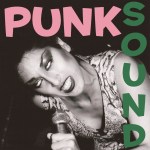
Image of Alice Bag used with her permission (thank you!)
For full intro and part one of the series click here. For part two, click here.
Our Punk Sound series implicitly argues that sound studies methodologies are better suited to understanding how punk works sonically than existing journalistic and academic conversations about musical genre, chord progressions, and/or genealogies of bands. Alexandra Vasquez’s sound-oriented work on Cuban music, for example, in Listening in Detail (2014) opens up necessary conversations about the “flashes, moments, sounds” in music that bear its meanings and its colonial, raced, classed, and gendered histories in material ways people can hear and feel. While retaining the specificity of Vasquez’s argument and the specific sonic archive bringing it forth, we too insist on “an ethical and intellectual obligation to the question: what do the musicians sound like” (12) and how do folks identifying with and through these musical sounds hear them?
In this series, we invite you to amplify varied historicized “details” of punk sound–its chunk-chunk-chunk skapunk riffs, screams, growls, group chants, driving rhythms, honking saxophones–hearing/feeling/touching these sounds in richly varied locations, times, places, and perspectives: as a pulsing bead of condensation dripping down the wall of The Smell in Downtown LA (#savethesmell), a drummer making her own time on tour, a drunk sitting too near the amp at a backyard party, a queer teenager in their bedroom being yelled at to “turn it down” and “act like a lady[or a man]”. . .and on and on. Today’s essay is by Tamra Lucid. Here, Tamra offers her thoughts on how both technique and expression reinforce a gendered understanding of music. When punk sound plays with extremes, how can artists who feel trapped by these polemics resist?
SOUND!
–Aaron SO! (Sounding Out!) + Jenny SO! (Sounding Out!)
—
“Don’t touch that!” a virtuoso guitarist had once told me when as a kid I reached for his guitar. The same phrase would later be delivered by a punk guitarist at a gig where I offered to replace a string broken during his performance. As noted in the book Girls Rock , women are often told not to touch these sacred instruments (18). I remember thinking that guitar was as complex as a car engine and as dangerous as a circular saw. Technique and theory are meant to liberate musicians (so that their dexterity can follow wherever imagination and inspiration may lead), but when experiencing gender discrimination from instructors and fellow instrumentalists, technique and theory can seem antagonistic. In this essay I show how the elite and virtuoso focus on technique and theory has catalyzed punk musicians to cultivate the raw, expressive, qualities of punk sound. Yet, paradoxically, I point out how movements toward a raw and visceral sound constitute a cage of their own, alienating an equally radical and virtuoso community of women in the punk scene. How do these sonic contours in the 1990s riot grrrl scene tell a story about injustice and community building through sound?

Iconic guitarist Eddie Van Halen, shredding. Technique can be a form of gendered gatekeeping. Image by K. Todd Storch @Flickr CC BY-NC-ND.
Theory and technique become a cage when they are used by sexist cliques, such as the heavy metal scene, which sought to maintain hegemony over local scenes and resources. For the gatekeepers, there are many benefits to this form of discrimination–women are encouraged to act as doting fans rather than joining bands. As a teenager I saw many young women told by male musicians that their only permissible roles were those of sex object or fan. Early in my musical career when I put out an ad searching for band mates some male musicians would call just to laugh at me.
In the late 1980s and early 1990s when canons of punk tone and composition ironically became defined by an athletics-like dedication to speed, precision and endurance, riot grrrl bands were criticized for their primitive skills. However, by removing the barriers to self-expression that this emphasis on technique and theory created, many people, not only female or female identified, were empowered to create music similar to performance art. As Liam S. Ruin of the Columbia, South Carolina hardcore band Shirley Temple of Doom (1993-1996) said in an interview I conducted with them for this essay: “I still think emphasis on technique is gross and ableist and boring and obvious.”
In this time of sonic reform, some scenes came to prize sincerity over skill. Here, a new canon of theory and technique evolved–another cage. Some related to the riot grrrl scene found themselves accepted by their community while receiving praise for abandoning a commitment to simplicity. For example Associated Newspapers News North West previewed a gig by Sleater Kinney in Manchester, UK by describing them as “too musically competent to be a Riot Grrrl band.” Likewise, the female hardcore bands Girl Jesus and Free Verse (though politically aligned with riot grrrl) found little support in a scene that viewed them as a threat. It was as if the language of technique and theory was the language of oppressors, and using it implied submission to the status quo. The directness of purpose which had liberated so many artists, became a new kind of cage for others.

Shot of Girl Jesus from 1995. Image used with permission by the author.
As a roadie for Girl Jesus, I witnessed the immediate dismissal (including groans of disappointment) they suffered when confronting male bands at gigs many times. Despite these jeers I also saw the way their ferocious music and performance, anchored by guitarist Gina Rush’s use of middle eastern scales, Shell Davina’s unique and unusual drumming style, and Grit Maldonado’s flamenco-like bass lines, reduced many male bands to discouraged silence and listless performances. I remember thinking that riot grrrl, or what was left of it in 1993, would welcome such a powerful example of female creativity. The feeling of competence I felt as Girl Jesus approached each gig with confidence in their music and technology helped me to reinvent myself, encouraging me to graduate quickly from roadie to musician.
Gina Rush carefully chose her amps and had them modded by an expert. Shell used a vintage drum-kit that would make any collector drool. But these distinctions were rejected by the riot grrrl audience who found them elitist and classist. Though Girl Jesus was a band of working class lesbians they were treated the same way as male bands in the scene. As Shell reported in an article entitled “Queercore: Ready to Face the Market” by Brent Atwood in the May 6, 1995 issue of Billboard Magazine: “As a female band, we expected a strong network of women in music to stick together. Instead we found a lot of competition.” She also pointed out: “We’ve had more club owners be sexist to us than homophobic.” Despite their embrace of technology and technique, two domains that code as masculine, Girl Jesus nurtured into existence two of the more popular riot grrrl bands in mid-90’s Los Angeles, Patsy and my own band Lucid Nation, which began by rehearsing in Girl Jesus’s garage using their equipment. The name of Girl Jesus’s first cassette demo succinctly captured the problem: “Afraid of Our Own.”

The cover of Free Verse’s “Access Denied” album. Image used with permission by the author.
A similar trajectory was found by the all female hardcore band Free Verse, whose first record “Access Denied” was released by the indie label Brain Floss Records. Free Verse began in Lawrence, Kansas in 1995 and in 1998 relocated to Seattle. Lucid Nation toured nationally with Free Verse in the summer of 1998. The experience was similar to what I observed as a roadie for Girl Jesus. Male bands who looked down upon female musicians with disdain were stunned by their display of skill and ferocity. However, when we played in Olympia, Washington, the riot grrrl community cowered against the back wall, clearly uncomfortable. On the road we smiled ruefully over the irony of masculinist male bands becoming fans while female fans who shared our politics turned their backs. This created a conundrum for Free Verse. Although they were able to deliver a feminist message to scenes and individuals who were hostile to feminism, they could not enjoy the community of like minded women who identified as riot grrrl.
Over time, Free Verse earned enough respect that they were able to open for leading bands from a variety of scenes. From Hardcore bands like The Blood Brothers to indie stars like Sleater Kinney. From queer core bands like The Need and The Butchies to riot grrrl supergroup The Cold Cold Hearts. Though Free Verse were chosen to participate in the Northwest Coalition For Human Dignity’s anti-racism tour October 2002, a tour sponsored by Ms. magazine and featured in ROCKRGRL magazine, the band was never able to achieve the following or recognition of the bands they shared bills with, information about them is hard to find on the internet today.
Liam S. Ruin, now one of the guiding lights of the new Riot Grrrl Intersectional movement, provides a more intimate look at how the pressures of technique and theory influenced Shirley Temple of Doom: “Not really any RG [riot grrrl] activity in Columbia SC. Um, Slant 6 played there once. Our scene was extremely nuclear. We played with our friend’s bands, The Trema, Erector Set, Guyana Punch Line. We were pretty much all in each other’s bands or dating each other or whatever. Making it up as we went along. Jessica saw me in the halls at school wearing a Pearl Jam shirt and told me ‘you’re way too cool to be listening to shitty bands.’ She made me a mix cd that was mostly D.C. Emo and Hardcore but it had Bratmobile, Bikini Kill and L7, too. Then she lent me her bass. I practiced with Joy Division and Heavens To Betsy covers till I could play along. We started a band with her boyfriend. Half of our band were really into Straight Edge H/C and the other half were into Huggy Bear, Fugazi, NOU, etc.”

Donita Sparks of L7. Image by Dena Flows CC BY-NC-ND.
Shirley Temple of Doom, despite reflecting a riot grrrl like platform in their lyrics received little attention from the riot grrrl community. Eventually the band collapsed due to internal tensions regarding technique–as if the rhetoric of extremes around technique and expression had become an expertly baited, misogynist trap. As Liam informed me: “The guys in the band were very technical and pushed me to play more technical bass lines but honestly, I get bored with proficiency. I’ve heard what guitars are supposed to sound like. I wanna hear what they’re not supposed to sound like. We split because of ideological differences. I got really into visceral bass-feels and wanted to sound like a disaster, and they wanted to be on Victory Records.”
How did the cage of technique and expression, evolve in a style of music that advanced freedom as its guiding praxis? Early on, rock musicians were considered unskilled when compared to classical, jazz and country musicians. Later, virtuosity became central to rock music as bands like Yes, Led Zeppelin, and Pink Floyd, sought radical sounds to accommodate an aesthetic cultivated by Cannabis and LSD. As What’s That Sound? An Introduction to Rock and It’s History puts it: “Rock musicians now had a responsibility to create sophisticated music using whatever means were available.” Soon after this turn to virtuosity, guitarists like Eddie Van Halen became the Paganinis of their time, displaying jaw-dropping finger speed and impressive knowledge of scales and musical theory.
Later, punk rock crashed the party. First in the hands of the MC5 and The Stooges, and then the New York Dolls, The Ramones, the Sex Pistols and many other bands, rock music turned again towards primitive and cathartic sincerity. Musical virtuosity was literally spit upon. The Ramones famously told The Clash that they needn’t worry about improving their musicianship before playing live because “as you’ll see tonight, we suck.” Ferocity replaced dexterity. Nihilistic and cathartic lyrics displaced idealistic flights of fancy. Punk quickly developed its own criteria to indicate mastery of the genre. Bands like Fugazi and F.Y.P. typified a performance style that required frenetic motion while preserving the lockstep rhythm and hand speed, if not the musical knowledge and experimentation, of the earlier virtuosos. Then riot grrrl arrived, freeing a generation of punk women who were uncomfortable with the athletic performance style of these bands. For example, one of L.A.’s favorite riot grrrl bands Crown for Athena would perform at times with one member of the band sitting on the stage singing while clinging to the pant leg of another who stood immobile and emotionless. Frenetic performance and blazing chord speed was no longer a requirement for legitimacy on the punk stage.

Flier advertising an International Woman’s Day celebration featuring Lucid Nation. Image used with permission by the author.
Riot grrrl liberated me from the odious trial of confronting sexist music teachers, store clerks, booking agents, and record companies. I learned from the movement that I could get by with simple barre chords. I could use cheap and borrowed gear and I didn’t have to worry about great tone. One of the bands I admired, Foxfire, a band of female high school students from Los Angeles, used an oven pan instead of a snare drum. Riot grrrl bands emphasized community by booking shows with each other and with activist groups like Food Not Bombs. We made our own labels to distribute each other’s records. When Lucid Nation opened for Bikini Kill at Terraza Jamay in Montebello, Kathleen Hanna took tickets at the door.
As my musical skills developed I found myself feeling restricted by the aesthetics of riot grrrl. Beginning with Lucid Nation’s DNA record (2000) we began exploring cliches of what we called “butt rock,” now more popularly known as classic rock. While we attempted to master the techniques of classic rock our intent was to deconstruct them by introducing unexpected twists of sound (like chaotic analog synth and noise pedals) and lyrics containing feminist perspectives. At this point, we had moved on to other scenes, for example, the melange of Peace Punks, Black Panthers, and riot grrrls at Koo’s Cafe in Santa Ana, CA. We played hemp rallies and non-riot grrrl political events like fundraisers for Big Mountain and other Native American causes.

1997 Image of the author with her “surrealist assemblage.” Image used with permission by the author.
Eventually I developed a fascination with improvisation inspired by freestyle rap and augmented by the writing of Gertrude Stein and the recordings of Jack Kerouac. By the time our most successful album was released, the improvised Tacoma Ballet (2002), I prized musicianship and encouraged experienced collaborators, like Patty Schemel of Hole on drums and Greta Brinkman of Moby’s live band on bass, to bring to bear the breadth and depth of their musical knowledge. I was delighted that Rick King of Guitar Maniacs in Tacoma allowed us to use his highly valuable collectible gear such as a 1967 Gibson Flying V and an array of legendary vintage pedals when we recorded the album. I was proud when Patty said in an interview about Tacoma Ballet: “…there are always ideas that I have–interesting beats and such–that I could never incorporate into Hole or any other project. In Lucid Nation I got to incorporate all my weirdness.” Though Tacoma Ballet made it to #1 on the New Music Weekly Chart of College and Secondary Market Radio Stations in December 2002 it received very little attention in riot grrrl circles. I found myself silenced again, not by advocates of technique, but by a community who valued raw expression.
Of course, in 2002 riot grrrl was less popular than it had been a decade before–it mostly consisted of isolated zine writers and bands. Still, those who remained in the scene ignored Tacoma Ballet despite its success. When I asked them why, they explained that although they admired our work and the songs spoke to their experience, our band just wasn’t riot grrrl. I was told that the skills and awareness of musical history displayed on the record were too self conscious, that I had become ambitious, or as more than one zine writer said, I had sold out. Since I made no money on that record despite the attention it got, and we couldn’t tour behind it since the music was improvised, I found it hard to understand how such a purely artistic lark could be viewed as selling out. I didn’t sell out, my increased respect for theory and technique just felt wrong when viewed from the perspective of the riot grrrl canon.

EDM and the new politics of punk sound. Image by Patrick Savalle CC BY-SA.
While new music hardware and software have helped level the field in ways that were not possible in the 90’s, the cage of expression and technique continues to govern a new world of highly individuated scenes. EDM continues to fetishize the drop. Live performers need no longer be concerned about vocal pitch or knowledge of vocal harmony. Hardware like the Digitech VLFX, available on Amazon for under $200, corrects pitch and provides easy and automatic harmony vocals. In this device, music’s ability to create unexpectedly cathartic experiences has been diminished, while the simple mimicry of technique has been elevated.
Perhaps new regimes of data are to blame. Specific canons of theory and technique function as points of data that help define marketing audiences. After all, bands often succeed by conforming to the sonic norms of their given scene. For this reason, there is a tension between conservation and innovation. An artist must conserve as much of their scene’s identity as possible while finding subtle ways to innovate. Today, anyone can share their music on the internet regardless of traditional criteria. Despite this, a desire for acceptance and success continues to pressure musicians into accepting limitations to their creativity like technique and expression.
–
Cover image is of Tamra Lucid and by TheInfinite314 @Wikimedia Commons CC BY-SA.
—
Tamra Lucid is an executive producer of Viva Cuba Libre: Rap is War the award winning documentary about Cuban hip hop legends Los Aldeanos, a producer of Edward James Olmos Presents Exile Nation: The Plastic People, and associate producer of The Gits documentary. Writing from her riot grrrl zines was reprinted in A Girl’s Guide To Taking Over The World: The Zine Revolution by Karen Green and Tristan Taormino,and in Hilary Carlip and Francesca Lia Block’s Zine Scene. Tamra blogs for Exterminating Angel Press and for Reality Sandwich where her most recent project has been a series of interviews with water protectors and filmmakers at Standing Rock. She’s a founding member and primary singer of Lucid Nation.
–
 REWIND! . . .If you liked this post, you may also dig:
Listening to Punk’s Spirit in its Pre-, Proto- and Post- Formations – Yetta Howard
Feeling Through the Keen and Grind: Team Dresch’s Personal Best – Gretchen Jude
SO! Amplifies: Indie Preserves – Norie Guthrie and Scott Carlson
Share this:

Listening to Punk’s Spirit in its Pre-, Proto- and Post- Formations

Image of Alice Bag used with her permission (thank you!)
“Genres, styles form around places of cohesion, of transport, of passage. Not an instrumental mathematics (though it can be that too), but a speculative one that seeks out locations of collective affect, of resonance between micro and macro spheres.” –Marcus Boon, “One Nation Under a Groove”
Yes. Punk, is a way of living, being, thinking, and relating to the world. Yes, it is bigger than borders. . .greater than the sum of than any number of bands or even the label of “musical genre” altogether. Its dynamic style visually signifies; its DIY mode-of-operations can empower, even as its more capitalist-oriented versions can frustrate and exploit.
YES YES YES.
But also, NO!
Punk sounds!
Even if punk’s sound intentionally evades classification and clichéd high-fidelity top-ten lists like Keanu Reeves dodges bullets in the Matrix, it nonetheless exists. and means. and incites. and motivates. and creates powerful structures of feeling that resonate through entire lifetimes, reverberations of that one all-ages basement show.
How do we know? Because, at the absolute very least, both of us have heard it with–and through–our bodies. It has moved us, and not just symbolically, intellectually, politically, and metaphorically. It has quite literally vibrationally, kinesthetically, heart-throbbingly, finger bleedingly, head-bangingly, body-smashing-up-against-others-bodily, in the pit of our stomachs-y, angry tear cryingly, skin tinglingly moved us.
Without universalizing our respective experiences in the Jersey and Inland Empire/SoCal punk scenes of the 1990s/early 2000s–and our wide listenings and local involvements since then–we want to say simply that punk sound is not an abstract and negative entity. Punk sounds–and punk’d sounds–form distinct sonic calls to some of us out there in the world that our bodies yearn to answer.
And its listeners’ understanding of and relationship to punk’s sound(s) matters. In her essay “On Not Playing Dead,” Bikini Kill, Le Tigre, and (the) Julie Ruin lead singer Kathleen Hanna described one of the key powers of punk’s live sound as creating a threshold of physical exchange, a vibration drawing folks into “one of the only spaces where we give and receive pleasure publicly” to friends and strangers alike, which she argues “seems radical for a myriad of reasons, especially because it challenges the idea that sexuality/pleasure is only for people in straight/monogamous relationships and not something we as a community can have through music.” Punk sound constructs, enables, and sometimes downright demands a variety of participatory responses, both individual and social.
In short, just ask a punk about what punk sounds like! They know! And they will tell you about it! It’s up to us to figure out how to listen. And what better space to try in the audiovisual ‘zine that is Sounding Out!, started by folks whose scenes taught them how to forge and sustain community with and through sound.
This series (and its follow up in Spring 2017) calls bullshit on the related notions that punk sound is either simple presence–ye olde “three chords,” a misnomer that is always already more geographically and historically specific than popular discourse allows–or overdetermined absence, a too-open, too-inclusive sound that, to riff on Green Day, is simultaneously “nothing and everything all at once.” And we very deliberately use “sound” rather than “music” as our guiding framework to think through punk’s sonic pull, not because punk “isn’t music” (a stale but ever present dis on the genre), but because punk itself sounds out the limitations of musical study ( in addition to Alice Bag’s musical manifesto below, see Leandro Donozo’s “MANIFIESTO POR UNA MUSICOLOGÍA PUNK” suggested to us by Alejandro Madrid).
Our Punk Sound series implicitly argues that sound studies methodologies are better suited to understanding how punk works sonically than existing journalistic and academic conversations about musical genre, chord progressions, and/or genealogies of bands. Alexandra Vasquez’s sound-oriented work on Cuban music, for example, in Listening in Detail (2014) opens up necessary conversations about the “flashes, moments, sounds” in music that bear its meanings and its colonial, raced, classed, and gendered histories in material ways people can hear and feel. While retaining the specificity of Vasquez’s argument and the specific sonic archive bringing it forth, we too insist on “an ethical and intellectual obligation to the question: what do the musicians sound like” (12) and how do folks identifying with and through these musical sounds hear them?
In this series, we invite you to amplify varied historicized “details” of punk sound–its chunk-chunk-chunk skapunk riffs, screams, growls, group chants, driving rhythms, honking saxophones–hearing/feeling/touching these sounds in richly varied locations, times, places, and perspectives: as a pulsing bead of condensation dripping down the wall of The Smell in Downtown LA (#savethesmell), a drummer making her own time on tour, a drunk sitting too near the amp at a backyard party, a queer teenager in their bedroom being yelled at to “turn it down” and “act like a lady[or a man]”. . .and on and on. Today’s essay is by Yetta Howard. Yetta discusses the pre-, post- and proto- punk movements that resisted the hegemony of a dominant punk sound from within. How is resistance be productive of a radical identity?
SOUND!
–Aaron SO! (Sounding Out!) + Jenny SO! (Sounding Out!)
–
The radical impulses of punk sound are generally thought to encompass noisiness, inaccessibly, and inconsistency. Beyond the three chords, anti-virtuosity, and “fuck you” to dominant culture that came to define punk is its spirit of provocation. Punk’s ability to be categorized as a type of identifiable chaos is both what allows it to be readily commodified (in the case of pop-punk), and paradoxically what allows it to coalesce as identity (insofar as punk is the sound of marginal experience). Perhaps, in punk, we can listen for a sense of cultural libertinism, in line with what José Muñoz discusses as “the desire, indeed the demand, for ‘something else’ that is not the holding pattern of a devastated present, with its limits and impasses” (98). Where we hear musical norms challenged in terms of non-heteronormative erotics, like in Bad Brains’ “Pay to Cum,” or as reflecting authoritarian violence, as in the Dead Kennedys’ “Police Truck,” is equally where we may locate punk’s fluidity and refusal to maintain a uniformity of sound.
While punk’s sonic offense to authority and legitimacy was initially cast as a mode of rejecting mainstream politesse and a reflection of a class-specific youth revolt, I want to suggest that these offenses can be made palpable as non-visually-inclined gendered and sexual incitements–inhabitations of sound that are physically felt as anti-normative auditory expression. We hear these expressions today in Xiu Xiu’s “Stupid in the Dark” (2014), set to an uncontrollable pulse “in the moonlight,” the non-normative embrace of violence and the erotic are tangible within the texture of this sinister sound. By listening here to punk’s fringes, I aim to highlight how it actively distorts normativity, disrupts readability, and refuses consistency. I propose that when disobedience is cast as a sexual or gendered event, punk incoherence moves closest toward sounding like a stiff middle finger to dominant uptake–an incoherence that signifies radical identity formation outside the dominant.
While punk became and continues to be legible as one of the most significant cultural upheavals of late-twentieth-century music, its anti-establishment ethos is most pronounced when it reflects gender and sexual transgression. This is most clear in a handful of punk’s first wave and, counterintuitively, in contexts that would not necessarily be called punk. Indeed, its proto-punk predecessors and postpunk experimenters become compelling places to listen to punk’s sonic spirit.
Embodying sexual and ethnic difference as audible protest, Alice Bag of the Bags and the Alice Bag Band, cultivated punk anger as both a menacing scream and a revision of white masculinist rage. As documented in Penelope Spheeris’s The Decline of Western Civilization (1981), while performing “Gluttony,” Bag aggressively meshes with the crowd and, wearing a pink mod dress, pushes slam-dancers out of her way. Uttering “watch the calories,” she fiercely shifts from a reproachable timbre to strident shrieks. In her Violence Girl: East L.A. Rage to Hollywood Stage: A Chicana Punk Story (2011) memoir, Bag includes stories about witnessing her father abuse her mother as well as her struggles with dieting and abortion, all of which obliquely and explicitly informed the female bodily revolt we hear in her raw, counter-melodic vocalizations. As gendered, these forceful contestations of conformity extend to the rejection of homogenizing punk style heard on “We Don’t Need the English” (1979).
Also moving against social-sexual normativity, The Cramps’ version of Hasil Adkin’s psychobilly “She Said” on their Smell of Female (1983) live album—featuring a sex theater on its cover—conspicuously emerges as a sonic resistance to the status quo of mid-eighties sexuality. Alongside the frenzied vibrations of Poison Ivy’s and Kid Congo Powers’s sharp guitar plucking, Lux Interior narrates the hungover morning after a one-night stand using explosively orgasmic, hysterical repetitions of “wooo, eeee, ah, ah!” What we hear in these oppositionally tuned shrieks, grunts and cries is punk loudly throwing its disregard for accessibly and popularity into the ears of general decorum.

The DVD cover of Losier’s documentary. Image used with permission by the author.
The lo-fi and brutish contours of punk have existed for decades along the margins of the genre. Before punk was called punk, before industrial became recognizable as its own genre within postpunk, Throbbing Gristle, which included members Genesis P-Orridge, Peter “Sleazy’ Christopherson, Cosey Fanni Tutti, and Chris Carter, crafted their sound with a broken bass, a homemade modular synthesizer, and a set of cassette-players fed through a keyboard. Using “industrial” to describe their noise pieces and eventually to name their label, the group had a creative friendship with Brion Gysin and William Burroughs. Burroughs employed Gysin’s cut-up technique in/as his writing, which he described/subsequently cut-up: “Images shift sense under the scissors smell images to sound sight to sound sound to kinesthetic” (RE/Search #4/5, 36). If the literary extremes of Burroughs’s words operate in the same scope as their synesthetic ambiguity, then the anti-music provocations that they suggest become something heard in Throbbing Gristle as gender non-normativity, bodily lawlessness, and erotically minoritarian practices.
In an early performance art show and exhibition titled “Prostitution” (1976), members of Throbbing Gristle (who began in 1970 as COUM Transmissions) made full use of accoutrements associated with the abject body: the exhibition featured images from the Playbirds series, pornographic magazine layouts of Tutti, and P-Orridge’s TAMPAX ROMANA, a mixed-media installation that included used tampons. The volume of these images is disruptive, their performative effects straddling the sonic-visual extremes of artistic practice. Appearing in Marie Losier’s The Ballad of Genesis and Lady Jaye (2011), the more recent bodily equivalent is P-Orridge and the late Jaye’s “Pandrogeny” project, a corporeal cut-up: both underwent plastic surgery to look like each other—the physical reference points, like Throbbing Gristle’s sounds’ connections with its sources, became lost as they became one, with P-Orridge getting tattoos of Jaye’s beauty marks, for instance. This is the anti-legibility that characterizes punk’s visionary sonic limits. In their modification of flesh, they embody the material alteration of what is heard in heavily processed tape, ruthless loops, and use of non-musical objects as modes of radical resignification.
Contemporaneous with Throbbing Gristle, Chrome’s formation in 1975 firmly placed its industrial experiments in anticipation of punk with their sonic legacy continuing as postpunk sound. In what is a typical two-ish minute duration of a punk song—say, the Germs’ “Manimal”—Chrome’s “Animal” from Red Exposure (1980) sounds as if it were made of chrome. Tinny, metallic tape manipulations and synthesized guitar make each note sound as if it were sinking in deep, murky water. It is a groove emerging from a bath of acid. For the less-vanilla-inclined ear, this combination of sounds is also immensely erotic. Listening to these multiple sonic elements against the logic of normative arrangement means listening to queer forms of relationally. Here, aural encounters are defined by misalignment rather than complementarity.
The equally confrontational sounds of proto-punk duo Suicide, consisting of the late Alan Vega’s often-terrifying vocals and alarming sparseness of Martin Rev’s keyboard work, ushered in what became No Wave. No Wave, New York’s downtown art-film-performance underground of the 1970s, was a cultural anti-movement that contested the increasing popularity of New Wave as subcultural sound. Visually documented in Kris Needs’s Dream Baby Dream: Suicide: A New York Story (2015), Suicide was one of the first to put “punk music” on fliers for their early 1970s gigs at avant-jazz venues and underground art spaces. We hear punk in Suicide when listening for deviations from punk’s dominant formulae of masculine, churning guitar-rock.
While Suicide’s shows were notoriously destruction-inviting as performances, the antagonism of their sound was established through the use of drum machines instead of drums, incorporation of shadowy forms of disco’s repetition, and, at times, a crooning gone awry. Accordingly, “Girl” on their self-titled 1977 album chill-drips sex as Rev’s opening sequence of full-bodied, low tones undulate at angles for its listeners. Less expected as an accompaniment is Vega’s quivery “turn me on,” murmured “yeahs,” and carnal utters of “oh girl,” which reassign any sense of typically gendered desire. He pleads “touch me soft” before fully offering himself up: these tortured requests morph into submissive orgasmic expressions of desire. Here we might call up the temporally correct yet misplaced mixture of black female sexual agency as disco rhythm and vocal moan-cries in Donna Summer mixed with Iggy Pop’s gravelly appeal on The Stooges’ “Penetration.” Punk’s transgressions are not merely sexual in this case, rather, they embody auditory forms of a sexual avant-garde.
Coming out of New York’s No Wave milieu, Sonic Youth, whose “The Good and the Bad” from their self-titled EP Sonic Youth (1982) defines punk in the negative, by forcing us to revel in dissonance. Thurston Moore plays heavy bass as Kim Gordon and Lee Ranaldo continuously build endless dissonance. The song collapses onto itself until it becomes a rebellious pleasure, an oppositionally melodic omen. The song ends with the heavy bass that initially introduced the song. In opposition to the three-minute Ramones single, it is eight minutes of exhilaratingly wrong notes and inconsistent drumming. The song doesn’t champion “bad,” it breaks down the binary: it refuses to be read as good or bad. Similarly, a live version of this song featuring some vocal work by Moore and Gordon is named “Loud and Soft”—a key description functioning all at once to signal the refusal to be named or the need for classificatory stability—sonic, social, or otherwise.
The musical analogue to Jamie Reid’s Nowhere Buses (1972) image, used for The Sex Pistols’ “Pretty Vacant” (1977) single, is the vocalization of “no future.” Perhaps there was no future for punk’s initial impact if comprehensibility implied watering it down for dull masses. At stake in the politics of punk sound are the identities negotiated at its incomprehensible fringes–they productively and spiritually account for marginal experience. In Xiu Xiu’s “Stupid in the Dark”, we can detect a dark renewal of The Pistols’ not wanting a “holiday in the sun.” Like the others I have pointed to in this essay, Xiu Xiu recognizes how the prurient dangers of night are necessary for non-normativity and discordant strangeness to flourish. In Dirty Beaches’ distanced echoing we can listen for a bloody smirk in the muffled vocal of “Night Walk” (2013) and, rather than necessarily take that bus to nowhere, go somewhere by taking that walk on the other sides of the conventional.
–
Cover image is “Cramps-3” by Chad Johnson CC BY-NC-ND.
—
Yetta Howard is Assistant Professor of English and Comparative Literature at San Diego State University. She specializes in gender and sexuality studies, queer studies, and feminist theories of race and ethnicity. Emphasizing visual and auditory texts, her research and teaching focuses on 20th- and 21st-century American cultural studies with an investment in unpopular, experimental, and underground cultural production. Some of Howard’s work appears in TSQ: Transgender Studies Quarterly, The Journal of Popular Culture, and Women & Performance: A Journal of Feminist Theory. Her book manuscript, Ugly Differences: Queer Female Sexuality in the Underground, is under contract with the University of Illinois Press.
–
REWIND! . . .If you liked this post, you may also dig:
Enacting Queer Listening, or When Anzaldúa Laughs – Maria P. Chaves Daza
Feeling Through the Keen and Grind: Team Dresch’s Personal Best – Gretchen Jude
Live Through This: Sonic Affect, Queerness, and the Trembling Body – Airek Beauchamp
Share this:


Current Top Posts





April 2021

January 2020

November 2019

October 2019

August 2019

April 2014

November 2017

March 2015

December 2017

October 2015
 Sounding Out!
Recent Comments