
Sounding Out! Podcast #12: Animal Transcriptions: Listening to the Lab of Ornithology
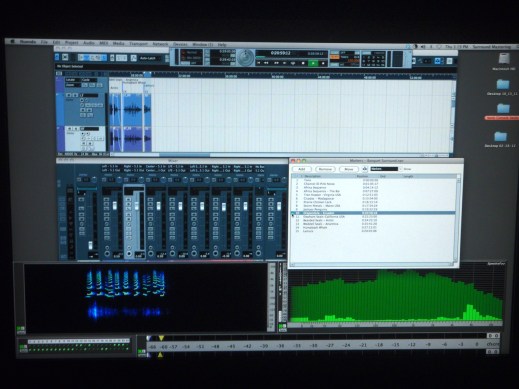
CLICK HERE TO DOWNLOAD: Animal Transcriptions: Listening to the Lab of Ornithology
SUBSCRIBE TO THE SERIES VIA ITUNES
This podcast culls material from seven hours of interviews about sound and animal life with scientists, engineers, programmers, archivists and other staff working in the Bioacoustics Research Program (BRP) and in the Macaulay Library of Natural Sounds (LNS) at the Cornell Lab of Ornithology. The interviews were conducted as part of a research project situated at the intersection between sound in poetry (prosody) and environmental sound (soundscape), specifically focused on animal vocalizations.
Poetry might help us to use, study, and deploy animal morphologies in ways that hope to better, rather than merely exploit, the human relation with such life forms, if not to improve the welfare of the species themselves. As Katy Payne, Mike Webster and others suggest, when we speak of animal “song,” we bring metaphors from the arts of poetry and music to complement our limited scientific understanding of the intricacies of animal communication.
At the same time, the process of capture, practiced by poets and recordists alike, heightens ethical choice in a time of accelerated species extinction: many of the techniques and resources developed at LNS and BRP are currently used for basic monitoring of conflict between animal life and human industry. This podcast explores both why and how the Macaulay LNS collects animal sounds (which some of the archivists refer to as “specimens”), and how such a collection is conceptualized, deployed and situated within a matrix of concerns (philosophical, aesthetic, ethical, and political) about human relations to other-than-human life forms.
This article continues the work on “rendering” I began here at Sounding Out! last spring. My interest in the Macaulay LNS, directed by Mike Webster and Greg Budney, introduced me to the vital, cutting-edge, and often mind-blowing work being done in BRP, under the leadership of Chris Clark as well as of a pioneer in animal communication and conservation such as Katy Payne, who founded the Elephant Listening Project and has also contributed to the podcast. Although I did not get Chris’s voice on record, his groundbreaking research, activism and leadership on behalf of a “singing planet” nevertheless loom large behind much of the work featured here. I was fortunate to be able to speak with Tim Gallagher, of Ivory-billed Woodpecker fame, in the Lab of Ornithology. The podcast also explores the crucial work of audio engineers Bill McQuay and Karl Fitzke, and of software analysts and research specialists LIz Rowland, Ann Warde, Laura Strickland, and Ashakur Rahaman, amongst others.
The staff at the Lab of Ornithology generously granted me a tour of their archive, showed me their gear, explained their sound visualization software, and sat me down in the surround sound listening room, where I heard some unforgettable recordings, which opened up my investigation to acoustic dimensions I had never before suspected. We sounded these dimensions in wide-ranging conversations about archiving, acoustics, field work, gear, communication, looking at sound, music, evolution, and conservation. This podcast offers, in a condensed form, some of the highlights of those conversations and experiences.
Thanks are due to the staff whose voices the podcast features: Mike Webster, Greg Budney, Bill McQuay, Liz Rowland, Alexa Hilmer, Ann Warde, Mary Winston, Tim Gallagher, Ashakur Rahaman, Katy Payne, Laura Strickland, and Karl Fitzke. Thanks are equally due staff who consented to be interviewed or otherwise helped out but whose voices didn’t make it onto the podcast: Chris Clarke, Christianne McMillan White, George Dillmann, Connie Bruce, Tammy Bishop. Thanks to Aaron Trammell for crucial editorial and technical help. Thanks finally to the Cornell Society for Humanities for the 2011-2012 research fellowship and the scholarly community that made this research possible.
Animal Transcriptions: Listening to the Lab of Ornithology – Contents and Credits
Intro
Mike Webster
Winter Wren, at normal and at one-half speed (Greg Budney, from The Diversity of Animal Sounds, Macaulay Library of Natural Sounds sampler CD)
Sound: Greg Budney and Musician Wren (Cyphorhinus arada, LNS 8897, Peter Paul Kellogg)
Archive 2:40
Mike Webster
Greg Budney
Bill McQuay
Sound: Ashakur Rahaman and Blue Whale (Balaenoptera musculus, played back at eight times normal speed, LNS 128263, Paul Thompson)
Acoustics 5:45
Liz Rowland
Bill McQuay, Greg Budney: Africa Sequence (The Bai)
Alexa Hilmer
Ann Warde
Sound: Greg Budney and Townsend’s Solitaire (Myadestes townsendi, LNS 50192, Geoffrey Keller) and Brown-backed Solitaire (Myadestis occidentals, LNS 136544, Michael Andersen)
Field 11:00
Bill McQuay
Greg Budney
Mary Winston
Tim Gallagher
Liz Rowland
Sound: Ann Warde and Beluga Whale (Delphinapterus leucas, LNS 126105, Donald Ljungblad)
Gear 14:30
Ann Warde
Ashakur Rahaman
Greg Budney: Beluga multi-array recording
Liz Rowland
Sound: Katy Payne (Humpback Whale)
Communication 20:05
Greg Budney: Madagascar lemur family group
Bill McQuay
Ann Warde
Laura Strickland
Bill McQuay: Treehopper sequence (NPR Radio Expedition)
Katy Payne
Tim Gallagher
Sound: Mike Webster and Crested Oropendola (Psarocolius decumanus, LNS 12830, Ted Parker), Common Potoo (Nyctibius griseus, LNS 59964, Paul Schwartz)
Looking at Sound 27:25
Liz Rowland
Laura Strickland
Alexa Hilmer
Ashakur Rahaman
Katy Payne
Sound: Alexa Hilmer and Humpback Whale (Megaptera novaeangliae, LNS 110847, Paul Perkins)
Music 36:05
Bill McQuay
Ann Warde
Laura Strickland
Katy Payne
Karl Fitzke
Alexa Hilmer
Sound: Laura Strickland and Wood Thrush (Hylocichla mustelina, LNS 11316, Arthur Allen; LNS 125223, Michael Andersen)
Evolution 40:10
Greg Budney (Spot-breasted Oriole duet, LNS 164045, David Ross)
Mike Webster (Black-throated Blue Warbler, LNS 27208, Randolph Little)
Katy Payne (Humpback whale group singing, LNS 118147, William Steiner)
Sound: Alexa Hilmer, Katy Payne with Common Loon (Gavia mimer, LNS 107964, Steven Pantle)
Conservation 47:05
Greg Budney: Attwater’s Prairie Chicken lek
Ashakur Rahaman
Tim Gallagher
Liz Rowland
Sound: Karl Fitzke and European Starling (Sturnus vulgaris, recording by Greg McGrath)
Recordings used with permission of Macaulay Library, Cornell Lab of Ornithology.
Starling recording used with permission of Greg McGrath.
–
Jonathan Skinner founded and edits the journal ecopoetics, which features creative-critical intersections between writing and ecology. Skinner also writes ecocriticism on contemporary poetry and poetics: he has published essays on Charles Olson, Ronald Johnson, Lorine Niedecker, Mei-mei Berssenbrugge, Bernadette Mayer, Cecilia Vicuña, translations of French poetry and garden theory, essays on bird song from the perspective of ethnopoetics, and essays on horizontal concepts such as the Third Landscape and on Documentary Poetry. Currently, he is writing a book of investigative poems on the urban landscapes of Frederick Law Olmsted, and a book on Animal Transcriptions in contemporary poetry. He teaches poetry and poetics in the Department of English and Comparative Literature at the University of Warwick.
—
 REWIND! . . .If you liked this post, you may also dig:
Listening to Disaster: Our Relationship to Sound and Danger— Maile Colbert
Animal Renderings: The Library of Natural Sounds— Jonathan Skinner
Six Years in Nodar: Sound Art in a Rural Context— Rui Costa
Share this:

Tofu, Steak, and a Smoke Alarm: The Food Network’s Chopped & the Sonic Art of Cooking

On Sunday evening, Susan discovered the tofu had gone bad. Unfortunately, the entrée for the evening was to be tofu with sweet chili sauce. We connect on Skype at 3:30pm, as Susan is cutting up vegetables. Usually, she has classical music on while she cooks; it helps her concentrate. She’s cut up so many vegetables in her life, that she finds music sweetens the repetitive activity. However, today I hear only the rewarding sound of her knife bisecting baby bok choy.
Susan and I don’t talk about this sound, but it is certainly familiar. She says she cuts up the pieces small, as Mimi likes the chunks of bell pepper to be as little as possible.
My ethnographic work on cooking is birthed from a very personal place: Susan is my Aunt and Mimi my mother. They live together in Kingston, Massachusetts, where Susan’s cooking nourishes Mimi through her ongoing chemo and radiation treatments. Using Skype, I watched and asked questions remotely from Raleigh, North Carolina on three consecutive evenings during their dinner preparation in order to more deeply understand cooking as an art. From the first moment of preparation each night, Susan and I talked about the meal, the cooking techniques, and her feelings about cooking and eating–and I noted that sound emerged as central to her culinary process.
Opening my ethnographic practice up to sonic analysis enables new definitions of both chef and kitchen as lively, complex sites, constantly negotiating with each other. Taking the role of sound into account in the practice of cooking allows me to construct new interpretations of cooking artistry that considers everyday negotiations and embodied limitations not as “threats” to the cooking art, but, instead, as elements that enrich its artistry.
My sonic analysis specifically chafes against dominant formations of “cooking as art” in the contemporary moment, exemplified by reality television programs such as The Food Network’s Chopped, which constructs a static configuration of space with the cook as subject and the meal as art object. On Chopped, four chefs are given thirty minutes and four ingredients. Using these items, they must make a dish to be judged by a panel of food experts. These items are often strange or incongruous: on one episode, they had to make an appetizer out of frosted wheat cereal, baby red romaine lettuce, black garlic, and quahog clams. The success of a dish is measured by the chef’s ability to balance the necessary experimentation with an implied universal of good taste, texture balance, and pleasuring preparation. In other words, Chopped collapses art-making and capital into the “art object-meal,” reproducing a tired definition of “high art” that necessitates access to wealth and privilege, because the creation of “art” requires expensive foodstuffs, sophisticated kitchen technologies, and a highly controlled visual and sonic environment.
.
In my Aunt Susan’s kitchen, there are a number of sonic and spatial negotiations that preclude her cooking from the singular criteria of artistry perpetuated by Chopped. Specifically, my Aunt Susan’s cooking does not meet Chopped’s standards because it requires negotiations related to her personal mobility and my mother’s health. My Aunt uses a wheelchair to get around her house, and, as a result, some kitchen appliances are harder to reach. My mother’s chemo and radiation treatments mean that she has both complicated limitations to her diet and fluid culinary desires.
In seeking to understand the fluid challenges of Susan’s cooking, I designed my virtual sensory ethnography by combining two methods, defined respectively by Sarah Pink and Jenna Burrell. In Sensory Ethnography, Pink proposes that the ethnographer is immersed in smells, tastes, sights, and sound during the ethnographic process. Things that might seem mundane such as the sound of onions being chopped, for example, can actually reveal a complex set of relations about the cook and their process. The cook might be listening to the chopping as a rhythm in her process, like background music: the pleasing sound as it hits the cutting board. But if the onion isn’t fresh, the sound is less crisp, less crunch, the sounds changes to speak of a different type of knowledge, and she must act differently in response. In “The Field Site as a Network,” Burrell proposes an understanding of the ethnographic field site as a network rather than a singular object. The field site, in other words, is a heterogeneous set of connections, always expanding. Using a technology like Skype to do ethnography is not “ethnography at a distance,” she implies, rather it is the field site manifested through a multiplicity of connections. It simply reflects the ever-changing set of relations that comprise our world.

Tools for the sensory ethnography of the kitchen. Borrowed from Travelin’ Librarian @Flickr.
After Susan has cut up all the longer-cooking vegetables and set the chili sauce to simmer, we disconnect. At 5:15pm, we connect again. Susan unwraps the tofu, and something isn’t right. She calls Mimi into the kitchen, and, after some deliberation, they decide that steak will need to replace the tofu. It’s a disappointment as the tofu would have tasted best with the sweet chili sauce.
The sonic landscape of Susan’s kitchen has been, up to this, point, fairly solitary and controlled. When Susan welcomes Mimi in, the kitchen becomes a lively space of conversation, interaction, and negotiation. The production of the sonic space in the kitchen, from solitary preparation to lively interaction, is a crucial part of Susan’s art. The kitchen has undergone what Brian Massumi, in his essay “Floating the Social,” calls a “modulation of the dimension of perception [rather] than an encoding of separate pieces of data or a sequencing of units of meaning” (41). Such a sonic modulation challenges the narrative of lone artist-chef creating object-meal. Rather than segmenting the meal into a set of data blocks (chef, food, preparation time, and eater), Susan orchestrates the art of cooking as participatory with Mimi.
In the kitchen, Mimi also examines the tofu. She offers some information about it, and then joins Susan to figure out what other protein might work.
Once the steak is decided upon, Mimi exits and Susan works again at preparing dinner.
Susan’s sonic modulations, in this case conversation, allow for immersion and engagement in the lively sonic space of her kitchen. Mimi and Susan create a co-constitutive relationship between chef and eater. Unlike on Chopped, the eater is a participant rather than a judge.
Susan and I disconnect from Skype to give the steak time to thaw. We connect once again, at 6:20PM, once the steak has been properly thawed. As we discuss how Susan learned to cook, the smoke alarm suddenly comes to life.
An unplanned sonic intervention has occurred. The smoke alarm has its own desires; it insists on total control of the sonic space. Susan’s response is a necessary modulation. She counters the smoke alarm’s desire for sonic control with words, saying that it triggered accidentally because of the steak, sizzling in the pan. The interruption of the smoke alarm exemplifies how Susan’s cooking technique is not one of dominance. Rather than producing clear boundaries between chef and eater, the food and the preparation, the kitchen and its outside, Susan allows for fluid boundaries, welcoming chance and the unknown into her art.

Setting off the alarm image borrowed from Gwenaël Piaser @Flickr.
In the context of Susan’s kitchen, Massumi’s definition of modulation applies, however subtle. These domestic modulations are not a movement toward total control, but, instead, a lively negotiation with a set of partly unpredictable relations – an orchestration of the sonic space. The idea of sonic orchestration allows us to consider the complex set of possibilities existing between the choices made by the subject, here, the chef, and the presence of a set of potentialities, such as the smoke alarm. To Susan, the art of cooking is not the reduction or elimination of “threats”; her art is the negotiation of modulations. In contrast to Chopped, where careful boundaries are constructed in order to protect the privilege inherent in its definition of art, Susan’s art lies in her engagement with the lively potentialities of the sonic art of cooking.
—
Seth Mulliken is a Ph.D. candidate in the Communication, Rhetoric, and Digital Media program at NC State. He does ethnographic research about the co-constitutive relationship between sound and race in public space. Concerned with ubiquitous forms of sonic control, he seeks to locate the variety of interactions, negotiations, and resistances through individual behavior, community, and technology that allow for a wide swath of racial identity productions. He is convinced ginger is an audible spice, but only above 15khz.
—
REWIND! . . .If you liked this post, you may also dig:
Sound-politics in São Paulo, Brazil–Leonardo Cardoso
Sounding Out! Podcast Episode #5: Sound and Spirit on the Highway–David Greenberg
Listening to Whisperers: Perfomance, ASMR Community and Fetish on YouTube–Joshua Hudelson
Share this:


Current Top Posts





April 2021

January 2020

November 2019

October 2019

August 2019

April 2014

November 2017

March 2015

December 2017

October 2015
 Sounding Out!
Recent Comments