
The Top Ten Sounding Out! Posts of 2015!


 8). “
8). “


—
Featured image by bostik_ @Flickr CC BY-NC-ND.
—
 REWIND! . . .If you liked this post, you may also dig:
Misophonia: Toward a Taxonomy of Annoyance — Carlo Patrão
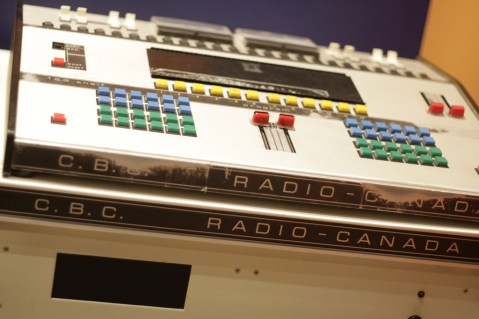
Sounding Out! Podcast #38: Radio Frequencies, Radio Forms, LIVE — Monteith McCollum and Jennifer Stoever
Mediated Sexuality in ASMR Videos — Emma Leigh Waldron
Share this:

A Conversation With Themselves: On Clayton Cubitt’s Hysterical Literature
 Welcome to our second installment of Hysterical Sound. Last week I discussed silence and hysteria in relation to Sam Taylor-Johnson’s silent film Hysteria, suggesting that the hysteric’s vocalizations go unheard because we have tuned them out. In upcoming weeks Veronica Fitzpatrick will explore how the soundtrack of The Texas Chainsaw Massacre can be considered hysterical in its rejection of language and meaning and John Corbett, Terri Kapsalis and Danny Thompson share an excerpt from their performance of The Hysterical Alphabet.
Today, Gordon Sullivan, considers the video art series Hysterical Literature in relation to a long history of women’s vocalizations serving as aural fetishes for the pleasure of male listeners. In doing so he troubles the dichotomies raised by the project, dichotomies between masculine visual pleasure and feminine aurality, between language and bliss.
— Guest Editor Karly-Lynne Scott
—
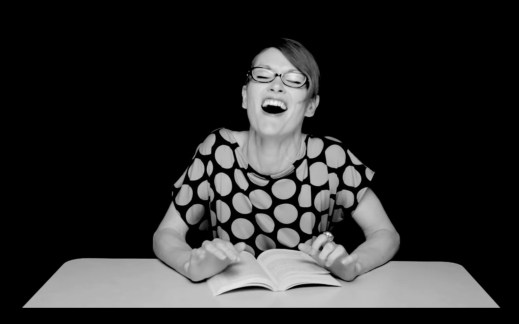
Each video in filmmaker and photographer Clayton Cubitt’s Hysterical Literature series (2012-) – which consists of 11 “sessions” so far – appears deceptively simple. We see a black and white frame with a clothed woman seated at a table, visible from the sternum up, holding a book of her choosing. She announces her name and the title of the book before beginning to read. While reading, the subject generally begins to stumble, the speeding of reading slowing down or speeding up, changes in pitch and emphasis growing more pronounced. Eventually, she is able to read no more and gives in to sighs, groans, or silent, eye-closing paroxysms. When she returns to herself, she announces again her name and the title of the book before the “session” ends.
Despite the consistency of the concept, the 11 “sessions” have been viewed a combined 45 million times, and perhaps much of the appeal of the series is in what it doesn’t show. What we do not see – and indeed do not hear – is the “assistant” beneath the table with an Hitachi Magic Wand physically stimulating the subject. What might have been errors or difficulties in the reading are retroactively understood as evidence of the difficulty of “performing” under the attention of the vibrator.
According to Cubitt, the series’ title and conceit nod at the Victorian-era propensity for naming “unruly” female behavior as “hysterical,” where the cure was often the application of a vibrating device to produce “release.” Female sexuality is therefore the absent center of Hysterical Literature – it is there, but can be disavowed (at least visually), a trend that places it firmly in a culture that has an ambiguous relationship to female pleasure and its sounds.
As John Corbett and Terri Kapsalis note in “Aural Pleasure: The Female Orgasm in Popular Sound,” the sounds of female pleasure are “more viable, less prohibited, and therefore more publically available form of representation than, for instance, the less ambiguous, more easily recognized money shot” that characterizes “hard core” pornography (104). Certainly Hysterical Literature’s home on YouTube would seem to confirm Corbett and Kapsalis’ claim that sounds of female pleasure “occur in places…that would otherwise ban visual pornography” (104).
Indeed, the question of pornography looms over Hysterical Literature, as Cubitt seeks to push on YouTube’s “Community Guidelines” by exhibiting female pleasure sonically (See also Joshua Hudelson for a discussion of sexual fetish and the ASMR community on Youtube). Here the sound of the subject’s voice echoes Linda Williams’s description in Hard Core: Power, Pleasure, and “The Frenzy of the Visible,” where the female voice “may stand as the most prominent signifier of female pleasure” that can stand in for the pleasure we are denied access to visually (123). In this way, the sound of female pleasure is, as Corbett and Kapsalis suggest, always evidentiary (104). For them, a woman’s pleasure may/must be corroborated by her sounds (For an alternative view of gender and sound as it relates to women, see Robin James’ “Gendered Voice and Social Harmony”).
This pleasure calls to mind Roland Barthes, who saw the possibility of bliss and representation as fundamentally incompatible. For Barthes, the “grain” of the voice is a bodily phenomenon, not one of language and signification. For him, “the cinema capture[s] the sound of speech close up…and make[s] us here in their materiality, their sensuality, the breath, the gutturals, the fleshiness of the lips, a whole presence of the human muzzle” (67). This “materiality” has a single purpose: bliss. This bliss doesn’t reside in language, with its representational aims, but in those aspects of the voice that are not ruled the signifier/signified dynamic.
What draws me to these discussions – and their relation to Hysterical Literature – is the almost overwhelming insistence on dichotomy. The visual “evidence” of hard core pornography is juxtaposed to the aural “evidence” of female pleasure. Male pleasure (on the side of the visible) is opposed to female pleasure (on the side of the invisible). Representation is incompatible with “bliss.”
This logic is not confined to discussions of sound, but is echoed in some of the writing on Hysterical Literature as well. In her profile (which included her own “session”), dancer and writer Toni Bentley argues that the series “juxtaposes the realm of words literally atop the realm of the erotic.” In her view, this immediately becomes a conflict: “Who would win the inevitable war? Upper body or lower? Logic or lust? Prefrontal cortex or hypothalamus?” Though her list of oppositions may seem idiosyncratic, she still insists on division before suggesting that what might emerge instead is that they “meld together.”
Bentley is not alone in understanding the videos this way, as other subjects find a clean break between “I am reading” and “I am orgasming” that would suggest a strict dichotomy between, as Barthes would put it, representation and bliss. For Bentley, this is a “literate, and literal, clitoral monologue that renders the Vagina Monologues merely aspirational.” I’m not sure that “monologue” captures the depth of what is happening in each Hysterical Literature session. Cubitt’s goal is to reveal something about his subjects, to use “distraction” as a means for revelation that ultimately removes him from the scene. Indeed, the participation of the vibrator-wielding “assistant” and Cubitt’s status as filmmaker argue that instead of a monologue, the series facilitates what Cubitt calls “a conversation with themselves.”
Though Cubitt and his subjects seek to maintain the division between the subject and her distraction, the series is far more interesting than that dichotomy would suggest. Hysterical Literature is interesting not because it juxtaposes “reading” and “orgasm,” but rather because of the rigor with which it is willing to dwell in between these two (apparently) opposed states. There is no cut, no switch in which a subject goes from reading to not-reading. Every video begins and ends the same way – we open on a woman telling us her name and her book, and end the same way, orgasm over with. In between, however, we have a combination of the book chosen by the subject and her augmented reading. Rather than the sighs and groans that supposedly evidence the subject’s pleasure, the more interesting elements are the sounds of the book transformed. The cadence that slows down, speeds up, gets lost, and must repeat. The drawn out vowels that teeter between a gracefully pronounced word and the abyss of unintelligibility. That the “struggle” will end in orgasms and the loss of speech is less significant than the attempt to maintain a voice in the face of what cannot be denied.
If we grant a gulf between “representation” and “bliss,” Hysterical Literature suggests that such a gulf is a productive place to be.
—
Gordon Sullivan is a PhD candidate at the University of Pittsburgh, currently writing a dissertation on questions of sensation and the political in exploitation films.
—
Featured image taken from “Hysterical Literature: Session Four: Stormy“.
—
REWIND! . . .If you liked this post, you may also dig:
Echo and the Chorus of Female Machines — AO Roberts
This Is How You Listen: Reading Critically Junot Díaz’s Audiobook — Liana M. Silva
Standing Up, For Jose — Mandie O’Connell
Share this:


Current Top Posts





April 2021

January 2020

November 2019

October 2019

August 2019

April 2014

November 2017

March 2015

December 2017

October 2015
 Sounding Out!
Recent Comments