
Hold This Thread: A Partial History of a Rock n’Roll Relationship
I got my first computer, A Packard Bell desktop, in 1995, when I was 11, and my parents would only buy it after three trips to Comp USA where they found a salesman with enough patience to make them feel OK about hoarding a year’s worth of PC Magazines in a box under my bed that I was supposed to use for research, but really I just wanted to get the best computer for games.

“This isn’t just for games,” my parents said.
And there was, of course, a ton of pre-loaded educational software, like Encarta, sending my folks into a state of catatonic euphoria dreaming of Ivy League schools, but there was also a Weezer music video. Specifically, the Spike Jonze-directed video for “Buddy Holly” inexplicably hidden in the computer’s media files.
The existence of “Buddy Holly” on my computer was as mysterious as the video’s special effects. Now considered by aficionados to be a creative high point of the medium, the clip showed the band playing inside an episode of Happy Days, and to my pre-adolescent sense of humor was utterly hilarious.
More than that, through the backdoor of Windows 95, Weezer, with this music video, attached themselves onto my brain in a real way, and with their humor, made the first significant bridge connecting my musical and emotional islands in a way a CD alone never could. Sure, I liked the song, but I loved that music video.
Aggressively aging through middle and high school, through Nine Inch Nails and Black Flag, Weezer’s first album was just a blue CD stacked with a bunch of other old birthday presents I couldn’t return. Their music wasn’t harsh enough, and it dealt with realities (sentimental longing, romantic frustration, imagination seen as inner-brain reclusivity) that I hadn’t yet developed the ability to experience.
Then a couple years into high school, on a homemade VHS tape of six hours worth of videos recorded off MTV2, I was once again confronted with the band, this time via their video for “Say It Ain’t So.” This one was also pretty funny, but it took the band out of a pastiche and into a fully-realized suburban rock fantasy: playing guitars in a garage, doing laundry, and kicking a hacky sack in the backyard.
Even more importantly, this was the first time I realized how good their music was. Mixing that ever-present humor, with heavy guitars and unapologetic pop hooks, Weezer were reincarnated as instant personal favorite; as anti-venom to blindingly angry music and a reflection of my own growing inner-complexity. The content of the songs on their first album, Weezer, finally registered with me too: the fragility of relationships with “Say It Ain’t So” and the liberating loneliness of geekdom portrayed with “In The Garage,” to me, was deeply profound.
It didn’t take long for me to move on to 1996’s Pinkerton, Weezer’s second album, and with its discovery came detailed maps guiding me through new musical/emotional landmasses. Pinkerton is built around a conceit of unfiltered confession, with moments of terrifying straightforwardness, but tempered with self-deprecating humor. Songs like “Across the Sea,” “Pink Triangle,” and “Falling for You” tackled the irony and inevitability of heartbreak to the richest and most complex pop the band would ever create. Pinkerton not only mapped my feelings, but fueled them as well, keeping me anchored to the disc for years.
In point of fact, as I grew into emotional self-realization, Weezer’s first two albums became my sad records. These songs, while ironic in tone, were completely genuine in content and delivery, genetically engineered to combine with my particular brain chemistry.
Pinkerton, though, was a commercial disappointment, and since that self-perceived fail Weezer’s interests shifted from writing clever songs, tempering their rich content with sturdy hooks, to jokes. Their third album, also called Weezer, was released in 2001and presented the band as dually trying to tap into the geek ethos of their first record, but this time strictly in visual terms. They became a novelty band, writing “funny” pop songs, which are silly and sentimental, but lacking serious emotional content.
They play shows sponsored by Axe body spray, wear costumes on stage, put an actor from Lost on their latest album cover, even going as far as to name the album after his character; Weezer are now totally vapid. Everything I loved about the band was disintegrated, leaving nothing but a scorched caricature behind.
 Blame that on the music business if you want, on the shifting roles of music in culture (as an art form now more closely related to branding and licensing as a way to disseminate culture), or even on the needs on the music-listening public, but that would frame “Buddy Holly’s” appearance on my pre-adolescent computer in a similar way, as nothing more than a cash-in on some big market licensing.
Well then good job, I guess. And, I guess, with all today’s corny gimmicks they’re just trying to do the same thing to another generation of fans fifteen years later. But, It’s hard for me to think about the band Weezer are now, making it too heartbreaking to listen to those two albums I used to love so much. Weezer were an important band to me. I discovered them when I was new to music, just forming my tastes, and Weezer found a way into my brain by exploiting my non-musical inclinations, and their songs and their songs mapped my emotional center. I’m worried their directions will have me going in circles forever.


Share this:

Como Now?: Marketing “Authentic” Black Music
With all the excitement over the new release of Mavis Staples’s You Are Not Alone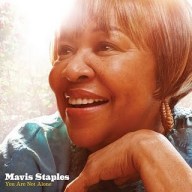 (Anti-, produced by Wilco’s Jeff Tweedy), I can’t help but be skeptical of the outpouring of Indie love for the album, even as I have been spinning (and enjoying) it myself. It isn’t the positive reaction to Staples’s talent that is surprising—at 70-plus years, Mavis has been exquisite for quite some time now—but rather the way in which critics have freighted her newest record with the “uplift” (AV Club) of a whole lot of souls that haven’t ever been to church (at least not in a good long while). Her voice is described as alternately “raw” (Paste) and full of a “depth, power, and warmth that seem increasingly rare in music today” (hear ya); Consequence of Sound, who cites Tweedy’s hand at the boards as the reason for all the current music blog attention, calls her voice “empathetic. . . powerful. . .soulful. . .touching” and “wise.” If the blogosphere is to be believed, Staples’s voice, “as authentic as it gets” (buzzine), could really save us all in these tough times. Come to think of it, the fervor of (white) faith in “authentic” black music shouldn’t be that surprising either, given the way in which race has always been entangled with popular music history in the United States.
Authenticity and the immediacy of experience it implies, have had a long history in the music industry—especially in reference to black artists—stemming back at least to the Fisk Jubilee Singers in the 1870s, an all-black acapella troupe celebrated for  powerful live performances whose breakthrough concert also happened to be for a crowd of hipsters: the wealthy congregants of Henry Ward Beecher’s Brooklyn church in 1871. Beecher gave the band his enthusiastic support, namely because he felt their sound gave listeners direct access to “the inner lives of slave hearts expressed in music” even after slavery had formally ended.
While the sound of You are Not Alone differs greatly from the Jubilee Singers, the reviews of the record belie and inflame a similar desire for unmediated access to the emotive qualities (a)historically associated with black life and sound in the U.S.: namely suffering, faith, and catharsis. And Staples’s record is indeed not alone in this. Many of the sentences from the Staples reviews could easily have been lifted from those of another recent gospel record to capture the indie imagination, Daptone Records’s 2008 release Como Now. Starkly different from the breezier, countrified sounds of You Are Not Alone, Como Now is an acapella gospel recording made in a small town in Panola County, Mississippi. The record was a risky release for Daptone, a Brooklyn-based label that has consistently produced new funk and soul records since its inception in 2002 by the likes of Sharon Jones and the Dap-Kings and The Budos Band. Although old school sound has always been a part of the label’s ethos—its engineers use primarily analog equipment, for example, a major reason Amy Winehouse recorded her throwback Back in Black album at Daptone studios in 2006—marketing stripped-down gospel to its audience of predominately white hipsters would nonetheless prove a daunting task. Treating Como Now as a labor of love and a paying of dues, Daptone attempted to spark interest in the release by relying on the familiar marketing strategies of immediacy, authenticity, and nostalgia.
 While Como Now’s tagline boldly proclaims that the music was “Recorded Live at Mt. Mariah Church on July 22, 2006”—and, thus, emphasizing the Now of the title—the cover’s vintage civil-rights era design evokes the Como of yesterday, or more accurately, encourages listeners to hear Como now and Como yesterday as one and the same through the vehicle of “raw gospel testimony.” Como Now’s depiction of the sounds of the past as echoes within the present is as ambiguous as it is uncanny, a sonic window thrown open to simpler times happening somewhere out there, “deep in the heart of Mississippi” right now.
The introductory promotional video from Como Now’s website (also uploaded on Youtube) represents the record as an aural time machine to a land and a people isolated from and largely unchanged by technology, modernity, and history.
Producer Michael Reilly’s voiceover locates rawness, emotional release, and “real religion” in the sound of black voices, in no small part because the video places his measured Yankee pacing in sonic tension with the song that accompanies it, Mary Moore singing “When the Gates Swing Open.” Over Moore’s impassioned singing, Reilly assures listeners in a muted deadpan that they will hear “no pretty piano playing or clever guitar picking, just voices. Pure soul stirring fire from the heart.” Reilly’s sentiments not only evoke the gushing Jubilee Singers’ press, but also the ethos of the infamous folklorist John Lomax, who made field recordings in Southern prisons in the 1930s because he sought “negro singers untainted by white musical conventions” (as he wrote in 1934’s “Sinful Songs of the Southern Negro”); singers in Como were actually recorded by John’s son Alan in the 1940s. Reilly’s voiceover goes on to frame the Como singers as practitioners of what the senior Lomax called “the real art of simplicity,” as stripped-down, natural singers who are artful mainly in their artlessness. While Reilly’s webcopy mentions how “children and grown folks alike have been living and breathing gospel for as long as they can remember,” for example, he fails to mention how the residents of Como have also been writing, rehearsing, and performing it.
Thus, Como Now’s marketing disavows the real artistry of the Como singers, even as it seeks to celebrate it. The simple, natural quality endowed to the singers of Como is visually accentuated by stark imagery representing the town as a down-at-the-heels, living museum of the black life of yesteryear. In the youtube clip, Moore’s soaring and spirited singing animates stills of blooming cotton fields, vintage RCA microphones, and splintering upright pianos.  Save for the album cover and one blurry still of a child, there are no shots of the people of Como in the introductory promo, effectively isolating Moore’s voice from her corporeal and historical body. This isolation allows listeners to supply their own fantastic imagery and forces them to rely on historical stereotypes about the naturally sonic qualities of black people. By choosing to disembody Como’s voices, the promotional video represents the album’s music as emanating from, and even haunting, Panola County’s lush green fields and battered strip-malls rather than showing it to be a hard-fought creation of the residents themselves. To quote Lomax again: “[The Negro’s] songs burst from him, when in his own environment, as naturally as those of a bird amid its native trees.”
Although the impulse to make the album reflects a progressive desire to respectfully pay tribute to the black gospel tradition in American popular music—and to provide quality artists like The Como Mamas with critical renown and monetary compensation—Como Now relies on well-worn racial tropes to do so. It also points to the continued presence in American culture of an essentialized “black voice” that is naturalized as more emotive, truthful, and soulful than other voices. While this phenomena is socially constructed and the sounds thought of as “black” have shifted considerably—when I play early recordings of the Jubilee Singers my students consistently tell me that they sound “white” like a “glee club”—I find it fascinating that the language used to describe them has largely remained the same. While Como Now’s producer at least acknowledges that, in Como, “no one has to pick up cotton anymore, thankfully,” the marketing trades on the possibility that, while slavery and sharecropping have ended, its sonic labors have not only endured, but are readily available for download.


Share this:


Current Top Posts





April 2021

January 2020

November 2019

October 2019

August 2019

April 2014

November 2017

March 2015

December 2017

October 2015
 Sounding Out!
Recent Comments