
Easy Listening: Spreading and the Role of the Ear in Debating
DOI: https://doi.org/10.59350/f1x7n-zjs89
As I write, my institution, the University of Denver, is gearing up to host the first of the 2012 Presidential Debates. The debate promises a polite and eloquent exchanging of reasons on matters of public concerns. This image of “the good man [sic] speaking well,” roughly represented by Obama and Romney, pervades popular culture representations of debate. While there are certainly some forms of debate that stress public reason, like Worlds style debate, most other competitive styles of debate, look and sound very different.
American “Policy Debate,” the type of debate I will explore today, is a high school and collegiate competitive activity where two-person teams argue the merits of governmental legislation. In every round there is an affirmative that advocates an action and a negative defending the status quo, or some alternative. The debate prompts, or resolutions, change yearly and produce research collections comparable to a master’s thesis. But, it is not the research that captures newcomers’ attention. No, it is the velocity that information travels. Indeed, highly successful debaters transform their voice into a high-speed information weapon, sometimes speaking up to 400 words per minute (wpm).
Nobody really knows who decided that speaking quicker than her/his opponents would be a viable strategy. Some allege that David Seikel and Mike Miller, a dominant team from the University of Houston in the late 1960s invented the strategy. However, Miller denies this fact, insisting that the practice of speaking quickly, or “spreading,” predated their success by a couple years. While it is difficult to pin down exactly when talking becomes spreading, studies indicate passive comprehension has a threshold of around 210 wpm. Simply put, spreading is a vocal practice that propagates more arguments than an opponent can rebut, forcing the opposing team into a strategic choice of conceding and/or inadequately responding to some positions.

Almost immediately after its introduction, spreading became a polarizing issue. While some alleged that speed undermined communicative argumentation, others applauded its ability to foster critical thinking. Rate of delivery became a site for what Douglas Ehninger called in 1958 the debate about debate: should debate be concerned with public reason or technical proficiency? Spreading figured prominently in these discussions because it circumscribed debate to the technical sphere, the quick pace precluding lay comprehension. As a site for cultivating what argumentation theorists Ron Greene and Darrin Hicks call “the ethical attributes required for democratic citizenship” (101), debate operates as an ideal problem space to inquire about the relationship between listening and judgment that underwrite argumentative exchanges.
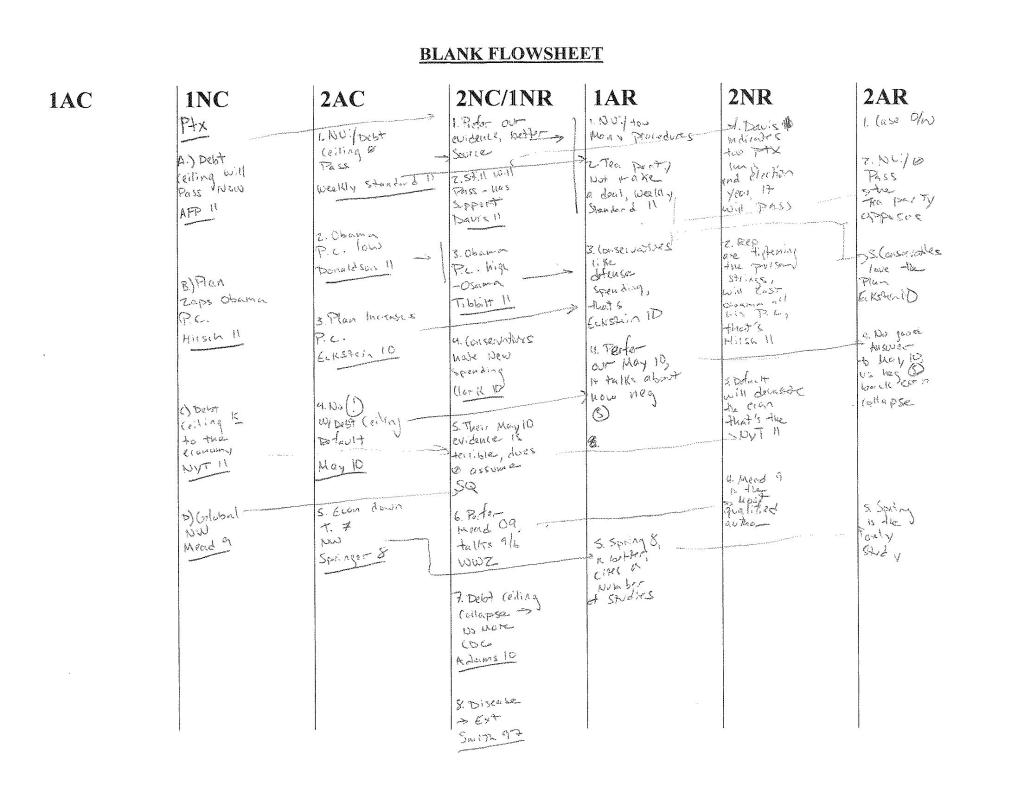
Extracting meaning from a spread requires a trained ear that can delineate the nuance of tone, rhythm, code, and breathing, while translating these sounds into symbols that are then recorded onto a “flow” (a document where participants keep notes of the debate). This technical sphere of argumentation, then, requires what cultural historian Jonathan Sterne calls in The Audible Past: Cultural Origins of Sound Reproduction an “audile technique,” or a set of culturally defined listening practices. Here, spreading denotes not just rate of delivery, but encompasses a range of other practices that attend to the debate. Yoking velocity with technical proficiency, spreading requires an audile technique that attunes the ear to speed, while calibrating the viscera to quickly appraise each position espoused. Extending Sterne’s observations into an embodied theory of listening, I argue that spreading entrains visceral judgment that organizes expertise under the banner of “exchange-value,” instead of its veracity. Reflecting what Jodi Dean calls in Blog Theory: Feedback and Capture in the Circuits of Drive capitalism’s communicative style, I contend, audition in this case privileges flow over content.
Today, debaters are much faster than their 1960s counterparts. Take for example the championship round of this year’s (2012) National Debate Tournament (NDT). The 2012 topic debated the merits of the United States’ democracy assistance in the Middle East.
Finals – NDT 2012 Northwestern BK v Georgetown AM – 1AC + CX
In the speech linked to above, dubbed the first affirmative constructive (1AC), the speaker’s first words are easily audible, but as the seconds expire, the affirmative’s words increase in velocity; syllables collide and contort. The speaker pushes through, taking a split second to take a short, fast breath (called a clutch) before he begins his next word. To the seasoned ear, the voice is instructive; a slower, deeper tone signifying an assertion. also known as a “tag,” and a faster tempo indicating evidence. Out of this buzz, debaters’ are able to discern distinct phrases, like “Arab Spring,” “economic down turn,” and “nuclear war.” In 9 minutes the speaker outlined his advocacy, consisting of multiple scenarios for planetary extinction.
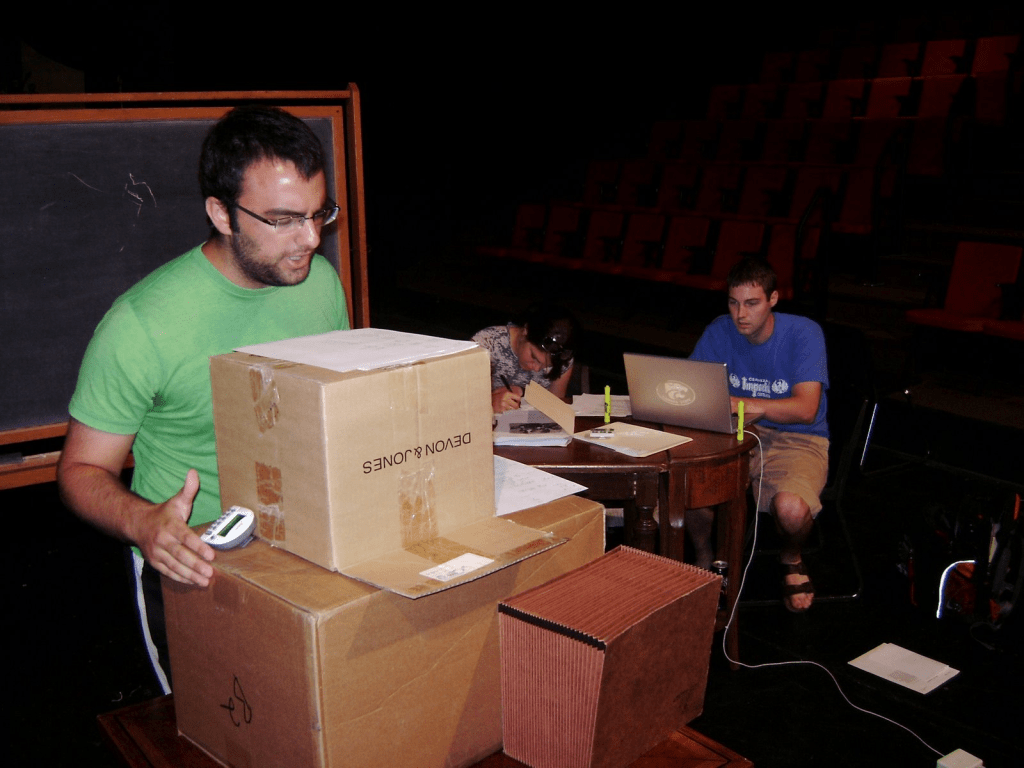
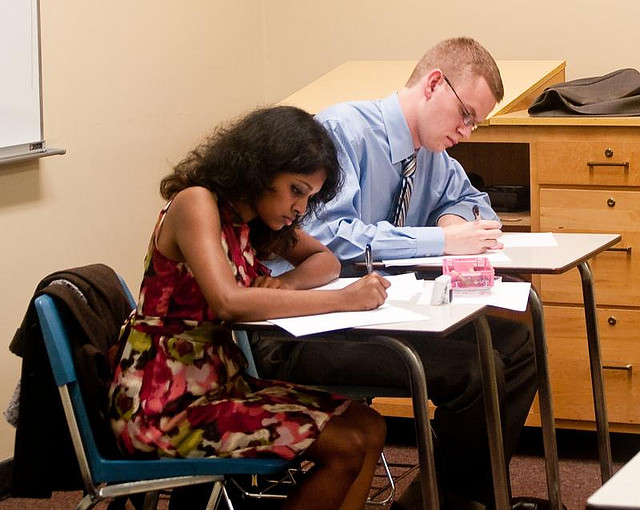
During the 1AC, the negative team is carefully listening, gathering the affirmative’s evidence, and translating the speech into symbolic shorthand, termed flowing. In addition to its purely functional use—to keep track of positions—the flow also provides third party adjudicator(s) a document to evaluate the debate.
After a period of questioning, the first negative speaker, linked to below, elaborates his positions: a procedural concern that the affirmative is outside the confines of the resolution; two philosophical objections (or critiques); two alternative courses of action that resolve the affirmatives exigencies, while conserving the president’s political capital, so Obama can push for Jackson-Vanik legislation; and finally direct responses to the affirmative position.
Finals – NDT 2012 Northwestern BK v Georgetown AM – 1NC + CX
Coupled with the “burden of rejoinder,” which dictates a conceded argument is a true argument, speed becomes a strategic weapon. The more positions, the more likely one will be missed, granting the other team an advantage. For example, failure to address the negative’s concerns about the Jackson-Vanik legislation means that the affirmative position would result in a US-Russian nuclear war culminating in extinction and probably losing the affirmative the debate. Even less dire claims exert force in the round. For instance, missing the relatively innocuous claim that Obama does not have political capital abrogates the negative’s whole Jackson-Vanik position. After all, what would be the point of Obama conserving capital, if he has none to begin with?
Debating thus requires a refined ear capable of quickly determining a argument’s merit, while allotting the proper amount of attention. If a claim is deemed irrelevant, the debater can focus on a more relevant position, keeping her/his ear piqued for beginning of the next position.
This confluence of speed, evidence, time constraints, and a burden of rejoinder cultivates an instrumental relationship to expertise. Media theorist Jayson Harsin suggests in “The Rumour Bomb: Theorising the Convergence of New and Old Trends in Mediated US Politics” that these “conditions encourage a relationship of viewer to text (slogan, soundbite, fragment) which is essentially fiduciary, based on trust, not critical understanding”(101). Indeed, time constraints coupled with a proliferation of positions, produces a sound to listener relationship, where the veracity is assumed and significance is dictated by strategies, not the least of which is vocal. This is because there is simply not enough time to evaluate the credibility of each piece of evidence read. Patrick Speice and Jim Lyle, two debate coaches, explain that “Debaters have to be focused on the arguments being offered, have to be able to understand them very quickly, and they have to be able to discern which arguments are of the greatest significance for the round.” Evidence, then, is reorganized along a strategic continuum—the more likely an argument may help or hinder a team’s chances of winning, the more important it becomes. This can precipitate a “race to the margins,” where one side tries to find an obscure argument to beat back more probable analysis. This is not to say that one kind of argument is better than the other. But, the rationality used to organize the evidence relegates veracity to the epiphenomenal. This fosters an epistemic leveling, indexing expertise according to its exchange-value.
The repetitive nature of debate inscribes these listening habits into the body, shaping future interaction. Writing on the pious ear, cultural anthropologist Charles Hirschkind explains in The Ethical Soundscape: Cassette Sermons and Islamic Counterpublics, “patterns of sensory attunement configured through continuous practice of such a listening constitute an intensifying perceptual background for […]ethical agency and public reason”(28). Similarly, the practice of listening to debate rounds, along with the movement of the hands, quickness of thought, and so on are burned into an affective substrate, defining the horizons of future action. That is, through the repetition of debates, audile technique is entrained into motor memory, residing just below the conscious register of thought, acting as a potentiality. Most often, this listening technique is activated in the next debate round, the spread’s distinctive sound generating an anamnestic effect, activating the policy debate ear.
In sum, spreading proffers an audile technique concerned with the exchange-value of evidence, where the “best claim” is the one that wins the round. It entrains a technical mode of audition, aiding the debater in making quick decisions. This listening style underwrites a knowledge economy, where expertise becomes just another commodity that is bought, sold, and traded to support pre-formulated opinions. “Under communicative capitalism,” Jodi Dean writes, “an excess of polls, surveys, and assessments circulates, undercutting not only the efficacy of any particular poll or survey but the conditions of possibility for knowledge and credibility as such. There is always another survey, done by another group or association with whatever bias and whatever methodology, displacing whatever information one thought one had” (103).
—
Justin Eckstein is a doctoral candidate and former director of debate at the University of Denver. His work explores the intersection of listening, affect, and argumentation. Justin’s writing has appeared in Argumentation & Advocacy, Relevant Rhetoric, and Argumentation in Context. Currently, he is writing his dissertation on the micropolitics of podcasting in the post-deliberative moment.
—
Share this:

The Plasticity of Listening: Deafness and Sound Studies

“Listening Post” by Flickr User Theory
Editor’s Note: Steph Ceraso‘s post wraps up Sounding Out!’s three-part February forum on the intersection of deafness, Deaf Studies, and sound studies. However, SO! would like this series to open an ongoing conversation. If you would like to respond to these posts and/or pursue your own avenue of inquiry, please direct your pitches to jsa@soundingoutblog.com. We’d love to hear from you. By the way, if you missed (or want to re-read) Liana Silva‘s “Listen to the Word: Deafness and Participation in Spiritual Community” click here and C.L. Cardinale‘s “my mother’s voice, my father’s eye, and my other body: the sound of deaf photographs” click here.
There is no difference in being deaf or hearing—one will always appreciate the subtleties of sound because of the ability to feel things in greater depth to what the ear alone will allow us to hear. -Evelyn Glennie from Shirley Salmon’s Hearing—Feeling—Playing: Music and Movement with Hard-of-Hearing and Deaf Children
DOI: https://doi.org/10.59350/jqk23-5t005
I am not deaf, nor am I someone who is affiliated with the scholarly field of disability studies. However, I am someone who is very interested in expanding notions about what it means to listen. For my dissertation research, I have been working on developing a theory of what I call “multimodal listening.” Rather than understanding listening as something that is dependent upon the ears, “multimodal” listening refers to the various ways in which sound is felt throughout the body (via vibration), and to the multiple senses in addition to the auditory sense that are employed during a listening event.
Because of my interest in moving beyond ear-centric models of listening, I really appreciated Liana M. Silva’s recent post on the Deaf International Community Church (DICC). I was especially struck by how her experience as a hearing individual attending a Deaf church service suddenly defamiliarized her own relationship to sound and voice. The visual nature of this service, which was conducted through the use of American Sign Language (ASL), prompted her to consider listening practices that do not rely on a fully functioning auditory system.
I wonder, though, if swapping the ears for the eyes is still too limiting—too dependent on a single mode. For instance, if a non-signing deaf person was attending a service similar to the one Silva described, visual listening (in a discursive sense) would not be a possibility. My use of “deaf” (with a small “d”) is a strategic choice here. The descriptor “Deaf” (with a capital “D”), as Silva uses it in her discussion of the church, is almost always employed to refer to the Deaf Community as a cultural and linguistic entity, whereas “deaf” refers to an audiological deficiency. Since the use of ASL is most often associated with individuals in the Deaf community, those who do not sign would most likely avoid churches like the DICC. However, depending on the acoustics and the material features of the church, a non-signing deaf person might be able to experience the sound of music through vibration in a more full-bodied kind of listening practice.
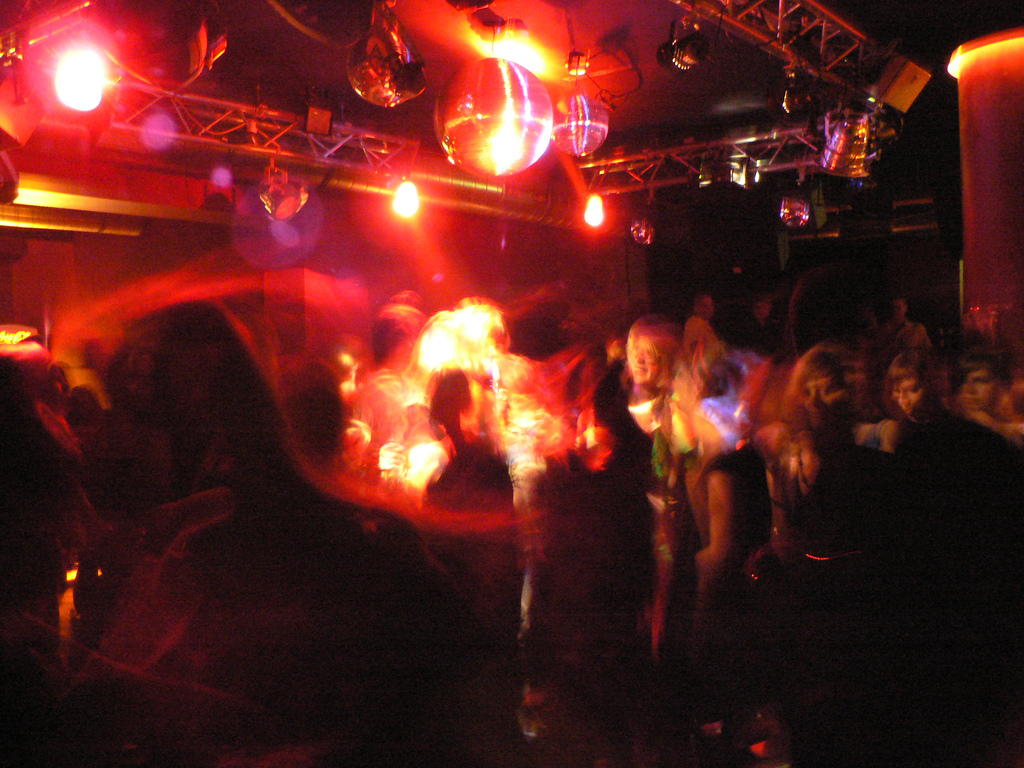
Listening via vibration is something that Cara Cardinale Fidler writes about in her poetic account of growing up with deaf parents. She remembers,
In high school, I went to a dance at the Fremont School for the Deaf where my parents were chaperones. It was easy to find the dance; you could hear the throbbing bass from across campus. It was so loud, it hurt. When I walked in, I wasn’t surprised to see a wall full of uncomfortably dressed teenagers holding balloons to feel the sound and bobbing their heads in tempo.
In this passage, Cardinale Fidler amplifies the tactile experience of sound—the ability of all bodies to listen-feel through the force of vibration. Sometimes we feel sound in our guts or throats or teeth, but this is not usually an aspect of listening that most people with a working auditory system meditate on, or try to refine in any way.
I think it is important to acknowledge, as Silva and Cardinale Fidler do by example, that the labels “deaf” and “hearing” are not as clear-cut as they may seem. There is a whole range of auditory function among people who are given these labels, or who fit somewhere between them. Sound scholars might think of deafness, then, not as a uniform lack, but as a range of listening practices in which sensory modes other than the ears are employed. Some people rely more on one mode than others, and some might develop synesthetic listening practices.
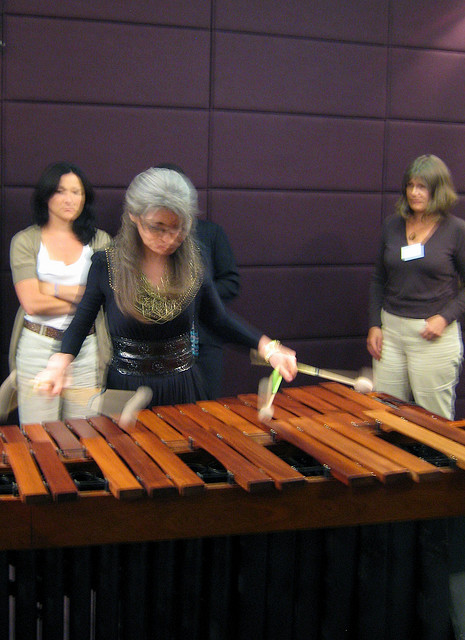
For instance, in the documentary Touch the Sound, percussionist Evelyn Glennie uses the convergence of sound, sight, and touch in her own listening training. We need to start thinking about listening less in terms of binaries (e.g. you either have the capacity to listen or you do not), and more in terms of possibilities. The fact that bodies can be retrained to experience listening via multiple modes highlights the extremely flexible, plastic nature of listening habits and practices. In considering this diverse range of listening possibilities, I wonder how we might design more listening experiences that are truly multimodal—that require or at least present the possibility of listening with more than one sensory mode. How might we expand the listening capacities of all bodies?
Deaf space and architecture is one area that is beginning to take up such questions. Based on the concept of universal design, which emphasizes the production of products and environments that are accessible to both so-called “disabled” and “able-bodied” individuals, deaf architecture considers the ways in which deaf listening bodies move through and communicate within space. These spaces seem particularly well-designed for visual and tactile listening situations. For example, according to blogger Scott Rains, some key principles of deaf architecture include: the use of partial walls or open concept spaces, no sharp angles and curved corners to increase visual range, no sources of glaring light that might impede vision, and wooden floors for more pronounced vibration. Bodies, spatial and material configurations, and the senses were all taken into account in this kind of design. The visual and tactile elements in these spaces accommodate particular bodies and communication practices, but there would be no need for such spaces without the existence of those particular bodies and communication practices. The design of deaf architecture is based on the reciprocal relationship between cultural and physiological needs, which in turn broadens the listening possibilities of the inhabitants of deaf spaces.
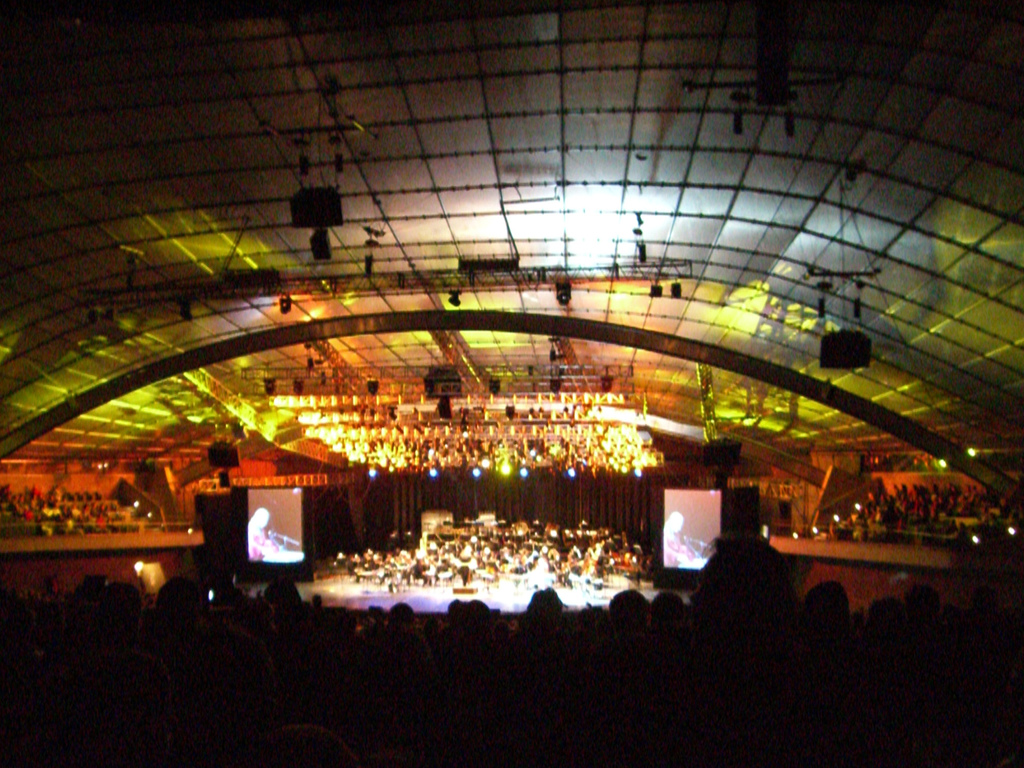
Deaf studies and deaf scholars have much to contribute to sound studies. Expanding ideas about what it means to listen, coming up with new ways to extend the capacities of all listening bodies, and developing more dynamic and complex theories of listening will require sound studies scholars to think about listening not only in terms of the ears, but in terms of bodies, affects, behaviors, design, space, and aesthetics. In this sense, deafness may be one of the most significant and generative areas of research in the continuing development of sound and listening studies.
Conversely, sound studies can offer deaf studies fresh ways to think about how sound shapes/enhances/disrupts deaf cultural practices. As we have seen from the examples above, sound plays a powerful and sometimes complicated role in deaf contexts. Using sound studies approaches and methodologies, then, could help to augment the ways in which sound figures into deaf culture–a subject that has received very little attention thus far. Collaborations between these seemingly contradictory areas of study have the potential to enliven and enrich each other in mutually beneficial ways. Sound studies and deaf studies have a lot to say to each other. They just need to start listening.
__
Steph Ceraso is a 4th year Ph.D. student in English (Cultural/ Critical Studies) at the University of Pittsburgh specializing in rhetoric and composition. Her primary research areas include sound and listening, digital media, and affect. Ceraso is currently writing a dissertation that attempts to revise and expand conventional notions of listening, which tend to emphasize the ears while ignoring the rest of the body. She is most interested in understanding how more fully embodied modes of listening might deepen our knowledge of multimodal engagement and production. Ceraso is also a 2011-12 HASTAC [Humanities, Arts, Science, and Technology Advanced Collaboratory] Scholar and a DM@P[Digital Media at Pitt] Fellow. She regularly blogs for HASTAC.
—
Share this:




Current Top Posts





April 2021

January 2020

November 2019

October 2019

August 2019

April 2014

November 2017

March 2015

December 2017

October 2015


Recent Comments