
Garageland! Authenticity and Musical Taste

First show with The Carpetbaggers! @The Manor.
Today’s post is a bit of a confessional. Reflecting on Andreas Duus Pape’s post a few weeks back, Building Intimate Performance Venues on the Internet, I can not help but admire how closely Andreas relates podcasting with intimacy, and therefore; authenticity. Although it would be simple to critique this point as a case of circular reasoning (Podcasts are intimate because they are authentic. Podcasts are authentic because they are intimate.), I cannot help but wonder if there is something deeply honest and deftly earnest about this claim. Speaking as a musician, I believe that authenticity is a quality that cannot be conjured. It, like a feedback loop or proof of will, seeks only itself. But, how does the desire to be authentic shape performance? Does it affect what we listen for and who we listen to?
My adventures as a musician started in high school with a second hand guitar and a lot of free time. It only took a year before my pastime became something more like an obsession. First was my high school band: The Nosebleeds. The Nosebleeds played revved up versions of 50s and 60s rock and roll while all the other kids were covering Blink 182 and Operation Ivy. We were cool – really! Even at this early stage it was clear to me, authentic rock bands played old-school rock music. Even my punk guitar heroes from the 1970s like Mick Jones and Captain Sensible knew how to cop a Chuck Berry riff and Little Richard groove. After 3 years of humid Jersey shore dive bars and fluorescent high school talent shows we called it quits. Honestly, we just got bored. Also, our ace repertoire of fifteen songs was beginning to wear a little thin. . .
After The Nosebleeds came The Carpetbaggers. This was a sea-change in compositional direction. Instead of playing punky renditions of Twist and Shout, we affected a country twang and sang songs about travel and broken hearts. If you caught us on a good night, we would even throw a bit of Sonic Youth into the mix and evoke a wall of feedback out from silence. We played in New Brunswick basements and central Jersey bars and recorded an EP on an abandoned Tascam 1” reel to reel. Buzz words being thrown around at the time were: rootsy, alternative and raw. I had pulled the covers back from a revved up Chuck Berry only to find a wonderland of Americana – washboards, harmonicas, and acoustic guitars – waiting. This was, of course, what those rocker’s back in the day were inspired by – right? If The Carpetbaggers weren’t the real thing, who was?
When The Carpetbaggers broke up I joined one last band, The Acid Creeps. At this point, there would be no turning back from my descent into nostalgia. We aimed to resurrect the late sixties go-go bar house band. Taking care to acquire vintage Fender amplifiers, vintage reissue guitars, and even a knockoff Vox Continental organ. If that wasn’t enough, my sister sewed us matching orange paisley shirts which complimented our skinny black ties and sunglasses. We imagined ourselves as a period perfect garage band, exactly the sort we had seen in movies. We covered everything from Iggy Pop’s, I Wanna Be Your Dog, to The Sonic’s, Psycho, and the Detroit Wheels version of Little Latin Lupe Lu (which we all preferred). Only in our mid-twenties, we were experts (or snobs, depending on your perspective) at defining and defending what authentic garage music was, and what it was not. Before breaking up, we created a yellow 7” vinyl tomb to forever keep our music. It was named “The Bananna Split EP,” and at the moment it all seemed perfect. Authenticity, sold for five dollars at a show.

Bananna Split EP w/ Full of Fancy.
Reflecting, five years later, on these three epochs of music making – it is hard not to blush. Not only did I, for at least a year, consider each band the singular most authentic band ever; authenticity, as an ideal, began subtly to change the way I viewed myself. I transformed from Aaron the Weird Al Yankovic fan to Aaron, the garage rock expert in about 8 years. Wherever I looked for authenticity, I found it, and it was real. Not only that, but at the bar, we convinced ourselves and our friends of this notion. Conversations about which bands got it, and which did not, were frequent – if not mandatory. The answers became standard too: The Exploding Hearts, The Murder City Devils, The Misfits? They all got it. Bands like Metallica; for the most part, they did not. These conversations forever led us to equate the authentic with the obscure; a rabbit hole that twists and darts endlessly.
Authenticity in music is like feedback: powerful, seductive and dangerous. It is a very real, yet elusive concept that invites imitation and when left unchecked, can spread like a contagion. Although I love revisiting the music of my old bands, I cannot help but hear them now as a set of key moments in a greater life narrative. Iterations of myself left behind in an ongoing dialogue about authenticity. A dialogue, which, to this day, affects what music I choose to listen to, and what music I choose to avoid. Although none of my bands were truly “the real-deal,” it would be odd to claim that any were not authentic. Rather, this concept, authenticity animated each band – it kept us all going, and brought our music to life. My bands were authentic because I believed in them. I believed in my bands, because they were authentic.
AT
–
Aaron Trammell is co-founder and multimedia editor of Sounding Out! He is also a Media Studies PhD student at Rutgers University.
Share this:

Remixing Girl Talk: The Poetics and Aesthetics of Mashups
Peter DiCola’s analysis of Girl Talk is astute, on point, and insightful. So instead of quibbling with him about arcane or subjective matters, I’ll try to add a bit of aesthetic and cultural analysis to his legal and procedural observations.
Improvising vs. Composing
First of all, it’s important to point out that Girl Talk is not a typical mashup artist, and in fact many of the DJs I interviewed for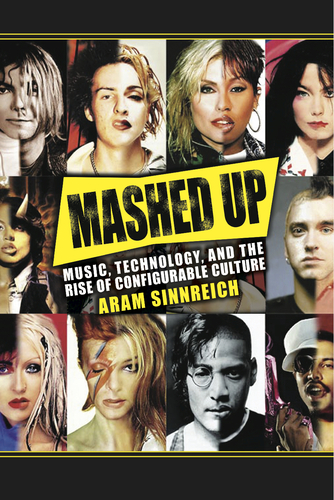 my book Mashed Up: Music, Technology, and the Rise of Configurable Culture (University of Massachusetts Press, 2010) don’t really view him as one of their own. This isn’t simply because he exceeds the standard, 2-song “A plus B” technique that serves as a basic template for the form; after all, Osymyso was mashing together hundreds of songs at a time back in the early 2000s, and he’s downright canonical. Rather, it’s because Girl Talk is more improvisatory, and less formalistic, than most other mashers.
Of course, improvisation has been a central element of DJing at least since Kool Herc first started beat juggling between two decks. And some contemporary mashup DJs, like Z-Trip and TradeMark G, are rooted in live, on-stage improvisation. But these are the exceptions, not the rule. If sample-based music describes a spectrum between what we traditionally think of as performance and composition, the vast bulk of mashup artists tend to see themselves on the composition side of the fence. They assemble the mashup in the studio, then play it “as is” in the club, just as they would play any other record. As DJ Earworm told me, “a good mashup artist is a good composer. Because, you know, you’re moving these parts around and giving it new form.” While Girl Talk certainly lives up to this description on albums such as “All Day,” his live, improvisatory performances are something else altogether.
Mashup vs. Cut-up
An interesting point DiCola raises is the prevalence of what he calls the “name-that-tune” critique of the mashup aesthetic, the claim that they “have no intertextuality or deeper meaning.” Not only is this claim unjustified, it completely misses the point. The problem is, these critics think of mashups as simply another example of paper-thin postmodernism. This couldn’t be further from the truth; in fact, you could call mashups post-postmodern.
To illustrate my point, let’s take a look at an earlier art form that looks a lot like mashup at first glance: the cut-up. Cut-ups were a kind of literary collage popular among avant-garde writers like William Burroughs and Brion Gysin in the mid-20th century. As the technique’s name suggests, writers would cut existing, finished texts into pieces, and then tape them back together in random fashion, thus generating surprising and provocative new juxtapositions and grammatical logics. The cut-up was the very essence of postmodernism: it aimed to disrupt the “master narrative” of linear thought and force the reader to confront its limits head-on. In other words, it was a reaction to, and an inoculation against, high modernism.
Mashups use similar techniques to achieve the opposite effect. We no longer live in a modern world, in which all information is forced to hew to a single, objectified model of reality. Postmodernism has not only successfully exposed and disrupted the hidden power dynamics of the master narrative, but produced a cultural environment in which an endless parade of symbols float unmoored in a sea of chaos and contradiction. The role of the mashup is to restore some semblance of order to this maelstrom, by stitching together the disparate symbols with a genealogical thread. Every sample in a mashup means something, and brings its entire cultural history trailing behind it. Thus, while the cut-up is named for its ability to sever signifier from signified, the mashup is named for its power to suture them back together (albeit in different combinations and permutations). This is the point that critics miss: the mashup isn’t an expression of postmodern nihilism, but an argument against it.
Whither Originality?
The final point of DiCola’s I’ll touch upon is the concept of originality, as it applies to a cultural form that consists entirely of “borrowed” work. As he observes, the question of whether a given mashup is original or not is almost moot when it comes to questions of transformativity and “fair use”; the very fact that people argue about it demonstrates that creative forces are at work.
Yet it’s also interesting to look at how the originality arguments play out. I devote an entire chapter of Mashed Up to exploring the various techniques DJs employ to differentiate between innovative and derivative work, as well as the ways in which they’ve moved beyond the distinction altogether. Commonly cited markers of originality in mashups include: how well a DJ selects his source materials; how the samples are arranged, both spatially and temporally; how the samples are transformed using digital processing techniques; and even textual interplay between the lyrics of the songs he’s chosen. In combination, these factors can describe a given DJ’s “signature” style, as distinctive as a saxophonist’s phrasing and tone, or a rapper’s rhyme and flow.
One could spend countless hours dissecting the mashup aesthetic and debating its legalities, and having done so myself, I can attest that it’s time well spent. Ultimately, however, the form’s significance outstrips even these weighty dimensions of analysis. What makes the mashup most interesting to me isn’t the question of what an individual work means, or whether it’s legitimate in the eyes of the copyright office, but rather how it’s produced (and reproduced) in the first place.
Our mode of musical production is always a harbinger of social changes to come, and the mashup has a lot to say about what lies in store for us as a globally connected, digital society. By blurring the lines between artist and audience, original and copy, the mashup fundamentally rejects the atomistic assumptions that undergird our legal, economic and political institutions. The millions of people who participate in the process of re-imagining a song comprise a kind of “collective subjectivity” as cohesive and amorphous as a storm cloud, and like a cloud, their actions only have meaning in aggregate.
This is why analyses that focus on a DJ like Girl Talk as though he’s a radical innovator or lone copyright renegade always tend to leave me cold. As Girl Talk himself would be the first to admit, his work neither begins or ends on his laptop; at best, he’s a highly entertaining conduit for an infinitely larger and more complex process. Or, to use his words (as I did in the epigraph to Mashed Up), “This shit is not about me, it’s about all of us, ’cause we’re the same motherfuckin’ person.”


Share this:


Current Top Posts





April 2021

January 2020

November 2019

October 2019

August 2019

April 2014

November 2017

March 2015

December 2017

October 2015
 Sounding Out!
Recent Comments