
Hold This Thread: A Partial History of a Rock n’Roll Relationship
I got my first computer, A Packard Bell desktop, in 1995, when I was 11, and my parents would only buy it after three trips to Comp USA where they found a salesman with enough patience to make them feel OK about hoarding a year’s worth of PC Magazines in a box under my bed that I was supposed to use for research, but really I just wanted to get the best computer for games.

“This isn’t just for games,” my parents said.
And there was, of course, a ton of pre-loaded educational software, like Encarta, sending my folks into a state of catatonic euphoria dreaming of Ivy League schools, but there was also a Weezer music video. Specifically, the Spike Jonze-directed video for “Buddy Holly” inexplicably hidden in the computer’s media files.
The existence of “Buddy Holly” on my computer was as mysterious as the video’s special effects. Now considered by aficionados to be a creative high point of the medium, the clip showed the band playing inside an episode of Happy Days, and to my pre-adolescent sense of humor was utterly hilarious.
More than that, through the backdoor of Windows 95, Weezer, with this music video, attached themselves onto my brain in a real way, and with their humor, made the first significant bridge connecting my musical and emotional islands in a way a CD alone never could. Sure, I liked the song, but I loved that music video.
Aggressively aging through middle and high school, through Nine Inch Nails and Black Flag, Weezer’s first album was just a blue CD stacked with a bunch of other old birthday presents I couldn’t return. Their music wasn’t harsh enough, and it dealt with realities (sentimental longing, romantic frustration, imagination seen as inner-brain reclusivity) that I hadn’t yet developed the ability to experience.
Then a couple years into high school, on a homemade VHS tape of six hours worth of videos recorded off MTV2, I was once again confronted with the band, this time via their video for “Say It Ain’t So.” This one was also pretty funny, but it took the band out of a pastiche and into a fully-realized suburban rock fantasy: playing guitars in a garage, doing laundry, and kicking a hacky sack in the backyard.
Even more importantly, this was the first time I realized how good their music was. Mixing that ever-present humor, with heavy guitars and unapologetic pop hooks, Weezer were reincarnated as instant personal favorite; as anti-venom to blindingly angry music and a reflection of my own growing inner-complexity. The content of the songs on their first album, Weezer, finally registered with me too: the fragility of relationships with “Say It Ain’t So” and the liberating loneliness of geekdom portrayed with “In The Garage,” to me, was deeply profound.
It didn’t take long for me to move on to 1996’s Pinkerton, Weezer’s second album, and with its discovery came detailed maps guiding me through new musical/emotional landmasses. Pinkerton is built around a conceit of unfiltered confession, with moments of terrifying straightforwardness, but tempered with self-deprecating humor. Songs like “Across the Sea,” “Pink Triangle,” and “Falling for You” tackled the irony and inevitability of heartbreak to the richest and most complex pop the band would ever create. Pinkerton not only mapped my feelings, but fueled them as well, keeping me anchored to the disc for years.
In point of fact, as I grew into emotional self-realization, Weezer’s first two albums became my sad records. These songs, while ironic in tone, were completely genuine in content and delivery, genetically engineered to combine with my particular brain chemistry.
Pinkerton, though, was a commercial disappointment, and since that self-perceived fail Weezer’s interests shifted from writing clever songs, tempering their rich content with sturdy hooks, to jokes. Their third album, also called Weezer, was released in 2001and presented the band as dually trying to tap into the geek ethos of their first record, but this time strictly in visual terms. They became a novelty band, writing “funny” pop songs, which are silly and sentimental, but lacking serious emotional content.
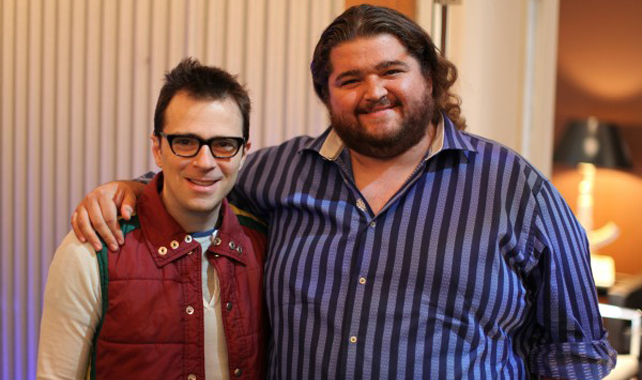
They play shows sponsored by Axe body spray, wear costumes on stage, put an actor from Lost on their latest album cover, even going as far as to name the album after his character; Weezer are now totally vapid. Everything I loved about the band was disintegrated, leaving nothing but a scorched caricature behind.
 Blame that on the music business if you want, on the shifting roles of music in culture (as an art form now more closely related to branding and licensing as a way to disseminate culture), or even on the needs on the music-listening public, but that would frame “Buddy Holly’s” appearance on my pre-adolescent computer in a similar way, as nothing more than a cash-in on some big market licensing.
Well then good job, I guess. And, I guess, with all today’s corny gimmicks they’re just trying to do the same thing to another generation of fans fifteen years later. But, It’s hard for me to think about the band Weezer are now, making it too heartbreaking to listen to those two albums I used to love so much. Weezer were an important band to me. I discovered them when I was new to music, just forming my tastes, and Weezer found a way into my brain by exploiting my non-musical inclinations, and their songs and their songs mapped my emotional center. I’m worried their directions will have me going in circles forever.


Share this:

The Noise You Make Should Be Your Own
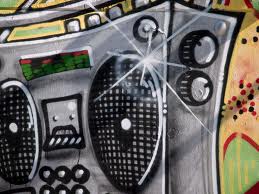 Before I suggested the name VIBE, even before the magazine was being called Volume, it was known as NOISE. I never liked that name. I mean, I knew what they were going for: “Noise” was meant to imply the loud raucousness of youth that defined the increasingly popular urban culture that would fill its pages. But the dominant strand of that youth culture was going to be represented by hip-hop, and I was quite sensitive to mainstream society’s tendency to think of hip-hop—what I liked to think of as the breakbeat concertos of inner city maestros—as not-music, as nothing but noise, something not necessarily from the street but of it, like a garbage truck or a knife fight.
I started to reminisce about the Noise name a coupla weeks ago when I walked into my university-owned apartment building and saw a note with the word “NOISE” poised at the top of it in a huge bold and italicized font, assured of getting everyone’s attention as they entered the elevator vestibule. According to the note taped to the wall, there was a noise problem in the building, and it was getting worse. Would tenants please be considerate of the other members of the apartment community and refrain from playing music loudly after certain proprietary hours?
I thought about it. I never heard music being played loudly. But maybe that was because I live on of the upper floors, away from the blaring speakers of others. The noise I was privy to was the natural noise of the many babies who lived in the building, the children of grad students, probably bored to tears (and tantrums) living in this austere monolith we all call home.
But then I thought about it some more. And I considered the musical noise I heard in this building, compared to the musical noise I’d heard in my building in Manhattan before I re-located to pristine, polite Cambridge, Massachusetts. In New York, I remember the guy on the second floor, the raging theater queen, who blasted cast albums and show tunes at top volume, usually during the day, when the only people in our small West Village building were him (a theater designer), me and the “model” who lived on the third floor—in other words, those of us who lived lives outside the traditional mainstream. The “model” cranked up the volume on her club-kid techno beats, while I was probably playing The Smiths or The Cure or R.E.M. at loud volumes, re-living my college rock days while missing a freelance deadline or two.
I remember, when I lived in New York, thinking that people had no shame when it came to making noise: people had loud  conversations about personal business on the subways; vendors shouted to (at?) delivery guys on street corners; sirens blared their way through the streets; boomboxes competed with car speakers for the ears and stares of passersby. But no one complained. If anything it was a competition of soundtracks in, on and around the streets of New York. Do the lipstick lesbians outside the bar across from my apartment mind, relish in the fact perhaps, that the iconic sound of Stevie Nicks growling out of the jukebox codifies them as queer women on the scene? That kid in the business suit and expensive Wall Street shoes on the train, bobbing his head to the rhythms of Jay-Z rapping loudly through his earbuds: does he really want those of us around him to know he was a hip-hopper? The 6’4” theatrical designer from the second floor who struts down 12th Street like a linebacker: does he simply want the world to know that Barbra’s star-making turn as Miss Marmelstein soothed his soul and that the Pippin version of “Corner of the Sky” is what gets him through the day?
And what was my noise telling the world? I was the queer black writer dude upstairs. But if someone had walked by the apartment, not knowing who was inside, and stopped to tap a toe or shed a tear at the mopey, fop-rock of Morrissey that so often cleared my door jamb, would I be what they expected? Perhaps; perhaps not.
But then I think about the times that I just had to hear Martika. And I had to hear her loud. Or I had to hear some 80s-style deep house, especially the tracks defined by the soul-shouting diva-fied orgasmic melismas that not only date me age-wise, but most definitely queer the space that was blasting the Rolling Stones’ Let It Bleed just a half hour before. I used to be self-conscious of those sonic shifts in my noise soundtrack, as if they highlighted a larger, deeper confusion about my own position, culturally-, racially-, and sexually-speaking.
But then I joined the team to start VIBE, a magazine once called NOISE. And my sensitivity over its possible name settled my own personal dilemma: We may want the world to hear our noise, because of its shorthand to who we are. But what we really want them to do is feel our noise, vibe it if you will, and hopefully feel our joy, pain, shame, love and contradictions in the process.
–SPB (Scott Poulson-Bryant)


Share this:


Current Top Posts





April 2021

January 2020

November 2019

October 2019

August 2019

April 2014

November 2017

March 2015

December 2017

October 2015
 Sounding Out!
Recent Comments