
“Ain’t Got the Same Soul”
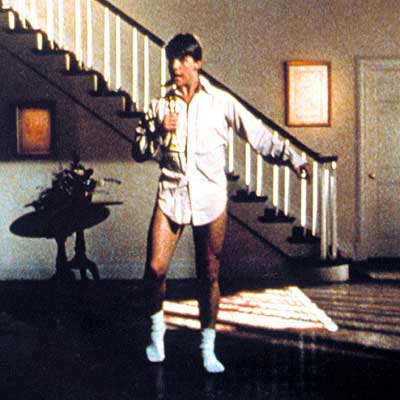 Bob Seger’s “Old Time Rock n’ Roll” has bothered me for a long time. I first heard it in Risky Business in 1983, four years after its initial release, as the soundtrack to a young Tom Cruise frolicking in his tightie-whities to his father’s sacrosanct (and expensive) hi-fi, expressing his repressed white suburban middle-class masculinity and sexuality. It was the song’s vague appeal that got me wondering even back then, how Cruise’s character was even old enough to remember the “old times” that Seger sang of. Hearing it on a “classic rock” station on a recent drive, it suddenly hit me – for many young people the song is a representation of what it clearly isn’t: “old time” rock n’ roll itself.
The song performs a form of hyper-nostalgia, not only eliding all potentially negative aspects of the “old times”—such as the racial erasure at rock n’ roll’s emergence into the mainstream—but eschewing any kind of specificity about “old time rock n’ roll” altogether. The song’s lyrical and sonic vagueness, punctuated by bland guitar solos and cheesy piano rolls, hearkens to an undefined sense of authenticity that casts doubt on other musical forms and implicitly marks itself as legitimate and authentic – laying a kind of homogeneous claim on rock itself.
The key phrase to Seger’s song, “Today’s music ain’t got the same soul / I like that old time rock n’ roll,” is leavened with irony, because it could be used as an example of “today’s music” itself – at least contemporary to the release of the song in 1979. And let’s face it, “Old Time Rock ‘n Roll” itself seems to be lacking in the soul department. Now, “soul” is a shibboleth. It is a call to a form of racial authenticity that many assume blacks have a natural, essential access to. When whites allegedly have it–it is something worthy of a NY Times article. However, when used by Seger, “soul” becomes a way of defining authentic music as having an unchanging “feel” anchored in a particular vision of the past. So distant it seems, that the lyrics can give us no real hint as to what constitutes “soul”; listeners are just supposed to know it when they feel it.
And yet, “Old Time Rock n’ Roll” arguably lacks that feel; leaving aside the happy accident of the repeated piano intro and the grain of Bob Seger’s voice, I’d make the argument that any close listening to the musical portions themselves makes the lack of “feeling” in the song evident. The song’s music can only be described as an attempt to present a generic portrait of rock n’ roll sounds, with Chuck Berry guitar licks deprived of all gusto and a sax so filtered it may have come from a late seventies synth. This could be attributable to the fact that Seger is singing over a demo meant as a model for his band to record its own version, but the fact remains that is the cut that was kept and that we all know.
The questions then arise: why so generic? Why the lack of specificity in sound and content?
The answer, I feel, can be found in the two listening practices described in the song and the preference of one over the other. The speaker’s unwillingness to be taken “to a disco / you’ll never even get [him] out on the floor” seems to be putting down a genre of music that emerges from a line of descent in the development of popular music in America that can be traced from the “blues and funky old soul” he claims he’d rather hear – Black American music. “Old Time Rock n’ Roll” can be seen as a kind of anthem of the disco wars, where rock fans violently objected to disco.
The rejection of disco then becomes part of a conflict at the time between “rock” as a dominant mainstream white musical form and disco, which Alice Echols has described in her recent book, Hot Stuff: The Remaking of American Culture, as a heterogeneous site that was black, queer, women-friendly and social and that eschewed the centrality of a ineffable “authenticity” that rock n’ roll always strove for. In order for Bob Seger’s “Old Time Rock n’ Roll” to establish its authenticity, it must contrast itself to disco, accomplishing this not only by pulling rock n’ roll into a personal listening sphere, but by eliding the sexual energy present in early rock n’ roll and still evident in the disco of the 70s. To heap upon this irony, the fact the high-hat cymbal moves into a disco off-time beat at several points in the song provides “Old Time Rock n’ Roll” with what catchy-rhythm it does have.
Leaving the disco after 10 minutes along with the opening lines of the song “Just take those old records off the shelf / I sit and listen to them by myself” one gets a sense of an anti-social listening practice that divorces the music he claims to love from its cultural context and transform it into a solitary act. Like nearly all forms of nostalgia, Seger’s view of the past of the music is problematic in its glossing over the complexities and specificities of the time he is ostensibly singing about.
 Another one of Seger’s hits may claim that “rock n’ roll never forgets,” but it seems like forgetting might be what it does best. Looking at Bob Seger’s professed influences— Little Richard and Elvis — we can see some of that forgetting in action. If the former suggests that the shifting, slippery, and flamboyant sexuality of disco has been present from rock’s very beginning, then the crowning of the latter as the “King of Rock n’ Roll” highlights just the kind of erasure that allows for a song like “Old Time Rock n’ Roll” to make sense as an anthem of whitewashed “heartland” rock. Seger’s clarion call to old timey-ness strips it of its sex even as he evokes a particular kind of “blackness” through the grain of his voice – a throaty howl full of a representation of sonic authenticity profiting of a vague sense of racial marking. In other words, Seger’s voice performs soulfulness through a growly working-class sound (typified in his “Like a Rock” Chevy commercials), itself a placeholder for race which is verboten in this construction of rock n’ roll. This kind of rock star class passing functions because of the racial erasure the songs enacts by means of white privilege.
Richard’s slippery sexuality and the way in which his most famous songs, like “Tutti Frutti” emphasize dance–and dancing as a euphemism for sex: “she rocks it to the east/she rocks it to the west/but she’s the girl that I know best”–brings me back to Seger’s denial of dance and the solitude of his idealized rock n’ roll, and thus back to Tom Cruise in his tightie-whities dancing around by himself in his parents’ fancy suburban Chicago house.
It makes sense that the scene in Risky Business is so isolated, middle-class and white – idealized rock n’ roll has been hijacked out of the heterogeneity of urban centers, and into the mythic American Heartland where white masculine sexuality can be extolled without threat. Seger’s reactionary song makes a world where it is safe for a teen-aged Cruise to enact his youthful rebellion by unproblematically participating in a form of class-passing of his own – lest we forget, the plot of Risky Business has his character playing the part of pimp to earn his way into Princeton – and yet retain his privileged position insulated from further influence of Black America on his music and on his life.


Share this:

Hold This Thread: A Partial History of a Rock n’Roll Relationship
I got my first computer, A Packard Bell desktop, in 1995, when I was 11, and my parents would only buy it after three trips to Comp USA where they found a salesman with enough patience to make them feel OK about hoarding a year’s worth of PC Magazines in a box under my bed that I was supposed to use for research, but really I just wanted to get the best computer for games.

“This isn’t just for games,” my parents said.
And there was, of course, a ton of pre-loaded educational software, like Encarta, sending my folks into a state of catatonic euphoria dreaming of Ivy League schools, but there was also a Weezer music video. Specifically, the Spike Jonze-directed video for “Buddy Holly” inexplicably hidden in the computer’s media files.
The existence of “Buddy Holly” on my computer was as mysterious as the video’s special effects. Now considered by aficionados to be a creative high point of the medium, the clip showed the band playing inside an episode of Happy Days, and to my pre-adolescent sense of humor was utterly hilarious.
More than that, through the backdoor of Windows 95, Weezer, with this music video, attached themselves onto my brain in a real way, and with their humor, made the first significant bridge connecting my musical and emotional islands in a way a CD alone never could. Sure, I liked the song, but I loved that music video.
Aggressively aging through middle and high school, through Nine Inch Nails and Black Flag, Weezer’s first album was just a blue CD stacked with a bunch of other old birthday presents I couldn’t return. Their music wasn’t harsh enough, and it dealt with realities (sentimental longing, romantic frustration, imagination seen as inner-brain reclusivity) that I hadn’t yet developed the ability to experience.
Then a couple years into high school, on a homemade VHS tape of six hours worth of videos recorded off MTV2, I was once again confronted with the band, this time via their video for “Say It Ain’t So.” This one was also pretty funny, but it took the band out of a pastiche and into a fully-realized suburban rock fantasy: playing guitars in a garage, doing laundry, and kicking a hacky sack in the backyard.
Even more importantly, this was the first time I realized how good their music was. Mixing that ever-present humor, with heavy guitars and unapologetic pop hooks, Weezer were reincarnated as instant personal favorite; as anti-venom to blindingly angry music and a reflection of my own growing inner-complexity. The content of the songs on their first album, Weezer, finally registered with me too: the fragility of relationships with “Say It Ain’t So” and the liberating loneliness of geekdom portrayed with “In The Garage,” to me, was deeply profound.
It didn’t take long for me to move on to 1996’s Pinkerton, Weezer’s second album, and with its discovery came detailed maps guiding me through new musical/emotional landmasses. Pinkerton is built around a conceit of unfiltered confession, with moments of terrifying straightforwardness, but tempered with self-deprecating humor. Songs like “Across the Sea,” “Pink Triangle,” and “Falling for You” tackled the irony and inevitability of heartbreak to the richest and most complex pop the band would ever create. Pinkerton not only mapped my feelings, but fueled them as well, keeping me anchored to the disc for years.
In point of fact, as I grew into emotional self-realization, Weezer’s first two albums became my sad records. These songs, while ironic in tone, were completely genuine in content and delivery, genetically engineered to combine with my particular brain chemistry.
Pinkerton, though, was a commercial disappointment, and since that self-perceived fail Weezer’s interests shifted from writing clever songs, tempering their rich content with sturdy hooks, to jokes. Their third album, also called Weezer, was released in 2001and presented the band as dually trying to tap into the geek ethos of their first record, but this time strictly in visual terms. They became a novelty band, writing “funny” pop songs, which are silly and sentimental, but lacking serious emotional content.
They play shows sponsored by Axe body spray, wear costumes on stage, put an actor from Lost on their latest album cover, even going as far as to name the album after his character; Weezer are now totally vapid. Everything I loved about the band was disintegrated, leaving nothing but a scorched caricature behind.
 Blame that on the music business if you want, on the shifting roles of music in culture (as an art form now more closely related to branding and licensing as a way to disseminate culture), or even on the needs on the music-listening public, but that would frame “Buddy Holly’s” appearance on my pre-adolescent computer in a similar way, as nothing more than a cash-in on some big market licensing.
Well then good job, I guess. And, I guess, with all today’s corny gimmicks they’re just trying to do the same thing to another generation of fans fifteen years later. But, It’s hard for me to think about the band Weezer are now, making it too heartbreaking to listen to those two albums I used to love so much. Weezer were an important band to me. I discovered them when I was new to music, just forming my tastes, and Weezer found a way into my brain by exploiting my non-musical inclinations, and their songs and their songs mapped my emotional center. I’m worried their directions will have me going in circles forever.


Share this:


Current Top Posts





April 2021

January 2020

November 2019

October 2019

August 2019

April 2014

November 2017

March 2015

December 2017

October 2015
 Sounding Out!
Recent Comments