
“A Long, Strange Trip”: An Engineer’s Journey Through FM College Radio


Today is World College Radio Day, and it’s more important than ever to honor and preserve free airwaves for our communities, now and for the generations to come. Sounding Out! is marking the day with a special post devoted to the intergenerational relationships that power college radio and keep it lit, whether over the terrestrial airwaves or via online streaming. College radio binds campus and community in tangible ways and builds deep and long lasting connections, as Sean Broder’s (WHRW 90.5 Class of 2025) conversation with Freddie Montalvo (WHRW 90.5 Class of 1987) certainly shows. Tune in to the people and keep it locked on college radio. –SO! Eds
—
In 2026, Binghamton University’s WHRW 90.5FM will celebrate its 60th birthday. Ferdinand “Freddie” Montalvo has been an prominent member of the station for 45 of those years, which means he has experienced many changes in radio’s culture and technology. Supplemented by his experience as a professional electrician, Freddie’s enthusiasm for a traditional approach to broadcasting has remained unchanged through the station’s many alterations, bringing undeniable authenticity to the forefront of the station, and showing newcomers how they can do the same.
An expressive medium, college radio has enabled students of all backgrounds to project their voice and music taste as far as the radio waves take them. Whereas some former college radio DJs apply their newfound power of expression to other professional fields, others like Freddie have only continued to develop their broadcasting style, which is why I wanted to get his perspective on college radio’s evolutions. Freddie has never lost sight of the art and the value of individualized broadcasting in the age of streaming music, and he generously shares it with incoming members who seek their own voices.

I met Freddie for this interview in the station’s current location in the basement of the university union. WHRW has three studios, one of the largest record libraries in the northeastern United States, and a common space that’s layered in stickers, posters, and graffiti spanning several generations of broadcasters. I found him in WHRW’s primary studio, CR-1, serving as the required broadcaster for a student talk show. As this was the end of the Spring ‘25 semester at BU, I was able to briefly catch the thank yous and goodbyes of the hosts at the conclusion of their final show. Freddie continues to host his own weekly radio show–Dimenciones on Saturdays from 7-10 PM on terrestrial radio 90.5 in the Greater Binghamton area and via WHRW’s livestream–but his additional involvement as an engineer for others at the station continues to enable newcomers to develop and project their own voices, even if they’re not certified broadcasters themselves. This post offers some excerpts of our in-depth conversation concerning Freddie’s life and rich history with WHRW, as well as his perspective on the continued importance of college radio, and of course some of the many valuable music recommendations he shared over our two hours together.
—
Freddie’s journey into the world of FM radio began in 1976, when the South Bronx native transferred from Bronx Community College to Binghamton University. It wasn’t until ‘79 that he would be introduced to the station by a friend of his who was hosting a Latin music show on the campus station WHRW 90.5, which had Freddie instantly hooked. Coming from a Puerto Rican family, it meant a lot to Freddie to join his friend in the station’s Latin Department; he became the first Latino program director in 1981 and the first Latino general manager in 1982. While serving leadership roles and maintaining his weekly programming, Freddie attended Binghamton through the work-study program BOCES (Boards of Cooperative Educational Services). It’s here that he trained to become an electrician, further intertwining his personal connection to WHRW:
BOCES… they taught you the fundamentals and at that time, I was getting involved at the station, and it was like a synergy of that, you know? Between electronics and radio broadcasting. So, at that time I was going to school in the evening, I went to the BOCES program 8-4/8-5, went to school at night, was doing radio, so everything was involved and influencing each other.
As a leading member of his department, Freddie embraced the alternative radio that WHRW was known for, broadcasting an assortment of music ranging from Latin Jazz to Cumbia, Disco, Salsa, and Santana… not to mention his confirmed favorite song: “Sofrito” by Mongo Santamaria.
In the decades following his transfer to BU, he has established a home and marriage in Binghamton, describing his life’s journey in the city as “a long, strange trip.”
—
WHRW has been a free format station since it began in 1966, giving each DJ and engineer freedom to play their favorite pieces of music within the FCC guidelines. WHRW has always been, according to Freddie, about “protecting that alternativeness on campus and off campus… we weren’t copying anybody.” He brings attention to what he calls the “great social redeeming value” of alternative broadcasting, which surpasses the confines of the station and not only enriches the surrounding community, but influences future forms of expression by DJs, or “broadcasters” as Freddie calls them.
When you record your shows and listen to yourself that’s how you develop your sense of style… The voice is an instrument, and you learn to modulate when you turn that mic on, always make sure you have on your headset, and that’s how you develop your style. ‘Cause at first you don’t realize these things, but as you evolve, you’ll notice these different nuances.

As his career progressed and Freddie became an installer technician, he increased accessibility to new musical programs for local residents, most notably, MTV. Combining this work with his many hours at the station, Freddie felt a great sense of pride and responsibility in bringing the forefront of new music to the lives of countless listeners. “I always called it therapeutic radio,” he explained to me, bringing attention to WHRW’s commercial-free programming, and the station’s ability to allow for its broadcasters to express their personalities. Freddie has never felt the need to possess an alter-ego while broadcasting as many do, explaining that members of the station are “audiophiles experiencing music, certain different genres, and that’s what we’re presenting. And when you do a show, you’re that show. That is your artwork in action.”
In addition to producing unique art on air, each WHRW broadcaster makes and plays hourly “carts,” public service announcements that are the closest thing to commercials on 90.5. There too, the station’s members have managed to transform the regulation-required station identifiers, PSAs, promos, and announcements into pre-recorded miniature productions; each about a minute long. During Freddie’s earlier years at the station, engineers made carts on Ampex audio track tape machines, quite different from the digital editing software utilized today. While traditional, bulky tape machines offered creative possibilities, they were be far less forgiving of errors than modern audio editing software. As Freddie told me,
there’s a certain thing that you can do with reel-to-reel recorders, where you could do sound-on-sound and sound-with-sound, and what that does is it creates an echo effect that is different from the electronic echos that you can do with the software… The mixing and the editing was hardcore, it was physical.
One of Freddie’s favorite promotional carts was “La Emisora Que Vuela,” made several years ago on the Ampex by a DJ apprentice of his, Francisco Reyes. Freddie remembered that it took eight full hours of recording, splicing, and layering for the minute-long audio production. Rightfully so, he refers to both the production process and final recording as true art, going on to describe the context of the dialogue:
So it’s like a gathering in a Latin household talking about different foods. And… It’s like a sitcom in a sense because he’s goofing with the different characters and he’s talking about, you know, the foods to be prepared. You say, well, who is this guy? That’s when he starts talking and saying: ‘you’ve got to be listening to WHRW in Binghamton.
“La Emisora Que Vuela” (“The Station That Flies”) -Francisco Reyes
The Ampex isn’t the only thing that has changed during Freddie’s 45+ years at WHRW. Other significant changes to the technologies utilized for broadcasting over the years. Because the station has always operated 24 hours a day, it required a certified broadcaster to remain on air at any given time for many decades. More recently, an automated system has allowed for some time slots to be occupied by a digital playlist, inevitably creating a distinct gap between WHRW’s night owls and early risers. Additionally, physical media such as vinyl records and CDs are no longer necessary for radio shows on WHRW. After the implementation of a Eurorack–which allows DJs to use an aux chord to play their shows–most current station members went digital. Despite this change and preference, Freddie remains loyal to the art of digging through physical media, for him primarily CDs, in order to find music that portrays his personality and taste.
Not too many people have FM radios at home, which was the norm. Everybody had records, they were listening to FM radio, and the only way you could listen to the station was tuning in with an FM radio. Today, everybody’s into Spotify… they’re not pulling records, they’re not pulling CDs, there’s no more really hands-on, it’s all plug in a laptop and sitting back… But that’s just me because I came from a different era, you know, where we had the hands-on with vinyl… once they put that Eurorack in there, it’s not the same. That’s why we have to have turntable classes to teach people how to work with the vinyl cause most of the younger crowd didn’t grow up playing 45s or lps, you know?… That’s when you’re definitely an audio aficionado.

Despite the sonic and technological changes that have permanently altered radio broadcasting, Freddie urges people of all backgrounds to get involved with radio given the opportunity; especially on the rare occasion that the station is free-format like WHRW has been since its inception. Technological changes aside, WHRW harbors the unique and deeply personal environment that deems college radio so valuable. Today, more than ever it is vital to understand the importance of large-scale audial expression in the face of vastly different musical soundscapes, as explained by Freddie:
This (the station) is the focal point for social interaction relating to music but, you know, today it’s more Spotify based, which is not the greatest because with a CD or an LP, you’re able to read the line-in notes, you get to read about the musicians, the group, the transition of between groups. Just think about Led Zeppelin. Zeppelin, let’s say Led Zeppelin 1, 2, and 3: different LPs, different flavors in their musical repertoire, you know? And you’re reading the LP, and you’re reading about the musicians and all the songs and the line and all… I’m not sure if Spotify has the same thing today… it’s not interactive. With LP’s, you’re fully engaged with that LP as you’re listening to it, whereas with that it’s just, you know, a certain song, or if you go looking for a little bit of tidbit, but it’s not the same experience. With the LP you get to see, you get to feel the artwork… it has to be different from the laptop experience… it’s more tactile.
Today, everything is digitized, it’s not like we have our live broadcaster or radio DJ… it’s not visceral in that sense… radio is different today. ‘Corporate radio’, as they refer to it… There’s no personality in it, and if there is a personality, it’s more blahblahblahblahblah and very little with the music and all… Even today, I listen to some DJs that I was listening to then and they’re still around today, and there’s a difference between that time and today. But, their influence must have influenced me unknowingly, and so as I experienced radio here, it’s vastly different from what I thought about radio at that time.
The thing is, when you do radio here [at WHRW], it is different than if you weren’t doing radio just listening to your laptop or Spotify. When you’re doing radio, you are engaging actively and producing your own show… It will influence you too, you know, we always used to say here: ‘expand your horizons’ and not just stay in a certain genre. As you experience WHRW, you will be listening to certain things, or you should be listening to certain things, and exposed to certain things, and that’s what opens your whole view, you know, musically, orally. And so, what you were listening to two years ago might be vastly different from what you are listening to today. And, when you go back home and you listen to radio you say ‘man, I could do better than that shit!
WHRW is vital for those who have ever been involved in its community, expressed to its truest extent by Ferdinand Montalvo. Members define the atmosphere within the station and the growth of the station outside of it. Despite the many technological changes to broadcasting, college radio has continued to build a symbiotic relationship with its members and the local community of listeners.
—
Featured Images: Courtesy of Ferdinand “Freddie” Montalvo
—
Sean Broder is a recent graduate of Binghamton University in Binghamton, NY, where he was a trained DJ at WHRW 90.5 FM as well as an English Literature major. He was a Sounding Out! intern in Spring and Summer 2025. He’s from New Rochelle, New York and has always had a great love for music.
—

REWIND! . . .If you liked this post, you may also dig:
“Vous Ecoutez La Voix du Peuple”: The Kreyol Language Pirate Radio Stations of Flatbush, Brooklyn–David Goren
Listening (Loudly) to Spanish-language Radio–Dolores Inés Casillas
“Chicana Radio Activists and the Sounds of Chicana Feminisms“–Monica De La Torre
Radio and the Voice of the Aymara People – Karl Swinehart
Share this:

Tuning In to the Desi Valley: Getting to Know a Community via Radio

Sound has a peculiar relationship to mindfulness; zoning in and out, active and passive forms of listening while we situate our listening practices alongside other daily activities. Especially when it comes to driving, listening to something or someone or just singing aloud by myself, I have realized, helps me drown out other noises of alertness. Over the years I have come to value background music or chatter and especially radio programming that takes the burden of curation and scheduling off my back, in all sorts of tasks that require deep concentration. Enough and more has been said about the visual-bias in various forms of ethnographic inquiry (see Andrew C. Sparkes’s “Ethnography and the senses” for a good example). Without belaboring these arguments, I also find that knowing through listening and listening as a mode of non-haptic yet immersive and intimate engagement can also prove to be a fruitful method of inquiry, especially in our post-pandemic worlds, where it feels a lot harder to establish intimacy. The United Nations noted that radio, in particular, “provided solace” during that period of physical distancing and social isolation.
For me, radio sparked my accidental realization and foregrounding of sonic methods as an itinerant means of getting to know new things, people and surroundings in life and research when I moved from New York to the San Francisco Bay Area in mid-2022 to start a new position as a postdoctoral researcher. Knowing that I would continue living in California for the near future, after eight long years of having deferred driving in America, I decided to learn driving and buy a car. I was also especially excited to be moving to Sunnyvale, a city in the Southern Peninsula, located between more known places like Palo Alto and San Jose. Sunnyvale is often jokingly called the desi capital, perhaps the most Indian of any ‘Little India’ you could find in America. As shorthand, desi, a Hindi word,refers to anyone and everything with ties to the South Asian subcontinent. In more recent years, the term has gained currency especially among South Asian diasporic communities to self-refer to culture, music, food, often to signify the presence and strength of transnational ties (between India and their countries of settlement).
What I hadn’t anticipated was that driving brought about a new connection to the medium of radio, as I started tuning in to take my mind off the jitters that come with the new sounds of an automobile-dependent region: fast moving rubber hitting the freeway tarmac and the lane changes and the scalar adjustments that demand driving tens of miles to ensure you still have a social life stitched together across the vastness of California. I began to find the act of tuning in and out of stations fascinating, especially how the radio as a device holds the parallel realities of so many people with different interests, languages and politics together but separate. Scholarship and even casual listening shows that non-English radio stations catering to various immigrant and other communities have existed for a long time in the US and elsewhere (I wish pondering the sonic geographies of Radio Garden, a web-based map interface that allows listeners to access any free-to-air radio stations across the world, wasn’t beyond the scope of this post!). Both as an ethnographer and as an insider-outsider within the larger Indian immigrant and diaspora community (but a newcomer to the Bay Area), tuning into the local desi radio station while driving offered me a good way to enter the desi community of the Bay Area, to know what it means to be desi and perform Indianness in 2022, in a place where I regularly see so many Indians and South Asians every single day.
As a friend who recently visited me in Sunnyvale remarked as we waited for our table at the always-busy Madras Cafe, Sunnyvale feels so much like India! And I felt it too; what she was referring to was not only the very visible presence of Indian people all around town or the abundance of restaurants catering to various sub-regional cuisines from India. What felt different to me here was how relaxed everyone looked in grocery stores, restaurants and elsewhere, how utterly remade Sunnyvale is as a pan-Asian but mostly Indian space that even the smallest performances of fitting in feel unnecessary. In fact, shopping her reminded me of a point Purnima Mankekar’s Indian narrators made in her iconic essay on Indian grocery shopping in the San Francisco Bay Area (2010), that Indian stores in Sunnyvale and Milpitas as places where “white people look out of place” as compared to the ones in Berkeley.
The juxtaposition of the non-performances and the weight of being comfortably in place in a community like Sunnyvale only settles on the mind and body very slowly, like a faint but familiar smell from home. Words and demands often stumble out of my mouth at the grocery store, as if I am allowed and I will be completely understood. Immigrant life in America is steeped in language acrobatics, balancing being understood with becoming deliberately opaquely incomprehensible, using one accent for the ones from home, one for those who make you feel at home, and then the American accent for the Americans outside. The contrast of places like Sunnyvale, Fremont, Milpitas and other similar Northern California cities that have been transformed by immigrant presence is not just one of tangible and observable things, but sonic markers too, like Bolly 92.3FM.

Bolly 92.3FM is the default desiradio station that services the entire San Francisco Bay Area. As the name suggests, for the most part the station plays popular Bollywood songs from recently released movies and albums, but just as other stations do in India, Bolly92.3FM leverages its listener demographics at different times of the day to also play classics and hits from older Hindi films during late night slots. Interestingly, as the presenters repeat the station name and jingle time and again, they also remind you that you are listening to Bay Area’s Bollywood station owned by the Silicon Valley Asian media network. The name Bolly92.3FM is a play on the broad familiarity with Bollywood in the US even as Indian audiences globally have moved away from the older connotations of Bollywood as North Indian cinema with song, dance and people dressed in flashy clothes. Much like the hyper-authentic Indian restaurants that serve regional cuisines such as Andhra, Tamil, Gujarati, Rajasthani and Marathi food to their loyal and affording immigrant patrons, Bolly92.3FM has also configured its programming to cater to different regional and linguistic communities from India in the Bay Area. For instance, Saturday morning and afternoon slots are dedicated to Telugu programs—everything is in Telugu (language) from the hosts discussions to the songs being played as well as the actual topics being discussed—as if the station turns into a different station with the implicit acknowledgement of the substantial cultural presence and possibly the sonic and financial power of Telugu listeners among the wider Indian community here. There are similar slots dedicated to Gujarati language programming.
In addition to language and topical interests, listening to Bolly92.3FM has been instructive in getting a feel for communal desires, aspirations and anxieties through its advertisement. There are fellow desi real estate agents, tax planners, dentists, travel agencies and coaching centers, each signaling to why they are trustworthy. Some remind their audiences of their shared cultural background as key to them being able to understand their customers’ needs, others also indicate their familiarity with America: one realtor is the only Indian-origin person to feature in a top realtor list, another tax planner’s family has been in the US for three generations and thus he is well aware of the nitty-gritties of transnational estate planning. A known Indian-origin realtor in the area even sponsors his own radio show on the weekends where he takes questions from prospective home buyers and sellers. Before and beyond giving them financial advice, he often explains how fellow Indian immigrants think about financial opportunities, investments, how they might seek social validation from fellow Indians who might see their home and so on. He weaves in such exposition before talking dry financial facts about mortgages. The same tax planner and his co-host occasionally offer historical accounts of changing real estate trends, how certain places used to be affordable for Indian immigrant buyers and how new places are becoming of interest as vacation homes for more affluent Indian immigrants.

Hearing the tax planners and real estate agents plot these dynamic and speculative maps of South Asian financial, cultural and political futures week-after-week felt like witnessing what many historical texts on migration within the Bay Area have described as waves in the past. As I mentioned earlier, Sunnyvale is not the only ‘Little India’ in the Bay Area, let alone in California, but rather, is a more recent iconic place in the Indian and South Asian diaspora map where the younger and newer immigrants are finding homes. Fremont, Milpitas, and Hayward in the East Bay closer to Oakland, and San Jose in the South Bay, saw similar waves of Indian immigrant settlements in the past, many of whom now far more affluent than their younger counterparts. In my short time since moving here, I learned both from conversations with friends who grew up in the area as well as from communication scholar Anne Marie Todd’s work on the past and present of Santa Clara Valley, this region has not only seen waves of migration from settlers across the world but with each incoming wave and turn in occupational trends from farming to railroads to IT work. Multiple communities have remade cities in the Bay Area over the decades.
I also find advertisements as well as talk shows interesting because they offer a more proximate and concentrated triangulation of otherwise scattered, overheard communal talk – I’ve heard things about Indian immigrants and real estate, their aspirations for their children to get into Ivy league colleges. I have also been asked at the grocery store if I know people looking to get married; I’ve overheard aunties at the grocery store consulting each other about dealing with death, financial loss, planetary alignments and more. But it is through the radio that these private interests, anxieties and futures take more collective and articulate forms.
To speak, to be heard, and to be understood as intended are as important as visual representation to allow for feeling in place in the world and for feeling at home in the United States. Very simply put, in the American context, while Black and Brown vocal expression and volume or the stereotype of loudness have been historically stigmatized as a part of the larger racist depiction of ‘unruly’ bodies, various forms of Asian speech, languages and expression including loudness but also silence and the absence of vocality, have also been racialized against the backdrop of white socio-linguistic normativity. Specifically, Indian and South Asian immigrants have been repeatedly represented in popular American culture as muted characters whose interiority is either irrelevant to the plot or cannot be accessed. Think of Raj Koothrappali from the show The Big Bang Theory, an accomplished scientist at the prestigious Caltech university who loses his voice around women. In accounts of Indian tech workers in the US from the Y2K era, one finds multiple articles casting them as the back-office worker – good at laborious and boring work but not presentation material. Some of these stereotypes have changed and splintered as more South Asians technologists have gone on to become successful executives and leaders in US companies, but vocality as a form of publicity can be crucial to sonic forms of belonging.
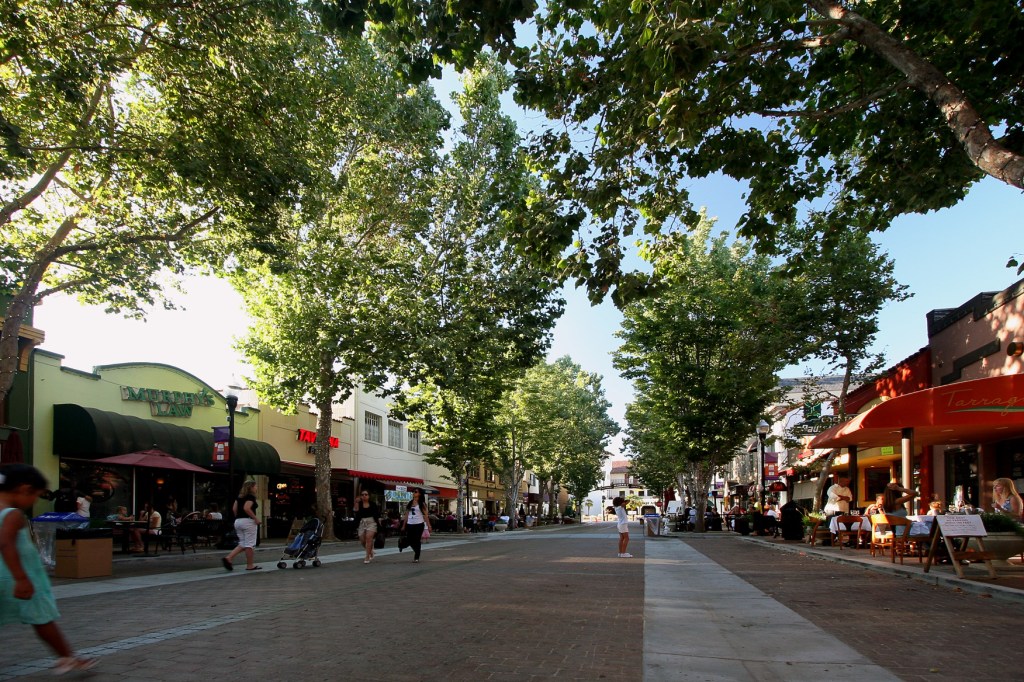
When I arrived in the Bay Area, I was still trying to figure out how to form a community and how to immerse myself in the desi community here, somewhat selfishly to get a glimpse of how Indian presence is remaking the Valley, not only through IT work but also through cultural and political performances. But I also wanted to get to know people, be known by people around. Olakhita means “people known to us” in Gujarati, my mother tongue; in Hindi jaan-pehchaan means to be in each other’s knowing that gives you some claim and affiliation over others without deep intimacy, not quite acquaintances or neighbors like in the American context. Apart from the numerous Whatsapp and Facebook groups aimed at desifolks living in the same neighborhood or city, Bolly92.3FM acts as a beacon for Indians and South Asians spread across San Francisco, the East Bay and the South Bay areas, offering a medium for the various Indian associations and event organizers to reach out to thousands and invite them to Diwali, Dussehra and other festival celebrations as well as any major concerts by visiting Indian artists in the area.
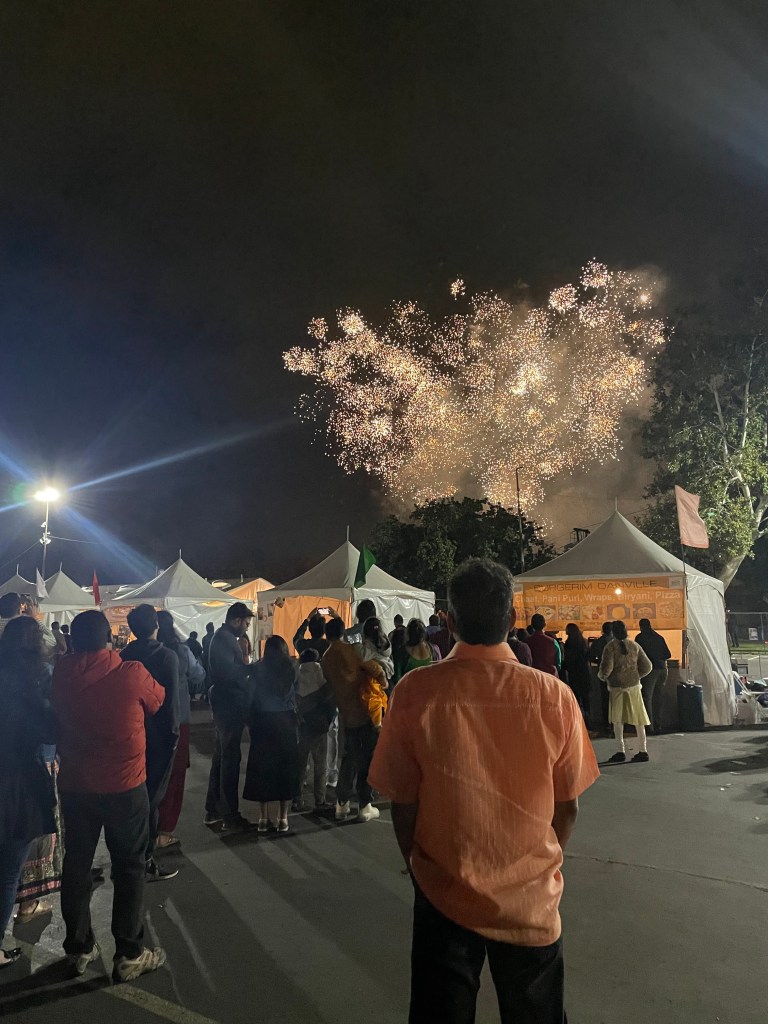
This is the far from the first or only time that a radio station has facilitated the forging of affective ties and social and material connections in diaspora. Rather this post recounts how active and passive listening to and through the station revealed over time how much South Asian presence has transformed the Bay Area. I attended the massive Diwali and Dussehra events advertised on 92.3, and once there, I could recognize so many of the organizers and sponsors’ names – some of them were the same tax planners and realtors that also run ads and sponsored segments on the station. One week in late September, an ad played on the radio, announcing that a famous hotel in downtown San Jose was now able to accommodate more than a thousand guests and offer a special entryway for the baraat procession (when the groom’s party of a few hundred comes dancing up to the wedding venue). The ad ended with the contact details of a South Asian representative of the hotel who could handle all queries related to Indian wedding arrangements! Bolly92.3FM mediates and shapes the collective desi identity through its programming and advertising, in turn also stitching, materializing and rendering visible a map of the Indian community spread across dozens of non-contiguous cities and neighborhoods in the Bay Area.

It bears noting, however, that the idea of Indianness or desi-ness (an imagined brotherhood among all the expats here) advanced through the radio programs, advertisements as well as the cultural celebrations, is very much a nationalistic and Hindu-dominant one. Although India is an ethnically, linguistically and culturally diverse country and not all people of Indian origin in the Bay Area are Hindu, the radio announcers never really celebrate or discuss Eid, Christmas, or Thanksgiving as events of possible interest. Just based on what is said and what is left unsaid, the dominant self-imagination of the Bay Area desi community as advanced through the radio station feels like it quietly aligns with the dominant religious and political imagination of India as Hindu, middle-class, post-religious and post-caste.
In the process of seeing this map render in my own imagination through regular listening, I also realized how this form of distant listening replicated the mode of jaan-pehchan (getting to know) for the itinerant immigrant-ethnographer. There is always the pre-fieldwork moment, the slightly promiscuous exploratory moment of getting to know and immersing oneself before one can articulate stakes and research questions. It is also often a period of deep uncertainty and ambivalence, since, as ethnographers, responsibility for and towards our field, communities, and interlocutors is always at the center of every project. We are always reminded not to be extractive and to think deeply about power relations even as we attempt to forge meaningful ties with those whom we want to observe and learn from and write about. Much like other visa-workers and international scholars in US academia, being a non-citizen ethnographer engenders multiple kinds of precarities—there is no straightforward or replicable guidebook on how to establish rapport, gain access, build trust and more with a community. More importantly, the itinerant-immigrant ethnographer’s relationships are also always interrupted, prone to arbitrary border restrictions and chronic deracination.
In the early days of digital ethnography, Kate Crawford powerfully argued to reframe acts of lurking (silently and passively hanging out in online communities) as forms of listening and by extension, listening as a concomitant and constitutive practice when we consider participation as speaking or having a voice. In the case of diasporic radio, as I realized, not only is the act of listening quite literal but it also affords and reinforces the vitality of different modes of agentic power and participation, those marked by ambivalence, yet-to-be gained legitimacy; forms of minor participation if you will. Via Crawford, listening and/as lurking also emerges as specifically racially inflected modes of agentic participation against the backdrop of media policy and the emphasis on free expression and speech as the ultimate realization of democratic power.
Among diasporic communities and further among itinerant immigrants within those communities, listening, overhearing and eavesdropping become the de facto modes of democratic and communitarian participation. Listening to the radio as a way of immersion is not a solution to these enduring dilemmas of ethical ethnography but to borrow from the analogy of Californian driving, listening to the radio, just like other forms of digital and analog lurking, allowed me an ‘on-ramp’ to gradually merge and embed myself in the larger South Asian diasporic community.
—
Featured Image: “Driving” by Flickr User AnnaNakami (CC BY-NC 2.0)
—
Noopur Raval is an interdisciplinary researcher interested in understanding global futures of work, the life and work decisions made by immigrant workers in tech companies, changing values and moral norms and projects of personhood especially in postcolonial settings. Noopur received a PhD in Informatics from University of California Irvine (UCI) in September 2020 and, through July 2022 was a postdoc researcher at the AI Now Institute at New York University. Noopur is currently a postdoctoral researcher at UC Santa Cruz – Silicon Valley Extension in the Computational Media department, working with Dr Norman Su. In Fall 2023, Noopur will join the Department of Information Studies at UCLA as an assistant professor.
—
REWIND! . . .If you liked this post, you may also dig:
“Gendered Soundscapes of India, an Introduction“–Monika Mehta and Praseeda Gopinath
The Queer Sound of the Dandiya Queen, Falguni Pathak–-Pavitra Sundar
“Out of Sync: Gendered Location Sound Work in Bollywood“—Priya Jaikumar
SO! LA: Sounding the California Story–Bridget Hoida
“Vous Ecoutez La Voix du Peuple”: The Kreyol Language Pirate Radio Stations of Flatbush, Brooklyn–David Goren
Listening (Loudly) to Spanish-language Radio–Dolores Inés Casillas
Share this:


Current Top Posts





April 2021

January 2020

November 2019

October 2019

August 2019

April 2014

November 2017

March 2015

December 2017

October 2015
 Sounding Out!
Recent Comments