
Y2K, Collective Ritual, and Sound in the New Millennium
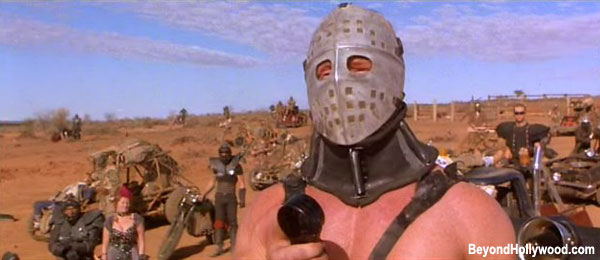 The recent New Year brought back some slightly embarrassing memories of past ball-droppings, 1999 in particular. That was the year, you’ll remember, when the world as we know it was to end due to all the clocks in all computers reading 0000 instead of 2000 – nuclear plants were to implode, bank accounts would be scrambled and a month later, the world would resemble some scene from The Road Warrior. I’ll fess up. I bought into the Y2K hype hook-line-and-sinker. I hunkered down in my living room with some old friends playing Risk that New Year’s Eve, I awaited an event of cataclysmic proportions. As the countdown droned on TV, it seemed every dice roll took me one step closer to the end . . . 10, 9, 8, 7, 6, 5, 4, 3, 2, 1. Upon zero, nothing changed and anxiety slowly began to leak from my body. Sting appeared on TV and introduced the new millennium with his jazzy “Brand New Day.” With lyrics about time and second chances, I grew to associate the song with a sense of profound relief. No matter how hokey Stings lyrics were (he uses the term “fuddy-duddy” at one point), “Brand New Day” will forever remind me of second-chances and possibility. Part of a clever advertising coup designed to reinvigorate Sting’s flagging career, the gospel tropes used in “Brand New Day” fit as a discursive response to the apocryphal (and apocalyptic) conversations circulating about Y2K at the time.
The history of technology is filled with utopian and dystopian visions of the future. Famously depicted in Apple’s “1984” commercial, the technocratic American narrative (Think Reaganomics) goes something like this: While developments in technology can allow for an increased sense of autonomy and individuality, they are unerringly used for evil. This evil strongly resembles a stereotypical Soviet culture where individuality is sacrificed for the good of the collective whole. Therefore, good technology promotes the individual while evil technology supports the collective.
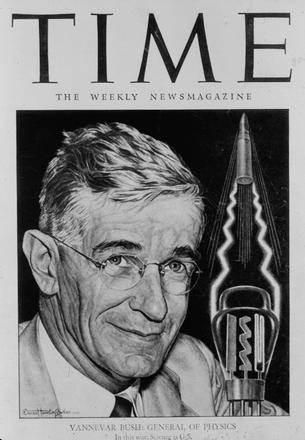 If this seems a little heavy handed, it should be noted that the whole endeavor of mass computing has its roots in American Cold War history. After the atomic catastrophes of Hiroshima and Nagasaki, Vannevar Bush, then Director of the Office of Scientific Research and Development, predicted the Internet with the “memex machine” in his article to The Atlantic, “As We May Think.” Written to an unassuming audience, Bush suggests the destructive potential of atomic weaponry heralded a concrete limit to traditional methods of warfare, because of this the next battlefronts would be informatic. Y2K is a dystopic variation on this theme, atomic blow up by-way-of nuclear power had even become incorporated into some of its myths. These myths were a fantasy, to be sure, but they were rooted in the collective fears of a confused and dysphoric America, an America which had recently overcome Communism and lauded its rapidly developing technological sector as a new source of economic capital on the world stage. Y2K was scary because it played on a cultural fear of technology, which was paradoxically one of America’s key exports at the time.
It is an interesting contrast between the cultural environment of post-Cold War America and the loose backup calls of “brand new day,” with its rhythmic pleas to “stand up!” increasing in frequency and intensity as the song continues. Though the song has nothing to do with Y2K, or even technology, its position as a televised event after the ball dropped December 31, 1999, had solidified it forever in my imagination as a spiritual reaction to the technological paranoia of the time. Sting conveys a baptism narrative; as a country we had mysteriously been absolved of our technocratic sins. I was (and am) a believer. As I sit writing this on my iMac, I consider the many marketing strategies Apple has used in the last decade to convince me of the ways their software and hardware could define me as an individual. Sting redeems the pursuit of individuality through the use of gospel tropes. Instead of an almighty passing the judgement of heaven or hell, a technocratic neoliberal economy threatened the wrath of Y2K to nonbelievers at the turn of the millennium. As the proverbial gates to a new era of prosperity opened, Sting climbed higher in falsetto, “Stand up and be counted every boy and girl/Stand up all you lovers in the world/We’re starting up a brand new day.”
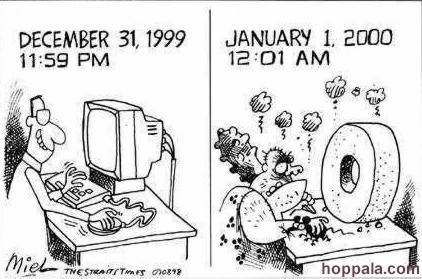
This year, as I watched a web steam of the ball drop January 31, 2010, I was able to later navigate to the MTV website and enjoy a Flaming Lips concert in Oklahoma City live from my computer. In this transition, something struck me. The potentials of computing, particularly video and sound editing (iMovie, Garageband and their disseminatory middle-man YouTube) still rely on an earlier Cold-War rhetoric of individualism and creative innovation to express the potential strengths of technology. Meanwhile any sense of collective ritual is set to the whim of a mouse-click, from New York to Oklahoma in a heartbeat. These new rituals compete with the old in a new context of hyper-individuality; ironically “Brand New Day” has become stuck once more in my head, as it has been routinely on New Years for the past 10 years. From these changes in collective ritual, what will it mean to celebrate the new year in 2011?


Share this:

Sound and Sanity: Rallying Against “The Voice”
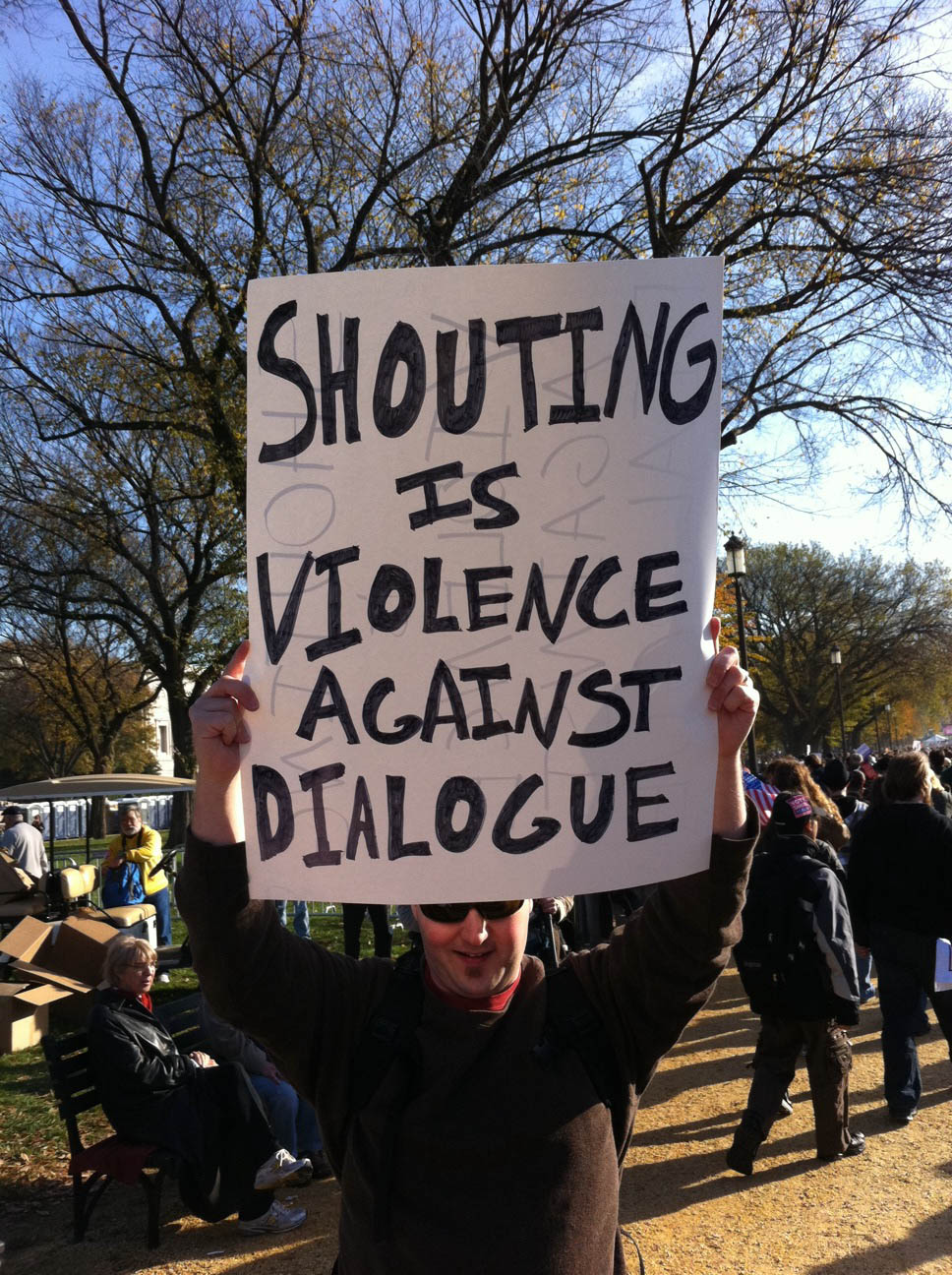 John Stewart’s recent Rally to Restore Sanity was an important political demonstration for all of the fairly-busy people in the USA. It was a moment when those who work forty hours per week or who have too many social bookings were able to come to the United States Capitol in order to proclaim with their “indoor voices” that the current political debates in America are characterized by too much irrationality and fear. As the RTRS website states, Stewart’s rally was expressly for “the people who think shouting is annoying, counterproductive, and terrible for your throat; who feel that the loudest voices shouldn’t be the only ones that get heard; and who believe that the only time it’s appropriate to draw a Hitler mustache on someone is when that person is actually Hitler. Or Charlie Chaplin in certain roles.” It’s interesting that the aim of this rally was ostensibly against the “shouting” and the “loudest voices” rather than any specific ideas, statements, or political positions. In other words, the problem, as Stewart sees it, is that public debates are too full of noise. And it is this noise that must be vanquished—or that, at least, should be modulated to an “indoor” level.
Stewart’s opposition between sound and sanity is actually quite common. Public noise is senseless sound, while rational debate is meaningful sound. The logic goes, then, that public debates need to have less sound or, at least, regulated sound. They must have two people who are willing to speak quietly and rationally, hear each other’s points, and raise and answer each other’s objections until some kind of consensus is built. Good public debates require less sound and more sanity.
But is this sonic modulation the right way to conduct public debate and to persuade others? The truth is that the relation between noise and reason, between senselessness and sanity, is very, very complicated. In fact, although it is a collective national fantasy that good debate is built on reason, there are lots of reasons to suggest that reason doesn’t always (or even predominately) come first. Rather, it’s often the sound that convinces people in an argument—not the reason. And in public debate, the particular sound is “The Voice.”
By looking at an episode of the animated TV show Batman: The Brave and the Bold let’s listen to how The Voice can persuade people to act against their own sanity. In “Mayhem of the Music Meister,” Neil Patrick Harris gives voice to the Music Meister, a singing villain whose tone and rhythm instantly hypnotize those who hear him and bend their actions to his will:
As the opening sequence begins, the audience is prepped for a standard showdown between three villains: Black Manta, Gorilla Grodd, and Clock King, who plan to steal a communications satellite; and three heroes: Black Canary, Green Arrow, and  Aquaman, who are prepared to save the day and stop the theft of the industrial hardware. But this showdown is interrupted when–to his surprise and seemingly against his self-control–Black Manta bursts into song, crooning, “I’m sounding shrill against my will.” Soon the other villains and heroes follow suit. All lose control of their voices and begin singing and acting against their own will. What’s interesting about this moment is that losing control of their voices signals a complete loss of self-control. Yet this loss brings with it a division within themselves. On one hand, they recognize that they are singing. On the other hand, they are conscious of the fact that they are equally unable to prevent their own actions. They must sing; they must dance; they must dissolve the initial division between heroes and villains and join together in a revised plan to launch the communications satellite.
From this vantage point, we can return to the alleged difference between sound and sanity. The first problem is that The Voice bypasses reason, making people comply without, or even in spite of, critical reflection. It generally does this in two ways. As the Music Meister episode illustrates, The Voice divides the hearer against himself, taking over his body while he remains fully aware of the situation. In other words, the Voice exerts a direct control over a body while the hearer remains in control of his or her consciousness. The Voice is a science fiction staple. For example, in Frank Herbert’s Dune, the Bene Gesserit are able to speak directly to the unconscious of the hearer while the conscious mind is aware that the body is controlled by The Voice. In the filmed version, an extra quality is added to The Voice in order to highlight the difference between its conscious and subconscious aspects. The Voice must sound different from the voice.
The second way that the Voice bypasses reason is in the way in which a voice– often described musically–makes people lose control of their ability for critical reflection. An example of this form of The Voice also comes from science fiction: the Jedi Mind Trick made famous in Star Wars. In this case, Obi Wan Kenobi bypasses the storm troopers’ ability to recognize the droids they are looking for, even as C3-PO and R2-D2 hang awkwardly from the back of his sandspeeder.
 When the logical reasons inevitably fail to account for the act of persuasion in public discourse, others come to the forefront. Often people will say the speaker has charisma, but often they are really referring to The Voice’s role as the persuasive element. What persuades? Not the logical argument, not sanity, but The Voice. And, often, this is against our better judgments or in spite of ourselves. So when Stewart acknowleges the role that “senseless” sound plays in public debates, he goes too far when he calls for “meaningful” sound instead. The two are not in opposition as the RTRS suggested. When all is said and done, sanity almost always depends on so-called senseless sound.


Share this:


Current Top Posts





April 2021

January 2020

November 2019

October 2019

August 2019

April 2014

November 2017

March 2015

December 2017

October 2015
 Sounding Out!
Recent Comments